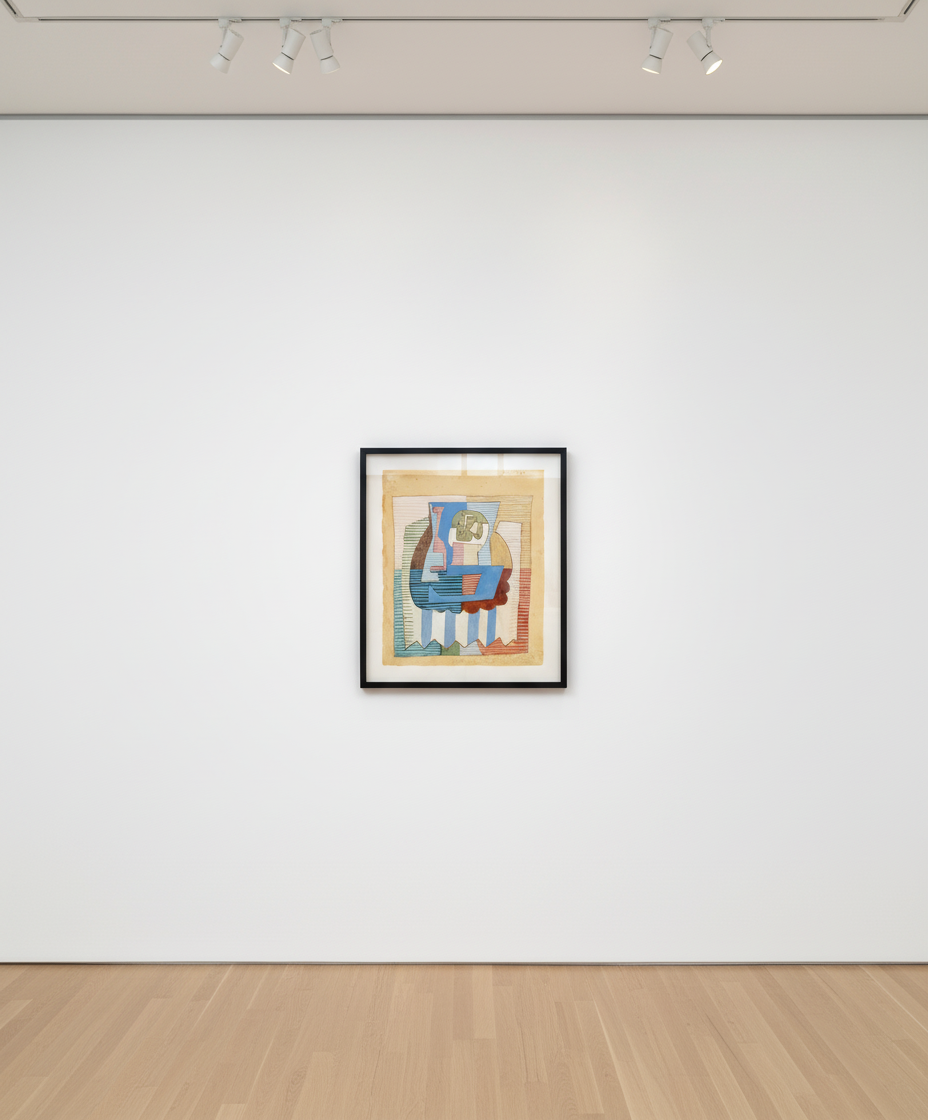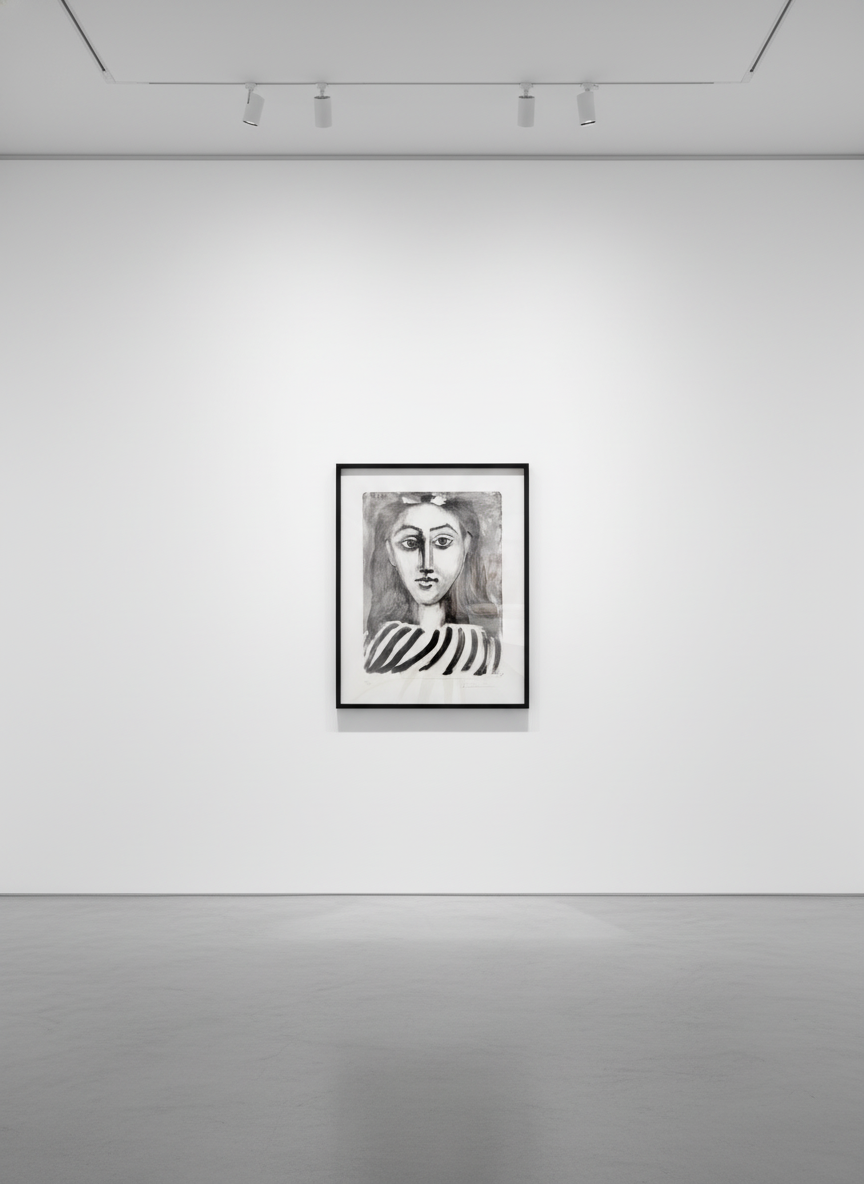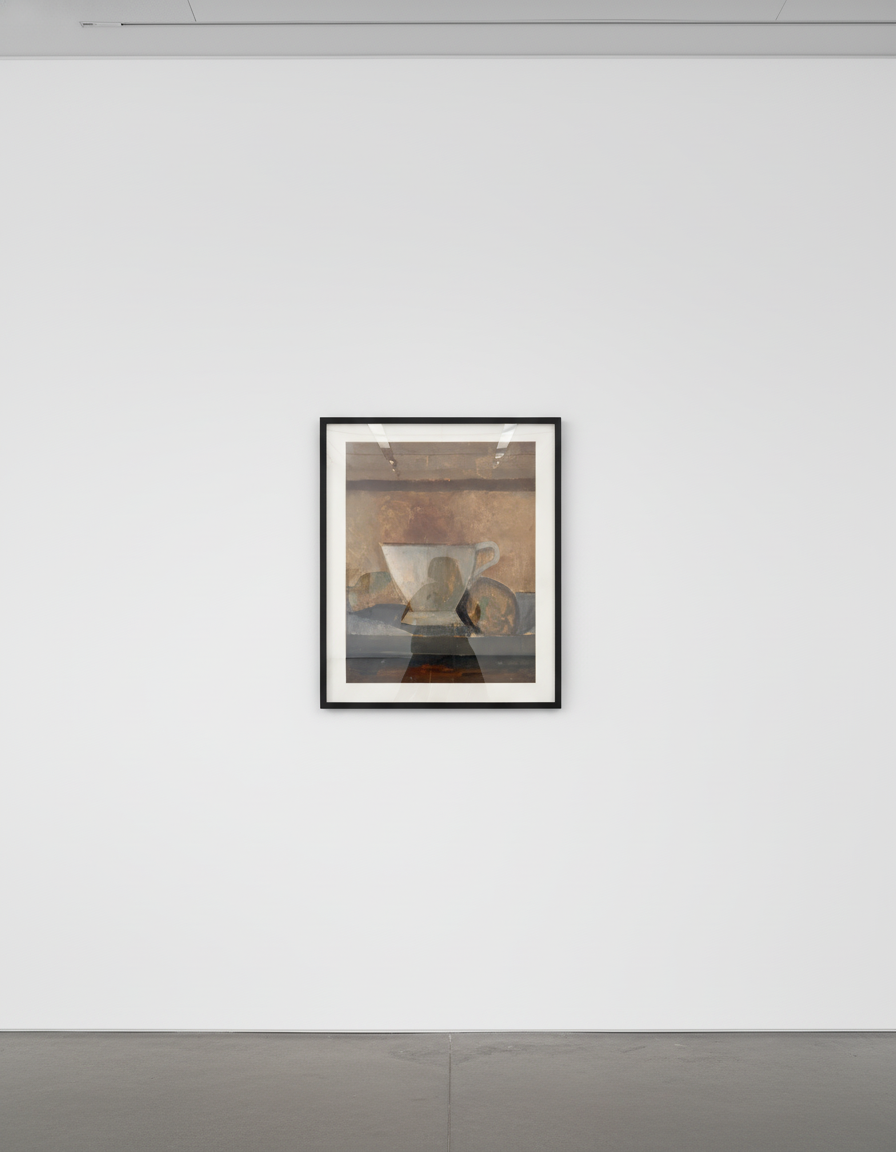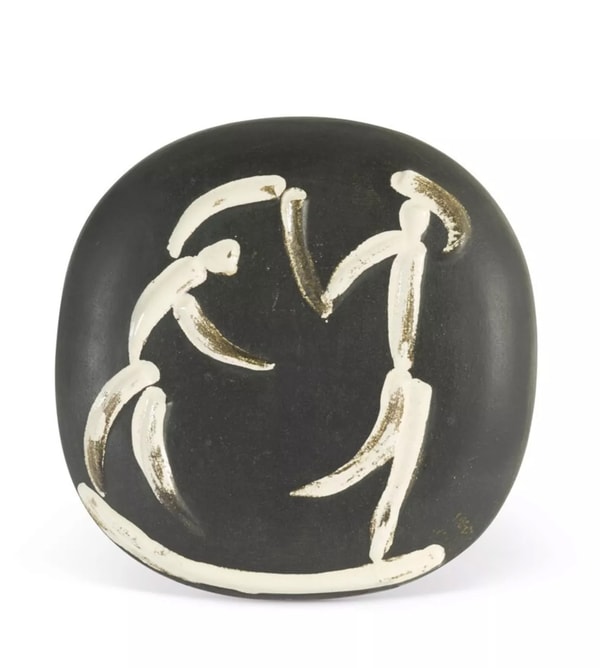

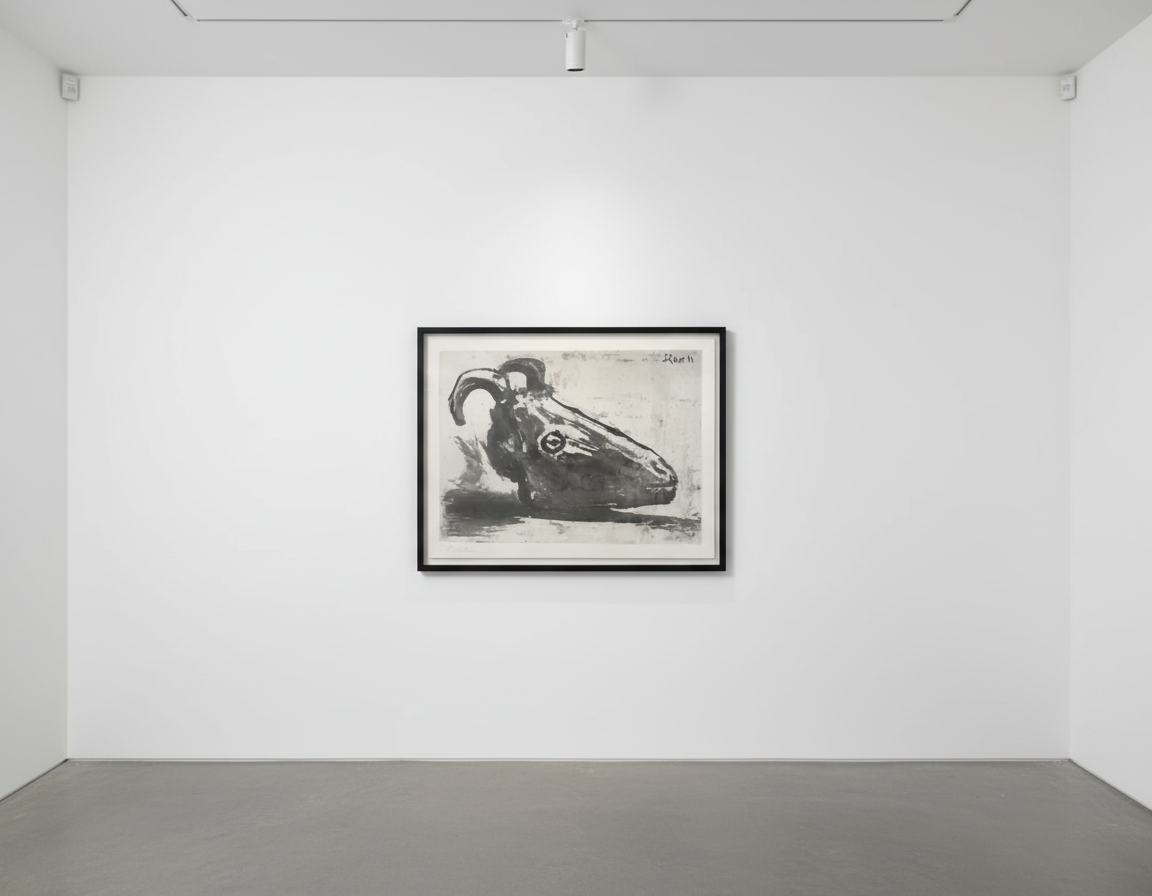
Aquatint
13 works

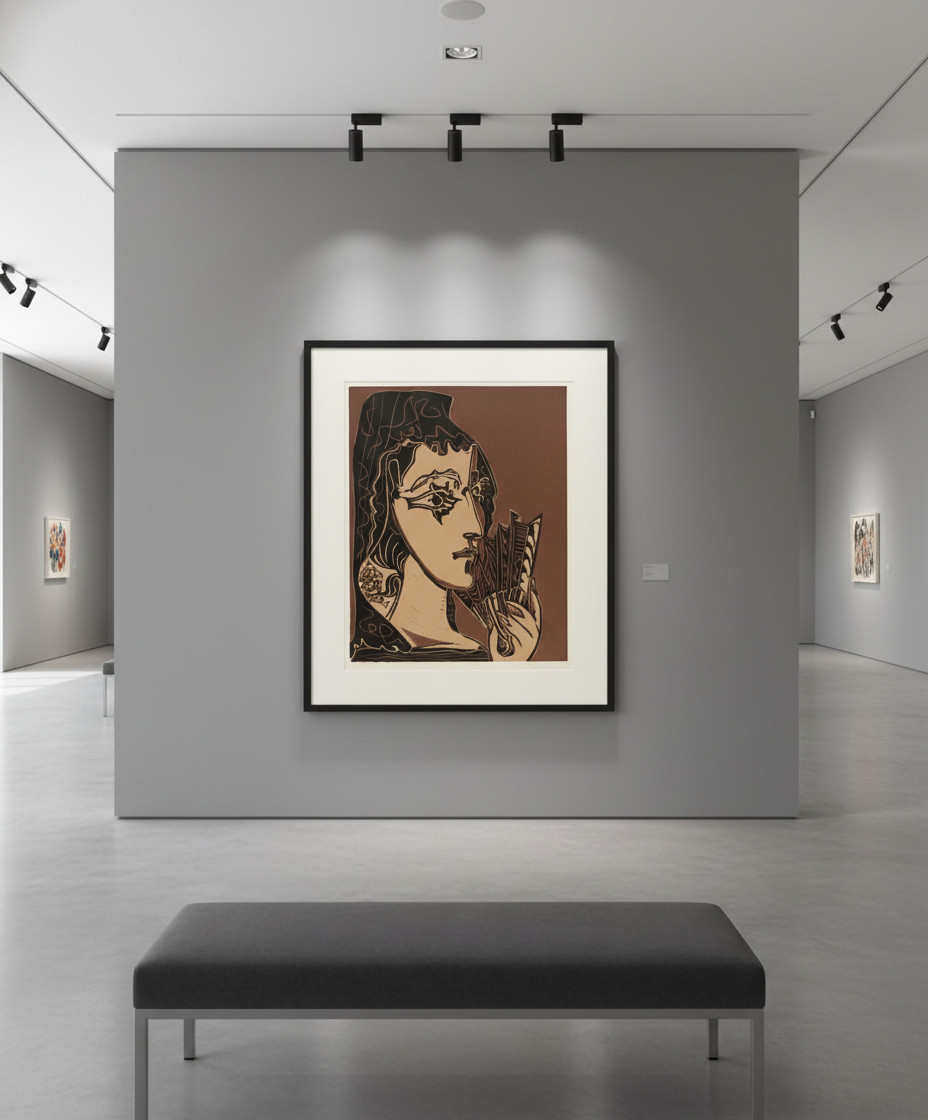
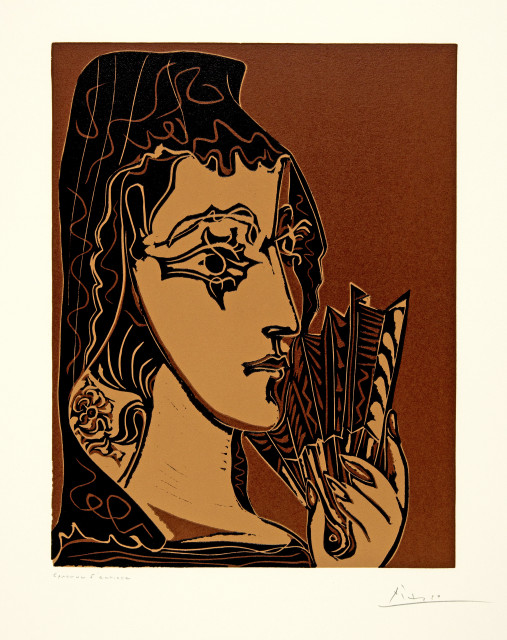
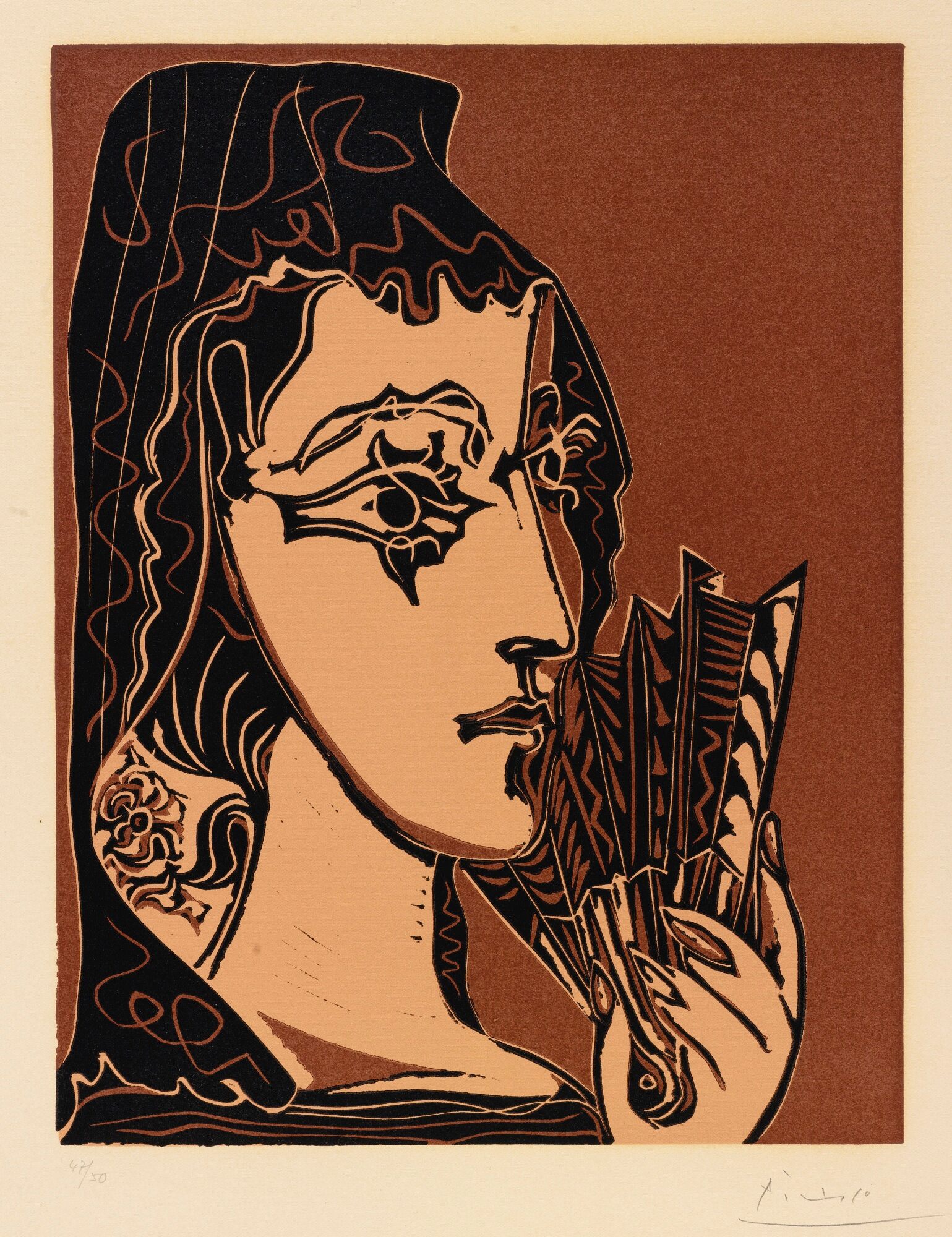
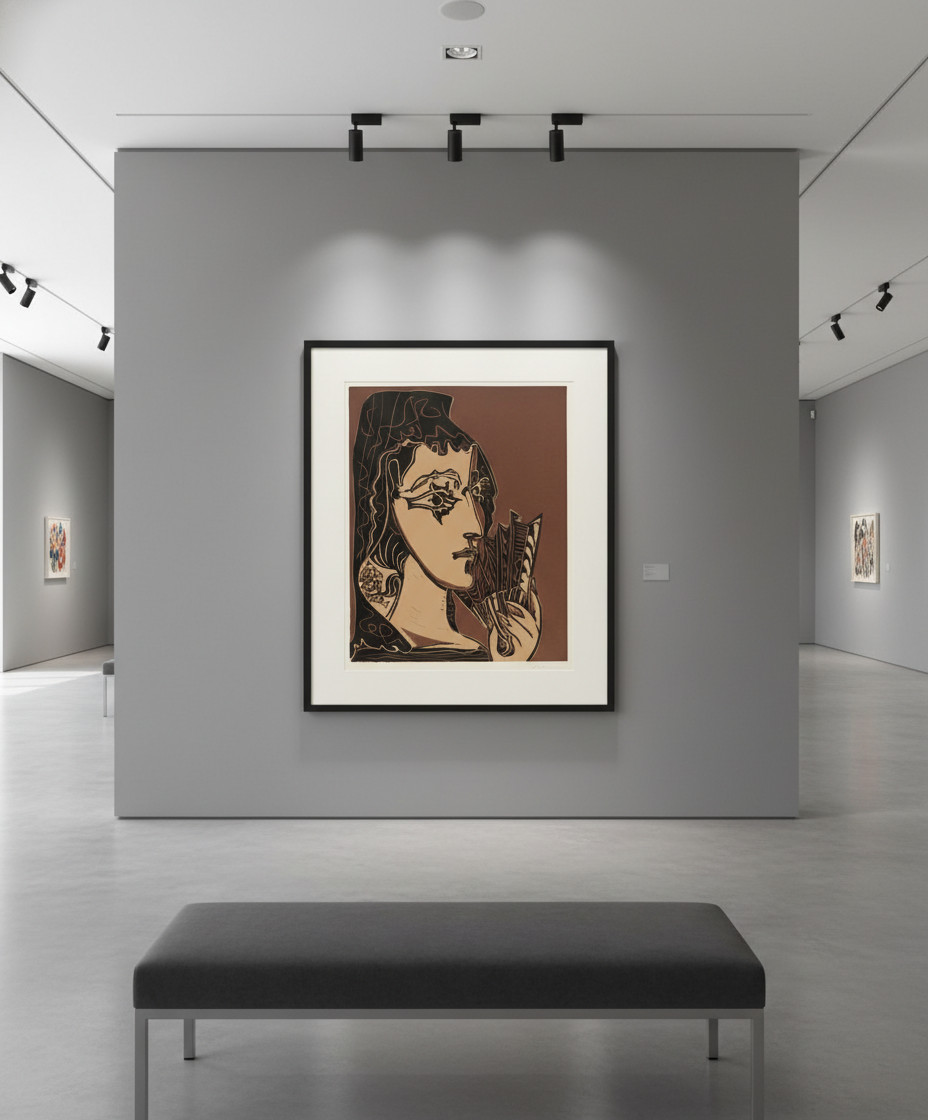
Portrait de Jacqueline en Carmen (L'Espagnole), 1962
Linocut in three colors on Arches paper Signed in pencil, lower right
13 3/4 x 10 5/8 in 34.9 x 27 cm
Edition of 50
Created in 1962, Portrait de Jacqueline en Carmen (L’Espagnole) belongs to the late period in which Picasso’s fascination with Jacqueline Roque became a dominant force in both his emotional life and artistic production. By this stage, Jacqueline had become not only a constant presence in the studio but the defining muse through whom Picasso revisited, reinterpreted, and re-energised entire strands of his earlier work. Here, he casts her in the guise of Carmen, drawing on the archetype of the Spanish heroine—at once seductive, self-possessed, and theatrically charged—to fuse personal intimacy with cultural mythology. The composition demonstrates how deeply Picasso relied on Jacqueline’s features as an elastic, generative framework. Her characteristic almond eyes, strong jawline, and elongated profile are transformed into a stylised, iconic mask, revealing Picasso’s long-standing interest in the face as a site of reinvention. Jacqueline’s visage becomes a stage on which Picasso rehearses his own visual language: the decorative arabesques of the mantilla, the sharply modelled shadows, and the fan rendered as a rhythmic, almost architectural form all speak to his ability to merge portraiture with formal experiment. Picasso’s use of colour—restricted yet richly orchestrated across ochres, blacks, and warm browns—intensifies the theatricality of the image. The contrast between the silhouetted veil and the luminous planes of the face pushes the portrait into a realm of emblematic abstraction, while retaining an unmistakable likeness. This balance between recognisable personality and stylised invention is central to Picasso’s late-period portraits of Jacqueline, in which she often appears as an amalgam of historical types: muse, odalisque, queen, dancer, Spaniard. In Portrait de Jacqueline en Carmen, the fan becomes an extension of the sitter’s psychology, both concealing and revealing, alluding to the layered roles Jacqueline played in Picasso’s life—companion, anchor, and ultimate muse. The result is a portrait that is less a depiction of a moment than a crystallisation of Picasso’s lifelong engagement with the feminine as a catalyst for artistic metamorphosis. Through Jacqueline, he revisits Spanish identity, theatrical costume, and the eternal subject of the woman as icon, producing one of the most refined and emblematic prints of his final decades. For more information on Portrait de Jacqueline en Carmen (L’Espagnole) or to buy Portrait de Jacqueline en Carmen (L’Espagnole) contact our galleries using the form below.
Price on Application
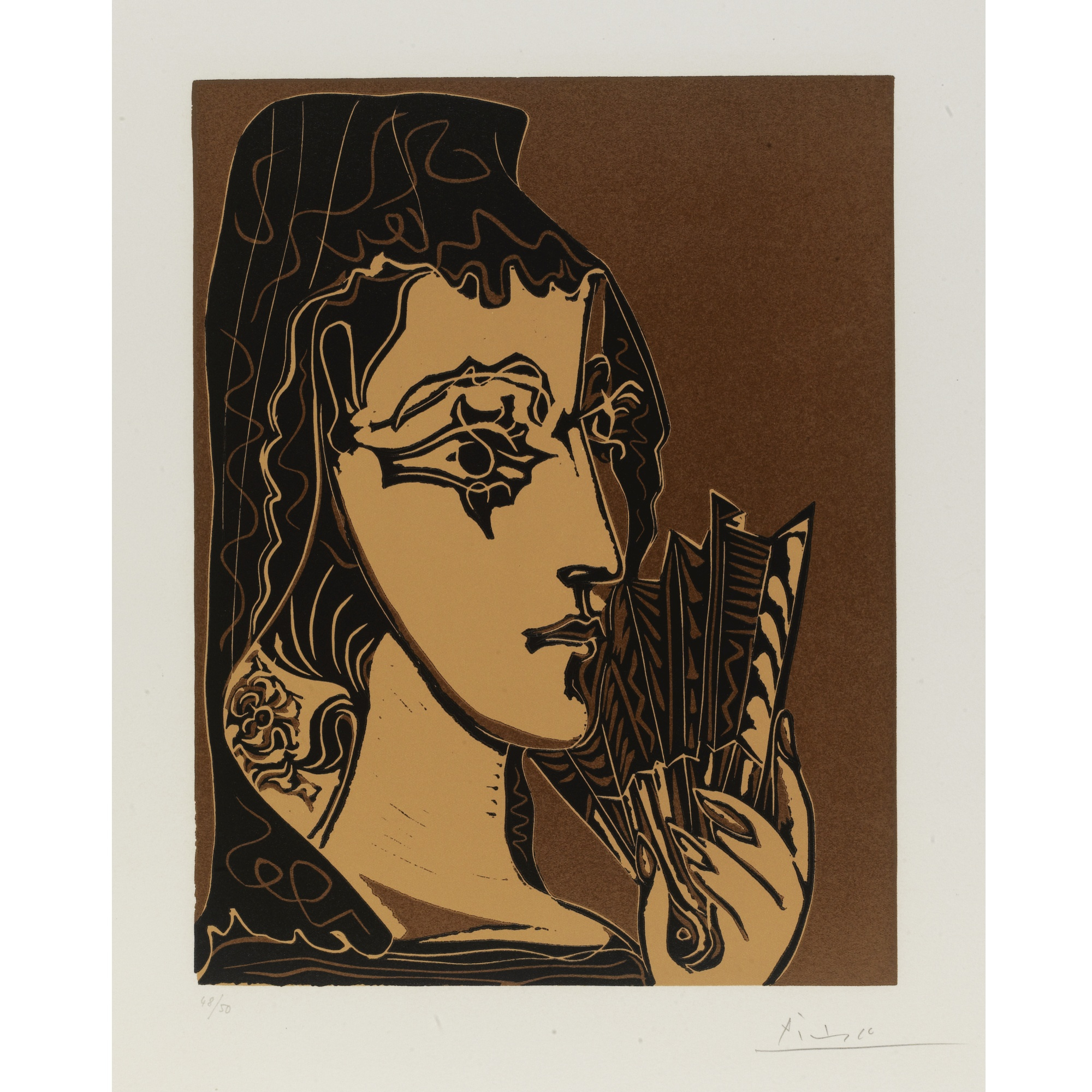
l'espagnole, portrait de jacqueline en carmen · Pablo Picasso · Sotheby's · 2010-09 · $50,691
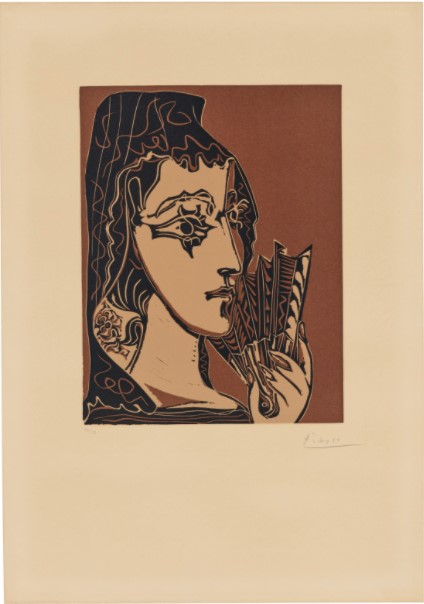
Portrait de Jacqueline en Carmen (L'espagnole) · Pablo Picasso · Christie's · 2021-09 · $47,554
Portrait de Jacqueline en Carmen · Pablo Picasso · Kornfeld · 2021-09 · $34,275
Portrait de Jacqueline en Carmen · Pablo Picasso · Sotheby's · 2014-05 · $26,250

Pablo Picasso
Aubade, with a Woman in an Armchair | L'aubade, avec femme dans un fauteuil
1959
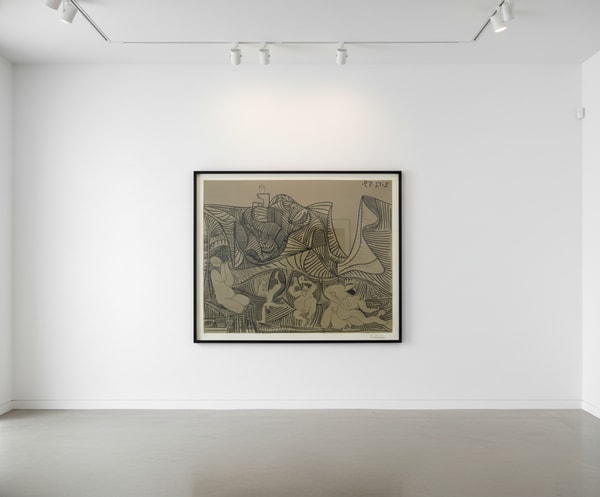
Pablo Picasso
Bacchanale au Hibou (bloch 938)
1959
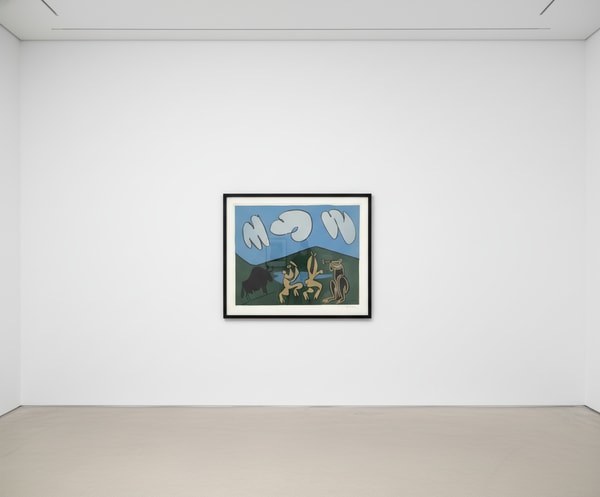
Pablo Picasso
Bacchanale au Taureau Noir (Bloch 935)
1959

Pablo Picasso
Boy with a Crown of Leaves | Jeune homme couronné de feuillage
1959
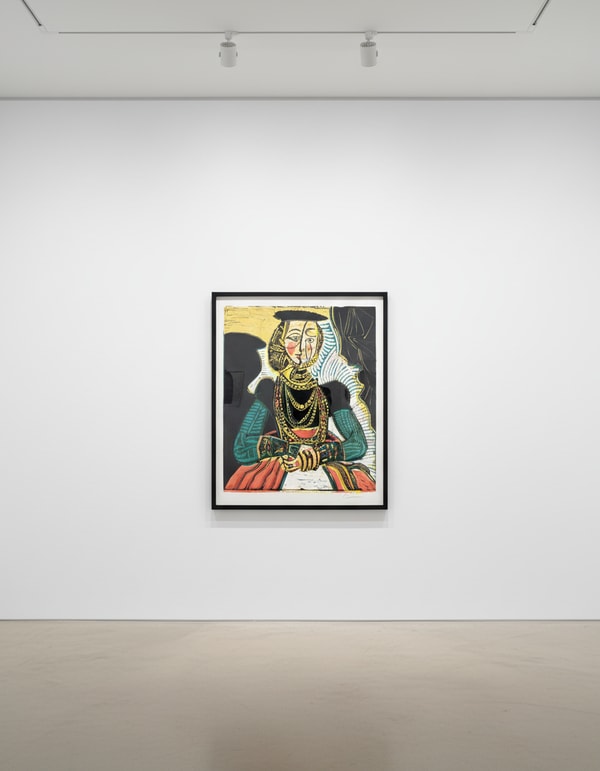
Pablo Picasso
Buste de Femme d'après Cranach le Jeune, (Bloch 859)
1958
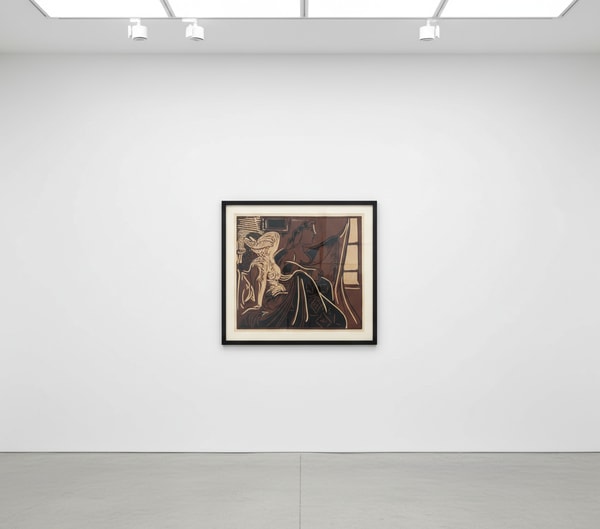
Pablo Picasso
Deux Femmes Prés de la Fenêtre
1959
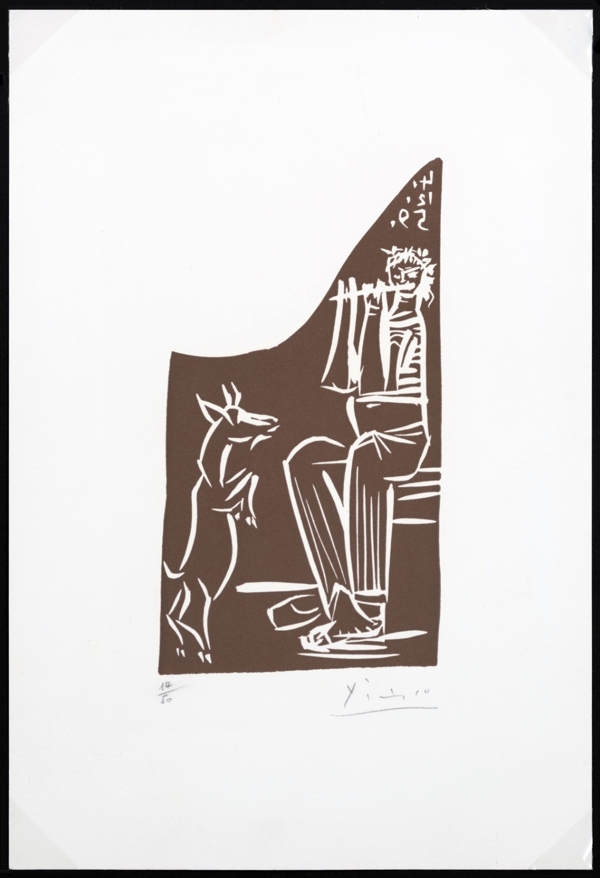
Pablo Picasso
Faune et Chévre
1959
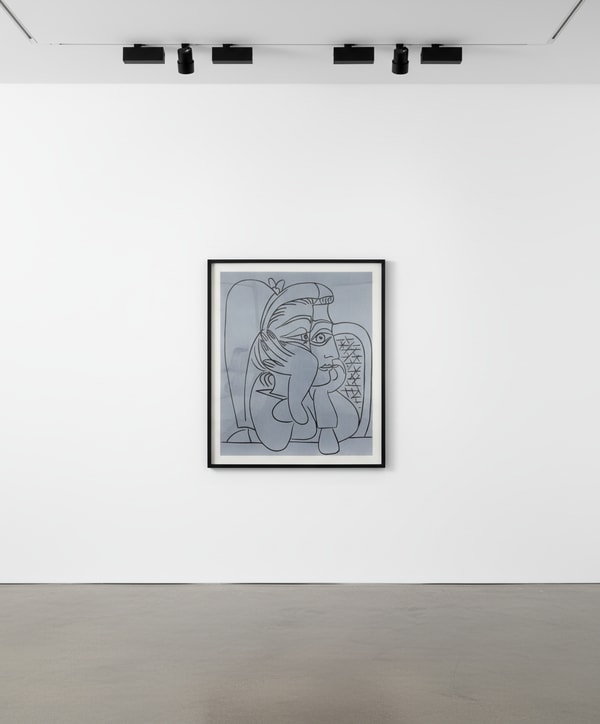
Pablo Picasso
Femme Accoudée (Bloch 922)
1959

Pablo Picasso
Femme au Chapeau (Portrait de Jacqueline au chapeau de paille multicolore).
1962

Pablo Picasso
Femme nue à la source
1963
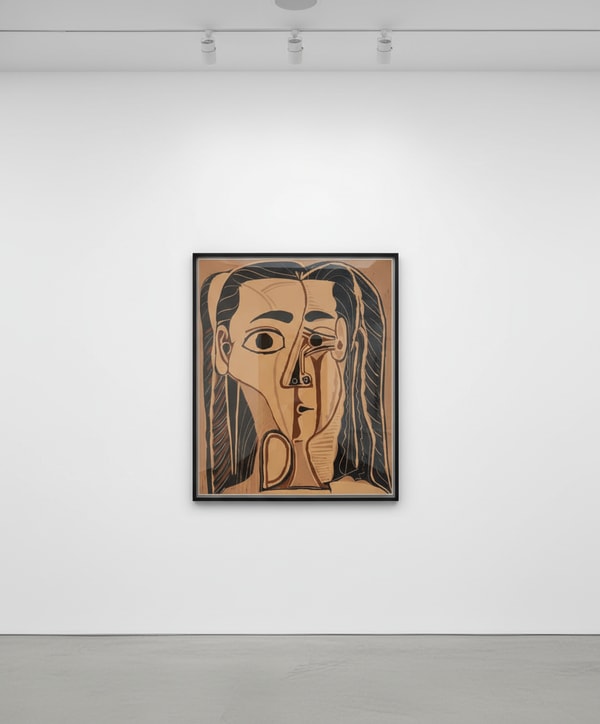
Pablo Picasso
Grande Tete De Femme (Bloch 1069)
1962
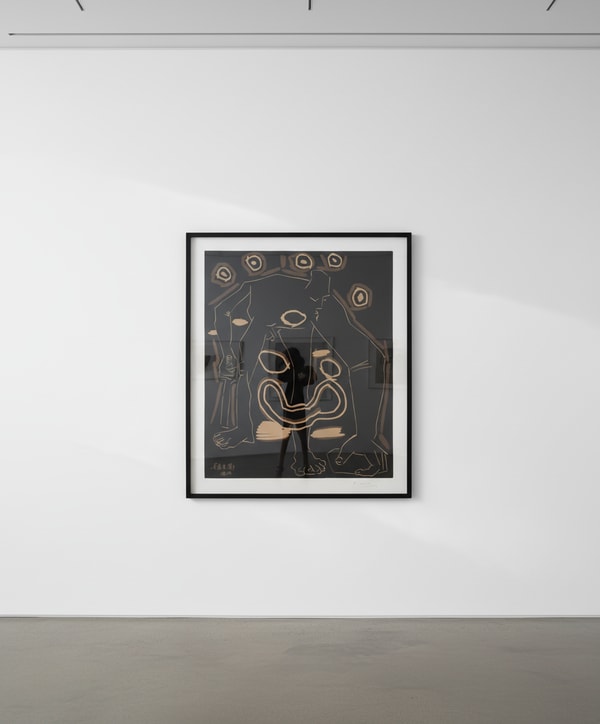
Pablo Picasso
Homme au batôn / Le Vieux bouffon
1963
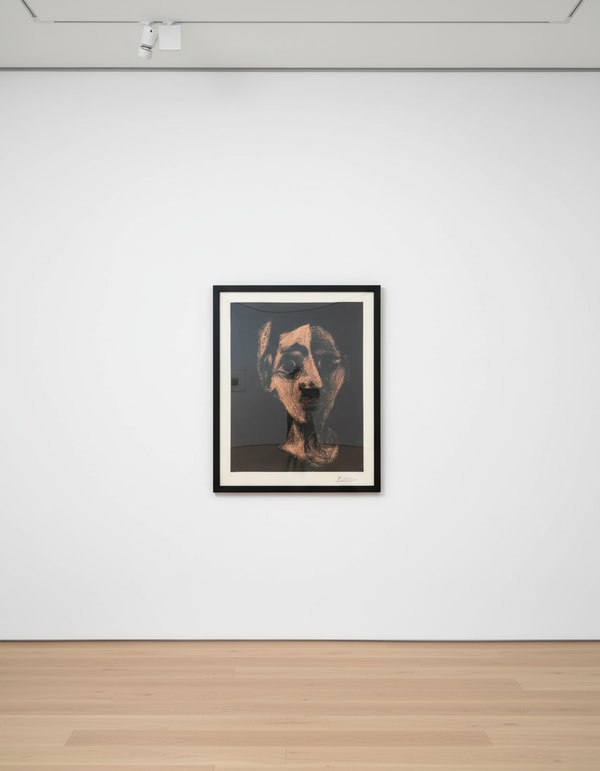
Pablo Picasso
Jacqueline au Bandeau
1962
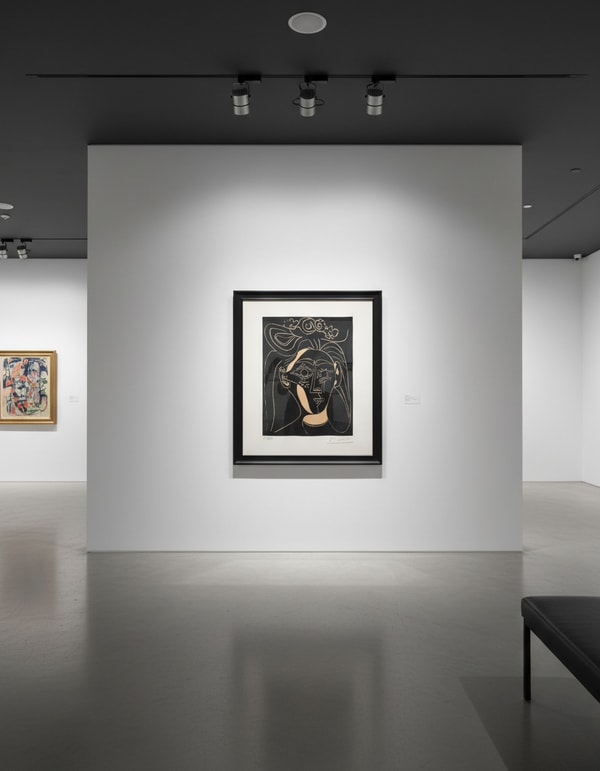
Pablo Picasso
Jacqueline au chapeau à Fleurs. I
1962
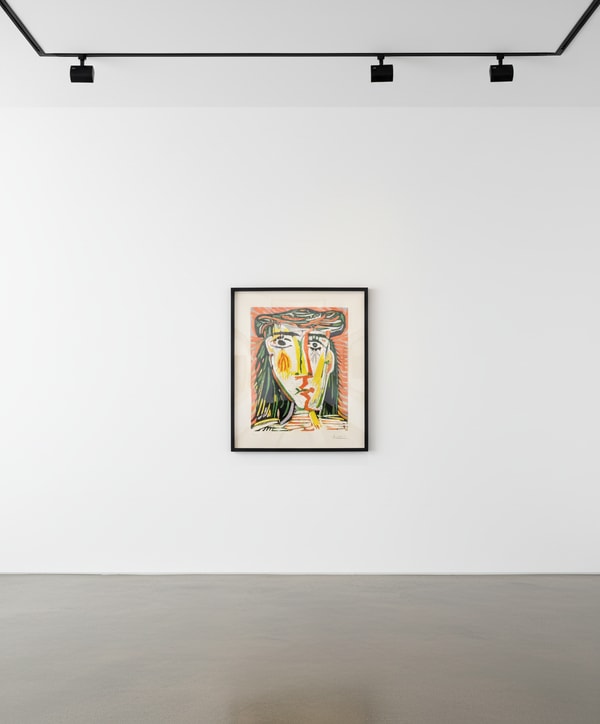
Pablo Picasso
Jacqueline au chapeau de paille
1962
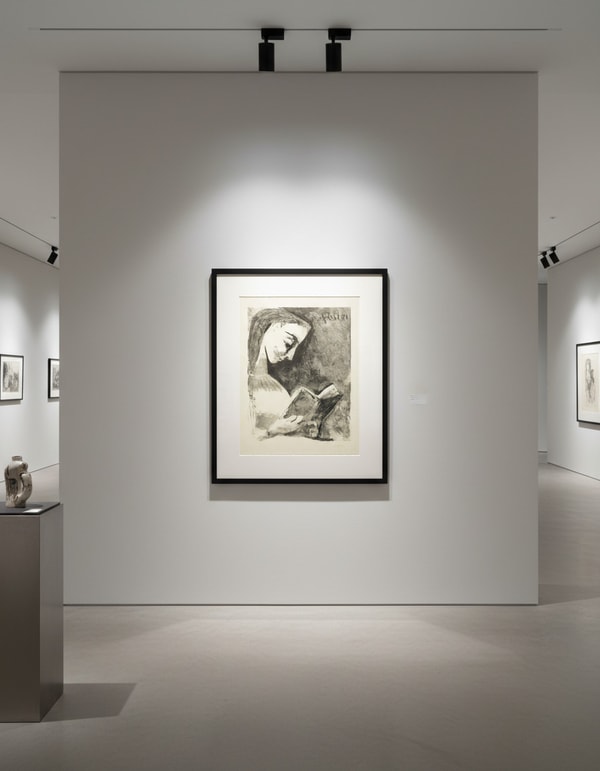
Pablo Picasso
Jacqueline Lisant
1964
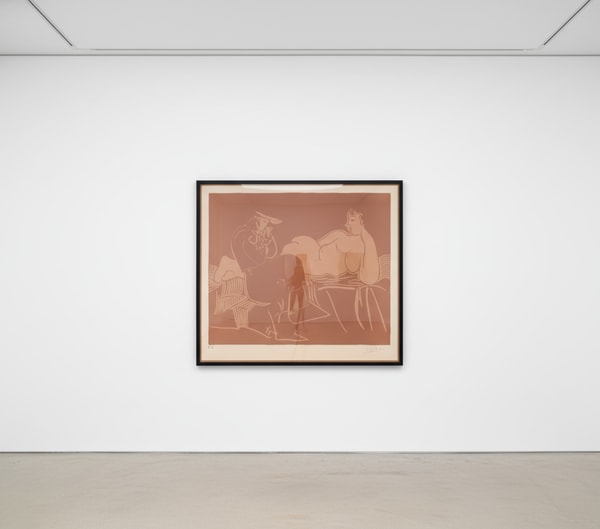
Pablo Picasso
L'Aubade, avec Femme Accoudee
1959

Pablo Picasso
L'Etreinte (Bloch 1150)
1963

Pablo Picasso
La Pique en Rouge et Jaune (The Bullfight in Red and Yellow)
1959

Pablo Picasso
Le Déjeuner sur l'herbe d'aprés Edouard Manet. (The Luncheon on the Grass after Edouard Manet)
1954

Pablo Picasso
Le Vieux bouffon
1963
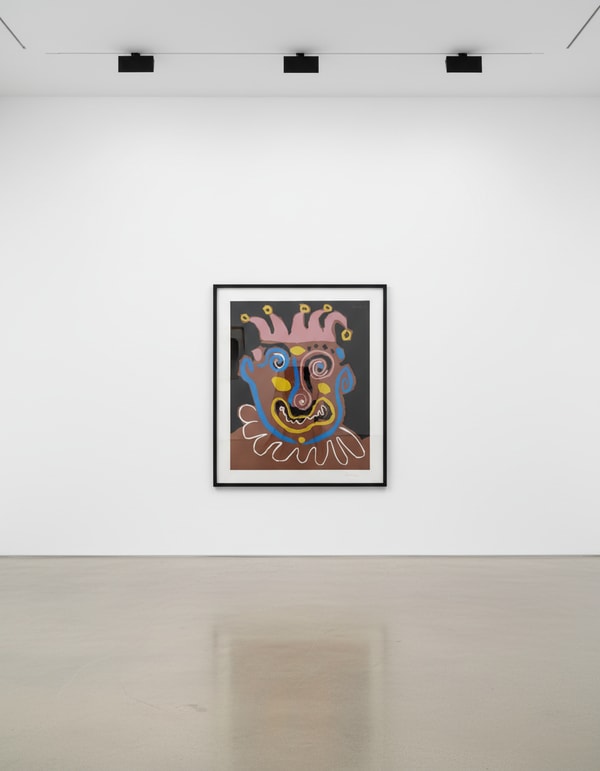
Pablo Picasso
Le Vieux Roi (B. 1152) (The Old King)
1963
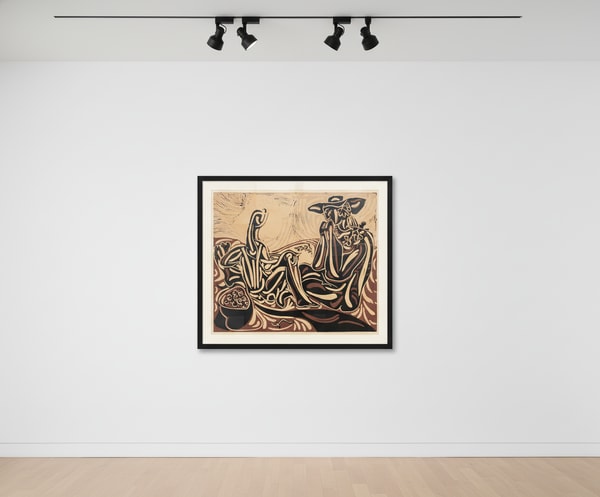
Pablo Picasso
Les vendangeurs
1959
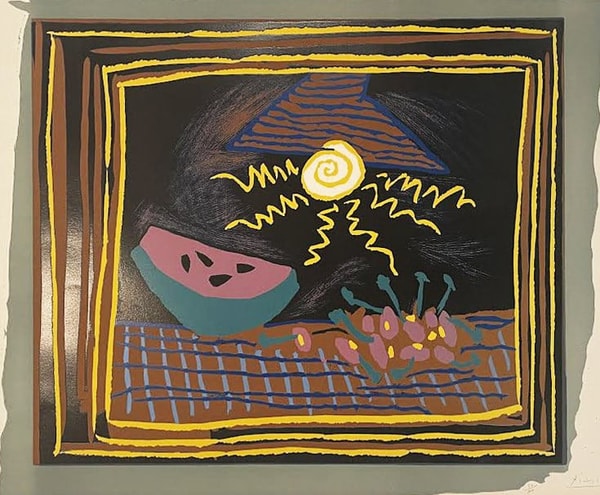
Pablo Picasso
Nature Morte a la Pasteque
1962
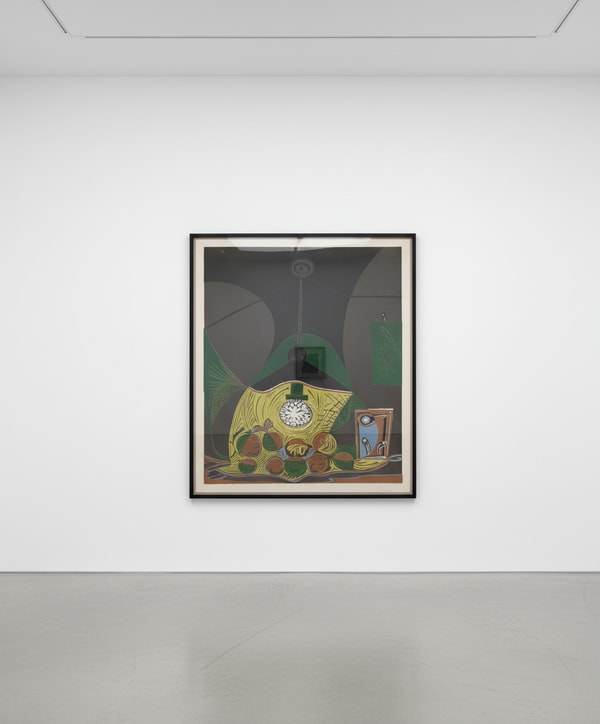
Pablo Picasso
Nature morte à la suspension, 26 mars
1962
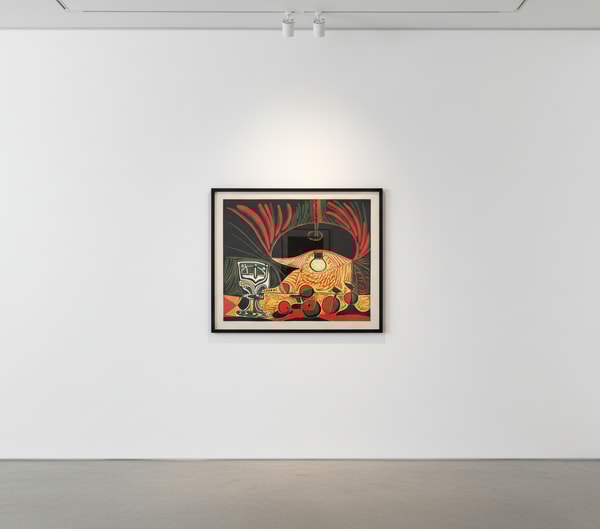
Pablo Picasso
Nature Morte Au Verre Sous La Lampe
1962
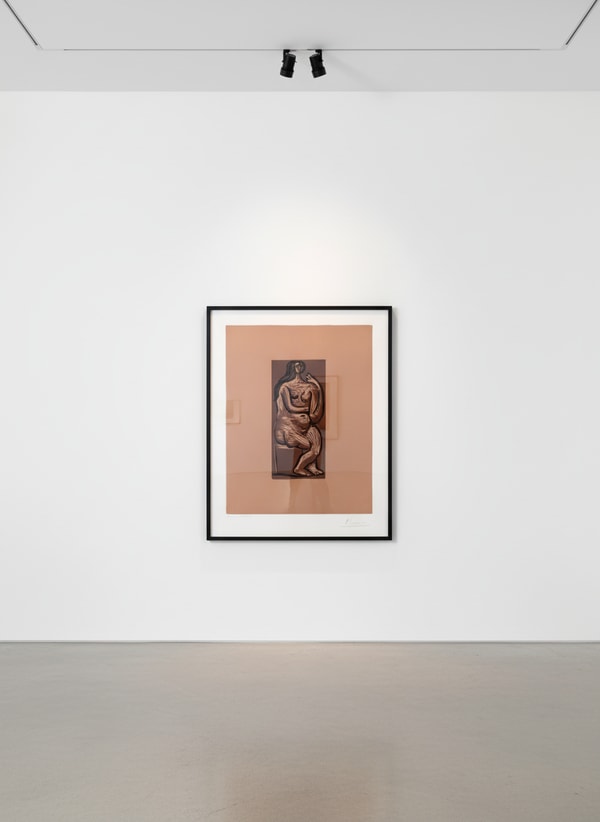
Pablo Picasso
Nu Assis
1962
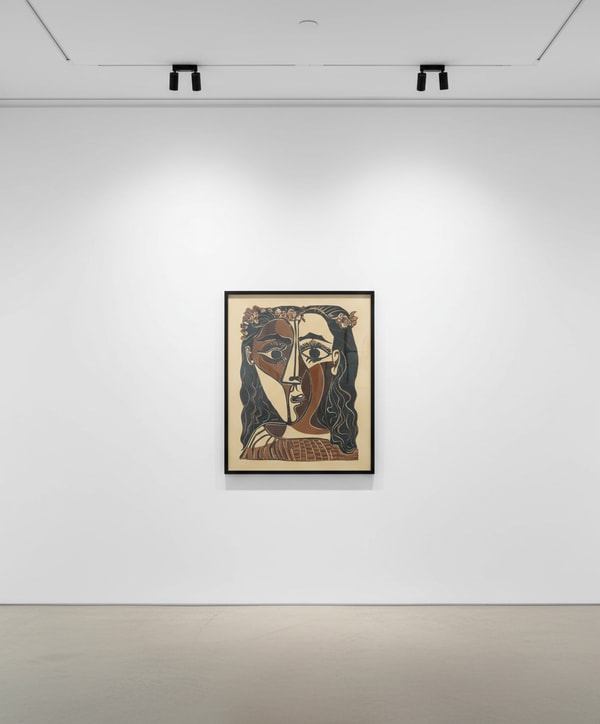
Pablo Picasso
Petite Tête de Femme Couronnée
`962

Pablo Picasso
Portrait de Femme a la Fraise et au Chapeau
1962
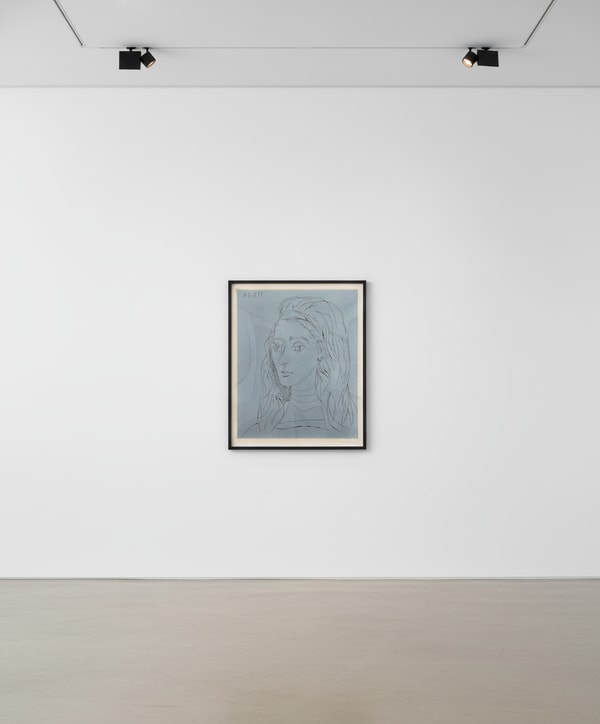
Pablo Picasso
Portrait De Jacqueline (Bloch 923)
1959
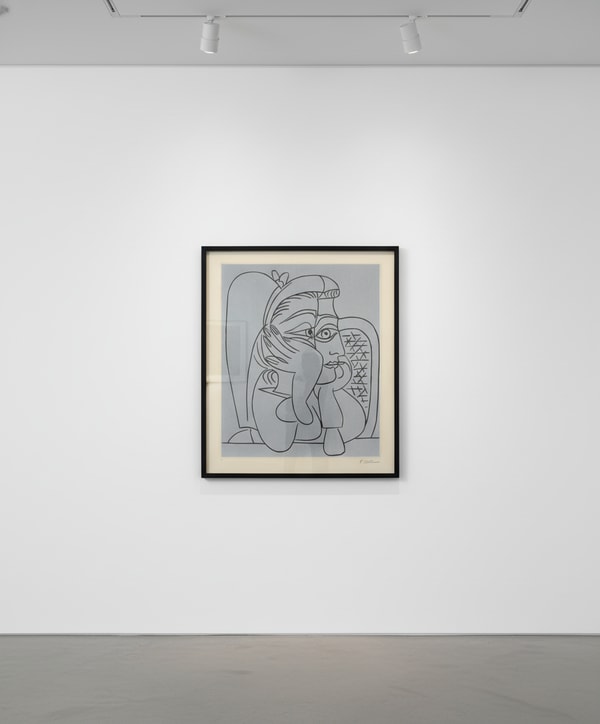
Pablo Picasso
Portrait de Jacqueline Accoudée
1959
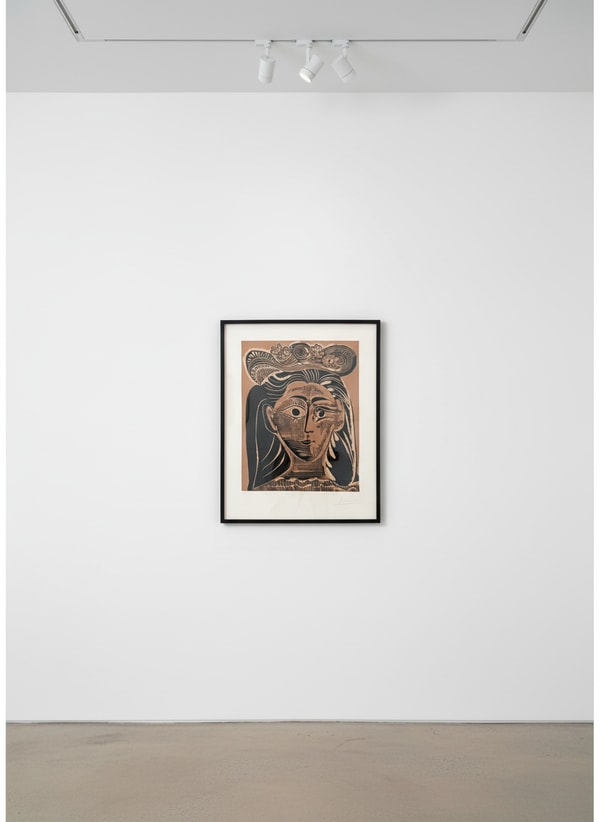
Pablo Picasso
Portrait de Jacqueline Au Chapeau De Paille Fleuri
1962

Pablo Picasso
Taureau et Picador
1959
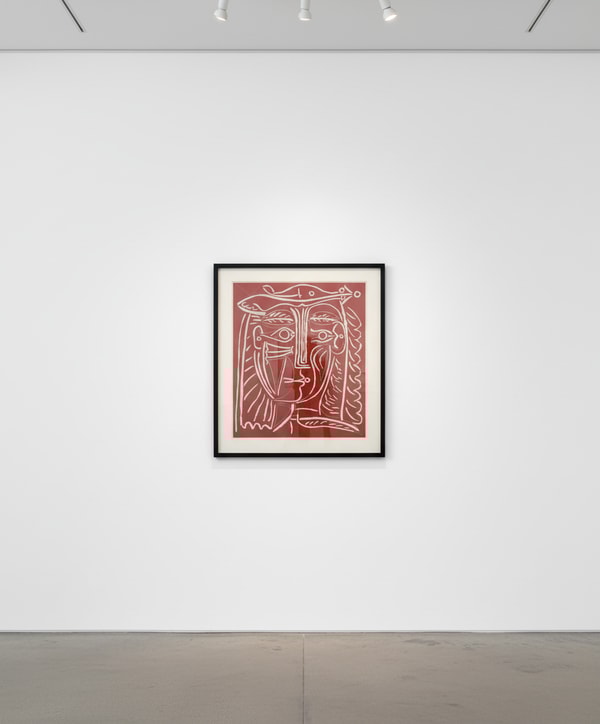
Pablo Picasso
Tête de Femme au Chapeau
1962

Pablo Picasso
Two Women by the Window | Deux femmes près de la fenêtre
1959
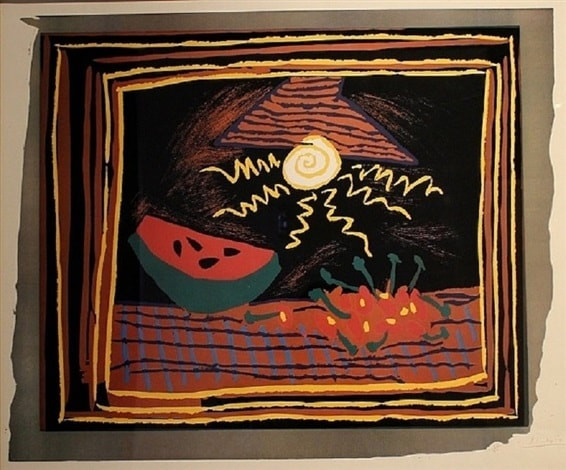
Pablo Picasso
Watermelon Still Life
1962
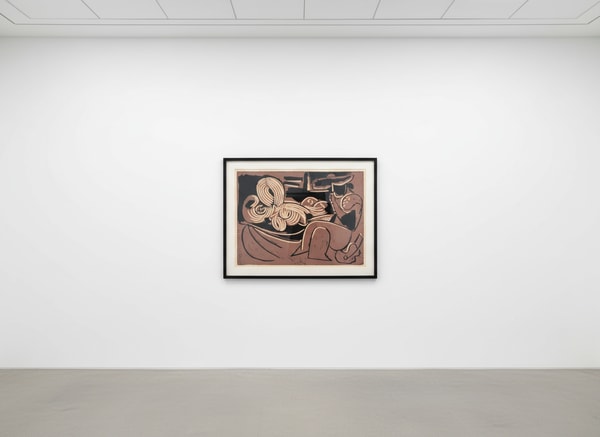
Pablo Picasso
Woman Reclining and Man with a Guitar | Femme couchée et homme à la guitare,
1959
Pablo Picasso (1881–1973, born Málaga, Spain) is the most productive and formally transformative artist in the history of Western art — a figure whose influence on twentieth-century painting, sculpture, printmaking, and ceramics is so pervasive that it remains, more than fifty years after his death, genuinely difficult to assess. Born in Málaga to an art teacher father who recognised and encouraged his prodigious talent, Picasso studied in Barcelona and Madrid before arriving in Paris in the early years of the twentieth century, where the encounter with Cézanne, African art, and his own restless intelligence produced Cubism — perhaps the most radical rupture in the history of representation since the Renaissance.
Pablo Picasso prints for sale at Guy Hepner represent one of the most significant collecting opportunities in the modern art market. Our gallery offers original Picasso lithographs, linocuts, etchings, and aquatints — each accompanied by full provenance documentation and catalogue raisonné references. Whether you are seeking a signed Mourlot lithograph, a Vollard Suite etching, a Vallauris linocut, or a late aquatint, Guy Hepner has the expertise and inventory to assist collectors at every level.
Picasso's print output is among the richest and most varied in art history, spanning etchings, lithographs, linocuts, and aquatints produced across seven decades. Understanding the categories is essential to collecting intelligently.
Lithographs were produced primarily through Fernand Mourlot's atelier in Paris, where Picasso worked from 1945 onwards. Mourlot documented over 400 lithographs bearing Picasso's hand, ranging from abstract heads and Cubist still lifes to the monumental Toros y Toreros bull-fighting series. Editions typically run from 50 to 275 copies. Unsigned Mourlot lithographs trade between $3,000 and $40,000; signed examples command $15,000 to $150,000 or more depending on subject and condition.
Linocuts, produced primarily at Vallauris between 1958 and 1963 using Picasso's own colour-reduction technique, are among the most technically revolutionary of all his prints. By cutting progressively deeper into a single block, Picasso achieved complex colour sequences impossible by conventional means. Edition sizes are small — typically 50 copies — and signed linocuts frequently exceed $80,000 at auction.
Etchings span Picasso's entire career, from his earliest Parisian years through to the late suites of the 1960s and early 1970s. The medium suited his restless line perfectly, and his etched output includes some of the finest prints of the twentieth century. Edition sizes vary widely, from the 50 impressions of the Vollard Suite to smaller later editions. Prices range from $5,000 for minor early works to well over $500,000 for Vollard Suite masterpieces.
Aquatints combine etching's linear precision with tonal washes of extraordinary subtlety. Picasso's aquatint work, often produced in collaboration with master printer Roger Lacourière, includes some of his most formally sophisticated printed images. These prints are rarer than his lithographs and command significant premiums accordingly.
Authentication for all Picasso prints relies on the Bloch catalogue raisonné — the definitive scholarly record of his print output — supplemented by Mourlot's lithograph catalogue where applicable.
Picasso's paintings represent the summit of the twentieth-century market. Understanding his periods is essential for collectors.
The Blue Period (1901–1904) produced austere, emotionally charged paintings on themes of poverty, isolation, and melancholy — elongated figures rendered in blue-grey tones that echo El Greco and carry an extraordinary psychological weight. Works from this period are among the most sought-after in the history of art.
The Rose Period (1904–1906) brought warmer hues and more tender subjects — circus performers, saltimbanques, and acrobats rendered with a new formal assurance. The transitional works that followed, leading to Les Demoiselles d'Avignon (1907), represent the hinge on which the entire history of modern painting pivots.
The Cubist period (1907–1921), co-developed with Georges Braque, produced the most intellectually radical body of painting in the twentieth century. Analytic Cubism (1909–1912) fragmented forms into near-monochromatic facets; Synthetic Cubism (from 1912) introduced collage, typography, and bolder colour. Major Cubist paintings are virtually never available on the primary market; they appear at auction rarely and achieve extraordinary prices.
Picasso's auction record stands at $179,365,000 — achieved at Christie's New York in May 2015 for Les Femmes d'Alger (Version O), a 1955 work from his series responding to Delacroix. Nude, Green Leaves and Bust (1932) reached $106,482,500 at Christie's in May 2010. These are benchmark figures for a career that produced well over 16,000 works catalogued by Zervos.
The most desirable areas of the Picasso print market for serious collectors are well-defined.
The Vollard Suite (1930–1937): ninety-seven etchings (and three aquatints with Roger Lacourière) commissioned by dealer Ambroise Vollard. The suite is considered Picasso's greatest print achievement — 100 plates encompassing the Sculptor's Studio sequence, the Minotaur series, and intimate portraits of Marie-Thérèse Walter. Published posthumously by Vollard's estate, the complete suite is extraordinarily rare. Individual plates now trade from $80,000 to over $500,000.
Suite 347 (1968): three hundred and forty-seven etchings completed in seven months when Picasso was eighty-six years old — an astonishing demonstration of creative energy in extreme old age. Themes include Degas's brothel scenes, Spanish picadors, Rembrandt, and Ingres. Published by Galerie Louise Leiris. These prints represent exceptional value relative to their historical importance.
Mourlot lithographs: Fernando Mourlot's catalogue documents Picasso's lithographic output with scholarly precision. The Bloch numbers (B.1 through B.2042 for the complete print oeuvre) and Mourlot numbers together form the authentication framework used by every major auction house.
Crommelynck etchings: Piero and Aldo Crommelynck's Paris workshop produced Picasso's late etchings with extraordinary technical refinement. The 347 Suite plates were printed here, as were the 156 Series etchings (1970–1972) — Picasso's final major print campaign.
Condition criteria for print collecting: look for clean, wide margins with no trimming; avoid foxing (rust-coloured spots from paper acidity) or tide lines; fading affects lithographs most severely — examine under strong light. Impressions on Japan paper or with remarques command significant premiums.
Authentication for Picasso works operates through established institutional channels.
For prints: the Bloch catalogue raisonné (Picasso: His Graphic Work, Volumes I–IV) provides reference numbers for all known prints. Mourlot's catalogue covers lithographs specifically. The Succession Picasso estate stamp appears on many posthumously published editions. Any print without clear catalogue raisonné reference and provenance chain should be examined by a specialist before purchase.
For paintings and works on paper: the Comité Picasso (now dissolved) was the primary authentication body; the Succession Picasso now handles estate matters. The Zervos catalogue raisonné (33 volumes) is the authoritative scholarly record for paintings, drawings, and sculpture. Expert authentication by a recognised Picasso specialist is essential for any major purchase.
Guy Hepner Gallery, 177 Tenth Avenue, New York, offers full provenance verification and catalogue raisonné consultation for all Picasso works. We provide free, confidential valuations for collectors looking to sell, and access to a global network of qualified buyers. Our expertise spans ceramics, prints, linocuts, drawings, and paintings across all periods of the artist's work.