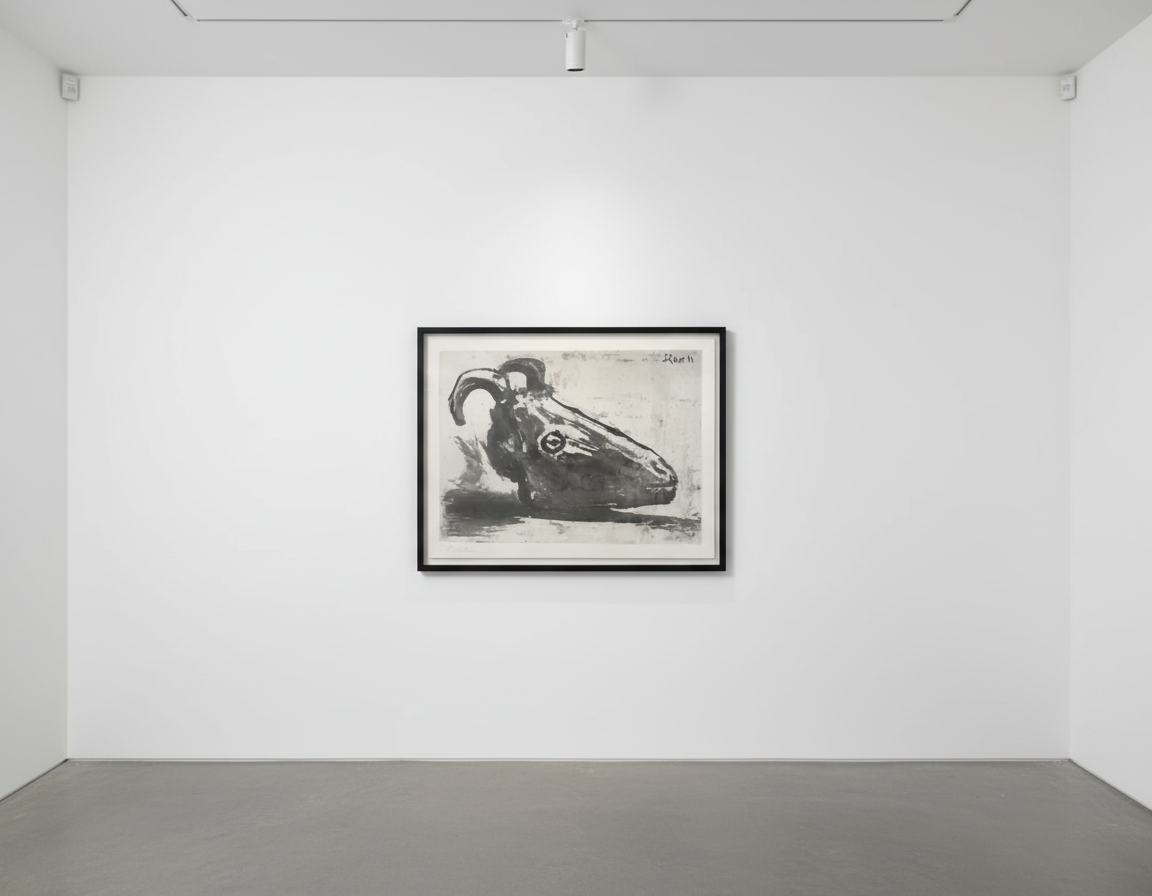
Aquatint
13 works

Picasso's gouache works represent an increasingly strategic entry point for collectors seeking museum-quality pieces by the twentieth century's most consequential artist.
Picasso's auction dominance remains unparalleled, reflecting sustained institutional and private demand that extends throughout his complete oeuvre and positioning gouache works as accessible alternatives within an artist category defined by nine-figure masterworks.
Pablo Picasso's gouache on paper works occupy a distinctive position within his vast artistic production, serving simultaneously as autonomous finished works and as windows into his creative methodology. Born in Málaga in 1881 and working until his death in 1973, Picasso generated an extraordinary body of work documented across thirty-three volumes of the Zervos catalogue raisonné—the most comprehensive scholarly documentation of any modern artist.
Gouache offered Picasso unique expressive possibilities that oil painting could not replicate. The medium's opacity allowed for bold chromatic experimentation while its water-soluble nature permitted rapid execution aligned with his legendary creative velocity. Unlike transparent watercolor, gouache enabled Picasso to build dense, luminous surfaces on paper that rivaled the visual intensity of his canvas works while maintaining the intimacy inherent to works on paper.
Throughout his career, Picasso returned repeatedly to gouache during periods of stylistic transformation. The medium's accessibility made it ideal for testing compositional ideas and chromatic relationships before committing to larger-scale oils. Consequently, gouache works often reveal Picasso's thinking process with remarkable directness, offering collectors insight into the evolution of movements he co-founded, particularly Cubism, which revolutionized Western visual culture.
The year 1920 marked a significant moment in Picasso's artistic trajectory. Having moved through his Blue, Rose, and Analytical Cubist periods, he was then exploring Synthetic Cubism while simultaneously engaging with neoclassical figuration—a stylistic duality that confounded critics expecting linear artistic development. Works from this period demonstrate his refusal to be categorized, employing multiple visual languages sometimes within single compositions.
Picasso's gouache technique demonstrates masterful control of a demanding medium. Gouache's rapid drying time requires decisive application, leaving little margin for revision—a characteristic that aligned perfectly with Picasso's spontaneous working method. His paper selections varied according to artistic intention, ranging from smooth surfaces that facilitated precise linear work to textured sheets that enhanced painterly effects.
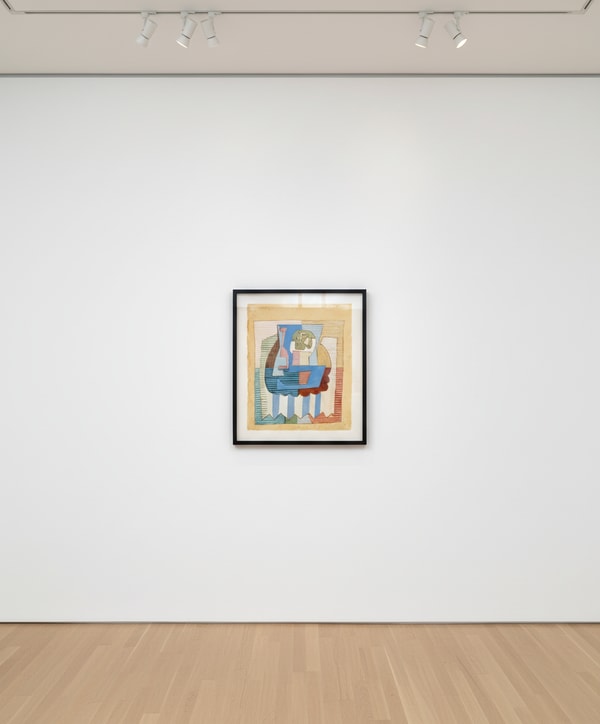
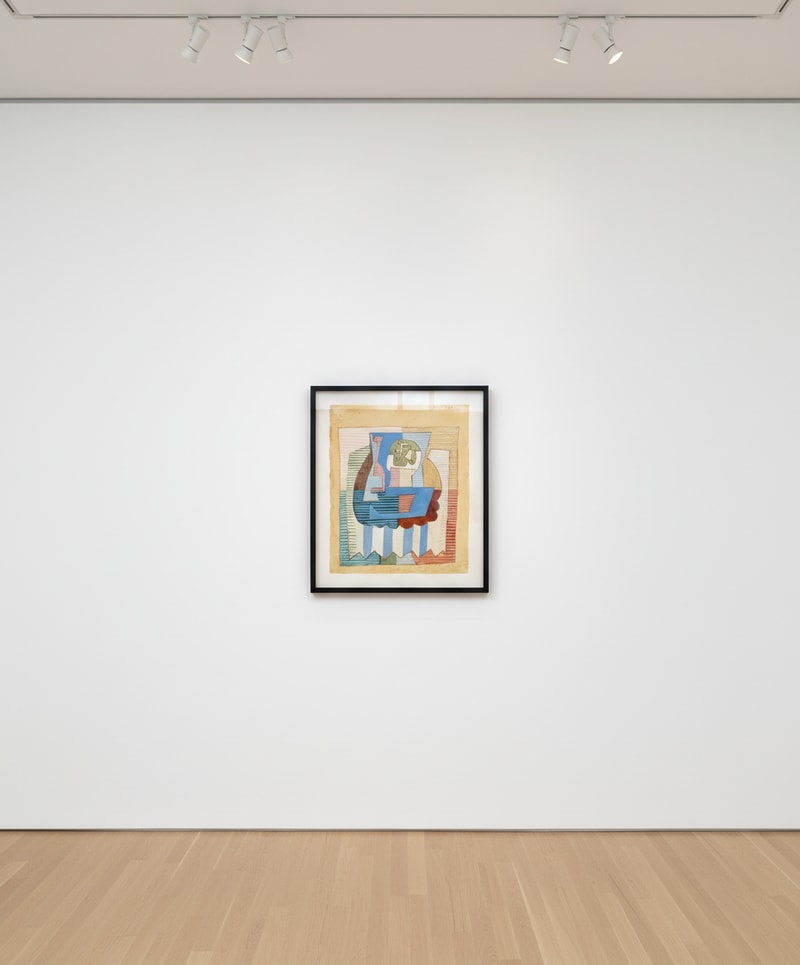
Abstracted (1920) exemplifies Picasso's sophisticated approach to gouache on paper during this pivotal year. The work's abstracted formal vocabulary reflects his ongoing engagement with Cubist principles while the gouache medium's inherent luminosity creates chromatic effects distinct from his concurrent oil paintings. Paper dimensions in such works typically range from intimate scale to substantial formats, with each size category serving specific compositional purposes.
Color application in Picasso's gouache works reveals layering strategies that maximize the medium's opacity while preserving surface vitality. His palette selections during the early 1920s frequently incorporated earth tones alongside more saturated hues, creating visual tension between classical restraint and modernist boldness. Brushwork varies from precisely controlled passages to gestural applications, often within single compositions.
Abstracted (1920) Gouache on paper
This work from 1920 captures Picasso at a moment of productive stylistic synthesis. The abstracted treatment characteristic of this period demonstrates his ability to distill representational subjects into essential geometric forms while preserving expressive energy. Created during a year when Picasso balanced avant-garde experimentation with classical references, this gouache embodies the creative tension that defined his most innovative periods.
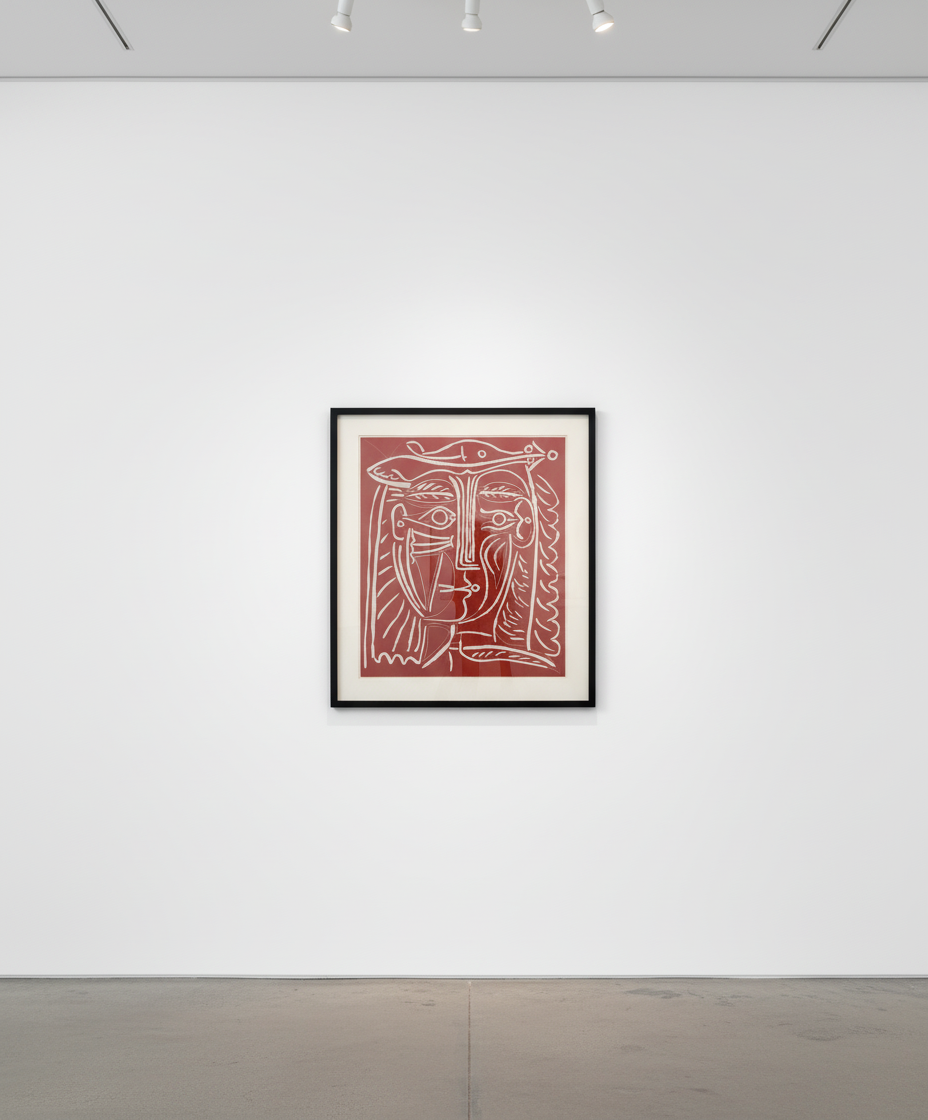
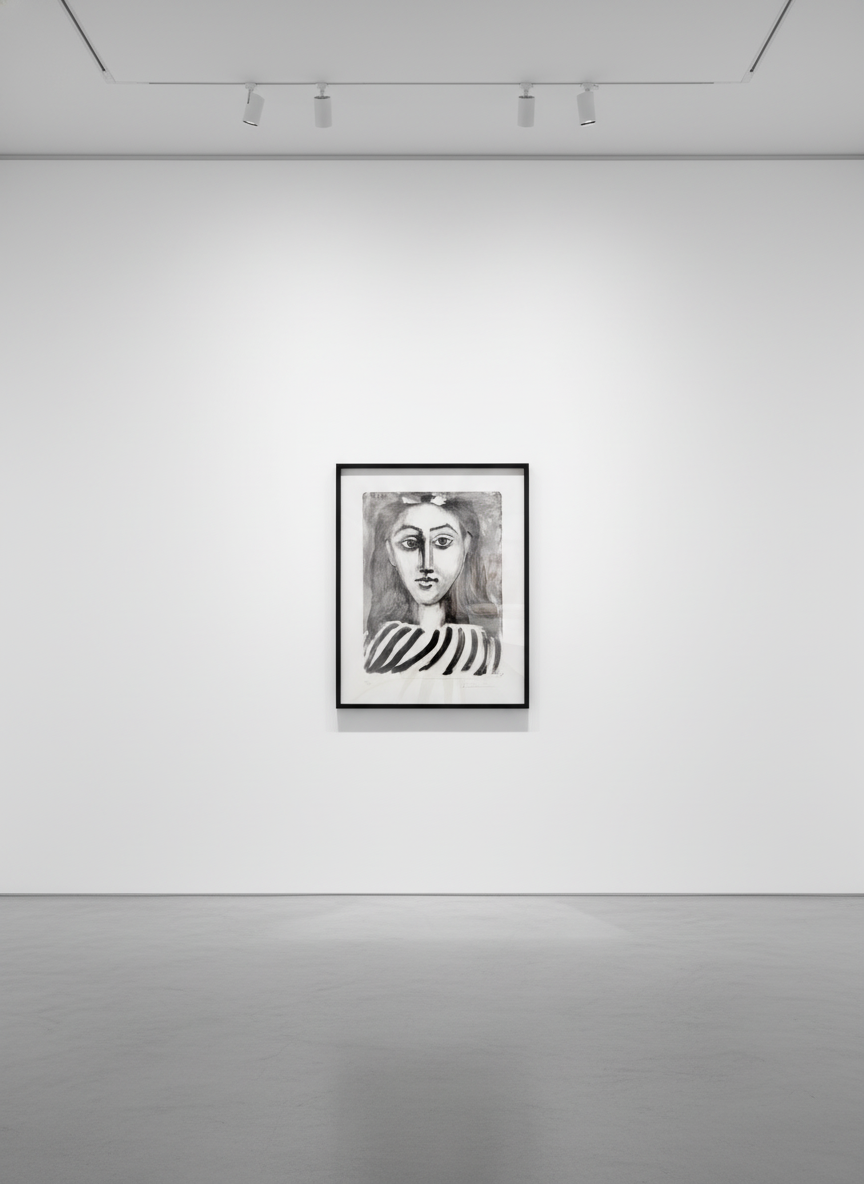
Pablo Picasso produced an extraordinarily large body of prints across his career, working continuously in etching, aquatint, linocut, lithography, and drawing alongside his painting and sculpture. His print output — spanning from his early Blue Period through his final decades of prolific late work — represents one of the most sustained and technically varied printmaking practices of any twentieth-century artist, and remains central to scholarly understanding of his overall development.
Picasso's paintings and prints are held in the permanent collections of virtually every major museum with a modern art department worldwide, and his position as one of the most significant and influential artists of the twentieth century continues to inform critical and market interest across every medium in which he worked, including his extensive print editions.
1 work available
Five Facts About Pablo Picasso Gouache on Paper
Woman with a Helmet of Hair (1904), a gouache on tan wood pulp board from Picasso's Blue Period, is held in the Art Institute of Chicago.
Head of a Woman (spring 1909), a gouache on paper from Picasso's early Cubist period, is in the collection of the Museum of Modern Art, New York.
Sleeping Peasants (1919), combining gouache, watercolor and pencil on paper, is held by the Museum of Modern Art, New York.
Picasso used gouache throughout his career alongside watercolor and pastel on a wide range of papers, a practice traced across decades in the touring exhibition Picasso and Paper.
For his planned large composition Boy Leading a Horse (1905-06), Picasso produced a related gouache study exploring the arrangement of figures.
Market Data
See real auction history, estimate ranges and price benchmarks for individual Gouache on Paper prints, sourced from Christie's, Sotheby's and other major auction houses.
Frequently Asked Questions
Pablo Picasso Gouache on Paper prints for sale are available at Guy Hepner Gallery, 177 Tenth Avenue, New York. We offer authenticated editions with full provenance documentation sourced from the secondary market and directly from publishers.
Pablo Picasso Gouache on Paper works — 1 available — are typically produced as limited editions, individually signed and numbered by the artist. Contact Guy Hepner Gallery for edition details on specific works.
Pricing for Pablo Picasso Gouache on Paper prints varies by edition size, date, and condition. Contact Guy Hepner Gallery for current market pricing and availability.
More Pablo Picasso Series
View all Pablo Picasso works →