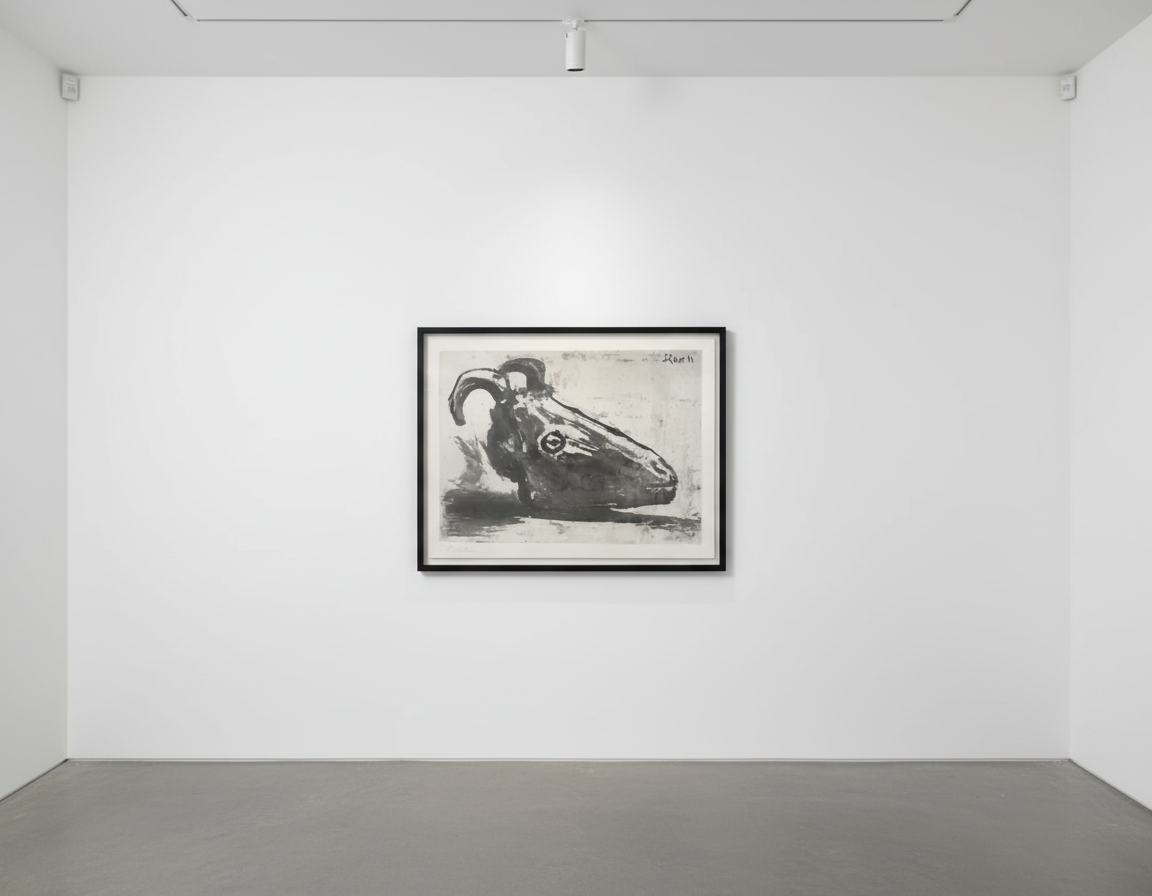
Aquatint
13 works

Pablo Picasso remains the definitive force in twentieth-century art markets, with auction results that consistently demonstrate unprecedented collector demand. Within this robust environment, Picasso's printed editions—particularly his innovative collotype works—represent a sophisticated entry point for collectors seeking museum-caliber works by history's most influential modern master.
From our New York location, we provide collectors worldwide with access to rigorously vetted Picasso editions backed by comprehensive provenance research and market expertise.
The collotype process represents one of the most technically demanding and visually refined printing methods ever developed, and Picasso's engagement with this medium during the early 1960s produced works of extraordinary subtlety and chromatic richness. Unlike lithography or etching, collotype printing utilizes a photomechanical process involving light-sensitive gelatin plates that can reproduce continuous tones without the visible dot patterns characteristic of other reproduction techniques. The result achieves a painterly quality that approaches the luminosity of original works on paper.
Picasso's collaboration with master printers during this period coincided with his prolific exploration of multiple printmaking techniques, including the revolutionary linocuts he produced between 1958 and 1963. The collotype editions emerged from this same spirit of technical experimentation, representing the artist's desire to disseminate his imagery through methods that preserved the gestural immediacy of his painted and drawn works. These editions occupy a distinct position within Picasso's vast printed oeuvre—documented across the comprehensive thirty-three volumes of the Zervos catalogue raisonné—offering collectors works that combine reproductive fidelity with the artist's direct creative involvement.
The series demonstrates Picasso's lifelong commitment to making his art accessible through multiple formats while maintaining uncompromising quality standards. Having produced approximately 3,500 ceramic pieces at the Madoura pottery in Vallauris between 1947 and 1971, Picasso understood the importance of editioned works in extending his artistic reach. The collotype editions represent a parallel achievement in printed media, allowing his imagery to exist in forms both intimate and technically accomplished.
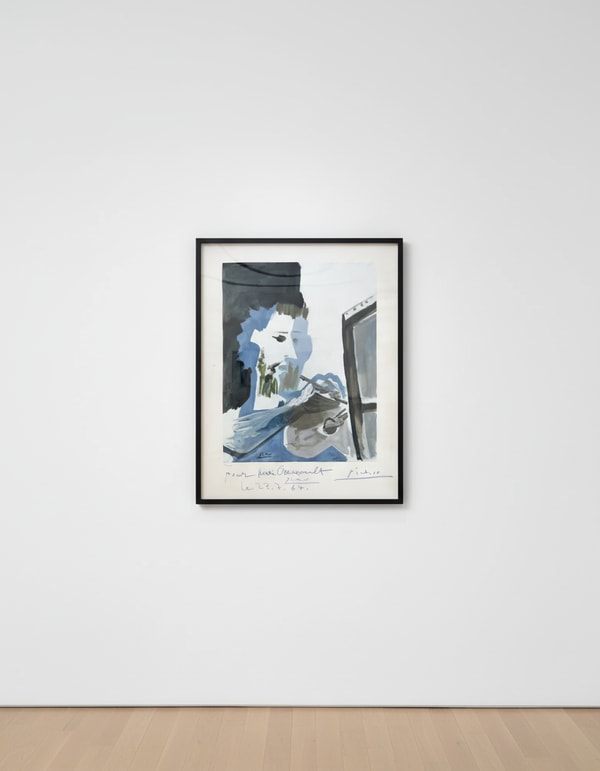
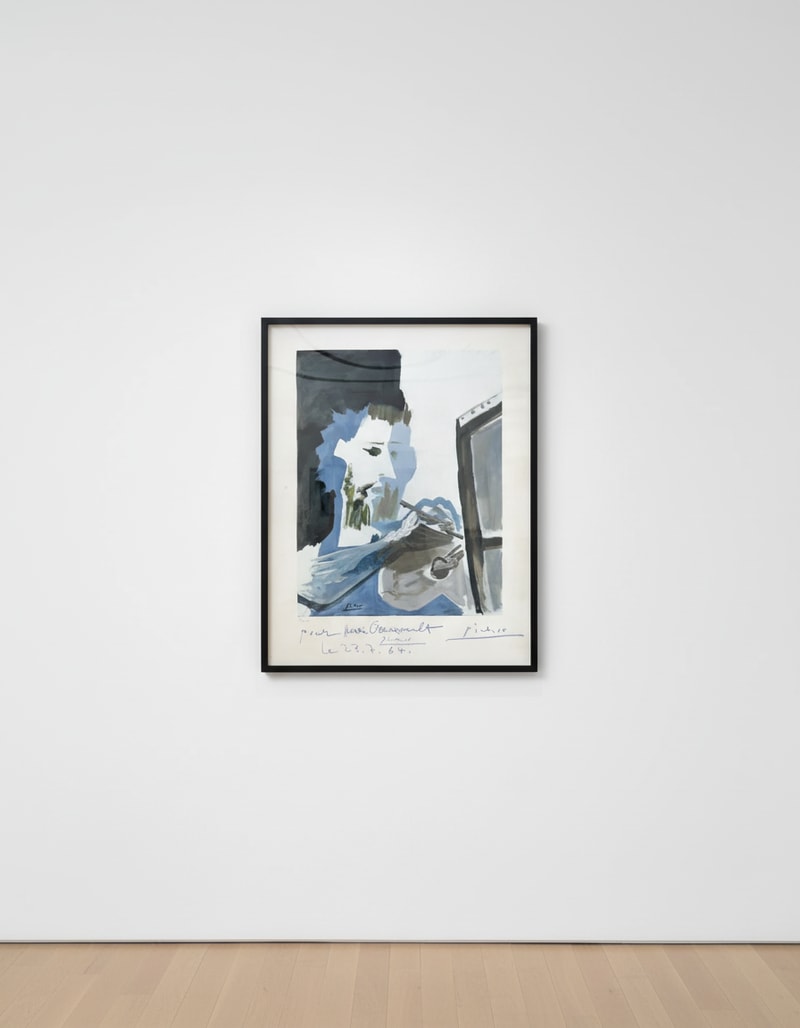
Le Peintre from 1963 exemplifies the sophisticated production values that distinguish Picasso's collotype editions. Executed as a collotype with pochoir in colors on Arches-cadastre paper bearing the distinctive watermark, this work demonstrates the careful material considerations that characterized Picasso's printed projects. The pochoir technique—hand-applied color through cut stencils—adds dimensionality and chromatic intensity that purely mechanical processes cannot achieve, creating a hybrid work that bridges industrial reproduction and artisanal craftsmanship.
The Arches-cadastre paper specification indicates premium French papermaking traditions, with the watermark serving as authentication of the substrate's quality and origin. This attention to material permanence reflects Picasso's understanding that works on paper require archival foundations to survive across generations. The combination of collotype base imagery with pochoir color application creates visual effects of remarkable depth, with colors appearing to float within the composition rather than sitting flatly on the surface.
The 1963 date places this work within Picasso's extraordinarily productive later period, when the artist—then in his early eighties—maintained creative output that would constitute a lifetime achievement for lesser figures. His continued engagement with printmaking processes during these years produced some of his most inventive graphic works, as he pushed each medium toward new expressive possibilities.
Le Peintre addresses one of Picasso's most enduring subjects: the artist at work. Throughout his career spanning from his 1881 birth in Málaga to his death in 1973, Picasso returned repeatedly to images of painters, their studios, and the act of creation itself. This reflexive examination of artistic practice connects to his foundational role in co-founding Cubism, a movement that fundamentally questioned how representation functions and what painting can reveal about perception and reality.
The painter theme carries particular resonance within Picasso's late work, functioning as both autobiography and meditation on creativity's nature. These images often feature simplified, almost archetypal figures engaged in the transformative act of making marks—a subject Picasso addressed with increasing frequency as he contemplated his own legacy and the meaning of a life devoted to visual invention.
Picasso's market demonstrates remarkable consistency across economic cycles, with major auction houses including Christie's, Sotheby's, Phillips, and Bonhams regularly achieving strong results for works spanning all media and periods. The collotype editions offer collectors entry into Picasso ownership at accessible price points while maintaining the authentication standards and material quality that ensure long-term value retention. As the Art Basel & UBS reports confirm continued market growth, works by blue-chip modern masters with established auction histories remain foundational holdings for serious collections.
Damien Hirst emerged as a defining figure of the Young British Artists movement in the late 1980s, building a body of work across painting, sculpture, and printmaking united by a sustained conceptual interest in mortality, science, medicine, and belief systems. His prints and editions extend the visual language developed across his sculptural and painted work — repetition, colour systems, and the tension between clinical precision and organic subject matter — into widely accessible reproducible form.
Hirst's work is held in the permanent collections of major museums worldwide, and his 2008 "Beautiful Inside My Head Forever" single-artist auction at Sotheby's, which bypassed the traditional gallery system entirely, remains one of the most widely discussed events in the recent history of the contemporary art market.
1 work available
Five Facts About Pablo Picasso Collotype
Le Tricorne (1920), Picasso's costume and set designs for Diaghilev's Ballets Russes production, was published as a portfolio of thirty-two collotypes, thirty-one with hand-applied pochoir colour.
Impressions from Le Tricorne are held in museum collections including the Museum of Modern Art, New York.
Toros y Toreros (1961), Picasso's collaboration with bullfighter Luis Miguel Dominguín, was published by Cercle d'Art, Paris, using photolithographic and collotype reproduction of his bullfighting drawings.
Diurnes (1962), a portfolio combining Picasso's paper cut-out photomontages with André Villers's photographs, was printed in collotype in an edition of 1,000.
Collotype, a photomechanical printing process developed in the mid-19th century, was prized for reproducing fine photographic tonal gradation, which Picasso used for these illustrated portfolio projects.
Market Data
See real auction history, estimate ranges and price benchmarks for individual Collotype prints, sourced from Christie's, Sotheby's and other major auction houses.
Frequently Asked Questions
Pablo Picasso Collotype prints for sale are available at Guy Hepner Gallery, 177 Tenth Avenue, New York. We offer authenticated editions with full provenance documentation sourced from the secondary market and directly from publishers.
Pablo Picasso Collotype works — 1 available — are typically produced as limited editions, individually signed and numbered by the artist. Contact Guy Hepner Gallery for edition details on specific works.
Pricing for Pablo Picasso Collotype prints varies by edition size, date, and condition. Contact Guy Hepner Gallery for current market pricing and availability.
More Pablo Picasso Series
View all Pablo Picasso works →