Ceramics
20 works

Pablo Picasso's aquatint works represent one of the most technically sophisticated categories within his extensive print oeuvre, demonstrating the artist's mastery of tonal complexity and atmospheric depth.
Picasso's auction dominance remains unparalleled in modern art history, creating cascading value recognition across his complete body of work and positioning aquatints as accessible entry points into one of art history's most consequential legacies.
Born in Málaga in 1881 and working until his death in 1973, Picasso approached aquatint not as a reproductive technique but as an autonomous creative medium capable of effects impossible in other formats. Unlike etching's linear precision or lithography's drawn qualities, aquatint permitted Picasso to achieve painterly gradations of tone, creating works that bridge the intimacy of printmaking with the atmospheric depth of his paintings.
The Zervos catalogue raisonné, spanning thirty-three volumes, documents the extraordinary breadth of Picasso's production. Within this monumental output, his aquatints occupy a distinctive position—works that demanded technical collaboration with master printers while maintaining the spontaneous energy characteristic of his creative process. The resin-ground technique allowed Picasso to work in broad tonal masses, building compositions through layered acid bites that produced his signature chiaroscuro effects.
Picasso's engagement with aquatint intensified during periods of sustained graphic experimentation, particularly during the 1930s when working with the Vollard Suite and again in the late 1960s with the monumental Series 347. These campaigns produced some of the most technically accomplished prints of the twentieth century, works that continue to define standards for the medium.
Aquatint achieves its distinctive tonal qualities through a fundamentally different approach than line-based intaglio techniques. By dusting a copper plate with powdered resin and heating it to create an acid-resistant ground, the printmaker creates a granular surface that holds ink in proportion to acid exposure time. Picasso exploited this variable to extraordinary effect, building compositions through successive bitings that produced gradations from luminous highlights to velvety blacks.
The works available through Guy Hepner demonstrate Picasso's range within the medium. Portrait of Vollard II (1937), catalogued as Bloch 231, exemplifies his psychological penetration through tonal modeling, capturing the legendary dealer in atmospheric depth. Tête de Femme III: Portrait of Dora Maar (1939), printed in colors, reveals his innovative approach to chromatic aquatint, layering multiple plates to achieve painterly richness.
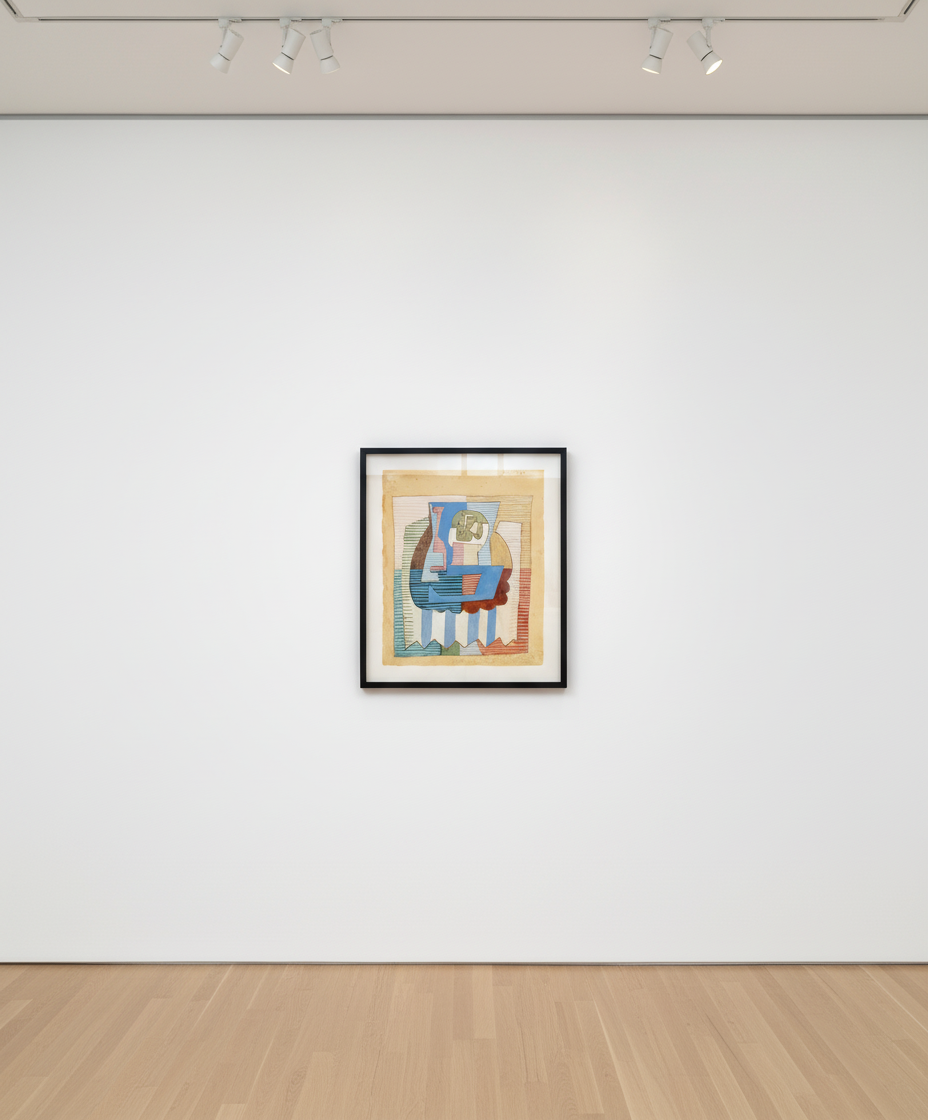
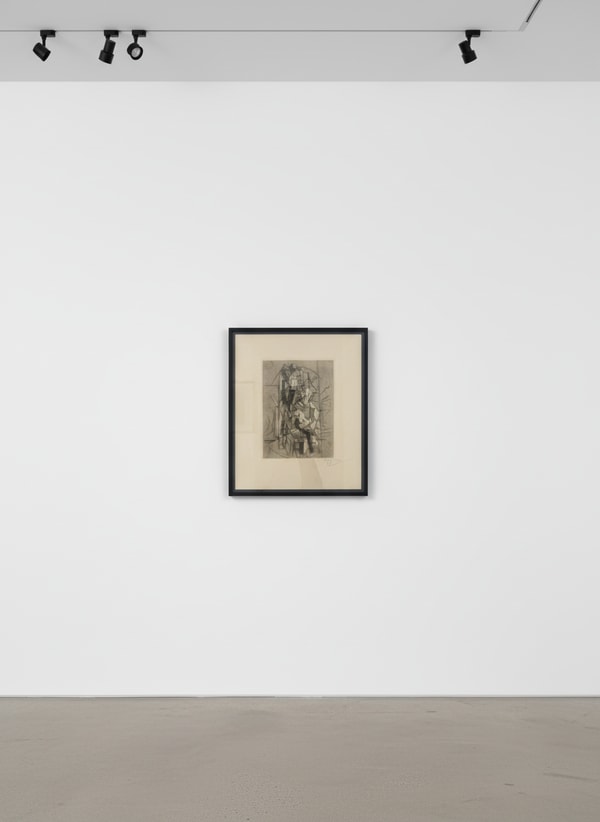
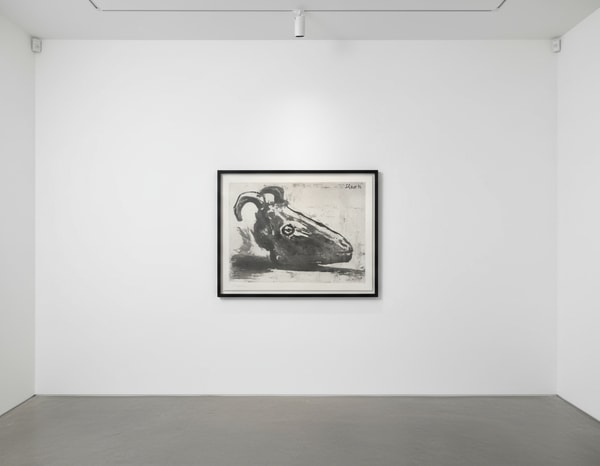
L'Homme à la Guitare (1915-29), combining aquatint with etching on precious Japon paper, demonstrates early experimentation with the medium during the Cubist period. The sugar-lift technique employed in Le Crane de Chevre (1952) shows Picasso's continued technical evolution, using dissolved sugar solutions to create brushwork-like marks within the aquatint ground.
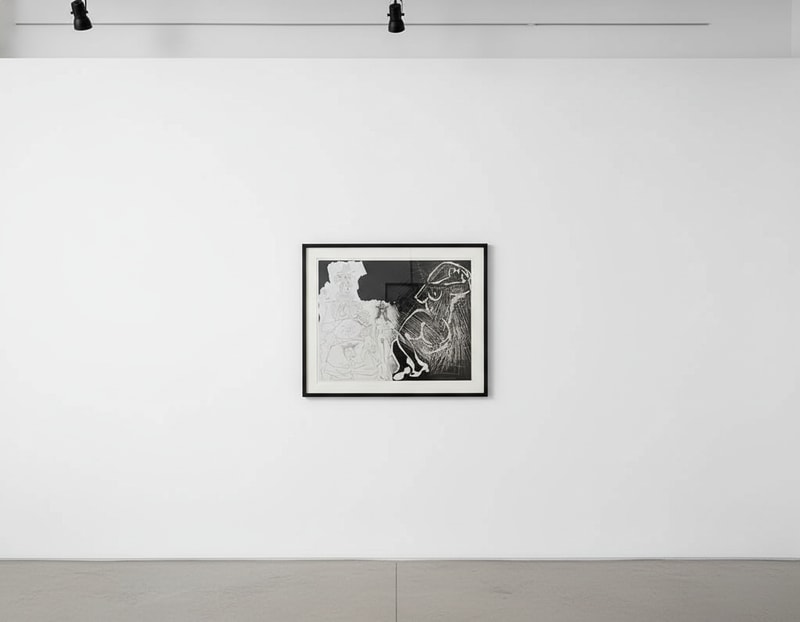
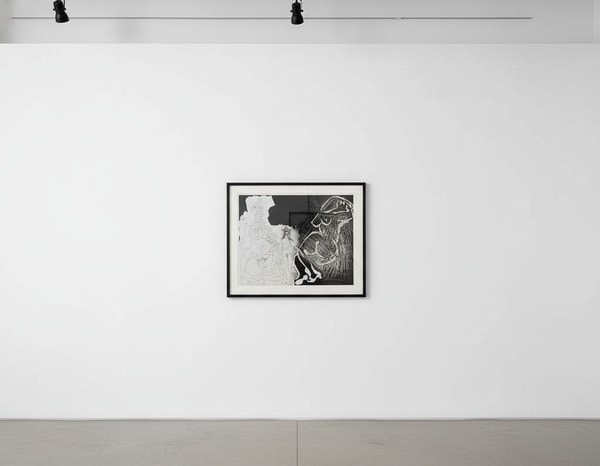
The Series 347 works represent Picasso's late-career printmaking apotheosis, produced between March and October 1968 in an extraordinary burst of creative energy. Caricature of General de Gaulle and Two Women (1968), an original hand-signed and numbered drypoint and aquatint with scraper on wove paper, demonstrates his political engagement and satirical wit during the tumultuous late 1960s.
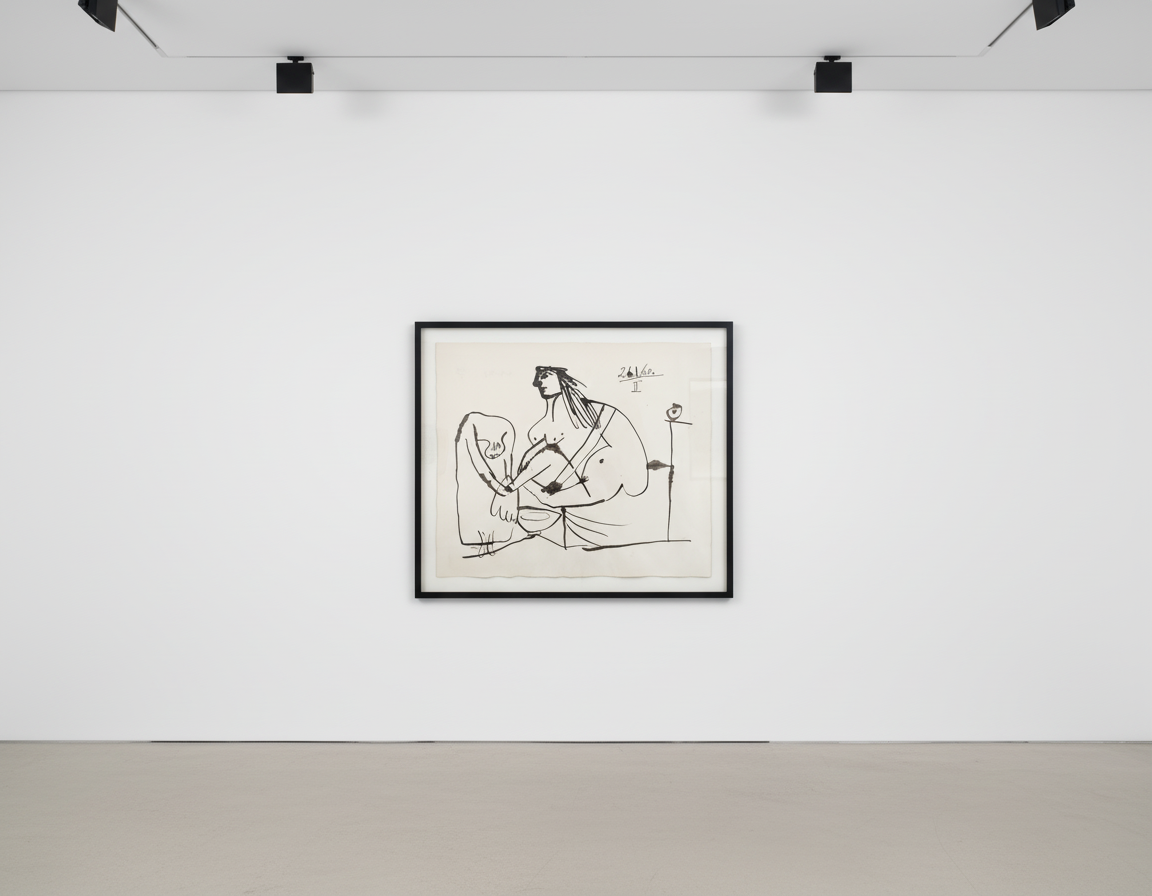
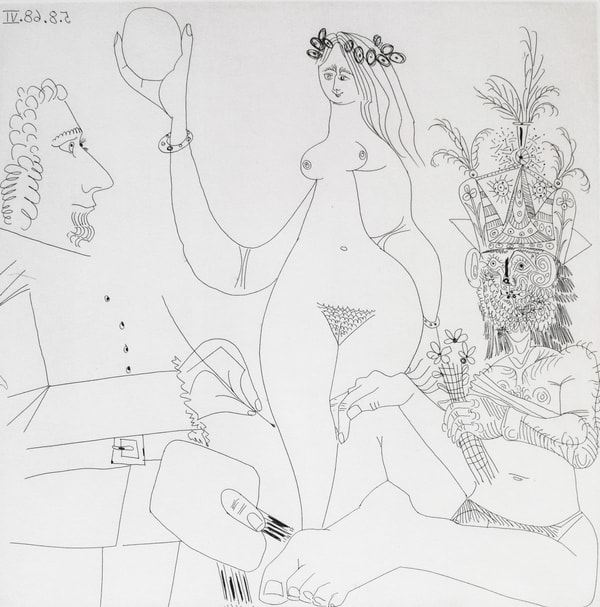
Jacqueline en mariée, de face (1961), combining aquatint with drypoint and engraving, captures his final muse in bridal imagery, blending technical complexity with emotional intimacy. Painter in front of one of Raphael's Three Graces, and a Woodsman in a Party Hat (1968/69), executed on BFK Rives wove paper, exemplifies the art-historical dialogue that animated his late work.
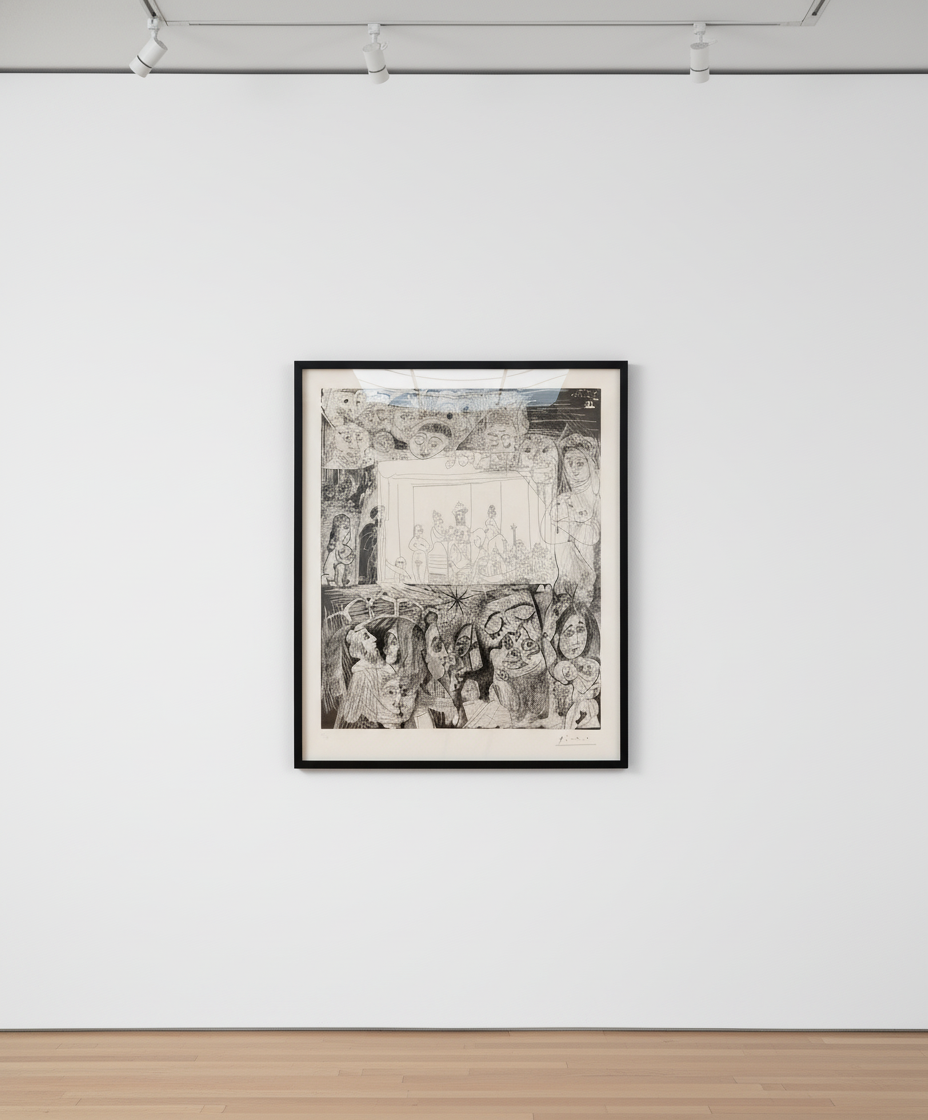
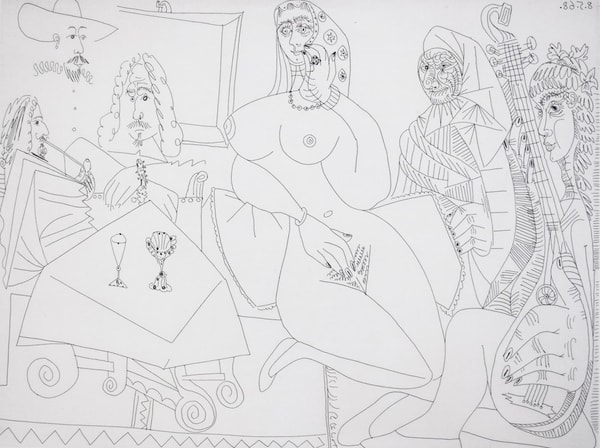
Discussing Music at Celestine's (1968), from Series 347, draws on literary sources that recur throughout Picasso's career, demonstrating the narrative complexity possible within his graphic production. Each work bears original hand signatures and numbered editions, ensuring authenticity and establishing clear provenance chains essential for secondary market confidence.
Pablo Picasso produced an extraordinarily large body of prints across his career, working continuously in etching, aquatint, linocut, lithography, and drawing alongside his painting and sculpture. His print output — spanning from his early Blue Period through his final decades of prolific late work — represents one of the most sustained and technically varied printmaking practices of any twentieth-century artist, and remains central to scholarly understanding of his overall development.
Picasso's paintings and prints are held in the permanent collections of virtually every major museum with a modern art department worldwide, and his position as one of the most significant and influential artists of the twentieth century continues to inform critical and market interest across every medium in which he worked, including his extensive print editions.
13 works available
Pablo Picasso
Caricature of General de Gaulle and Two Women, from: Series 347| Caricature du général de Gaulle et deux femmes
1968
Pablo Picasso
Discussing Music at Celestine’s, from: Series 347 | Collation en musique chez la Celestine
1968
Pablo Picasso
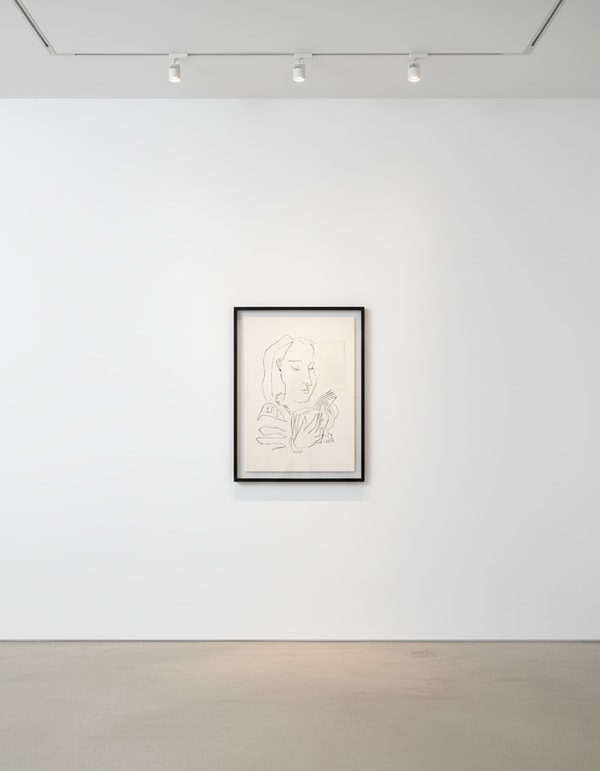
Femme Lisant
1948
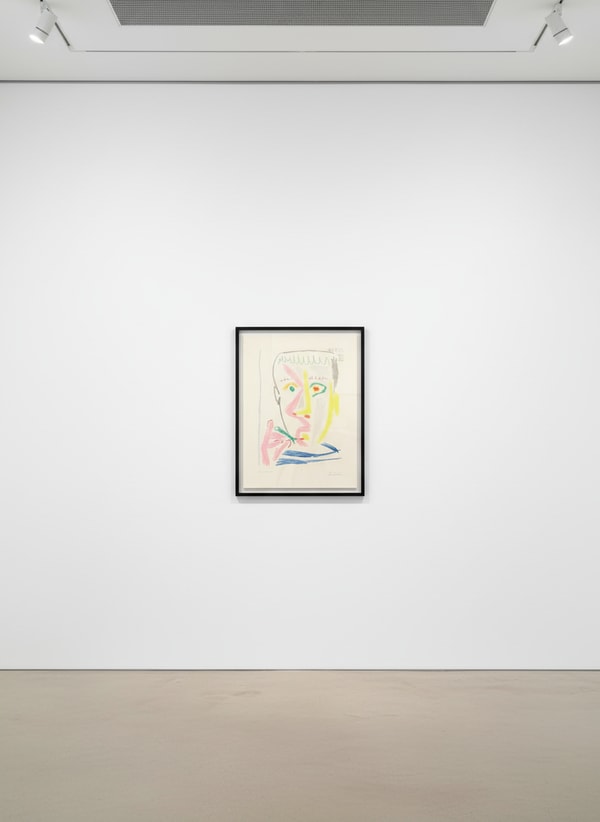
Pablo Picasso
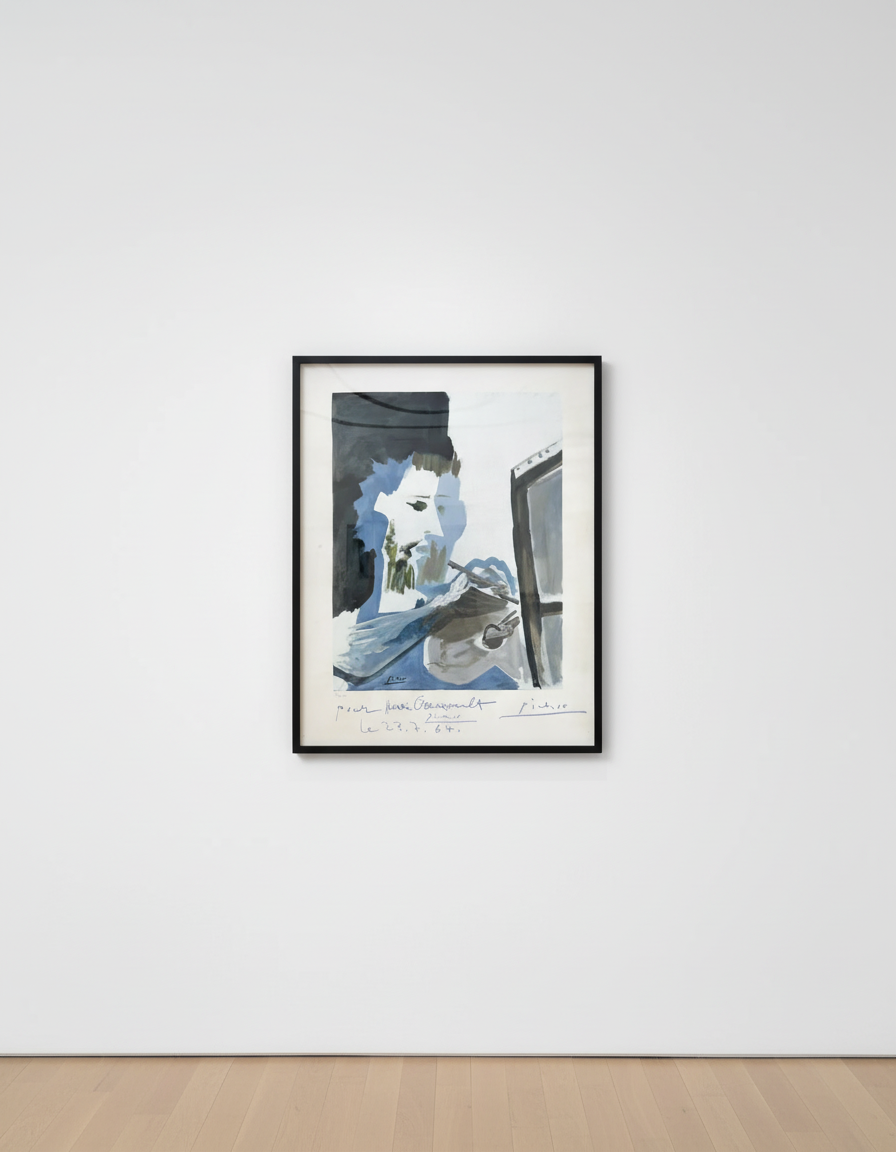
Fumer
1964
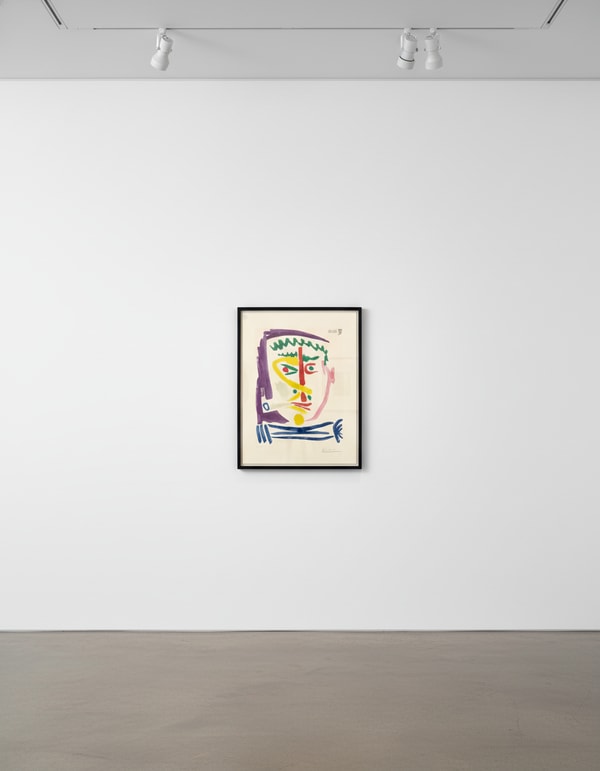
Pablo Picasso
Fumer III
1964
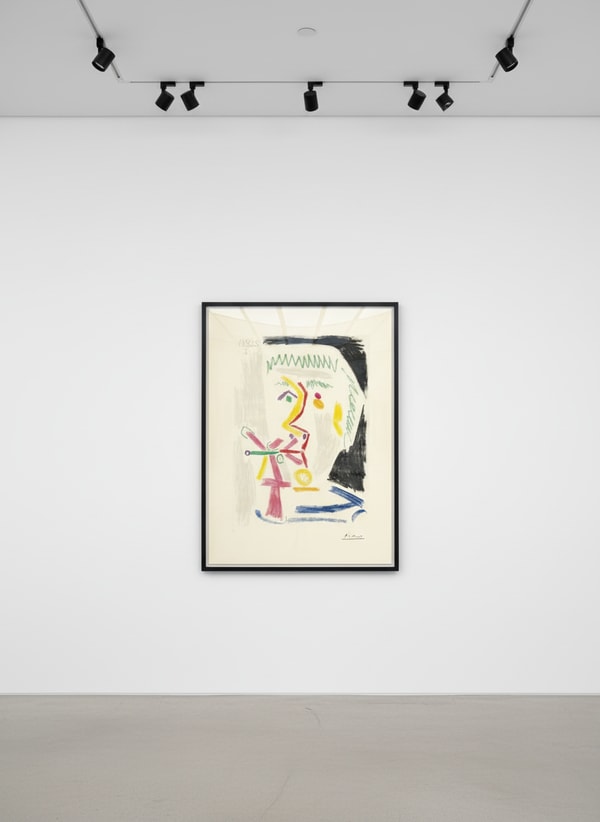
Pablo Picasso
Fumeur A La Cigarette Verte
1964
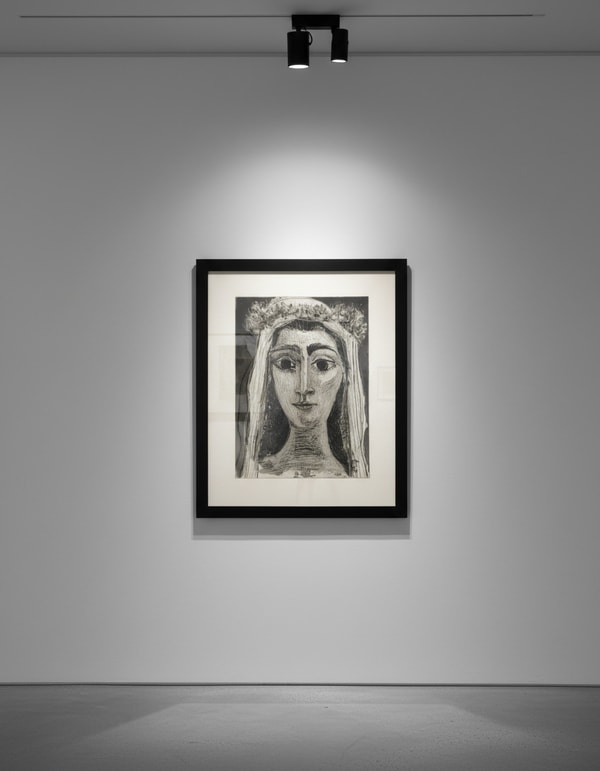
Pablo Picasso
Jacqueline en mariée, de face
1961
Pablo Picasso
L'Homme à la Guitare
1915-29
Pablo Picasso
Le Crane de Chevre
1952
Pablo Picasso
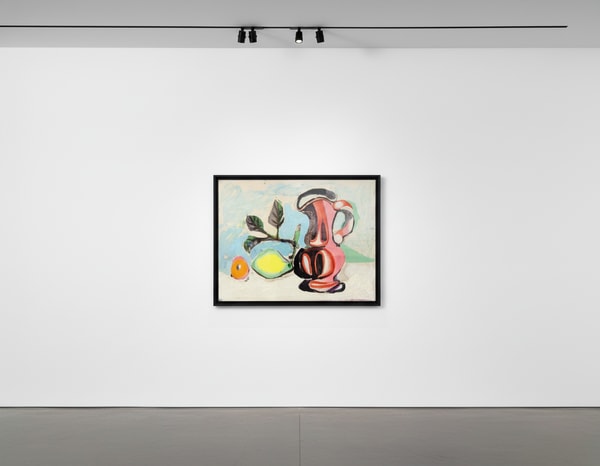
Nature Morte au Citron et au Pichet Rouge
1955
Pablo Picasso
Painter in front of one of Raphael's Three Graces, and a Woodsman in a Party Hat
1968/69
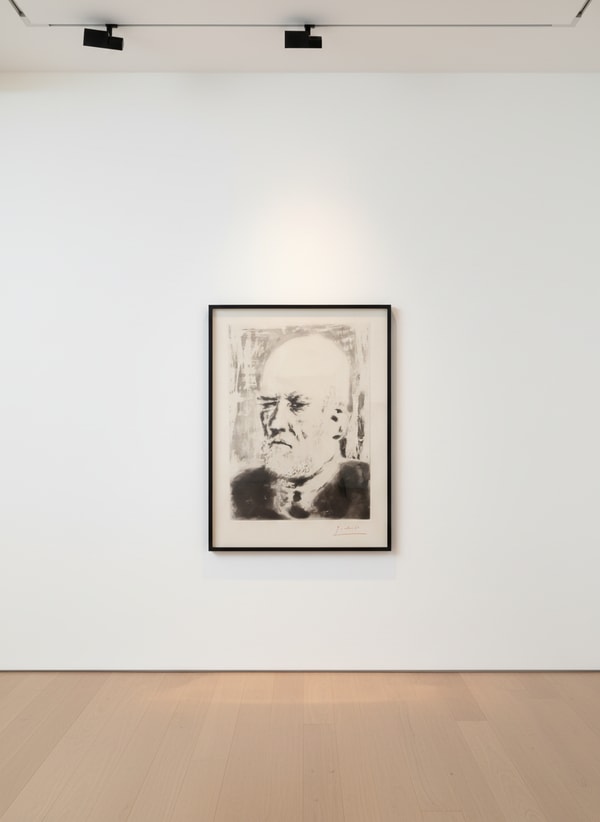
Pablo Picasso
Portrait of Vollard II
1937
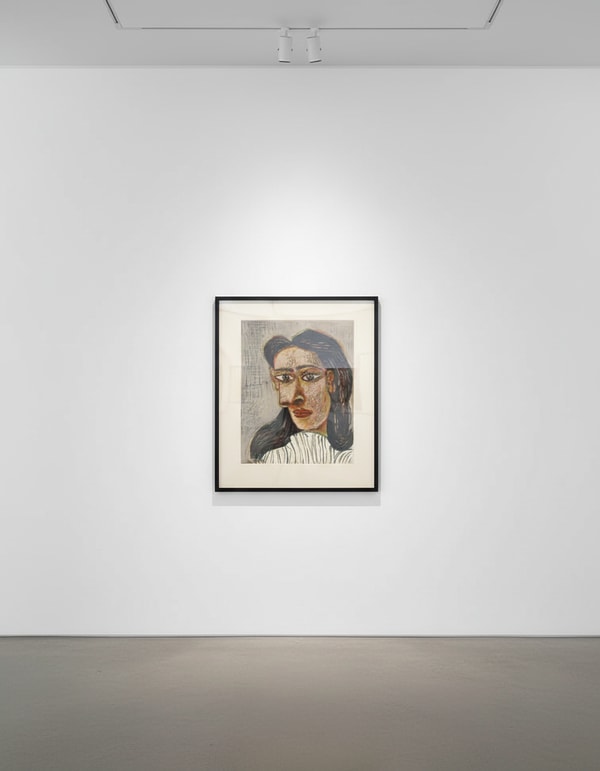
Pablo Picasso
Tête de Femme III: Portrait of Dora Maar
1939
Five Facts About Pablo Picasso Aquatint
In 1936, Picasso mastered the sugar-lift (lift-ground) aquatint process, painting his design directly onto the plate with a sugar solution before etching, as seen in Faune dévoilant une femme.
The Vollard Suite (1930-1937), Picasso's set of 100 prints commissioned by Ambroise Vollard, combines etching, drypoint and aquatint techniques and was editioned in 310 sets on Montval paper.
Picasso's '347 Suite' of 1968, comprising 347 etchings and aquatints made between 16 March and 5 October of that year, was produced at the Crommelynck workshop in Paris.
Suite 156, made between 1968 and 1972, was Picasso's final major series of prints and included aquatint alongside etching and drypoint.
Aquatint allowed Picasso to introduce tonal, painterly effects into his printmaking, a technique he continued developing through the late 1960s alongside traditional etched line work.
Market Data
See real auction history, estimate ranges and price benchmarks for individual Aquatint prints, sourced from Christie's, Sotheby's and other major auction houses.
Frequently Asked Questions
Pablo Picasso Aquatint prints for sale are available at Guy Hepner Gallery, 177 Tenth Avenue, New York. We offer authenticated editions with full provenance documentation sourced from the secondary market and directly from publishers.
Pablo Picasso Aquatint works — 13 available — are typically produced as limited editions, individually signed and numbered by the artist. Contact Guy Hepner Gallery for edition details on specific works.
Pricing for Pablo Picasso Aquatint prints varies by edition size, date, and condition. Contact Guy Hepner Gallery for current market pricing and availability.
More Pablo Picasso Series
View all Pablo Picasso works →