
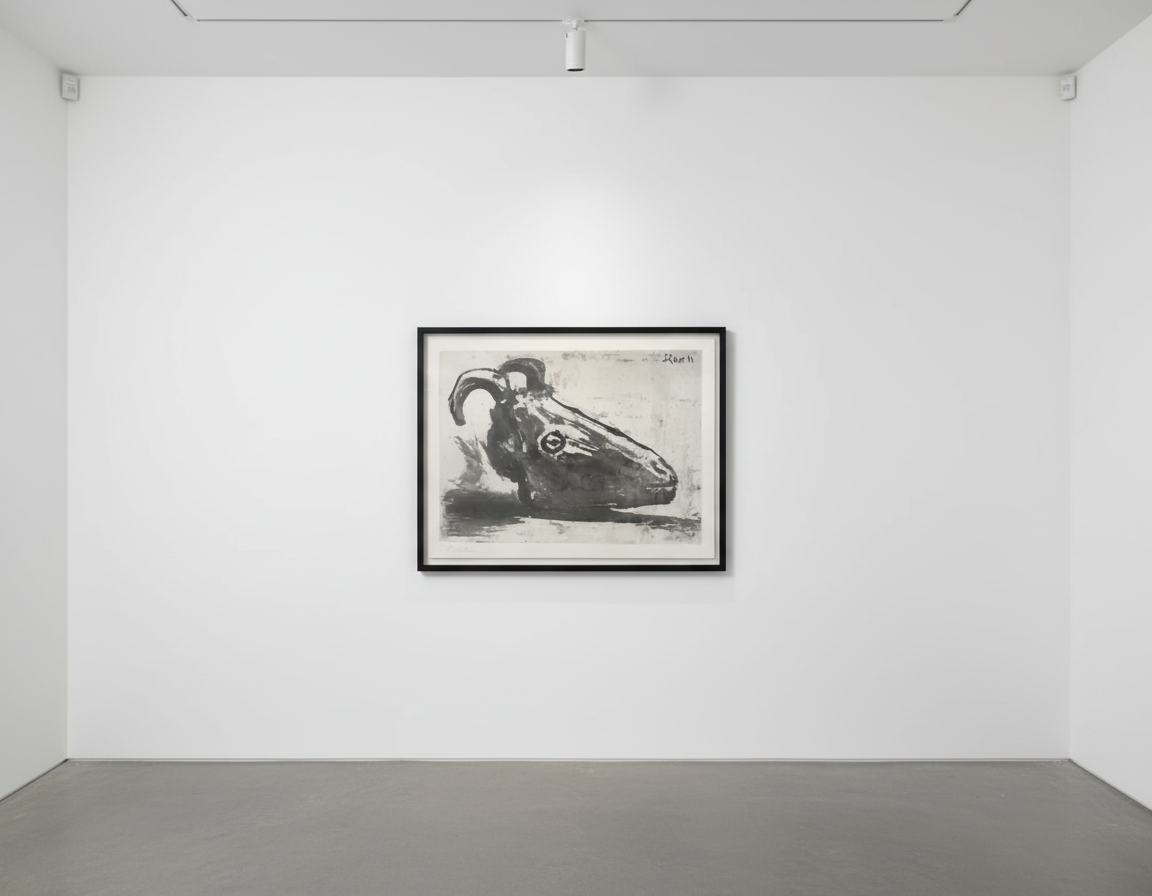
Aquatint
13 works

Pablo Picasso's drawings represent one of the most intellectually rigorous and historically significant categories within the modern art market, continuing to demonstrate remarkable resilience—offering collectors access to the artist's unmediated creative process at entry points substantially below his monumental paintings while retaining exceptional long-term value appreciation.
Picasso's permanent position at the apex of the global auction market has long been established, and seasoned collectors increasingly recognize that his drawings—spanning from adolescent academic studies to the urgent, libidinal sketches of his final decade—provide the most intimate documentation of Picasso's revolutionary visual thinking.
Born in Málaga in 1881 and working until his death in 1973, Picasso produced an estimated 12,000 drawings across a career that fundamentally restructured Western visual language. The Zervos catalogue raisonné, comprising thirty-three volumes, documents this staggering output, with works on paper appearing throughout as the essential laboratory for his painted masterpieces.
Picasso's drawings are not preparatory sketches in the conventional sense. They constitute autonomous aesthetic statements that reveal his intellectual process with unparalleled clarity. From the classical precision of his early charcoal studies through the spatial ruptures of Analytical Cubism, the neoclassical monumentality of the 1920s, and the expressionistic urgency of his late period, drawings functioned as the connective tissue binding Picasso's revolutionary stylistic transformations.
The works available through Guy Hepner span this complete trajectory, from Quatre têtes d'élégantes of circa 1899—executed when Picasso was barely eighteen—through L'Etreinte of 1968, created when the artist was eighty-seven yet drawing with undiminished vigor. This chronological breadth enables collectors to engage with specific periods according to aesthetic preference and investment strategy.
Picasso's drawings demonstrate virtuosic command across diverse media, each selected for specific expressive purposes. The Guy Hepner collection encompasses this technical range.
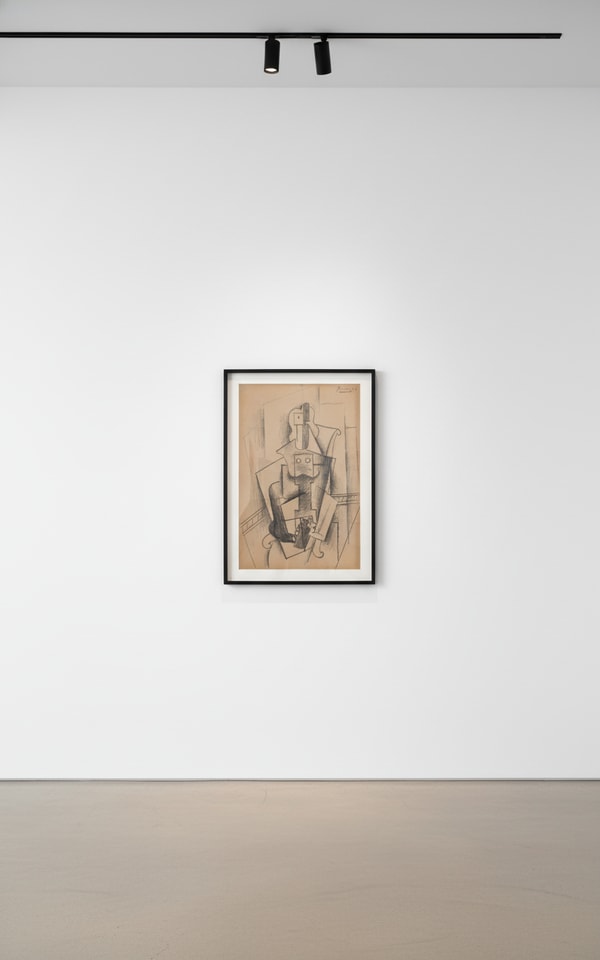
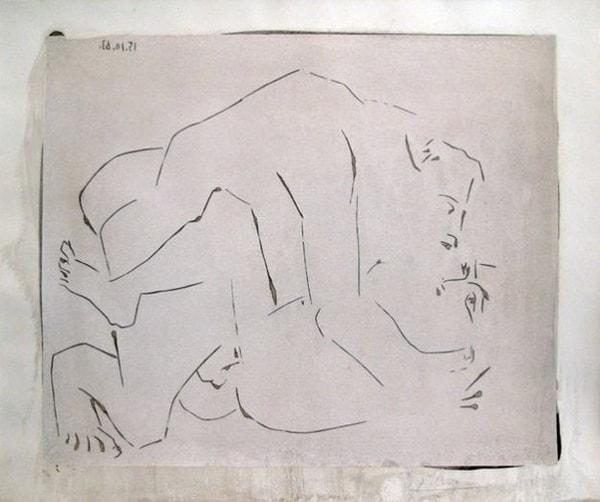
Pencil on Paper: Works including Femme tenant un journal (1915), L'Etreinte (1968), and Homme et Femme (1926) showcase Picasso's mastery of graphite's tonal possibilities. The 1915 work emerges from the height of Synthetic Cubism, while the 1926 piece reflects his engagement with Surrealist biomorphism. The 1968 drawing exemplifies his late-period synthesis—rapid yet assured, combining linear economy with psychological intensity.
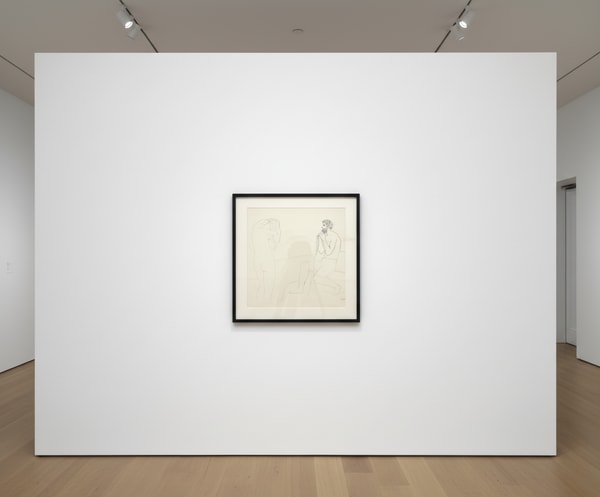
Pen and India Ink: Trois Personnages (1954) demonstrates Picasso's absolute confidence with the unforgiving ink medium, where every mark is permanent and revision impossible. This period coincides with his intensive ceramic production at Madoura pottery in Vallauris, and the drawing reflects similar spontaneity and material directness.
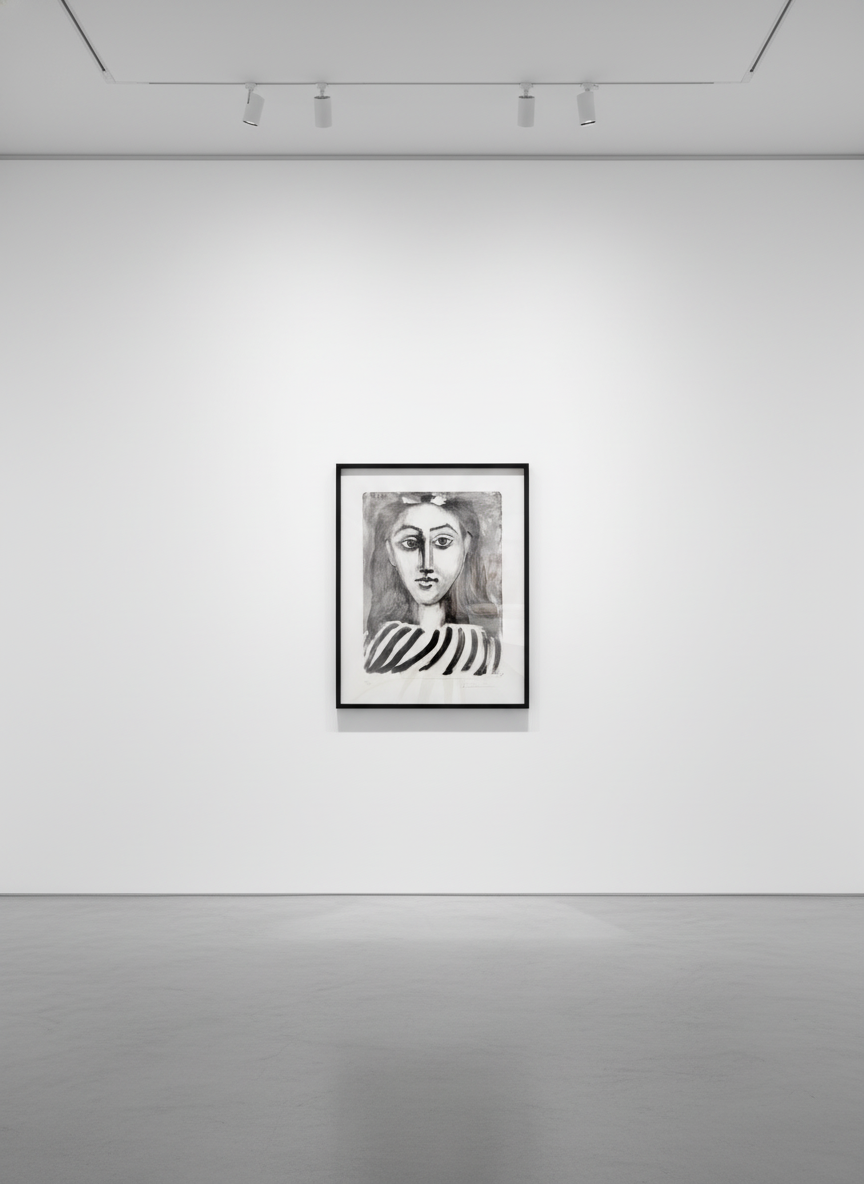
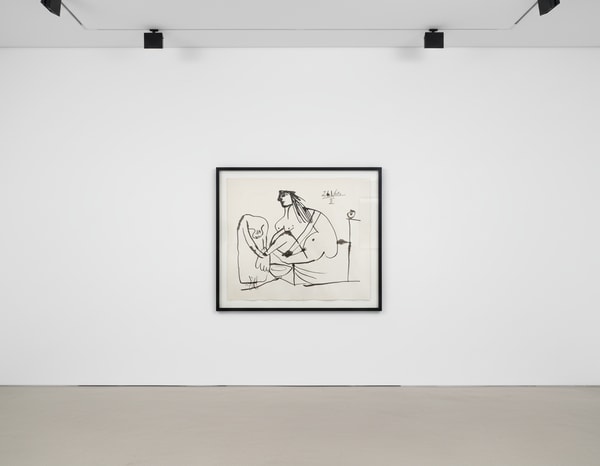
Brush and India Ink: The Foot Bath | Le Bain de pieds (1960), executed in brush and India ink on wove paper, represents Picasso's most painterly approach to drawing. The brush permits tonal variation impossible with pen, enabling atmospheric effects while maintaining graphic immediacy.
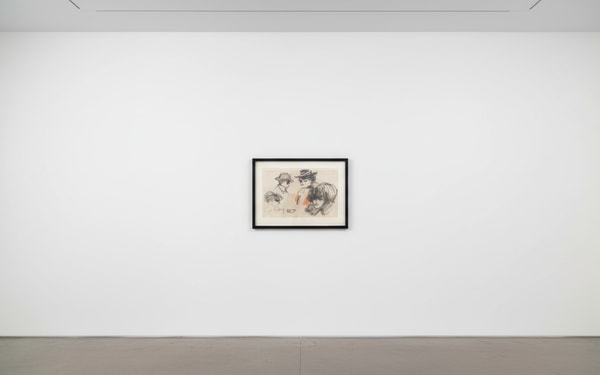
Charcoal and Sanguine: Quatre têtes d'élégantes employs the classical academic media Picasso mastered as a prodigy in Barcelona and Madrid. This early work demonstrates the traditional foundation from which his subsequent innovations departed—essential context for understanding his revolutionary trajectory.
Femme tenant un journal (1915) emerges from Picasso's Synthetic Cubist period, integrating newspaper references that connect to his pioneering collage experiments with Georges Braque. The subject—a woman reading—recurs throughout his oeuvre as meditation on representation and reality.
Quatre têtes d'élégantes (c. 1899) provides rare access to Picasso's formative period, executed when the artist was approximately eighteen. The classical technique and bourgeois subject matter reveal his academic training while hinting at the psychological penetration that would distinguish his mature portraiture.
L'Etreinte (1968) represents Picasso's late-period engagement with erotic themes, drawing with urgent intensity despite advanced age. These final-decade works have gained substantial critical and market appreciation as scholars recognize their synthesis of lifetime experience with undiminished creative vitality.
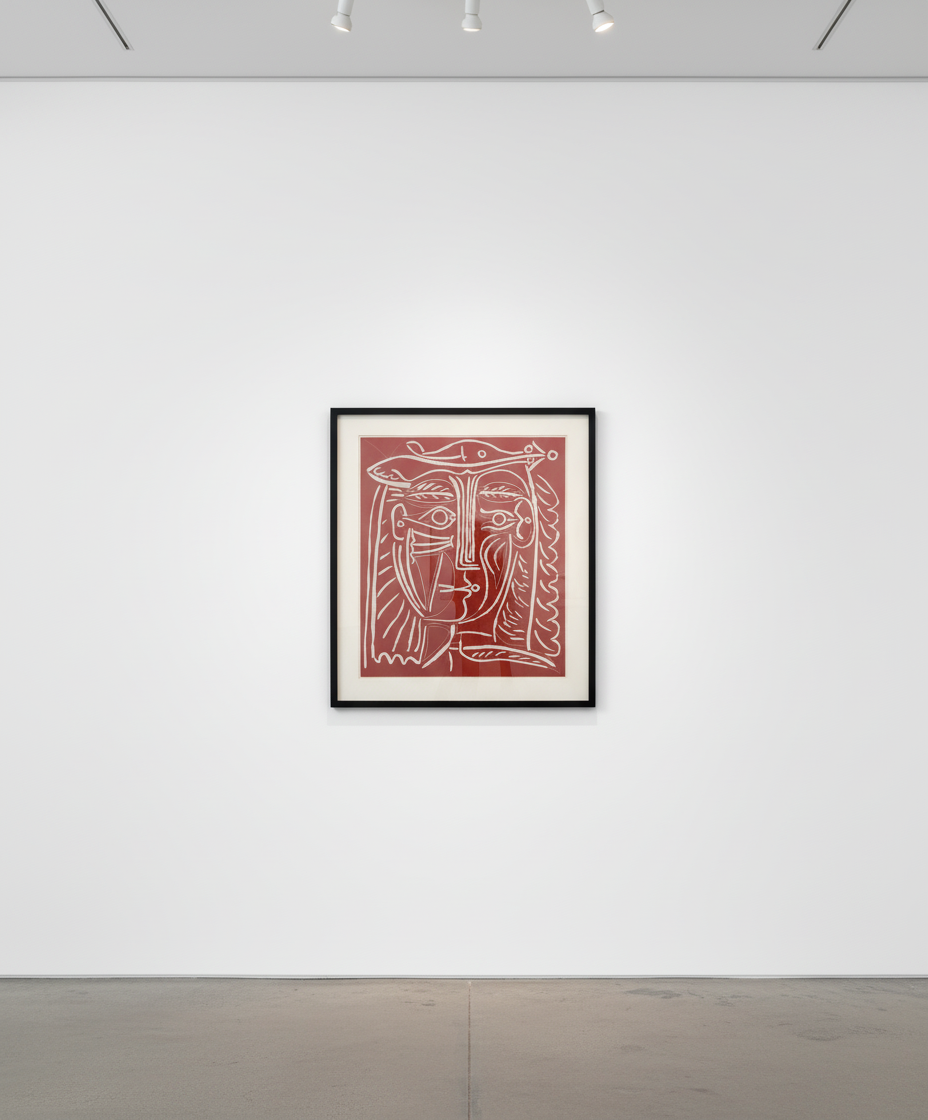
Pablo Picasso produced an extraordinarily large body of prints across his career, working continuously in etching, aquatint, linocut, lithography, and drawing alongside his painting and sculpture. His print output — spanning from his early Blue Period through his final decades of prolific late work — represents one of the most sustained and technically varied printmaking practices of any twentieth-century artist, and remains central to scholarly understanding of his overall development.
Picasso's paintings and prints are held in the permanent collections of virtually every major museum with a modern art department worldwide, and his position as one of the most significant and influential artists of the twentieth century continues to inform critical and market interest across every medium in which he worked, including his extensive print editions.
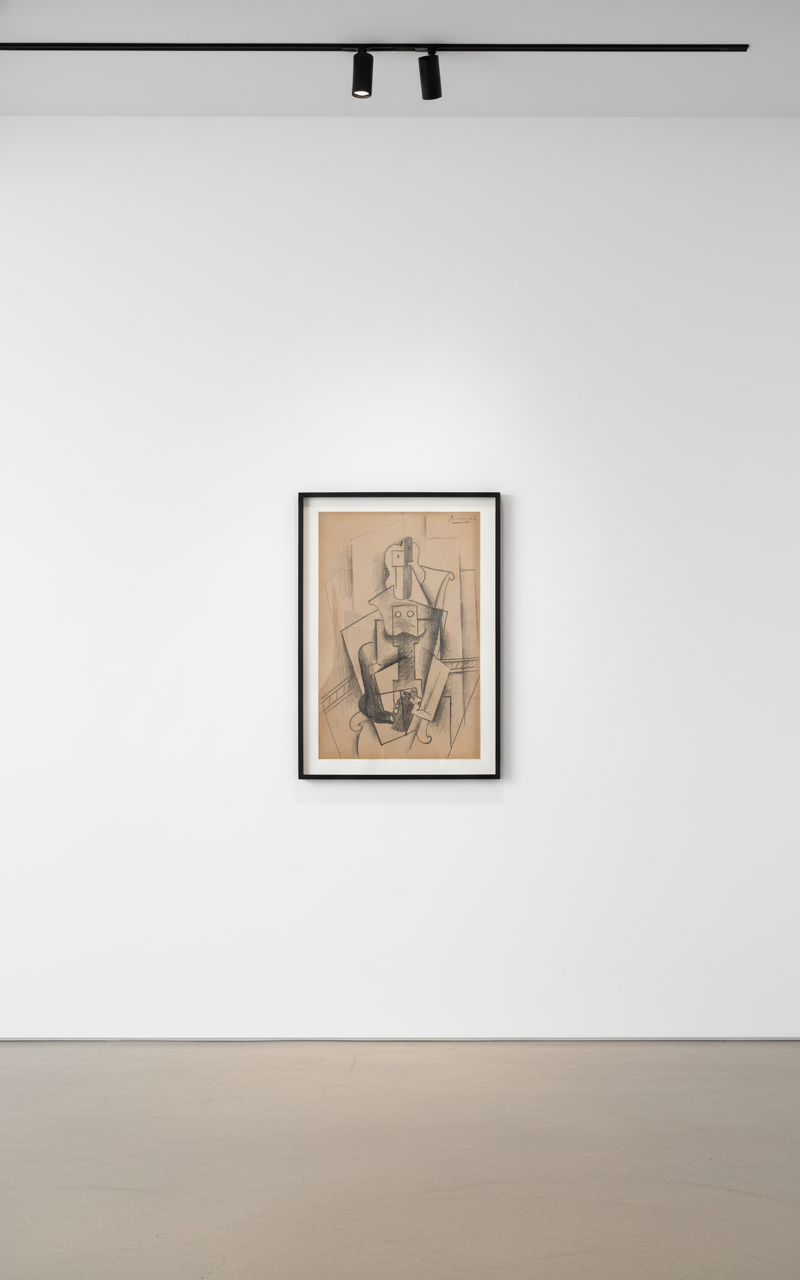
6 works available
Five Facts About Pablo Picasso Drawing
Picasso filled 175 sketchbooks with drawings between 1894 and 1967; the Museu Picasso in Barcelona holds nineteen of them.
He produced hundreds of preparatory sketches and studies over several months in 1907 while developing the composition of Les Demoiselles d'Avignon.
The Museo Reina Sofía in Madrid holds approximately 45 preparatory sketches and studies documenting the evolution of Guernica (1937).
The 2023 exhibition Picasso: 14 Sketchbooks (Je suis le cahier) toured internationally, including to the Royal Academy of Arts, London, and the Los Angeles County Museum of Art.
A 1924 sketchbook shows Picasso using precise, technical ink drawings with patterns of dots and lines to study the shapes of guitars and other objects.
Market Data
See real auction history, estimate ranges and price benchmarks for individual Drawing prints, sourced from Christie's, Sotheby's and other major auction houses.
Frequently Asked Questions
Pablo Picasso Drawing prints for sale are available at Guy Hepner Gallery, 177 Tenth Avenue, New York. We offer authenticated editions with full provenance documentation sourced from the secondary market and directly from publishers.
Pablo Picasso Drawing works — 6 available — are typically produced as limited editions, individually signed and numbered by the artist. Contact Guy Hepner Gallery for edition details on specific works.
Pricing for Pablo Picasso Drawing prints varies by edition size, date, and condition. Contact Guy Hepner Gallery for current market pricing and availability.
More Pablo Picasso Series
View all Pablo Picasso works →