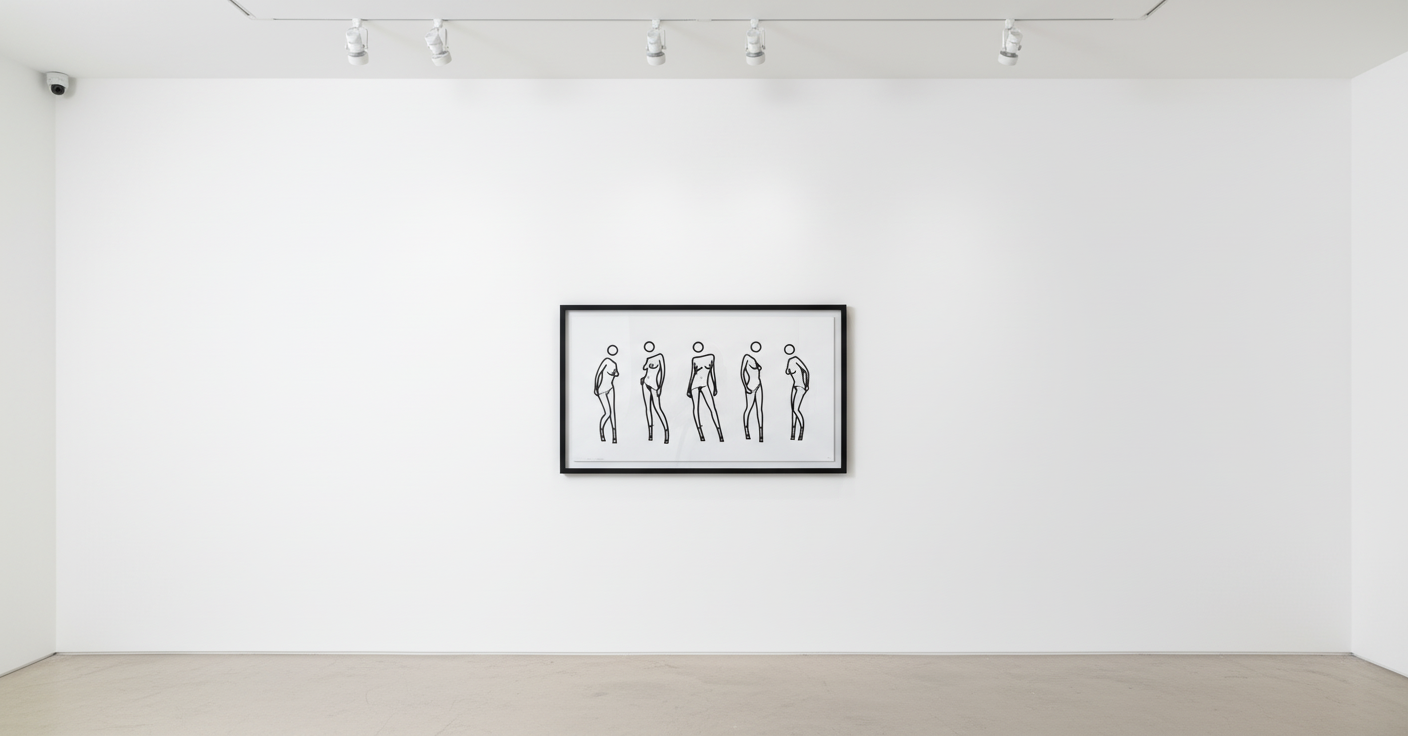
Bijou Gets Undressed

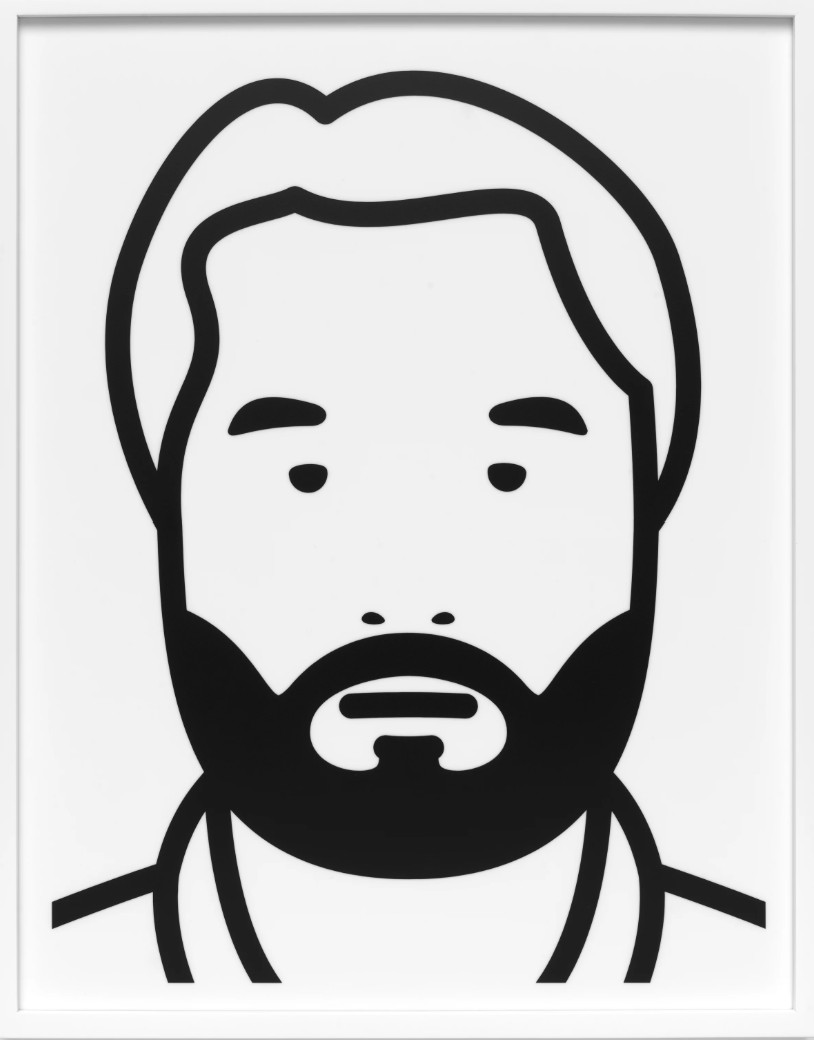
Julian Opie's artistic language is deceptively simple: a line, a contour, a block of color, a stripped-down representation of a figure in motion. Yet within this minimal vocabulary lies one of the most enduring and influential visual systems of contemporary art. Opie's practice sits at a rare intersection between two major 20th-century movements - Pop Art and Minimalism - absorbing their principles and extending them into a visual language that feels uniquely suited to the digital age. To understand Opie is to understand how forms evolve across eras: how the commercial visuals championed by Warhol and Lichtenstein merge with the precision sought by Kelly, Judd, and Martin. Opie's work compresses these histories, translating them into a universal language that now circulates across cities, technologies, cultures, and generations.
Pop Art fundamentally changed the way artists saw the world - and the way the world saw art. Its core assertion was radical: everyday imagery was worthy of fine art. Opie inherits and expands this principle with remarkable consistency. His subjects - walkers, commuters, dancers, and ordinary pedestrians - emerge directly from the urban landscape that surrounds us all. Where Warhol elevated soup cans and celebrity portraits, Opie elevates the anonymous figure, the person passing by on the Street, the crowd moving through a city square. This democratic approach to subject matter connects his practice to Pop Art's foundational impulse while pushing it into new conceptual territory.
The visual vocabulary Opie employs draws heavily from commercial signage, digital interfaces, and public wayfinding systems. His figures recall the universal pictograms found in airports, subway stations, and pedestrian crossings - symbols designed for instant recognition across linguistic and cultural boundaries. This appropriation of graphic design conventions mirrors Pop Art's absorption of advertising aesthetics, yet Opie strips away the commercial message entirely. What remains is pure form, pure movement, pure human presence rendered in bold, unapologetic color.
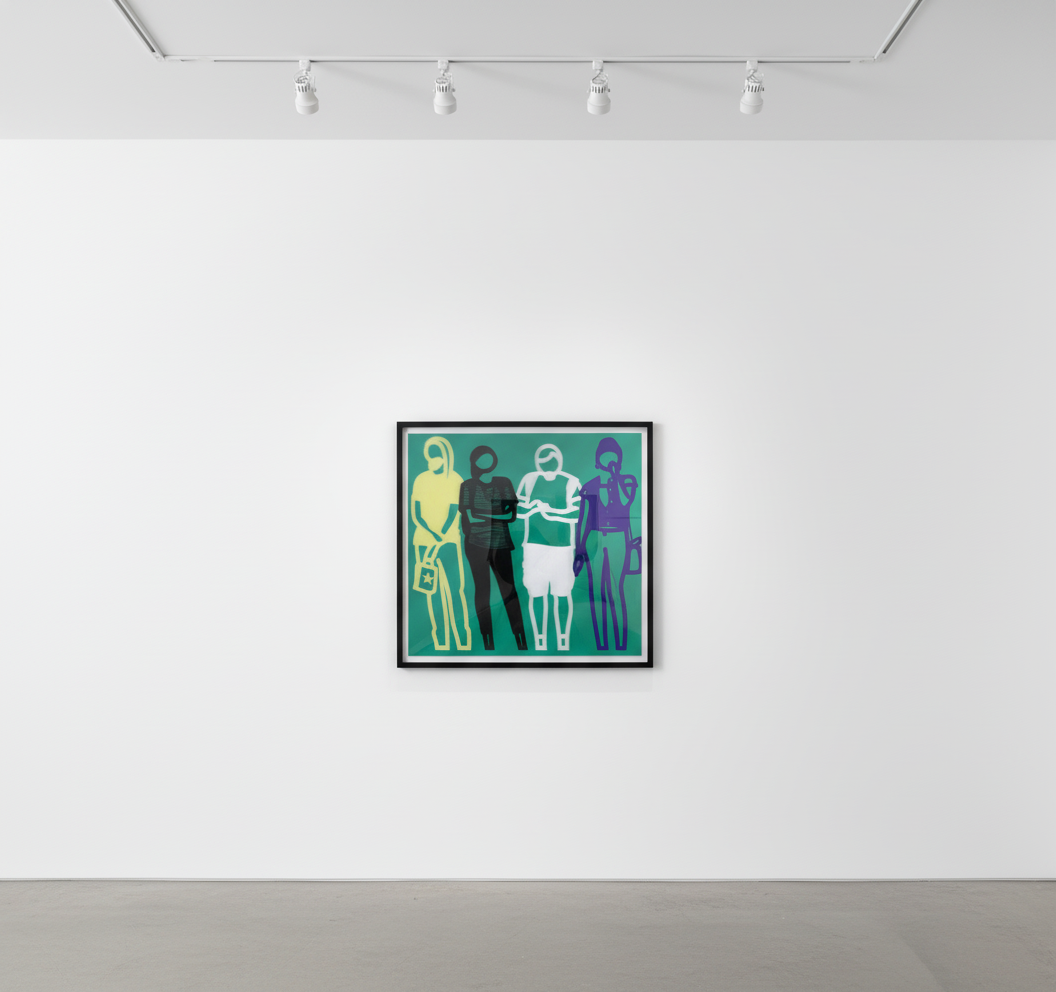
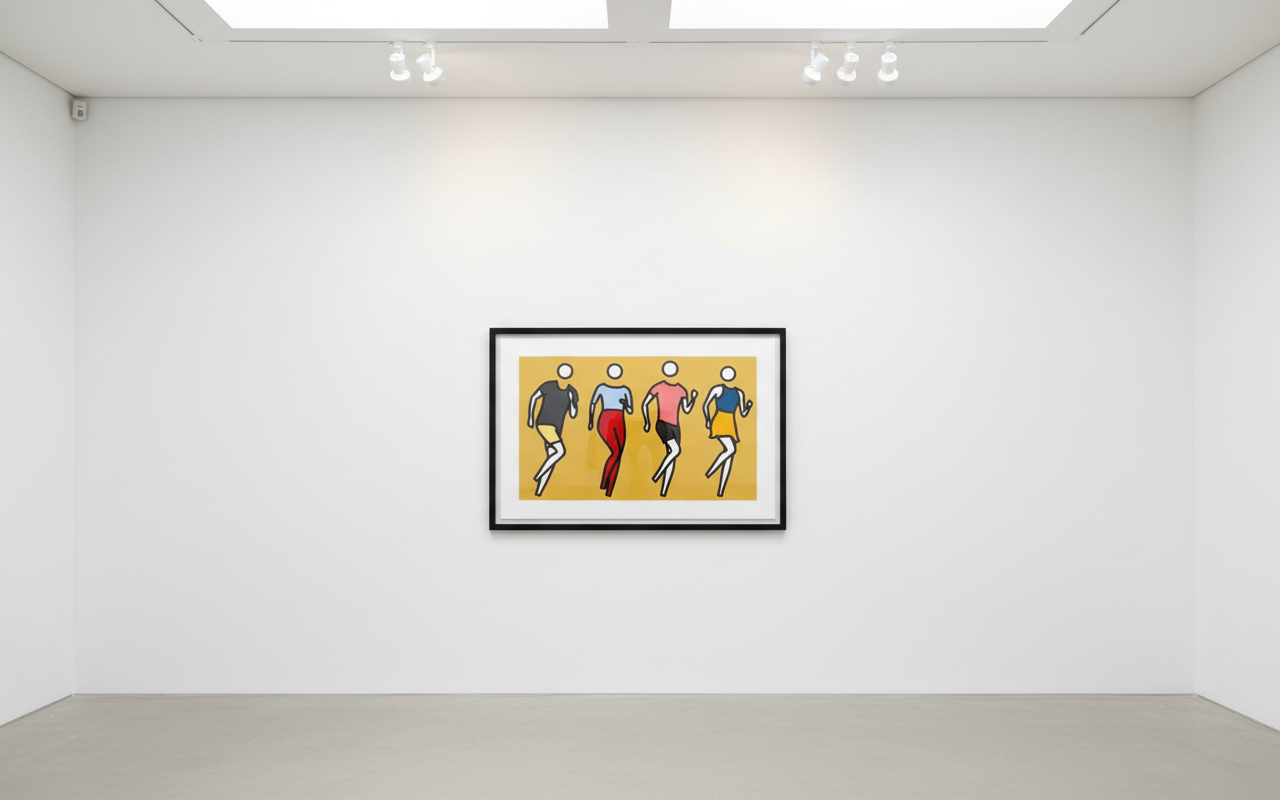
Yellow Black White Blue (Standing People) — Julian Opie. Available at Guy Hepner, New York.
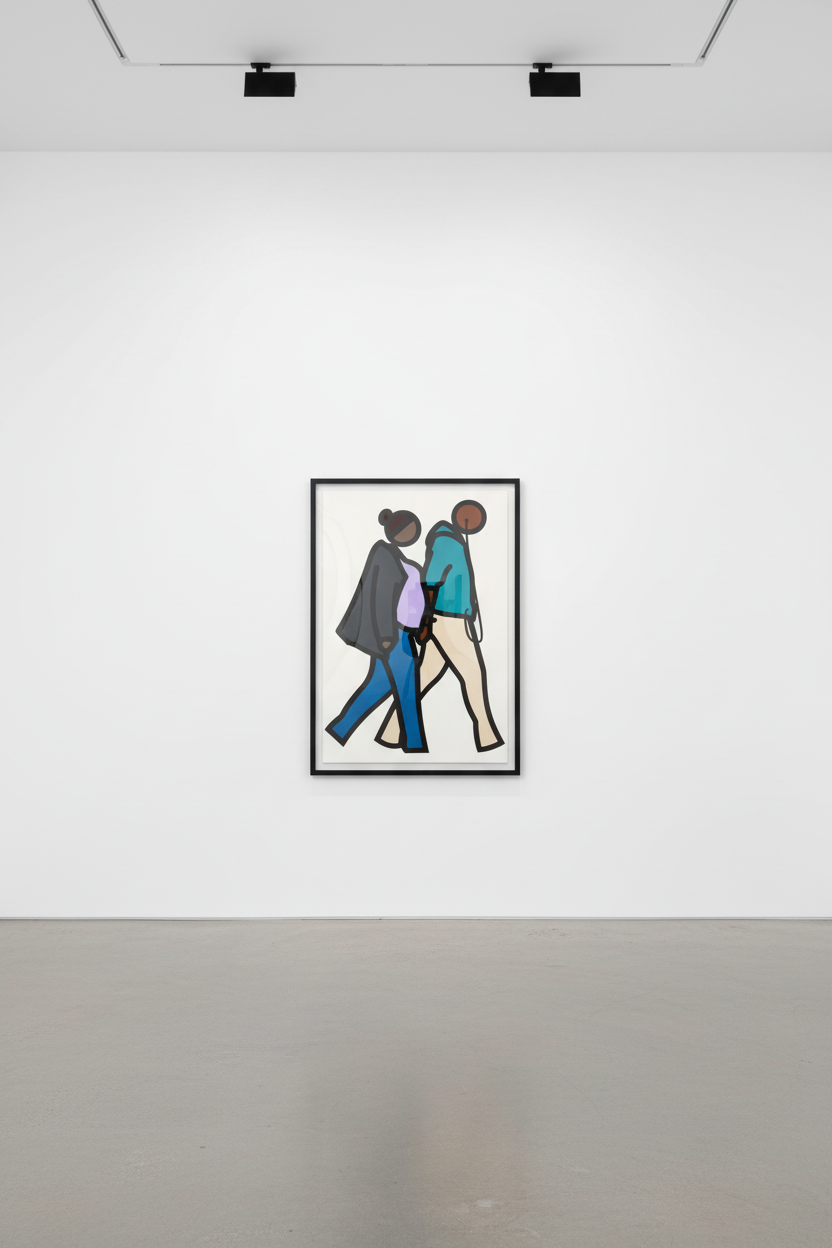
Works such as Standing People (Yellow, Green, White, Black) and Yellow Black White Blue (Standing People) demonstrate this synthesis perfectly. These compositions present figures as archetypal forms - reduced to essential contours yet immediately recognizable as specific individuals. The tension between anonymity and particularity gives Opie's work its distinctive psychological resonance, inviting viewers to project their own narratives onto these simplified human shapes.
While Pop Art provides Opie's subject matter and visual references, Minimalism supplies his methodology. The reductive impulse that defined artists like Donald Judd, Ellsworth Kelly, and Agnes Martin finds new expression in Opie's systematic elimination of detail. Every line in an Opie composition earns its place through necessity rather than ornamentation. Faces become arrangements of dots and curves. Bodies transform into flowing contours. Backgrounds flatten into pure chromatic fields. This process of reduction does not diminish meaning - it concentrates it.
The Minimalist influence extends beyond mere simplification into questions of seriality and variation. Opie frequently works in sequences, exploring how subtle shifts in color, posture, or composition can generate entirely different emotional registers from near-identical formal structures. This systematic approach echoes Minimalism's interest in permutation and repetition while maintaining the figurative accessibility that distinguishes Opie's practice from pure abstraction.
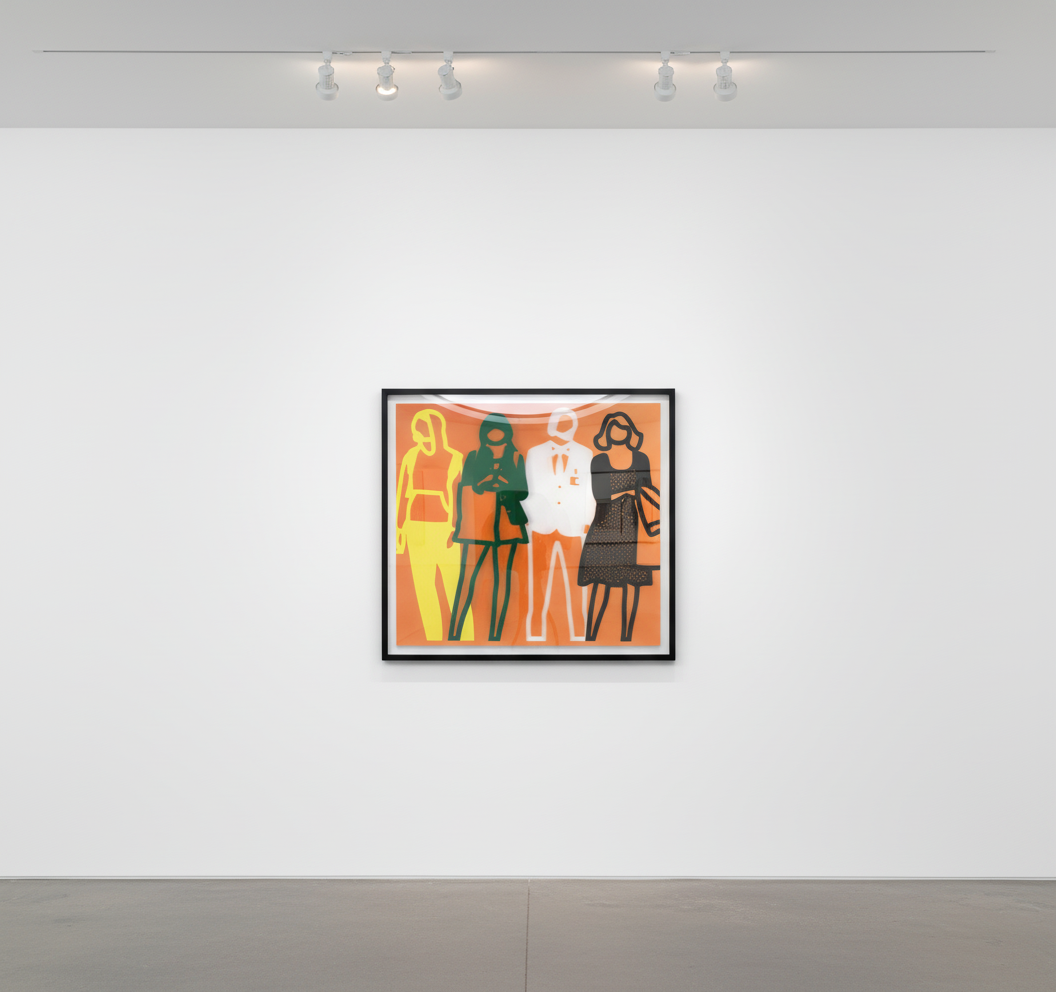
Standing People (Yellow , Green , White , Black) — Julian Opie. Available at Guy Hepner, New York.
Dance 1 and Dance 3 exemplify this methodology brilliantly. These animated works capture movement through the most economical means possible - yet they pulse with kinetic energy and human vitality. The dancing figures exist in perpetual motion, their simplified forms paradoxically more alive than photographic documentation could achieve. Opie proves that reduction amplifies rather than diminishes the essential qualities of human movement and expression.
The contemporary art market has increasingly recognized Opie's unique position bridging accessibility and conceptual rigor. According to the Art Basel and UBS Global Art Market Report, works that combine strong visual identity with art-historical grounding continue to attract sophisticated collectors seeking both aesthetic pleasure and intellectual substance. Opie's practice exemplifies this convergence. His pieces function equally well in museum retrospectives and private collections, in public installations and intimate domestic settings.
Auction results at Christie's and Sotheby's confirm sustained institutional and private interest in Opie's output across multiple decades. His works have achieved consistent results that reflect both critical recognition and genuine collector enthusiasm. The secondary market demonstrates particular strength for his figurative compositions - the Walking figures, standing people, and dancers that have become synonymous with his visual identity.
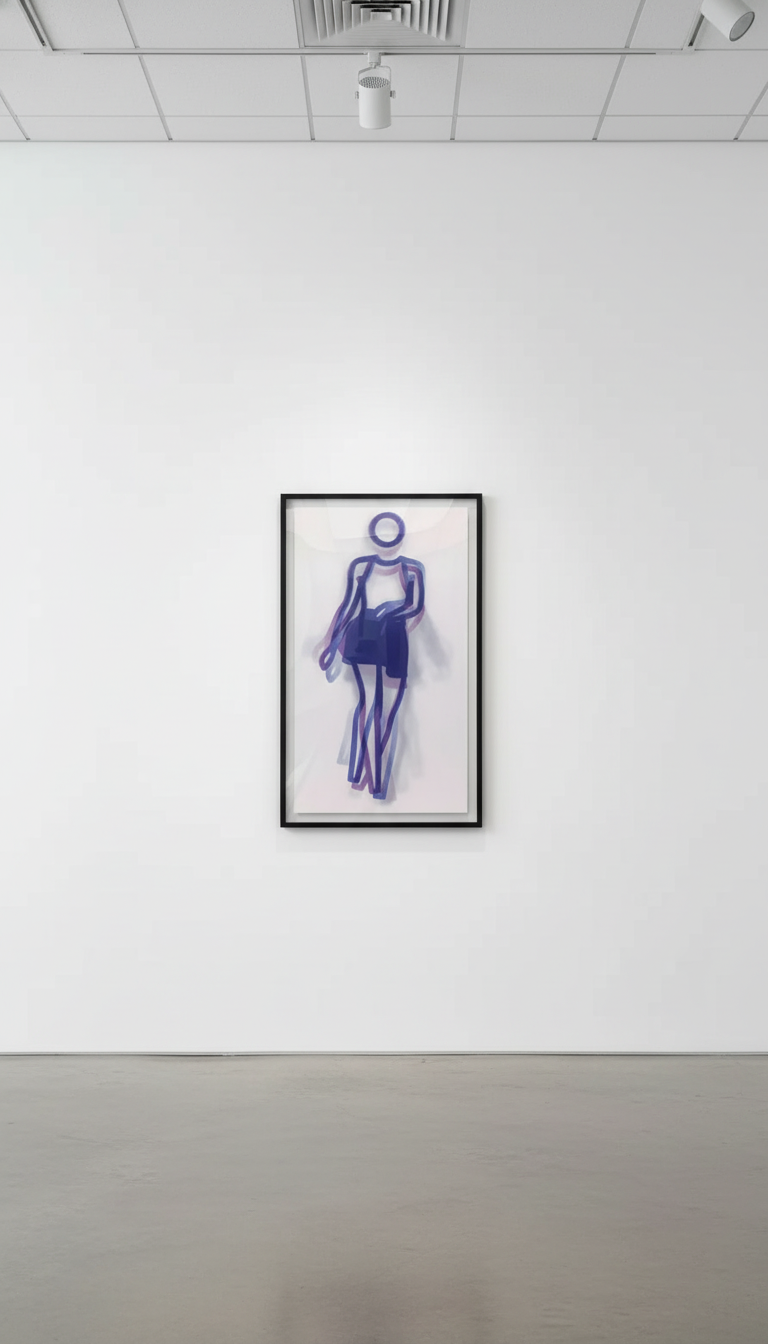
Dance 1 — Julian Opie. Available at Guy Hepner, New York.
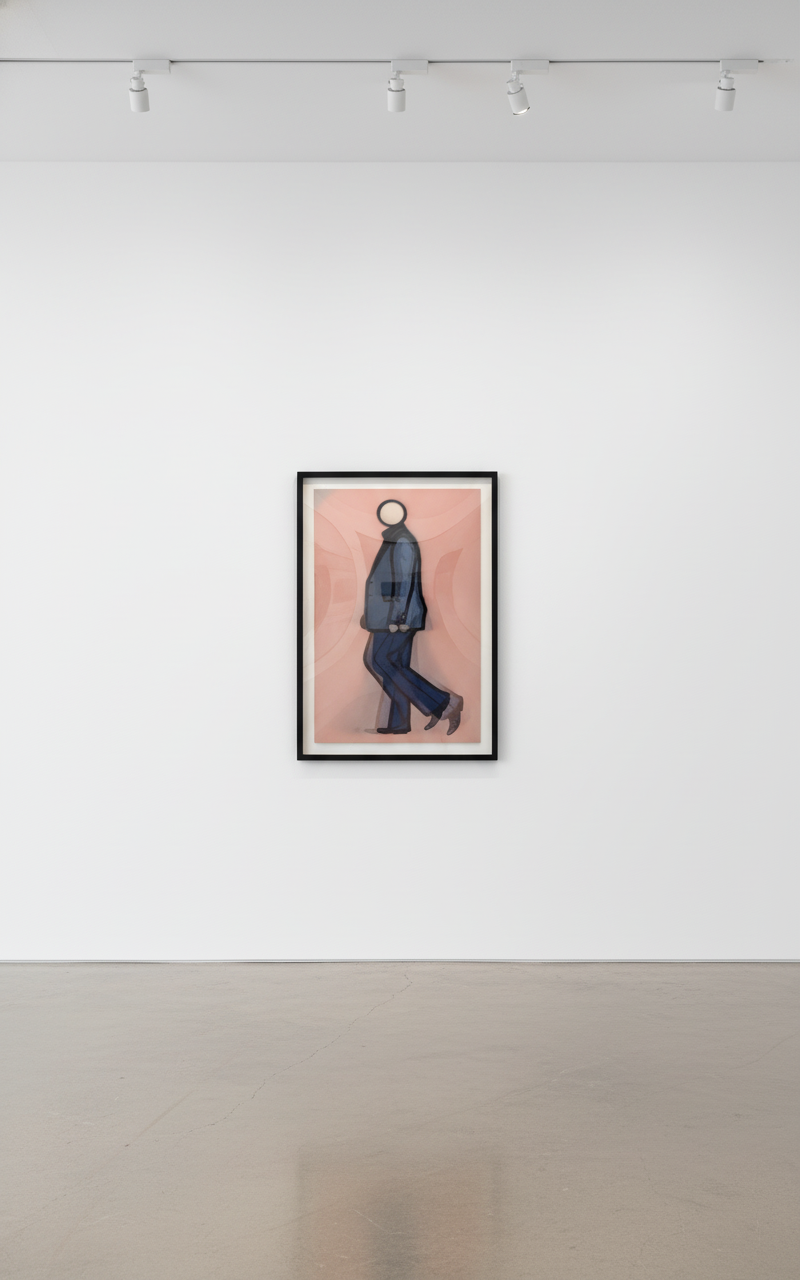
For collectors, Opie represents a rare opportunity: an artist whose work is immediately recognizable yet never simplistic, commercially successful yet critically respected, historically informed yet unmistakably contemporary. Rod Walking and similar ambulatory compositions capture this balance precisely. The walking figure becomes a meditation on modern existence - perpetual motion, urban anonymity, individual identity within collective experience. These are themes that resonate across cultural contexts, ensuring Opie's continued relevance as contemporary life grows ever more connected and visually saturated.
Guy Hepner is proud to offer exceptional works by Julian Opie, including significant examples from his celebrated figurative series. Our gallery provides collectors with access to carefully curated pieces that represent the artist's most accomplished achievements in bridging Pop Art and Minimalism. Whether you are building a focused collection of contemporary British art or seeking a singular statement piece, our team offers expert guidance throughout the acquisition process. Contact Guy Hepner to inquire about available Julian Opie works and discover why this artist continues to captivate collectors worldwide.
Explore Julian Opie prints for sale at Guy Hepner: Bijou Gets Undressed, Birds, Dance Synched, Everyone, Lenticular.
Related Series