Bijou Gets Undressed
6 works

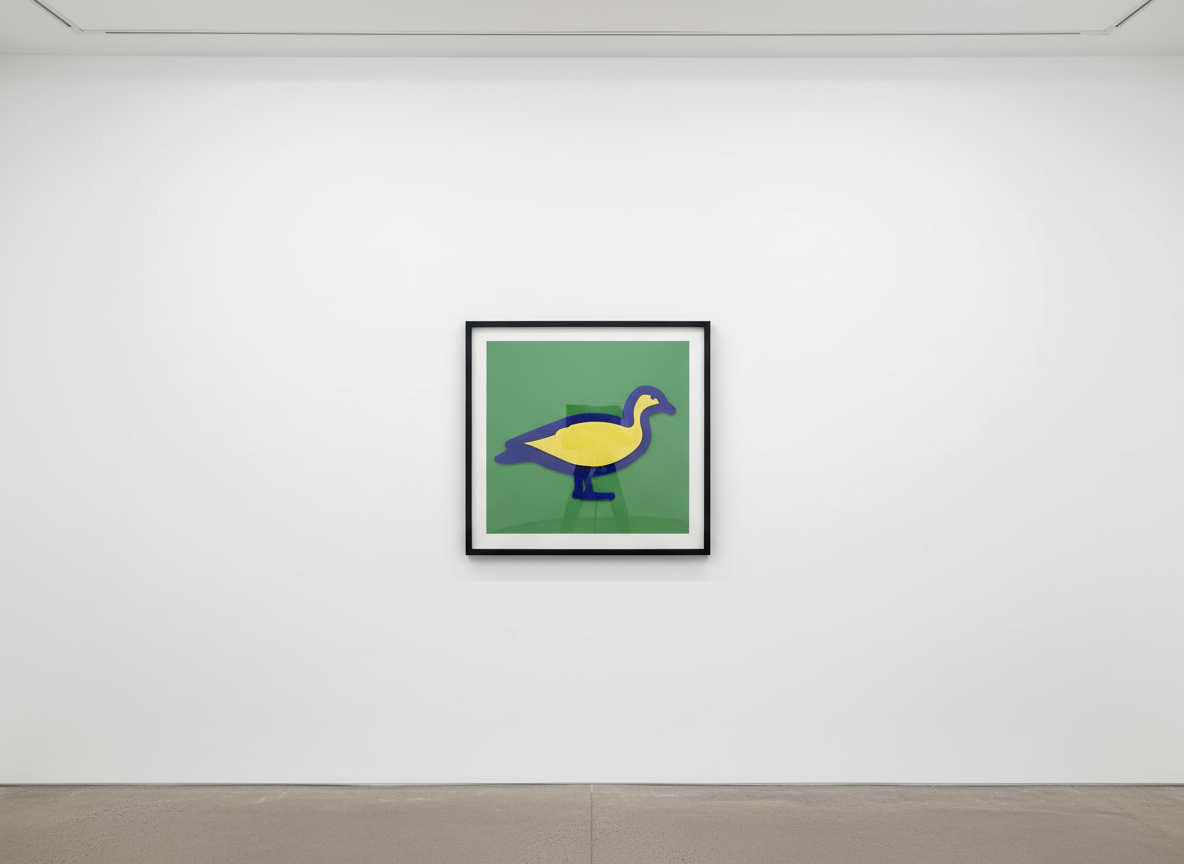
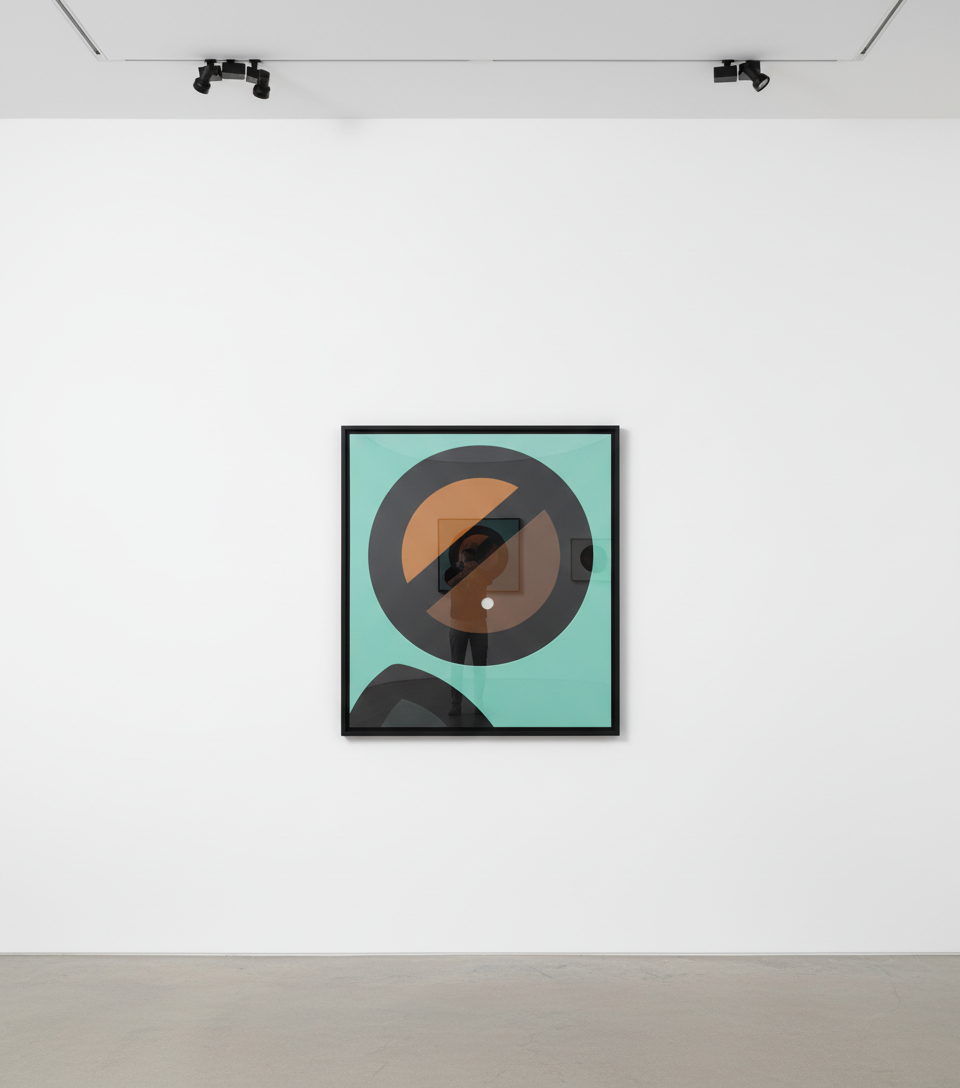
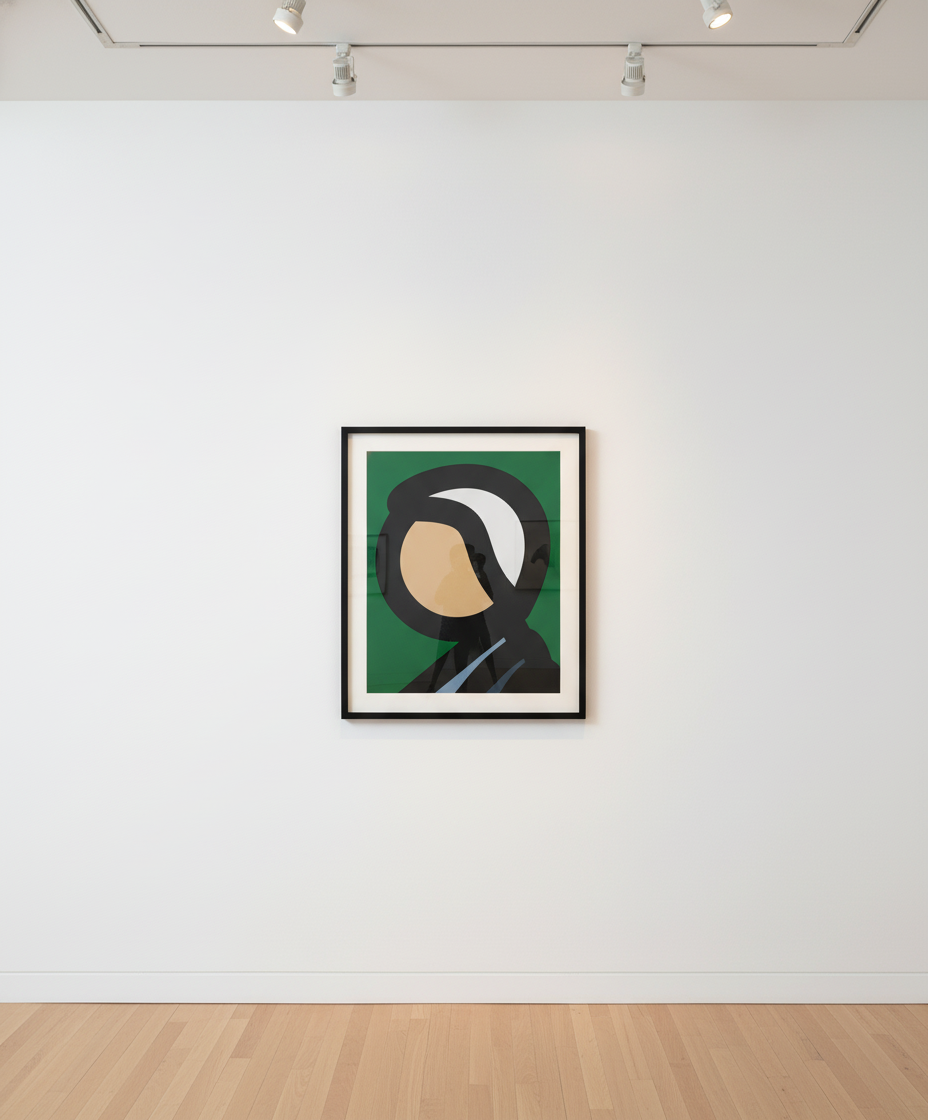
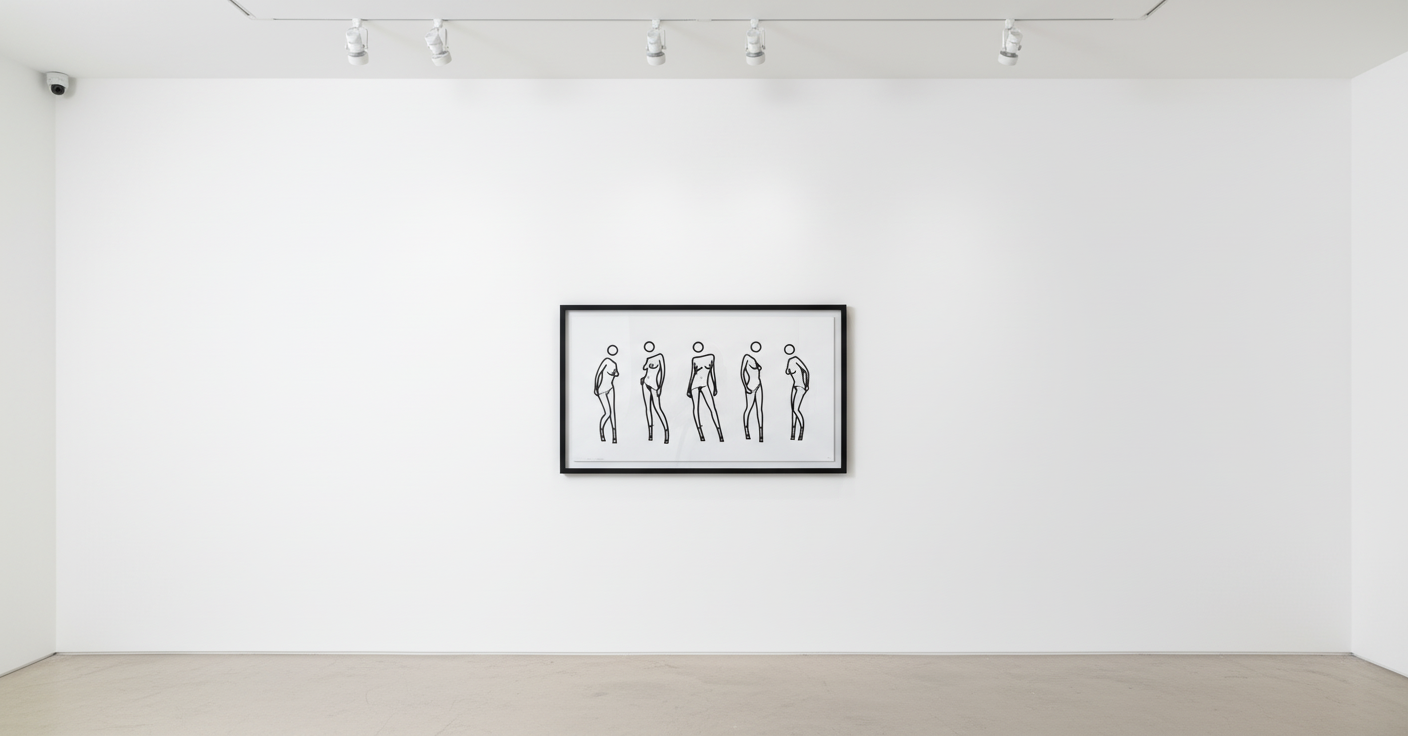
Julian Opie's Lenticular series represents one of the most technically innovative and visually captivating bodies of work within the artist's celebrated practice. These works harness the optical properties of lenticular printing—a technology that creates the illusion of depth and movement through precisely calibrated ridged surfaces—to bring Opie's signature figures to life in ways that static media simply cannot achieve. Where his paintings and prints capture a frozen moment, the Lenticular works pulse with kinetic energy, transforming viewers from passive observers into active participants whose physical movement through space unlocks the animation contained within each piece.
Born in London in 1958, Julian Opie emerged as a significant figure in the British art scene during the 1980s and has since established himself as one of the most recognizable contemporary artists working today. Represented by Lisson Gallery, Opie has developed a visual language so distinctive that his works are immediately identifiable: bold black outlines, flat planes of unmodulated color, and a radical economy of form that distills the human figure and everyday scenes to their essential elements. His practice spans an extraordinary range of media including prints, paintings, sculpture, vinyl works, and LED installations, yet across all these formats, his commitment to elegant simplification remains constant. The Lenticular series, however, occupies a unique position within this diverse output, representing the point where Opie's reductive aesthetic meets cutting-edge optical technology to produce something genuinely unprecedented.
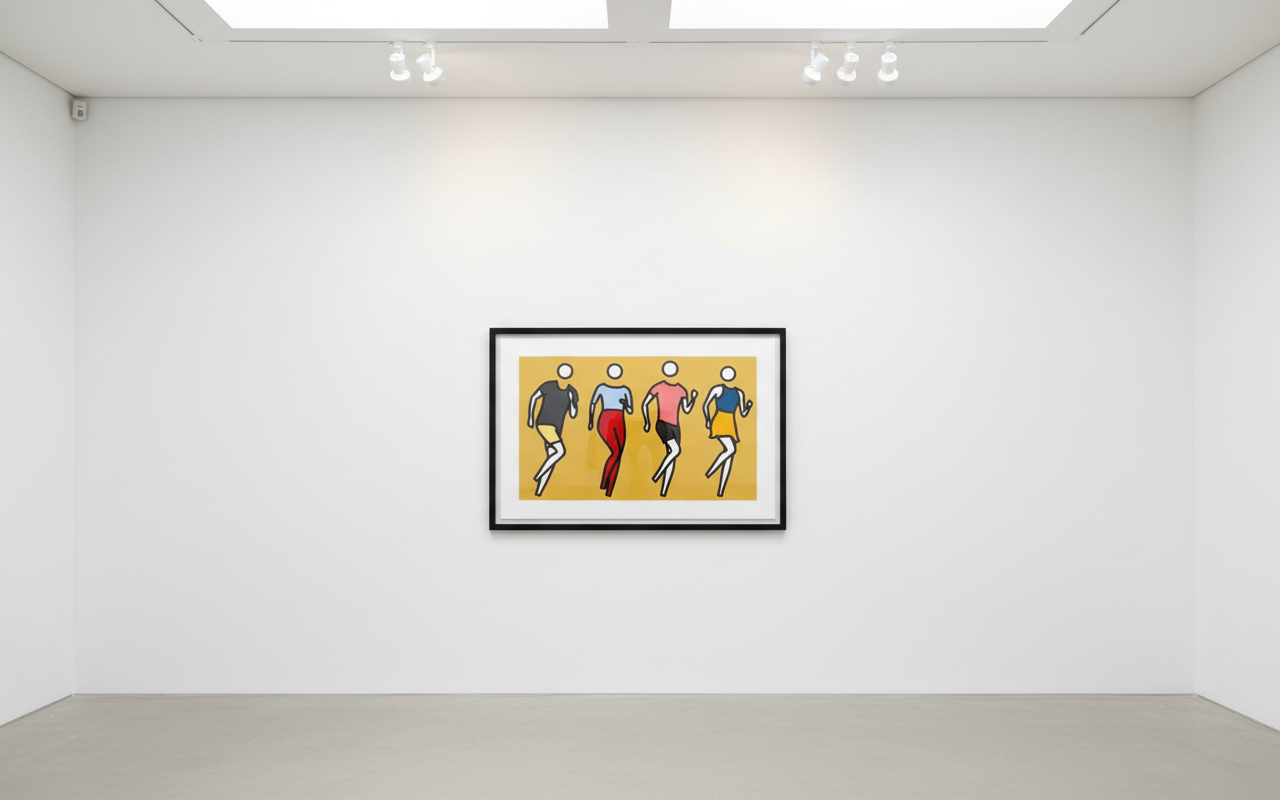
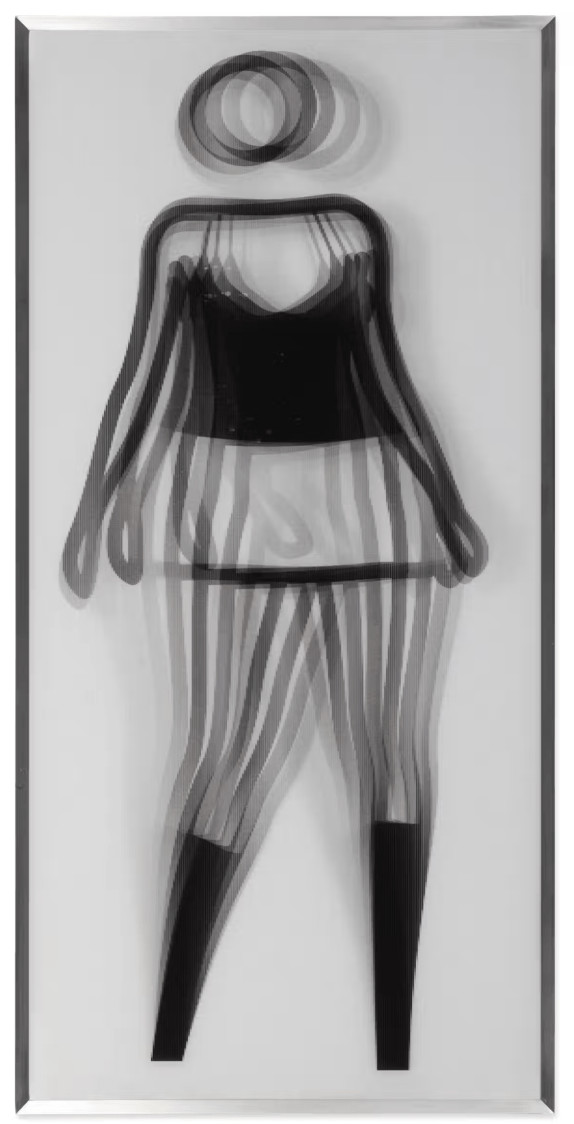
The mechanics of lenticular printing involve layering interlaced images beneath a surface of tiny parallel lenses, each revealing different visual information depending on the viewer's angle of observation. In Opie's hands, this commercial technology—familiar from novelty postcards and promotional materials—is elevated to the realm of fine art. Works such as Dance 1, Dance 3, and Dance 4 capture figures mid-movement, their bodies shifting through choreographed poses as viewers walk past. The effect is mesmerizing and profoundly physical; these are works that demand bodily engagement rather than static contemplation. The dance pieces, along with the broader Dance Portfolio, showcase Opie's longstanding fascination with the human figure in motion, a preoccupation that connects to his extensive studies of walking figures, runners, and crowds navigating urban environments.
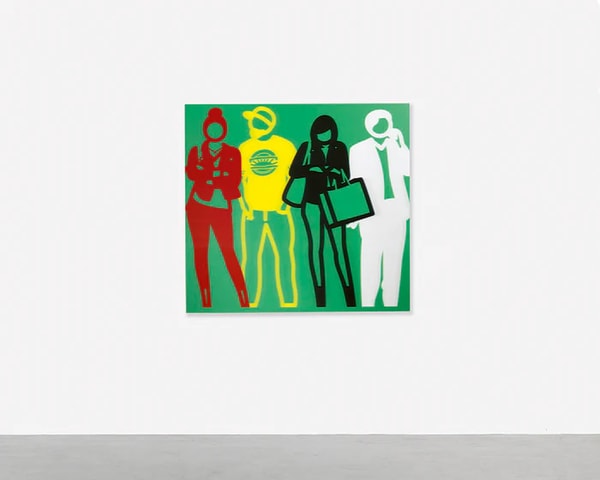
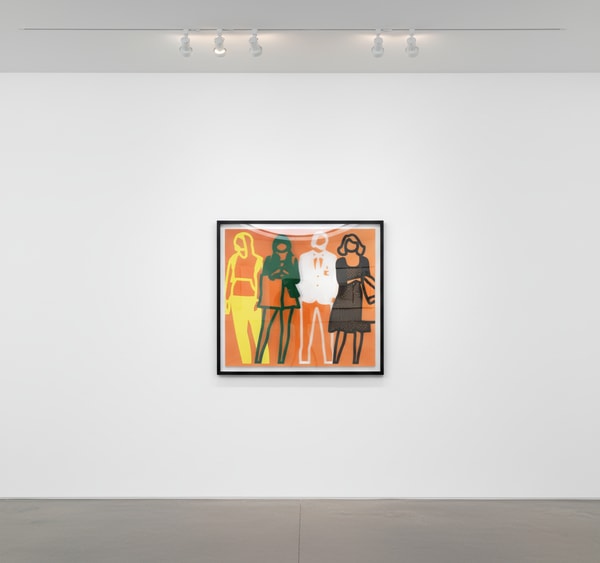
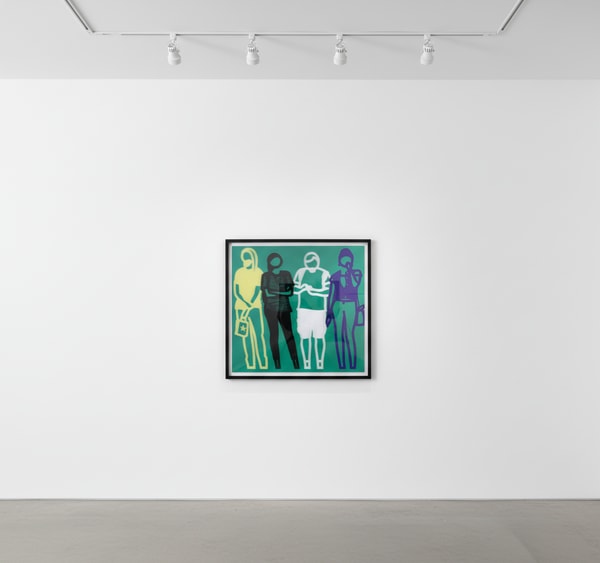
The Standing People works—presented in variations including Yellow, Green, White, and Black, as well as the composite Yellow Black White Blue (Standing People)—demonstrate another dimension of the Lenticular series' power. Even in apparent stillness, these figures possess an uncanny presence, their subtle shifts creating an almost breathing quality that distinguishes them from Opie's static portraits. The flat color backgrounds characteristic of his broader practice take on new significance in the lenticular format, their bold hues intensifying and shifting with the play of light across the ridged surface. These works speak to Opie's interest in portraiture as a form of typology, presenting anonymous yet somehow familiar figures who seem to exist simultaneously as specific individuals and universal human forms.
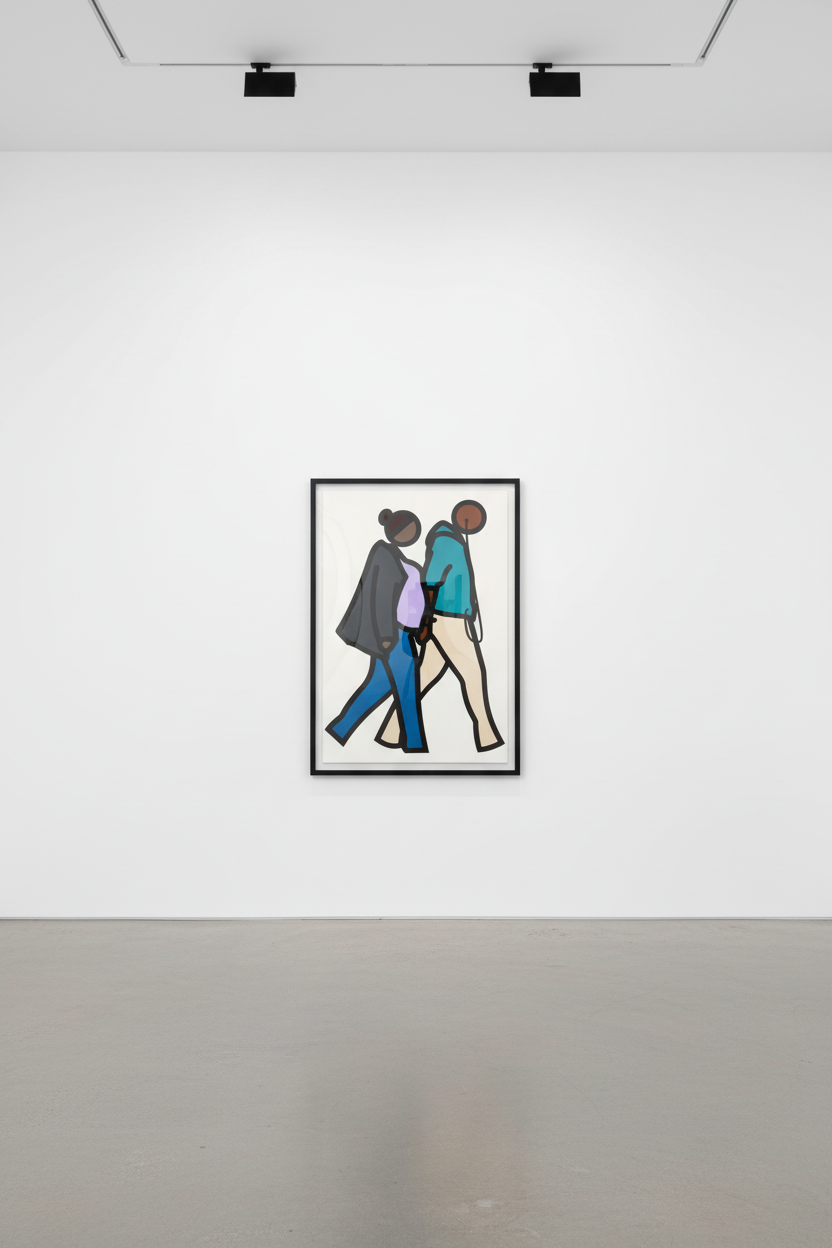
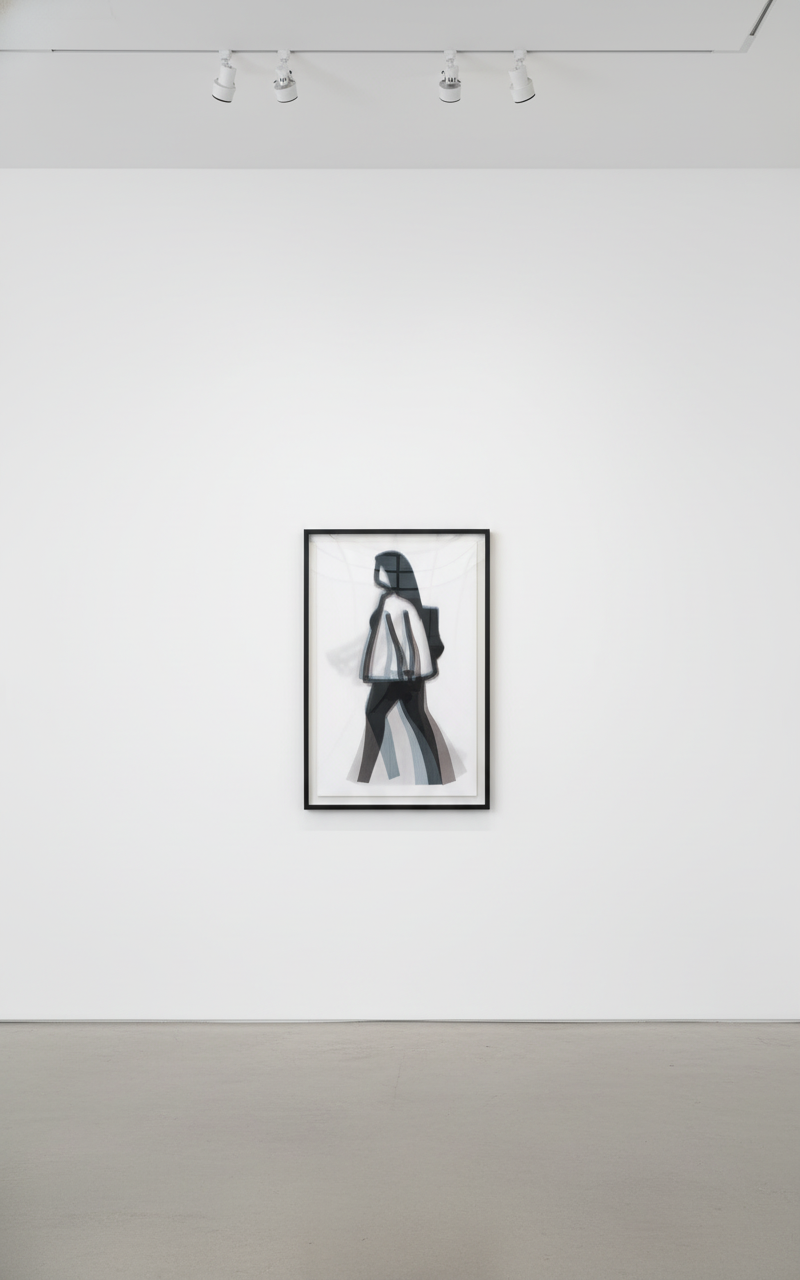
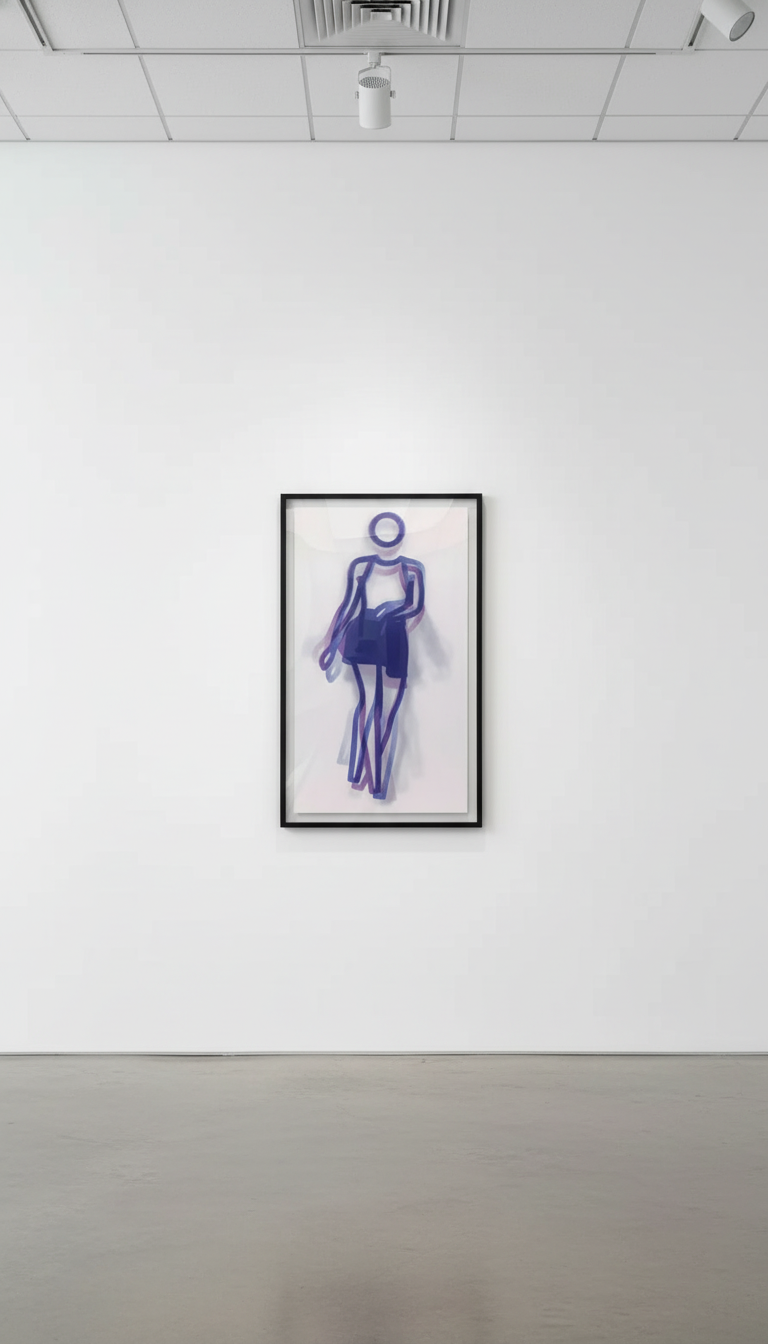
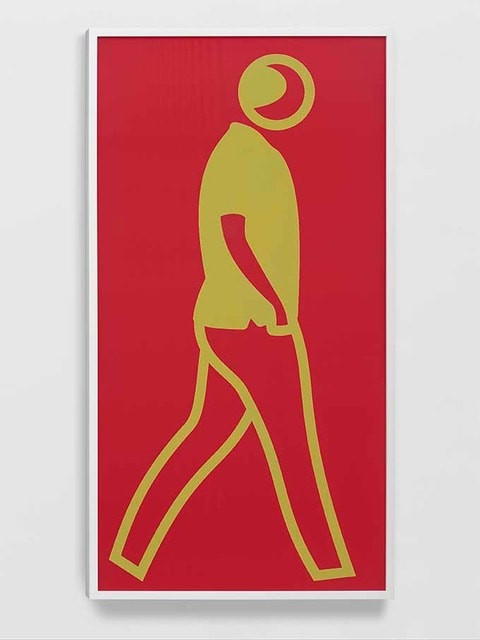
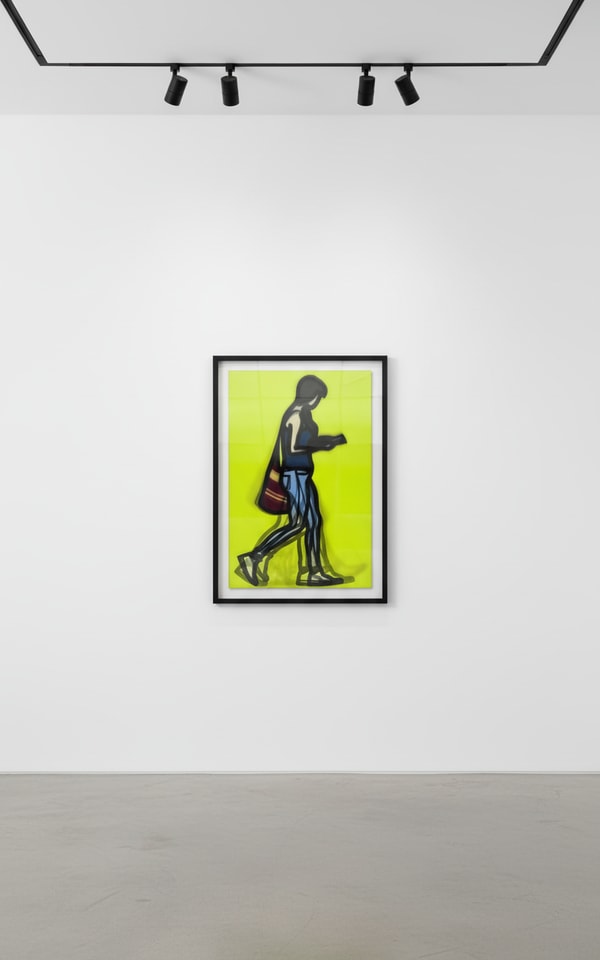
Rod Walking and Waitress, from Walking In London extend Opie's celebrated exploration of pedestrian movement into the lenticular medium with remarkable results. His walking figures have become iconic elements of contemporary visual culture, appearing on album covers, public installations, and in museum collections worldwide. In these lenticular iterations, the figures truly walk, their legs cycling through the mechanical rhythm of human locomotion as viewers pass by. The Walking In London series in particular captures something essential about urban experience—the endless flow of anonymous bodies through city streets, each person absorbed in their own trajectory yet participating in a collective choreography of everyday life. Opie strips away individual characteristics to reveal the underlying patterns of human movement, and the lenticular technology makes these patterns visible in real time.
What distinguishes the Lenticular series within Opie's practice is its reconciliation of seemingly opposing qualities: the works are simultaneously high-tech and handcrafted in their aesthetic, mechanically produced yet deeply humanistic in their subject matter, visually simple yet technologically complex. They exist at the intersection of pop art's embrace of commercial techniques, minimalism's reductive clarity, and contemporary digital culture's fascination with animated imagery. Unlike video or LED works that require electrical power and equipment, the lenticular pieces achieve animation through purely optical means, making them both practical for collection and conceptually elegant in their self-sufficiency.
The series also highlights Opie's ongoing dialogue with art history, particularly the legacy of artists who have sought to capture movement within static media—from Futurist attempts to depict motion through fragmented forms to Eadweard Muybridge's sequential photography. Opie's solution is characteristically his own: rather than fragmenting the figure or multiplying frames within a single image, he uses lenticular technology to compress sequential moments into a unified surface that reveals itself through the viewer's movement. The result is work that feels both timeless and thoroughly contemporary, connected to longstanding artistic concerns yet utterly of our moment.
Guy Hepner is pleased to offer works from Julian Opie's Lenticular series, and collectors interested in acquiring these distinctive pieces are invited to contact our New York team for availability, pricing, and further information.
16 works available
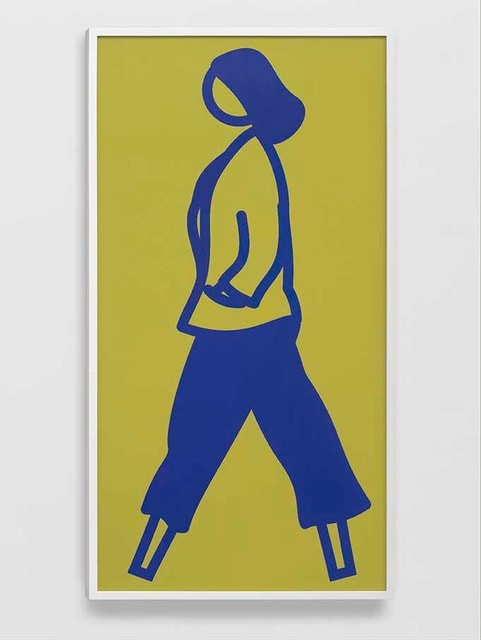
Julian Opie
Culottes (from Crossings)
2021
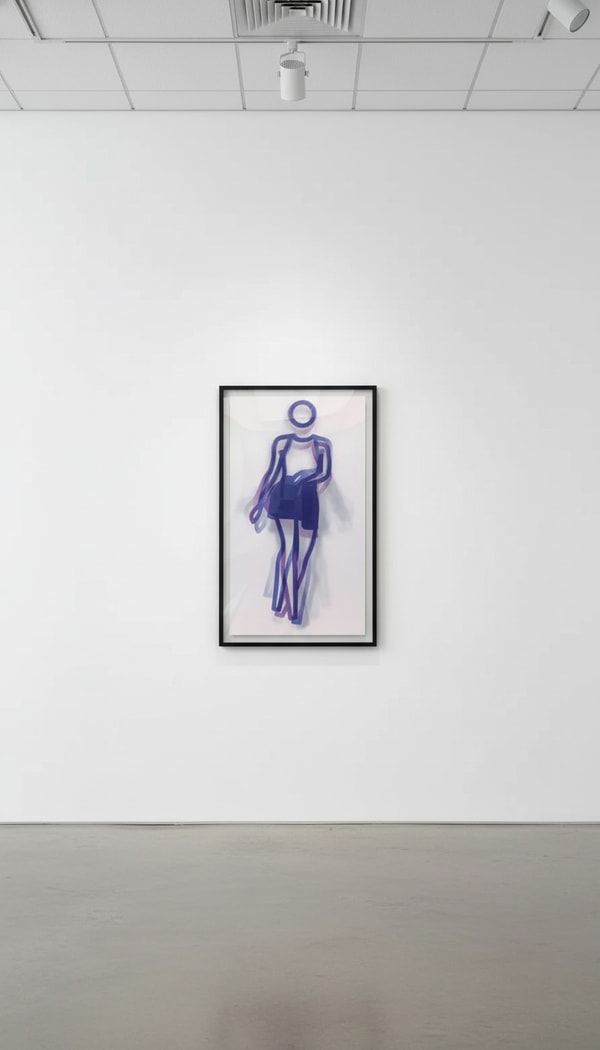
Julian Opie
Dance 1
2023
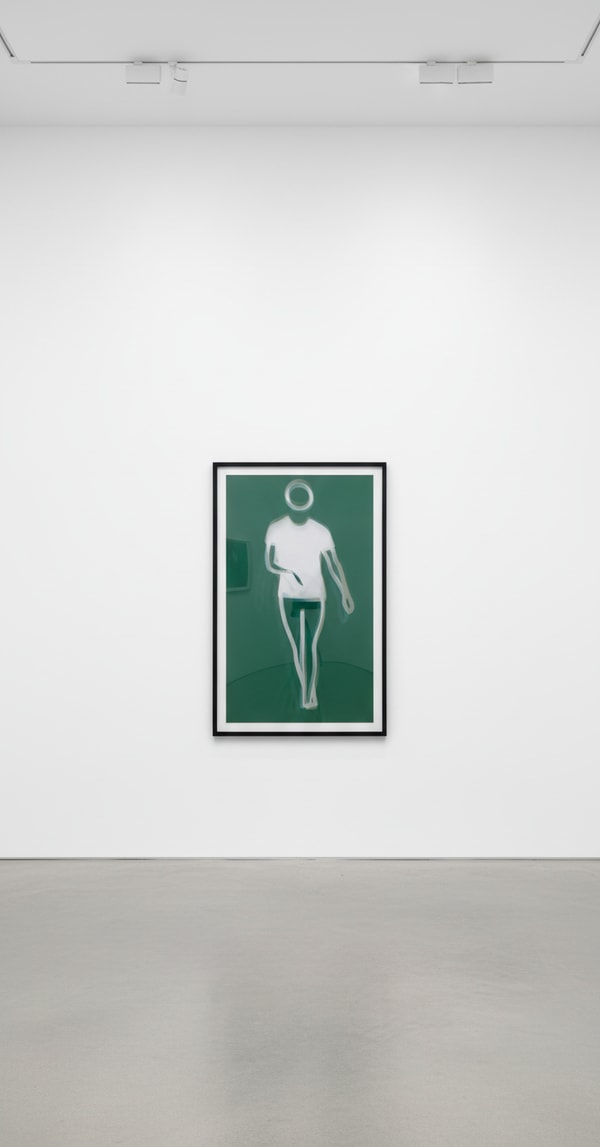
Julian Opie
Dance 2
2023
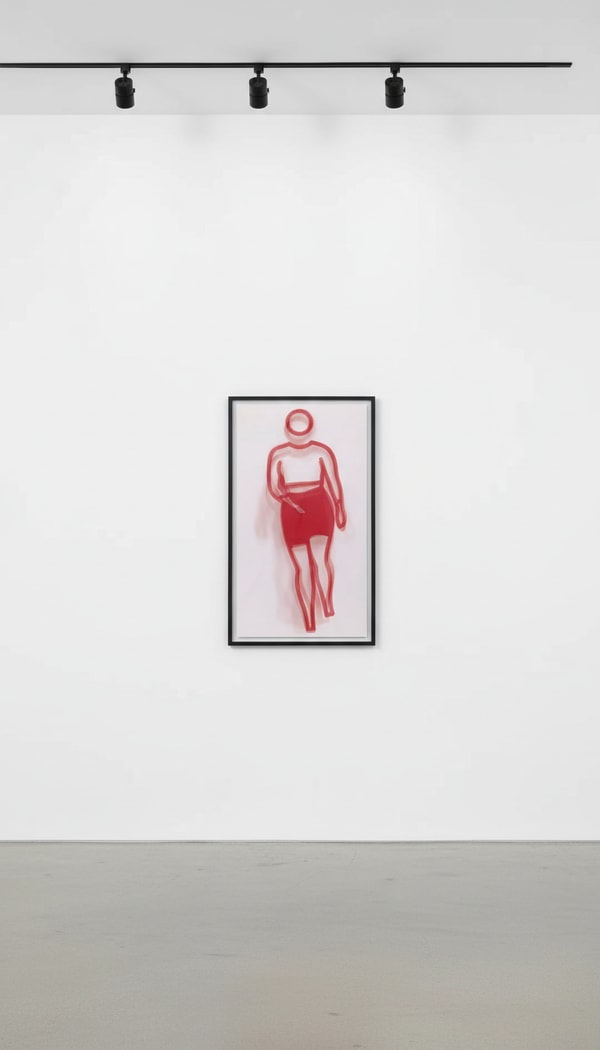
Julian Opie
Dance 3
2023
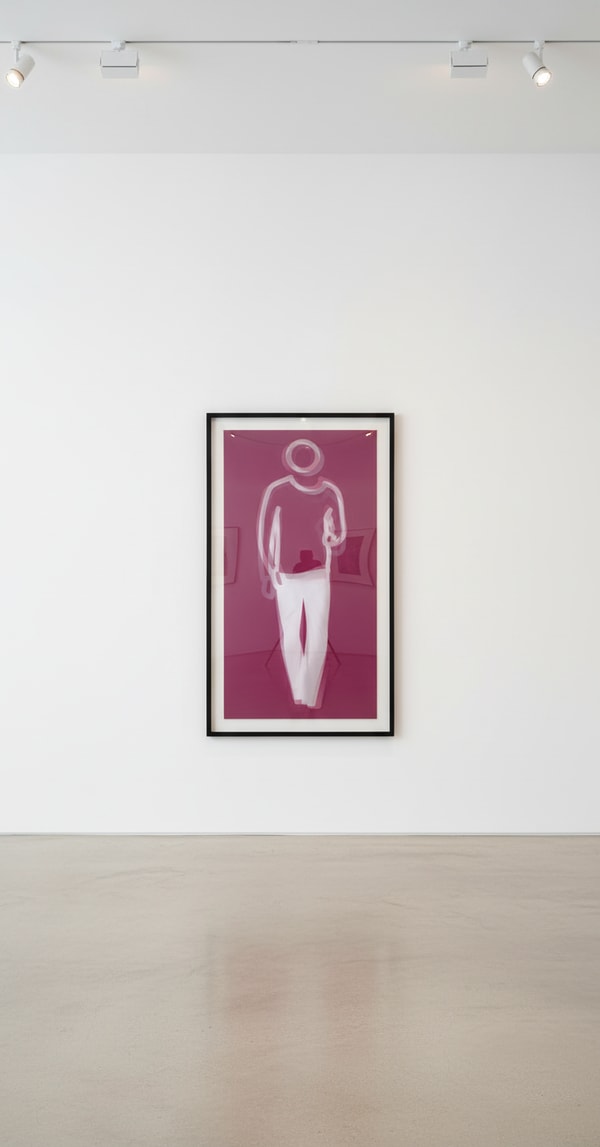
Julian Opie
Dance 4
2023

Julian Opie
Dance Portfolio
2023
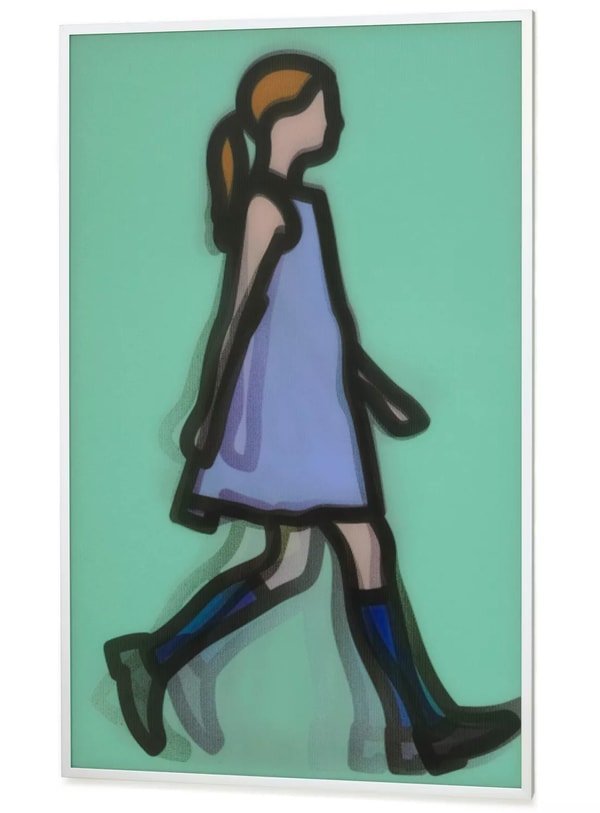
Julian Opie
Esther
2025
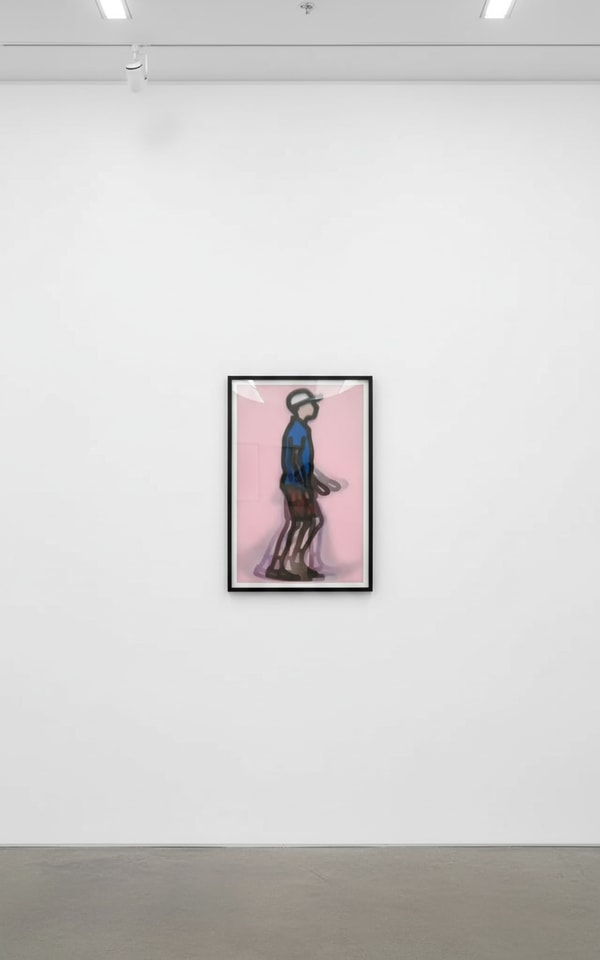
Julian Opie
Keyush
2025
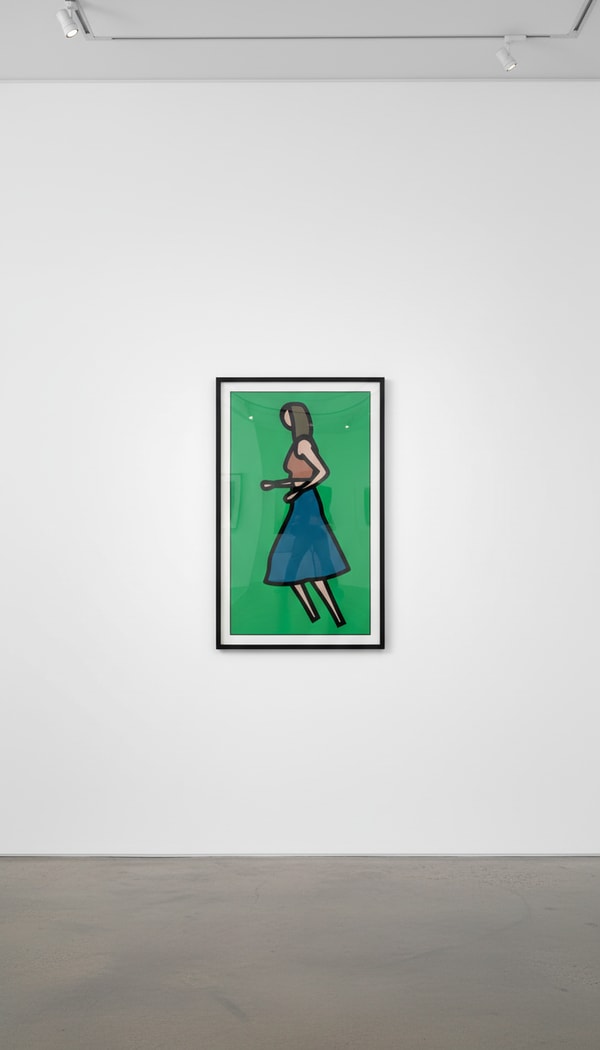
Julian Opie
Kiran
2025
Julian Opie
Pockets (from Crossings)
2021

Julian Opie
Rod Walking
2010
Julian Opie
Sara Dancing in Sparkling Top
2008
Julian Opie
Standing People (Red, Yellow, Black, White)
2019
Julian Opie
Standing People (Yellow , Green , White , Black)
2020
Julian Opie
Waitress , from Walking In London
2014
Julian Opie
Yellow Black White Blue (Standing People)
2019-2020
Five Facts About Julian Opie Lenticular
Opie's Dance (2023) lenticular edition comprises four acrylic panels mounted onto white acrylic, each measuring 170 x 92.5cm, released in an edition of 55.
Standing People was issued as a set of six small lenticular prints on card, each 14.8 x 14.8cm, alongside larger acrylic-mounted lenticular panels such as Red Yellow Black White (from Standing People), released in an edition of 25 plus 5 artist's proofs.
Opie's most recent lenticular editions, Esther and Keyush, released in 2025, depict schoolchildren and continue his ongoing exploration of the medium.
Cristea Roberts Gallery, London, is the exclusive worldwide publisher of Julian Opie's print editions, including his lenticular works.
Lenticular printing creates the illusion of movement by layering interlaced images beneath a ridged plastic lens, a technique Opie has used across several series, including Walking In London, to animate his signature reductive figures.
Market Data
See real auction history, estimate ranges and price benchmarks for individual Lenticular prints, sourced from Christie's, Sotheby's and other major auction houses.
Frequently Asked Questions
Julian Opie Lenticular prints for sale are available at Guy Hepner Gallery, 177 Tenth Avenue, New York. We offer authenticated editions with full provenance documentation sourced from the secondary market and directly from publishers.
Julian Opie Lenticular works — 16 available — are typically produced as limited editions, individually signed and numbered by the artist. Contact Guy Hepner Gallery for edition details on specific works.
Pricing for Julian Opie Lenticular prints varies by edition size, date, and condition. Contact Guy Hepner Gallery for current market pricing and availability.
More Julian Opie Series
View all Julian Opie works →