Bijou Gets Undressed
6 works

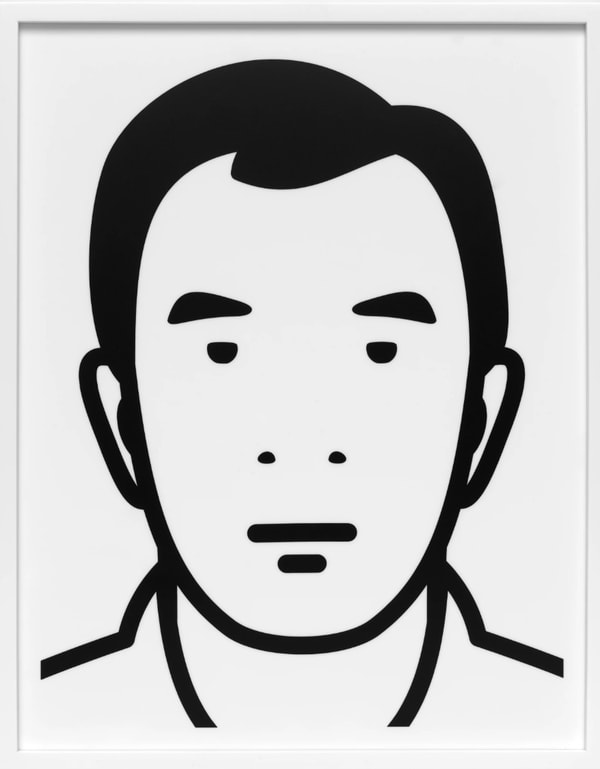
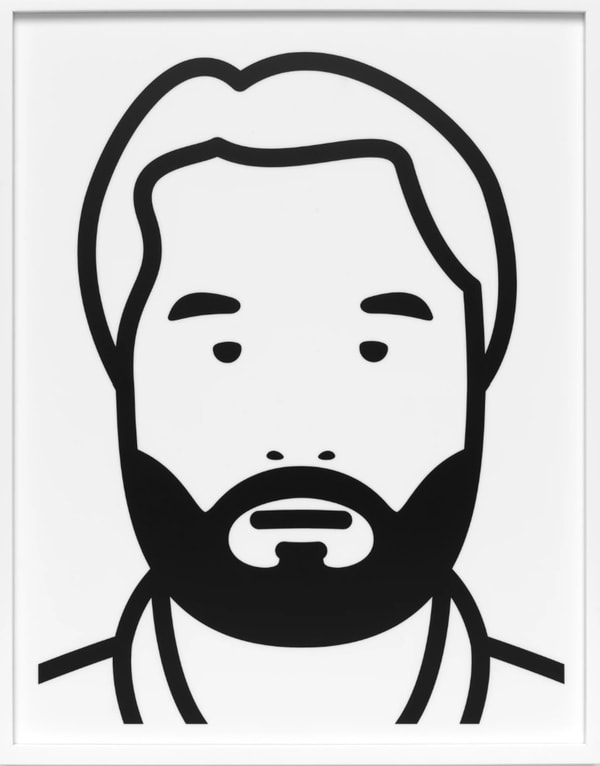
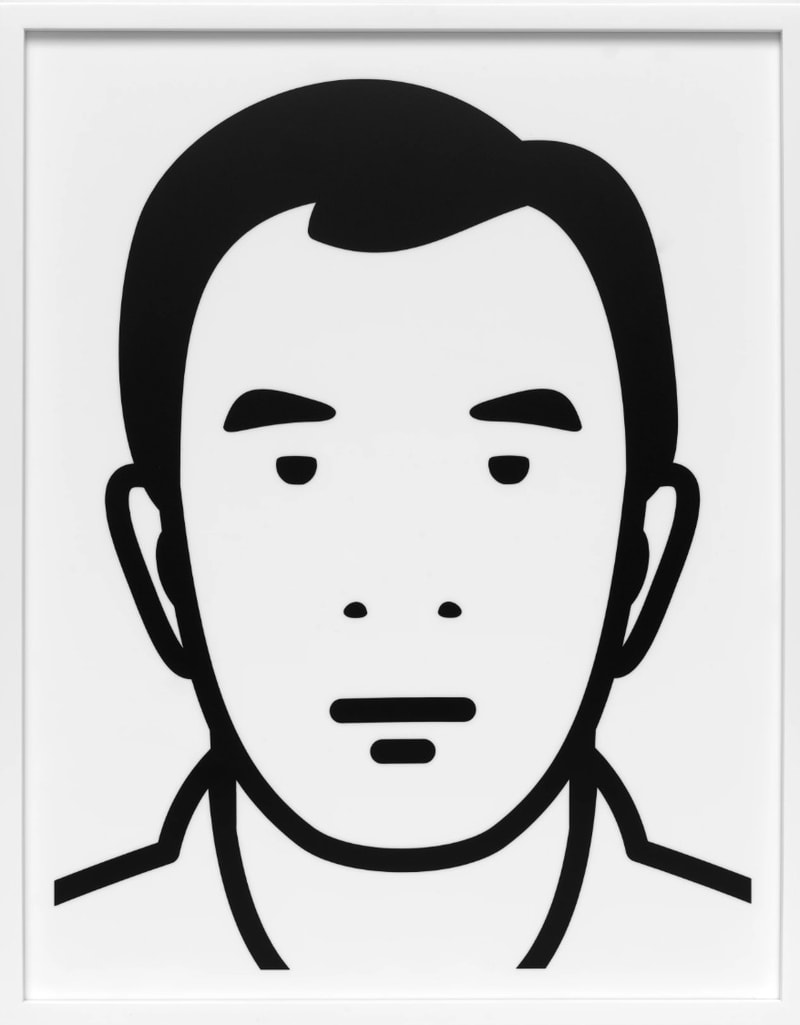
Julian Opie's "Everyone" series represents one of the most quietly profound bodies of work within the artist's expansive practice, distilling his decades-long fascination with human representation into portraits of striking intimacy and universal resonance. Where much of Opie's celebrated oeuvre captures figures in motion—walking, running, dancing through urban landscapes—the "Everyone" series invites a moment of stillness, presenting individual subjects with a directness that feels both deeply personal and remarkably democratic. Each work in the series carries a simple first name as its title, such as "Everyone: David" and "Everyone: Alan," a naming convention that speaks to the fundamental equality Opie perceives in human experience while simultaneously honoring the irreducible individuality of each person depicted.
The formal language Opie employs in the "Everyone" series showcases his signature aesthetic at its most refined. His characteristic bold outlines define each figure with an economy of means that recalls traditions as varied as Japanese woodblock prints, medieval portraiture, and contemporary digital iconography. Flat planes of carefully selected color fill these contours, eschewing conventional modeling, shadow, and the illusionistic tricks that have dominated Western portraiture since the Renaissance. Yet within this apparent simplicity lies tremendous sophistication. Opie's reduction of the human face to its essential components—the precise curve of a jawline, the specific angle of a nose, the particular set of eyes—requires an acute understanding of what makes each individual recognizable. He must identify and preserve precisely those features that constitute identity while stripping away everything extraneous. The result occupies a fascinating territory between abstraction and representation, between the generic and the specific, between the anonymous and the intimately known.
What distinguishes the "Everyone" series from Opie's other portrait work is its deliberate emphasis on ordinary people rather than celebrities or commissioned subjects. While Opie has created memorable portraits of musicians, athletes, and cultural figures throughout his career, the "Everyone" series turns its attention to individuals who might pass unnoticed on any street corner. This democratic impulse transforms each portrait into something approaching philosophical inquiry. By presenting these everyday figures with the same formal rigor and visual presence typically reserved for the famous or powerful, Opie challenges hierarchies of attention and worth that structure so much of contemporary visual culture. The series title itself carries this meaning: everyone, regardless of status or recognition, possesses a face worthy of contemplation, a presence deserving of artistic attention.
The visual impact of works like "Everyone: David" and "Everyone: Alan" derives significantly from Opie's masterful handling of color and line. Each portrait presents a face that feels simultaneously familiar and slightly estranged, as though we are seeing someone we might know rendered through a visual language just different enough to make us look again. The colors Opie selects—whether for skin tones, hair, clothing, or backgrounds—avoid naturalistic accuracy in favor of chromatic relationships that heighten visual presence and emotional resonance. His lines possess a confidence and clarity that comes only from an artist who has spent decades refining his visual vocabulary, knowing precisely how much information to include and how much to omit. This balance between presence and absence, between what is shown and what is implied, gives the "Everyone" portraits their distinctive power to engage viewers across extended contemplation.
Opie's working process for the series involves an intricate translation from photographic source material through digital manipulation to final artistic output. He photographs his subjects, then works extensively with computer software to progressively simplify and stylize the image, making countless decisions about which details to preserve and which to eliminate. This process might seem mechanical, but it is in fact deeply intuitive, requiring the artist to continually assess what constitutes the essence of a particular face. The final works, whether realized as prints, paintings, or other media, carry the authority of this extended consideration. They are not quick sketches but carefully calibrated distillations that have passed through multiple stages of artistic judgment.
The "Everyone" series also connects to broader currents in contemporary art's engagement with identity, representation, and the ubiquity of images in digital culture. Opie's simplified figures recall the avatars and icons that populate our screens, yet they resist the anonymity of purely functional imagery. Each portrait insists on particularity even as it employs a visual language associated with generality. This tension makes the series especially relevant to contemporary viewers who navigate daily between highly personalized digital identities and the standardizing forces of technological platforms. Opie neither celebrates nor critiques this condition; instead, he offers images that allow us to reflect on what it means to see and be seen in an age of unprecedented image proliferation.
Guy Hepner is pleased to offer works from Julian Opie's "Everyone" series, and collectors interested in acquiring pieces from this significant body of work are invited to inquire with our New York team for availability, pricing, and additional information.
2 works available
Five Facts About Julian Opie Everyone
Everyone is a series begun by Julian Opie in 2023 and continuing through 2025, comprising portraits of friends, gallerists, colleagues, family members and visitors to the artist's studio.
The series grew to include almost 100 individual portraits.
Each portrait is made of vinyl on white acrylic, presented in a wooden frame specified by the artist.
Individual works, such as Everyone: Joe and Everyone: David, were released in editions of 10.
Market Data
See real auction history, estimate ranges and price benchmarks for individual Everyone prints, sourced from Christie's, Sotheby's and other major auction houses.
Frequently Asked Questions
Julian Opie Everyone prints for sale are available at Guy Hepner Gallery, 177 Tenth Avenue, New York. We offer authenticated editions with full provenance documentation sourced from the secondary market and directly from publishers.
Julian Opie Everyone works — 2 available — are typically produced as limited editions, individually signed and numbered by the artist. Contact Guy Hepner Gallery for edition details on specific works.
Pricing for Julian Opie Everyone prints varies by edition size, date, and condition. Contact Guy Hepner Gallery for current market pricing and availability.
More Julian Opie Series
View all Julian Opie works →