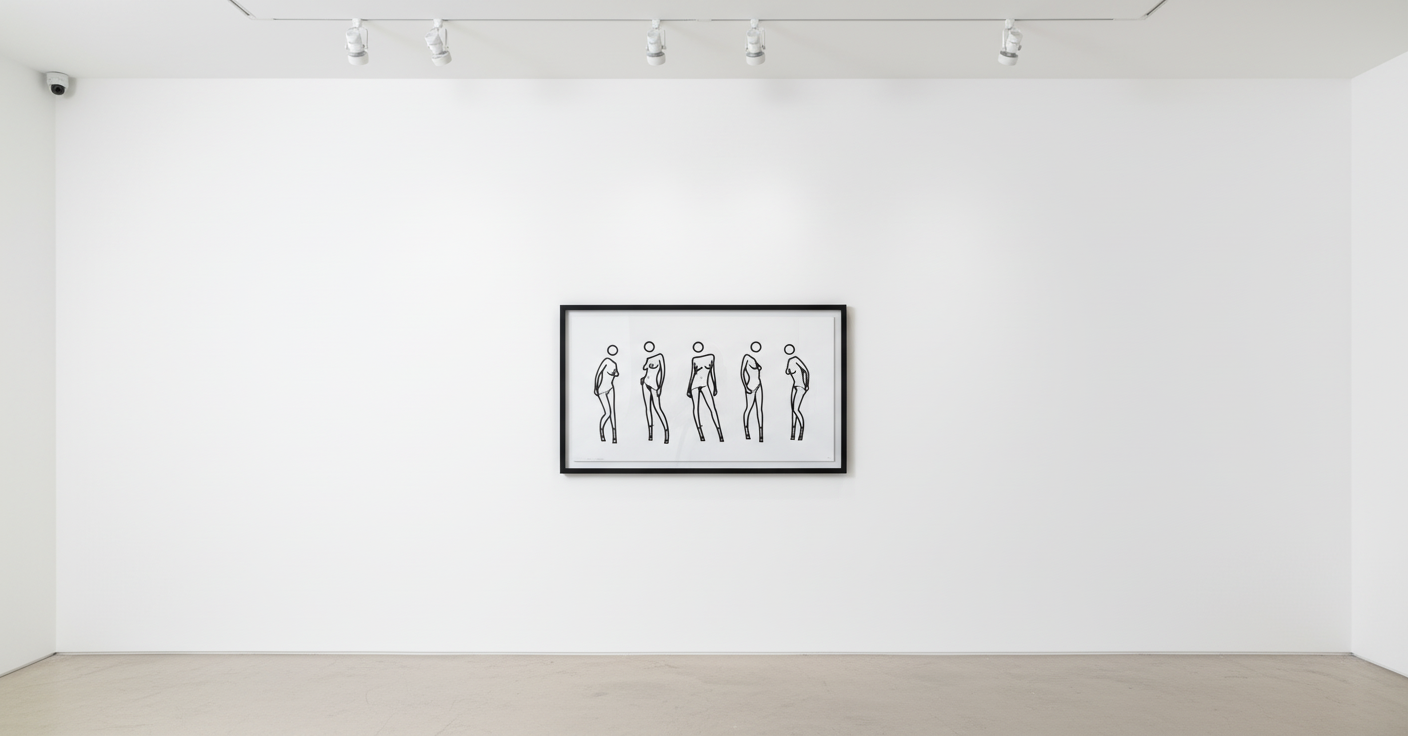
Bijou Gets Undressed
6 works

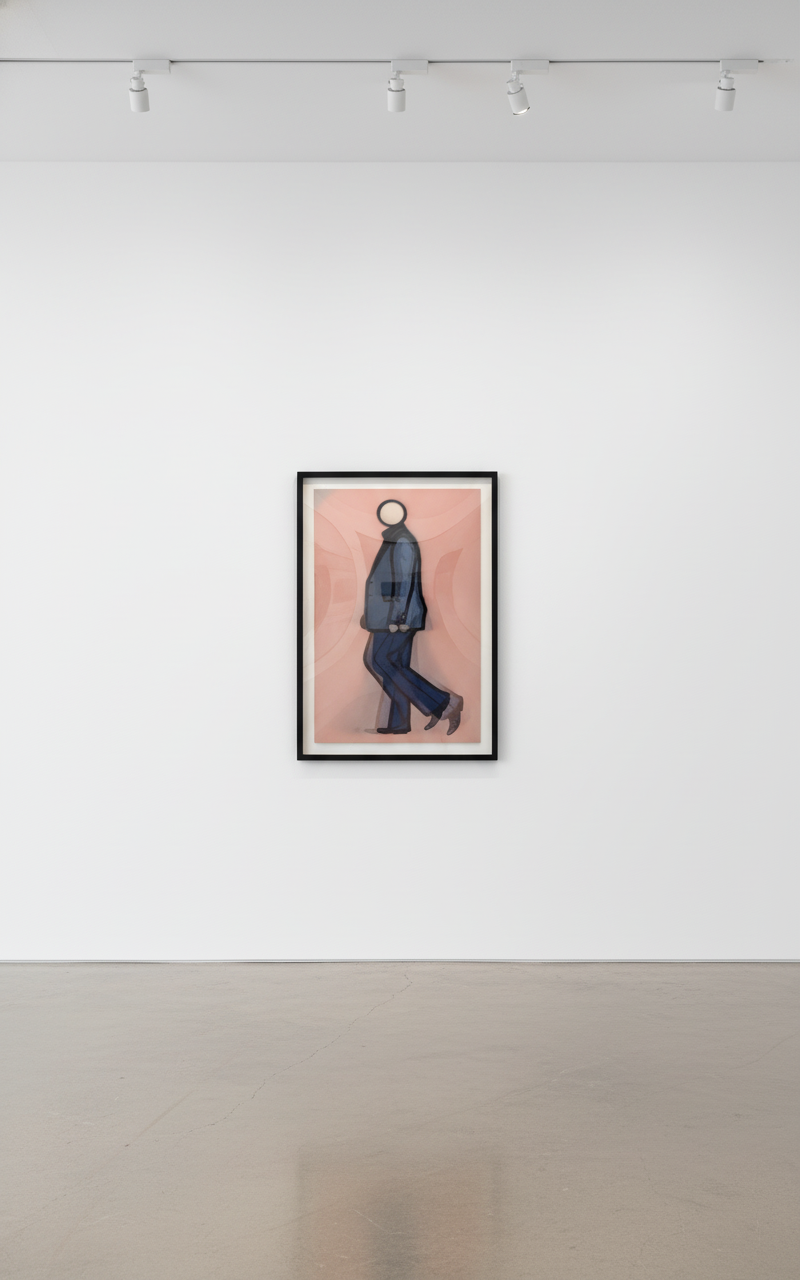
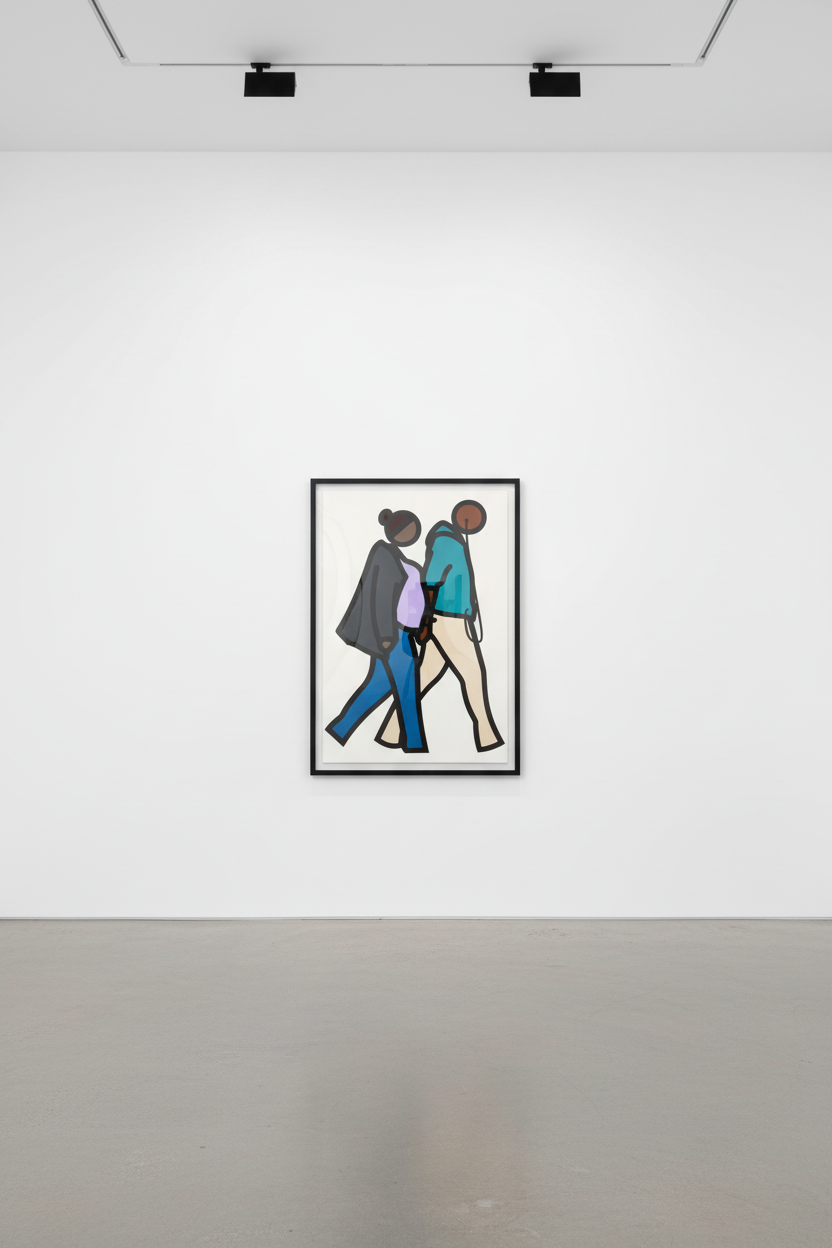
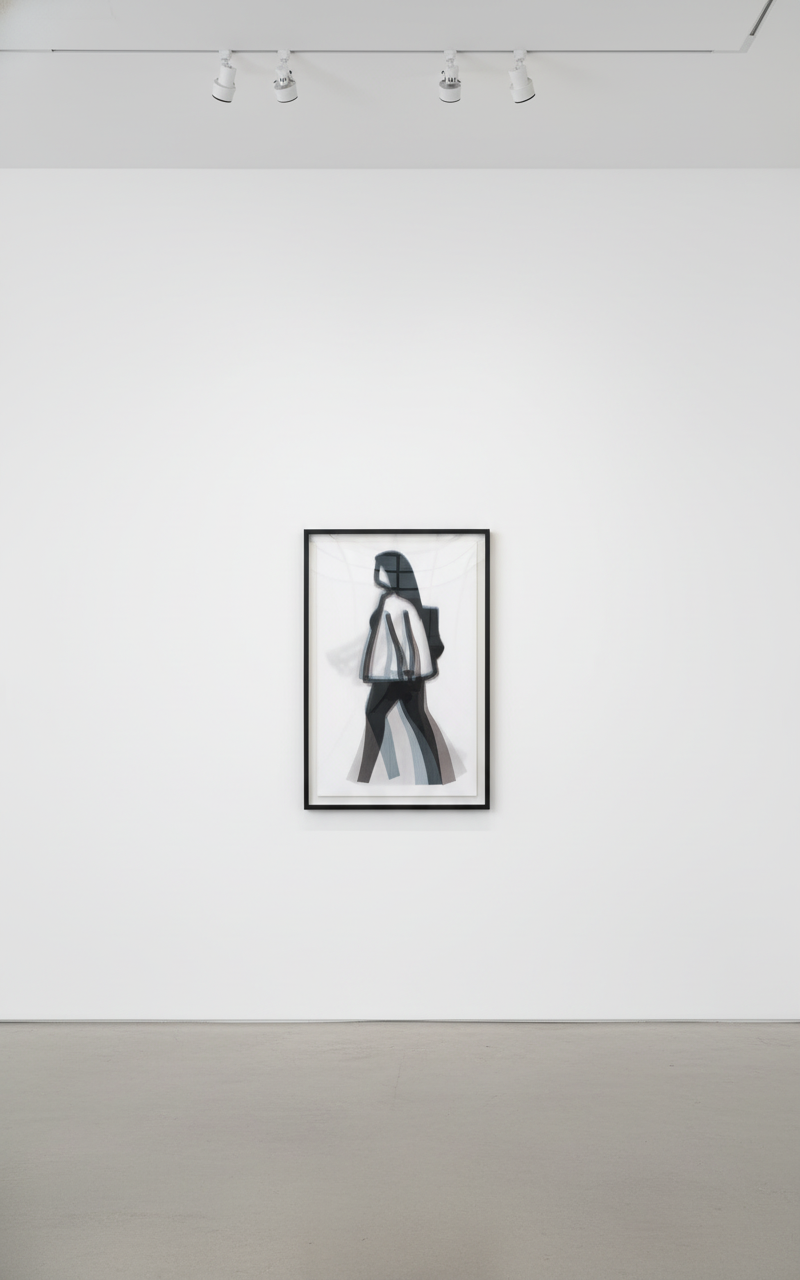
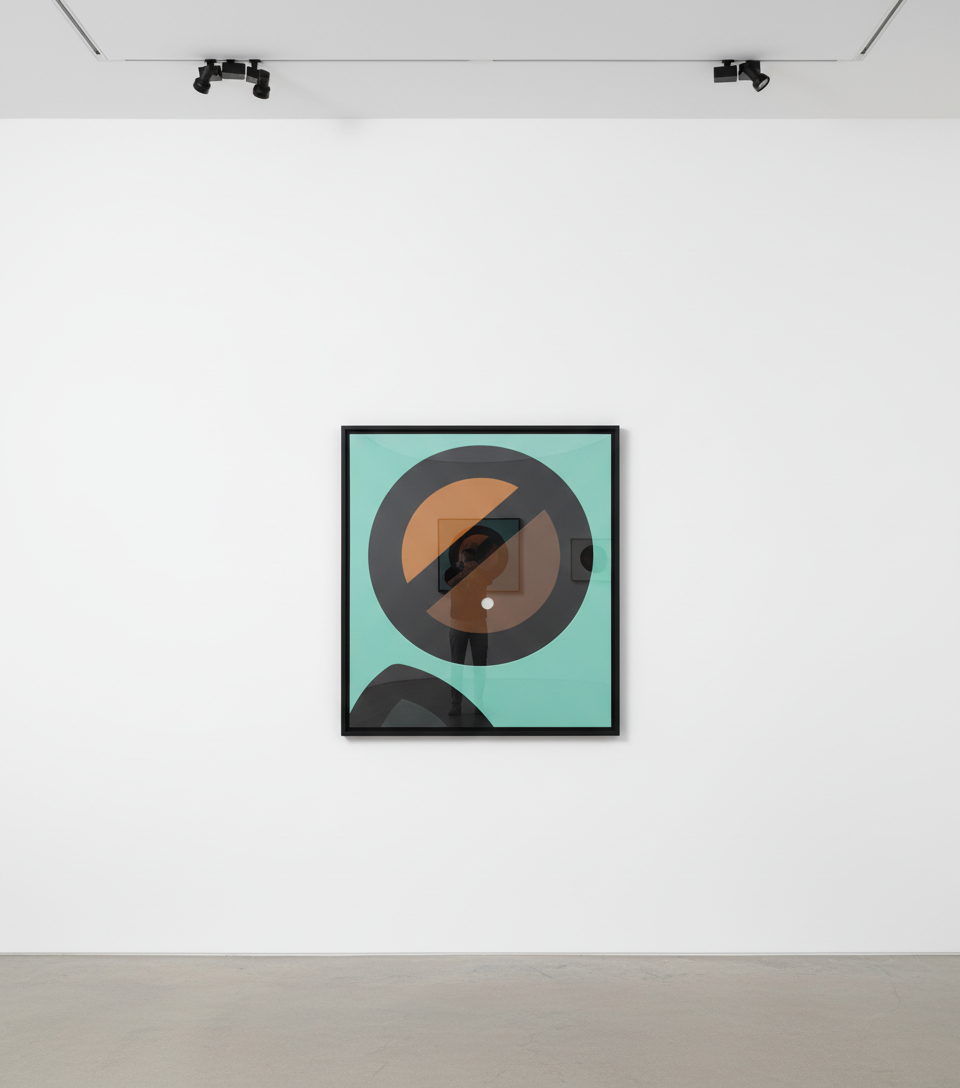
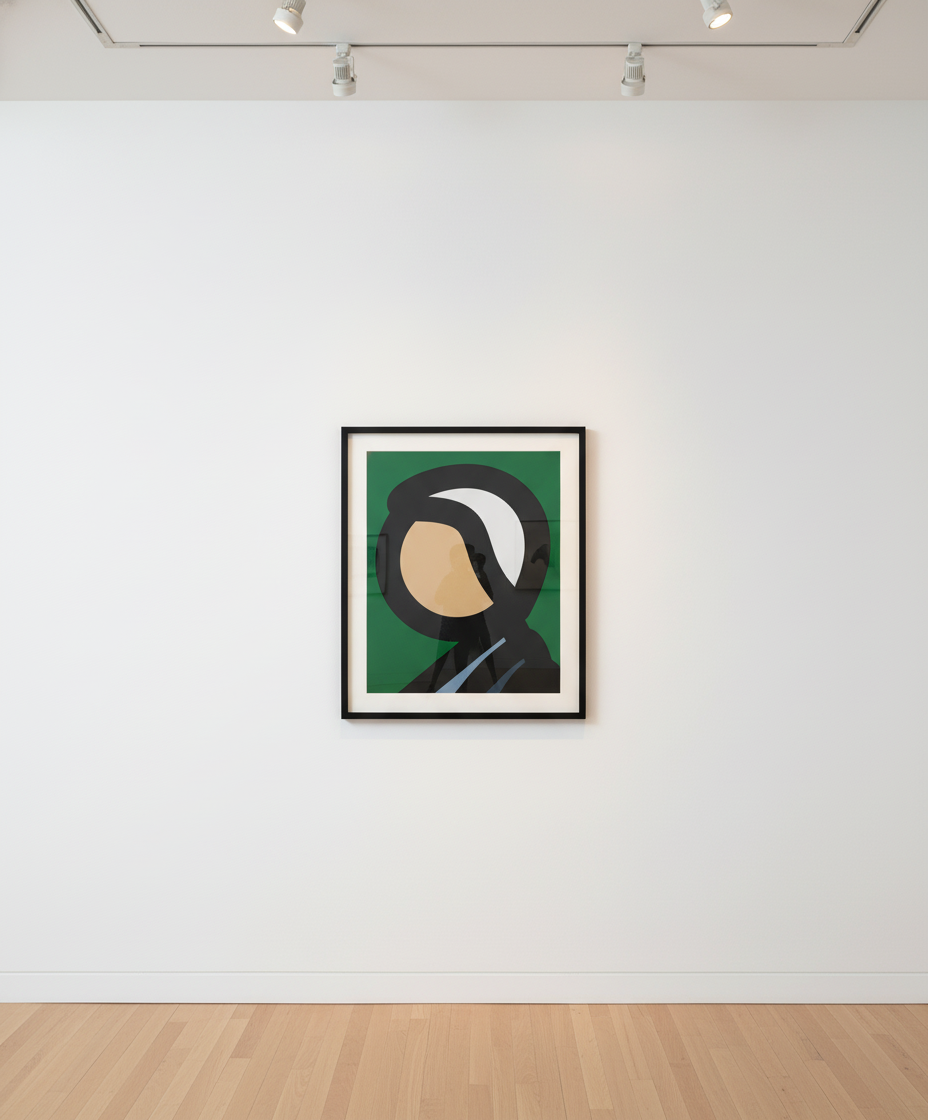
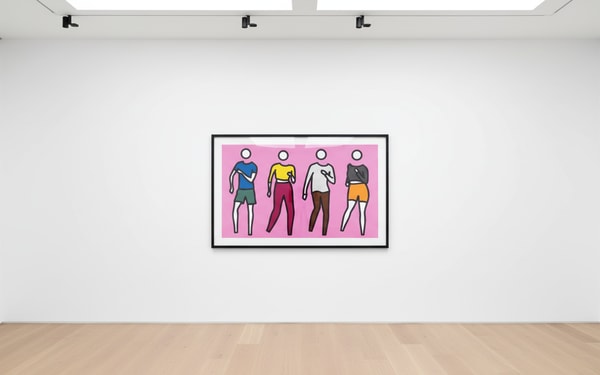
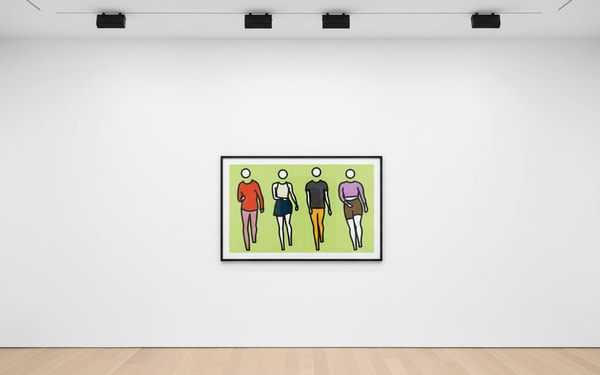
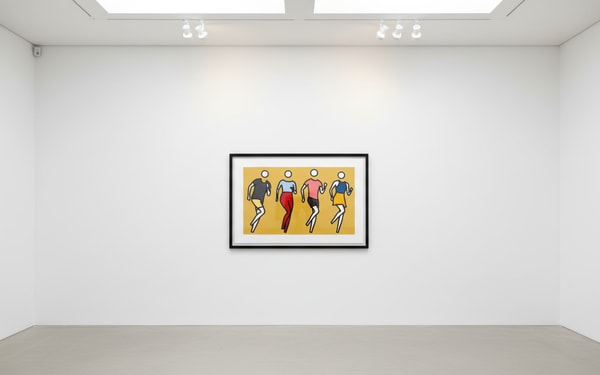
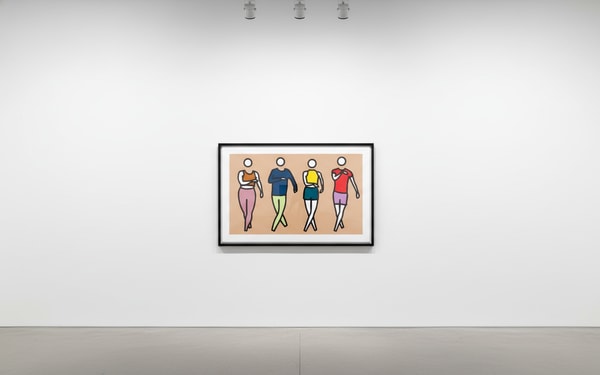
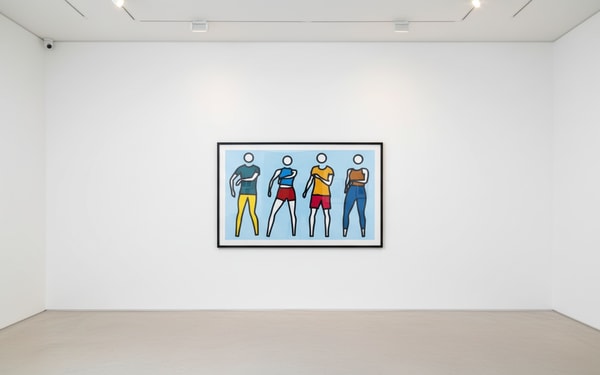
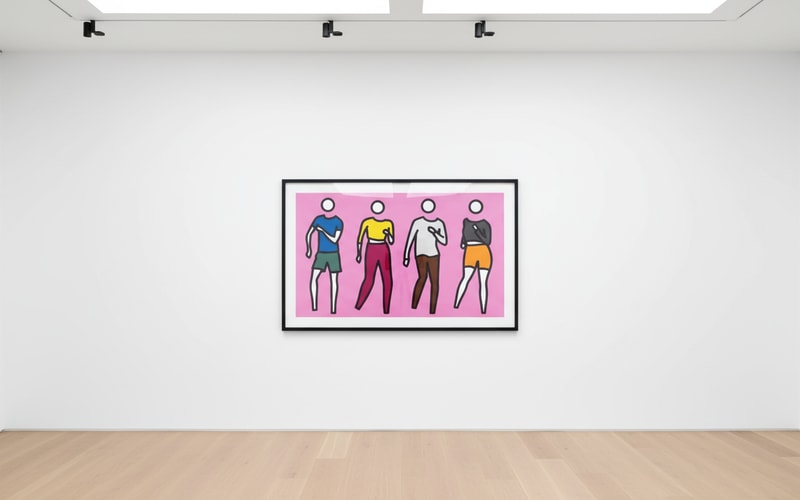
Julian Opie's "Dance Synched" series represents a captivating exploration of human movement, rhythm, and the visual language of contemporary dance, rendered through the artist's unmistakable aesthetic of bold outlines and vibrant flat color. Comprising five distinct works—Dance Synched 1 through Dance Synched 5—this series captures the essence of choreographed motion with a precision and clarity that has become synonymous with Opie's celebrated practice. Each piece in the collection freezes a moment of synchronized movement, transforming the ephemeral nature of dance into something permanent, iconic, and immediately recognizable.
Throughout his distinguished career, Julian Opie has consistently demonstrated an extraordinary ability to distill complex visual information into its most essential elements. Born in London in 1958 and now represented by the prestigious Lisson Gallery, Opie has developed a visual vocabulary that bridges the gap between fine art, graphic design, and popular culture. His signature style—characterized by thick black contour lines, minimal facial features, and expansive areas of unmodulated color—has made his work instantly identifiable across the globe. The "Dance Synched" series exemplifies this refined approach while pushing into territory that emphasizes the collective experience of movement and the relationship between individual bodies working in harmony.
What distinguishes the "Dance Synched" series from Opie's broader exploration of figures in motion is its specific focus on the synchronized aspect of dance. While Opie has long been fascinated by walking figures, runners, and individuals caught in everyday locomotion, this series investigates the particular visual poetry that emerges when multiple bodies move as one. The synchronization referenced in the title speaks not only to the coordination between dancers but also to a deeper harmony between form, color, and composition that Opie orchestrates within each work. The figures appear caught in moments of perfect alignment, their poses echoing and complementing one another in ways that create visual rhythms across the picture plane.
Opie's treatment of the dancing figures demonstrates his masterful understanding of how reduction can paradoxically enhance emotional and kinetic impact. By stripping away superfluous detail—eliminating individual facial features, simplifying clothing into blocks of saturated color, and reducing anatomical complexity to flowing contours—Opie creates figures that are simultaneously anonymous and universal. The dancers in the "Dance Synched" series could be anyone, yet they resonate with a specificity of gesture and pose that suggests real observation. This tension between the generic and the particular lies at the heart of Opie's artistic philosophy, and it finds especially powerful expression in these works where the subject matter itself involves the sublimation of individual identity into collective movement.
The formal qualities of the "Dance Synched" series reward sustained attention. Opie's color choices are deliberate and sophisticated, with each hue selected not merely for aesthetic appeal but for its capacity to define form, suggest depth, and create visual relationships between figures. The flat application of color, devoid of gradient or shadow, lends the works a graphic immediacy that connects them to signage, digital interfaces, and the visual shorthand of contemporary urban life. Yet there is nothing simplistic about this flatness; rather, it represents a considered artistic choice that amplifies the essential shapes and movements Opie wishes to communicate. The black outlines that define each figure possess a confident fluidity, capturing the grace of dance while maintaining the bold clarity that makes Opie's work so visually striking.
The "Dance Synched" series also reflects Opie's ongoing engagement with technology and contemporary visual culture. His work has always existed at the intersection of traditional artistic practice and digital aesthetics, and these pieces continue that dialogue. The clean lines and solid colors evoke the vector graphics of computer-generated imagery, while the subject matter—dance, with all its physical presence and human warmth—grounds the work in bodily experience. This synthesis of the digital and the corporeal gives the series a contemporary relevance that speaks to our current moment, when screens mediate so much of our visual experience yet we remain drawn to the irreducibly human act of moving together in space.
Each of the five works in the series—Dance Synched 1, Dance Synched 2, Dance Synched 3, Dance Synched 4, and Dance Synched 5—offers a distinct composition while maintaining cohesion through shared aesthetic principles and thematic concerns. Collected together, they form a meditation on movement, synchronicity, and the visual pleasure of bodies in coordinated action. Individually, each work stands as a complete artistic statement, capable of transforming any space with its vibrant presence and dynamic energy. The series demonstrates why Julian Opie remains one of the most significant and recognizable artists working today, his ability to create images that feel both timeless and utterly contemporary undiminished after decades of prolific output.
For collectors and art enthusiasts seeking to acquire works from Julian Opie's "Dance Synched" series, Guy Hepner in New York offers expert guidance and access to these remarkable pieces that celebrate the intersection of movement, minimalism, and modern visual culture.
5 works available
Five Facts About Julian Opie Dance Synched
Dance Synched is a 2024 series of screenprints by Julian Opie depicting figures captured mid-movement in dance.
Each screenprint in the series was printed in 12 colours on archival Museum Board.
The prints, numbered Dance Synched 1 through 5, were released in an edition of 45 plus 5 artist's proofs.
Each sheet measures approximately 96 x 152 cm (37 3/4 x 59 7/8 in).
Market Data
See real auction history, estimate ranges and price benchmarks for individual Dance Synched prints, sourced from Christie's, Sotheby's and other major auction houses.
Frequently Asked Questions
Julian Opie Dance Synched prints for sale are available at Guy Hepner Gallery, 177 Tenth Avenue, New York. We offer authenticated editions with full provenance documentation sourced from the secondary market and directly from publishers.
Julian Opie Dance Synched works — 5 available — are typically produced as limited editions, individually signed and numbered by the artist. Contact Guy Hepner Gallery for edition details on specific works.
Pricing for Julian Opie Dance Synched prints varies by edition size, date, and condition. Contact Guy Hepner Gallery for current market pricing and availability.
From the Journal
More Julian Opie Series
View all Julian Opie works →