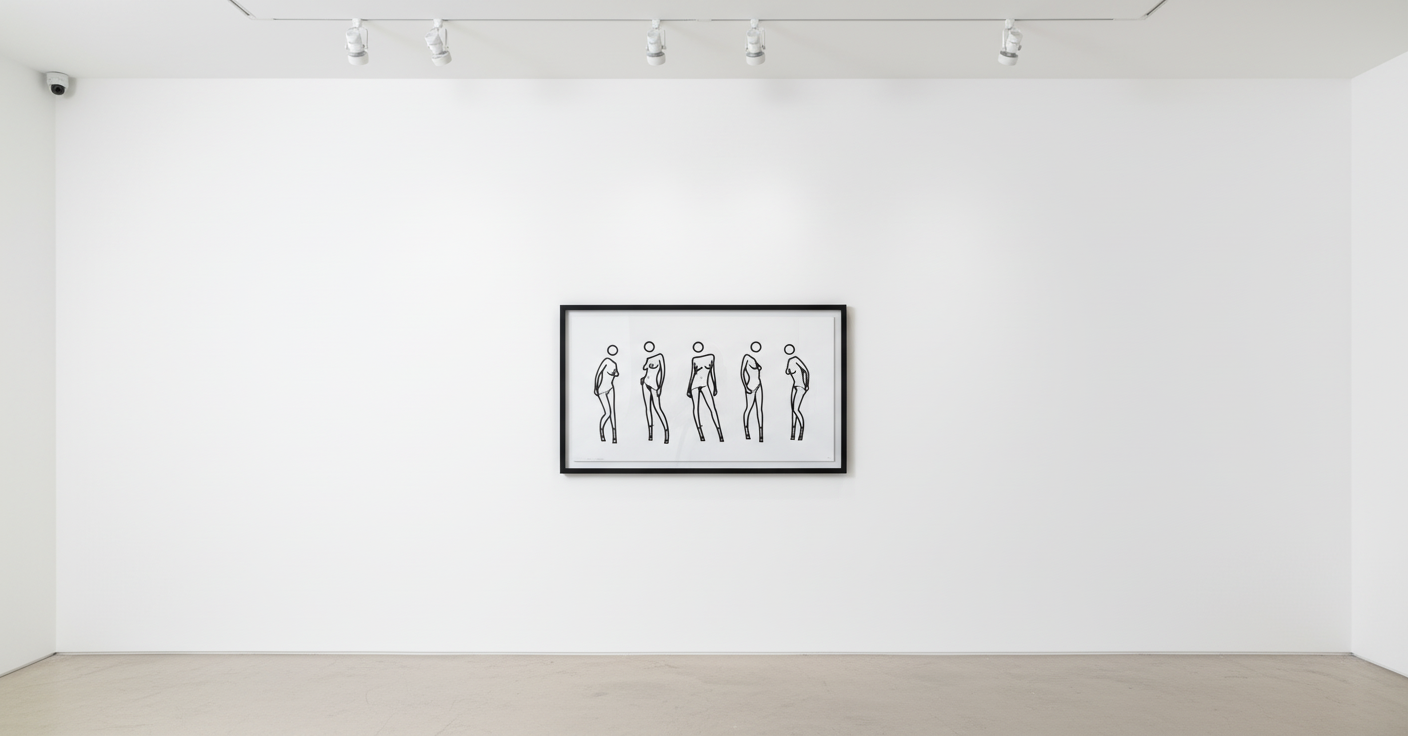
Bijou Gets Undressed
6 works

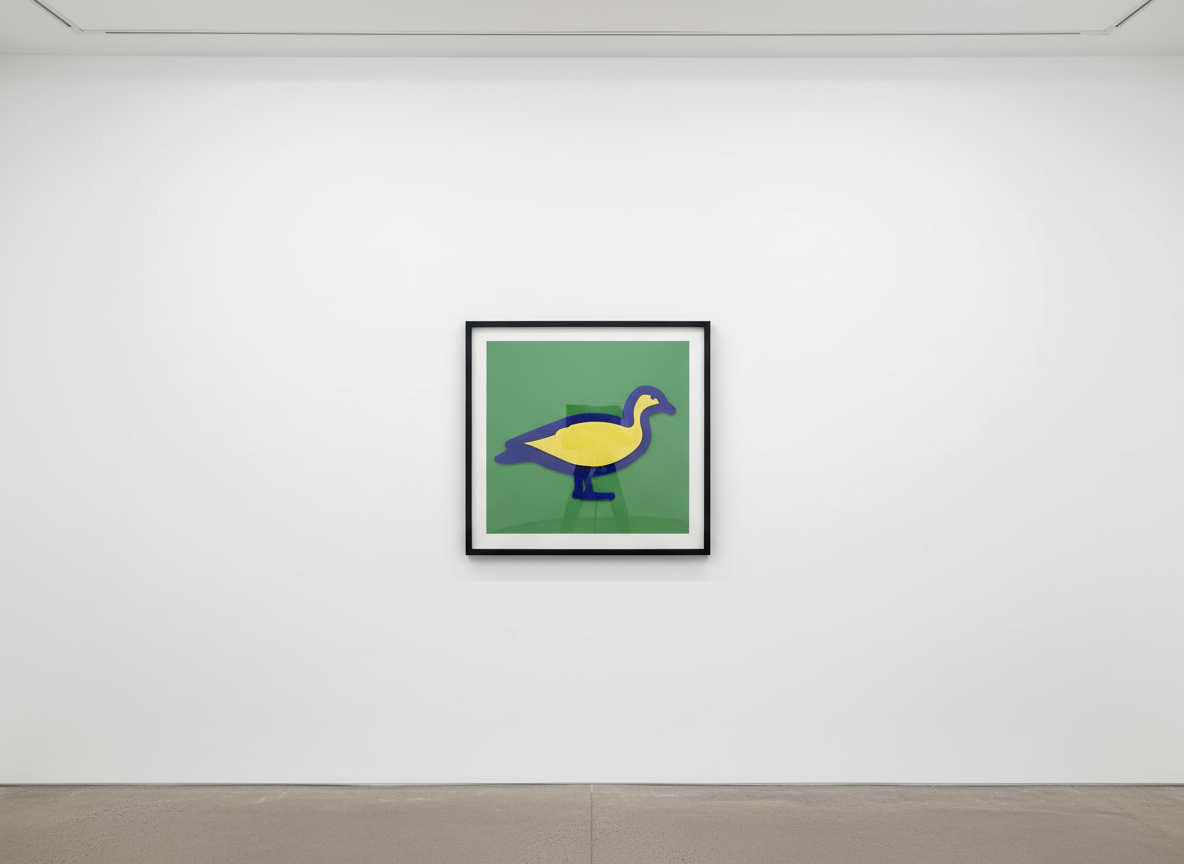
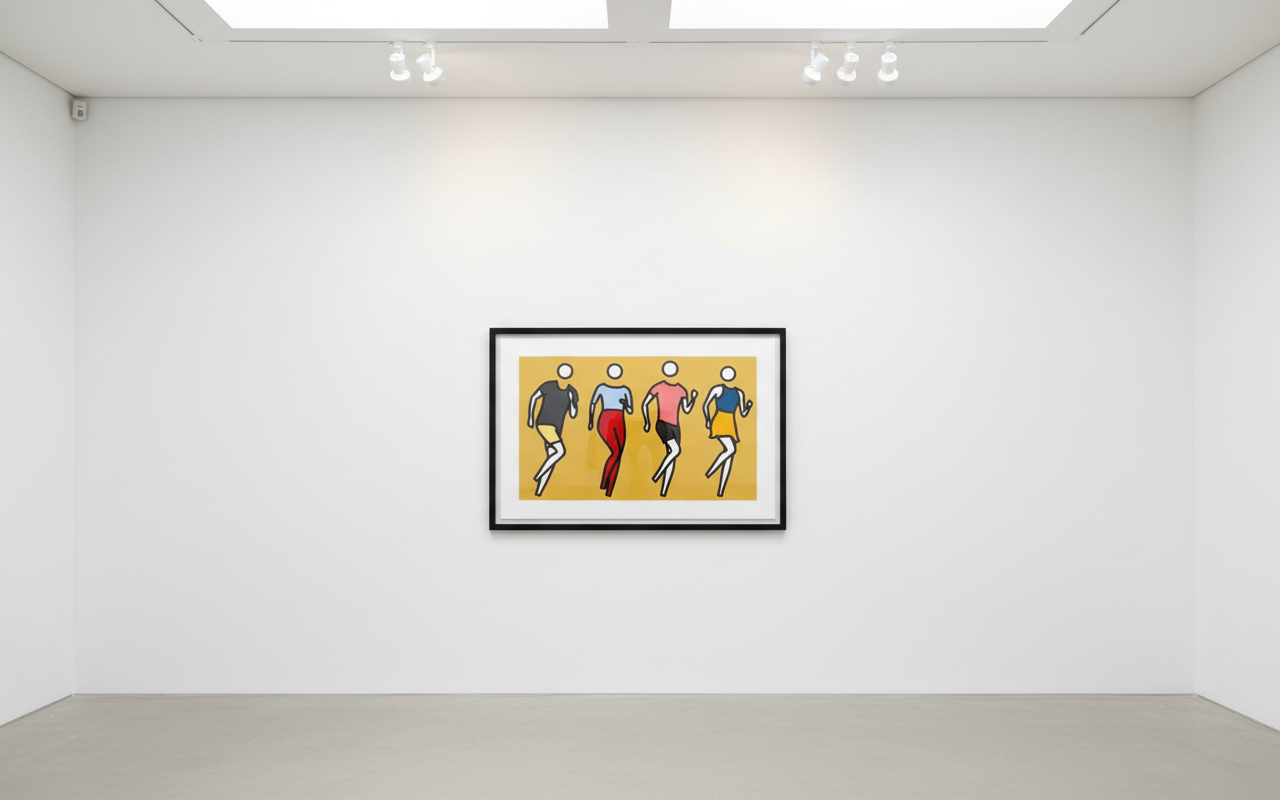
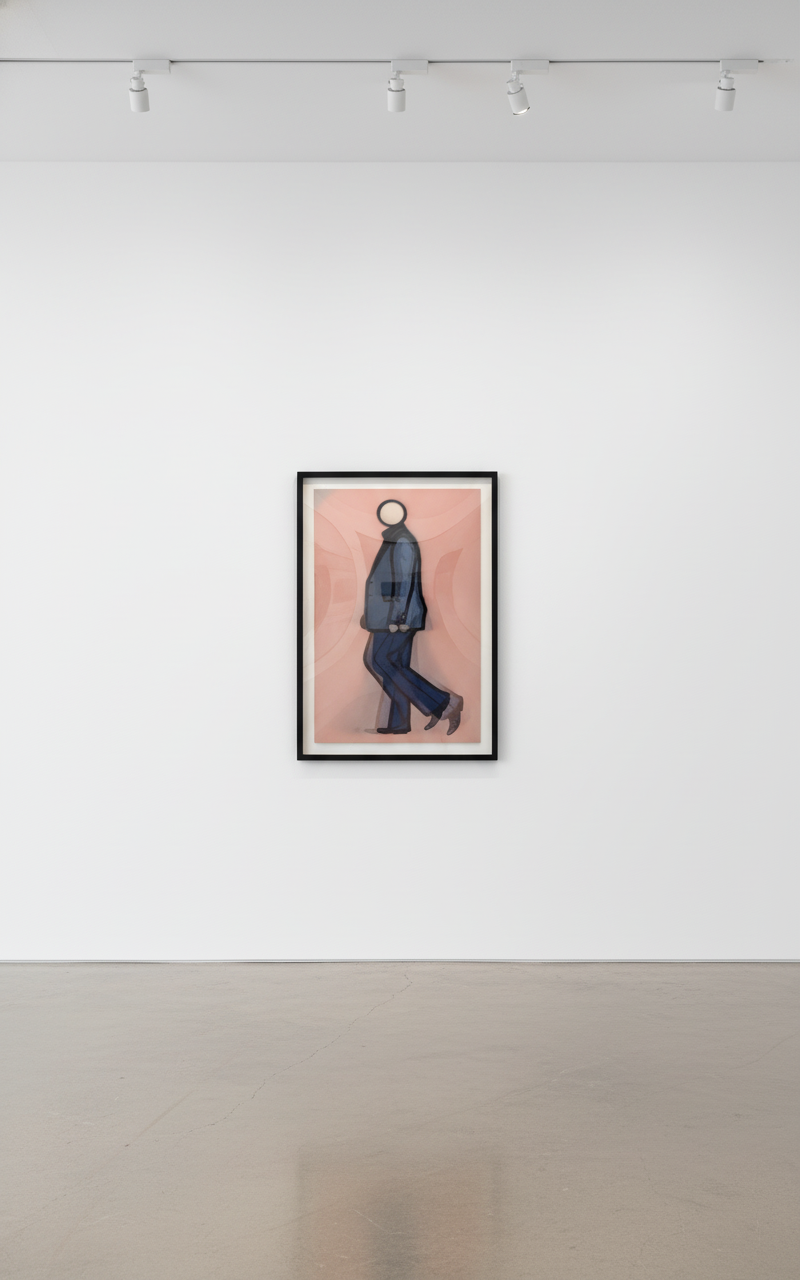
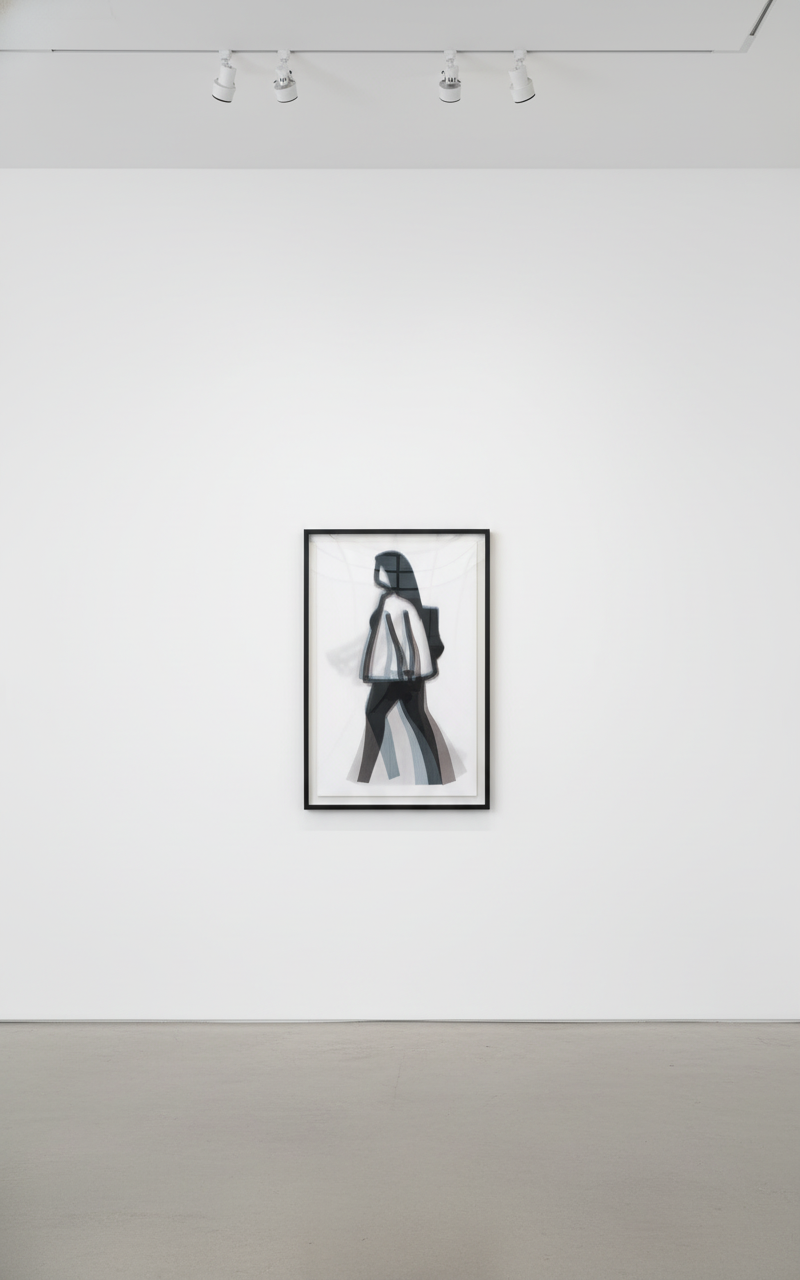
Julian Opie's "Walking" series stands as one of the most immediately recognizable and conceptually rich bodies of work in contemporary art, distilling the universal human act of movement into a visual language that is at once ancient and unmistakably modern. Across this celebrated series, Opie captures figures mid-stride—anonymous yet deeply familiar—reducing the complexity of human locomotion to its essential rhythm through his signature bold outlines and flat planes of color. The result is a meditation on how we move through the world, how we perceive one another in passing, and how the simplest of gestures can become a subject worthy of profound artistic investigation.
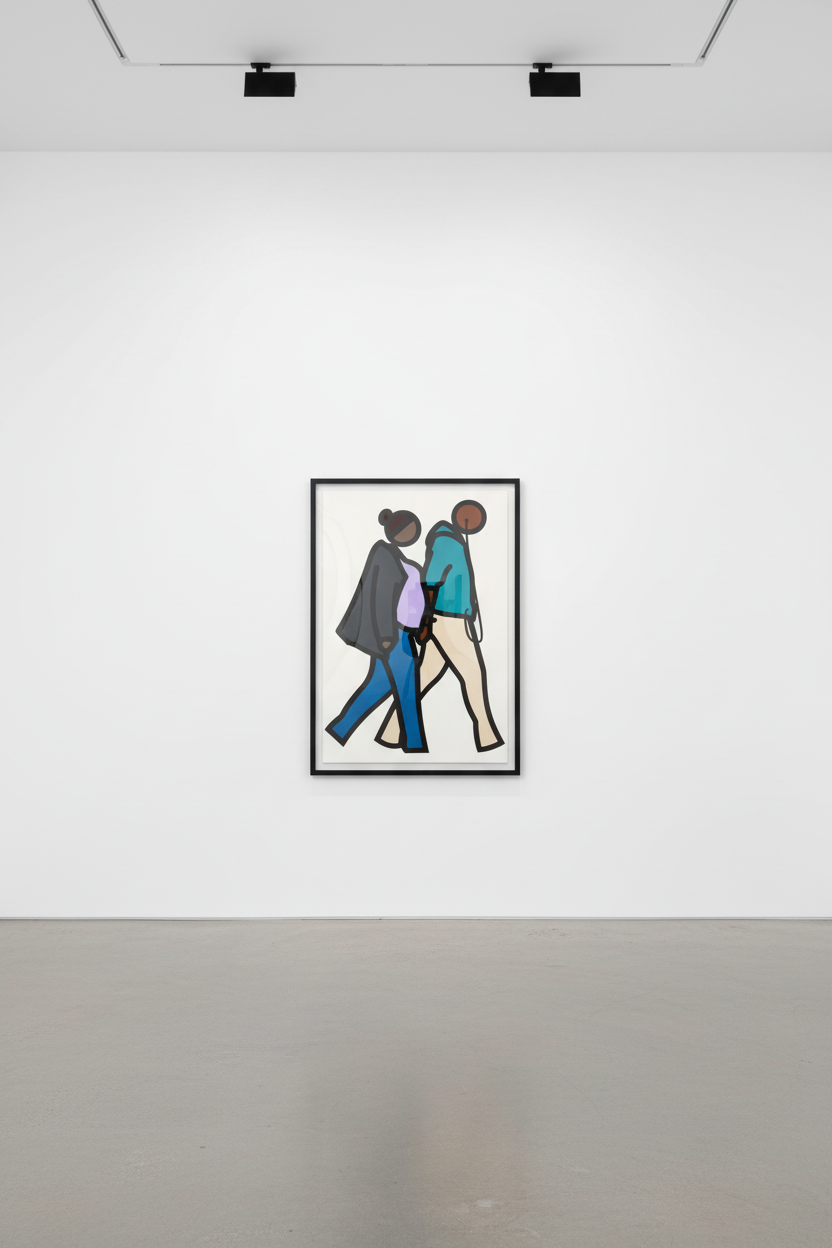
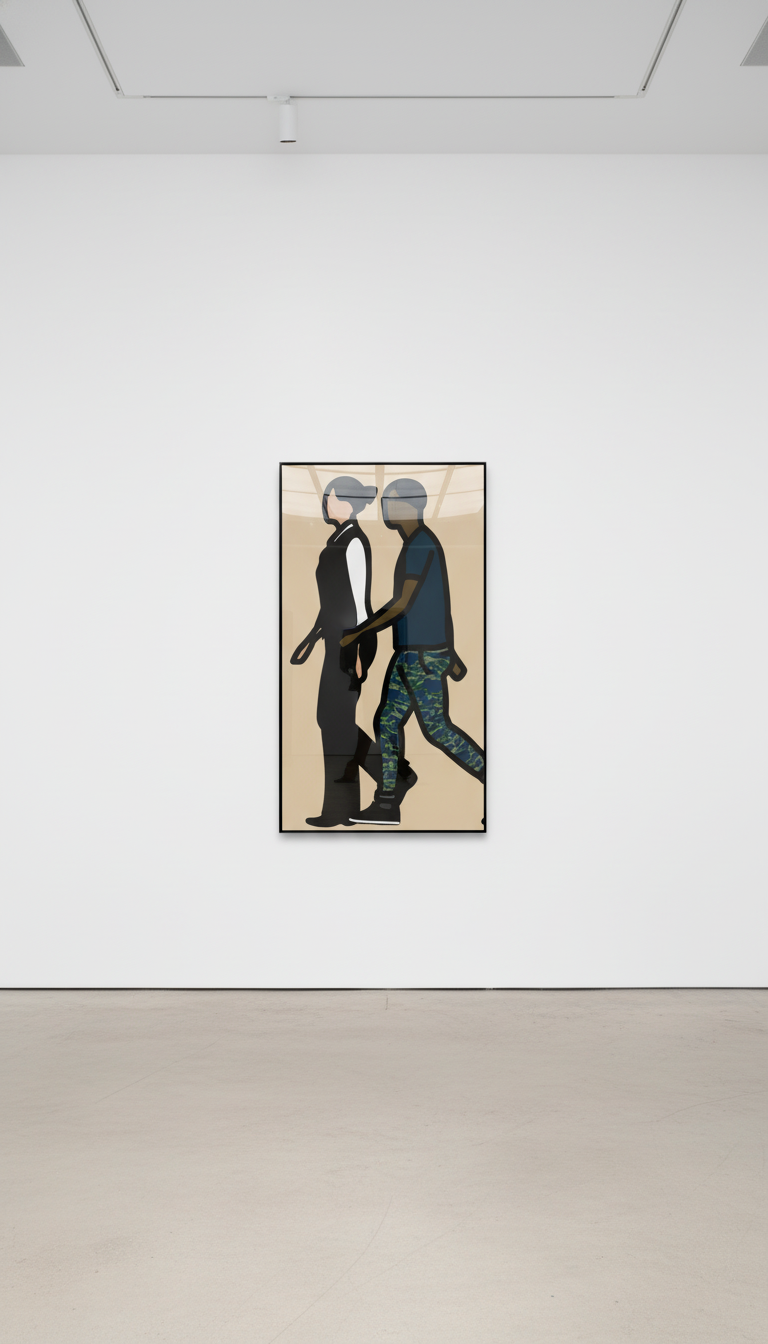
What distinguishes the "Walking" series within Opie's broader practice is its singular focus on the body in transit, stripped of context yet somehow made more present by that very absence. Works such as "Faime and Danielle Walking" present paired figures whose synchronized steps suggest relationship and rhythm without narrative explanation, while pieces like "Natalie Walking 2" and "Sian Walking 3" isolate individual subjects, transforming the solitary walker into an archetypal figure. These are not portraits in any traditional sense—Opie deliberately removes the markers of individual identity that we typically rely upon to know one another. Facial features are reduced to minimal dots and lines, clothing becomes pure color field, and yet each figure retains an undeniable sense of personhood. This tension between anonymity and presence lies at the heart of the series, inviting viewers to project their own narratives onto these silent pedestrians.
The geographic scope of the "Walking" series reveals Opie's fascination with the universal nature of human movement across cultures and climates. "Walking In New York 1" captures the distinctive pace and energy of Manhattan's streets, while "Walking in Melbourne" and "Walking In The Rain, Seoul" extend this study to vastly different urban environments. The inclusion of weather—particularly in the evocative "Walking In The Rain, London" and the broader "from Walking In The Rain" subset—adds atmospheric dimension to works that might otherwise exist outside of time and place. Rain transforms walking into something more deliberate, more conscious, and Opie's treatment of these conditions demonstrates his ability to convey environmental circumstance through the most economical of means. An umbrella becomes a bold geometric form; the posture of a figure shifts almost imperceptibly to suggest shelter-seeking; the color palette darkens to intimate gray skies without ever depicting them directly.
Opie's technical approach in the "Walking" series draws from an extraordinary range of influences while remaining wholly original. The flat color and bold outlines recall Japanese ukiyo-e woodblock prints, particularly the work of Hiroshige and his depictions of travelers on the Tōkaidō road. Simultaneously, there are echoes of ancient Egyptian wall paintings in the profile positioning and stylized human forms, as well as the clean graphic efficiency of modern signage and digital iconography. Opie has spoken of his interest in the way we process visual information rapidly—how a stick figure on a crosswalk sign communicates "pedestrian" instantaneously across languages and cultures. The "Walking" series operates in this same territory of immediate legibility while offering far greater visual sophistication and emotional resonance than any traffic symbol could achieve.
The process behind these works involves Opie photographing or filming real individuals, then meticulously translating their forms through digital manipulation before rendering them in his chosen medium. This methodology bridges observation and abstraction, ensuring that each walking figure, however simplified, carries the authentic weight distribution and kinetic truth of actual human movement. The figures do not merely represent walking; they embody it with an accuracy that bypasses photorealism to achieve something more essential. Viewers often report a strange sensation when encountering these works—a sense that the figures are perpetually about to complete their stride, frozen in motion yet somehow still moving.
Within the contemporary art market, the "Walking" series has achieved iconic status, appearing in major museum collections worldwide and becoming synonymous with Opie's contribution to the visual culture of our time. These works speak to our increasingly mobile, urban existence—the countless strangers we pass daily, the way we occupy public space, the curious intimacy of sharing sidewalks with people we will never know. In an age of constant movement and fleeting connection, Opie's walking figures offer a moment of contemplation, asking us to truly see the act we perform without thinking, elevated to the status of art.
Guy Hepner is pleased to offer works from Julian Opie's "Walking" series, and collectors interested in acquiring pieces from this defining body of contemporary art are invited to contact our New York team for availability, pricing, and detailed condition information.
8 works available
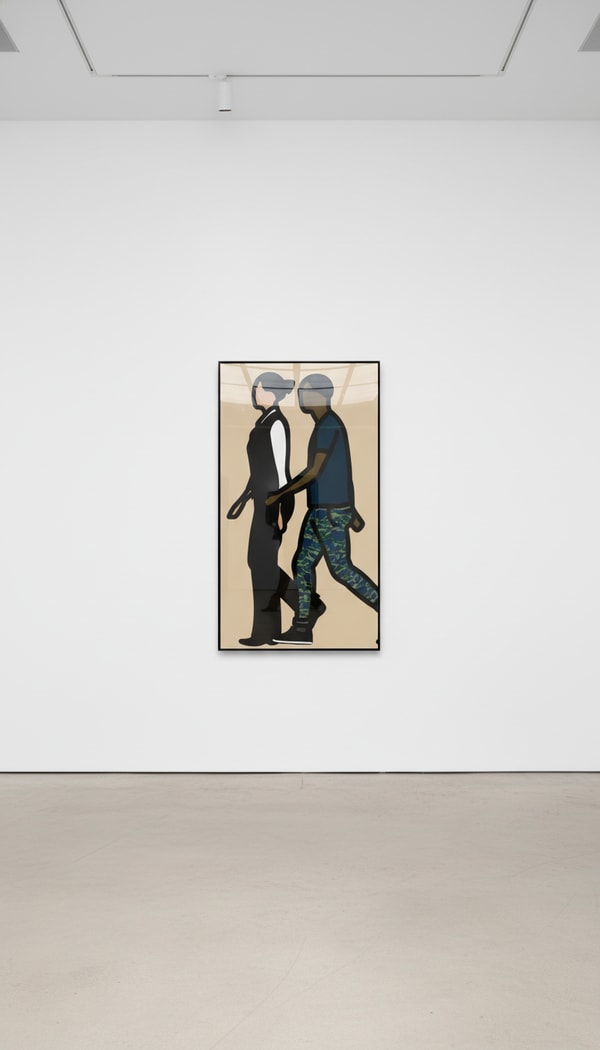
Julian Opie
Faime and Danielle Walking
2016

Julian Opie
Natalie Walking 2
2016
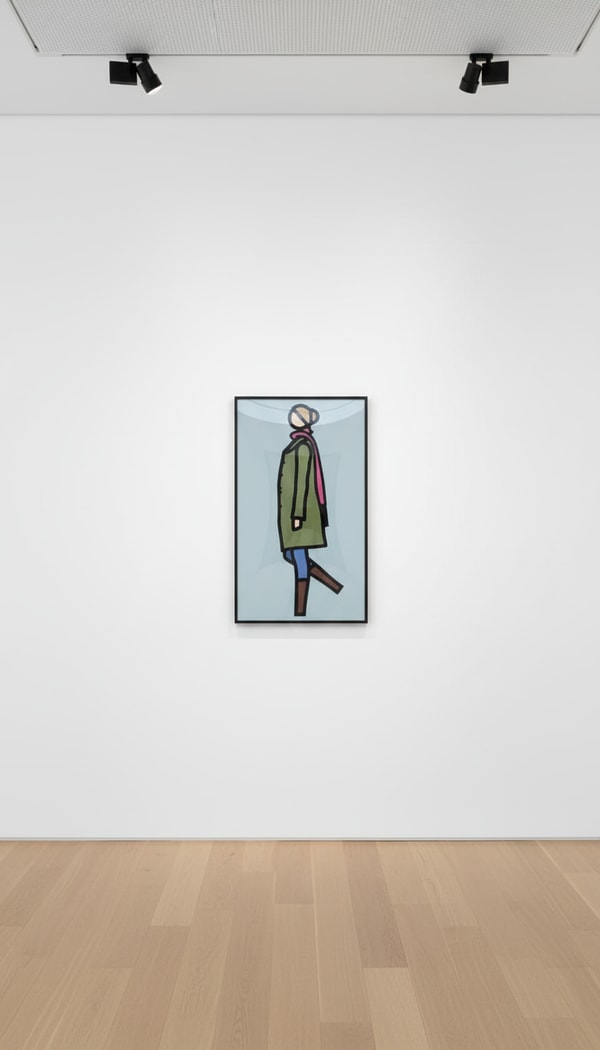
Julian Opie
Sian Walking 3
2013

Julian Opie
Walking in Melbourne
2018
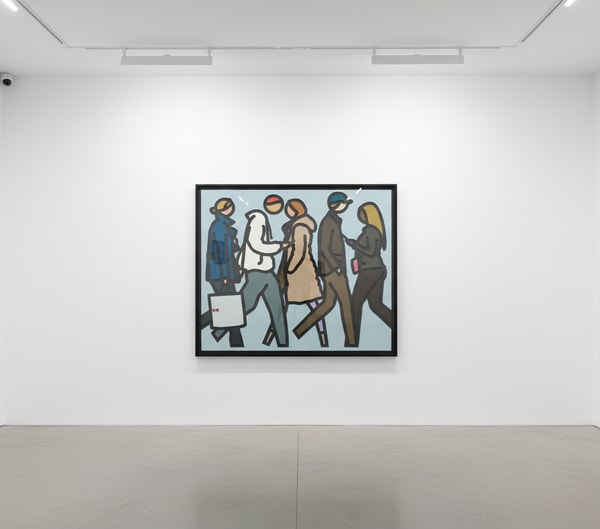
Julian Opie
Walking In New York 1
2019
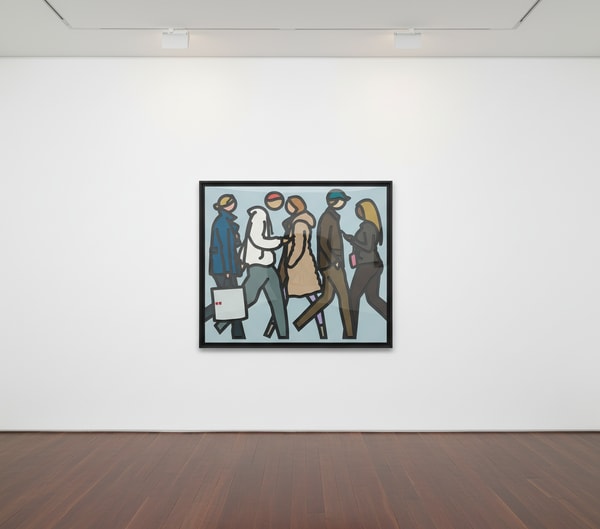
Julian Opie
Walking in New York 7
2019
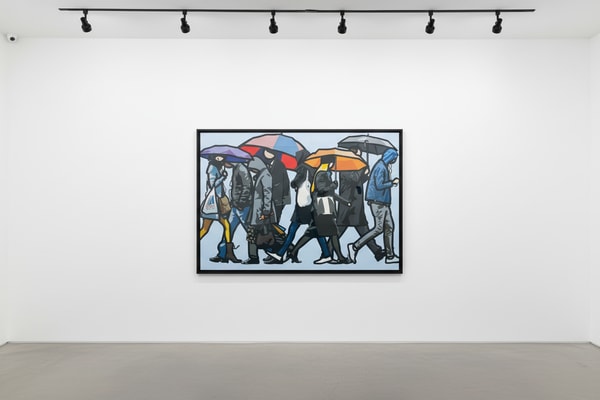
Julian Opie
Walking In The Rain, London
2015
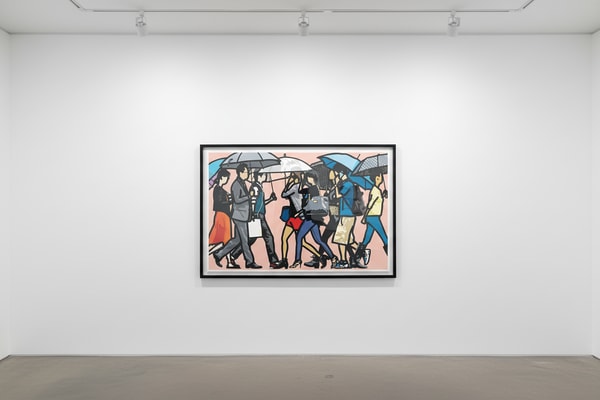
Julian Opie
Walking In The Rain, Seoul, from Walking In The Rain
2015
Five Facts About Julian Opie Walking
Opie is best known for reducing the human figure to its essential outline — flat, coloured shapes and thin black contour lines with minimal facial or bodily detail.
He developed his mature figurative language partly by studying the pictographic simplicity of male and female toilet-door symbols, seeking a way to combine the impersonal with the personal.
His Walking series translates this reductive style into implied motion, presenting figures mid-stride to suggest the rhythm of everyday movement in public space.
Opie has worked extensively with LED and lenticular technology, animating his figures so they appear to walk continuously when installed as public sculptures or screens.
His work draws a direct lineage from Pop Art's engagement with mass communication and signage, updated for a screen-based, data-driven visual culture.
Market Data
See real auction history, estimate ranges and price benchmarks for individual Walking prints, sourced from Christie's, Sotheby's and other major auction houses.
Frequently Asked Questions
Julian Opie Walking prints for sale are available at Guy Hepner Gallery, 177 Tenth Avenue, New York. We offer authenticated editions with full provenance documentation sourced from the secondary market and directly from publishers.
Julian Opie Walking works — 8 available — are typically produced as limited editions, individually signed and numbered by the artist. Contact Guy Hepner Gallery for edition details on specific works.
Pricing for Julian Opie Walking prints varies by edition size, date, and condition. Contact Guy Hepner Gallery for current market pricing and availability.
More Julian Opie Series
View all Julian Opie works →