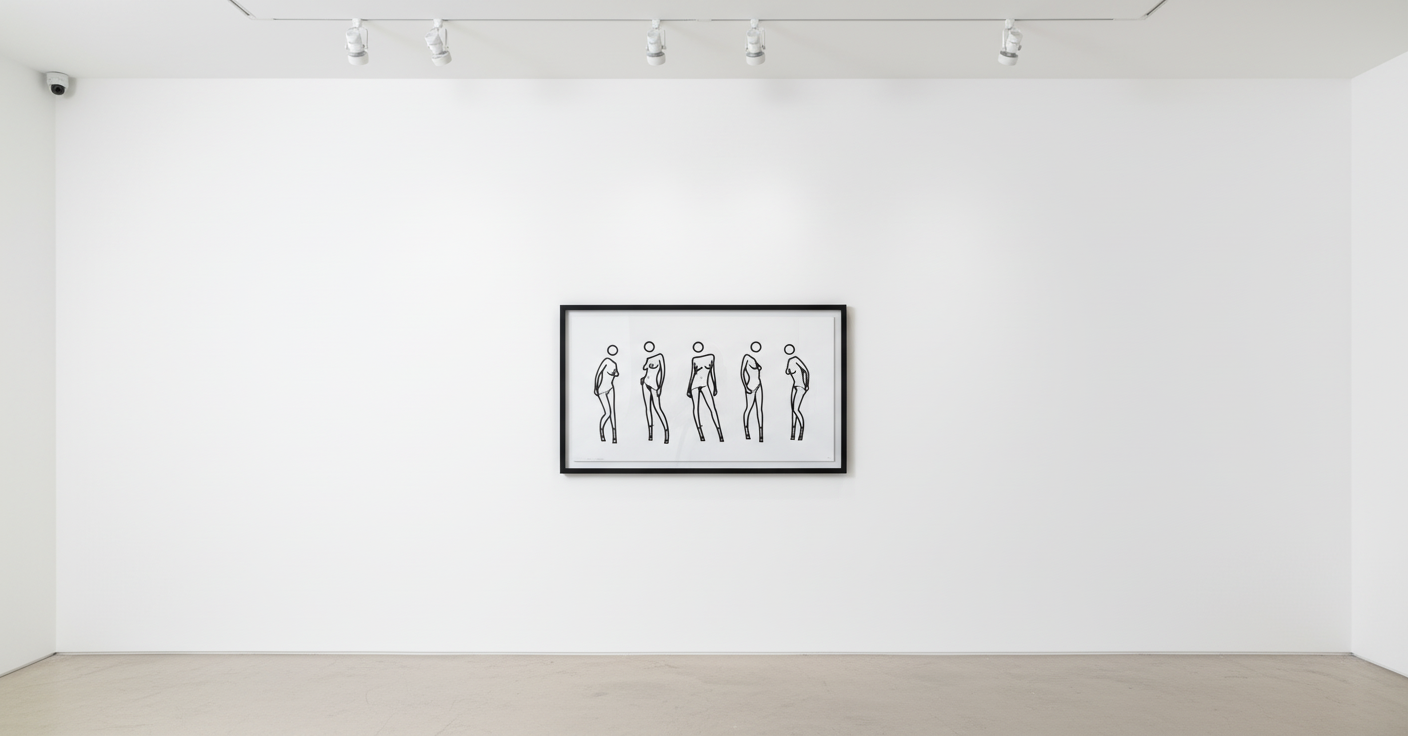
Bijou Gets Undressed
6 works

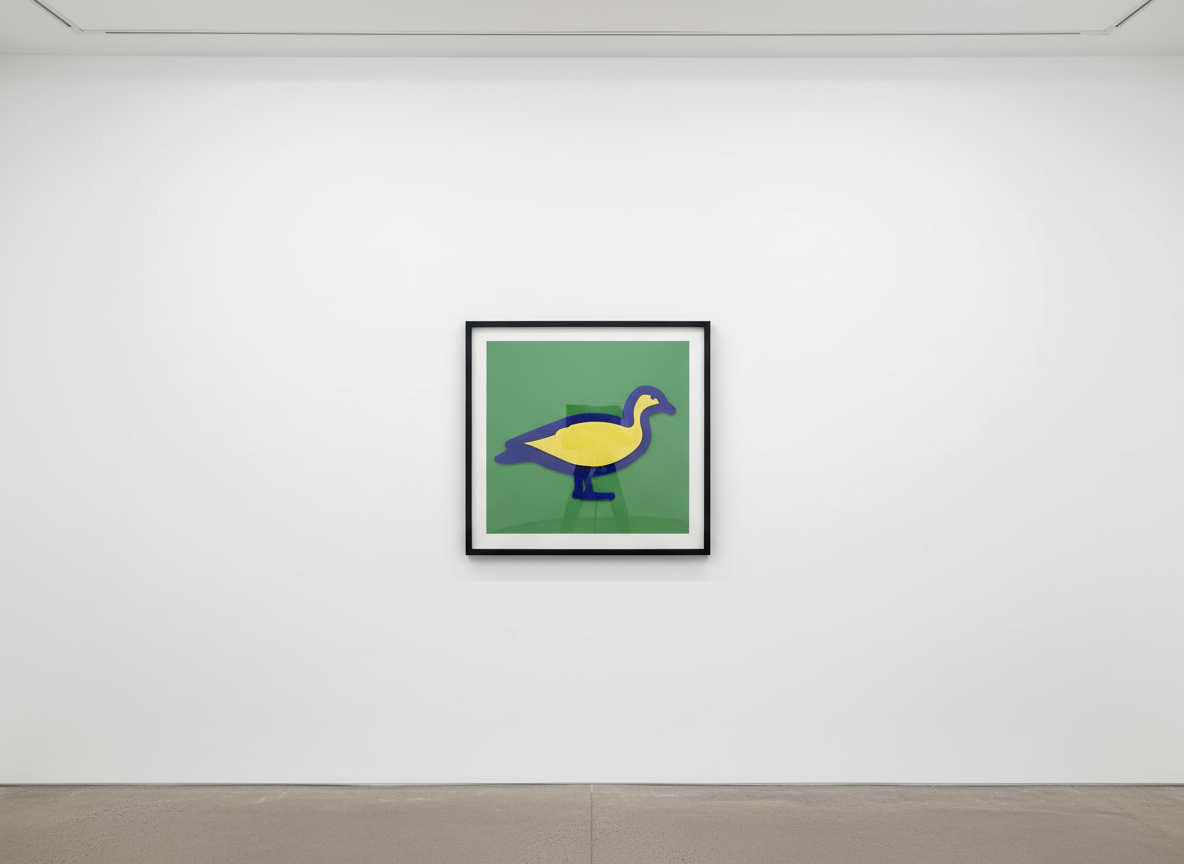
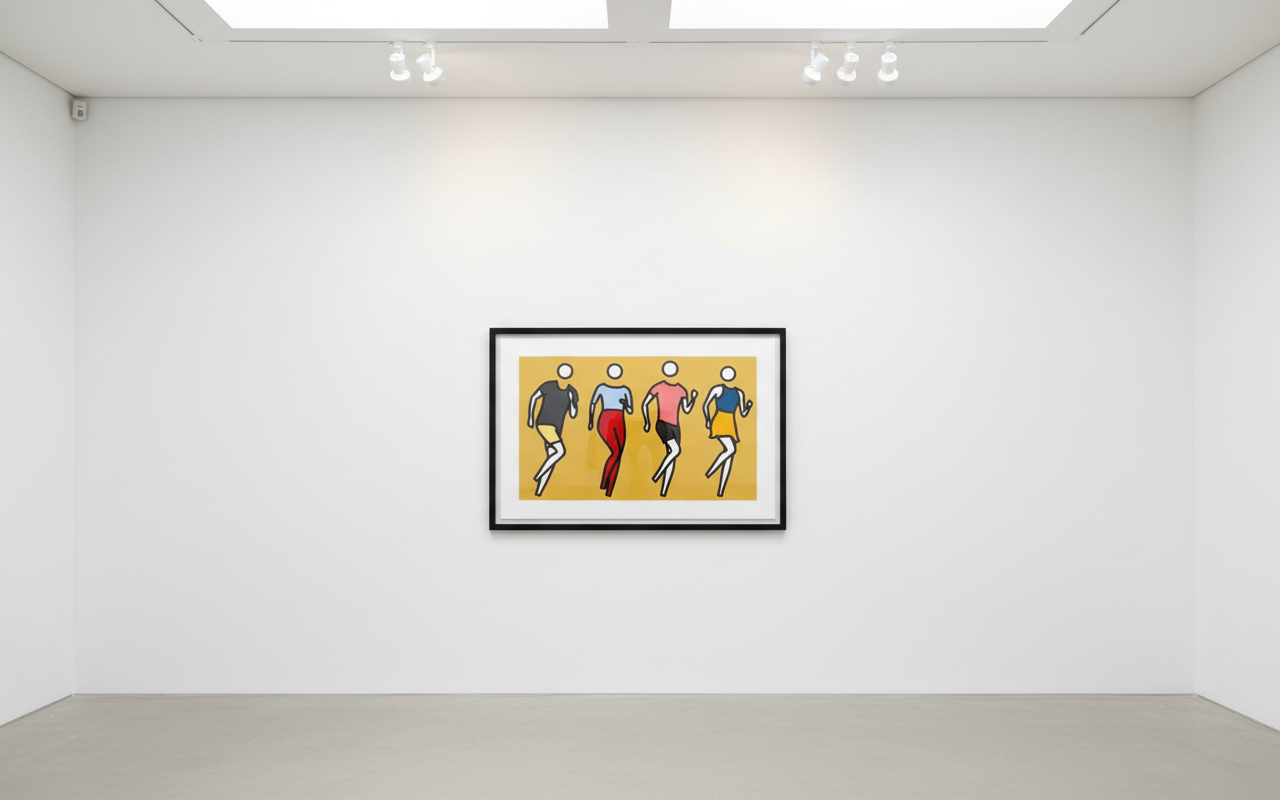
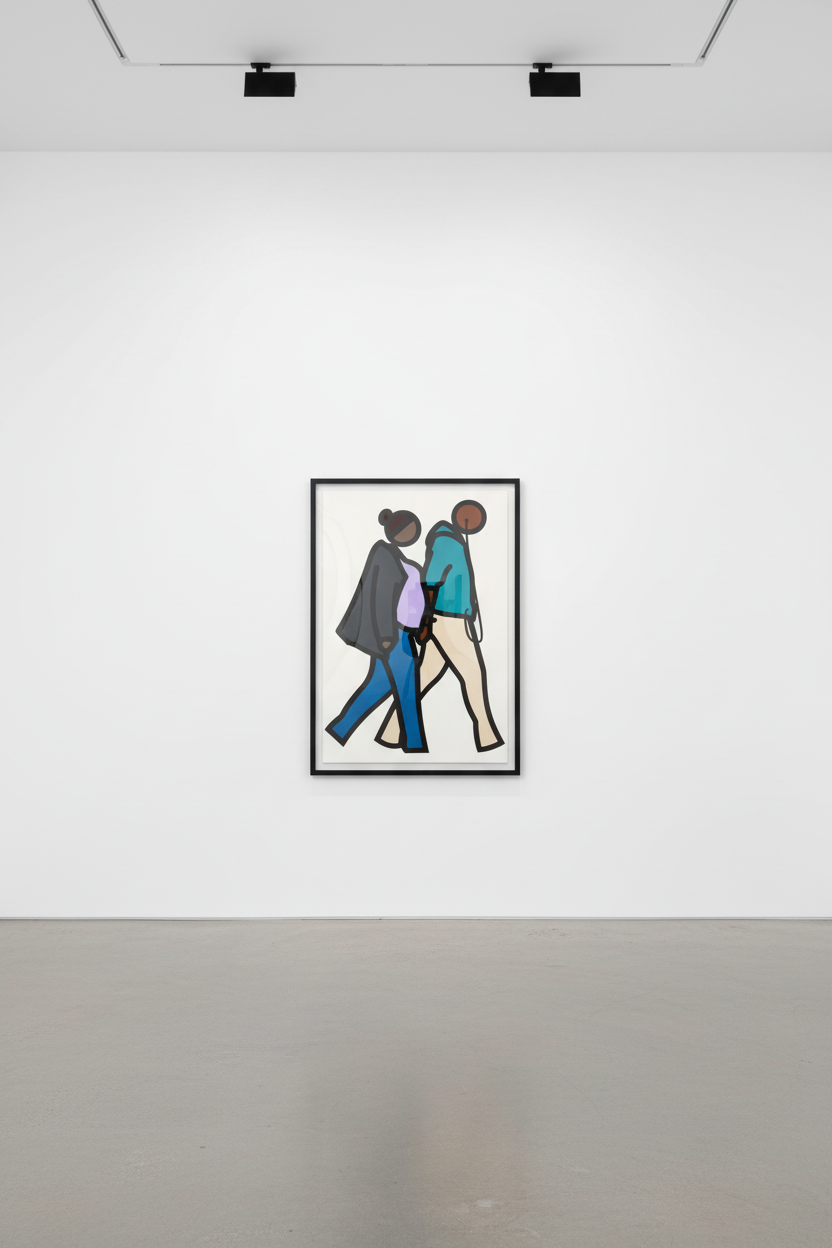
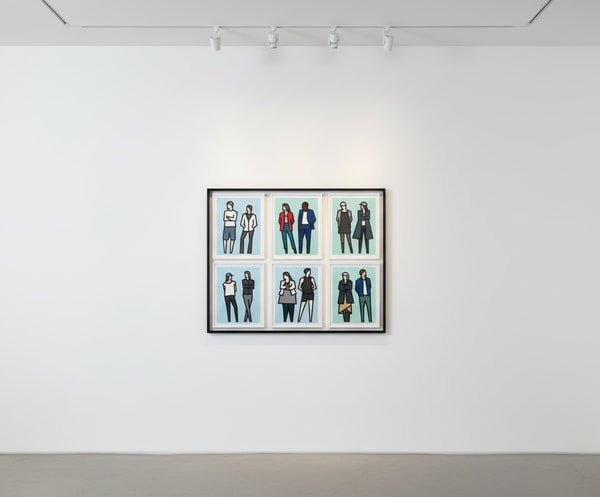
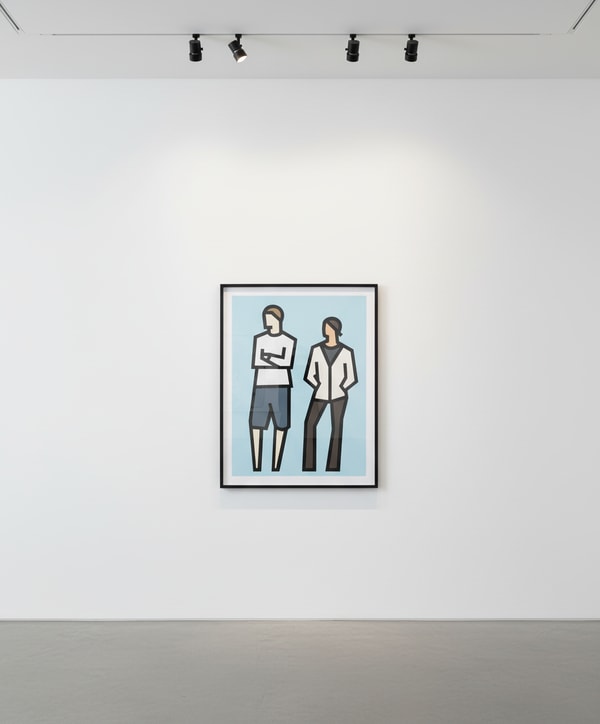
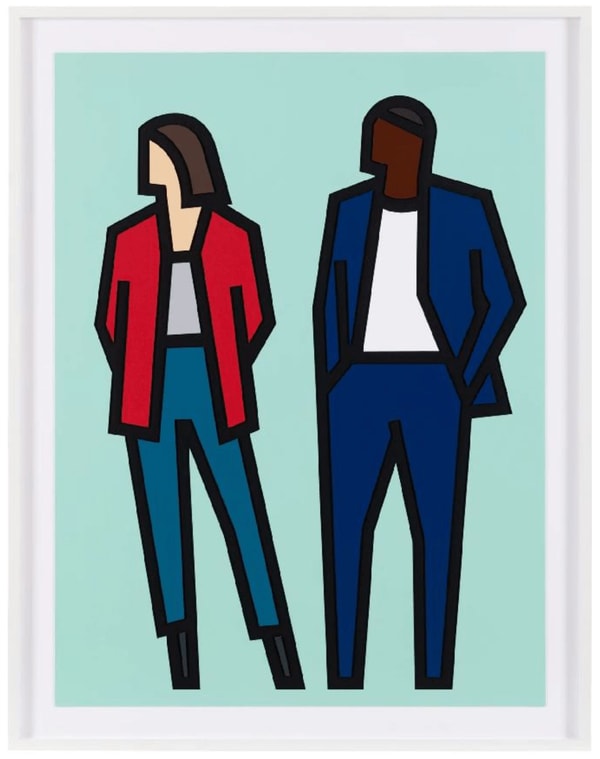
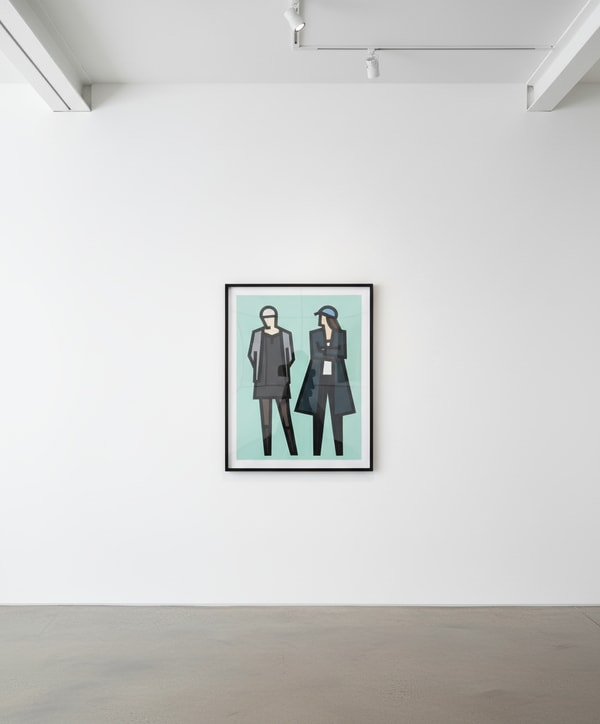
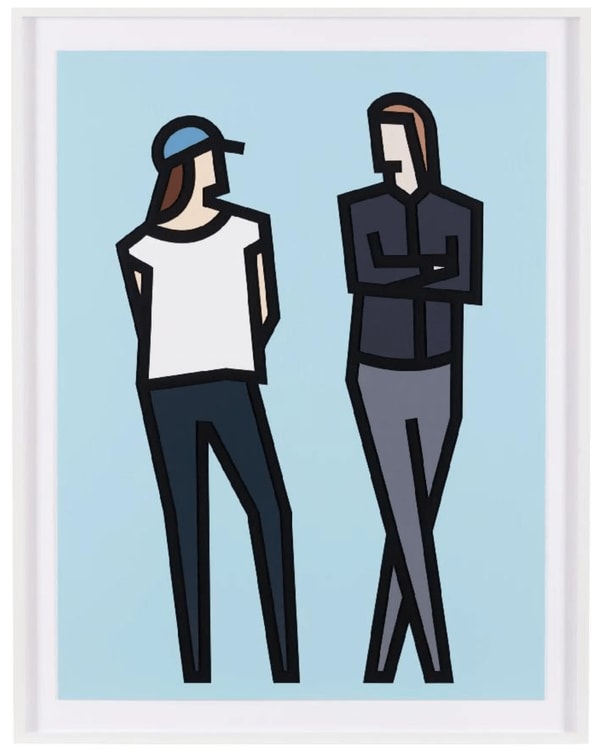
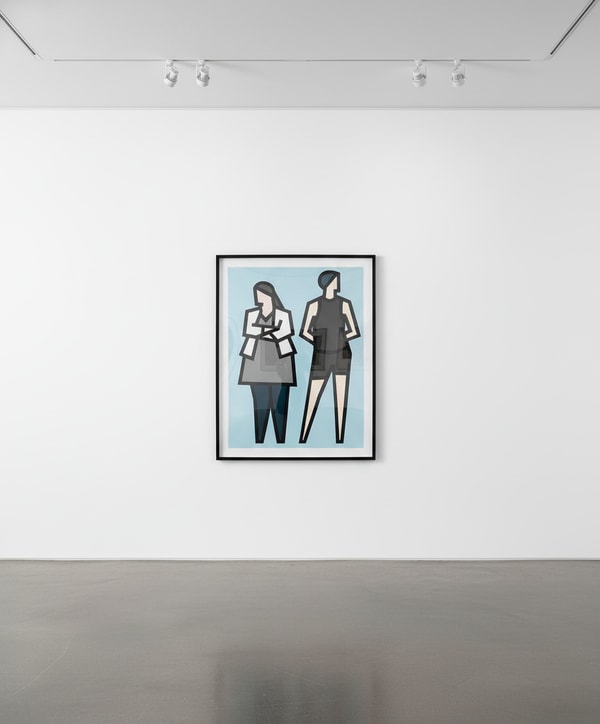
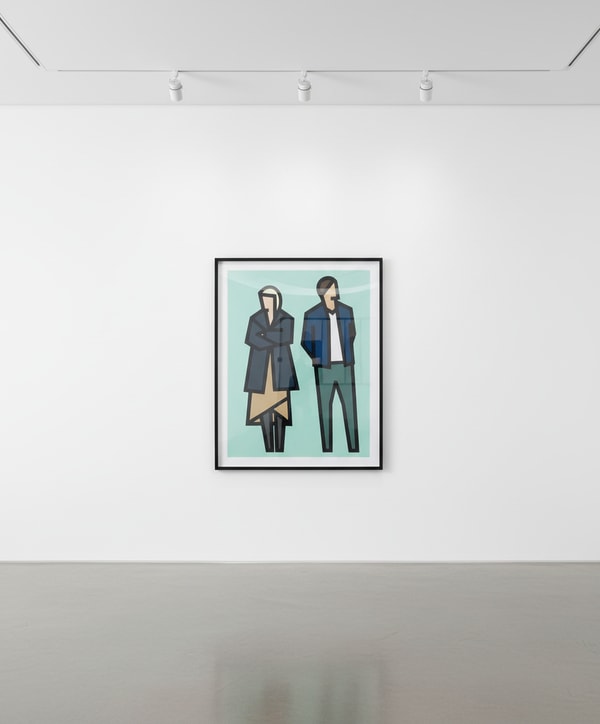
Julian Opie's "Standing Couples" series represents a compelling meditation on human connection, intimacy, and the visual language of partnership as rendered through the artist's unmistakably reductive aesthetic. Created with Opie's characteristic economy of line and his signature approach to flattening the human form into essential contours, this body of work distills the complexity of romantic and interpersonal relationships into their most fundamental visual elements. Each composition presents two figures standing together, their proximity and posture speaking volumes about the nature of human bonds while their faces remain deliberately simplified, allowing viewers to project their own narratives and emotional interpretations onto these anonymous pairings.
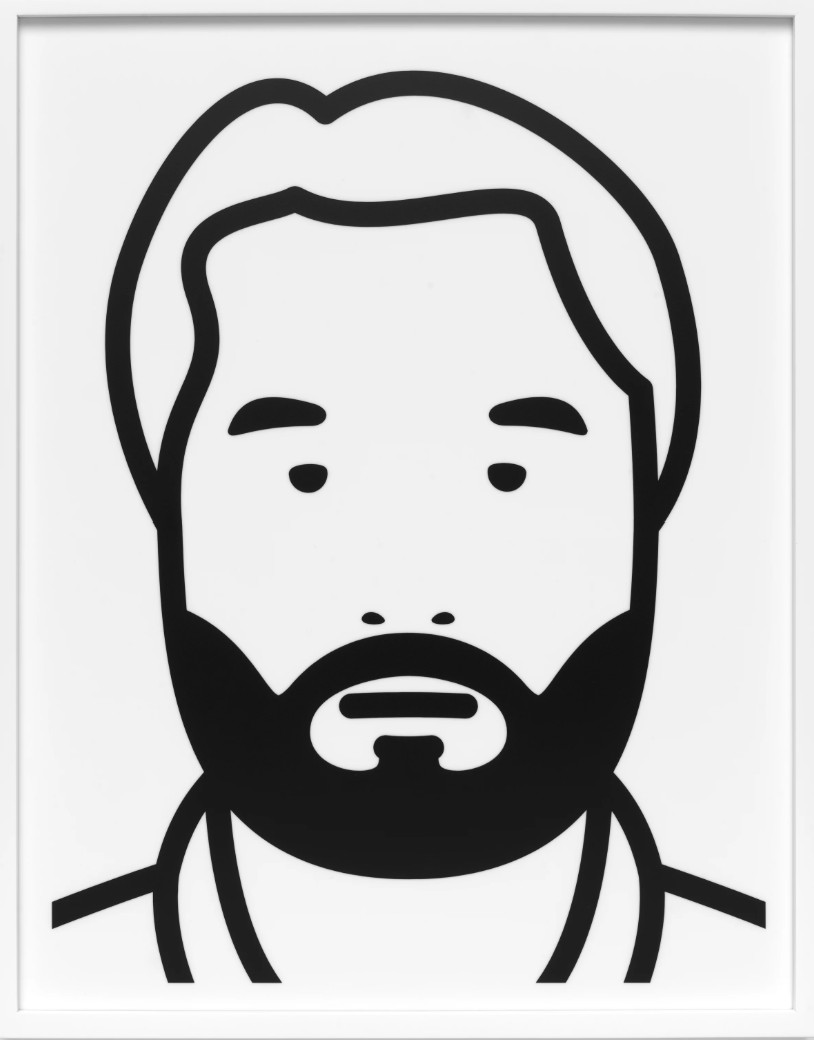
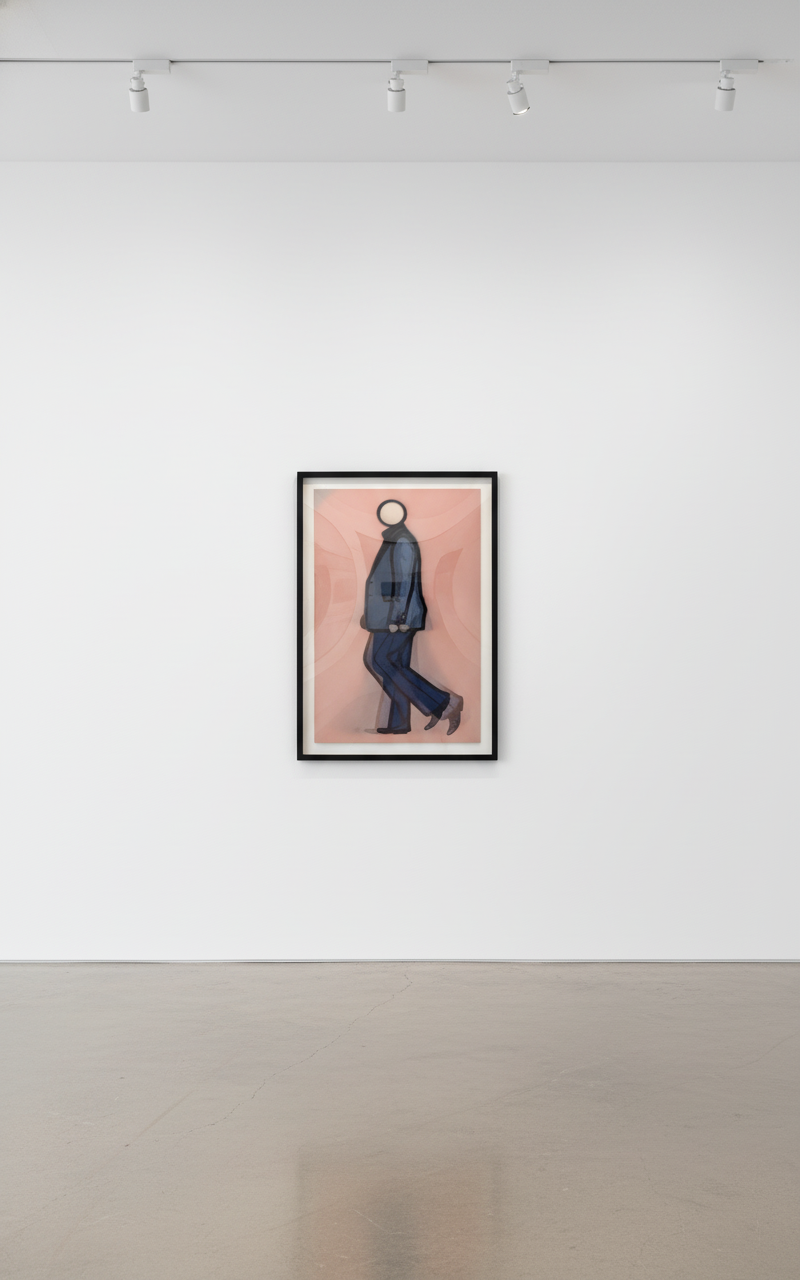
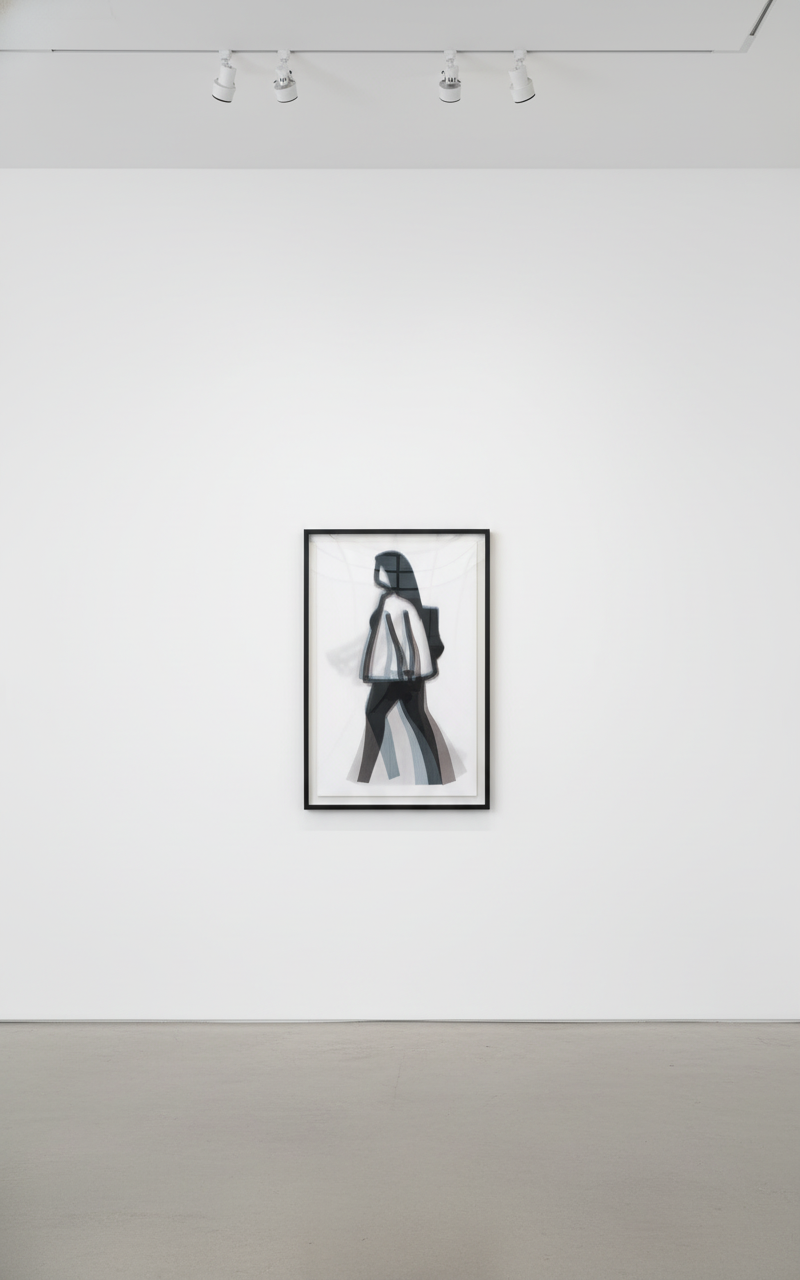
Born in London in 1958, Julian Opie has established himself as one of the most recognizable figures in contemporary British art, with his work held in major international collections and represented by the prestigious Lisson Gallery. His artistic vocabulary—defined by bold black outlines, flat expanses of color, and the systematic reduction of visual information—emerged from his engagement with pop art, minimalism, and the proliferation of signage and digital imagery in contemporary life. While Opie has explored subjects ranging from landscapes and cityscapes to portraits and figures in motion, the "Standing Couples" series offers a particularly intimate glimpse into his ongoing investigation of how we perceive and represent the human figure. Where his walking figures capture the kinetic energy of urban life and his portrait works isolate individual identity, these coupled compositions introduce a relational dimension that sets them apart within his broader practice.
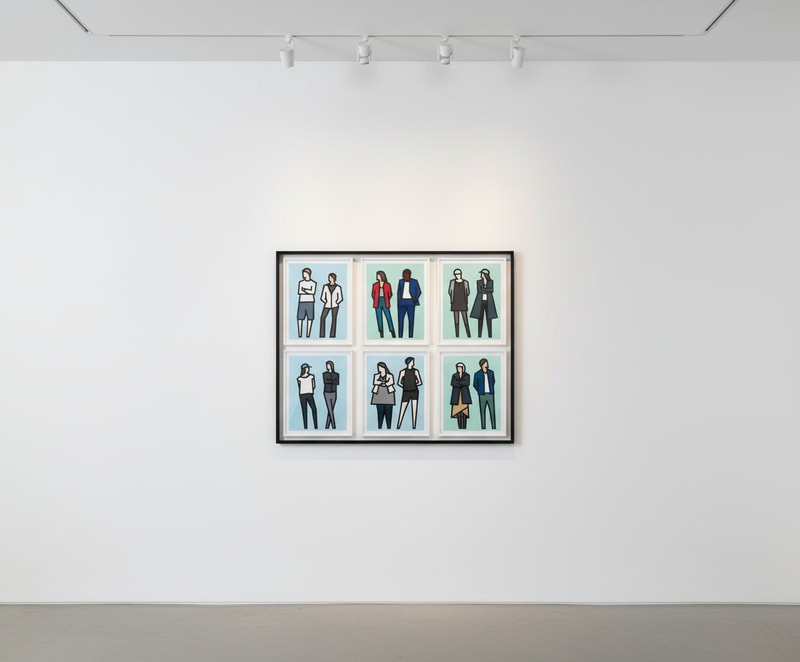
The series encompasses multiple iterations—Standing Couples, Standing Couples 1 through Standing Couples 6—each presenting subtle variations in pose, color palette, and the spatial relationship between the paired figures. This sequential approach is characteristic of Opie's working method, wherein he explores a theme through multiple permutations, allowing viewers to observe how minute adjustments in stance, proximity, or chromatic choice fundamentally alter the emotional resonance of each work. Some couples stand with bodies angled toward one another, suggesting conversation or shared attention; others face forward in parallel, their togetherness implied through alignment rather than interaction. These compositional decisions, though executed with apparent simplicity, reveal Opie's sophisticated understanding of body language and the visual cues through which we unconsciously read human relationships.
What distinguishes the "Standing Couples" series within Opie's oeuvre is its focus on stillness and presence rather than movement. Unlike his celebrated walking figures, which capture the perpetual motion of contemporary existence, these paired subjects exist in a state of repose, inviting contemplation rather than suggesting transience. This static quality transforms the works into something approaching portraiture, though Opie's characteristic anonymity—achieved through the elimination of individuating facial features—ensures that these remain archetypes rather than specific individuals. The figures become universal stand-ins for partnership itself, their simplified forms functioning almost as pictograms for the concept of coupledom in contemporary society.
Opie's technical approach in this series demonstrates his mastery of color as an emotional and compositional tool. The flat, unmodulated hues that define each figure's clothing and skin create bold graphic impact while simultaneously flattening pictorial space in a manner reminiscent of Japanese woodblock prints—an influence the artist has openly acknowledged. The careful selection of colors for each couple establishes visual harmony or productive tension between the paired figures, with complementary or contrasting palettes subtly reinforcing the relational dynamics at play. Background colors, typically rendered as solid fields, further contribute to this chromatic orchestration, situating each couple within an environment that is at once nowhere and everywhere.
The series also reflects Opie's engagement with the history of figurative representation, from ancient Egyptian art to contemporary digital interfaces. His reduction of the human form to essential outlines echoes the stylized figures found in hieroglyphics and early portraiture, while simultaneously anticipating the avatar aesthetics of our increasingly virtual world. In this sense, the "Standing Couples" works exist at a fascinating intersection of art historical tradition and contemporary visual culture, offering images that feel simultaneously ancient and futuristic, handcrafted and algorithmic.
For collectors, the "Standing Couples" series presents an opportunity to acquire works that encapsulate the core concerns of Opie's practice while exploring territory that remains distinctly focused within his output. These pieces possess the immediate visual impact and sophisticated conceptual underpinnings that have made Opie one of the most sought-after artists of his generation, with an accessibility that belies their intellectual depth. Whether displayed individually or as part of a larger grouping, works from this series make striking additions to both private collections and public spaces, their bold graphic presence commanding attention while their thematic content invites sustained engagement.
Guy Hepner in New York is pleased to offer works from Julian Opie's "Standing Couples" series, and collectors interested in acquiring pieces from this distinctive body of work are encouraged to inquire directly for availability, pricing, and additional information.
7 works available
Five Facts About Julian Opie Standing Couples
Standing Couples is a 2024 series of six relief prints with collage by Julian Opie on archival Museum Boards.
Each print depicts a pair of figures standing side by side.
The series was released in an edition of 50.
The prints are presented in sprayed white frames specified by the artist, with each framed work measuring 44 1/2 x 35 inches.
Market Data
See real auction history, estimate ranges and price benchmarks for individual Standing Couples prints, sourced from Christie's, Sotheby's and other major auction houses.
Frequently Asked Questions
Julian Opie Standing Couples prints for sale are available at Guy Hepner Gallery, 177 Tenth Avenue, New York. We offer authenticated editions with full provenance documentation sourced from the secondary market and directly from publishers.
Julian Opie Standing Couples works — 7 available — are typically produced as limited editions, individually signed and numbered by the artist. Contact Guy Hepner Gallery for edition details on specific works.
Pricing for Julian Opie Standing Couples prints varies by edition size, date, and condition. Contact Guy Hepner Gallery for current market pricing and availability.
More Julian Opie Series
View all Julian Opie works →