Bijou Gets Undressed
6 works

Julian Opie's "Original Works" series represents the artist at his most refined and immediate, offering collectors an exceptional opportunity to acquire pieces that embody the full spectrum of his distinctive visual language. Throughout a career spanning more than four decades, Opie has developed an unmistakable aesthetic that distills the complexity of contemporary existence into bold, graphic forms that feel simultaneously ancient and urgently modern. This carefully curated collection brings together works that demonstrate why Opie has become one of the most recognizable and influential figures in contemporary art, with each piece serving as a testament to his extraordinary ability to capture the essence of human presence and urban experience through radical simplification.
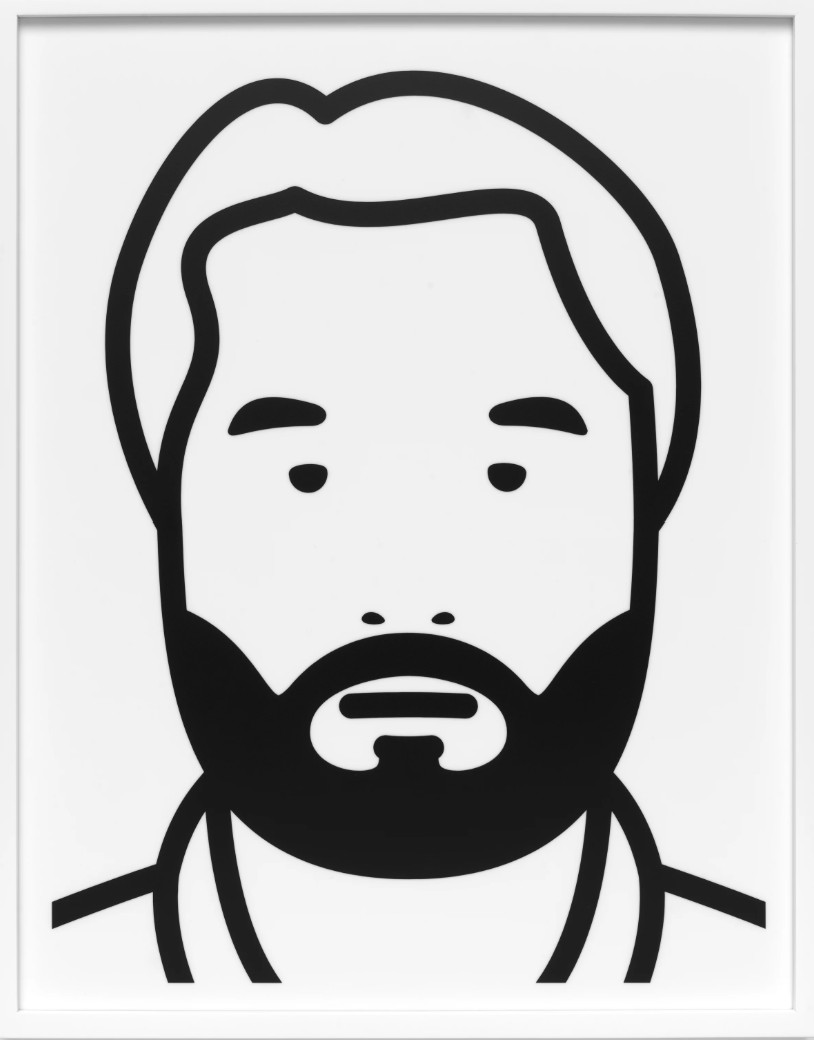
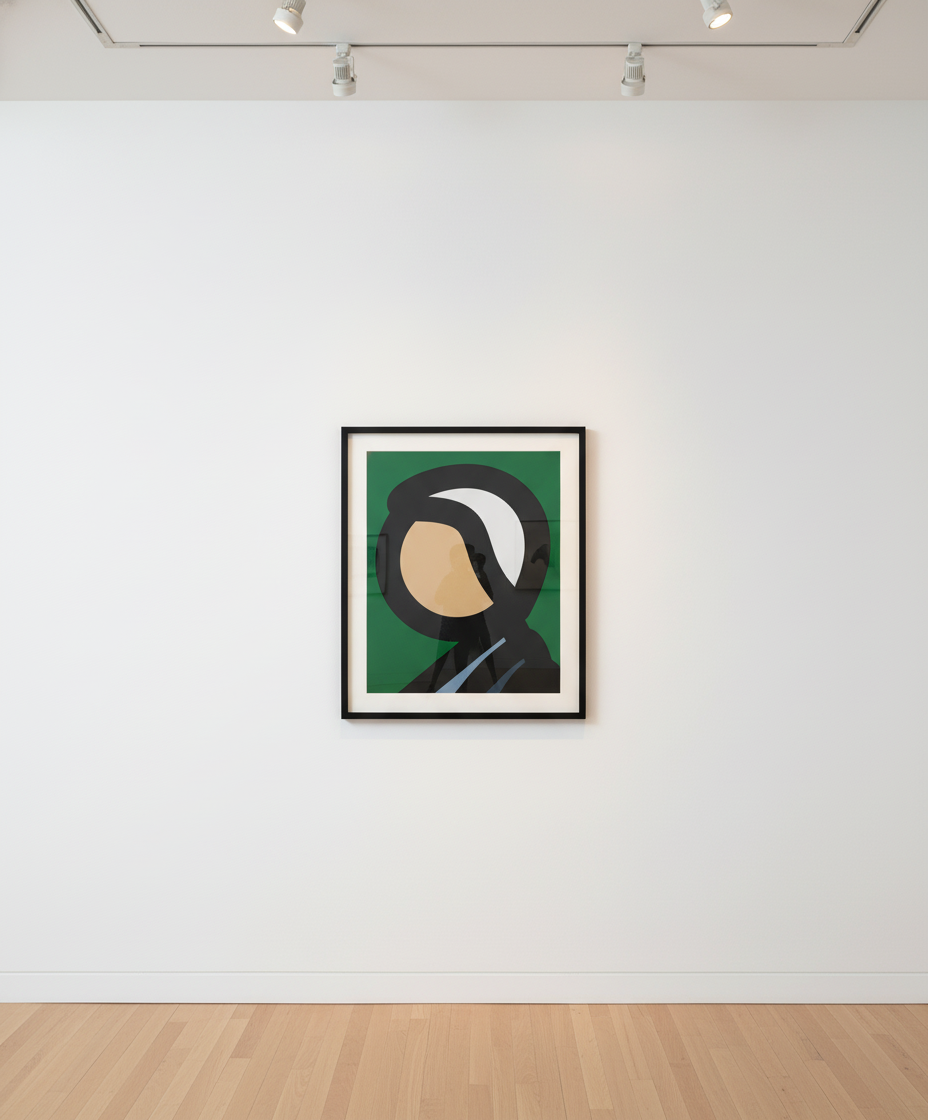
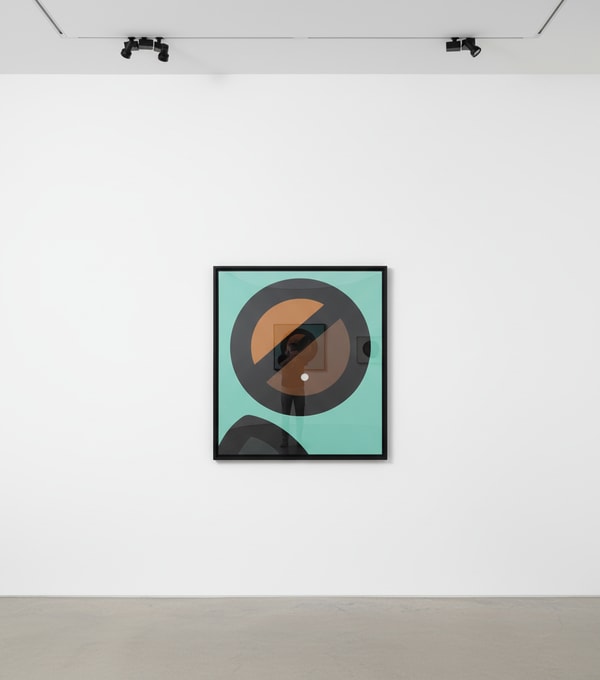
" These are not reproductions or editions but singular artistic statements that carry the full weight of Opie's creative vision. The portraits in this collection exemplify his signature approach to human representation, where faces are rendered with an economy of means that paradoxically intensifies rather than diminishes their individuality. In "Diamond Earring," for instance, the subject emerges through Opie's characteristic reduction of features to essential lines and shapes, yet the personality and presence of the individual remains powerfully intact, a quality that has made his portraits so compelling to collectors and institutions worldwide.
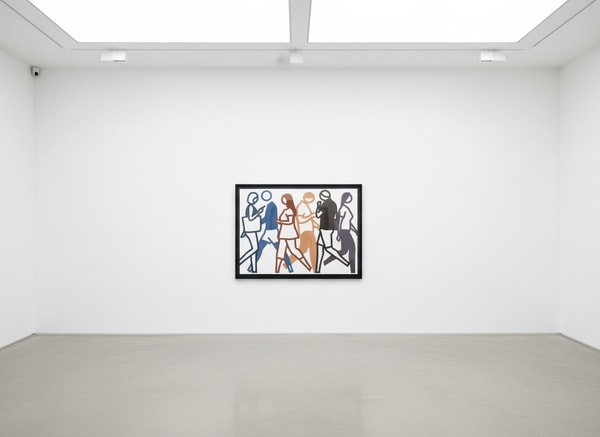
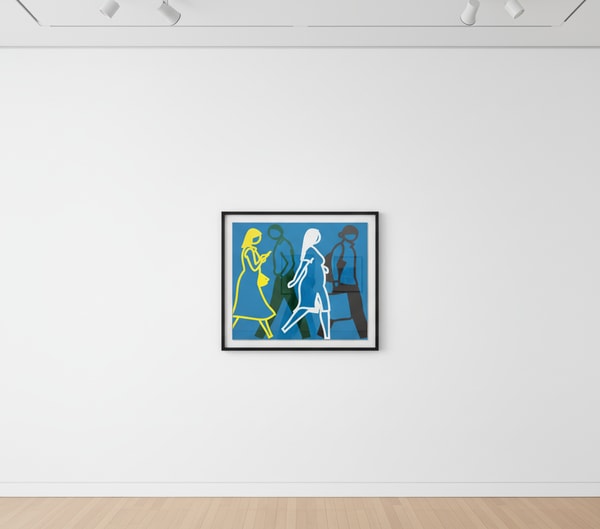
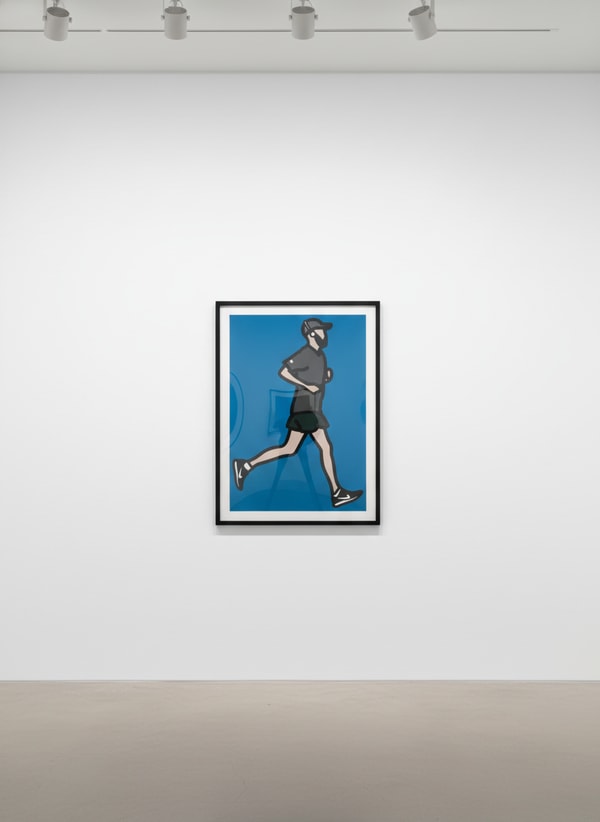
The urban landscape works within this series, including "Old Street August 12" and "Old Street June 3," reveal Opie's ongoing fascination with the built environment and its relationship to those who inhabit it. Old Street, situated in the heart of London's creative district, becomes in Opie's hands a study in geometric harmony and chromatic clarity. These works strip away the visual noise of contemporary city life to reveal underlying structures and rhythms that typically escape conscious attention. The specificity of the titles, anchoring each work to a particular moment in time, introduces a documentary dimension that enriches the formal qualities of the images. Opie transforms the mundane into the monumental, inviting viewers to reconsider spaces they might otherwise pass through without notice.
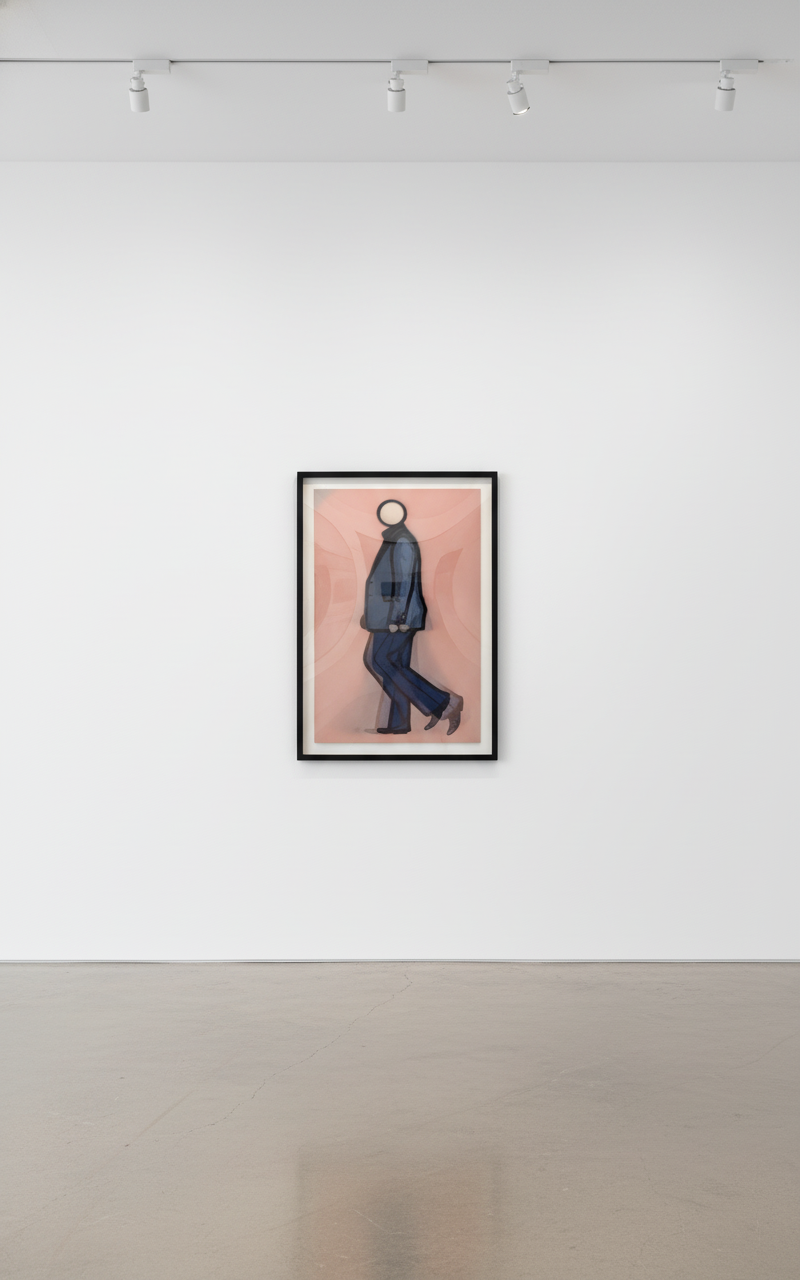
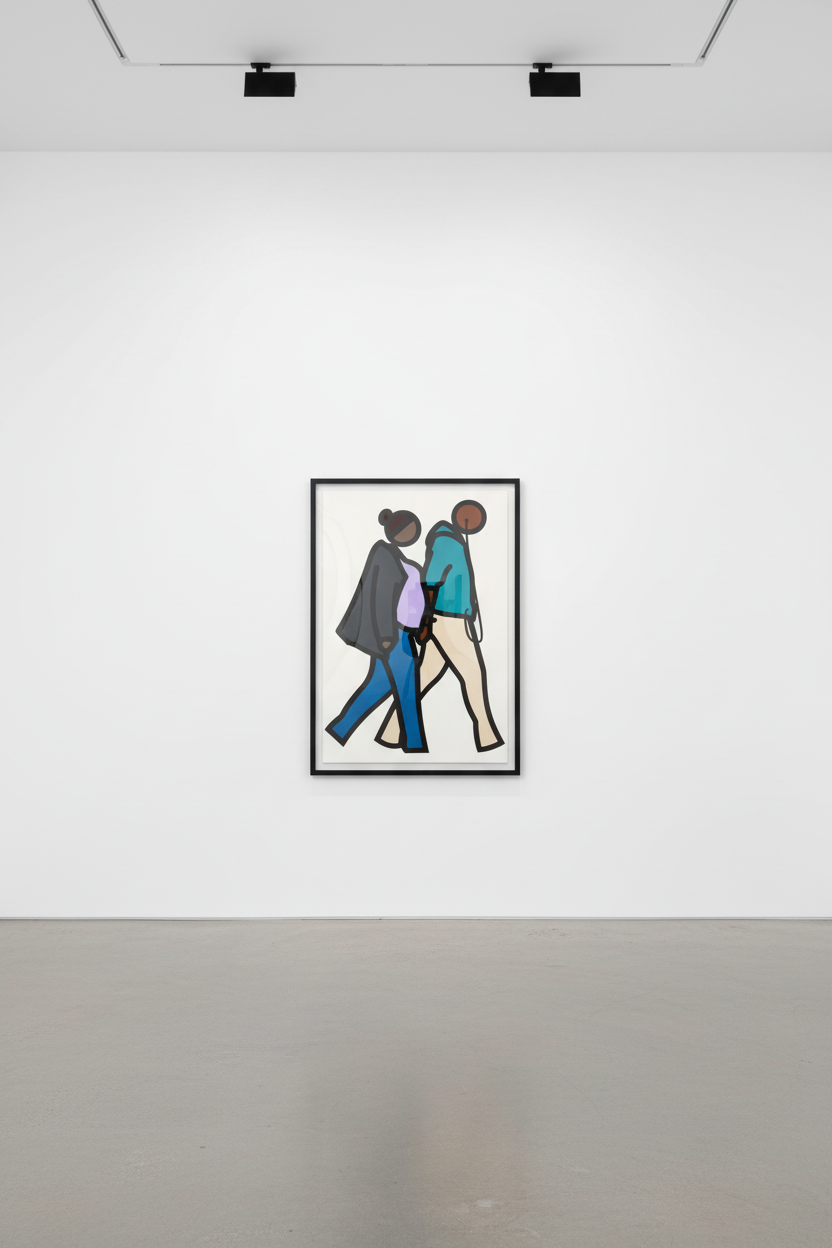
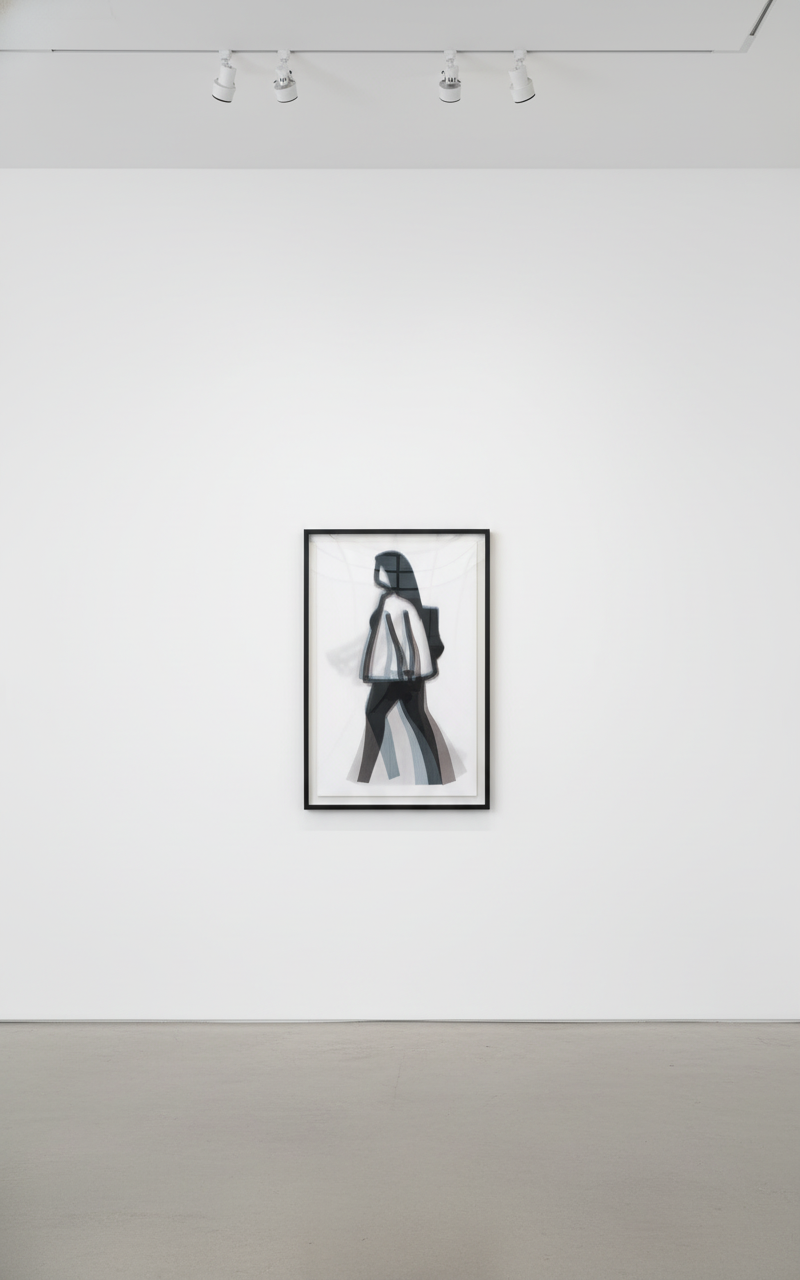
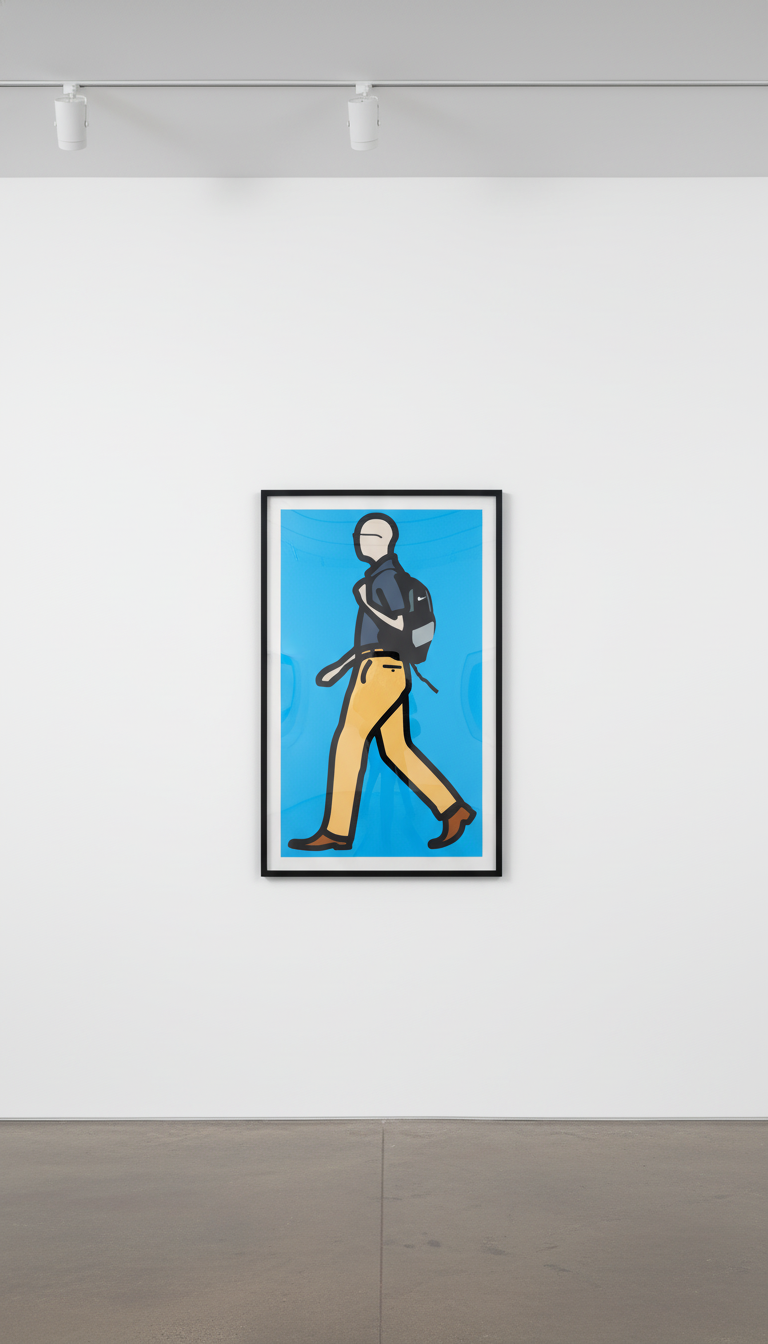
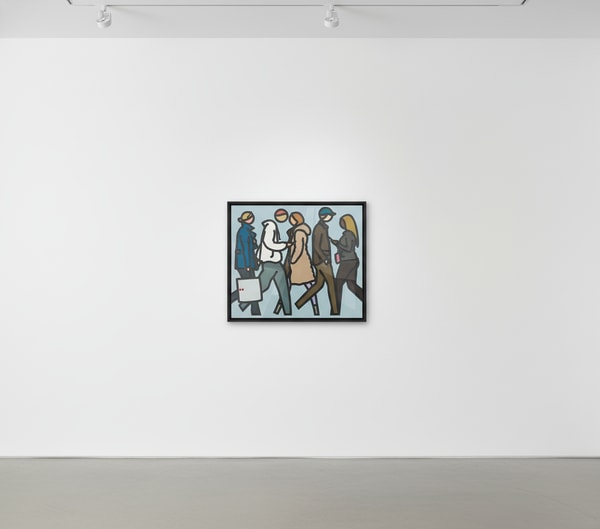
The walking figures that appear throughout this collection represent perhaps Opie's most iconic contribution to contemporary visual culture. Works such as "Walking in Busan 1" and "Walking in New York 6" continue his celebrated exploration of human movement, depicting anonymous pedestrians captured mid-stride with a fluidity that belies the apparent simplicity of his technique. These figures, rendered in flat planes of color bounded by bold black outlines, recall everything from ancient Egyptian reliefs to contemporary digital animation, yet they remain distinctly of their moment. Opie's walkers have appeared on album covers, public installations, and museum walls around the world, yet each original work retains a singular presence that mass reproduction cannot replicate. The choice of locations spanning from South Korea to New York underscores the universality of Opie's vision while acknowledging the subtle differences in posture, dress, and attitude that distinguish one urban population from another.
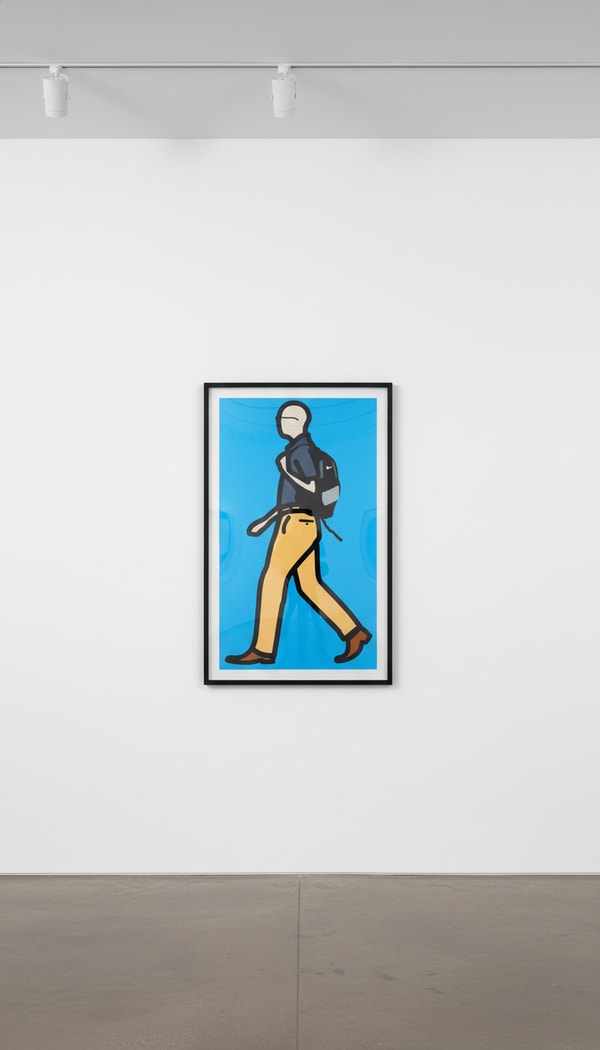
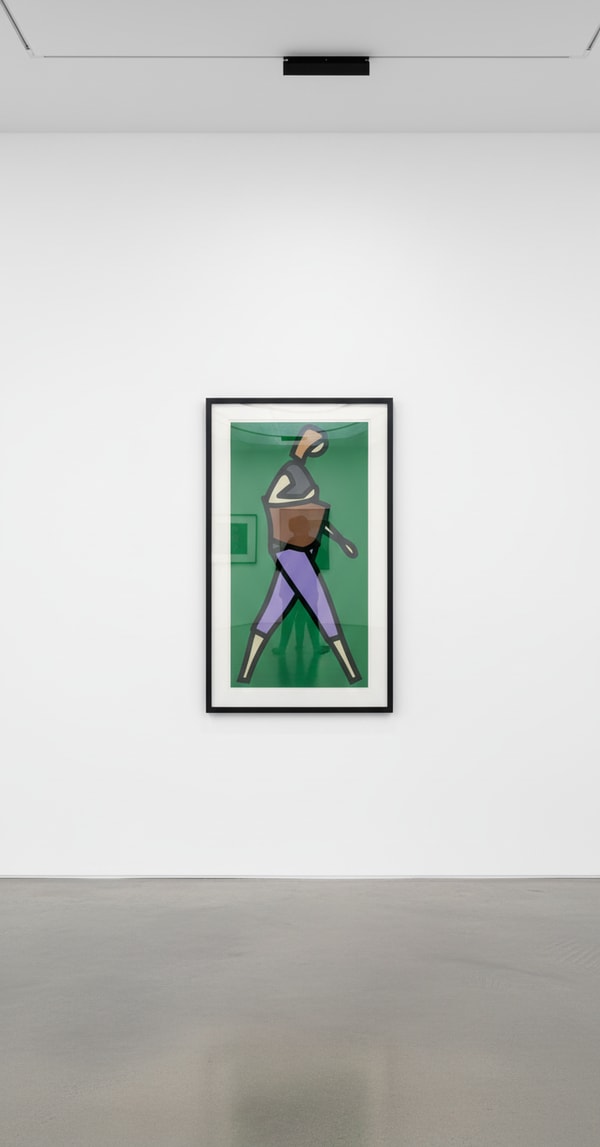
"Academic 2" and "Big Bag" further demonstrate the range contained within this series, with each work approaching its subject through Opie's distinctive lens of simplification and clarification. Whether depicting a scholarly figure or focusing on the everyday object of a bag, Opie applies the same rigorous attention to form and color that characterizes his most ambitious projects. This democratic approach to subject matter, treating the ordinary with the same formal seriousness typically reserved for traditional artistic subjects, has been central to Opie's practice since his emergence in the 1980s London art scene alongside contemporaries who would come to define the YBA generation. Yet unlike many of his peers, Opie has remained committed to a visual language that prioritizes accessibility without sacrificing intellectual depth.
The works gathered in this series share a quality of quiet intensity that rewards extended viewing. What initially appears straightforward reveals increasing complexity upon sustained attention, as viewers begin to appreciate the precision of Opie's color choices, the subtle variations in line weight, and the careful compositional decisions that govern each piece. His art operates at the intersection of representation and abstraction, figuration and design, fine art and popular culture. This liminal position has made Opie's work particularly resonant in an age saturated with images, offering a mode of seeing that cuts through visual clutter to arrive at something essential and enduring.
Guy Hepner is pleased to offer collectors in New York and beyond the opportunity to acquire works from Julian Opie's "Original Works" series, and interested parties are invited to inquire directly for availability, pricing, and additional information about bringing these exceptional pieces into their collections.
Julian Opie has built an internationally recognised body of work defined by radical formal reduction — figures, landscapes, and portraits rendered through flat colour fields and simplified linear outlines that strip his subjects down to their most essential visual information. This distinctive visual language, informed equally by classical portraiture, road-sign design, and Japanese woodblock printmaking traditions, has made his work some of the most immediately identifiable in contemporary British art.
Opie's work is held in the permanent collections of major museums worldwide and has been presented as large-scale public installations internationally, extending his practice beyond the traditional gallery context into shared civic space.
13 works available
Julian Opie
Academic 2
2014
Julian Opie
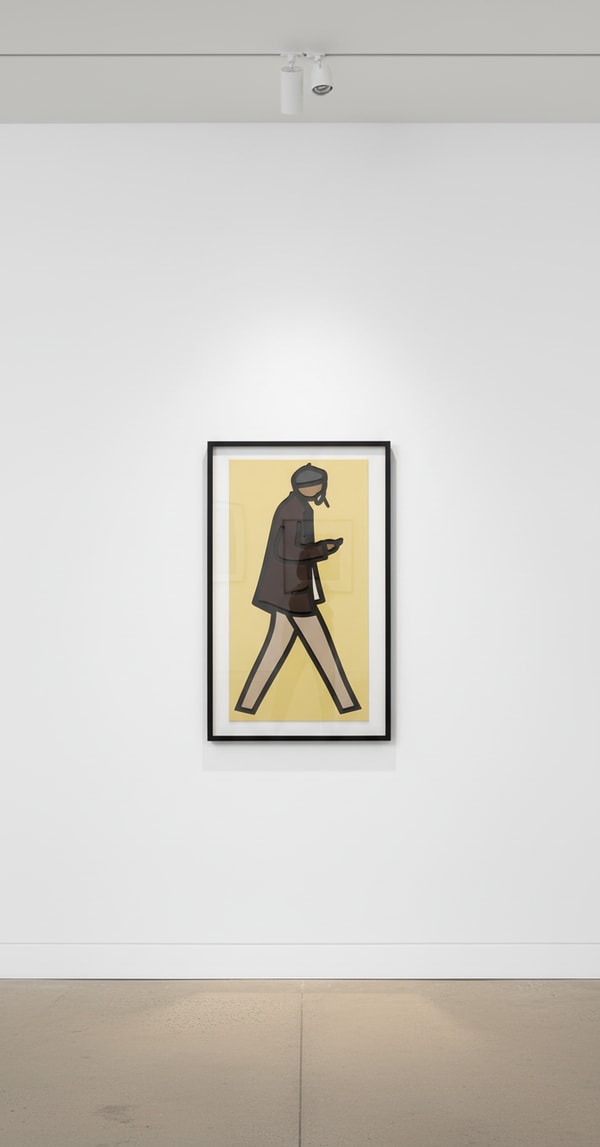
Beret
2019
Julian Opie
Big Bag
2018
Julian Opie
Diamond Earring
2019
Julian Opie
Estate Agent Runner
2015
Julian Opie
Kiri
2019
Julian Opie
Old Street August 12
2020
Julian Opie
Old Street June 3
2019
Julian Opie
Taxi Driver Running
2015

Julian Opie
Teresa John Amy Tim
2019

Julian Opie
This Is Keira 03
2004

Julian Opie
Walking in Busan 1
2023
Julian Opie
Walking in New York 6
2019
Five Facts About Julian Opie Original Works
Julian Opie studied at Goldsmiths' College in London from 1979 to 1983, emerging alongside the generation of British artists who would define the Young British Artists movement, though his own reductive visual language developed independently of their concerns.
Opie's radically simplified figures draw on an unusually wide range of visual sources for a single artist: classical portraiture, ancient Egyptian hieroglyphs and reliefs, Japanese woodblock printmaking, and modern road-sign and public-information design.
His 'Walking in London,' 'Walking in New York,' and related pedestrian works are produced as lenticular prints — sequential drawings layered together so that a walking figure appears to animate as the viewer moves past the surface.
In the 2000s Opie began integrating actual movement into his practice, progressing from early computer monitor displays to large-scale LED installations of walking figures used in public and civic spaces internationally.
Opie's portrait and figure works reduce their subjects to flat color planes bounded by bold black outlines, a technique intended to intensify rather than diminish individual character despite the extreme economy of visual information used.
Market Data
See real auction history, estimate ranges and price benchmarks for individual Original Works prints, sourced from Christie's, Sotheby's and other major auction houses.
Frequently Asked Questions
Julian Opie Original Works prints for sale are available at Guy Hepner Gallery, 177 Tenth Avenue, New York. We offer authenticated editions with full provenance documentation sourced from the secondary market and directly from publishers.
Julian Opie Original Works works — 13 available — are typically produced as limited editions, individually signed and numbered by the artist. Contact Guy Hepner Gallery for edition details on specific works.
Pricing for Julian Opie Original Works prints varies by edition size, date, and condition. Contact Guy Hepner Gallery for current market pricing and availability.
More Julian Opie Series
View all Julian Opie works →