Birds
7 works

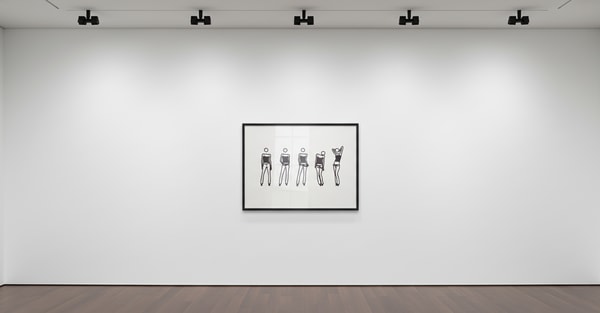
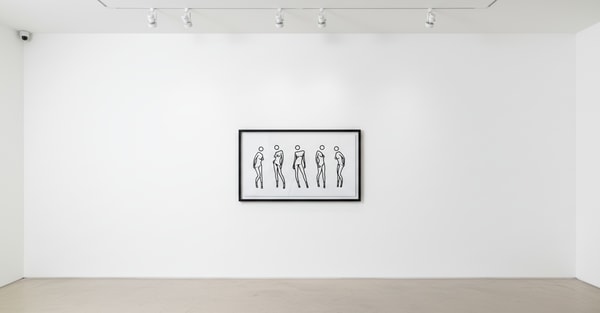
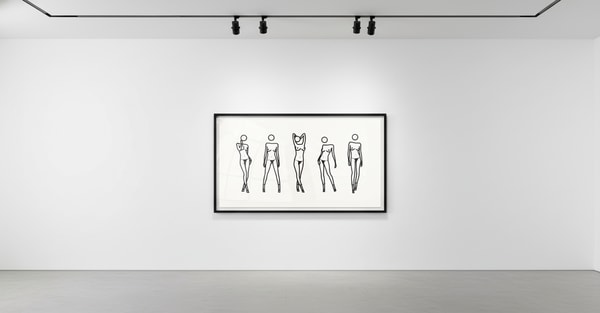
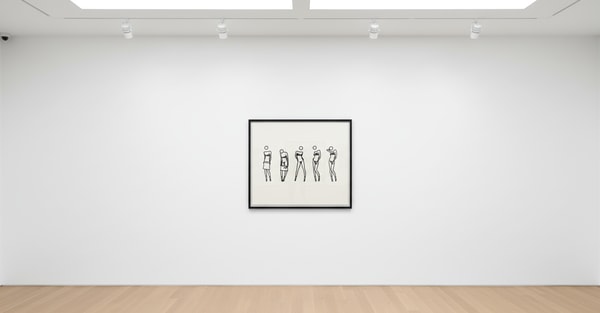
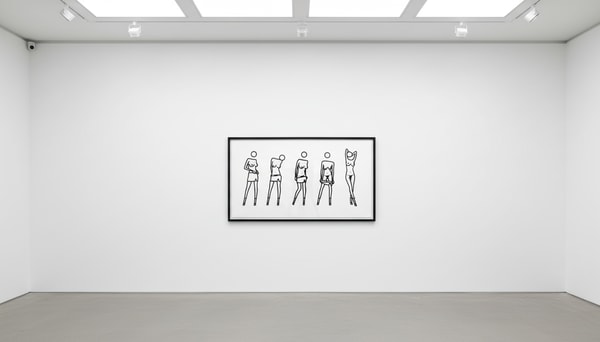
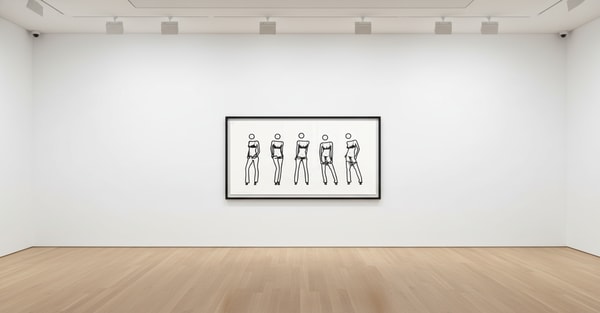
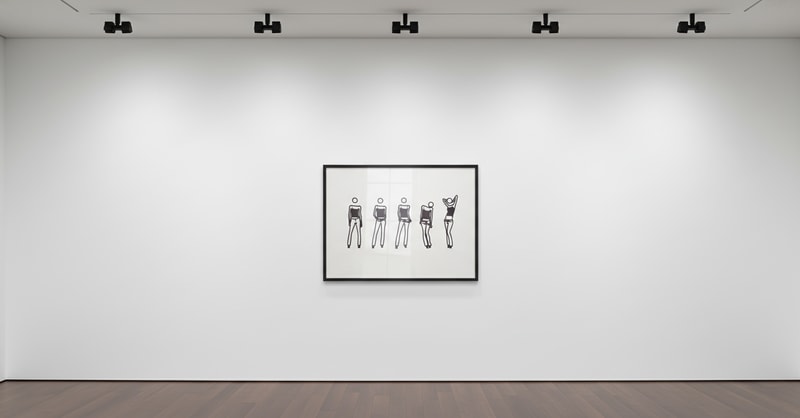
Julian Opie's "Bijou Gets Undressed" series represents one of the artist's most intimate and captivating explorations of the human form, distilling the private act of undressing into a sequence of bold, graphic compositions that pulse with quiet sensuality and formal elegance. Comprising works including Bijou Gets Undressed 1, Bijou Gets Undressed 4, Bijou Gets Undressed 5, Bijou Gets Undressed 6, Bijou Gets Undressed 7, and Bijou Gets Undressed 8, this series demonstrates Opie's remarkable ability to transform fleeting, everyday moments into timeless visual statements that resonate with both contemporary relevance and art historical weight.
Throughout his distinguished career, the British artist has become internationally celebrated for his reductive approach to portraiture and figurative work, stripping away extraneous detail to reveal the essential visual architecture of his subjects. In the "Bijou Gets Undressed" series, this methodology reaches a particularly refined expression, as Opie chronicles the sequential gestures of a single figure removing her clothing. Each work captures a discrete moment within this progression, freezing the model in positions that feel simultaneously candid and carefully composed. The result is a meditation on time, motion, and the body that recalls both Eadweard Muybridge's pioneering motion studies and the classical tradition of the artistic nude, yet remains unmistakably contemporary in its execution and sensibility.
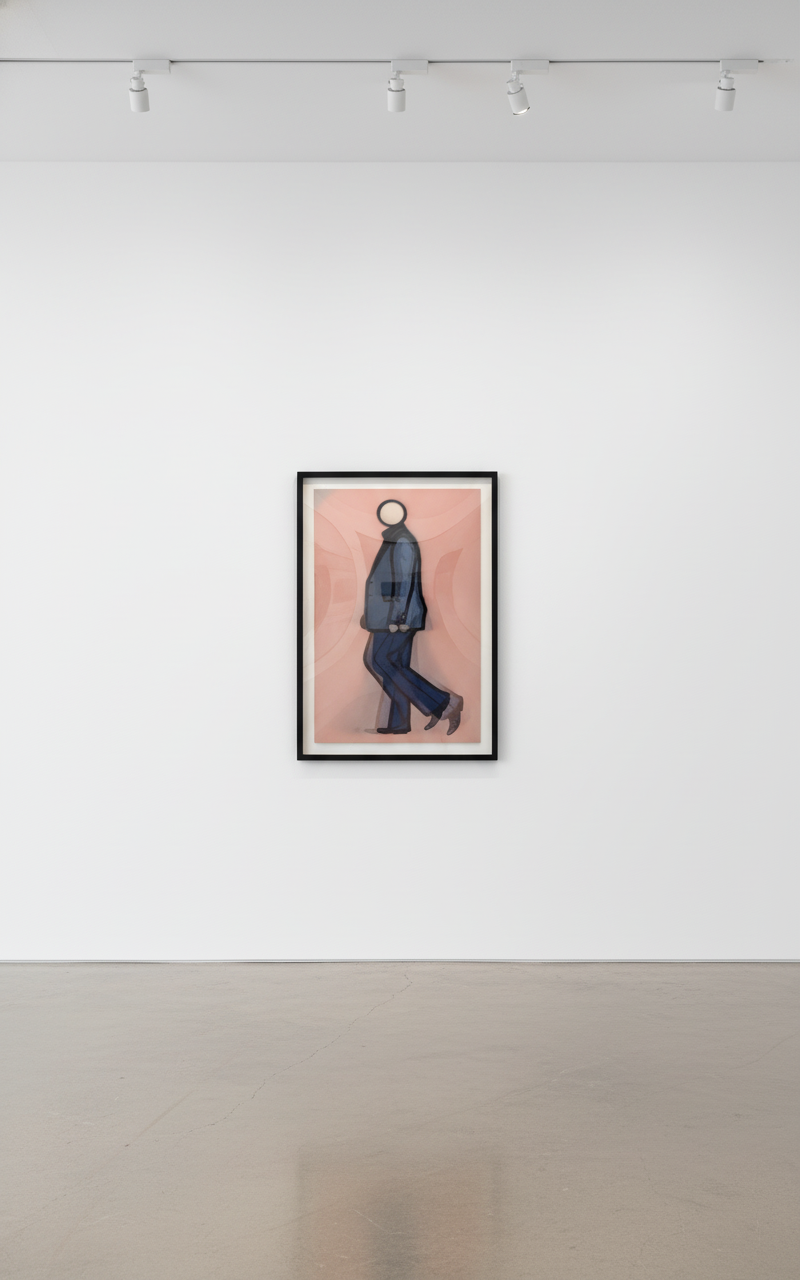
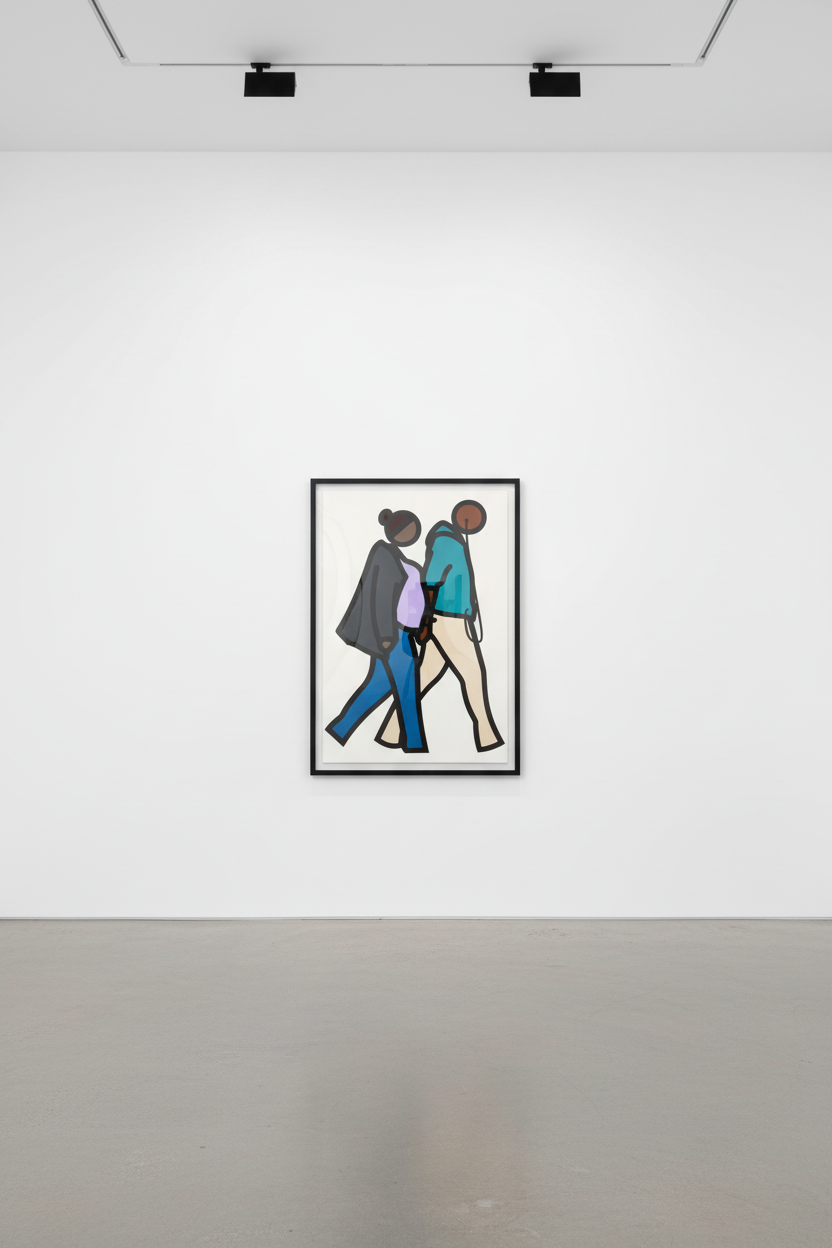
What distinguishes this series within Opie's broader practice is its sustained focus on a single subject engaged in a continuous action. While the artist has long been fascinated by figures in motion—his walking portraits and dancing figures have achieved iconic status—the "Bijou Gets Undressed" works offer something more sequential and narrative in nature. The numbered titles invite viewers to follow Bijou's progression, creating an implied movement through time even as each individual piece stands complete in itself. This tension between stillness and motion, between the isolated moment and the suggested sequence, generates much of the series' distinctive energy and emotional resonance.
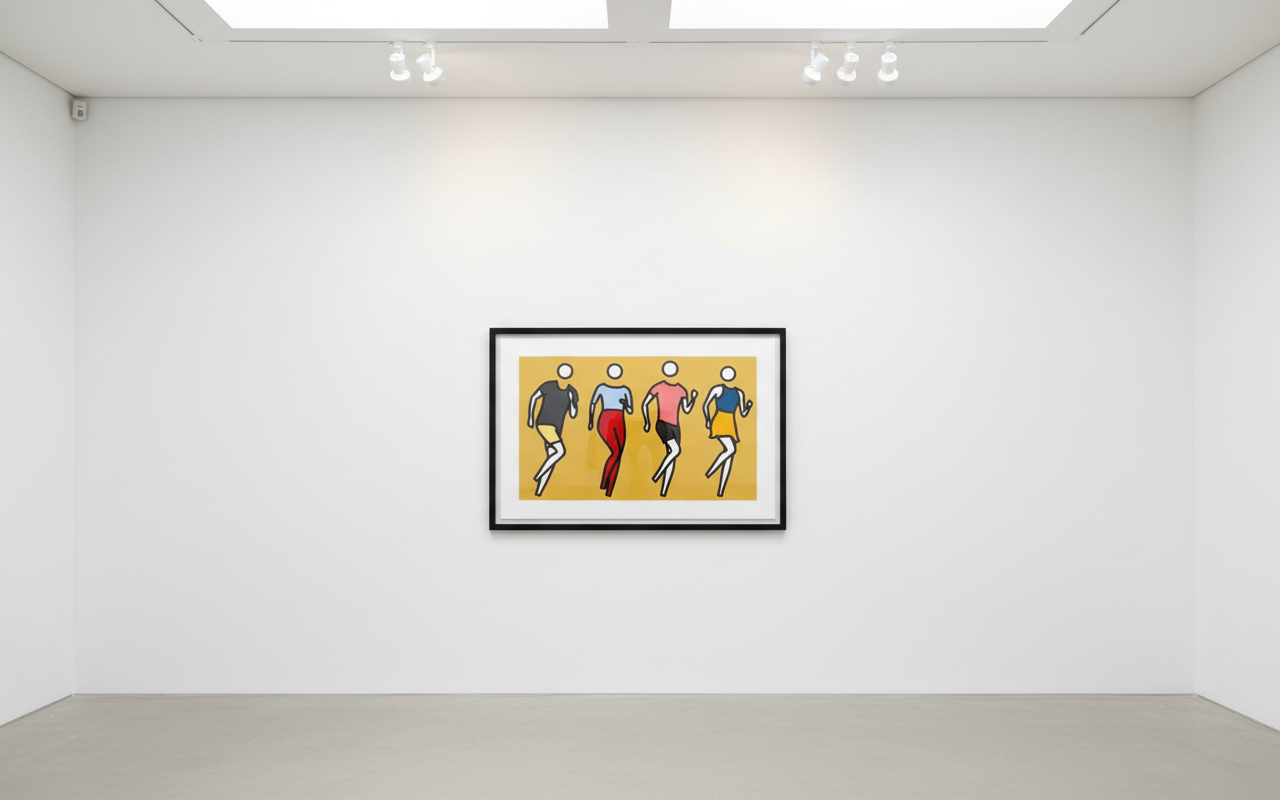
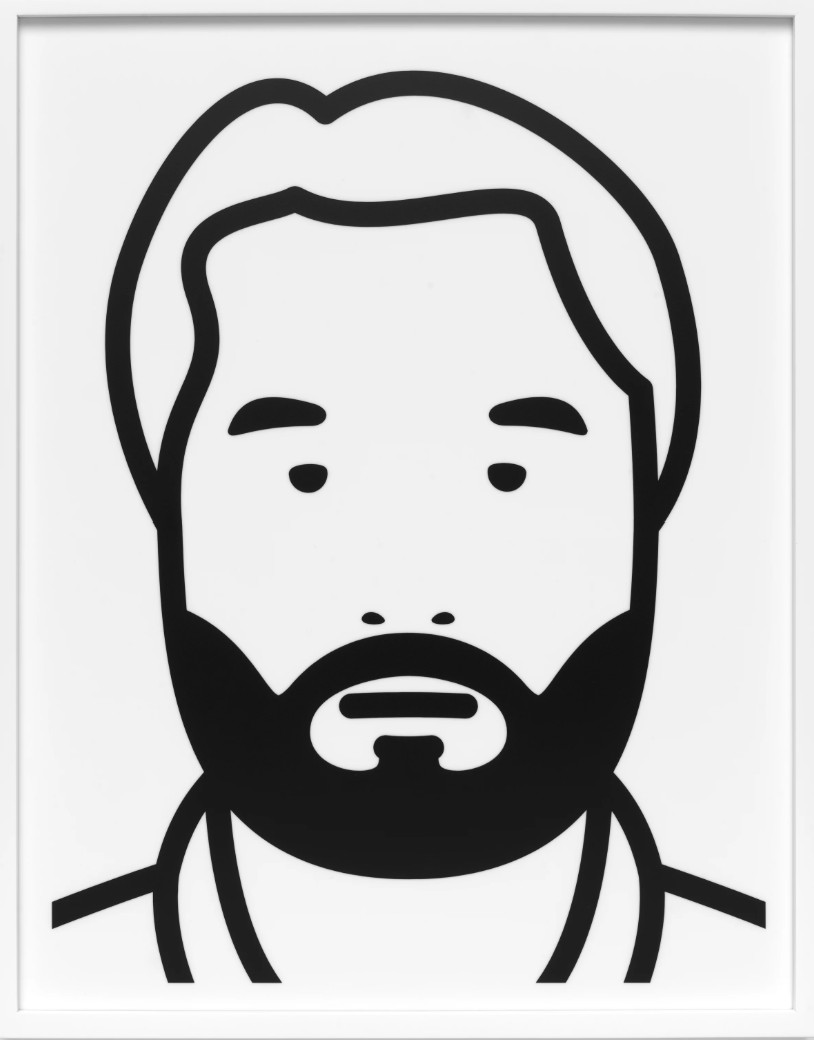
Opie's characteristic visual language finds particularly powerful application in these works. His signature thick black outlines define Bijou's form with confident economy, while flat planes of color fill the composition with a vibrancy that belies the simplicity of the technique. The artist's deliberate reduction of facial features to minimal elements—often just dots for eyes and a simple line for the mouth—paradoxically heightens rather than diminishes the figure's presence and personality. Bijou emerges not as an anonymous form but as a distinct individual, her identity conveyed through posture, gesture, and the particular way she occupies space within the frame.
The series also reveals Opie's sophisticated engagement with the history of representing the nude in Western art. From classical sculpture through Renaissance painting to modernist abstraction, artists have continually returned to the unclothed human form as a subject of profound artistic investigation. Opie's contribution to this lineage is to demonstrate that even in an age of image saturation, the nude retains its capacity to command attention and provoke contemplation when rendered with intelligence and formal rigor. His approach neither sensationalizes nor sanitizes the body; instead, it presents the figure with a matter-of-fact directness that feels refreshingly honest.
The technical execution of these works reflects the exacting standards that have made Opie's editions among the most sought-after in contemporary printmaking. His mastery of various production techniques allows each piece to achieve a precision and intensity of color that reproduction cannot fully convey. The surfaces possess a material presence that rewards extended viewing, revealing subtle qualities that emerge only through direct encounter with the physical work. This attention to craft ensures that these pieces function not merely as images but as objects of genuine aesthetic substance.
Within the context of Opie's ongoing exploration of contemporary life, the "Bijou Gets Undressed" series occupies a significant position. The artist has always been drawn to the rituals and rhythms of everyday existence—walking, driving, standing, watching—elevating mundane activities to the level of artistic subject matter. The act of undressing belongs to this same territory of quotidian experience, yet it carries additional associations of vulnerability, intimacy, and private space that give these works a particular emotional temperature. Opie handles this subject with characteristic poise, creating images that are sensual without being salacious, direct without being crude.
For collectors, the series offers an opportunity to acquire works that exemplify the artist's most refined formal qualities while also representing a distinctive thematic focus within his oeuvre. The sequential nature of the project means that individual pieces can stand alone as powerful singular statements or be considered in dialogue with other works from the series, creating rich possibilities for display and interpretation. As Opie's international reputation continues to grow, with major museum exhibitions and institutional acquisitions affirming his position as one of the most important British artists of his generation, works from focused series such as this one become increasingly significant both culturally and as collecting opportunities.
To inquire about acquiring works from Julian Opie's "Bijou Gets Undressed" series, please contact Guy Hepner in New York.
6 works available
Five Facts About Julian Opie Bijou Gets Undressed
Bijou Gets Undressed is a 2004 series of eight silkscreen prints by Julian Opie on Sirio paper.
The series depicts a model named Bijou through a sequence of five poses as she progressively removes items of clothing.
Each print in the series is numbered Bijou Gets Undressed 1 through 8.
Individual sheets in the series measure approximately 52.5 x 97 cm.
Market Data
See real auction history, estimate ranges and price benchmarks for individual Bijou Gets Undressed prints, sourced from Christie's, Sotheby's and other major auction houses.
Frequently Asked Questions
Julian Opie Bijou Gets Undressed prints for sale are available at Guy Hepner Gallery, 177 Tenth Avenue, New York. We offer authenticated editions with full provenance documentation sourced from the secondary market and directly from publishers.
Julian Opie Bijou Gets Undressed works — 6 available — are typically produced as limited editions, individually signed and numbered by the artist. Contact Guy Hepner Gallery for edition details on specific works.
Pricing for Julian Opie Bijou Gets Undressed prints varies by edition size, date, and condition. Contact Guy Hepner Gallery for current market pricing and availability.
More Julian Opie Series
View all Julian Opie works →