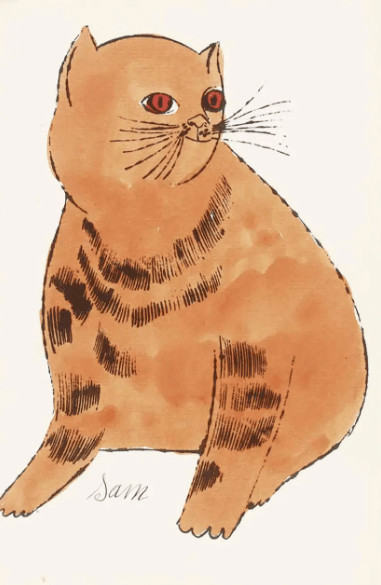
25 Cats Named Sam

Andy Warhol remains the undisputed titan of Pop Art, an artist whose influence extends far beyond the gallery walls into the very fabric of contemporary visual culture. His acid-bright portrayals of celebrities, consumer products, and American iconography have become some of the most recognized images in art history. Yet beneath the electric hues and commercial glamour lies a lesser-explored dimension of Warhol's practice - one that emerges most powerfully when color falls away entirely. The artist's black-and-white works represent a conscious departure from his signature palette, revealing structural complexities and emotional depths that vibrant color often obscures. For collectors and scholars alike, these monochromatic pieces offer an essential counterpoint to understanding the full scope of Warhol's artistic vision.
Andy Warhol's decision to work in black and white was never a limitation but rather a deliberate artistic strategy that exposed different dimensions of his practice. Throughout his career, Warhol demonstrated an acute understanding of how the absence of color could amplify certain visual and conceptual elements within his work. In his famous Flowers series from 1964, the grayscale versions of the hibiscus blossoms offer a somber counterpoint to their exuberant color counterparts. Where color conveys life and commercial vitality, the monochromatic iterations speak to mortality, stillness, and the underlying photographic source material that Warhol appropriated and transformed.
This approach extended across Warhol's most significant bodies of work. His portraits - whether of Marilyn Monroe, Mao Zedong, or the subjects of his Ladies and Gentlemen series - take on entirely different psychological registers when stripped of their characteristic color overlays. The silk-screen process becomes more visible, the photographic foundation more pronounced, and the tension between mechanical reproduction and artistic intervention more palpable.
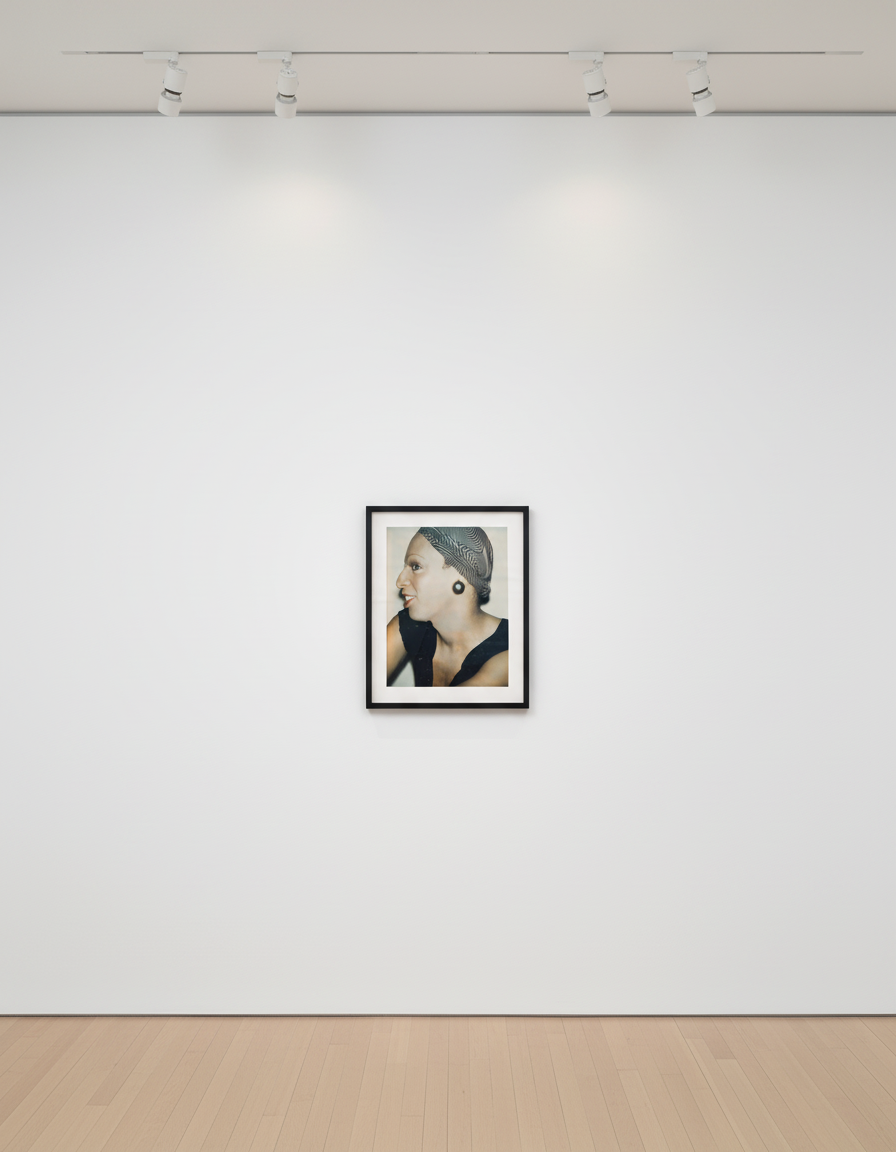
Ladies and Gentlemen (Wilhelmina Ross) — Andy Warhol. Available at Guy Hepner, New York.
The Ladies and Gentlemen series, featuring prominent figures from New York's drag and transgender community including Wilhelmina Ross, exemplifies how Warhol's black-and-white treatments could elevate his subjects beyond mere Pop iconography. Without the distraction of vivid color, viewers confront the humanity and dignity of these individuals directly, their features rendered with a gravity that color versions might inadvertently diminish through decorative appeal.
When examining Warhol's monochromatic works alongside his full-color pieces, one immediately notices how the absence of color redirects attention toward fundamental artistic concerns - line, contrast, composition, and the interplay of positive and negative space. This shift proves particularly significant in works where political or ideological content demands serious consideration.
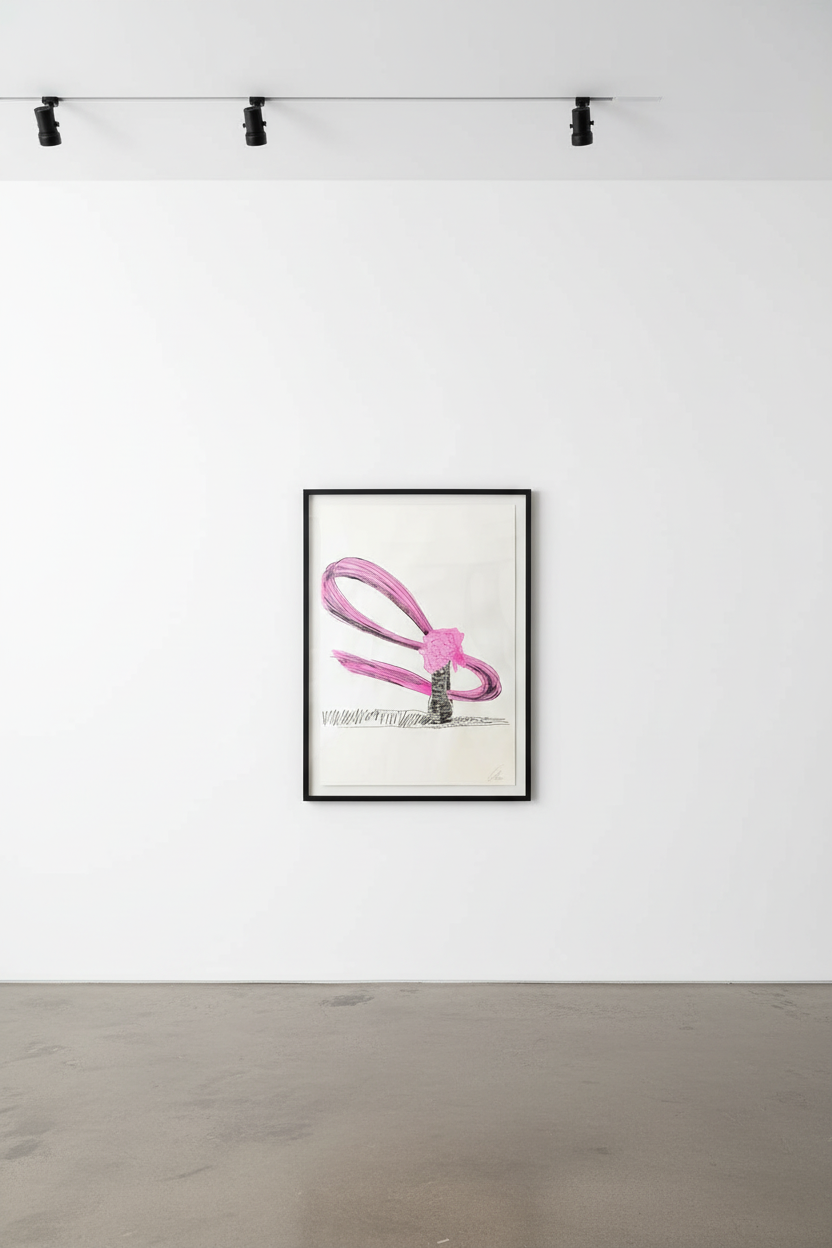
Warhol's Hammer and Sickle series from 1976 demonstrates this principle with remarkable clarity. Created during the height of Cold War tensions, these works appropriate the Soviet symbol and subject it to Warhol's signature Pop treatment. In their black-and-white iterations, the hammer and sickle shed any potential reading as mere graphic design or political commentary reduced to decoration. Instead, they become meditations on power, iconography, and the ways symbols accumulate and transmit meaning across cultures.
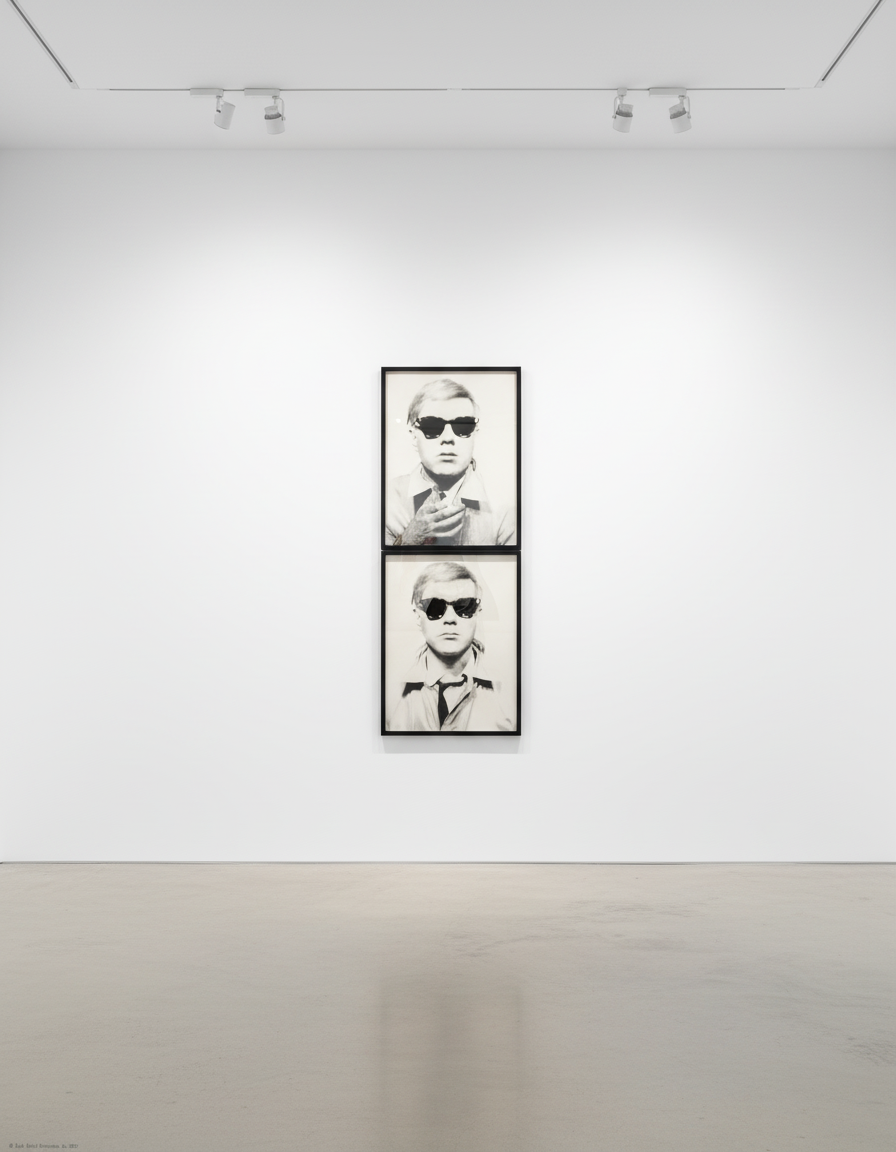
Self - Portrait F.S. IIIA 10 — Andy Warhol. Available at Guy Hepner, New York.
Similarly, Warhol's portraits of Mao Zedong gain particular weight in monochrome. The Chinese leader's face, stripped of the candy-colored overlays that characterize many versions, confronts viewers with an unsettling directness. The photographic source becomes a document, the silk-screen process a form of mechanical testimony. These works anticipate contemporary conversations about image proliferation and political iconography in ways that feel remarkably prescient.
The Camouflage series represents another crucial example of Warhol's monochromatic investigations. By reducing the military pattern to black, white, and gray, Warhol transforms a functional design intended for concealment into an abstract meditation on visibility, surface, and the nature of pattern itself. The work operates simultaneously as pure abstraction and loaded cultural commentary - a duality that color versions, while visually striking, cannot achieve with the same conceptual clarity.
The art market has increasingly recognized the importance of Warhol's black-and-white works within his broader oeuvre. According to data compiled by Sotheby's and Christie's, monochromatic Warhol pieces consistently demonstrate strong auction performance, with collectors valuing their relative rarity compared to color versions and their ability to integrate into diverse collecting environments. The Art Basel and UBS Global Art Market Report has noted sustained institutional and private interest in works that demonstrate the conceptual depth underlying Warhol's seemingly accessible aesthetic.
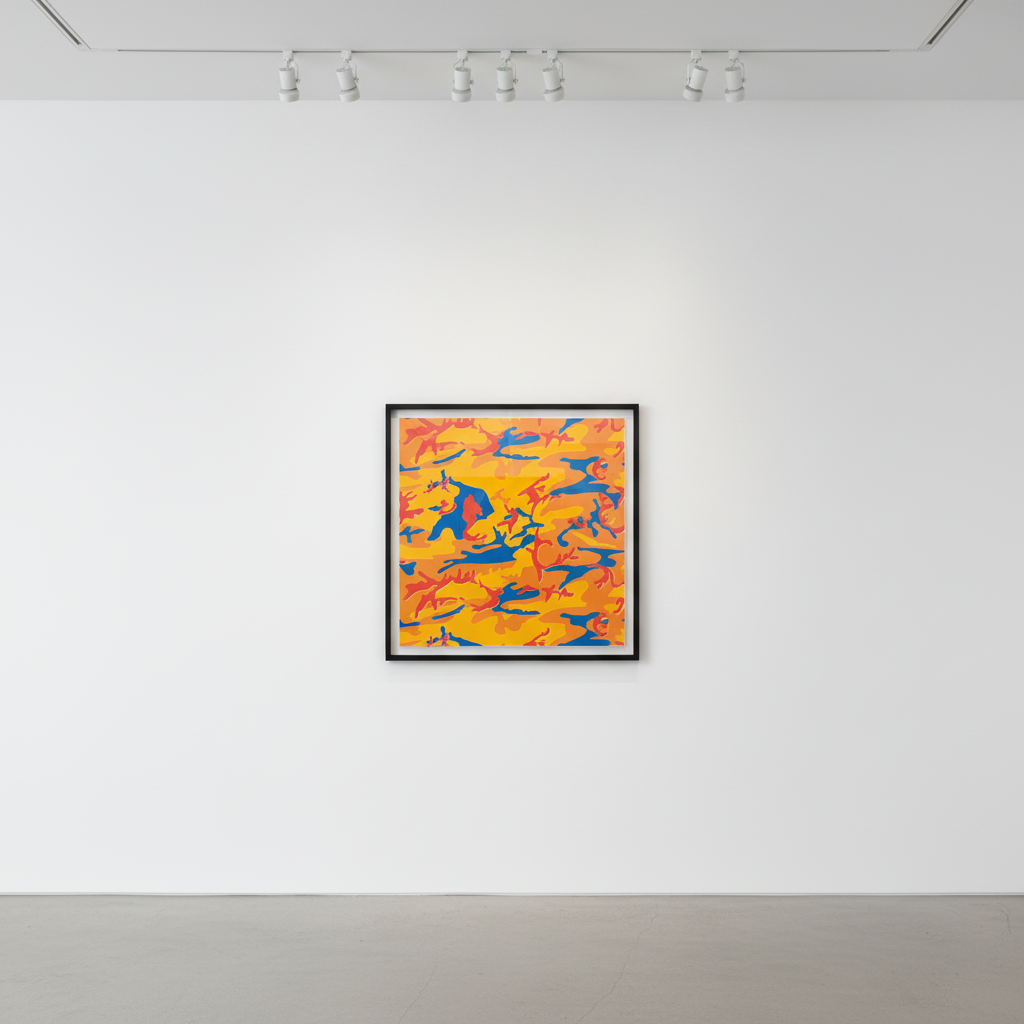
Camouflage Trial Proof TP 4/84 — Andy Warhol. Available at Guy Hepner, New York.
For serious collectors, black-and-white Warhols represent an opportunity to engage with the artist's practice at a fundamental level. These works reward extended viewing and scholarly attention, revealing layers of meaning that emerge only through sustained engagement. They also demonstrate Warhol's profound understanding of art history - his awareness that the Western canon, from Renaissance drawing to nineteenth-century photography to Abstract Expressionist painting, had long privileged monochrome as a vehicle for serious artistic inquiry.
The Beethoven portraits from Warhol's late period exemplify how the artist continued exploring monochromatic possibilities throughout his career. These works, depicting the legendary composer, use black and white to suggest historical distance and cultural gravitas while simultaneously subjecting a traditional subject to Pop Art methodology. They represent a synthesis of Warhol's lifelong concerns - celebrity, reproduction, mortality, and the transformation of images through artistic intervention.
Guy Hepner maintains one of the most distinguished selections of Andy Warhol works available on the secondary market, including exceptional examples from the artist's black-and-white practice. Our curatorial team offers collectors personalized guidance in identifying works that align with both aesthetic preferences and investment considerations. Whether seeking iconic pieces from the Hammer and Sickle series, compelling portraits from Ladies and Gentlemen, or rare examples from other significant bodies of work, Guy Hepner provides the expertise and discretion that discerning collectors require. Contact our New York gallery to discuss current availability and begin building a collection that captures the full complexity of Warhol's revolutionary vision.
Browse Andy Warhol prints at Guy Hepner: Andy Warhol art for sale | Sell your Warhol
Explore Andy Warhol prints for sale at Guy Hepner: 25 Cats Named Sam, A Gold Book, A La Recherche Du Shoe Perdu, Alexander the Great, Banana.
Related Series