Auction Results

Richard Pettibone stands as one of the most intellectually rigorous and conceptually fascinating artists to emerge from the American art scene of the 1960s. Working at the intersection of Pop Art, Appropriation Art, and Conceptualism, Pettibone has built an extraordinary career by creating meticulously crafted miniature replicas of works by the twentieth century's most celebrated artists. His painstaking reproductions of masterpieces by Andy Warhol, Roy Lichtenstein, Frank Stella, and Marcel Duchamp raise profound questions about originality, authorship, and the nature of artistic value - questions that remain as vital and provocative today as when he first began this singular practice over six decades ago.
Before the term "Appropriation Art" entered the mainstream lexicon, Richard Pettibone was already deep into his practice of borrowing, replicating, and recontextualising iconic imagery. Beginning in 1964, he started creating diminutive versions of works by his contemporaries, establishing himself as a true pioneer in a movement that would later include artists such as Sherrie Levine and Richard Prince. What distinguishes Pettibone from subsequent appropriation artists is the extraordinary craftsmanship he brings to each piece. Rather than employing mechanical reproduction or digital processes, he painstakingly hand-paints each miniature work, sometimes spending weeks on canvases measuring just two by two inches.
This labour-intensive approach creates a fascinating paradox at the heart of his practice. While the conceptual framework questions notions of originality and authenticity, the physical execution demands exceptional technical skill and devotion to craft. Pettibone's works are not mere copies but rather deeply considered meditations on what it means to create art in an age of mechanical reproduction. His practice perpetuates and extends a line of inquiry initiated by Marcel Duchamp, whose readymades first challenged conventional assumptions about artistic authorship and the boundaries of art itself.
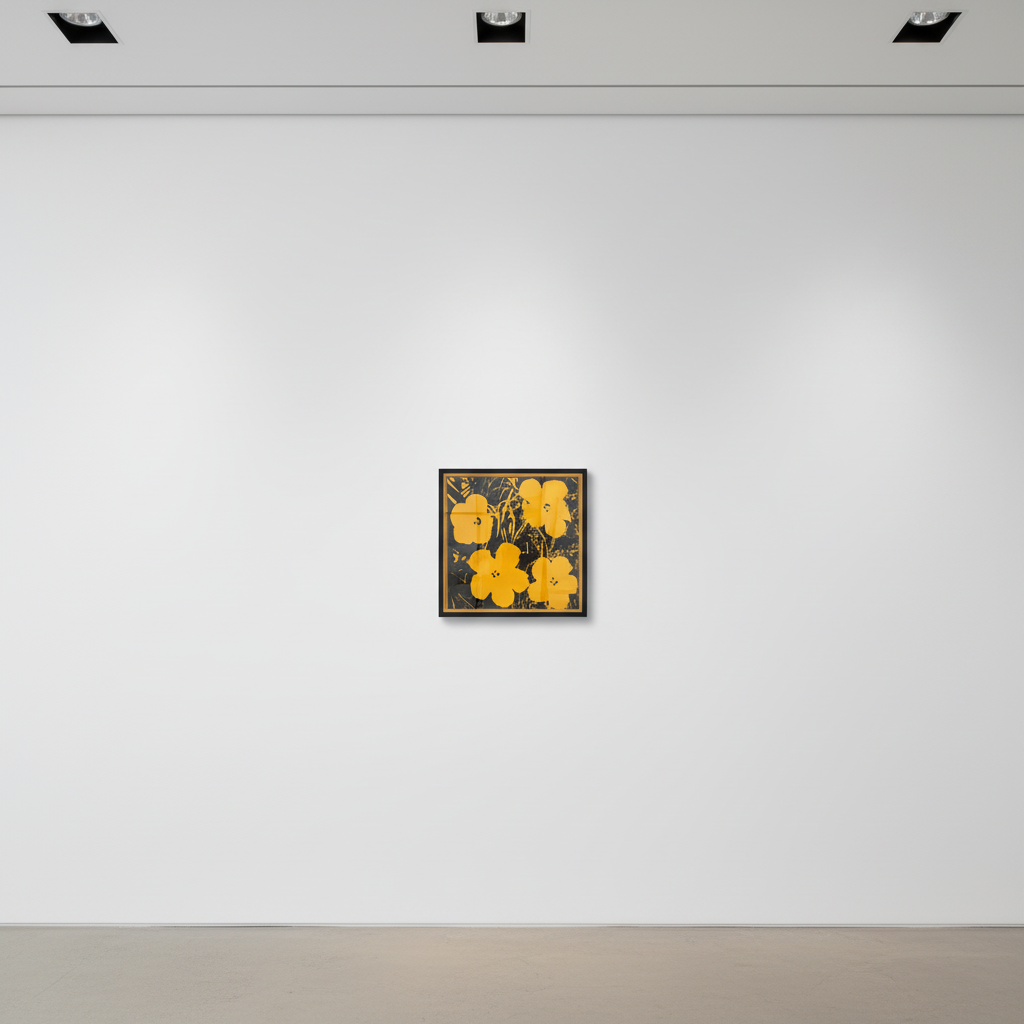
Andy Warhol Flowers (Yellow) — Richard Pettibone. Available at Guy Hepner, New York.
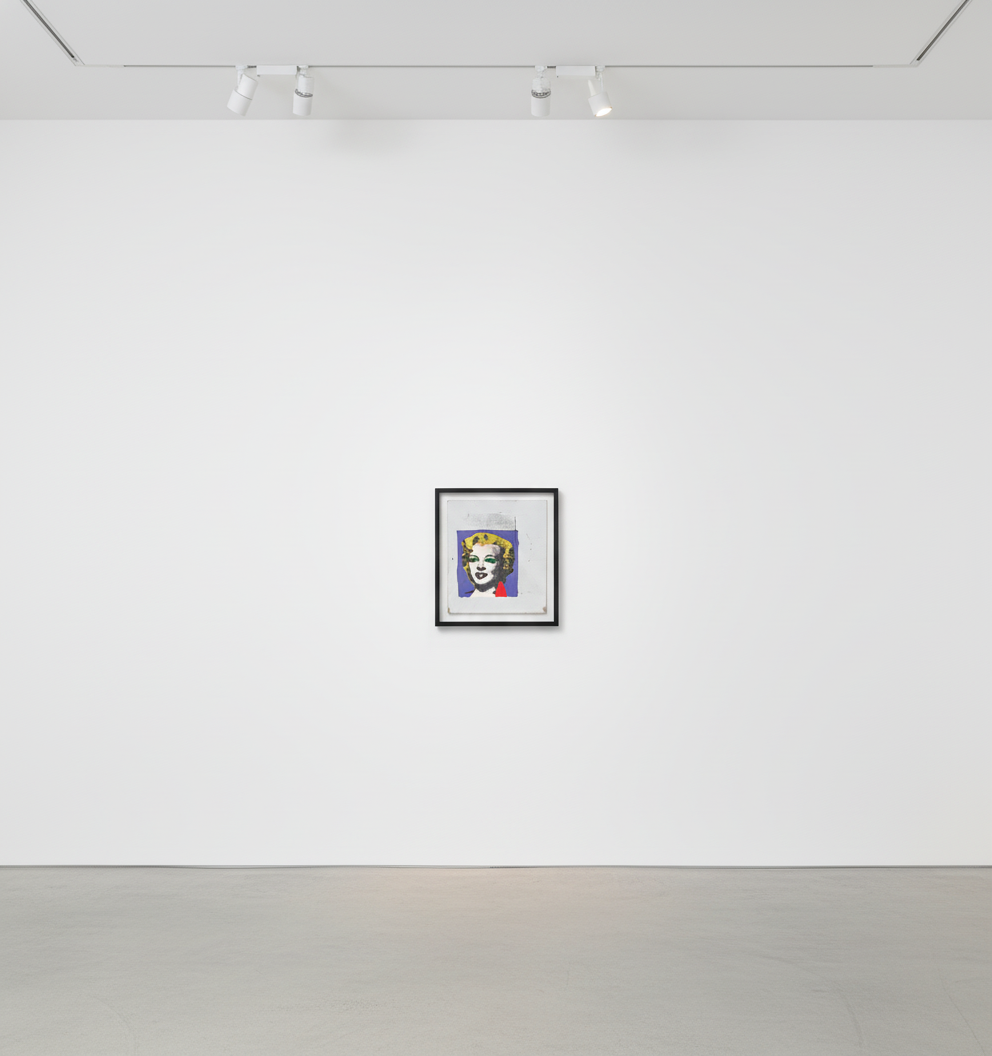
Richard Pettibone's relationship with Pop Art - particularly with the work of Andy Warhol - represents one of the most sustained and intellectually rich dialogues in contemporary art history. His miniature versions of Warhol's Flowers series, Campbell's Soup Cans, and Elvis portraits transform these already iconic images into something entirely new. By dramatically reducing scale while maintaining extraordinary fidelity to the original compositions, Pettibone invites viewers to reconsider these familiar works through an entirely different lens.
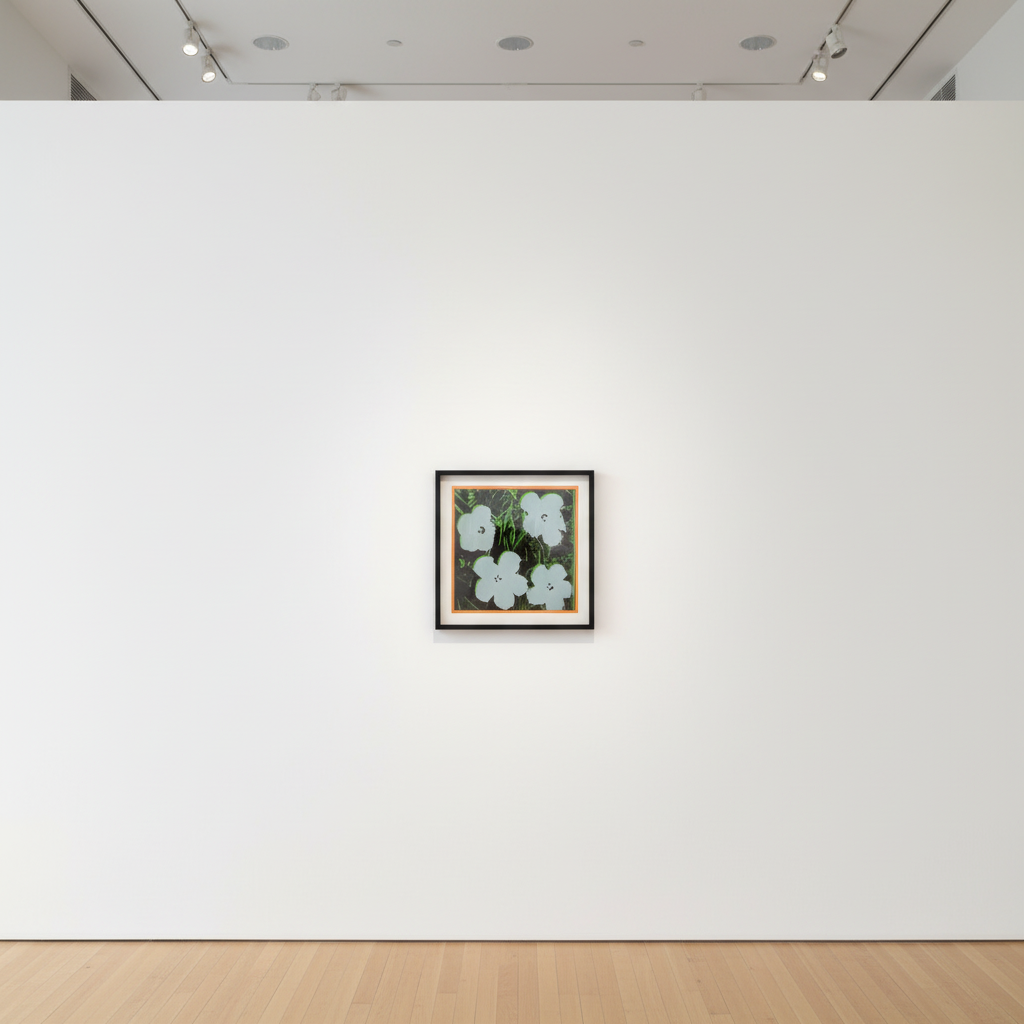
The Warhol Flowers series has proven particularly fertile ground for Pettibone's investigations. These works, which originally measured up to forty inches square in Warhol's versions, become intimate objects in Pettibone's hands - precious, jewel-like paintings that demand close inspection rather than the distant appreciation typically afforded to large-scale works. This shift in scale fundamentally alters the viewer's relationship with the image, transforming public spectacle into private contemplation.
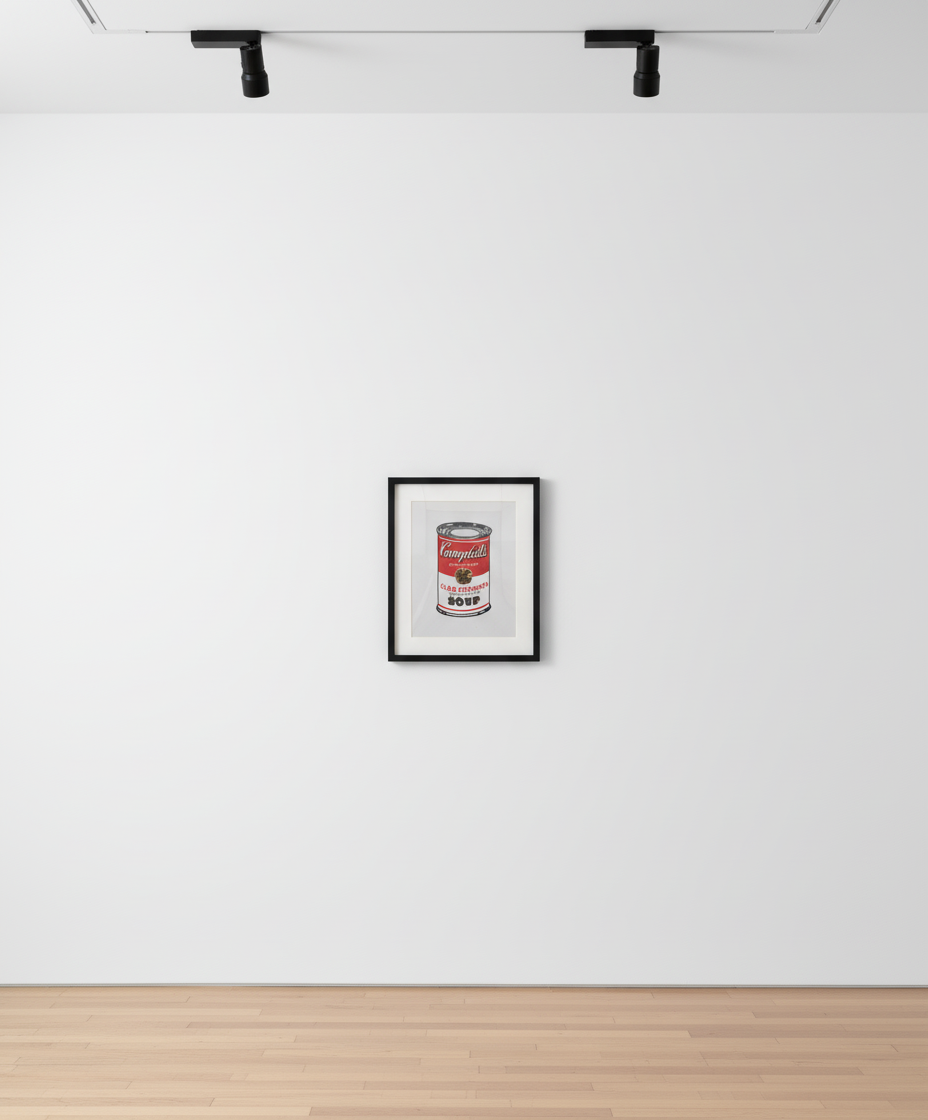
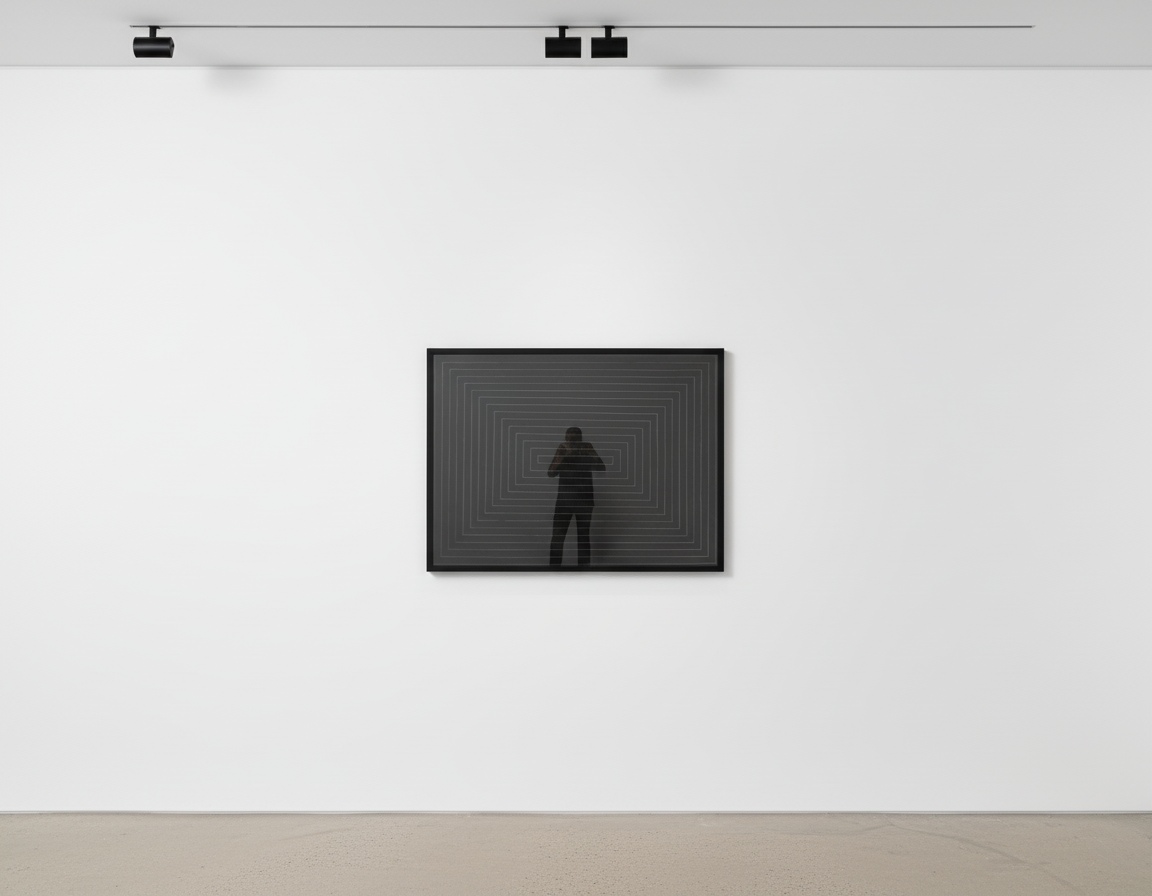
Andy Warhol, ’Clam Chowder Soup’ (1968) — Richard Pettibone. Available at Guy Hepner, New York.
Similarly, his engagements with Frank Stella's geometric abstractions demonstrate how Pettibone's practice extends beyond Pop Art into the broader terrain of postwar American art. Works such as his interpretation of Stella's Tomlinson Court Park reveal the artist's technical virtuosity, as he faithfully reproduces the precise geometric configurations and subtle colour relationships of the original at dramatically reduced scale. These pieces highlight how Pettibone's concerns transcend any single movement, addressing fundamental questions about representation, reproduction, and artistic identity that apply across stylistic boundaries.
The art market has increasingly recognised Richard Pettibone's unique contribution to contemporary art history. According to data from Christie's and Sotheby's, his works have achieved consistent results at auction, with collectors showing particular enthusiasm for his Warhol and Lichtenstein appropriations. This market performance reflects a broader institutional acknowledgment of Pettibone's importance - his works are held in major museum collections worldwide, cementing his position within the canon of postwar American art.
For collectors, Pettibone's works offer a remarkable proposition. Each piece functions simultaneously as a historical document, capturing a specific moment in art history, and as an autonomous artwork worthy of appreciation on its own merits. The Art Basel and UBS Global Art Market Report has noted the continued strength of the Appropriation Art category, with historically significant works by pioneering figures commanding particular attention from sophisticated collectors seeking works of genuine art-historical importance.
Warhol Flowers 1964 (Blue) — Richard Pettibone. Available at Guy Hepner, New York.
What makes Pettibone's market position particularly compelling is the relative accessibility of his works compared to the originals they reference. A collector who might never acquire an original Warhol Flowers painting can possess a Pettibone interpretation that carries its own artistic significance while engaging directly with that iconic imagery. This dynamic has made Pettibone's works especially appealing to collectors who appreciate conceptual rigour alongside visual sophistication.
Richard Pettibone's refusal to acquiesce to convention, coupled with his profound reverence for artistic greatness, has resulted in a body of work that continues to resonate with contemporary audiences. His whimsical yet deeply serious appropriations encapsulate notions spanning from the continuum between Dada and Pop to the intricate relationship between photography and painting. These concepts, interwoven across his various series, coalesce to offer a panoramic view of the often paradoxical nature of contemporary art.
As discussions around originality, authenticity, and artistic ownership intensify in the digital age, Pettibone's decades-long investigation of these themes takes on renewed relevance. His works anticipate many of the questions that dominate contemporary discourse around appropriation and reproduction, establishing him as a genuinely prescient figure whose importance only grows with time.
Guy Hepner is pleased to offer works by Richard Pettibone to discerning collectors worldwide. Our gallery provides access to exceptional examples from the artist's most celebrated series, including his renowned Warhol and Stella appropriations. For acquisition enquiries, pricing information, or to arrange a private viewing, please contact our specialist team who will be delighted to assist you in adding this important artist to your collection.
Explore Richard Pettibone prints for sale at Guy Hepner: Auction Results, Flowers, Marilyn Monroe.
Related Series