



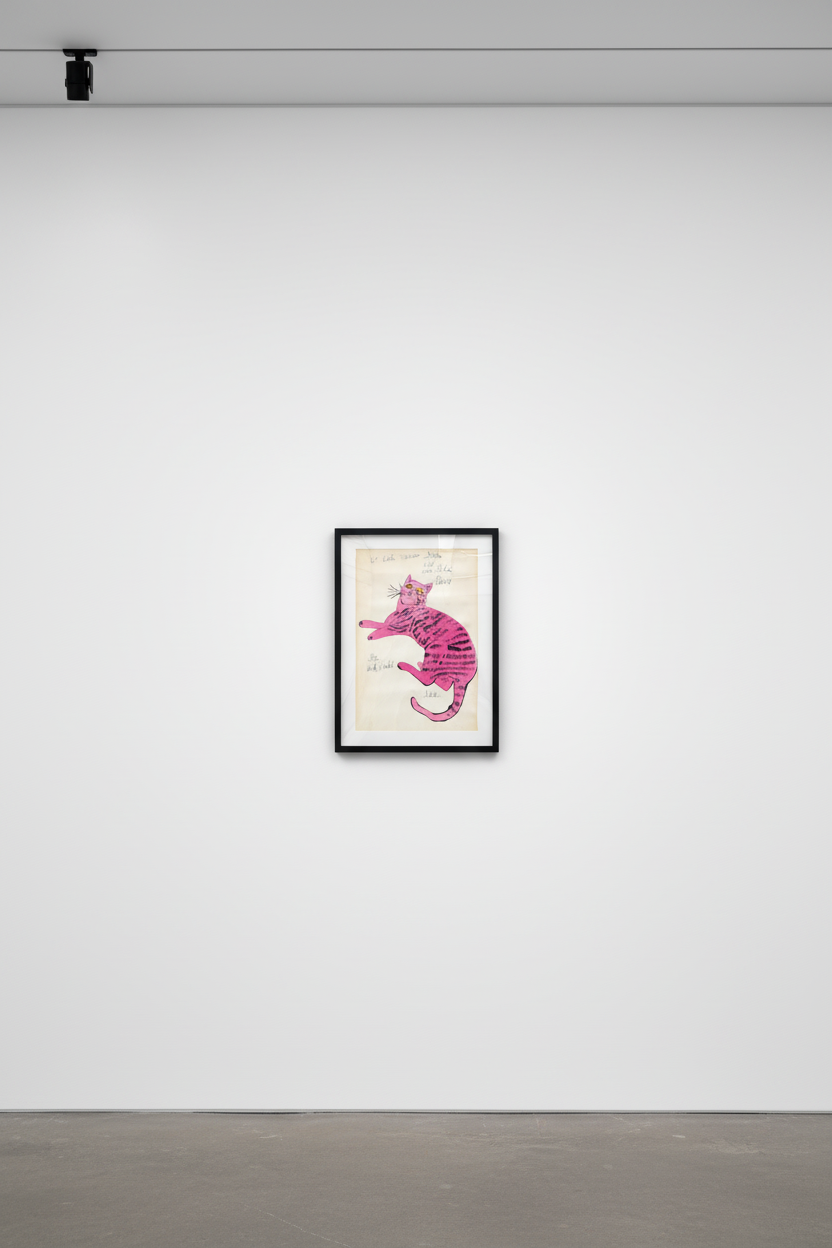
25 Cats Named Sam
20 works

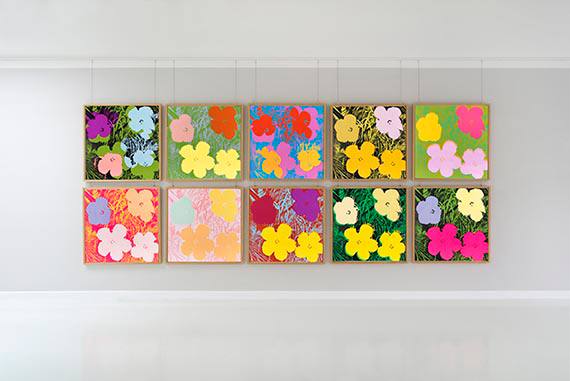
The Flower paintings represent one of Andy Warhol's most commercially resilient and aesthetically immediate bodies of work, with auction results consistently demonstrating sustained collector appetite across five decades. Recent auction activity confirms the Flowers' enduring strength. Sotheby's recorded sales of $4,076,000 and $3,832,000 for Flower works in May 2025, establishing fresh benchmarks for the series. Historical results from Guy Hepner records show exceptional performance for larger-format examples: Flowers Pink (1964) achieved $47,514,000 in November 2015, while Flowers Red (1964) reached HKD 98,537,500 at Hong Kong auction in April 2017—evidence of the series' global appeal and capacity to command eight-figure sums.
These results exist within Warhol's broader market dominance. Shot Sage Blue Marilyn (1964) established the artist as the most valuable 20th-century figure at auction when it sold for $195,040,000 at Christie's in May 2022. For collectors seeking Warhol exposure without the capital requirements of the Marilyn or Death and Disaster series, the Flowers offer exceptional entry at multiple price points while maintaining the artist's signature visual impact.
Warhol initiated the Flower paintings in 1964, sourcing his imagery from a photograph by Patricia Caulfield published in Modern Photography magazine—a decision that resulted in a copyright settlement and perfectly encapsulated his appropriation methodology. The series debuted at Leo Castelli Gallery in November 1964, filling the space floor to ceiling in a radical installation that treated paintings as decorative wallpaper, challenging hierarchies of fine art and commercial imagery.
Technically, the works employ synthetic polymer paint and silkscreen ink on canvas, with Warhol and his Factory assistants producing variations across multiple formats ranging from intimate 5-inch squares to monumental 48-inch canvases. The screenprint process allowed for deliberate misregistration and colour variation, meaning no two examples are identical despite sharing common source imagery. This controlled inconsistency—mechanical reproduction with handmade imperfection—defines Warhol's conceptual project and distinguishes original paintings from the later portfolio prints.
Guy Hepner currently offers eight Flower paintings spanning the primary period of 1964-1965, representing the full chromatic range Warhol explored.
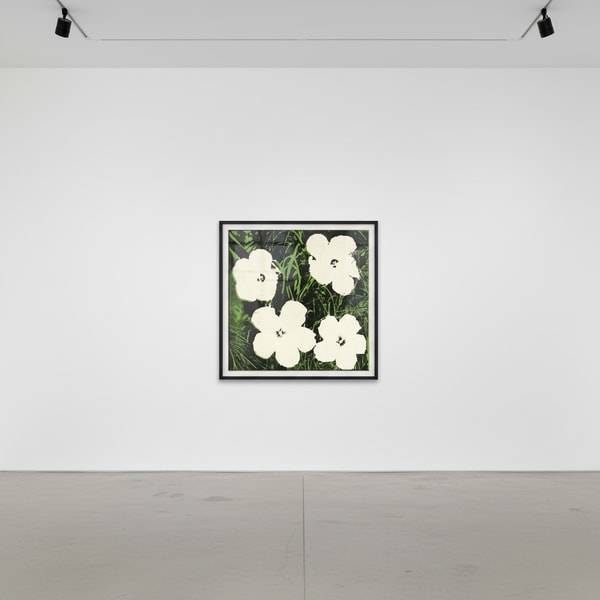
Flowers White & Green (1964) at 24 x 24 inches commands attention as the largest format in our current inventory. Collectors pursuing institutional-quality examples gravitate toward this scale, which offers wall presence comparable to works achieving mid-six-figure results at auction.
Flowers Red (1964) at 22 x 22 inches presents the most visually aggressive colourway. Red examples attract collectors with contemporary art holdings—the saturated palette bridges Warhol's Pop vocabulary with post-war abstraction.
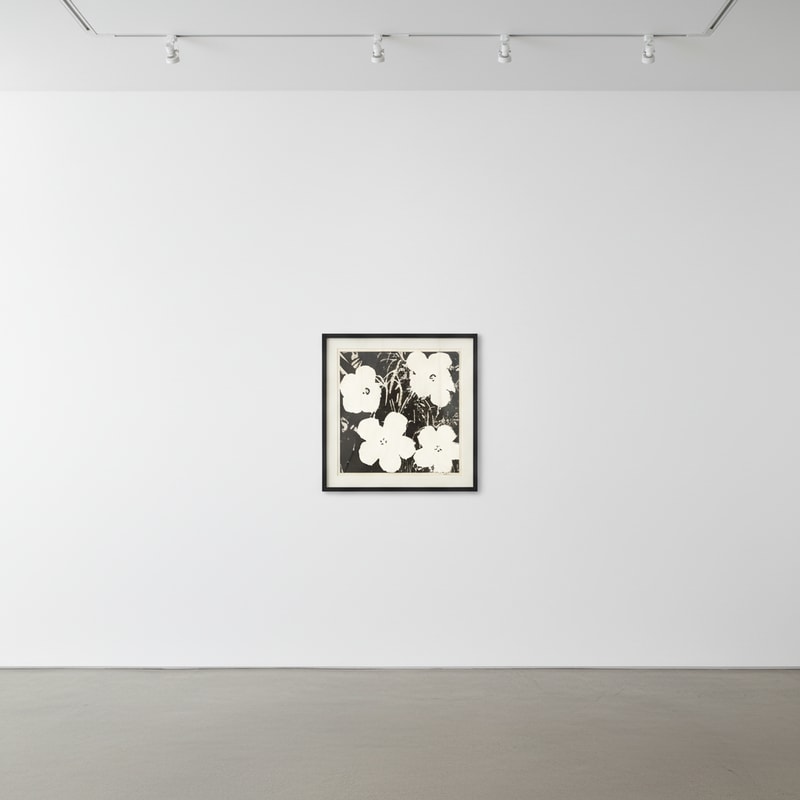
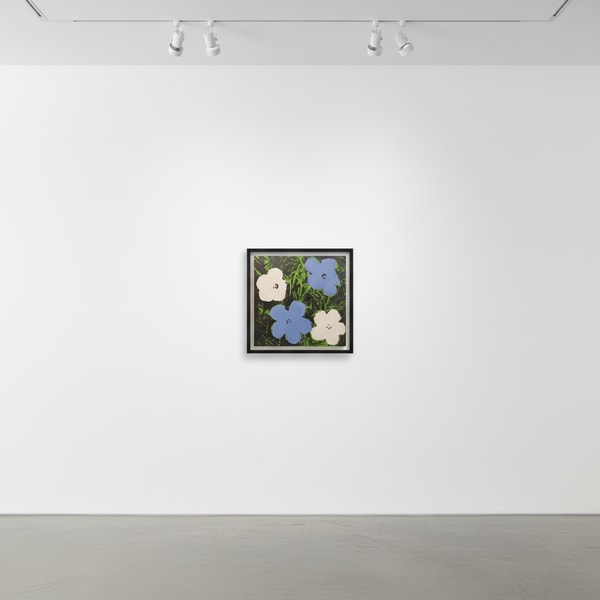
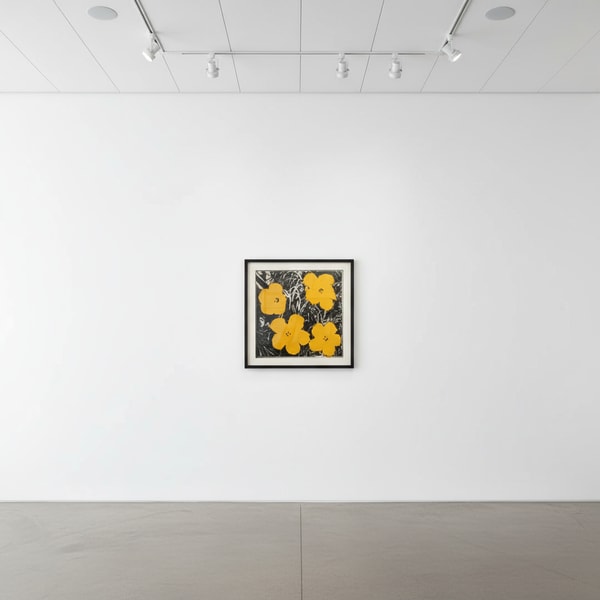
The 8 x 8 inch paintings—Flowers Pink, Flowers Yellow, Flowers White & Blue, and Flowers Black & White—represent the series' accessible entry point without sacrificing period authenticity or technical integrity. We observe strong acquisition patterns among collectors building Warhol depth across multiple series, using these intimate works as complements to larger holdings.
Flowers Orange (1964) at 5 x 5 inches offers the most discreet format, though collectors should note that diminutive scale has not historically limited value—rarity and provenance ultimately determine performance.
Authentication for Flower paintings requires verification through The Andy Warhol Foundation for the Visual Arts or inclusion in the forthcoming Warhol catalogue raisonné. Guy Hepner provides full provenance documentation and authentication paperwork with every transaction.
Condition assessment for these works demands particular attention to several factors. The silkscreen ink layer remains vulnerable to abrasion and solvent damage; examine surfaces under raking light for evidence of restoration or overcleaning. Canvas tension affects long-term stability—original stretchers are preferable, though professional conservation re-stretching does not diminish value when documented. The synthetic polymer paint Warhol employed has proven remarkably stable, though prolonged UV exposure causes fading, particularly in the red and orange pigments.
Provenance tracing matters significantly for 1964-1965 Flowers given the volume Warhol produced. Works with exhibition history at Castelli, Ferus, or Sonnabend galleries command premiums. Factory stamps, inscriptions, and early inventory numbers on verso provide additional authentication support.
Acquire with Confidence
Guy Hepner maintains the expertise, inventory access, and market intelligence to guide serious Warhol acquisitions. Contact our New York team to discuss available Flower paintings, request condition reports, or explore works entering the market through our collector network.
This series belongs to the vast and varied body of print and painted work Warhol produced across five decades, during which he moved fluidly between celebrity portraiture, consumer product imagery, historical appropriation, and personal or commissioned subject matter — all filtered through the same signature screenprint process that flattened the distinction between mechanical reproduction and fine art. Warhol's insistence on treating commercial printing techniques as a primary artistic medium, rather than a secondary reproductive tool, remains one of the most influential positions in postwar American art.
Warhol's work is held in the permanent collections of major museums worldwide, including the Museum of Modern Art, the Whitney Museum of American Art, Tate Modern, and the Andy Warhol Museum in Pittsburgh, which maintains the most complete public archive of his output across all periods and subjects.
11 works available
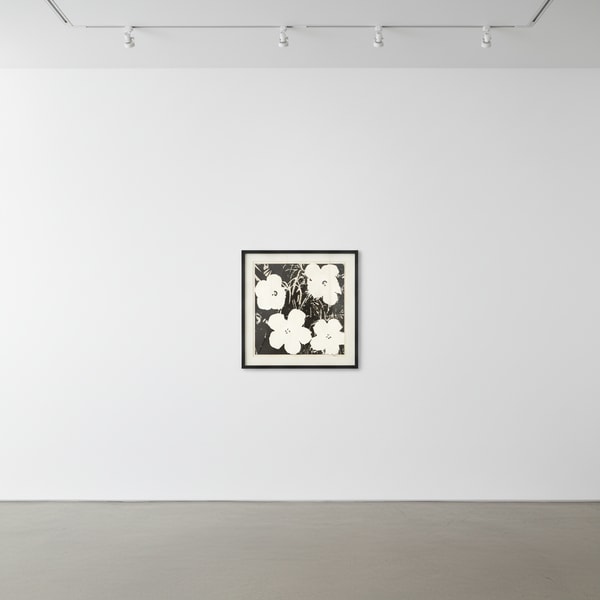
Andy Warhol
Flowers Black & White
1964
Andy Warhol
Flowers Black & White
1964
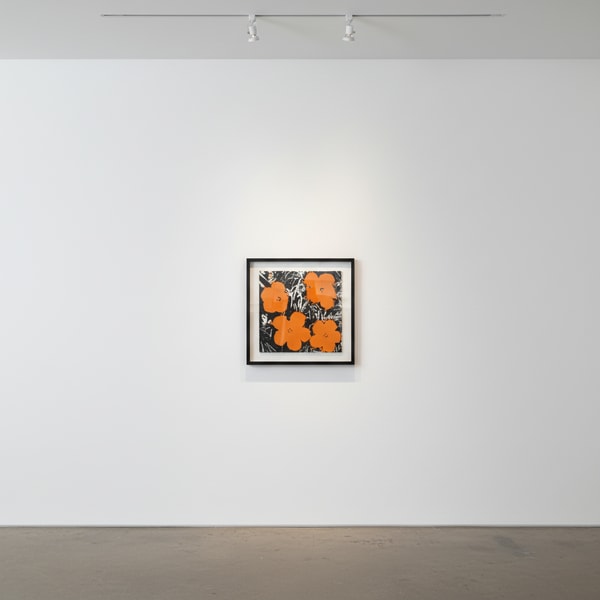
Andy Warhol
Flowers Orange
1964
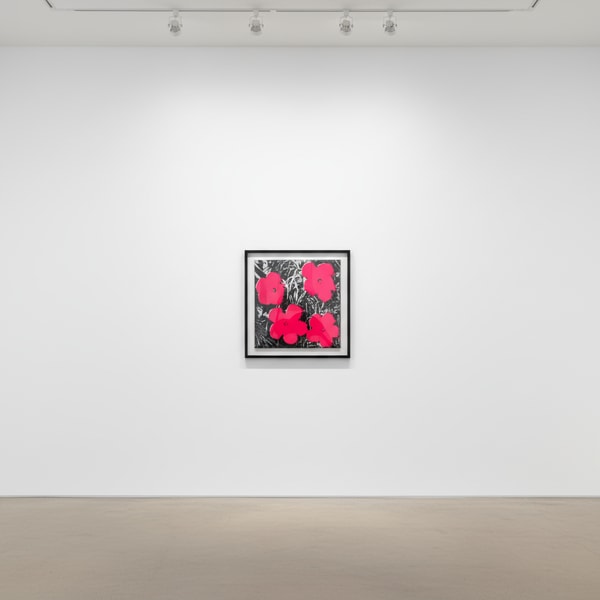
Andy Warhol
Flowers Pink
1964
Andy Warhol
Flowers Pink
1964
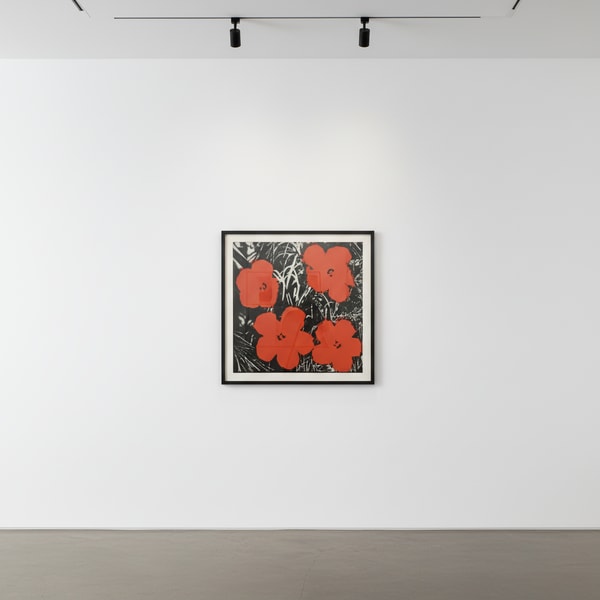
Andy Warhol
Flowers Red
1964
Andy Warhol
Flowers White & Blue
1965
Andy Warhol
Flowers White & Green
1964
Andy Warhol
Flowers Yellow
1964
Andy Warhol
Flowers Yellow
1965
Andy Warhol
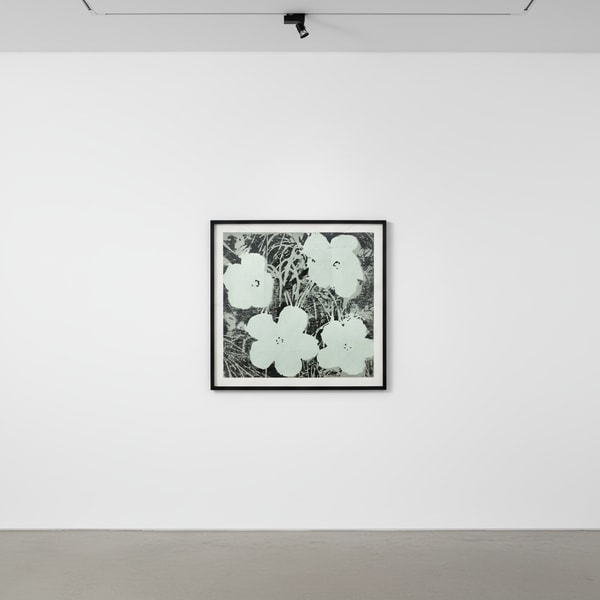
White Flowers
1964
Five Facts About Andy Warhol Flower Paintings
Warhol's Flower Paintings (1964-65) are acrylic and silkscreen ink works on canvas based on a photograph of hibiscus blossoms taken by Patricia Caulfield, an editor at Modern Photography magazine.
Warhol was shown the photograph by his friend Henry Geldzahler, curator of American art at the Metropolitan Museum of Art, who suggested he needed a fresh subject.
The paintings were first exhibited at the Leo Castelli Gallery in New York in November 1964, in canvases produced at 48-inch and 24-inch square formats.
For his 1965 exhibition at the Ileana Sonnabend Gallery in Paris, Warhol produced a second run of smaller Flower Paintings, in 22-, 14-, 8- and 5-inch square formats with black-and-white backgrounds instead of the original green.
The square format meant the paintings had no fixed orientation, allowing them to be hung in any rotation — an unusual structural feature within Warhol's wider body of work.
Market Data
See real auction history, estimate ranges and price benchmarks for individual Flower Paintings prints, sourced from Christie's, Sotheby's and other major auction houses.
Frequently Asked Questions
Andy Warhol Flower Paintings prints for sale are available at Guy Hepner Gallery, 177 Tenth Avenue, New York. We offer authenticated editions with full provenance documentation sourced from the secondary market and directly from publishers.
Andy Warhol Flower Paintings works — 11 available — are typically produced as limited editions, individually signed and numbered by the artist. Contact Guy Hepner Gallery for edition details on specific works.
Pricing for Andy Warhol Flower Paintings prints varies by edition size, date, and condition. Contact Guy Hepner Gallery for current market pricing and availability.
From the Journal
Watch
More Andy Warhol Series
View all Andy Warhol works →