
Virgil Abloh Reaper I For Sale
Virgil Abloh
Reaper I, 2019
Lithograph on transparent material
22.75 x 16 in | 57.8 x 40.64 cm
Edition
Edition of 200
About this work
Virgil Abloh's "Reaper I" from 2019 exemplifies the designer's ability to transform familiar iconography into provocative artistic statements. Rendered as a lithograph on transparent material, the work takes the archetypal figure of death—the hooded reaper—and filters it through Abloh's distinctive visual vocabulary. The choice of transparent substrate adds a conceptual layer, suggesting the liminal space between presence and absence, visibility and invisibility, that death itself occupies in the collective imagination. The piece demonstrates Abloh's signature approach of extracting symbols from their original contexts and reframing them within contemporary discourse. The reaper, a figure borrowed from medieval allegory and subsequently absorbed into skateboard graphics, heavy metal album covers, and tattoo culture, becomes a meditation on mortality that transcends any single subculture. Abloh understood that streetwear and high art share a common language of borrowed imagery, and "Reaper I" operates fluently in both worlds. The lithographic technique grounds the work in traditional printmaking while the transparent material pushes it toward something more experimental and installation-ready. This tension between craft heritage and conceptual innovation runs throughout Abloh's practice, whether in his quotation-marked designs for Off-White or his boundary-dissolving work at Louis Vuitton. "Reaper I" reminds viewers that Abloh's artistic concerns extended far beyond fashion into questions of symbolism, legacy, and what endures after we are gone. For collectors seeking to acquire this significant work by one of the most influential creative voices of his generation, Guy Hepner offers expertise in navigating the market for Virgil Abloh's limited edition prints and multiples.
Price on Application
Auction History
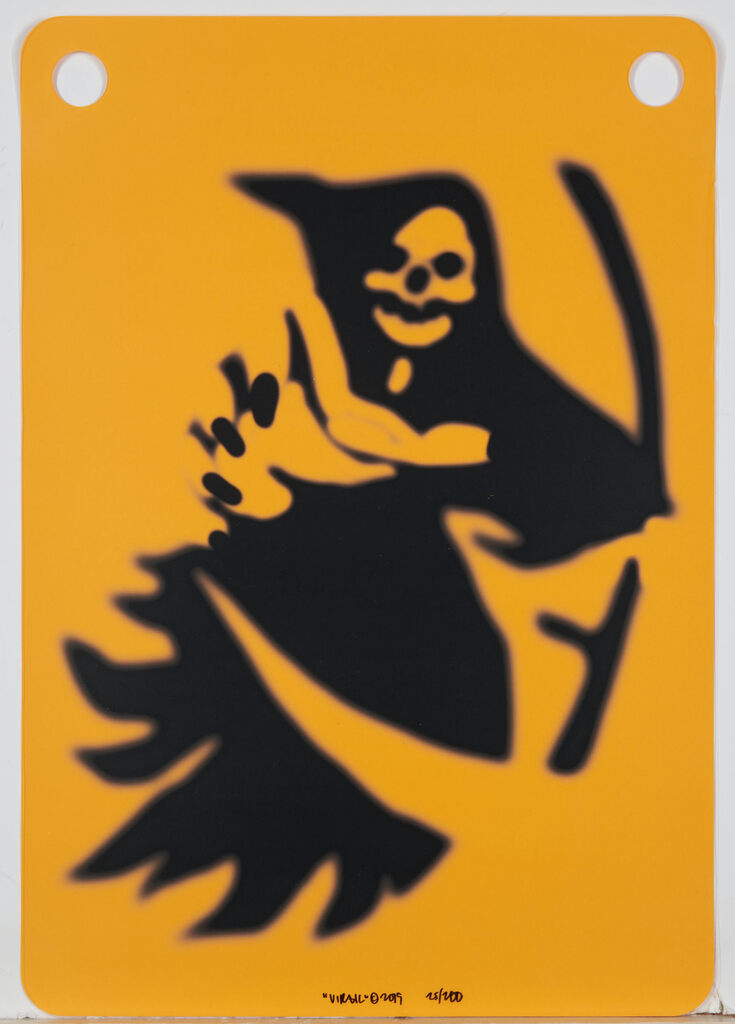
Reaper I · Virgil Abloh · Bonhams · 2023-05 · $0
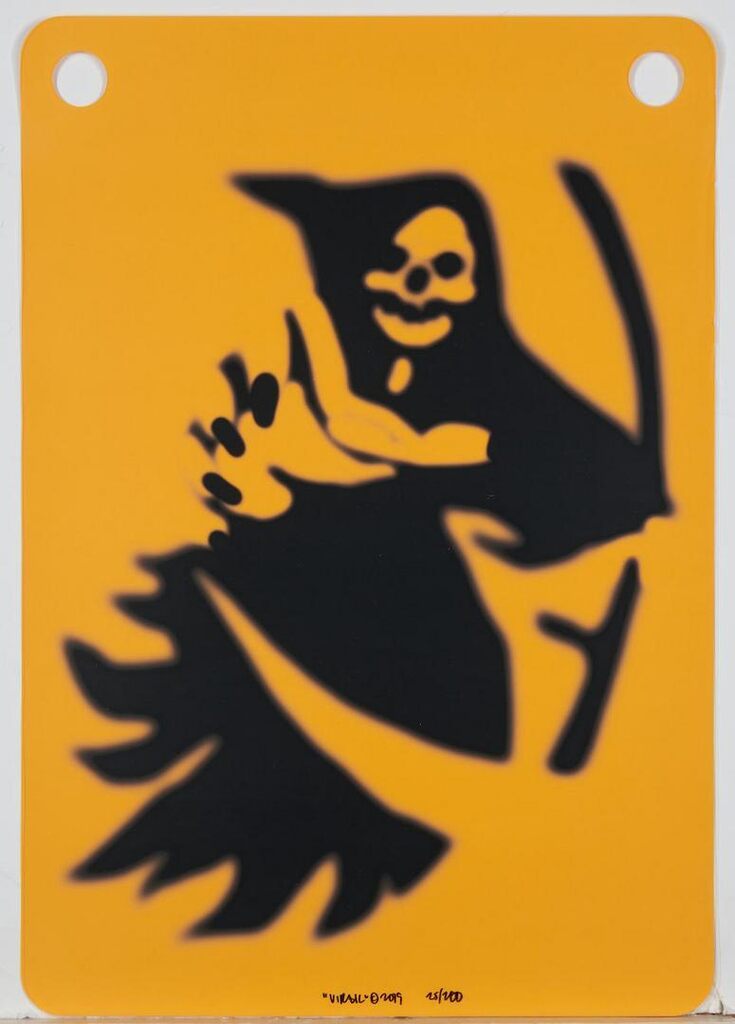
Reaper I · Virgil Abloh · Bonhams · 2023-05 · $0
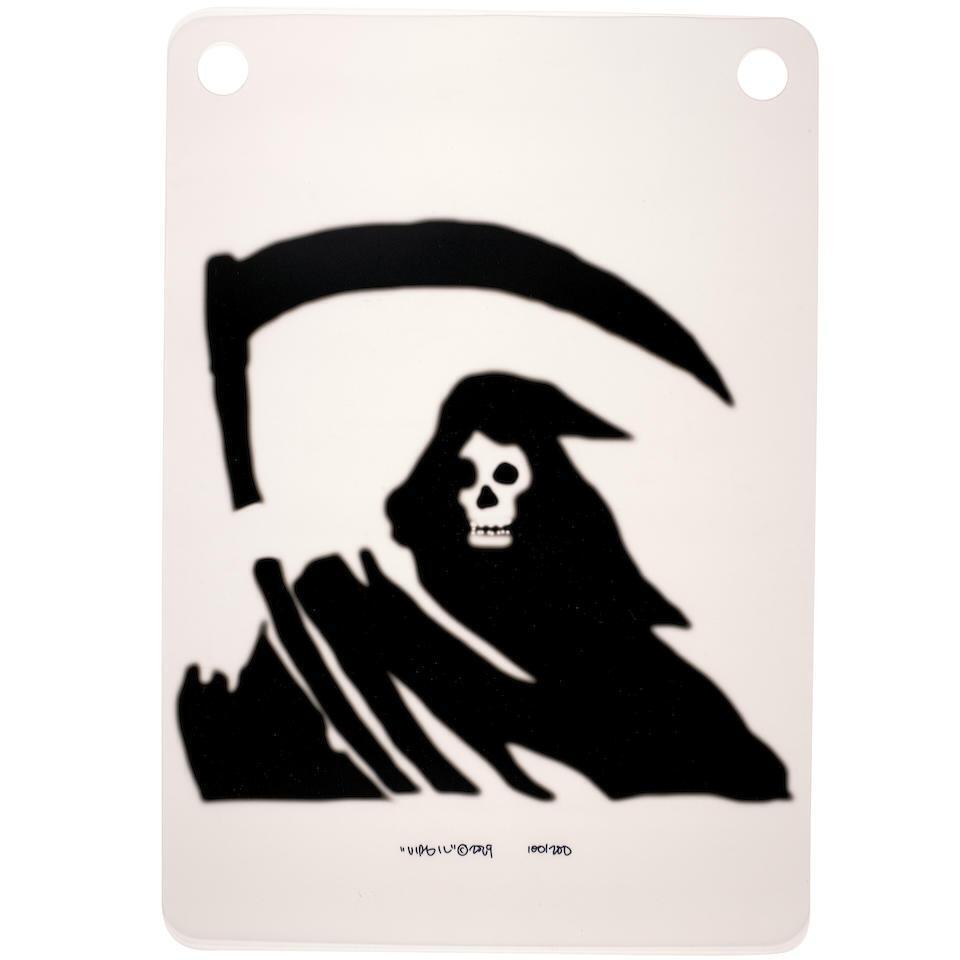
Reaper II · Virgil Abloh · Bonhams · 2022-08 · $1,402
More from this series

Virgil Abloh
Advertise Here
2019

Virgil Abloh
Advertise Here with Clear Canvas
2019
Virgil Abloh
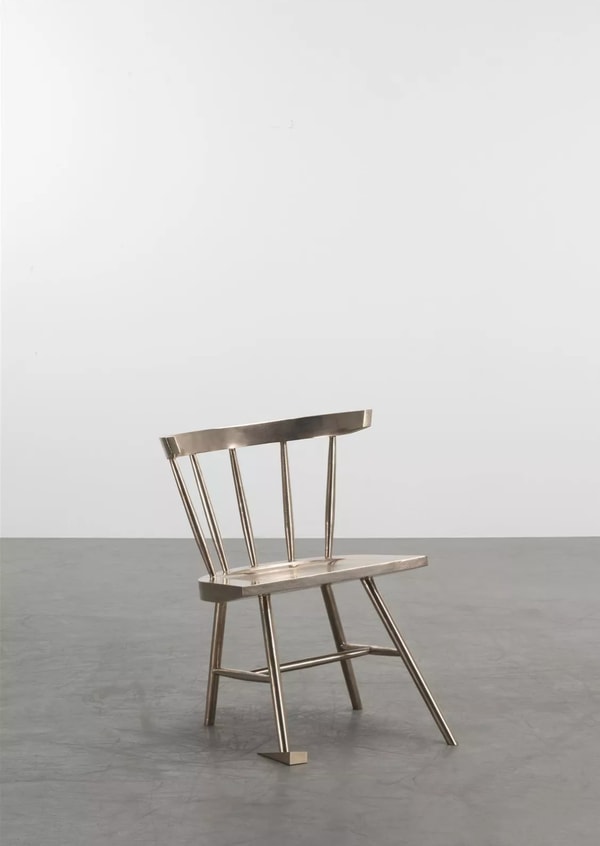
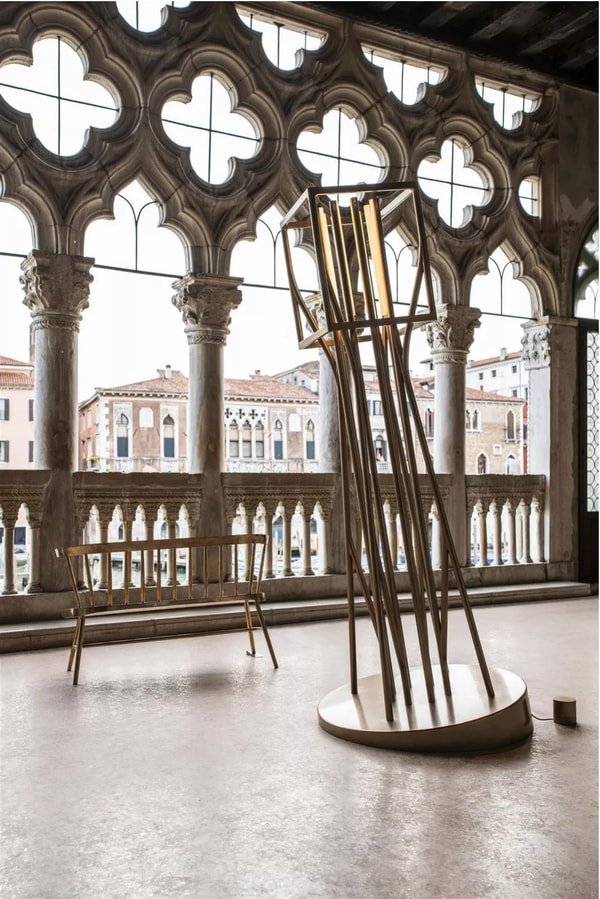
Alaska Chair
2018
Virgil Abloh
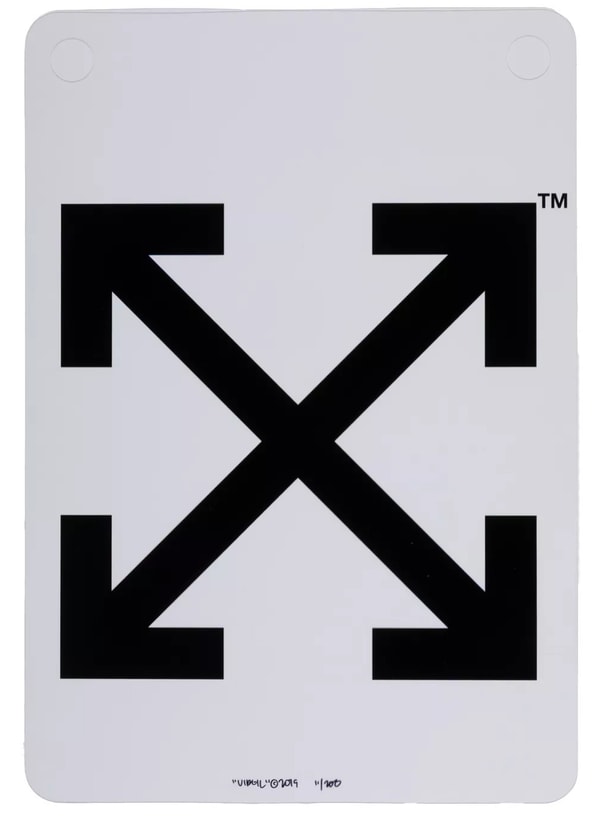
Alaska Floor Lamp
2018
Virgil Abloh
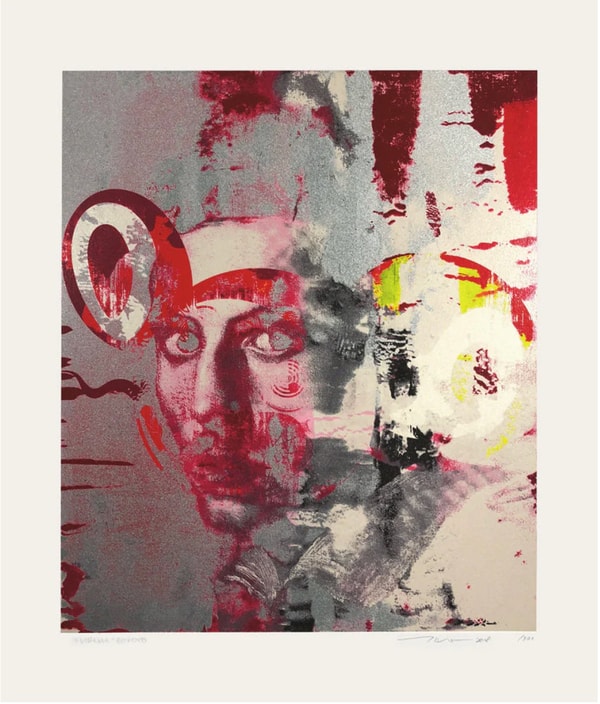
Arrows
2019
Virgil Abloh
Branded in Time
2018

Virgil Abloh
EFFLORESCENCE MIRROR 3
2019
Virgil Abloh
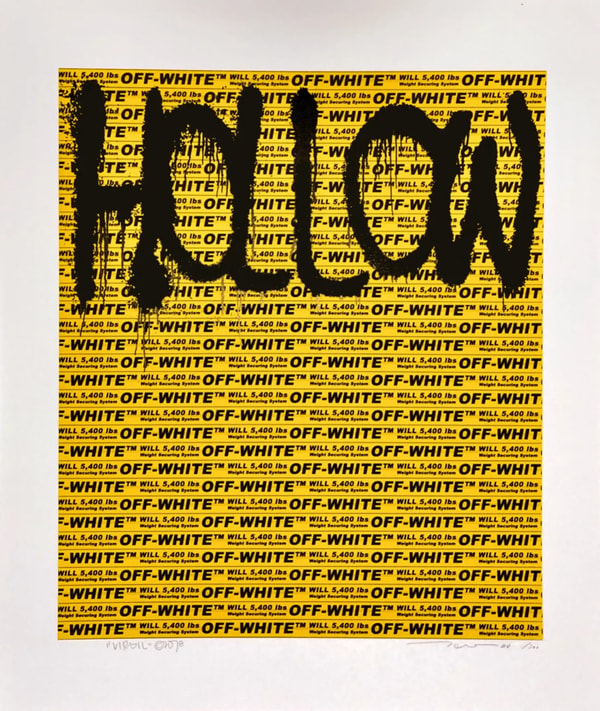
Hollow Man
2018
Virgil Abloh
Kyoto Enso
2018

Virgil Abloh
Life Itself
2021
Virgil Abloh
Life Itself (Black)
2021
Virgil Abloh
Life Itself (set of 2)
Virgil Abloh
Mona Lisa, Artwork With Steel Frame
2019

Virgil Abloh
Receipt Rug
2019
Virgil Abloh
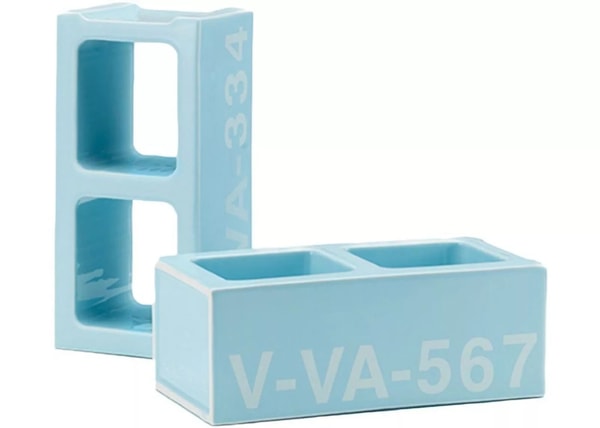
Virgil Abloh x Vitra Ceramic Block Baby Blue
2020

Virgil Abloh
Virgil Abloh x Vitra Ceramic Block Orange
2019
Related Reading



About the Editions Series
Virgil Abloh emerged as one of the most influential creative forces of his generation, fundamentally reshaping the boundaries between fashion, art, design, and popular culture before his untimely passing in 2021 at the age of forty-one. Trained as an architect at the Illinois Institute of Technology, where he studied under the intellectual legacy of Mies van der Rohe, Abloh brought a rigorous conceptual framework to everything he touched, whether designing collections for Louis Vuitton, where he served as artistic director of menswear, founding his acclaimed label Off-White, or creating the limited edition artworks and design objects that have become some of the most coveted pieces among collectors who recognize the significance of his singular vision.
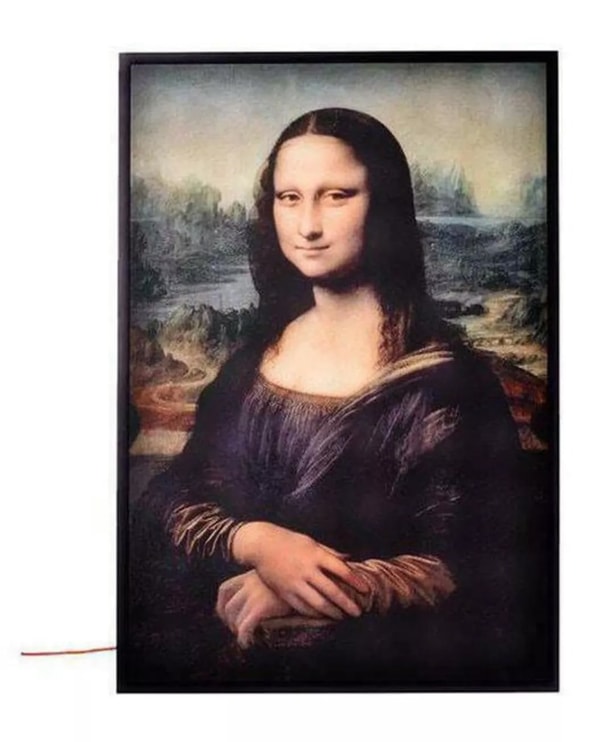
The editions and multiples created by Abloh throughout his career represent a distillation of his philosophical approach to creativity, one that rejected traditional hierarchies separating high and low culture, fine art and commercial design, the exclusive and the accessible. His famous notion of the "three percent approach" suggested that by altering an existing form by just three percent, one could create something entirely new while maintaining a dialogue with its source. This concept animated much of his work, including pieces such as the Mona Lisa, which takes Leonardo da Vinci's iconic masterpiece and recontextualizes it through Abloh's distinctive visual language, questioning notions of originality, reproduction, and value that have preoccupied artists from Marcel Duchamp to Andy Warhol and beyond. The work participates in a rich tradition of artistic appropriation while remaining unmistakably contemporary, speaking to a generation fluent in remix culture and digital reproduction.
The Arrows series exemplifies Abloh's ability to transform graphic elements into instantly recognizable artistic statements. The arrow motif, which became synonymous with Off-White and Abloh's broader aesthetic vocabulary, functions simultaneously as a directional symbol, a brand identifier, and a minimalist composition that rewards sustained attention. These works demonstrate how Abloh elevated commercial graphics to the realm of fine art, collapsing distinctions that the art world had long struggled to maintain. Similarly, the Artwork With Steel Frame presents his characteristically self-aware approach, where the title itself becomes part of the conceptual apparatus, acknowledging the mechanisms of display and presentation that determine how we perceive and value objects.
Abloh's collaborations with Vitra produced some of his most significant design editions, including the Virgil Abloh x Vitra Ceramic Block Orange, which brought his vision into three-dimensional space. These pieces reflect his training in architecture and his understanding of how objects function within environments, not merely as isolated aesthetic experiences but as elements that shape and are shaped by the spaces they inhabit. The Ceramic Block series, with its bold coloration and geometric simplicity, recalls the forms of modernist sculpture while remaining entirely accessible, inviting interaction rather than demanding reverent distance.
The rug editions created with IKEA, including the celebrated "Keep Off," "Wet Grass," and "TEMPORARY," represent perhaps Abloh's most democratic gesture as an artist. By partnering with the Swedish furniture giant, he brought his aesthetic into homes around the world, challenging assumptions about where art belongs and who deserves access to it. The "Keep Off" rug, depicting a Persian carpet pattern overlaid with Abloh's signature quotation marks and cautionary text, encapsulates his ironic sensibility, transforming a functional household object into a commentary on class, taste, and the conventions governing our interactions with designed objects. "Wet Grass," rendered in vivid green with its text appearing as though sprayed in white paint, brings the outdoor inside, playing with expectations of materiality and context. "TEMPORARY" addresses the transient nature of all things, a theme that resonates with particular poignancy given Abloh's passing.
The EFFLORESCENCE MIRROR 3 and the Alaska Floor Lamp demonstrate Abloh's engagement with functional design elevated to artistic statement. The mirror, with its suggestion of organic growth and transformation, invites viewers to see themselves within a frame that is itself a work of art, while the lamp transforms illumination into sculptural presence. These pieces extend the lineage of artist-designed furniture and objects that runs from the Bauhaus through contemporary design, positioning Abloh within a tradition he simultaneously honored and subverted.
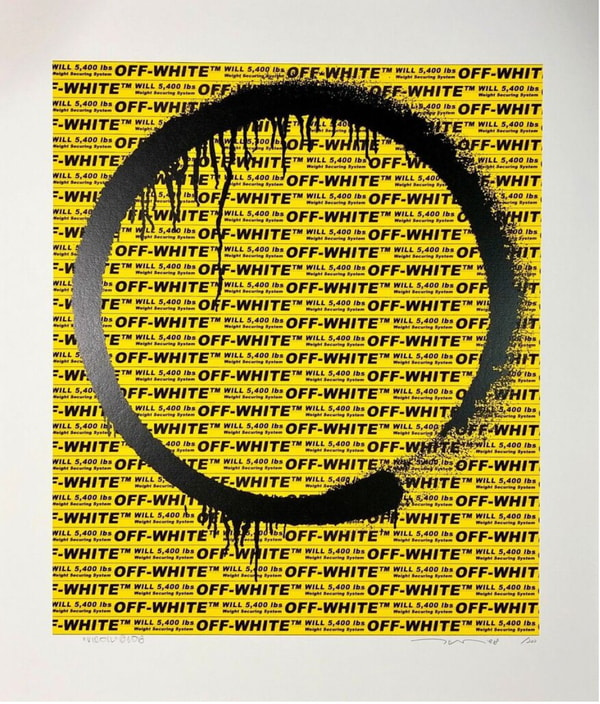
The Hollow Man speaks to themes of presence and absence, identity and anonymity, that recurred throughout Abloh's work. The figure, defined by its emptiness, becomes a vessel for projection and interpretation, inviting viewers to fill the void with their own meanings. The Kyoto Enso draws upon Japanese calligraphic tradition, with the circular form representing enlightenment, the universe, and the void in Zen Buddhism. Abloh's interpretation brings this ancient symbol into conversation with contemporary aesthetics, demonstrating the cultural fluency that characterized his practice.
What unites these diverse works is Abloh's insistence that creativity knows no boundaries, that a rug can be as significant as a painting, that streetwear and haute couture can speak the same language, that design objects deserve the same critical attention as gallery exhibitions. His legacy continues to influence artists, designers, and collectors who understand that the categories we inherit need not constrain the possibilities we imagine.
Guy Hepner is pleased to offer works from the Virgil Abloh Editions series. com or telephone +1 (212) 505-5950.

About Virgil Abloh
Virgil Abloh's multidisciplinary practice, spanning art, fashion, and design, has cemented his position as a highly sought-after artist in the secondary market. His unique blend of street culture, luxury aesthetics, and conceptual art principles translates into strong auction results, particularly for his limited-edition prints, sculptures, and collaborative design pieces.