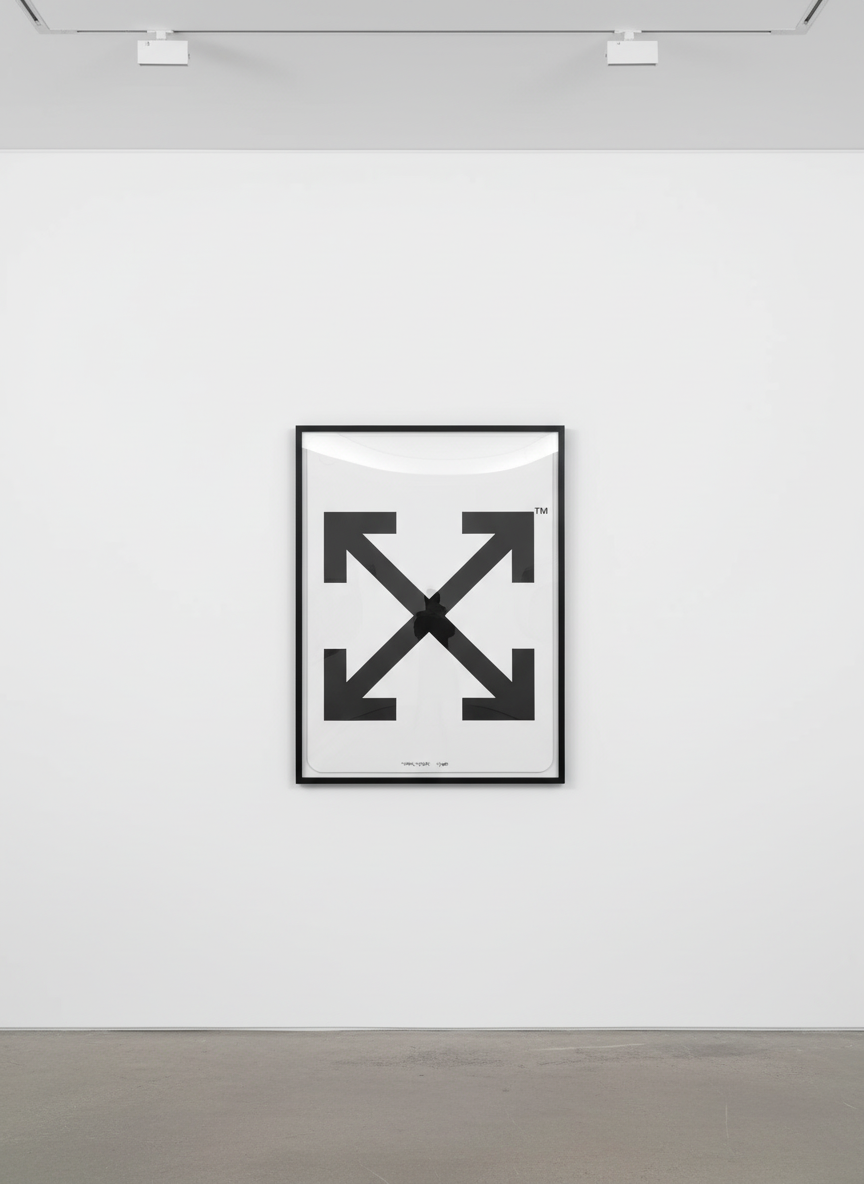
Editions

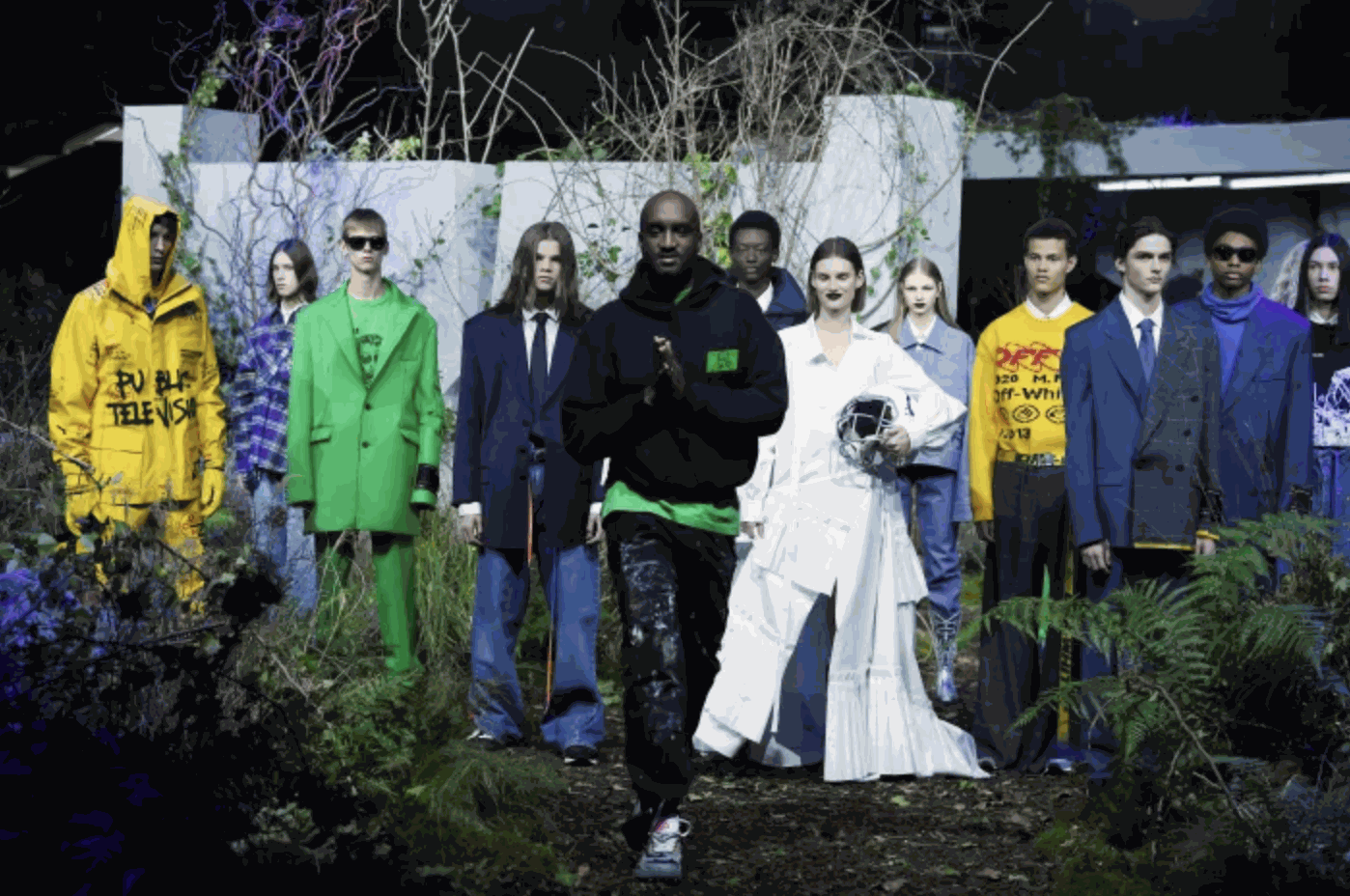
Virgil Abloh's Off-White represents one of the most significant cultural phenomena of the 21st century - a brand that fundamentally transformed the relationship between streetwear and luxury fashion while establishing its founder as one of the most influential creative voices of his generation. Founded in 2013 in Milan, Off-White emerged from Abloh's visionary desire to explore the liminal space between street culture and high fashion, creating a territory where youth-driven aesthetics could be elevated through the lens of luxury craftsmanship. With its now-iconic quotation marks, industrial zip ties, bold diagonal stripes, and references to construction and architecture, Off-White disrupted traditional fashion codes and established an entirely new design vocabulary that continues to reverberate throughout contemporary art and fashion.
Before Off-White became a household name among collectors and fashion enthusiasts worldwide, Virgil Abloh had already demonstrated his capacity for cultural disruption through Pyrex Vision, an experimental brand that repurposed Champion rugby shirts with bold graphics and provocative pricing strategies. This early venture served as a conceptual laboratory where Abloh tested his theories about value, perception, and the constructed nature of luxury. His concurrent role as Kanye West's longtime creative director provided him with unprecedented access to the intersection of music, fashion, and visual culture - experiences that would prove invaluable in shaping Off-White's distinctive identity.
Abloh launched Off-White at a pivotal moment when the fashion establishment was beginning to acknowledge streetwear's immense cultural capital. However, what distinguished Off-White from its contemporaries was Abloh's remarkable ability to synthesize his architectural training from the Illinois Institute of Technology, his conceptual art influences drawn from figures like Marcel Duchamp and Jenny Holzer, and his deep knowledge of skateboarding and hip-hop subcultures into a coherent, intellectually rigorous brand. The label's debut at Paris Fashion Week in 2015 signaled the dawn of a new era - one where a hoodie could command luxury pricing, and where cultural commentary could be embedded into the very construction of clothing.
At the heart of Off-White lies Abloh's concept of the "three percent approach" - the idea that by changing just three percent of an existing design or object, one could create something entirely new while maintaining a dialogue with its source material. This philosophy aligned Abloh's work with the traditions of appropriation art and readymade aesthetics that had defined much of 20th-century avant-garde practice. His use of quotation marks around words like "SHOELACES" or "SCULPTURE" functioned as a form of critical commentary, inviting consumers to question the nature of authenticity, originality, and value in contemporary culture.
The diagonal stripes that became Off-White's visual signature drew from hazard tape and industrial signage, transforming symbols of caution and construction into markers of luxury status. This semantic inversion - taking the vernacular of working-class environments and repositioning it within haute couture contexts - demonstrated Abloh's sophisticated understanding of how meaning is constructed and reconstructed through context. His collections frequently referenced art historical movements, architectural principles, and literary concepts, creating garments that functioned simultaneously as wearable objects and intellectual propositions.
The Art Basel and UBS Global Art Market Report has consistently documented the growing convergence between contemporary art collecting and fashion acquisition, a trend that Virgil Abloh's work exemplifies with particular clarity. Off-White's collaborative projects with major cultural institutions and luxury houses created limited-edition pieces that function within collector markets much like contemporary editions and multiples. The brand's partnership with Nike on "The Ten" collection, which reimagined iconic sneaker silhouettes through Abloh's deconstructive lens, generated extraordinary secondary market activity and established new paradigms for fashion as collectible cultural artifact.
Christie's and Sotheby's have both recognized Abloh's significance through dedicated sales and exhibitions that position his work within broader conversations about contemporary creativity. His designs have appeared in auction contexts alongside works by artists he frequently referenced and collaborated with, affirming his status as a figure who transcended traditional categorical boundaries. The auction houses' engagement with Abloh's output reflects the market's understanding that his pieces represent not merely fashion items but significant cultural documents that capture a specific moment in the evolution of contemporary aesthetics.
For collectors, Off-White pieces - particularly early runway samples, collaborative editions, and items from historically significant collections - represent tangible connections to one of the defining creative voices of the early 21st century. Abloh's tragic passing in 2021 at the age of 41 has only intensified scholarly and collector interest in his legacy, prompting serious institutional attention to preserving and contextualizing his contributions across fashion, art, design, and music.
Virgil Abloh's impact extends far beyond the commercial success of Off-White. He fundamentally democratized the conversation around luxury, insisting that creative excellence could emerge from any background and that the boundaries between high and low culture were artificial constructs worthy of interrogation. His appointment as artistic director of Louis Vuitton's menswear division in 2018 - making him one of the few Black designers to lead a major French fashion house - represented both a personal triumph and a broader cultural shift toward inclusivity in traditionally exclusive industries.
The design principles Abloh established through Off-White continue to influence emerging creators across disciplines, from graphic design to architecture to contemporary art practice. His emphasis on transparency, his willingness to reveal process, and his commitment to mentoring younger talents established a model for creative leadership that prioritizes community building alongside individual achievement.
Guy Hepner is pleased to offer works by Virgil Abloh and pieces related to his visionary creative practice. As a gallery committed to representing the most significant voices in contemporary visual culture, we recognize Abloh's profound contribution to redefining the boundaries between art, fashion, and design. Collectors interested in acquiring works by Virgil Abloh or exploring the intersection of streetwear aesthetics and fine art are invited to contact our gallery for availability, pricing, and private viewing appointments.
Related Series