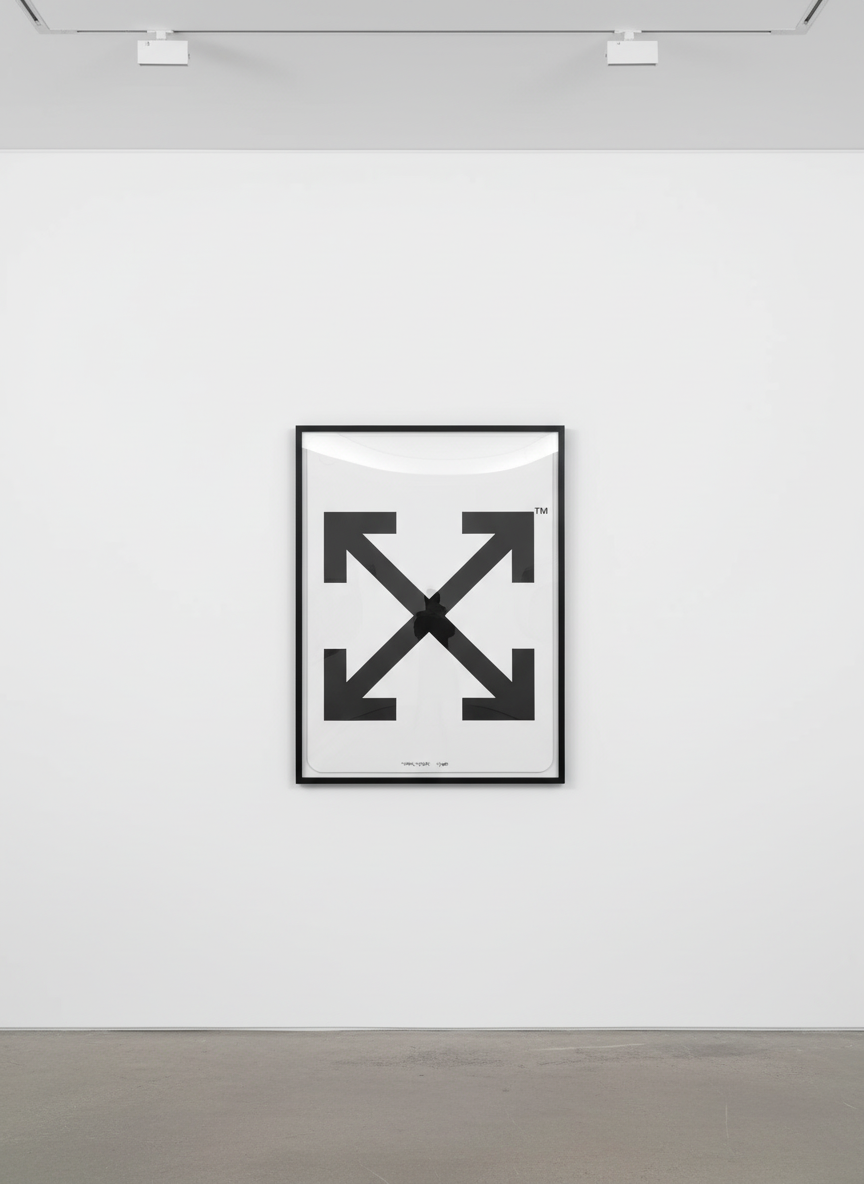
Editions

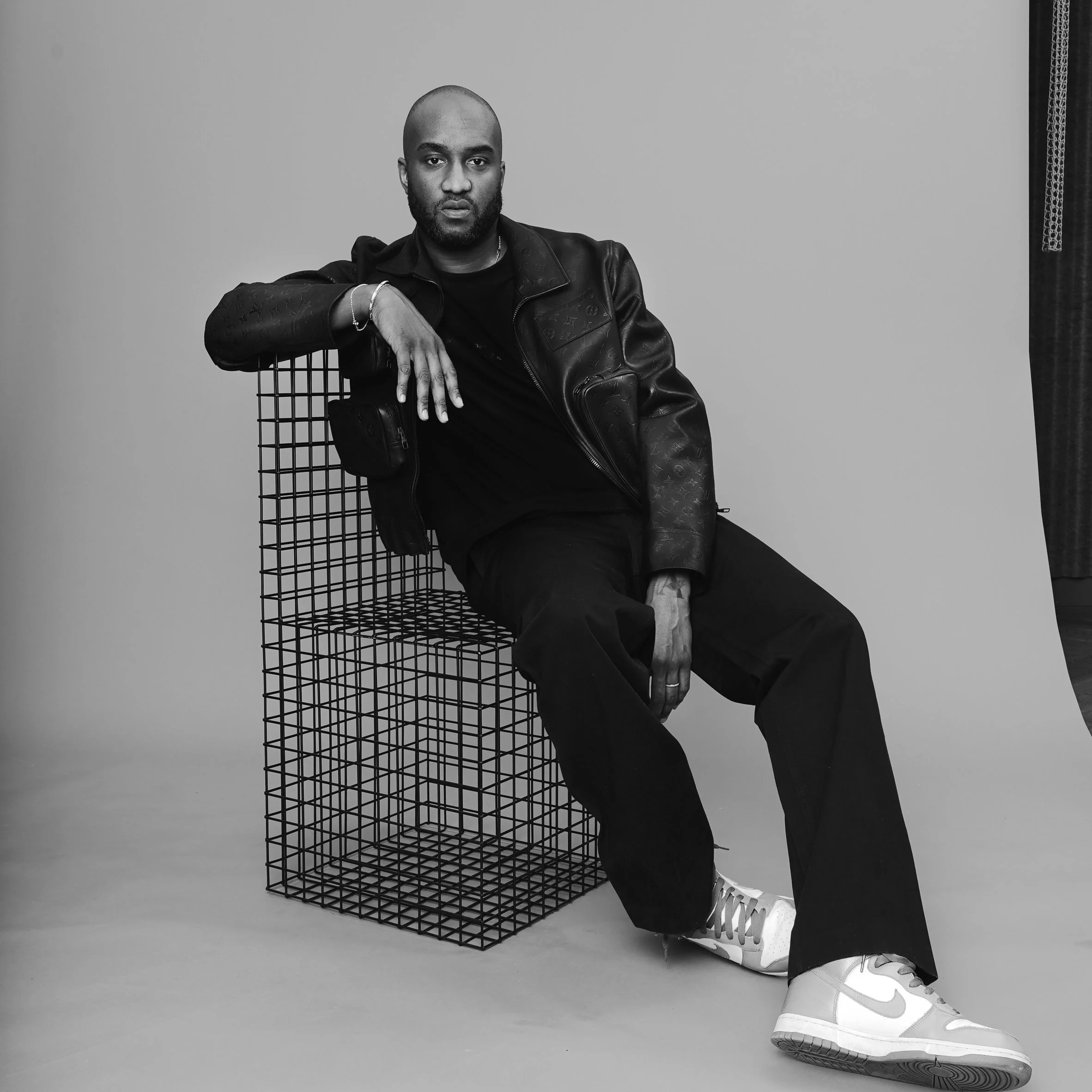
Virgil Abloh was a groundbreaking American designer, entrepreneur, and cultural visionary whose work fundamentally reshaped the landscape of contemporary fashion, art, and design. Born in 1980 in Rockford, Illinois, to Ghanaian immigrant parents, Abloh emerged as a trailblazer who dissolved the boundaries between streetwear and high fashion, architecture and art, commerce and creativity. His untimely passing in November 2021 at the age of 41 left an indelible void in the creative world, yet his legacy continues to influence a new generation of artists, designers, and collectors who recognize his singular contribution to contemporary visual culture.
Virgil Abloh's unique creative perspective was forged through an unconventional path that distinguished him from traditional fashion designers. He earned a degree in civil engineering from the University of Wisconsin-Madison before pursuing a master's degree in architecture at the Illinois Institute of Technology, where he studied within a program influenced by the legendary Mies van der Rohe. This rigorous academic foundation in structural thinking and spatial design became the intellectual bedrock upon which Abloh built his entire creative philosophy.
Rather than viewing fashion, art, and architecture as separate disciplines, Abloh approached them as interconnected expressions of a unified creative vision. He famously articulated his "three percent approach" - the idea that altering an existing design by just three percent could transform it into something entirely new. This conceptual framework challenged traditional notions of originality while democratizing the creative process, inviting broader participation in artistic discourse.
Abloh's career trajectory shifted dramatically in 2009 when he interned at Fendi alongside Kanye West. This formative experience ignited a profound creative partnership that would reshape contemporary culture. As the artistic director for West's creative agency DONDA, Abloh honed his ability to synthesize music, fashion, and visual art into cohesive cultural statements. His work on album artwork, concert staging, and merchandise design demonstrated an unprecedented understanding of how creative disciplines could amplify one another.
In 2012, Virgil Abloh founded Off-White in Milan, a label that would become synonymous with the fusion of streetwear aesthetics and high-fashion sensibilities. The brand's signature elements - industrial belts, quotation marks around familiar words, and diagonal stripes - created an instantly recognizable visual language that resonated with a generation seeking authenticity in luxury. Off-White became more than a fashion label; it evolved into a cultural phenomenon that challenged the exclusivity traditionally associated with high-end design.
The culmination of Abloh's fashion achievements came in 2018 when he was appointed artistic director of Louis Vuitton's menswear collection, becoming the first African-American to hold such a position at the storied French house. His debut show, featuring a rainbow-gradient runway and an emotional embrace with Kanye West, became one of the most discussed moments in recent fashion history. At Louis Vuitton, Abloh continued to challenge conventions, introducing streetwear influences to one of the world's most prestigious luxury brands while maintaining the house's commitment to exceptional craftsmanship.
While Virgil Abloh achieved widespread recognition through fashion, his contributions to contemporary art represent an equally significant aspect of his legacy. Abloh approached art with the same boundary-dissolving philosophy that characterized his fashion work, creating pieces that questioned hierarchies between high and low culture, between functional design and pure artistic expression.
His collaboration with Takashi Murakami demonstrated the cross-pollination between contemporary art and fashion that Abloh championed. Museum exhibitions of his work, including major retrospectives at the Museum of Contemporary Art Chicago and the Institute of Contemporary Art Boston, positioned Abloh firmly within the fine art discourse. His furniture collaborations with Vitra produced collectible design objects that occupy a distinctive space between functional furniture and sculptural art, including the celebrated Ceramic Block series that has become highly sought after by collectors.
Abloh's artistic philosophy centered on accessibility and cultural commentary. He believed that art should engage with contemporary life rather than exist in isolation, and his work consistently reflected the visual language of the present moment. His pieces often incorporated references to consumer culture, architecture, and social commentary, creating multilayered works that reward both immediate appreciation and deeper contemplation.
The market for Virgil Abloh's work has demonstrated remarkable strength since his passing, reflecting both genuine collector appreciation and recognition of his historical significance. According to market analyses from Christie's and Sotheby's, works by Abloh and pieces from his major collaborations have shown consistent demand at auction, with collectors recognizing the prescient nature of his creative vision. The Art Basel and UBS Global Art Market Report has noted the increasing integration of design objects and fashion-adjacent artworks into serious collecting practices - a trend that Abloh himself helped catalyze.
Collectors are drawn to Abloh's work for multiple reasons. His pieces represent a pivotal moment in cultural history when the boundaries between fashion, art, and design became permanently permeable. As an African-American designer who achieved unprecedented positions of influence within European luxury houses, Abloh's work carries profound cultural significance that extends beyond aesthetic considerations. Furthermore, his limited output of art objects and design collaborations ensures genuine scarcity in the market.
The Vitra collaborations, including the Ceramic Block Orange and related pieces, represent particularly compelling collecting opportunities. These works embody Abloh's mature artistic vision while offering the functional dimension that characterized his holistic approach to creativity. For collectors seeking entry points into Abloh's artistic legacy, these design objects provide museum-quality pieces that honor his boundary-crossing philosophy.
Guy Hepner is proud to offer exceptional works by Virgil Abloh, including significant pieces from his celebrated Vitra collaboration and other limited-edition artworks. Our gallery recognizes Abloh's enduring importance to contemporary visual culture and is committed to placing his work with collectors who appreciate both its aesthetic power and cultural significance. For inquiries regarding available works by Virgil Abloh, pricing information, or acquisition guidance, please contact our gallery team directly at info@guyhepner.com or telephone our New York location to speak with a specialist about building your collection.
Related Series