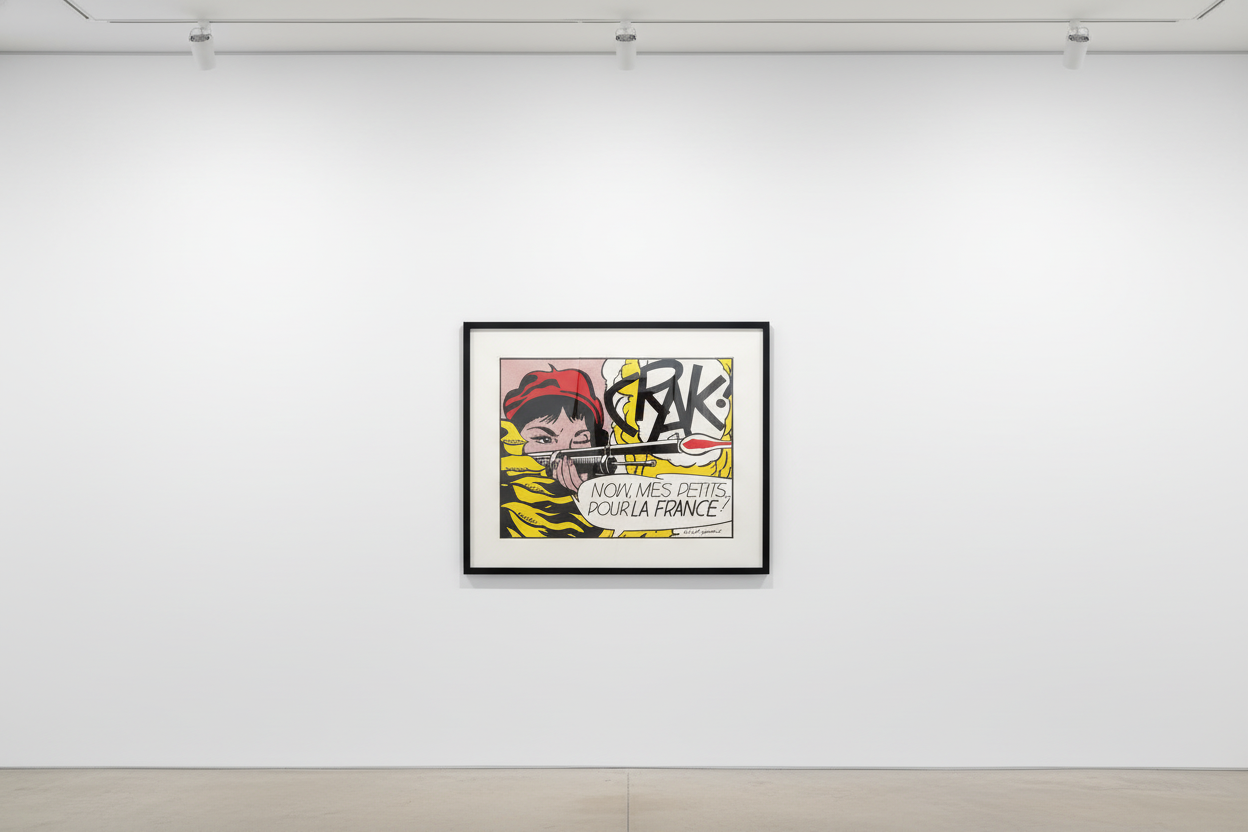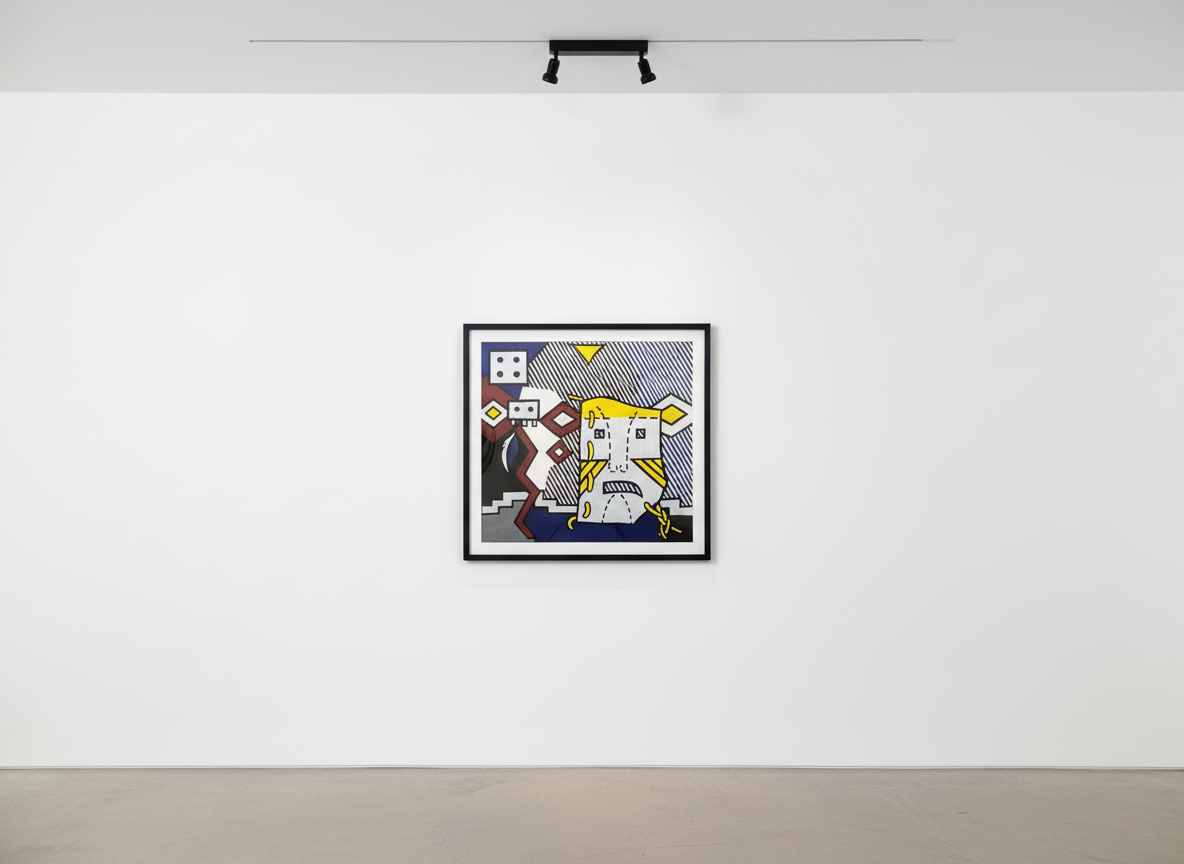
American Indian Theme

Roy Lichtenstein stands among the most influential American artists of the twentieth century, a figure whose bold reinterpretation of commercial imagery fundamentally altered our understanding of what constitutes fine art. His treatment of everyday objects represents one of Pop Art's most revolutionary achievements - the transformation of mundane consumer items, domestic scenes, and ordinary moments into museum-worthy masterpieces. Through his distinctive Benday dot aesthetic, Lichtenstein elevated the commonplace into the extraordinary, challenging long-held hierarchies between commercial design and high culture while simultaneously creating some of the most recognizable images in contemporary art history.
Lichtenstein's genius lay in his ability to perceive artistic potential in sources that the established art world had long dismissed as beneath serious consideration. Comic strips, advertisements, and commercial illustrations became his primary vocabulary - not as ironic commentary alone, but as legitimate aesthetic material worthy of monumental treatment. When he turned his attention to everyday objects - from utilitarian furniture to simple household items - he applied the same rigorous artistic methodology that defined his celebrated comic-book paintings.
The artist understood that these ordinary objects carried profound cultural significance. A chair was never simply a chair in Lichtenstein's hands; it became a meditation on design, consumption, and the visual languages that permeate American domestic life. His still life compositions featuring bowls of fruit, goldfish in their bowls, and flowers in vases connected his practice to centuries of artistic tradition while simultaneously subverting expectations through his distinctly modern technique.
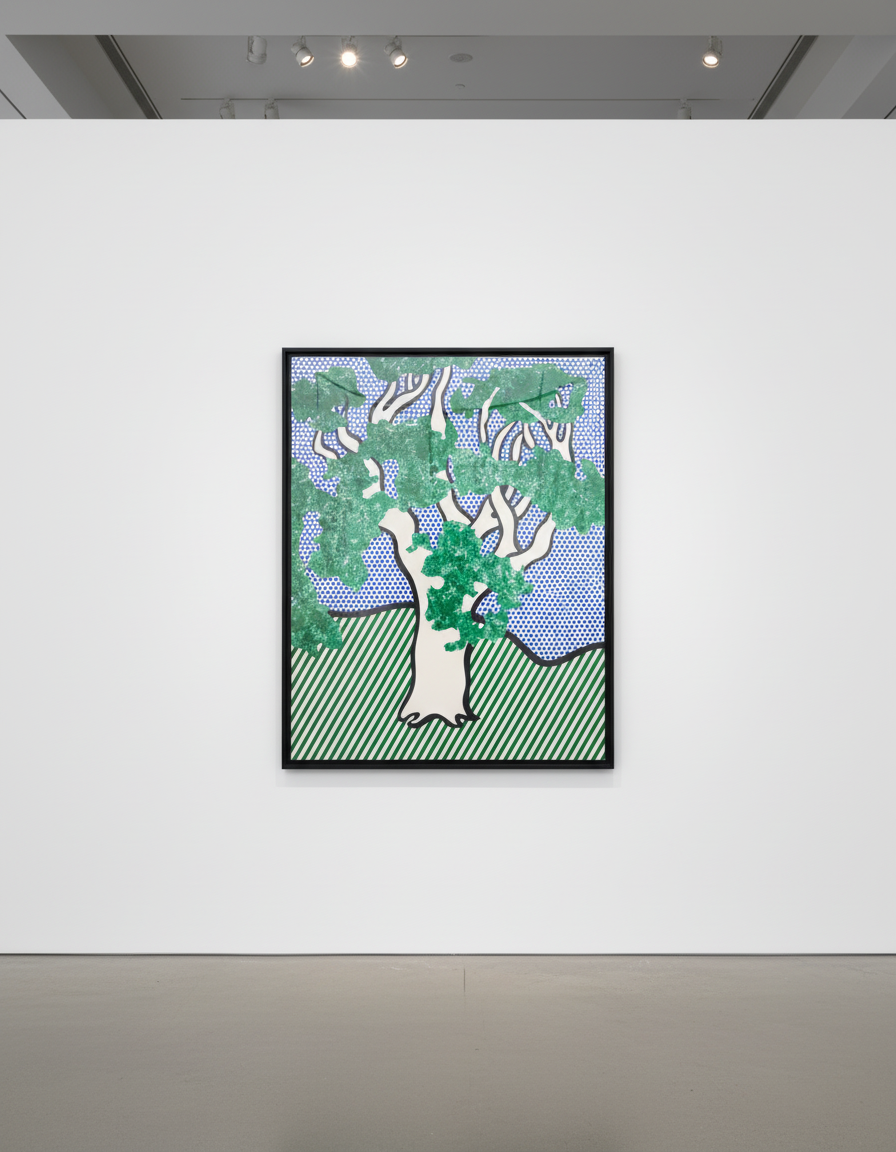
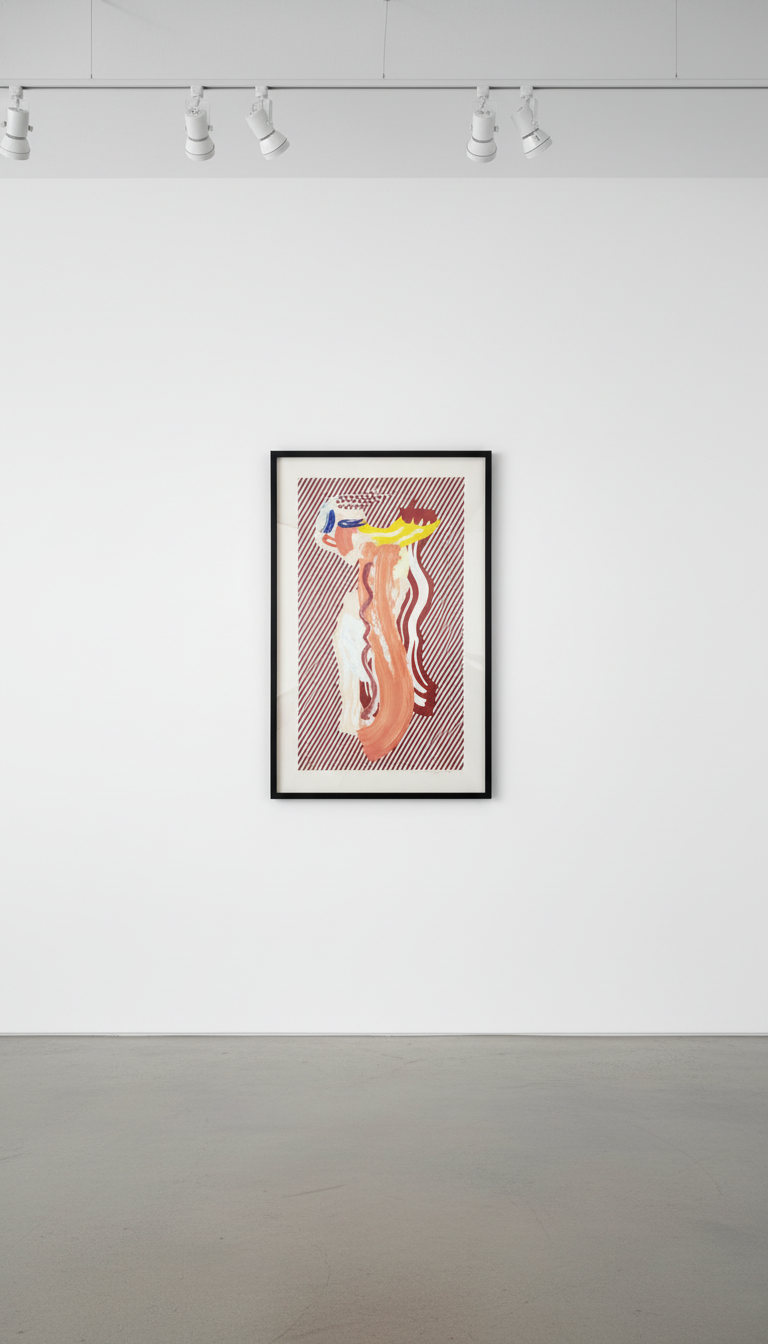
Rainforest (C. 278) — Roy Lichtenstein. Available at Guy Hepner, New York.
This approach proved particularly significant in establishing Pop Art's credentials within the broader art historical narrative. By treating everyday objects with the same formal consideration given to traditional subjects, Lichtenstein demonstrated that contemporary consumer culture deserved artistic scrutiny equal to that afforded classical themes. His work bridged the gap between the art museum and the living room, suggesting that aesthetic experience was not confined to rarefied institutional spaces but permeated every aspect of modern existence.
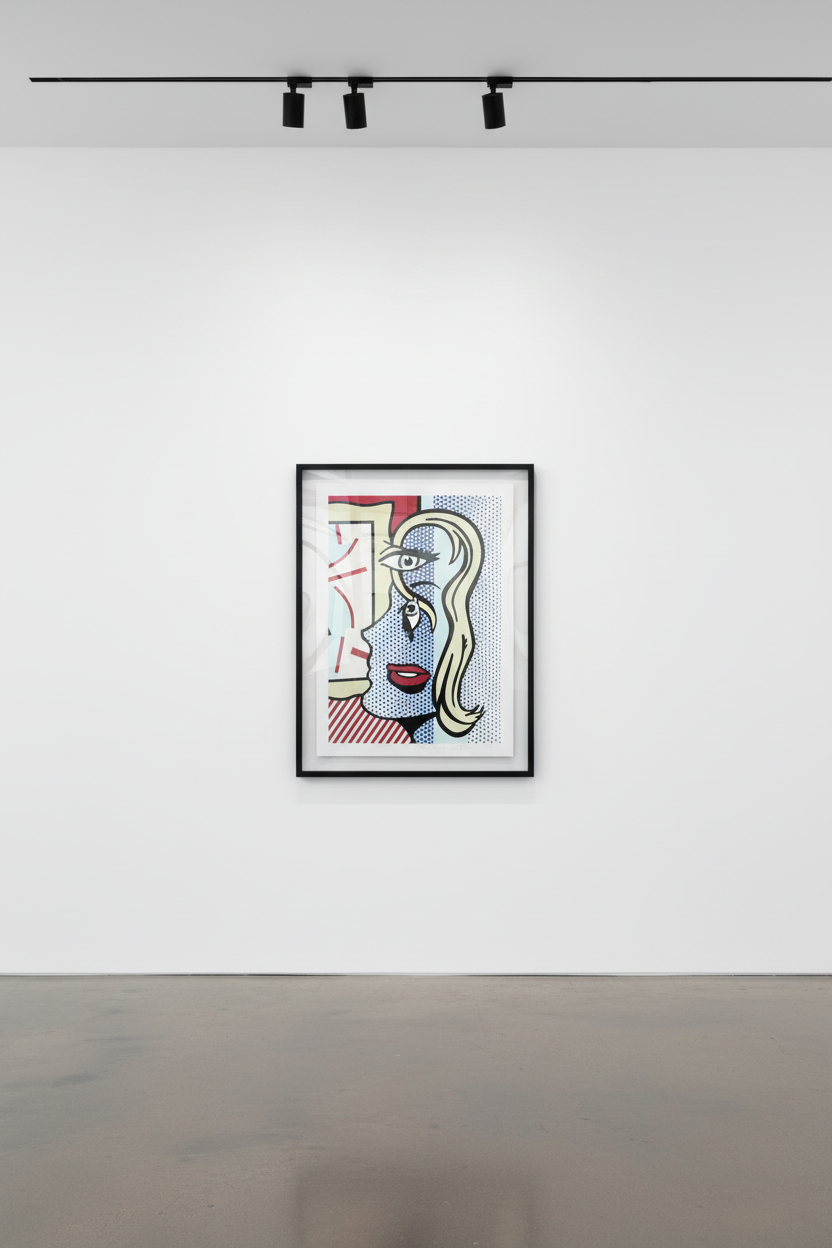
Central to Lichtenstein's treatment of everyday objects was his signature Benday dot technique - a method borrowed directly from commercial printing processes used in newspaper and magazine reproduction. This systematic approach involved translating source imagery into carefully organized patterns of colored dots, bold black outlines, and flat planes of primary color. The technique simultaneously revealed and concealed its mechanical origins, creating works that appeared mass-produced while remaining unmistakably handcrafted.
Lichtenstein's method was remarkably consistent yet endlessly adaptable. Whether depicting a simple table lamp or an elaborate interior scene, he maintained the same meticulous attention to dot placement, line weight, and color relationships. This consistency created a cohesive body of work in which everyday objects existed within a unified visual universe - one that mirrored the homogeneous aesthetic of commercial advertising while transcending its utilitarian purposes.
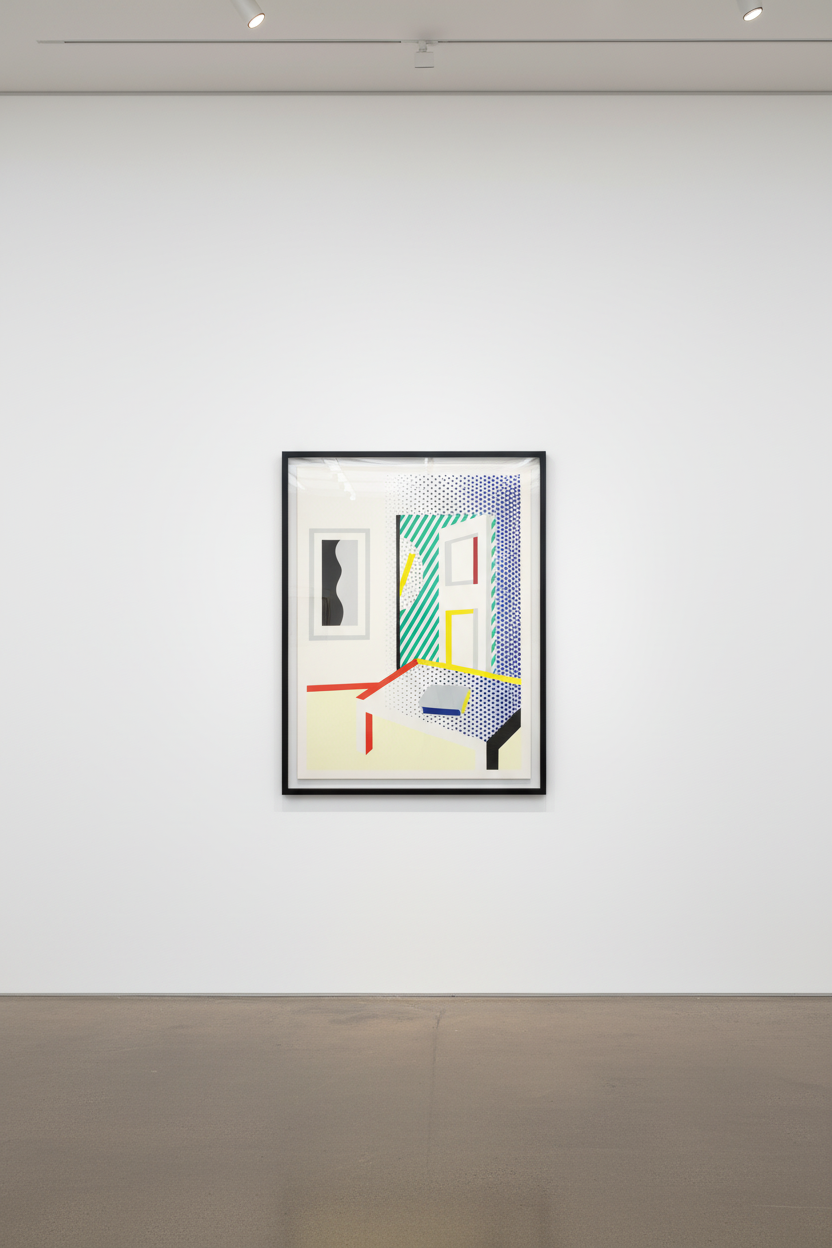
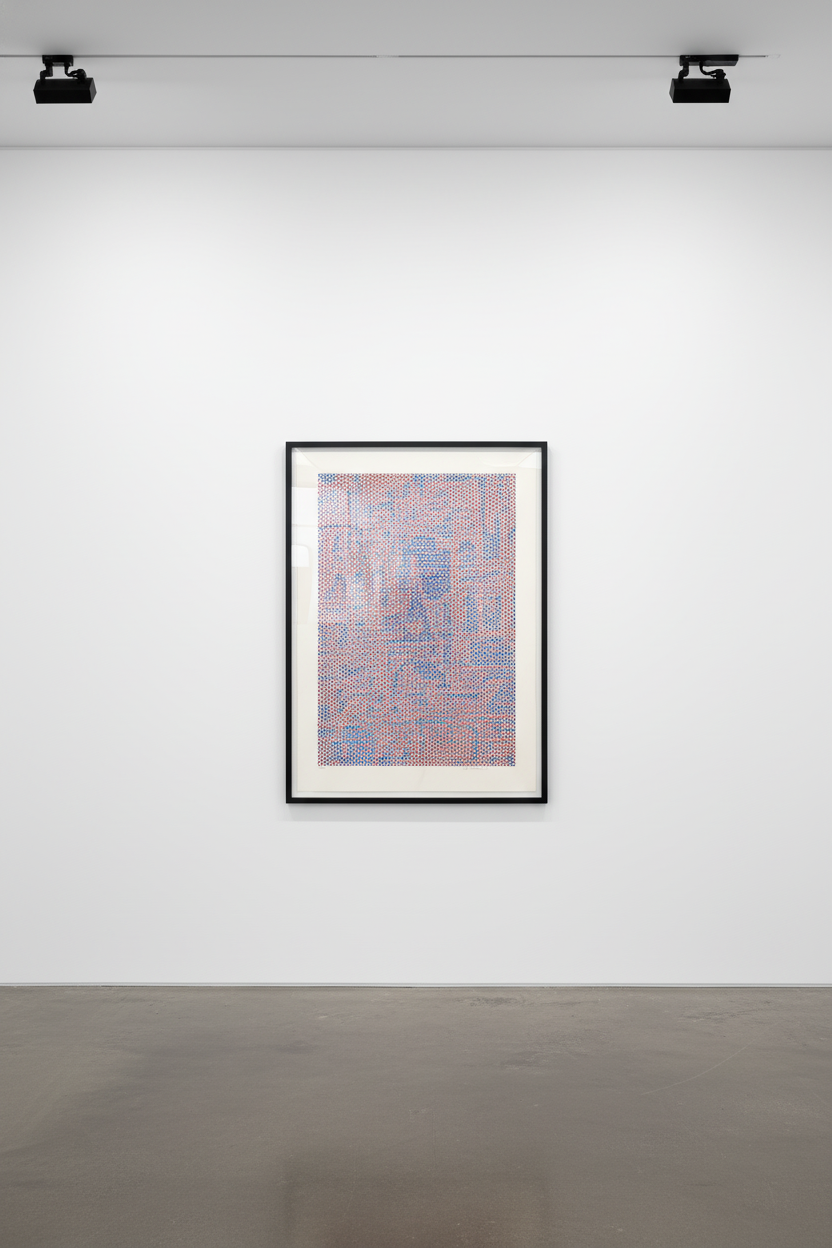
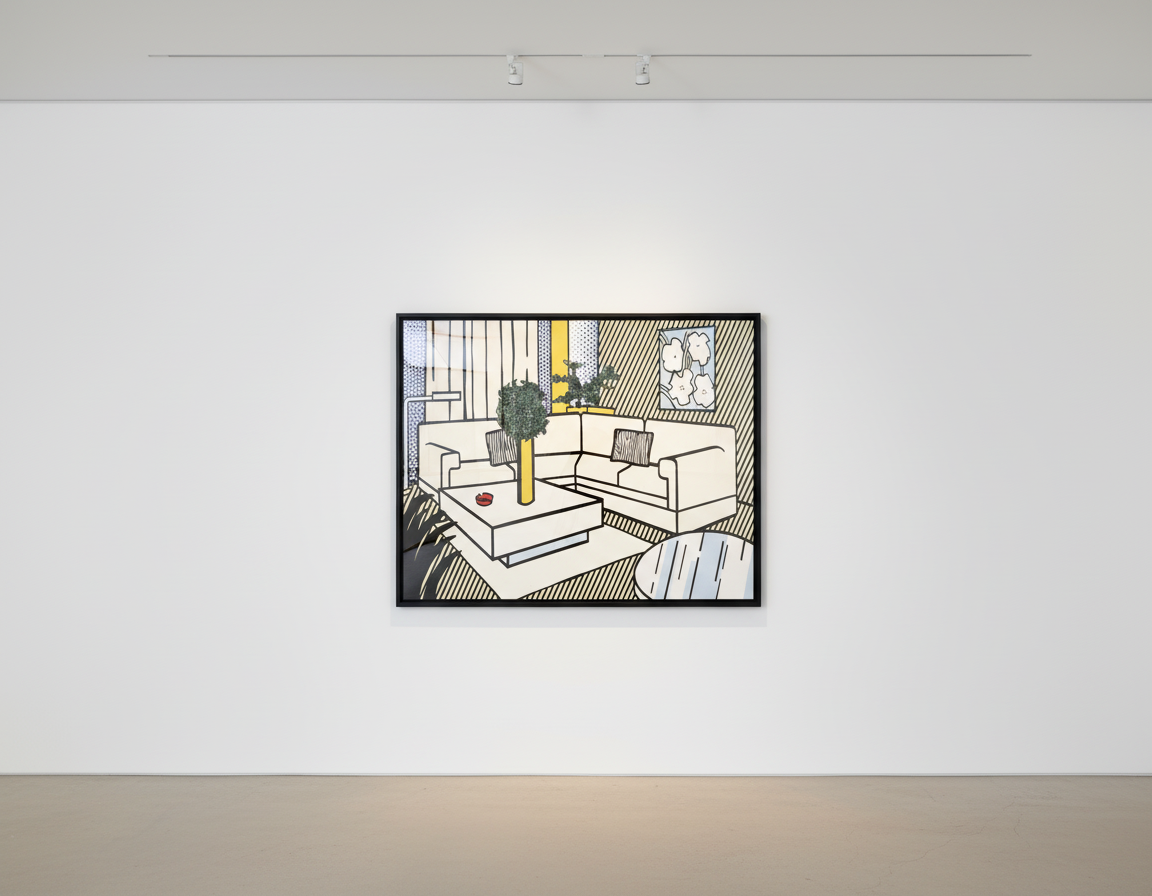
Virtual Interior With Book — Roy Lichtenstein. Available at Guy Hepner, New York.
The artist's interior scenes represent perhaps his most ambitious exploration of everyday objects within domestic contexts. These works - spanning from the 1990s Virtual Interior series to earlier explorations - positioned furniture, books, plants, and decorative items within carefully constructed spatial arrangements. The Interiors functioned as stage sets for modern life, their contents rendered with equal importance regardless of their real-world monetary or cultural value. A simple book received the same artistic treatment as an expensive piece of furniture, democratizing objects within the picture plane.
The market for Lichtenstein's everyday object works has demonstrated remarkable strength and consistent growth over recent decades. According to data from Christie's and Sotheby's, his paintings and prints featuring domestic subjects and still life compositions regularly achieve significant results at auction, reflecting sustained collector interest across multiple categories of his practice. The Art Basel and UBS Global Art Market Report has consistently identified Lichtenstein among the most sought-after Post-War and Contemporary artists, with his work maintaining strong demand across international markets.
Collectors are drawn to these works for multiple reasons. The everyday object pieces offer accessibility - both conceptually and often financially - compared to his most iconic comic-book paintings while retaining the unmistakable Lichtenstein aesthetic. They represent the full scope of his artistic vision, demonstrating that his Pop Art innovations extended far beyond the romantic melodramas and military scenes for which he initially gained fame. For collectors building comprehensive holdings in Post-War American art, these works provide essential context for understanding Lichtenstein's complete contribution to art history.
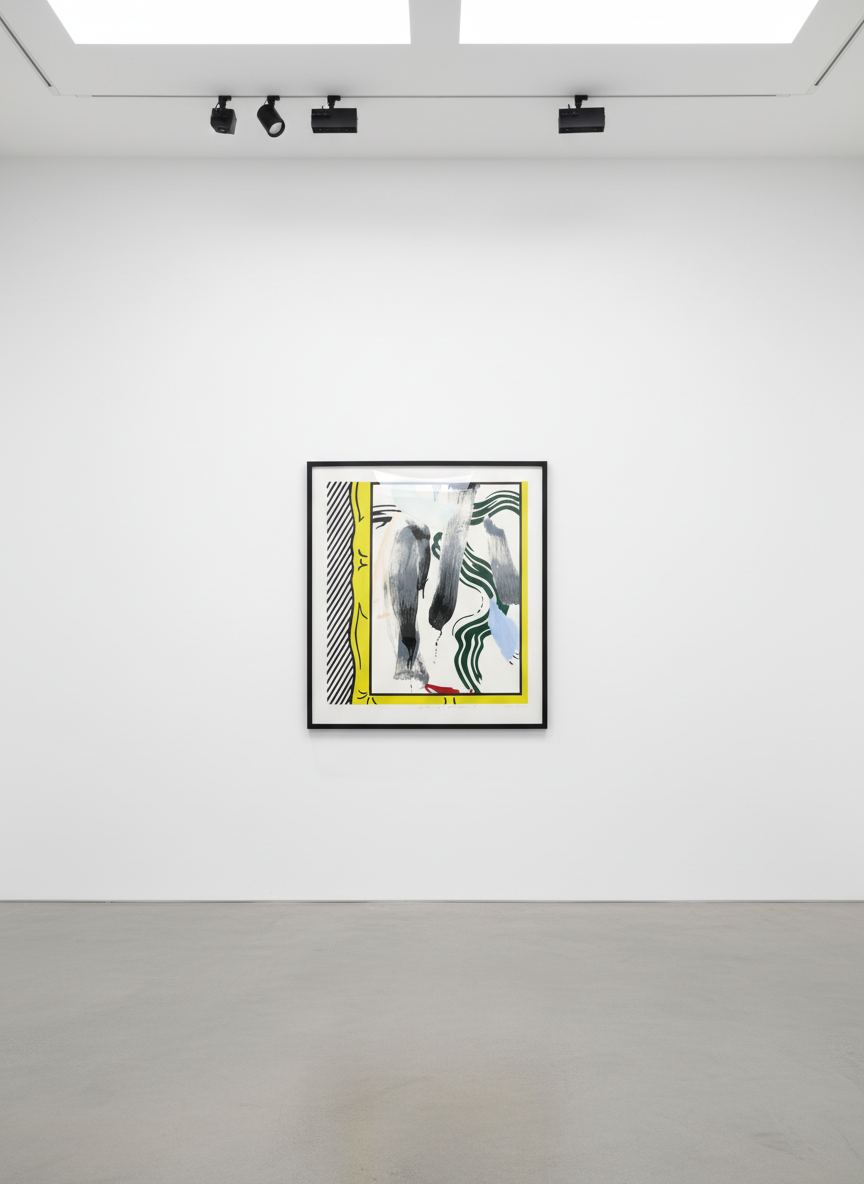
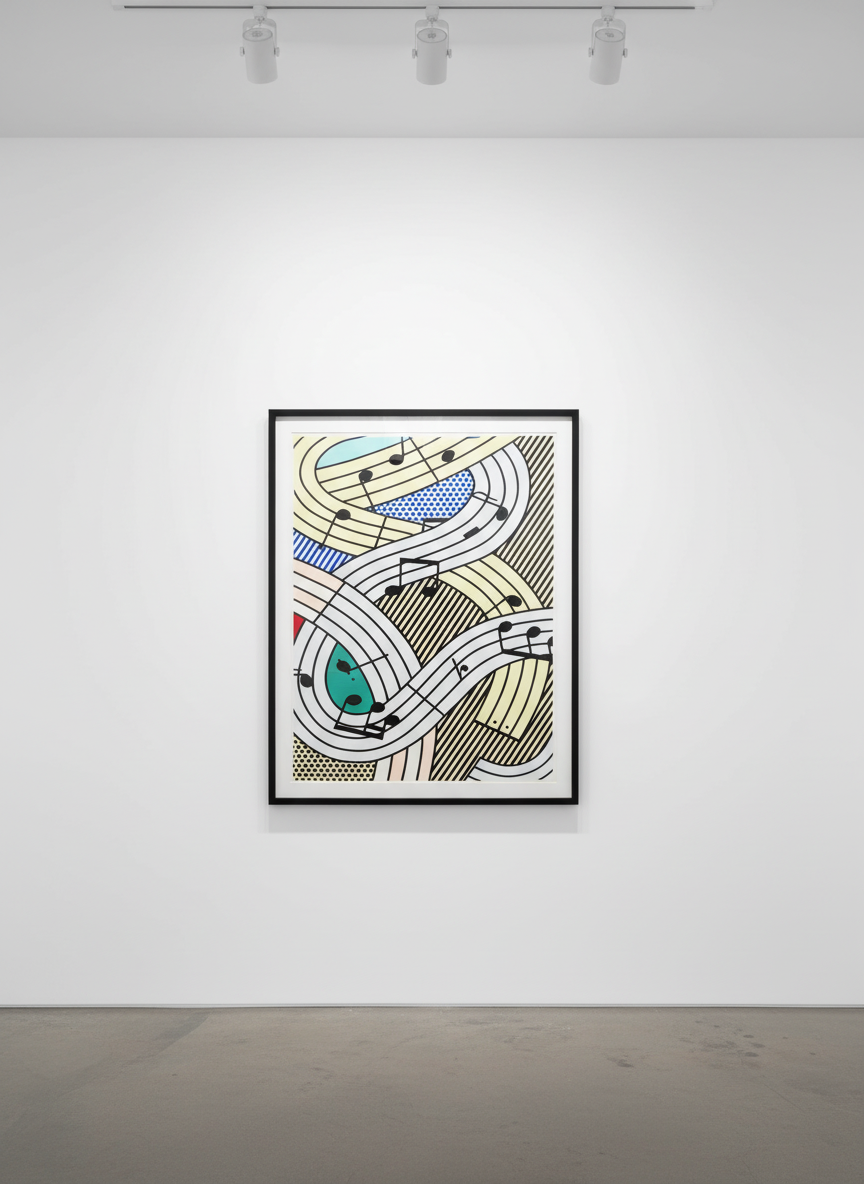
Against Apartheid (C. 200) — Roy Lichtenstein. Available at Guy Hepner, New York.
The prints and multiples market has proven particularly robust for everyday object subjects. Lichtenstein was a prolific printmaker who understood the medium's democratic potential - its ability to disseminate images widely while maintaining artistic integrity. His screenprints, lithographs, and woodcuts featuring still life subjects and interior scenes allow collectors at various levels to acquire museum-quality works by one of the twentieth century's defining artists.
Lichtenstein's everyday object works resonate with particular force in our current cultural moment. As contemporary society grapples with questions of mass production, consumer culture, and the boundaries between authentic experience and mediated representation, his investigations into these themes feel remarkably prescient. The objects he depicted - products of mid-century American industrial design and domestic aspiration - now carry additional layers of nostalgic significance, marking a specific moment in cultural history while addressing universal questions about how we inhabit and perceive our environments.
His influence extends throughout contemporary art practice, visible in artists who continue exploring the aesthetics of commercial culture and the artistic potential of overlooked subjects. Yet Lichtenstein's original works retain their power precisely because they emerged at a pivotal moment - when the boundaries between high and low culture first began their decisive collapse, and when everyday objects first demanded serious artistic consideration.
Guy Hepner gallery maintains an exceptional selection of Roy Lichtenstein works, including significant examples from his everyday object explorations and related series. Our specialists possess deep expertise in Lichtenstein's market and can guide collectors toward acquisitions that align with both aesthetic preferences and investment objectives. To inquire about available Roy Lichtenstein pieces or to discuss building a collection featuring this essential Pop Art master, contact Guy Hepner directly for private consultation.
--- **Browse Roy Lichtenstein prints** at Guy Hepner: [Roy Lichtenstein art for sale](/roy-lichtenstein) | [Sell your Lichtenstein](/sell/roy-lichtenstein)Explore Roy Lichtenstein prints for sale at Guy Hepner: American Indian Theme, Art Critic, Brushstrokes, Cathedral, Composition.
Related Series