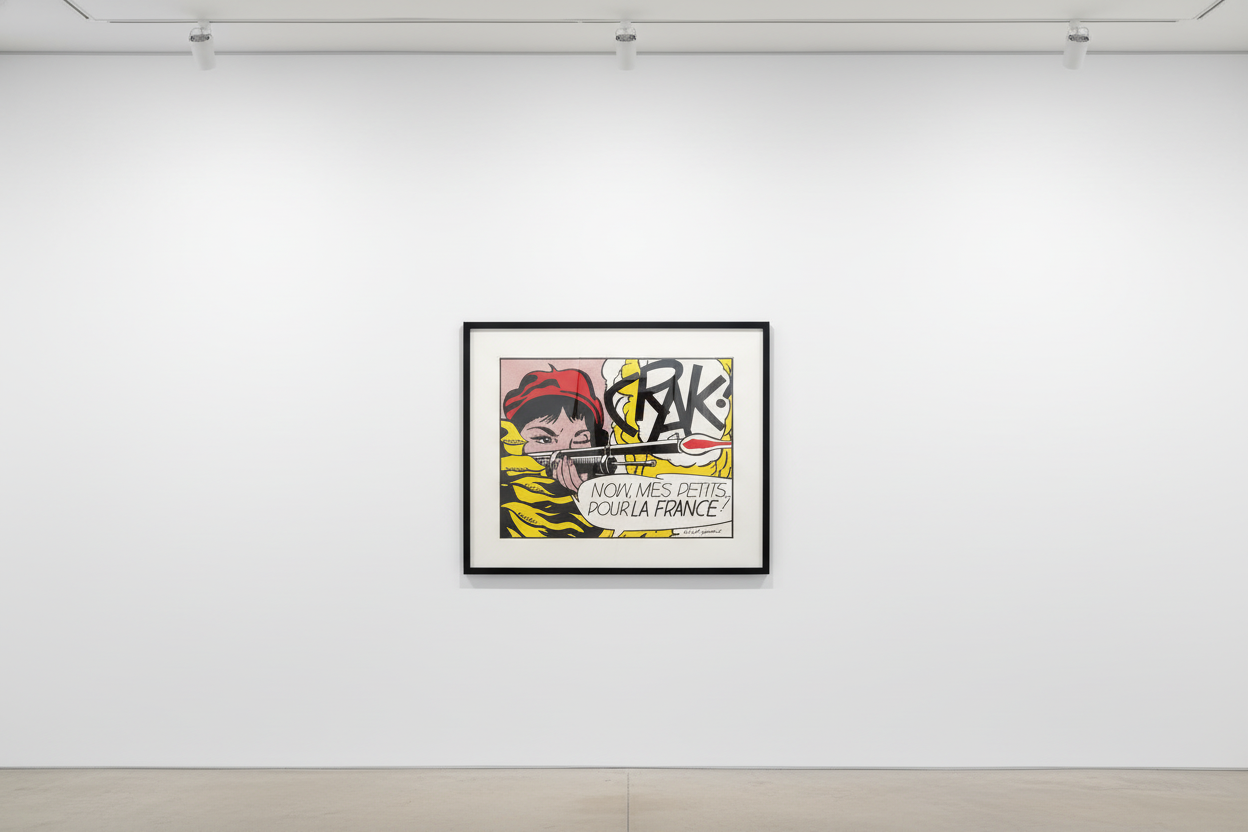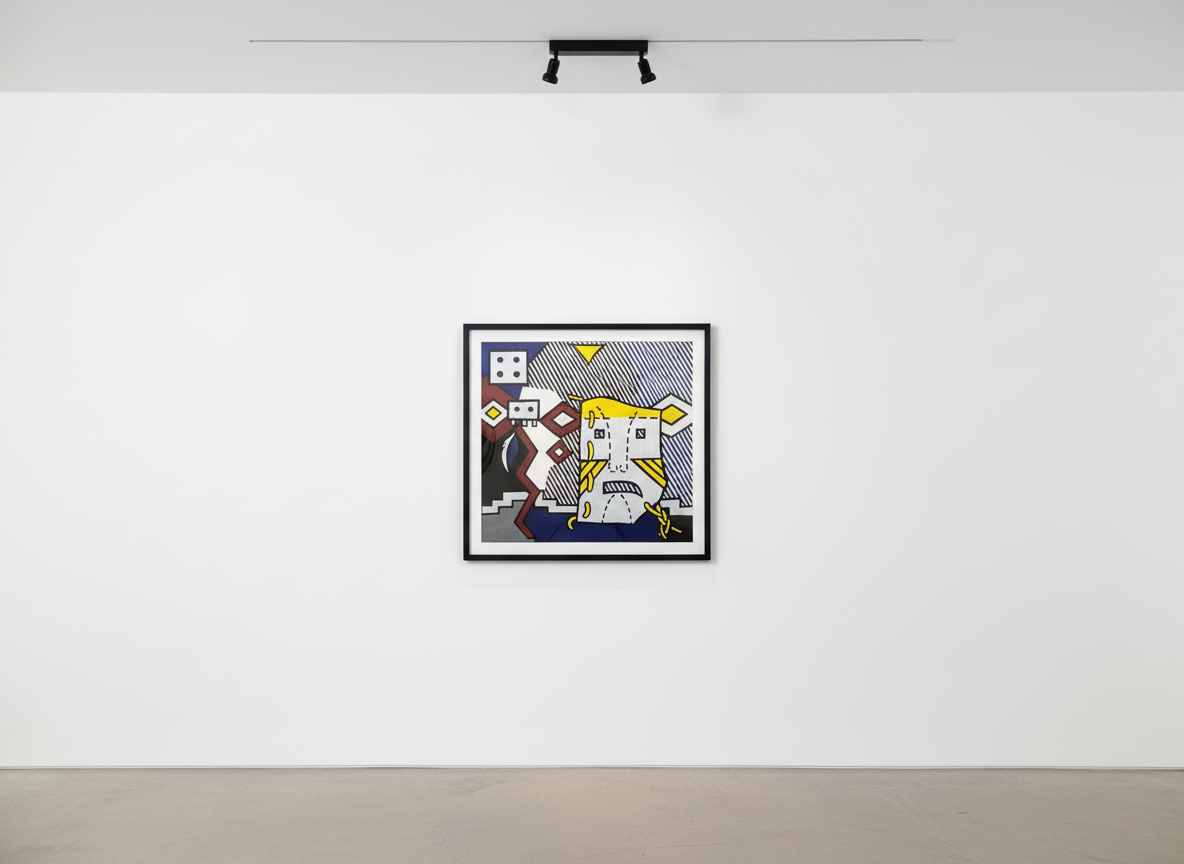
American Indian Theme

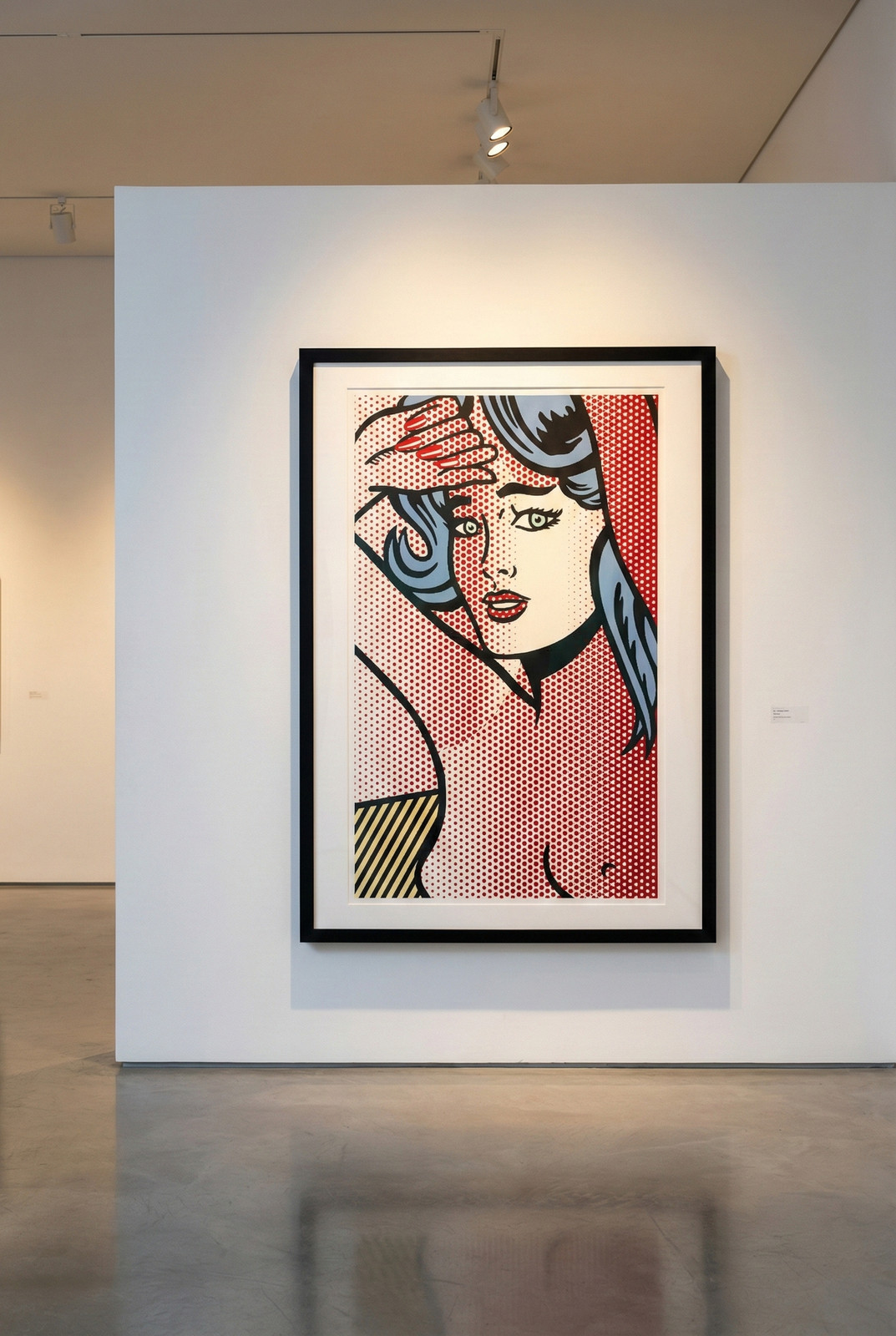
Roy Lichtenstein's paintings are often recognized instantly — the crisp comic-book dots, the bold primary colors, the stylized emotions frozen mid-gesture. Yet beneath their cool, graphic precision lies an intense narrative intelligence. Lichtenstein was not merely appropriating imagery from popular culture; he was distilling stories to their most potent, economical forms. Like a playwright following the classical unities of action, time, and place, he created images that capture the total drama of a scene in one immaculate frame. His art reminds us that storytelling does not always need motion or sequence — sometimes, a single moment can hold an entire universe of tension, irony, and meaning.
Roy Lichtenstein was born in New York City in 1923. Raised in an upper-middle-class Manhattan family, he showed an early interest in drawing, model-making, and jazz. He attended the Art Students League while still in high school, studying briefly with Reginald Marsh before enrolling at Ohio State University in 1940. His early education emphasized both studio practice and art theory — an unusual combination that later shaped his analytical approach to making art.
Lichtenstein's studies were interrupted by military service during World War II, after which he returned to Ohio State to complete his degree and later teach. Throughout the 1950s, he experimented with Abstract Expressionism and various modernist styles, searching for a visual language that felt authentically his own. The breakthrough came in 1961 when he produced Look Mickey, a painting derived directly from a comic book image. This work marked the beginning of his signature style and established him as a central figure in the emerging Pop Art movement alongside Andy Warhol, James Rosenquist, and Claes Oldenburg.
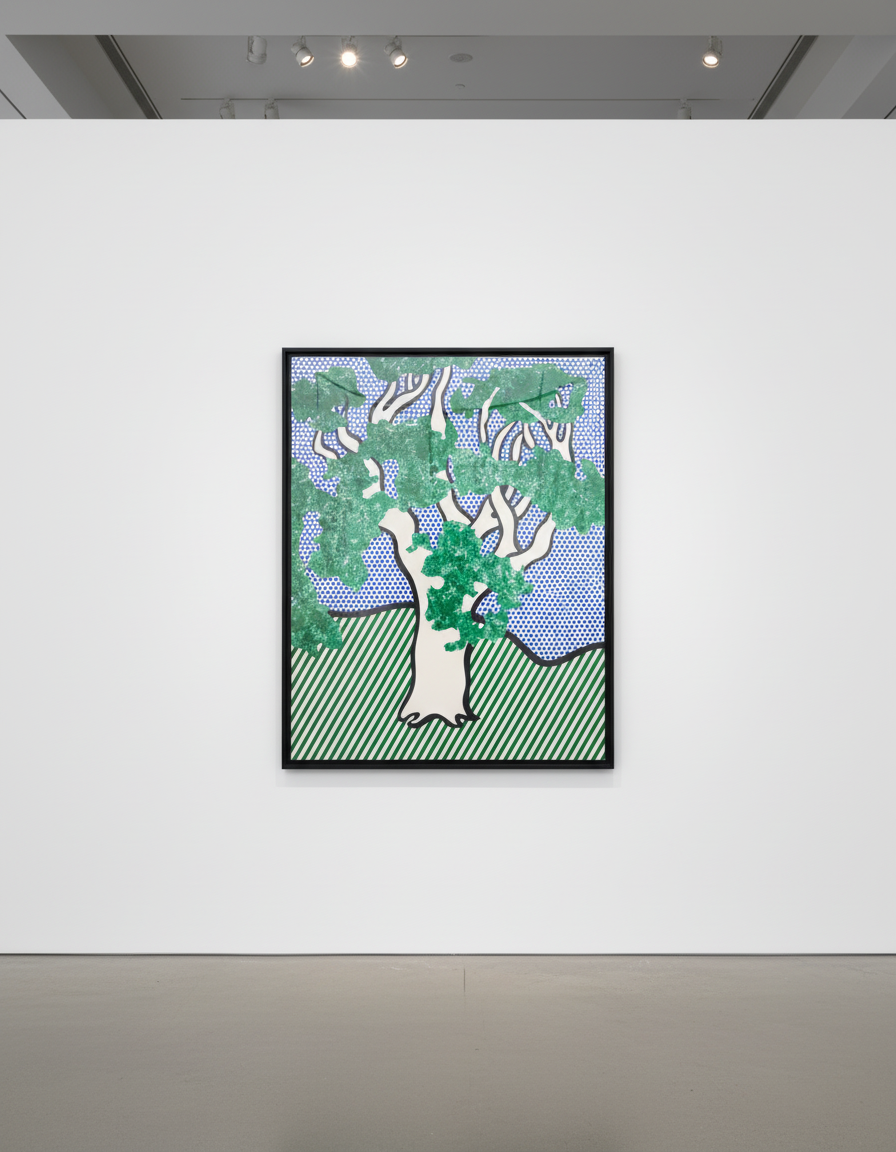
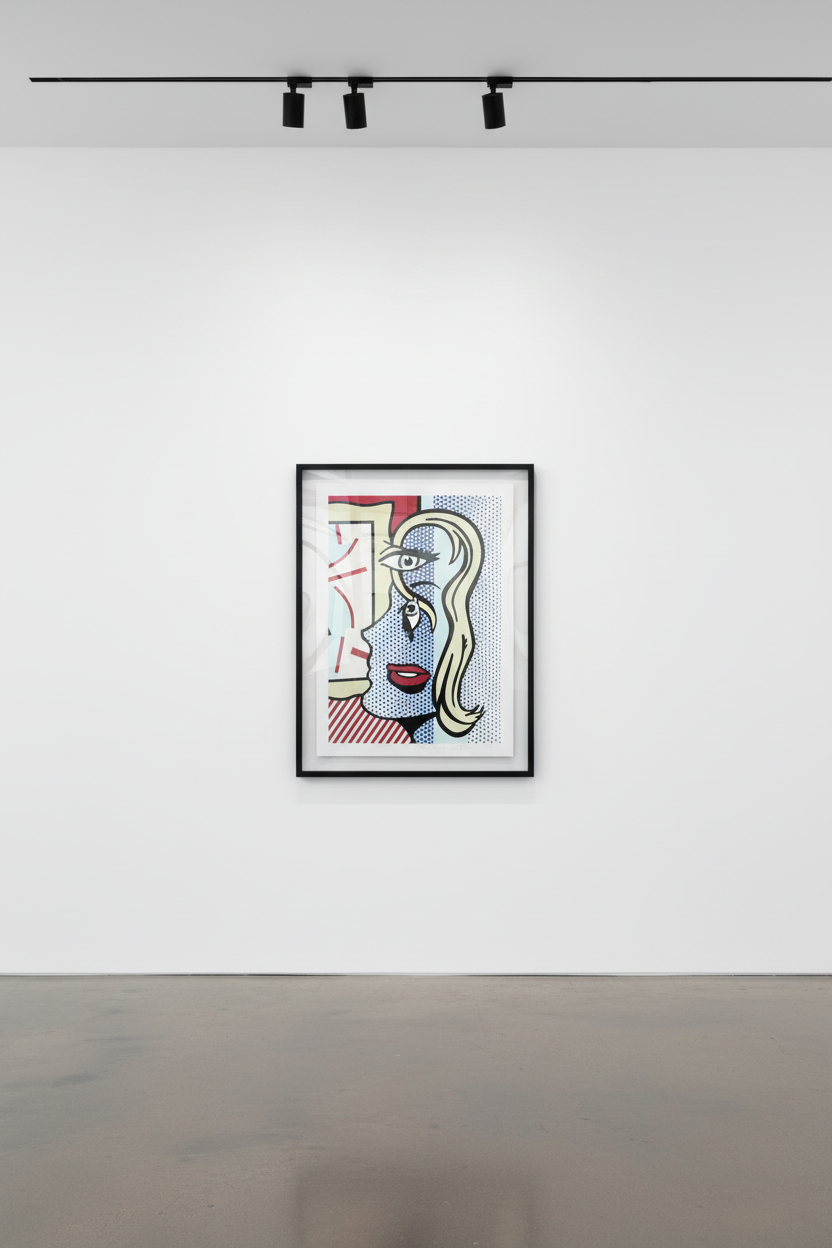
Rainforest (C. 278) — Roy Lichtenstein. Available at Guy Hepner, New York.
What distinguishes Lichtenstein from his Pop Art contemporaries is his sophisticated understanding of narrative compression. Where other artists celebrated consumer culture through repetition or scale, Lichtenstein focused on the mechanics of storytelling itself. His comic-derived paintings capture what literary theorists might call the pregnant moment — that instant when past action and future consequence collide in a single frozen frame.
Consider his approach to war comics and romance panels. These source materials originally existed within sequential narratives, each panel dependent on those before and after for meaning. Lichtenstein extracted individual frames and transformed them into autonomous works, yet the sense of ongoing story remains palpable. A woman weeps, but we never learn why. A fighter pilot fires, but we never see the outcome. This deliberate incompleteness creates psychological tension that draws viewers into active interpretation. We become co-authors of narratives that exist only in implication.
The technical execution reinforces this suspended quality. Lichtenstein's Ben-Day dots, hand-painted to simulate mechanical printing processes, create a visual rhythm that simultaneously references mass production and asserts individual craftsmanship. His thick black outlines freeze figures in poses that suggest interrupted motion. Primary colors - red, yellow, blue - reduce emotional complexity to elemental forces. Every formal choice serves the larger project of distilling narrative to its essence while leaving resolution perpetually deferred.
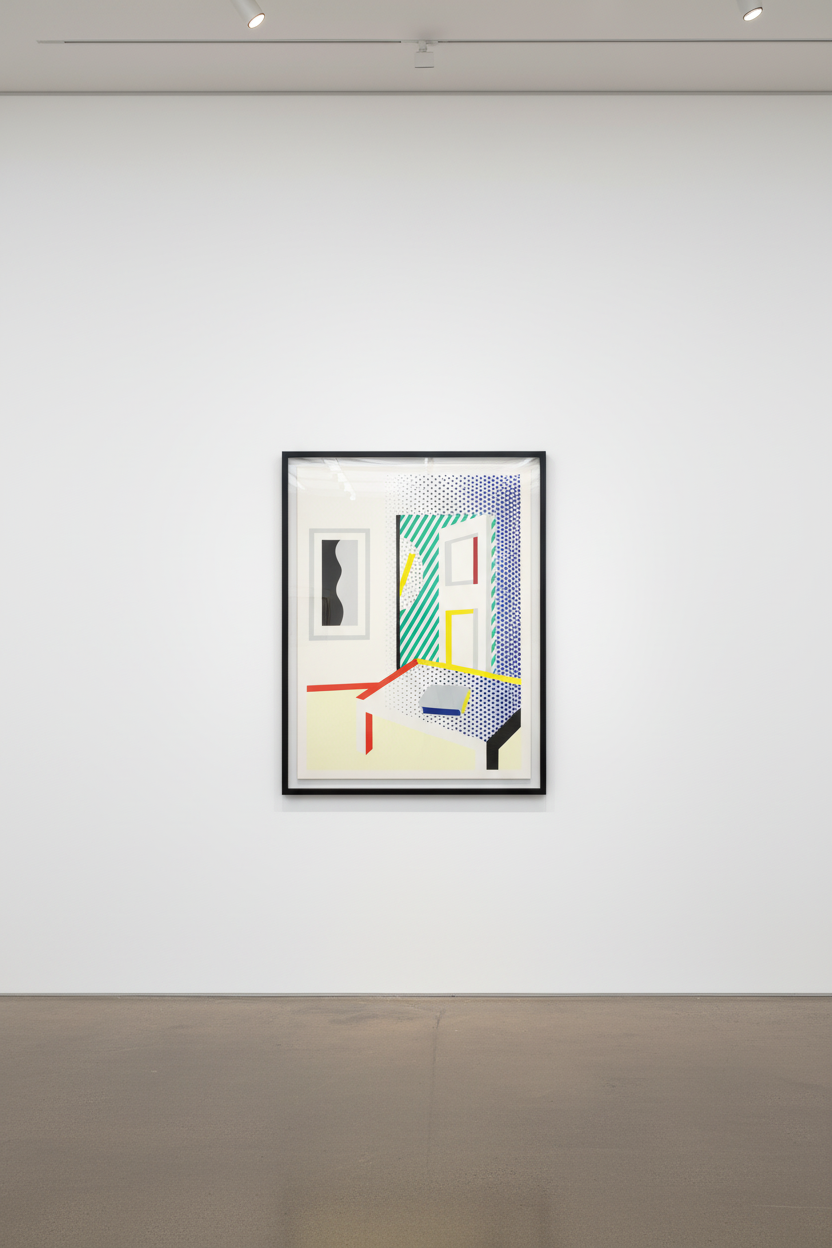
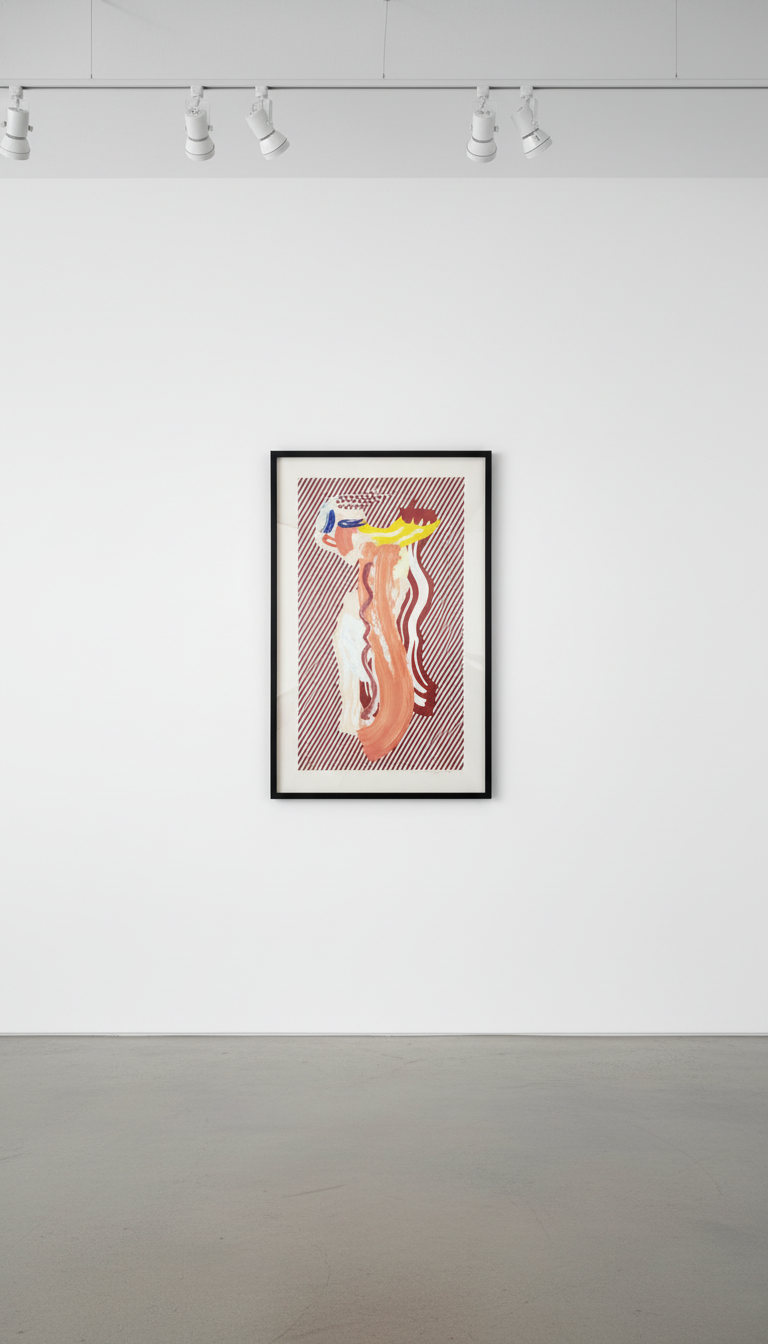
Virtual Interior With Book — Roy Lichtenstein. Available at Guy Hepner, New York.
As Lichtenstein's career progressed, he applied his suspended storytelling techniques to increasingly diverse subject matter. His Bull series from 1973 demonstrates how he could extract narrative tension from art history itself, progressively abstracting the image of a bull through multiple iterations that reference both Picasso's famous lithograph series and the broader trajectory of modernist reduction. Each print in the sequence tells a story about artistic transformation while functioning as a complete work in its own right.
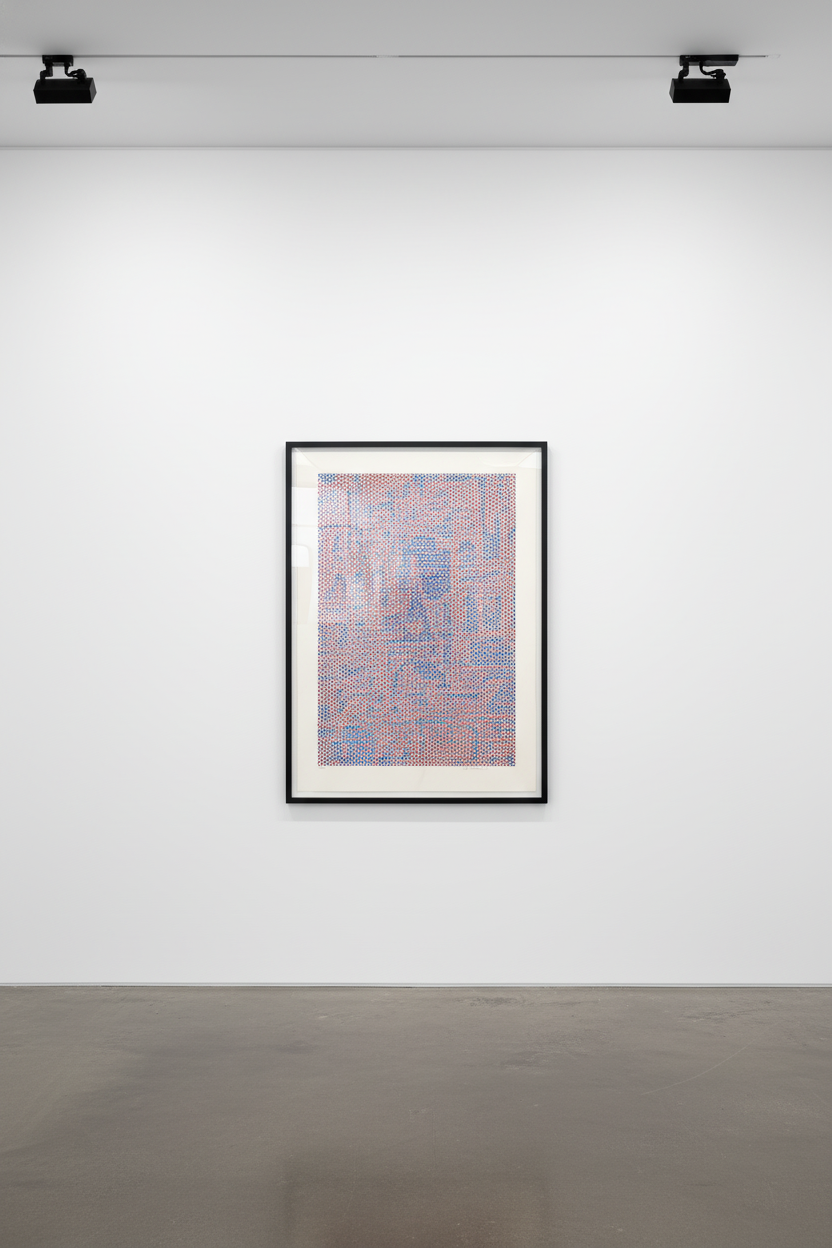
His later Interior series brought suspended storytelling into domestic space. Works like Virtual Interior With Book present environments that feel simultaneously occupied and abandoned. Objects suggest human presence and recent activity, yet no figures appear. These paintings function as stage sets awaiting performers, narrative spaces charged with anticipation. The viewer's eye moves through depicted rooms searching for clues to stories that remain tantalizingly untold.
Lichtenstein also engaged directly with political narrative. Against Apartheid from 1983 demonstrates how his visual language could address urgent social issues while maintaining the formal sophistication that defined his practice. The work proves that suspended storytelling could serve activist purposes, freezing a moment of moral clarity that demands viewer response.
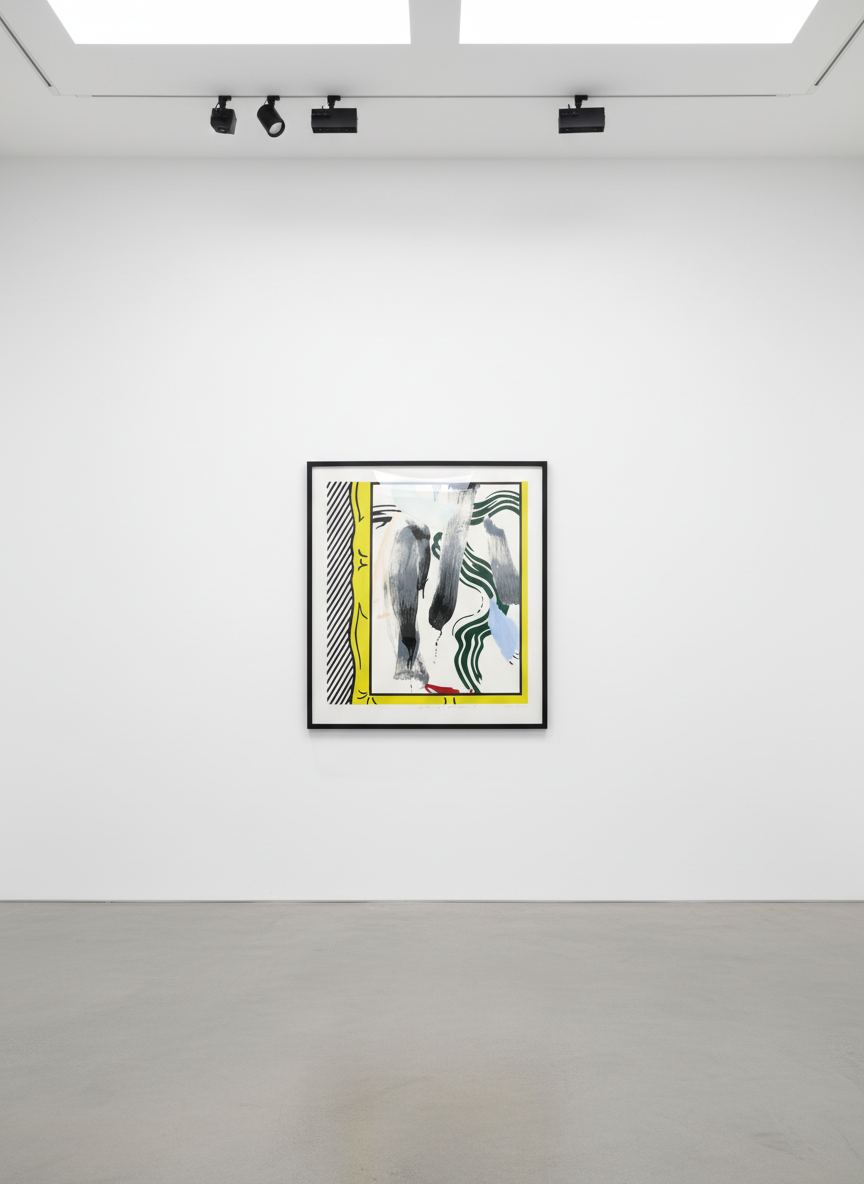
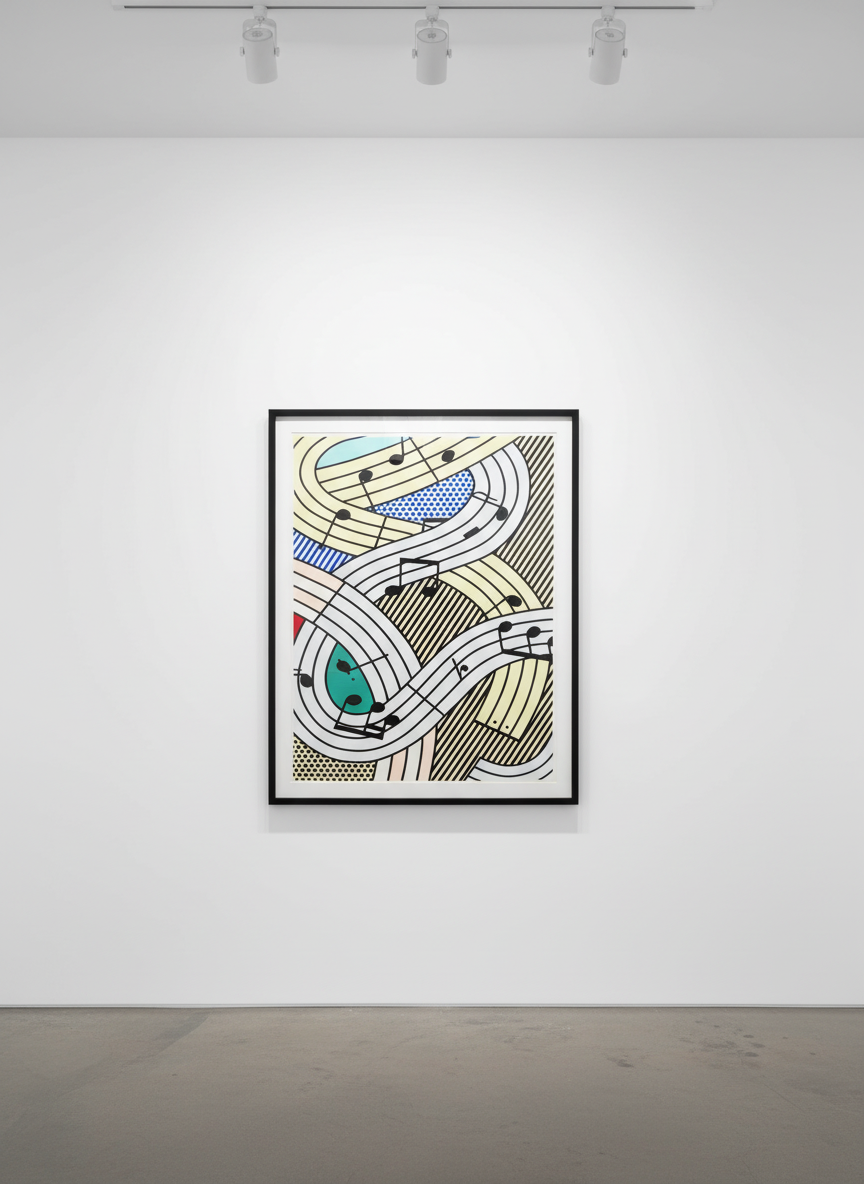
Against Apartheid (C. 200) — Roy Lichtenstein. Available at Guy Hepner, New York.
The auction market has consistently validated Lichtenstein's position as one of the twentieth century's most consequential artists. According to data compiled through major sales at Christie's and Sotheby's, his works regularly achieve prices in the tens of millions, with Masterpiece selling for over $165 million in 2017. The Art Basel and UBS Global Art Market Report consistently ranks him among the top-selling artists at auction, reflecting sustained institutional and private collector demand.
What drives this enduring market strength is precisely the quality of suspended storytelling that defines his work. Collectors recognize that Lichtenstein paintings offer inexhaustible interpretive richness. Unlike purely decorative works, these pieces reward prolonged engagement. The narratives they imply continue unfolding in the viewer's imagination long after initial encounter. For collectors building significant holdings, Lichtenstein represents both aesthetic achievement and reliable value retention — a rare combination in contemporary art markets.
His prints and editions, produced throughout his career with exceptional technical quality, offer accessible entry points to his oeuvre while maintaining the visual intelligence that distinguishes his unique works. The graphic precision of his style translates exceptionally well to printmaking, making these works particularly desirable for collectors seeking museum-quality pieces at considered price points.
Guy Hepner is proud to offer exceptional works by Roy Lichtenstein to discerning collectors worldwide. Our gallery specializes in sourcing authenticated prints, editions, and unique works that represent the full scope of Lichtenstein's artistic vision. Whether you seek iconic comic-derived imagery or works from his later explorations of Interiors and abstraction, our team provides personalized guidance through every stage of acquisition. Contact Guy Hepner today to explore available Roy Lichtenstein works and discover how his mastery of suspended storytelling can enhance your collection.
--- **Browse Roy Lichtenstein prints** at Guy Hepner: [Roy Lichtenstein art for sale](/roy-lichtenstein) | [Sell your Lichtenstein](/sell/roy-lichtenstein)Explore Roy Lichtenstein prints for sale at Guy Hepner: American Indian Theme, Art Critic, Brushstrokes, Cathedral, Composition.
Related Series