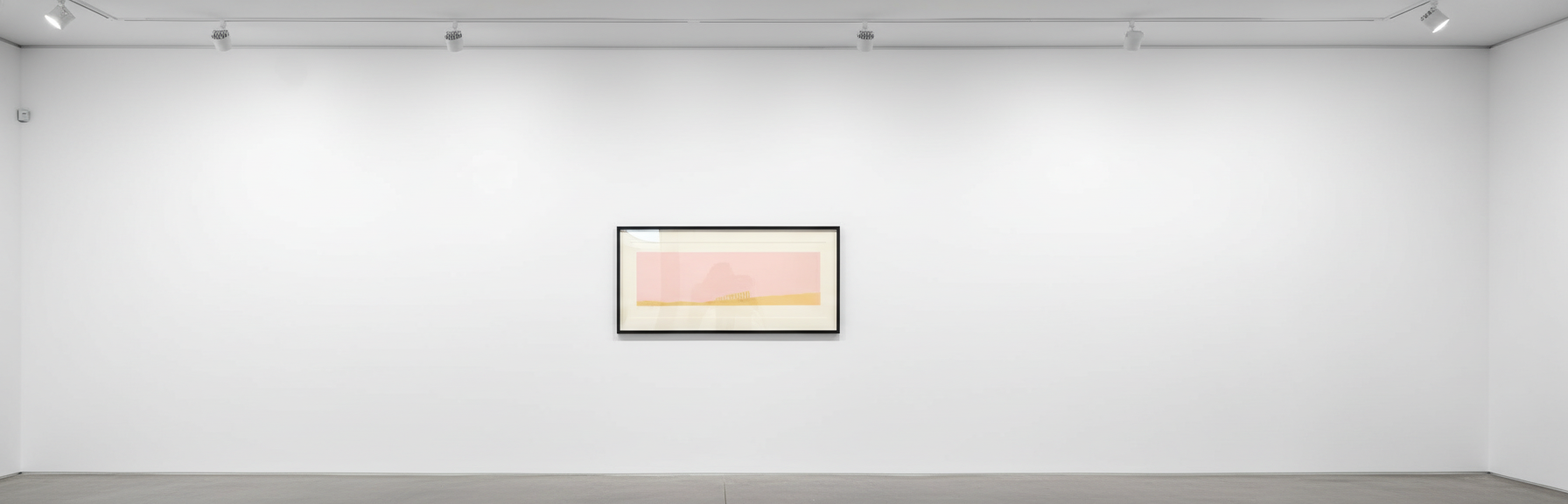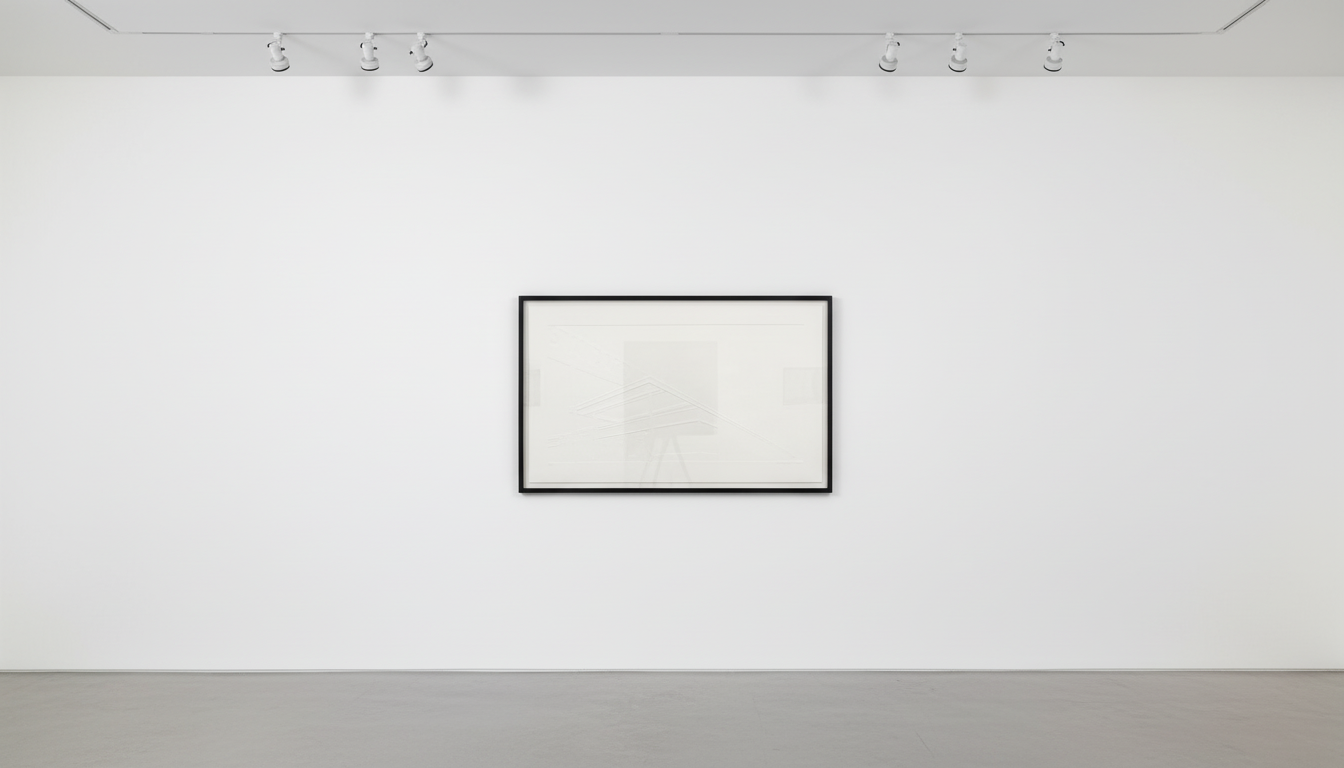
Standard Station

Few images in postwar American art are as instantly recognisable or culturally loaded as Ed Ruscha's Standard Station. First conceived as a painting in 1966 and later transformed into a celebrated series of prints and variations, Standard Station stands as a cornerstone of the artist's engagement with the iconography of the American West, the visual language of consumerism and the uncanny theatricality of everyday architecture. The print series - produced from the late 1960s through the 1970s in different colourways and iterations - has since become one of Ruscha's most sought-after bodies of work, encapsulating not only the stylistic clarity of West Coast Pop but also the artist's fascination with the tension between banality and grandeur in the modern American landscape.
Ed Ruscha's Standard Station emerged from the artist's deep fascination with the vernacular architecture of the American roadside. Born in Nebraska and raised in Oklahoma City, Ruscha drove Route 66 countless times during his journeys between his family home and Los Angeles, where he had relocated in 1956 to study at the Chouinard Art Institute. These cross-country drives exposed him to the repetitive visual rhythm of gas stations, diners and signage that punctuated the vast Western landscape - imagery that would become central to his artistic vocabulary.
The original Standard Station painting of 1966 depicted a Standard Oil station rendered in dramatic diagonal perspective, its angular canopy slicing through a deep crimson sky. The composition drew equally from the graphic precision of commercial illustration and the cinematic widescreen formats that dominated American popular culture during this period. Ruscha stripped the scene of human presence, transforming a mundane commercial structure into something approaching the monumental - a secular cathedral of petroleum-age America.
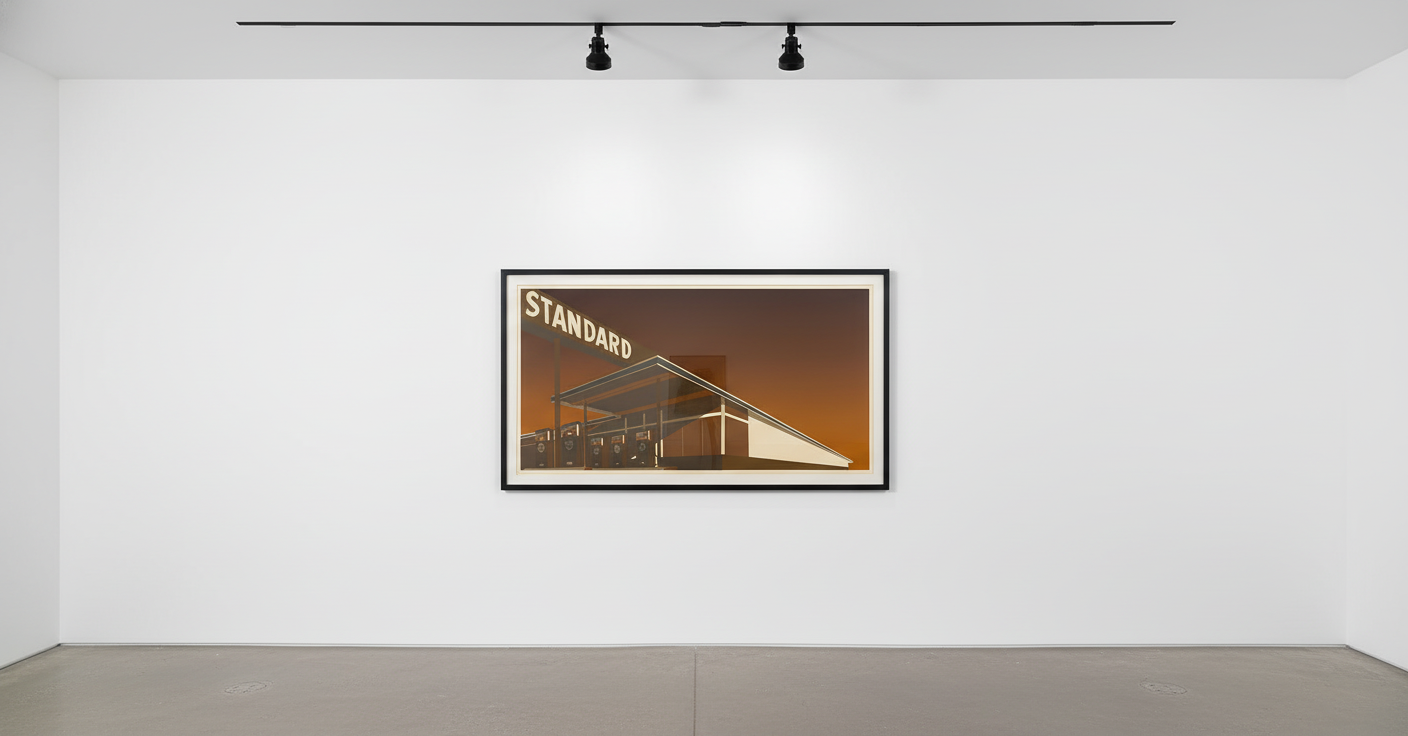
Standard Station Mocha — Ed Ruscha. Available at Guy Hepner, New York.
What distinguished Ruscha's approach from his East Coast Pop contemporaries was his cool, detached relationship with consumer imagery. Where Andy Warhol embraced the frenetic energy of mass media and Roy Lichtenstein amplified the emotional melodrama of comic strips, Ruscha presented the American landscape with an almost forensic stillness. The Standard Station became a meditation on the strange beauty embedded within the ordinary - a theme that would define his practice for decades to come.
Following the success of the original painting, Ruscha began exploring the Standard Station motif through printmaking - a medium that allowed him to investigate variations in colour, atmosphere and meaning while maintaining the graphic clarity essential to the image. The resulting print series, executed primarily through screenprinting techniques, represents some of the most technically accomplished and aesthetically refined works of the Pop print tradition.
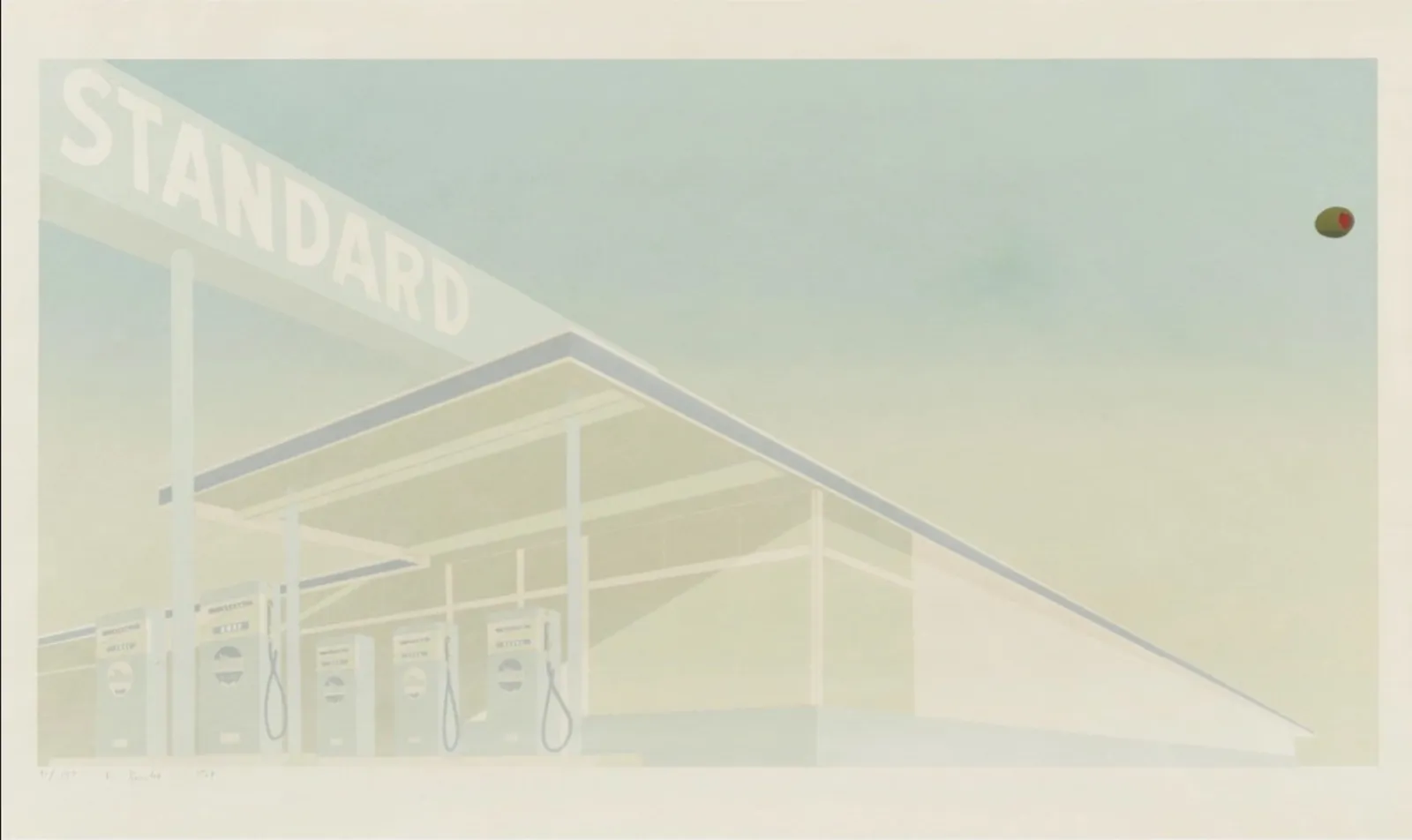
The Standard Station prints appeared in numerous iterations throughout the late 1960s and 1970s. Ruscha experimented with dramatic colour shifts - from the iconic red and blue of the original to variations in mocha, cheese and other unexpected hues that transformed the emotional register of the image entirely. Ghost Station presented the composition in ethereal, nearly monochromatic tones, rendering the familiar structure as a spectral presence hovering in an indeterminate space. Standard Station Mocha offered a warmer, more nostalgic palette that evoked the sepia tones of vintage photography and memory.
8900 Sunset blvd — Ed Ruscha. Available at Guy Hepner, New York.
These chromatic variations were far from arbitrary exercises. Each colourway fundamentally altered the viewer's relationship with the subject matter - transforming the station from a symbol of American commercial vitality into something more ambiguous, melancholic or even elegiac. Ruscha understood intuitively that colour carries psychological weight, and his systematic exploration of the Standard Station motif across different palettes demonstrated a conceptual rigour that aligned his practice with the emerging movements of Minimalism and Conceptual Art, even as his imagery remained firmly rooted in Pop sensibilities.
The print medium also allowed Ruscha to engage with questions of reproduction and authenticity that were central to postwar artistic discourse. By creating multiple authorised versions of a single iconic image - each subtly different yet unmistakably connected - he complicated traditional hierarchies between original and copy, unique artwork and multiple edition.
Ed Ruscha's position within the contemporary art market has strengthened considerably over the past two decades, with the Standard Station series representing a particularly robust segment of collector demand. According to recent Art Basel and UBS Art Market Reports, works by established postwar American artists with strong Pop associations continue to demonstrate remarkable resilience across market cycles, with Ruscha's prints consistently achieving results that reflect both historical importance and sustained contemporary relevance.
At auction, Standard Station prints have achieved significant results at Christie's and Sotheby's, with rare colourways and exceptional impressions commanding particular attention from institutional and private collectors alike. The combination of art historical significance, graphic immediacy and relative accessibility compared to unique works has made the series especially appealing to collectors building focused holdings in postwar American art.
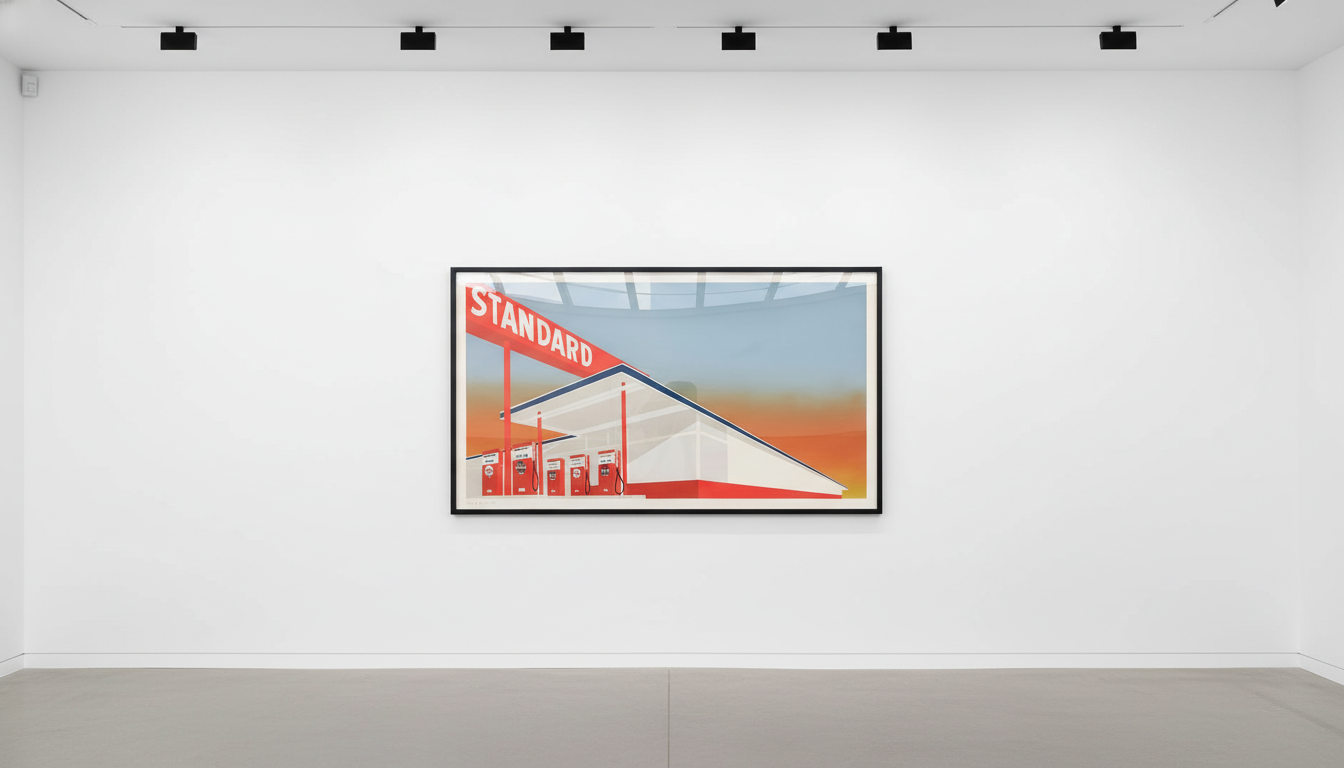
Ghost Station — Ed Ruscha. Available at Guy Hepner, New York.
For collectors, the Standard Station series offers entry into Ruscha's practice at its most iconic and resolved. These works encapsulate the artist's unique contribution to American art - his ability to locate the sublime within the vernacular, to transform the overlooked infrastructure of modern life into imagery of lasting power and beauty. As institutional recognition of Ruscha's achievement continues to grow - evidenced by major retrospectives and acquisitions by leading museums worldwide - the Standard Station prints remain essential documents of a pivotal moment in American visual culture.
Guy Hepner is pleased to offer collectors access to exceptional works from Ed Ruscha's celebrated Standard Station series alongside other significant prints and editions by the artist. Our gallery maintains relationships with distinguished private collections and can assist in sourcing specific works to meet collector requirements. For enquiries regarding available Ed Ruscha artworks - including Standard Station Mocha, Ghost Station and related editions - or to discuss building a collection of postwar American prints, please contact our advisory team directly.
Explore Ed Ruscha prints for sale at Guy Hepner: Standard Station, Archi-Props, Book Covers, Bow-Tie Landscapes, Etchings.
Related Series