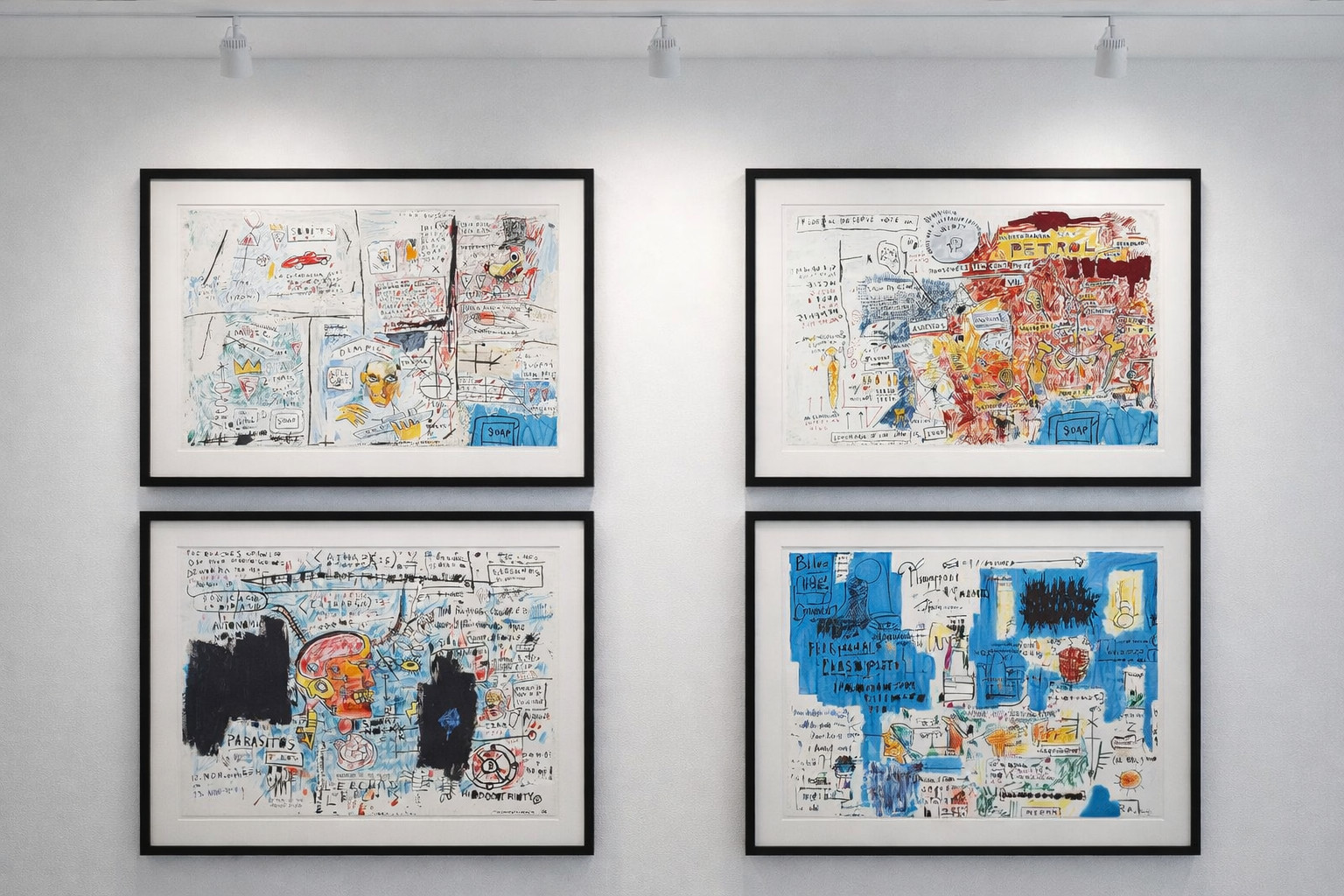
Anatomy

Jean-Michel Basquiat occupies a rare position in the contemporary art world: he is at once an enduring symbol of 1980s New York and a fully global blue-chip brand. For collectors navigating the market in 2026, Basquiat offers something few contemporary names can match - historically anchored importance, deep institutional validation, and a market that has already passed through several cycles of boom, correction, and consolidation. Understanding where the Basquiat market stands today, and how to approach acquisitions strategically, is essential for anyone considering a meaningful addition to their collection.
Jean-Michel Basquiat emerged from the downtown Manhattan art scene in the late 1970s, first gaining recognition through his SAMO graffiti collaborations before transitioning to canvas work that would fundamentally reshape contemporary art. His paintings - dense with text, symbols, anatomical diagrams, and references to Black history, jazz, and commodity culture - introduced a raw visual language that challenged the established hierarchies of the art world. By the time of his death in 1988 at just twenty-seven years old, Basquiat had already exhibited internationally, collaborated with Andy Warhol, and secured his place in the canon of twentieth-century art.
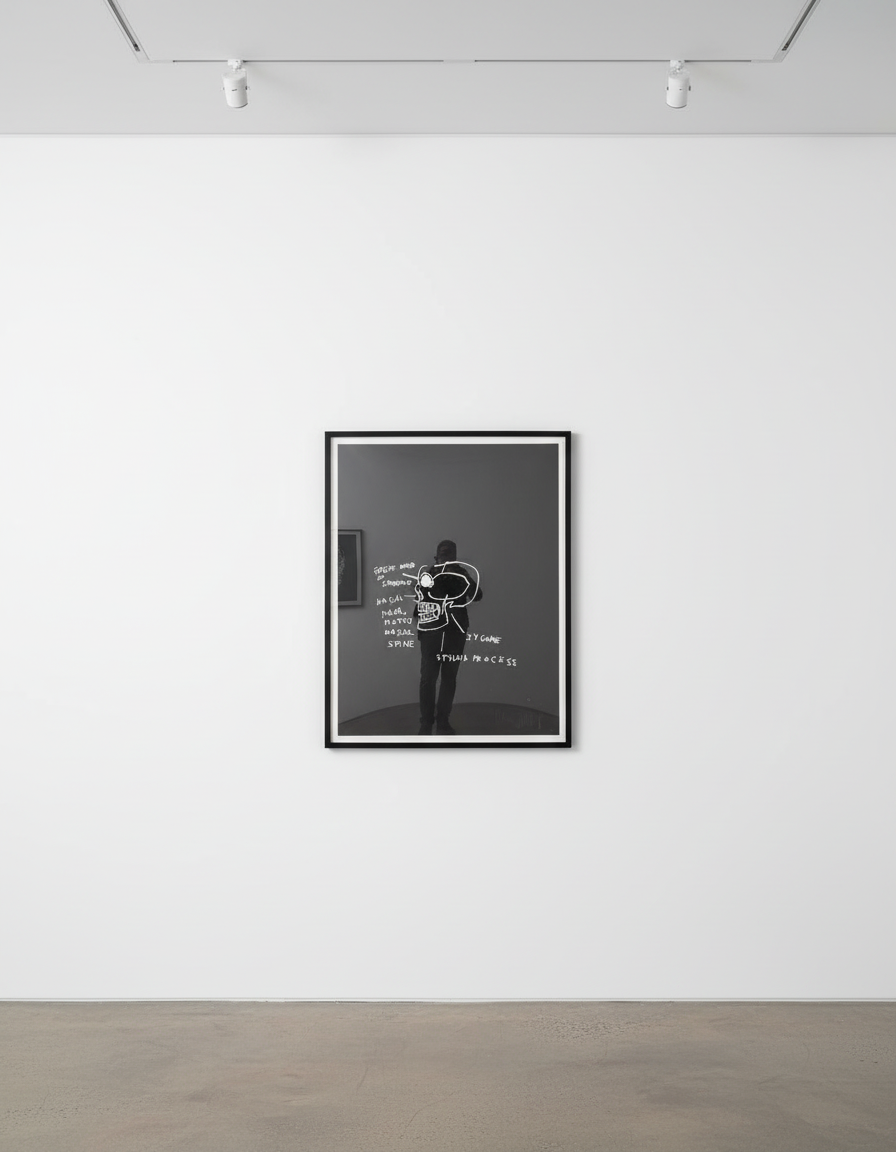
What distinguishes Basquiat from many of his contemporaries is the intellectual depth underlying his seemingly spontaneous compositions. His repeated engagement with Anatomy, as seen in works drawn from medical textbooks, reveals an artist grappling with mortality, the body as commodity, and the historical violence inflicted upon Black bodies. These themes resonate powerfully with contemporary audiences and institutions, ensuring that his work remains critically relevant rather than merely historically significant.
Great Wind of Sphenoid, from Anatomy — Jean-Michel Basquiat. Available at Guy Hepner, New York.
On the headline level, Jean-Michel Basquiat remains one of the most valuable artists of the post-war period. His auction record - the 1982 skull painting Untitled that sold for $110.5 million at Sotheby's in 2017 - still anchors his reputation and confirms him as one of the very few artists whose work trades comfortably above the $100 million threshold. Since that landmark sale, his market has broadened and matured considerably.
Auction data from Sotheby's and Christie's shows that annual sales for Basquiat reached a high of roughly $439.6 million in 2021 before falling by approximately fifty percent in 2022 - a correction that mirrored the wider cooling of the ultra-contemporary segment following the pandemic-era surge. This recalibration, rather than signalling weakness, demonstrated the market's capacity for self-correction and established more sustainable price levels across various categories of his work.
By 2025 and into 2026, the Basquiat market has entered what analysts describe as a period of selective strength. Major canvases from the artist's peak period of 1981-1984 continue to command eight-figure prices when fresh examples appear, though buyers have become increasingly discerning about condition, provenance, and exhibition history. The Art Basel and UBS Global Art Market Report has consistently identified Basquiat among the top-selling artists at auction, underscoring his position within the uppermost tier of the secondary market.
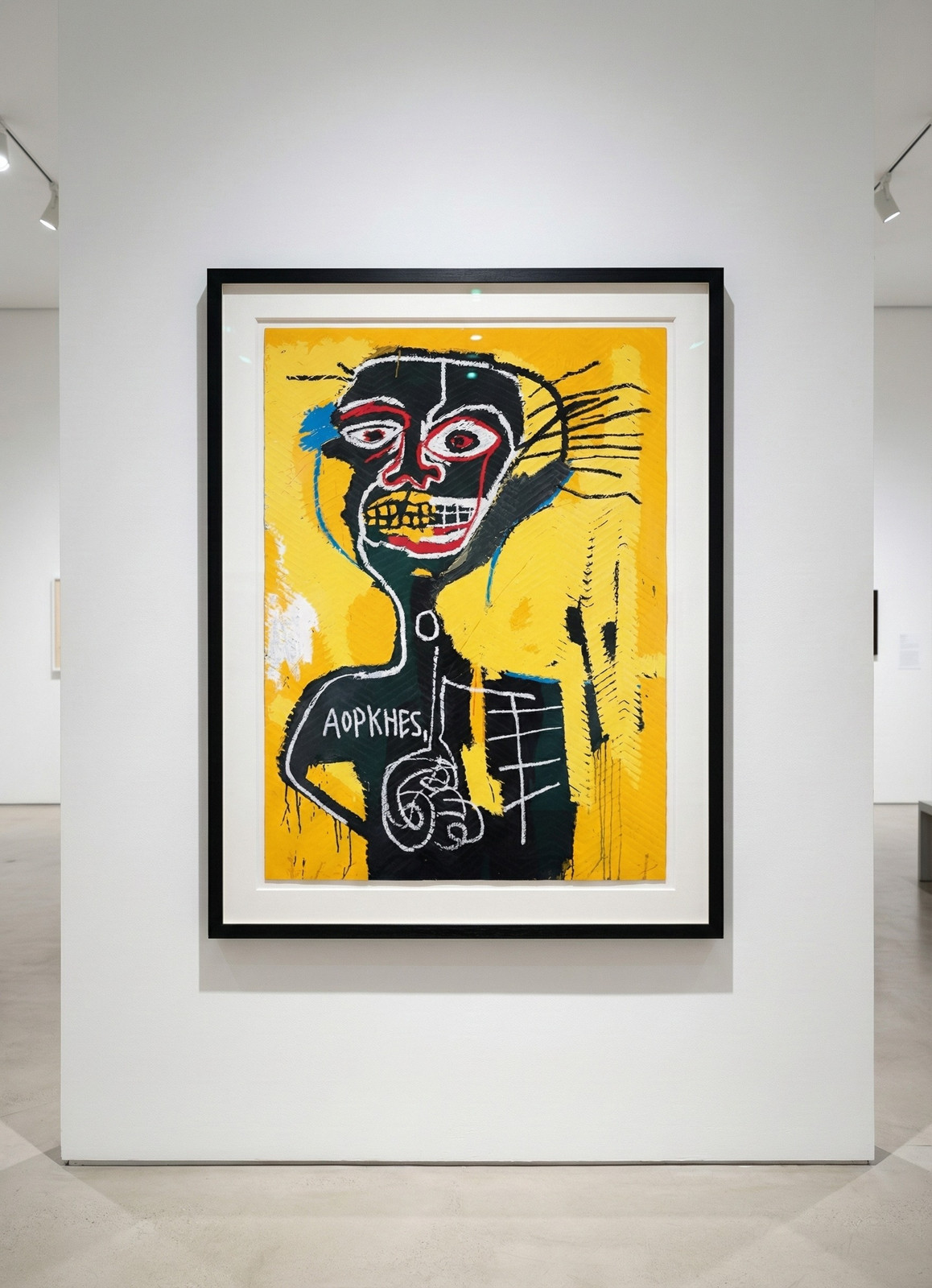
Cabeza, from Portfolio Ii — Jean-Michel Basquiat. Available at Guy Hepner, New York.
What distinguishes the current market environment is the growing sophistication of collectors entering the Basquiat space. Rather than pursuing trophy acquisitions at any cost, today's buyers are conducting deeper due diligence, seeking works with strong institutional exhibition histories and clear provenance chains. This evolution benefits serious collectors, as it places emphasis on quality and scholarship over speculation.
While major paintings dominate auction headlines, the most dynamic segment of the Basquiat market in 2026 lies in prints, editions, and works on paper. These categories offer collectors genuine access to Basquiat's visual vocabulary at price points substantially below his unique canvases, while still participating in the appreciation potential of a blue-chip artist.
Basquiat's print editions - including portfolios such as Anatomy and collaborative works - have demonstrated remarkable price stability and steady appreciation over the past decade. According to data tracked by major auction houses including Christie's and Sotheby's, his print market has shown consistent year-over-year growth, particularly for complete portfolios and works in excellent condition with strong provenance.
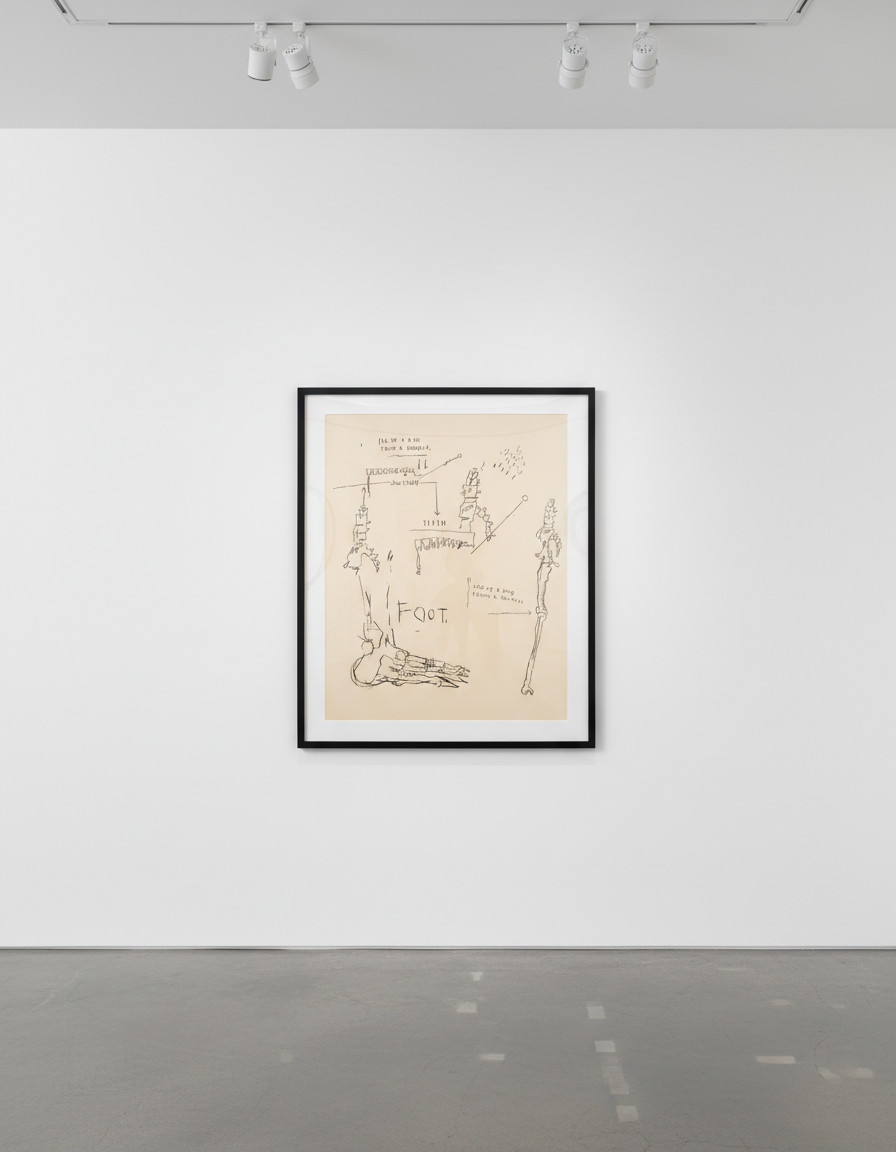
The Anatomy series, based on the artist's engagement with Gray's Anatomy and medical illustration, represents some of his most intellectually rigorous graphic work. Similarly, his contributions to collaborative portfolios reveal the range of his visual thinking while remaining accessible to collectors building significant holdings. These editions allow institutions and private collectors alike to acquire historically important Basquiat works without competing in the rarefied atmosphere of his major painting sales.
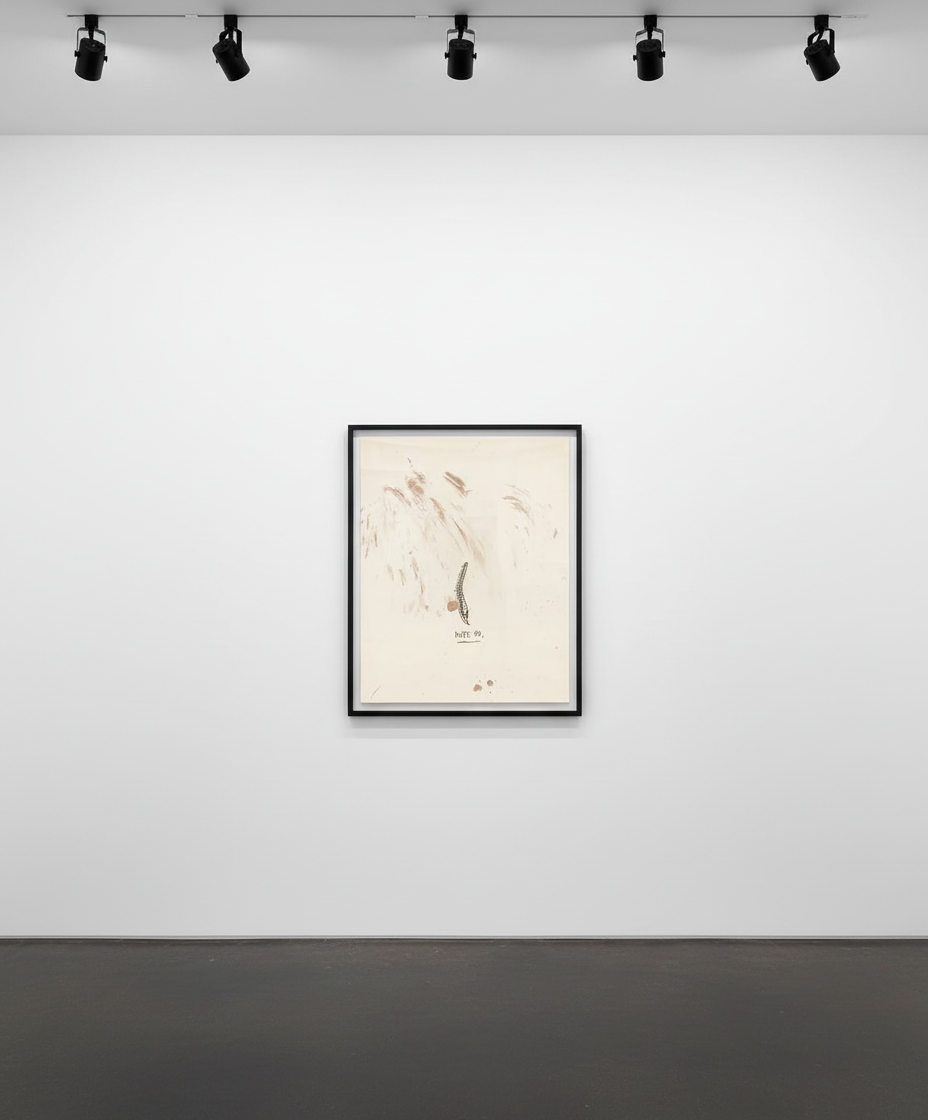
Untitled 4 (from Leonardo) — Jean-Michel Basquiat. Available at Guy Hepner, New York.
Works on paper occupy a middle ground in the market hierarchy, offering the uniqueness of original works while remaining more attainable than large-scale canvases. Basquiat was extraordinarily prolific as a draughtsman, and his drawings often contain the same density of imagery and textual elements that characterise his paintings. For collectors seeking direct engagement with the artist's hand and creative process, works on paper represent a compelling category with continued room for appreciation.
The enduring appeal of Jean-Michel Basquiat extends beyond market performance. His work speaks to urgent contemporary conversations about race, identity, capitalism, and cultural power - themes that ensure ongoing institutional interest and scholarly attention. Major museums worldwide continue to mount Basquiat exhibitions, each generating renewed public engagement and reinforcing his canonical status.
For collectors, Basquiat offers a rare combination of attributes: genuine art-historical importance, proven market resilience, and work that rewards sustained looking and intellectual engagement. Unlike artists whose markets rest primarily on fashion or speculation, Basquiat's position is anchored by decades of critical discourse, museum acquisitions, and cross-generational collector demand.
Guy Hepner maintains a carefully curated selection of Jean-Michel Basquiat prints, editions, and works on paper for collectors seeking to acquire significant examples of this essential artist. Our team provides comprehensive guidance on provenance, condition, and market positioning, ensuring that each acquisition reflects both aesthetic ambition and sound collecting strategy. To inquire about available Basquiat works or to discuss building a position in this important artist's market, contact Guy Hepner directly.
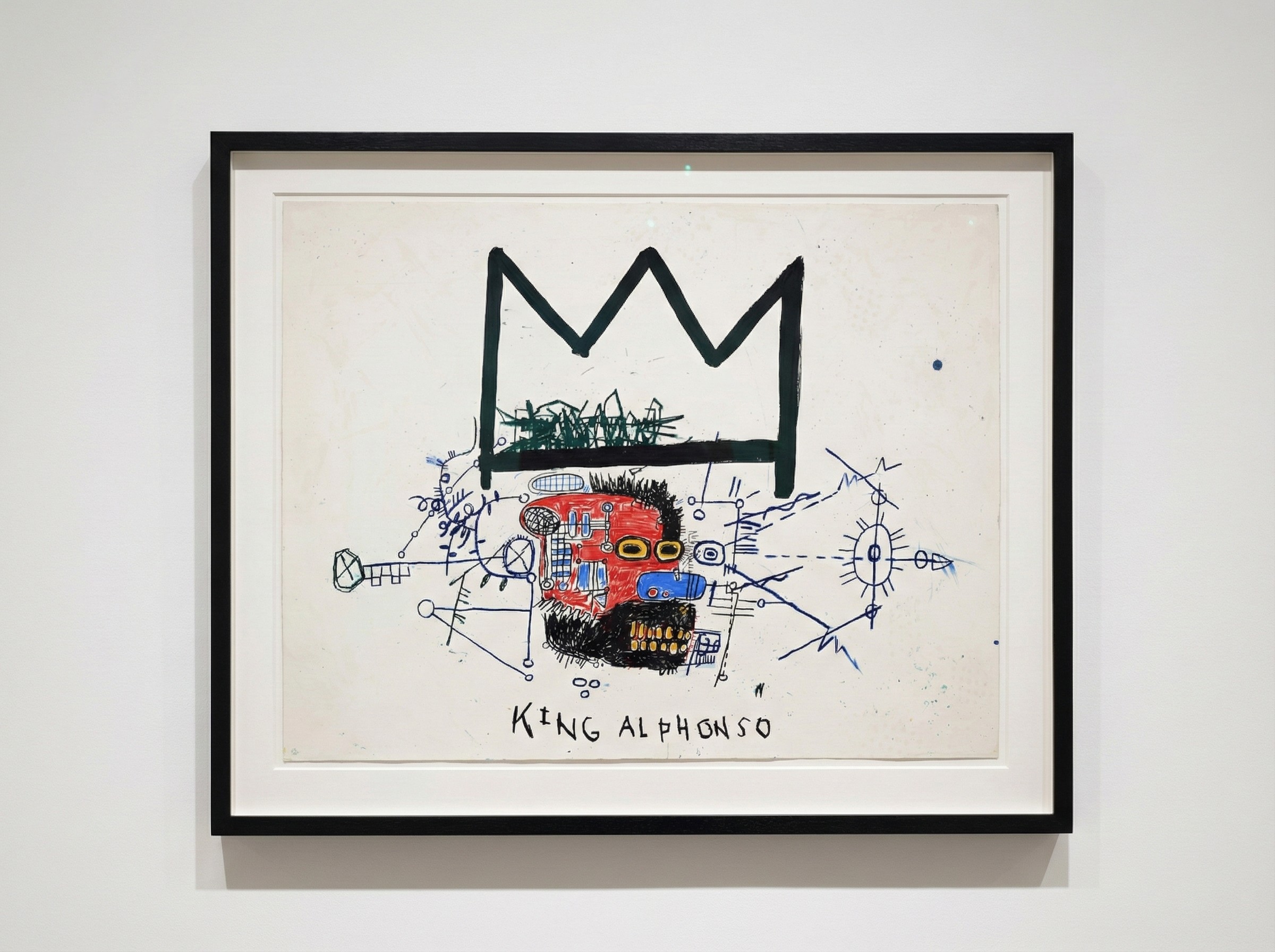
Explore Jean Michel Basquiat prints for sale at Guy Hepner: Anatomy, Daros Suite, Estate Prints, King Alphonso, Portfolio I.
Related Series