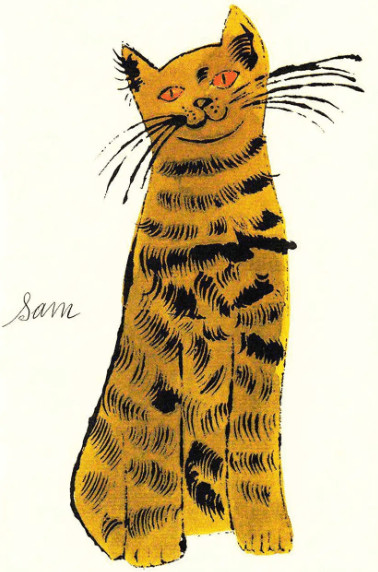
25 Cats Named Sam

The Cold War shaped the twentieth century not through conventional warfare but through an unprecedented battle of ideologies, symbols, and cultural production. For nearly five decades, the United States and Soviet Union engaged in a struggle that permeated every aspect of global life - from politics and economics to art and popular culture. While many artists of the era responded with overt activism or explicit opposition, Andy Warhol approached this ideological divide with characteristic complexity, transforming the very symbols of communist revolution into objects of capitalist consumption. Through his iconic Hammer and Sickle series, Warhol created one of the most sophisticated artistic meditations on Cold War tensions, works that continue to resonate with collectors and institutions seeking pieces that capture this defining moment in modern history.
Andy Warhol remains the most influential figure in post-war American art, an artist whose impact extends far beyond the gallery walls into fashion, film, music, and contemporary visual culture. Born to Carpatho-Rusyn immigrant parents in Pittsburgh, Warhol carried within him a connection to Eastern European heritage that would subtly inform his later political works. His rise to prominence in the 1960s through depictions of Campbell's soup cans, Coca-Cola bottles, and celebrity portraits established him as the defining voice of Pop Art - a movement that collapsed the boundaries between high culture and commercial imagery.
Yet to view Warhol solely through the lens of consumer culture is to miss the deeper currents running through his practice. By the 1970s, Warhol had begun turning his attention toward explicitly political imagery, applying his signature techniques of repetition and seriality to subjects that carried profound ideological weight. His portraits of Mao Zedong, created in 1972 following Nixon's historic visit to China, demonstrated that Warhol understood how political power operates through image-making. The Hammer and Sickle series, initiated in 1976, would extend this investigation into the very heart of Cold War symbolism.
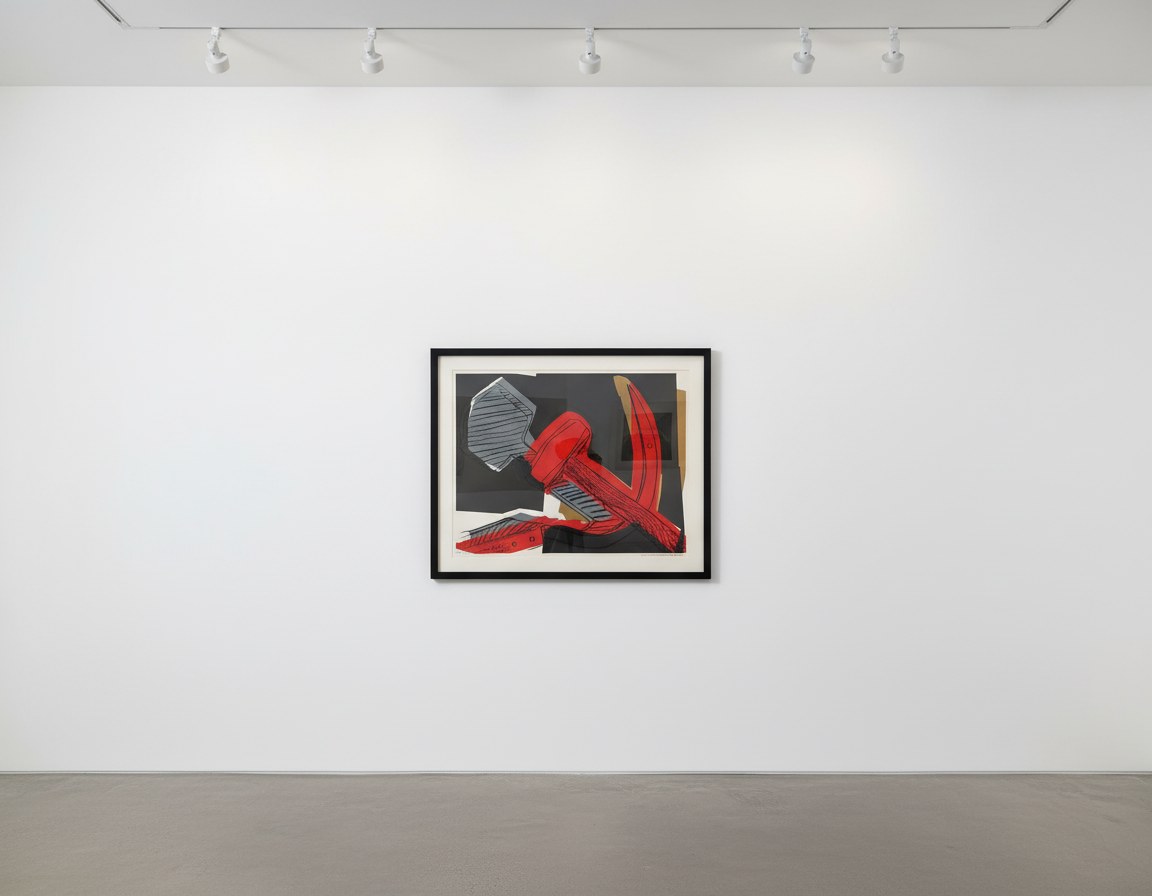
Hammer And Sickle (F & S. II 164) — Andy Warhol. Available at Guy Hepner, New York.
What distinguished Warhol's approach from traditional political art was his refusal to adopt a clear ideological stance. Rather than celebrating or condemning communist iconography, he subjected it to the same processes of reproduction and commodification that he applied to Marilyn Monroe or Elvis Presley. In doing so, Warhol revealed something essential about how symbols function in the modern media landscape - they become detached from their original meanings, transformed into floating signifiers available for endless reinterpretation and consumption.
The genesis of the Hammer and Sickle series reflects Warhol's intuitive understanding of cultural semiotics. During a visit to Italy in the mid-1970s, Warhol observed communist party symbols spray-painted on walls throughout Rome and other cities - remnants of political graffiti that had become part of the urban visual landscape. Rather than photographing these found images directly, Warhol returned to New York and purchased actual tools from a hardware store, arranging them in his studio for a series of source photographs that would form the basis of his paintings and prints.
This decision was characteristically Warholian in its implications. By using real American-made tools rather than idealized political graphics, Warhol grounded the abstract symbols of communist revolution in physical reality while simultaneously stripping them of their revolutionary context. The hammer and sickle became consumer objects - products available for purchase, arrangement, and artistic transformation. The 1977 portfolio of screenprints, catalogued as Feldman and Schellmann II.161-164, presents these tools in various configurations and colour combinations, each variation offering a different emotional register while maintaining the fundamental tension between political symbolism and commercial aesthetics.
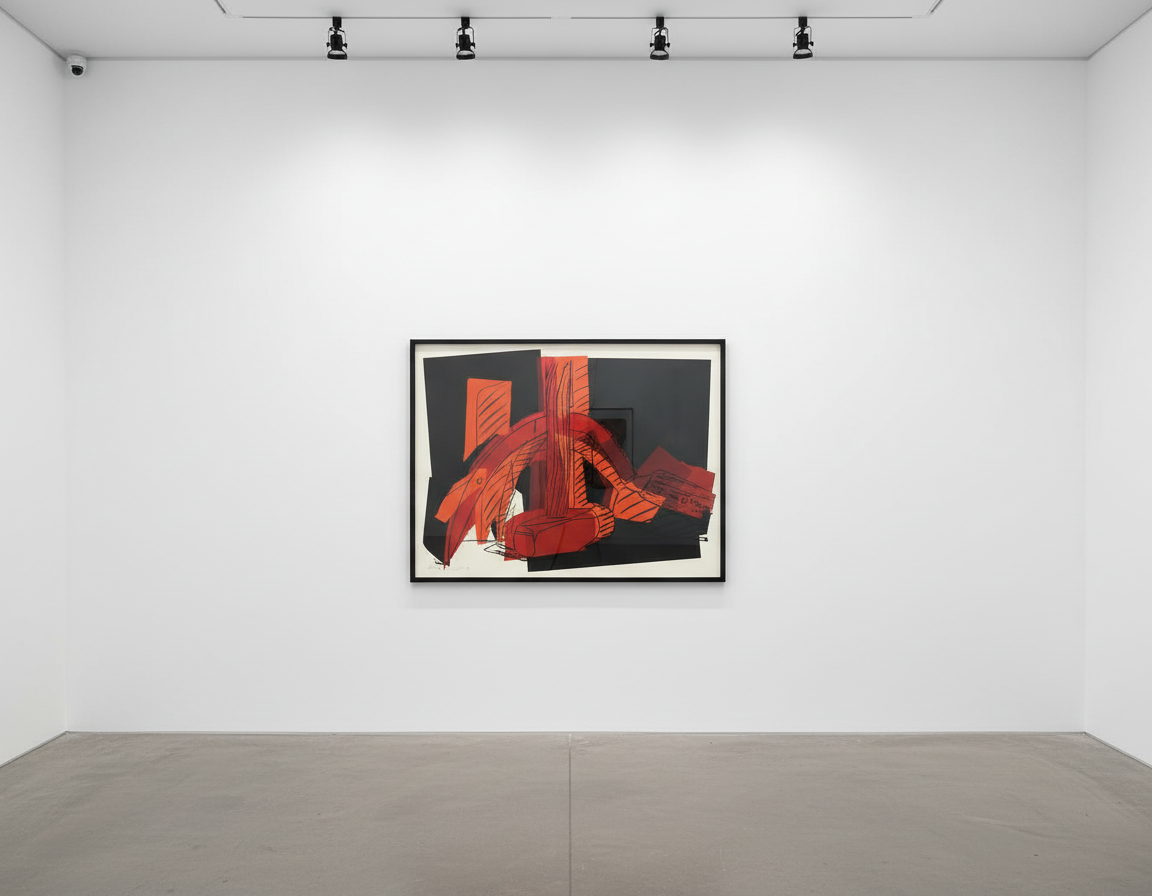
Hammer And Sickle (F & S. II 161) — Andy Warhol. Available at Guy Hepner, New York.
The prints employ Warhol's masterful use of bold, flat colour fields combined with gestural brushwork, creating compositions that vibrate between graphic immediacy and painterly expression. Shadows cast by the physical tools introduce an element of three-dimensionality, grounding the abstract symbols in tangible space. The colour choices - ranging from stark black and white to vibrant reds, yellows, and blues - evoke both the palette of Soviet propaganda posters and the commercial advertising that defined American visual culture. This chromatic dialogue between East and West occurs within each individual print, embodying the Cold War's ideological confrontation at the level of pure aesthetics.
The market for Andy Warhol's political works has demonstrated remarkable strength and consistent appreciation over the past two decades. According to data from Christie's and Sotheby's, Warhol remains among the top-selling artists at auction globally, with his prints representing an accessible entry point for collectors while maintaining strong investment potential. The Hammer and Sickle series occupies a particularly significant position within Warhol's print catalogue, combining the artist's most sophisticated political commentary with the visual impact that defines his finest graphic work.
The Art Basel and UBS Global Art Market Report consistently identifies Warhol as a cornerstone of the post-war and contemporary art market, with institutional and private collectors alike seeking works that demonstrate the full range of his artistic investigations. The Hammer and Sickle prints appeal to collectors who recognise that Warhol's genius extended far beyond celebrity portraits and consumer imagery - that he was, in fact, one of the most astute observers of political power and media manipulation in twentieth-century art.
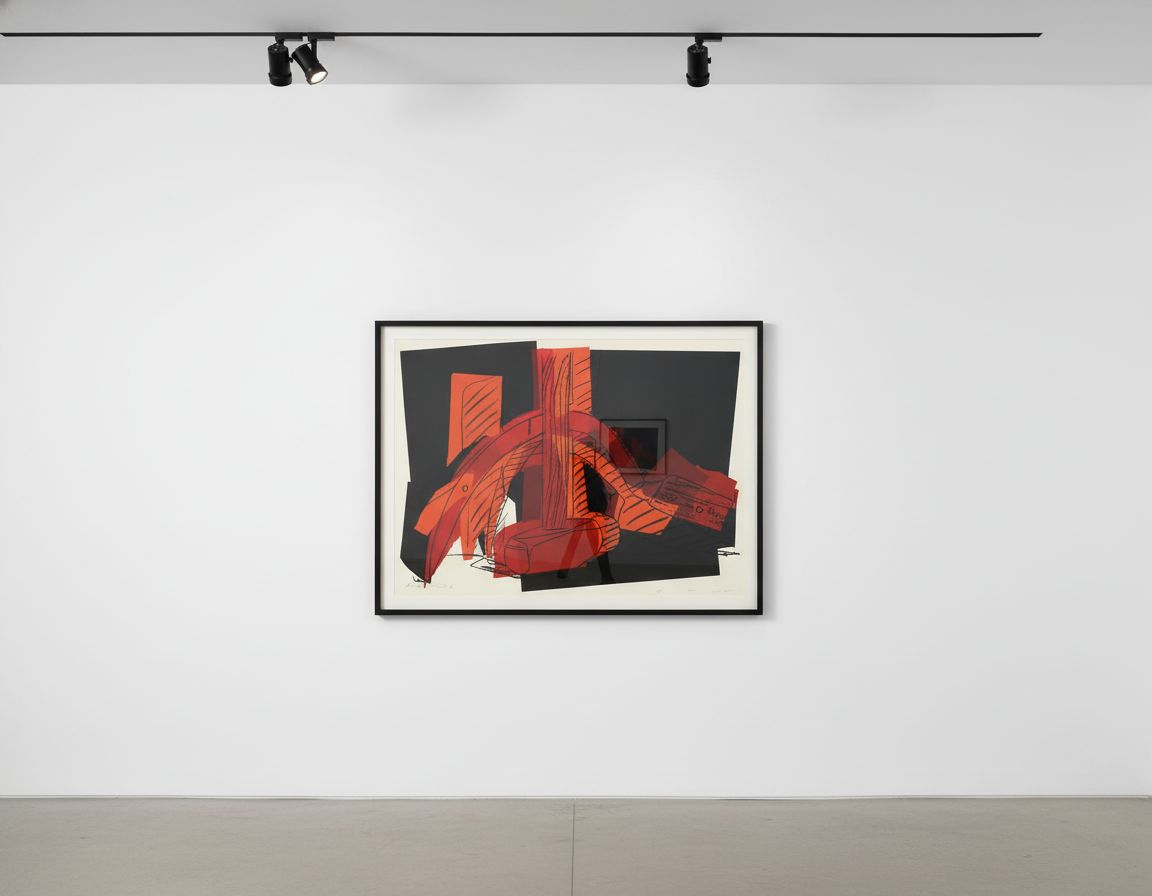
Hammer and Sickle — Andy Warhol. Available at Guy Hepner, New York.
These works also carry particular relevance for contemporary audiences navigating an era of renewed geopolitical tensions and ideological conflict. The questions Warhol posed through his Cold War imagery - about how symbols acquire meaning, how political power operates through visual culture, and how capitalism absorbs and neutralizes revolutionary imagery - remain urgently relevant. Collectors acquiring these prints are not merely purchasing historical documents but works of art that continue to speak to present conditions.
Guy Hepner maintains one of the most distinguished selections of Andy Warhol prints available on the secondary market, including exceptional examples from the Hammer and Sickle portfolio. Our specialists possess deep expertise in Warhol's print editions, provenance research, and authentication, ensuring that collectors receive works of impeccable quality with comprehensive documentation. Whether you are seeking individual prints from the series or the complete portfolio, Guy Hepner offers personalised consultation to align acquisitions with your collection goals. We invite collectors and institutions to contact our gallery to discuss available works from this historically significant body of Warhol's practice and to explore how these masterworks of Cold War Pop Art might enhance your collection.
--- **Browse Andy Warhol prints** at Guy Hepner: [Andy Warhol art for sale](/andy-warhol) | [Sell your Warhol](/sell/andy-warhol)Explore Andy Warhol prints for sale at Guy Hepner: 25 Cats Named Sam, A Gold Book, A La Recherche Du Shoe Perdu, Alexander the Great, Banana.
Related Series