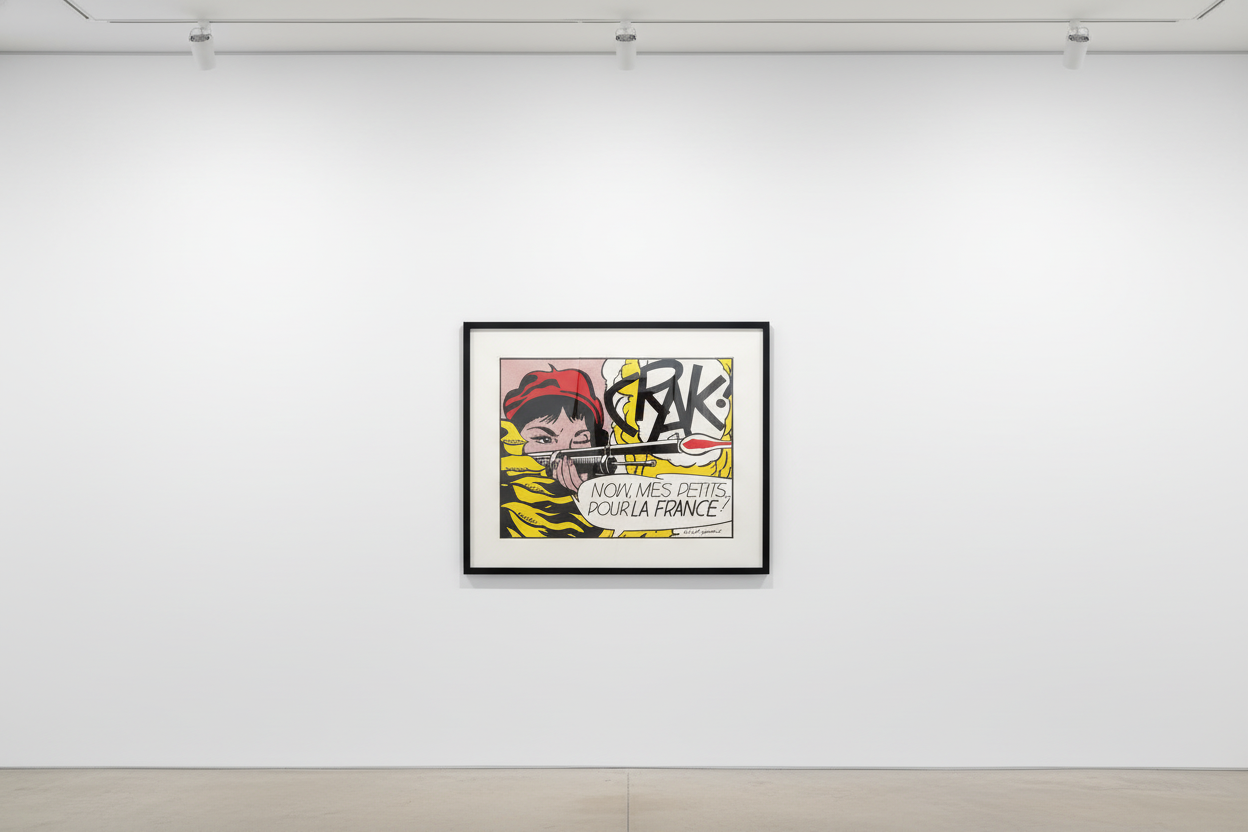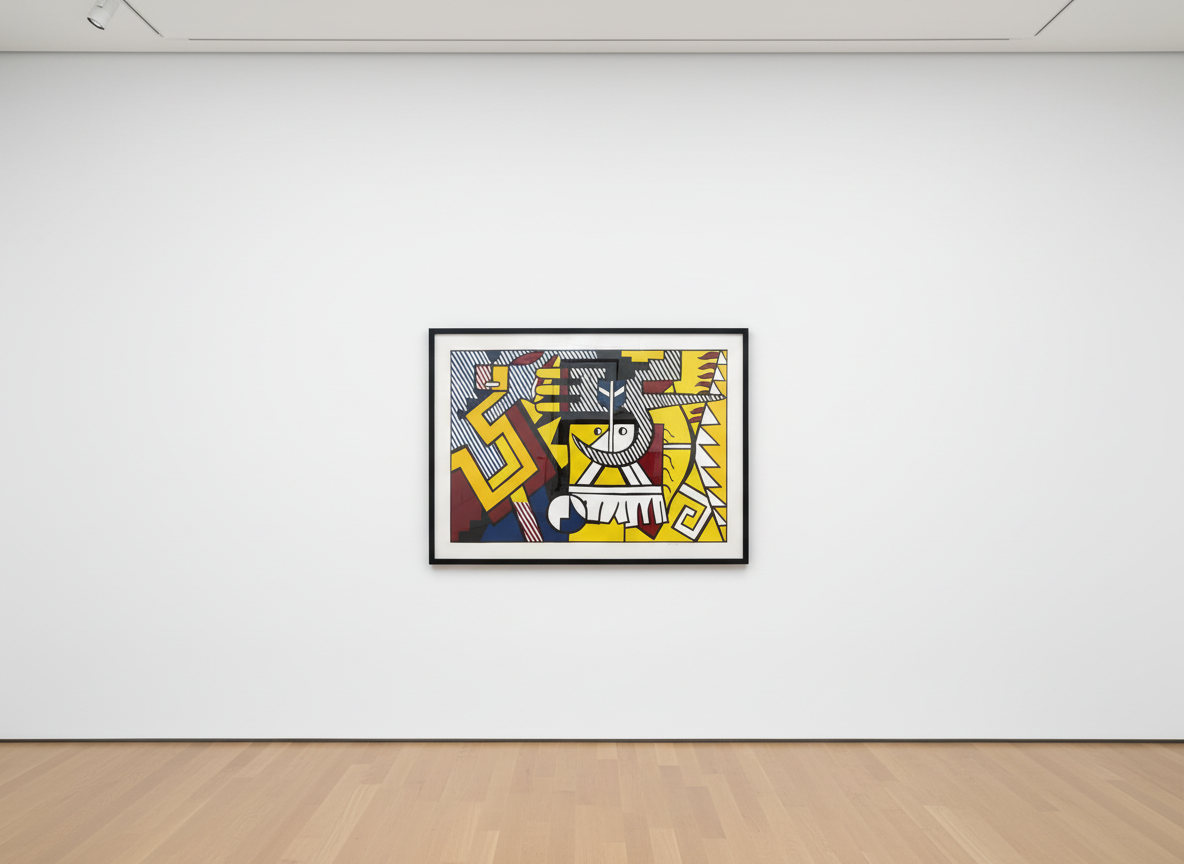
American Indian Theme

When Roy Lichtenstein's bold, comic-inspired canvases first exploded onto the American art scene in the early 1960s, they were met with both acclaim and outrage. Critics questioned whether his appropriated imagery constituted genuine art, while others hailed him as a visionary who understood the visual language of contemporary America. Fast forward six decades, and Lichtenstein is firmly established as one of the most influential figures in twentieth-century art. Not only did he help pioneer the Pop Art movement alongside Andy Warhol and Claes Oldenburg, but his legacy continues to echo in the practices of contemporary artists - and his market value has never been stronger. For collectors seeking to understand the enduring appeal of this master, examining the full scope of Lichtenstein's influence reveals why his work remains essential to any serious collection.
Lichtenstein's journey into Pop Art was both a reaction to and a rebellion against the prevailing Abstract Expressionist movement of the 1950s. While artists like Jackson Pollock and Mark Rothko explored emotional depth and gestural abstraction, Lichtenstein turned toward the mass-produced aesthetic of commercial printing. He found inspiration in comic strips, advertisements, and everyday Americana - sources that the art establishment had previously dismissed as low culture. In works like Whaam! (1963) and Drowning Girl (1963), Lichtenstein reimagined comic book panels on monumental canvases, painstakingly replicating the Ben-Day dots that characterized commercial printing processes.
This technical approach became Lichtenstein's signature - a method that simultaneously celebrated and critiqued consumer culture. His work challenged fundamental assumptions about originality, authorship, and the boundaries between fine art and commercial design. The artist himself described his process as finding ways to make the mechanical appear handmade while making the handmade appear mechanical. This conceptual tension gave his paintings an intellectual depth that transcended their seemingly simple imagery.
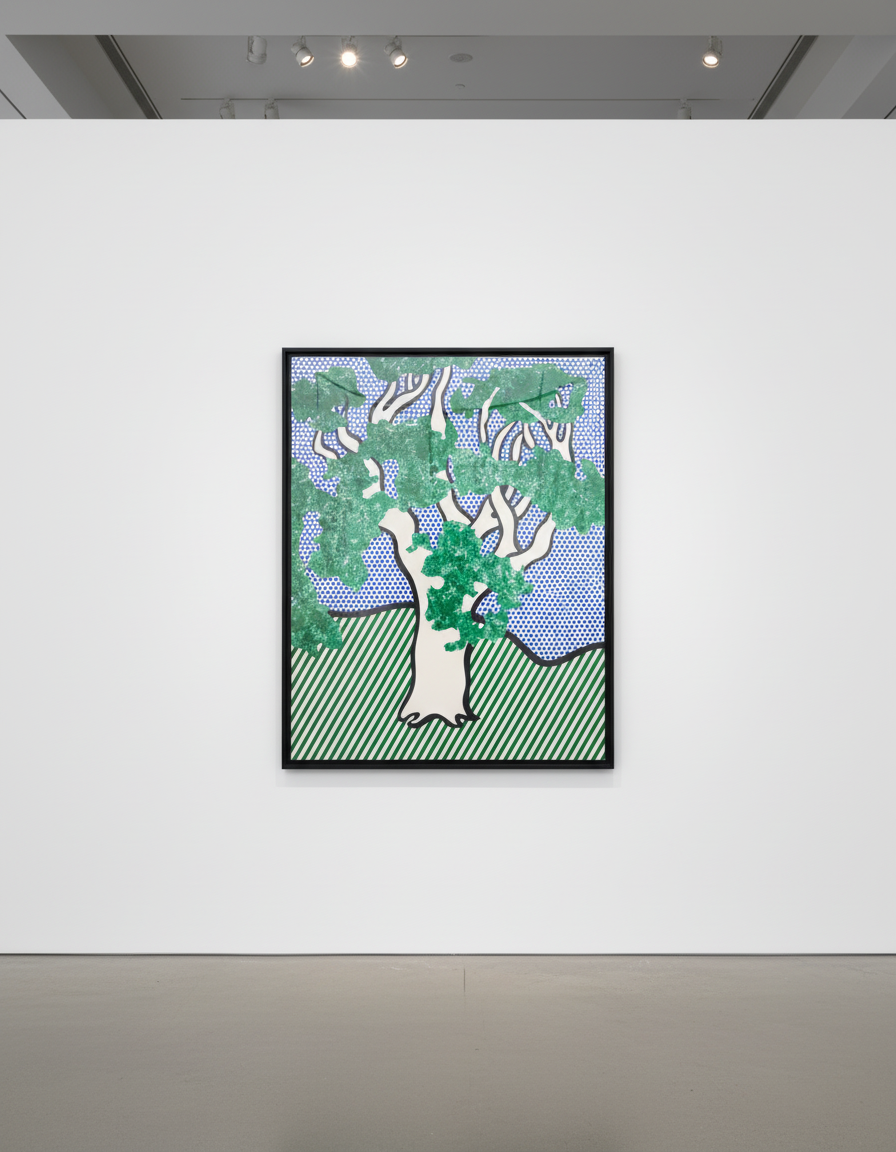
Rainforest (C. 278) — Roy Lichtenstein. Available at Guy Hepner, New York.
The triptych As I Opened Fire stands as one of the most powerful examples of Lichtenstein's ability to transform source material into something entirely new. By fragmenting a single narrative across three panels, he created a meditation on violence, heroism, and the way mass media shapes public perception - themes that remain strikingly relevant in today's image-saturated world.
While Lichtenstein is most celebrated for his comic-derived imagery, his artistic practice evolved dramatically over his five-decade career. Throughout the 1970s and 1980s, he engaged with art history itself, creating reinterpretations of works by Picasso, Matisse, and Monet filtered through his distinctive Pop sensibility. These pieces demonstrated that his approach was never simply about appropriation but rather about examining how we perceive and process visual information.
His later series explored themes ranging from Chinese Landscapes to Reflections and mirrors, each body of work expanding the conceptual framework he had established. The artist's exploration of Interiors proved particularly significant, merging his interest in art historical references with his Pop aesthetic to create complex spatial compositions.
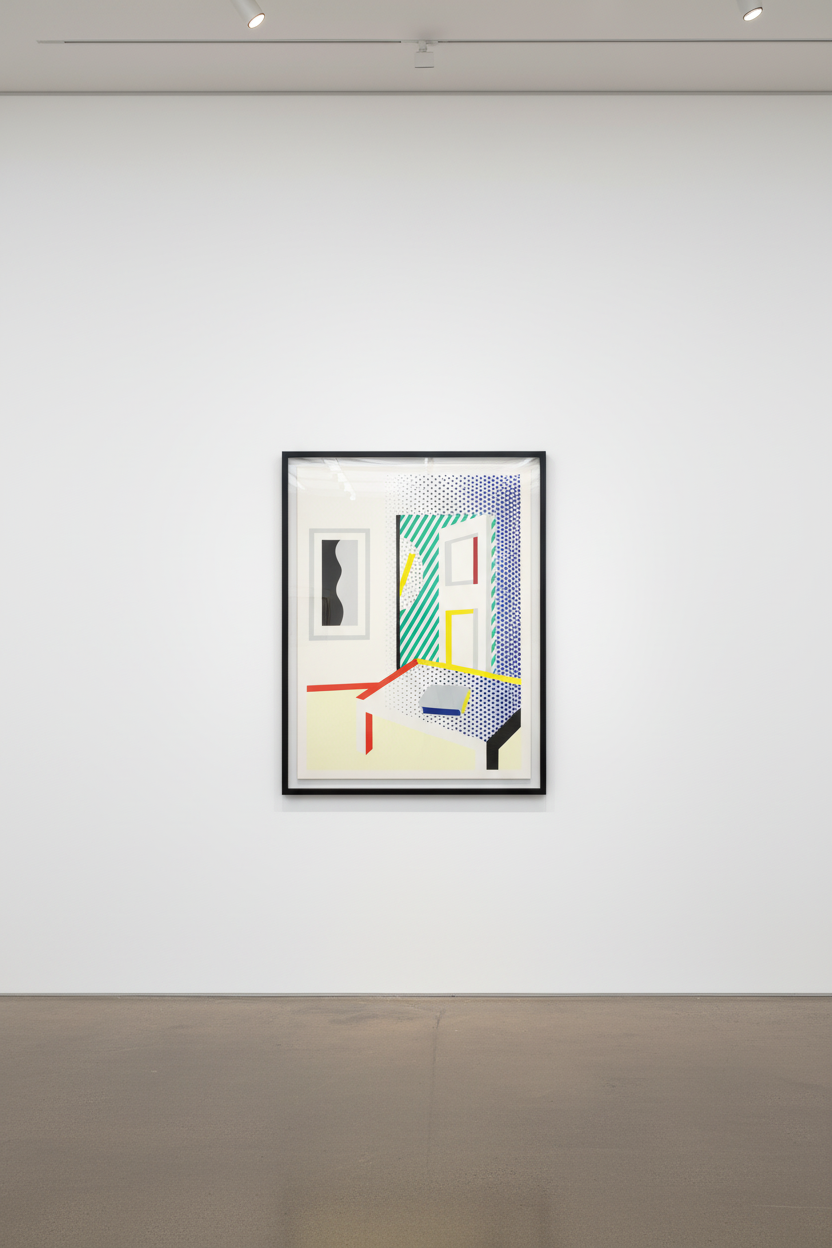
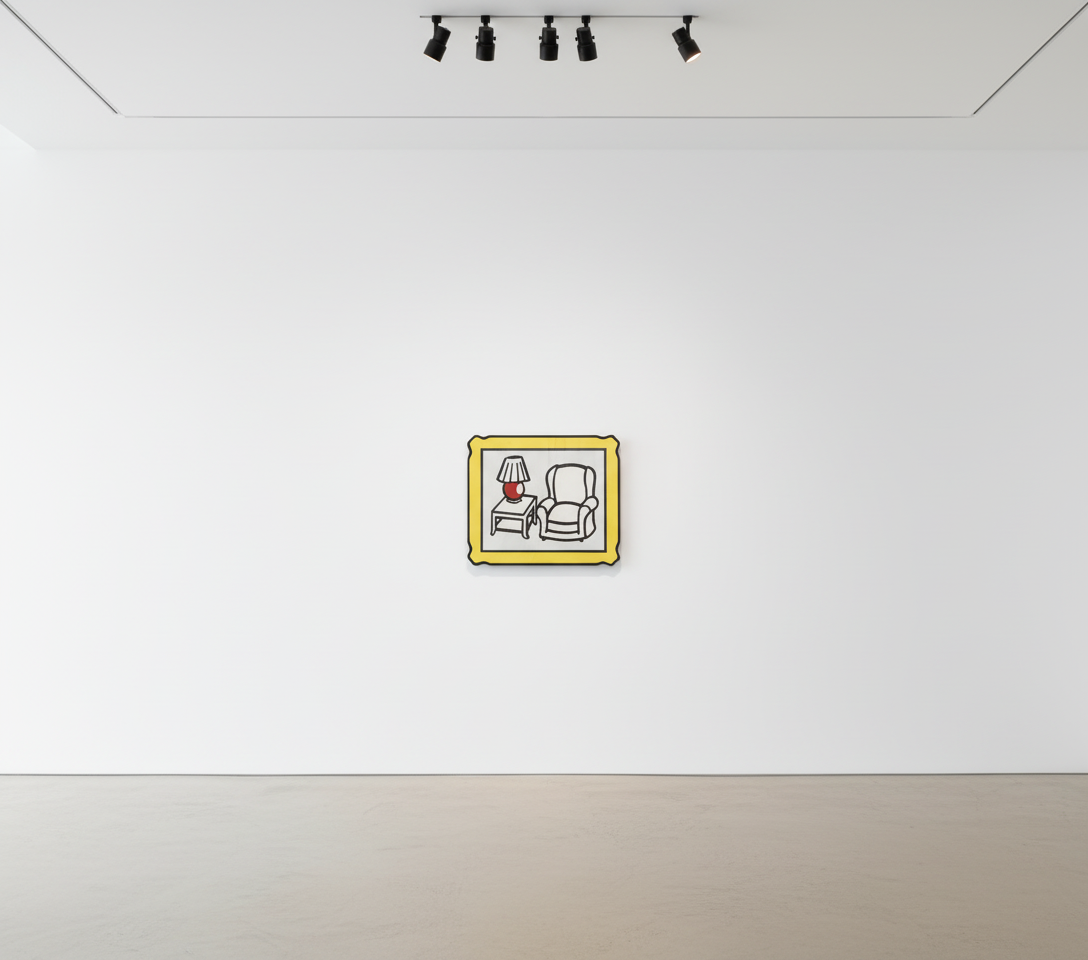
Virtual Interior With Book — Roy Lichtenstein. Available at Guy Hepner, New York.
Works from this period, such as Virtual Interior With Book, reveal Lichtenstein's sophisticated engagement with representation and illusion. These pieces collapse multiple visual languages into single compositions, challenging viewers to consider how we construct meaning from images.
Lichtenstein also demonstrated remarkable range across media. His sculptures translated his two-dimensional style into three-dimensional forms, while his prints - produced throughout his career - allowed him to explore the reproductive processes that had initially inspired his paintings. The bull series exemplifies his reductive approach, distilling complex imagery into essential forms through successive iterations.
The auction market for Lichtenstein's work has demonstrated exceptional strength across all price points. According to data tracked by Sotheby's, demand for the artist spans from accessible print editions to museum-quality paintings commanding eight figures. Christie's recorded one of the most significant sales in 2015 when Nurse achieved $95.4 million, cementing Lichtenstein's position among the most valuable artists at auction.
The Art Basel and UBS Global Art Market Report has consistently identified Pop Art as a category of sustained collector interest, with Lichtenstein representing a cornerstone of this market segment. His prints, in particular, offer collectors entry points into his oeuvre while maintaining strong value appreciation. The combination of art historical significance, visual impact, and proven market performance makes Lichtenstein an essential consideration for both emerging and established collectors.
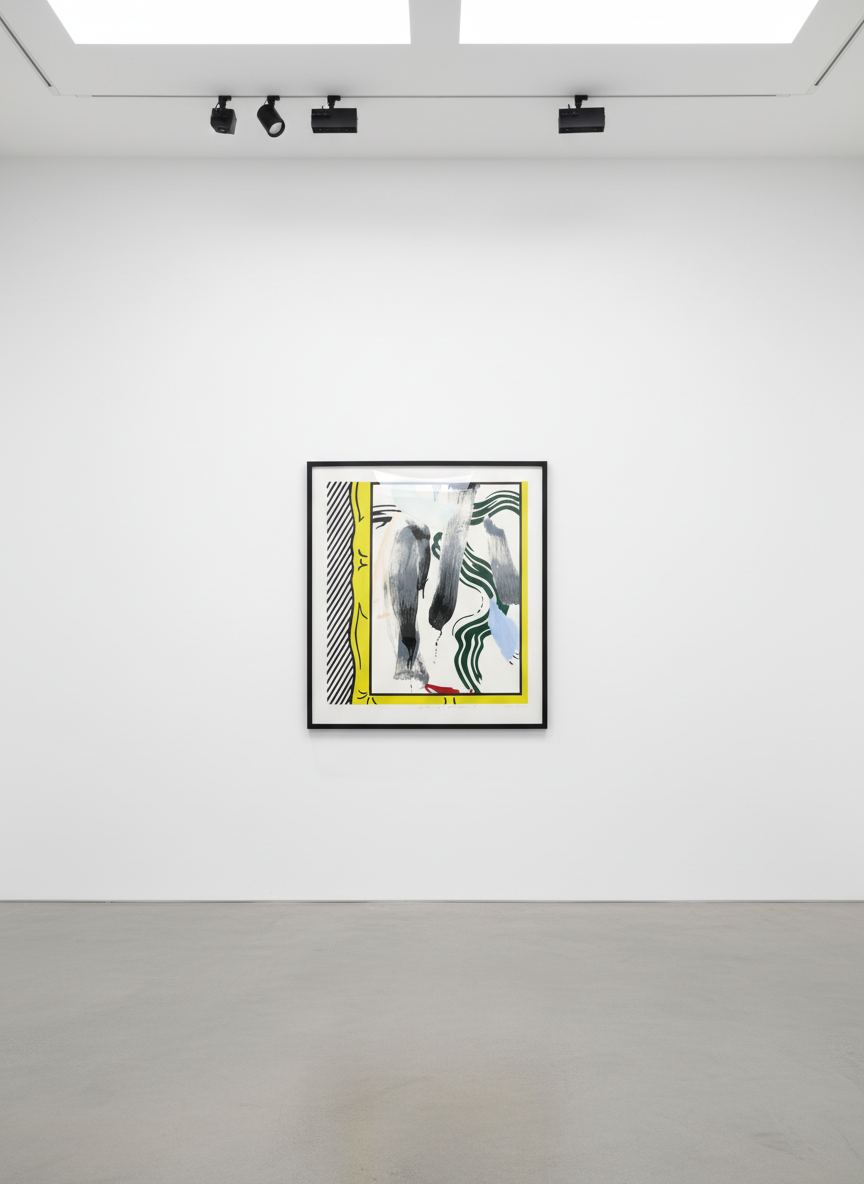
Against Apartheid (C. 200) — Roy Lichtenstein. Available at Guy Hepner, New York.
Political works such as Against Apartheid demonstrate Lichtenstein's willingness to engage with social issues, adding another dimension to his legacy. These pieces attract collectors who appreciate art that combines aesthetic excellence with historical resonance.
The influence of Lichtenstein extends far beyond the Pop Art movement he helped define. Contemporary artists working with appropriation, mass media imagery, and digital aesthetics owe a significant debt to his pioneering approach. His questioning of originality anticipated postmodern discourse, while his elevation of commercial imagery prefigured our current era of meme culture and viral content.
Museums worldwide - from the Museum of Modern Art in New York to the Tate Modern in London - maintain significant holdings of his work, ensuring continued scholarly attention and public engagement. This institutional support reinforces market confidence while introducing new generations to his revolutionary vision.
For collectors, Lichtenstein represents that rare combination of art historical importance, visual accessibility, and investment potential. His works serve as focal points in any collection, instantly recognizable yet rewarding sustained contemplation. Whether through his iconic comic paintings, sophisticated later works, or carefully executed prints, Lichtenstein offers multiple avenues for meaningful acquisition.
Guy Hepner is proud to offer select works by Roy Lichtenstein, providing collectors with access to authenticated pieces from across the artist's remarkable career. Our specialists possess deep expertise in the Lichtenstein market and can guide both new and experienced collectors toward acquisitions that align with their aesthetic vision and collection goals. We invite you to contact Guy Hepner to inquire about current availability and to discuss how Lichtenstein's transformative work might enhance your collection.
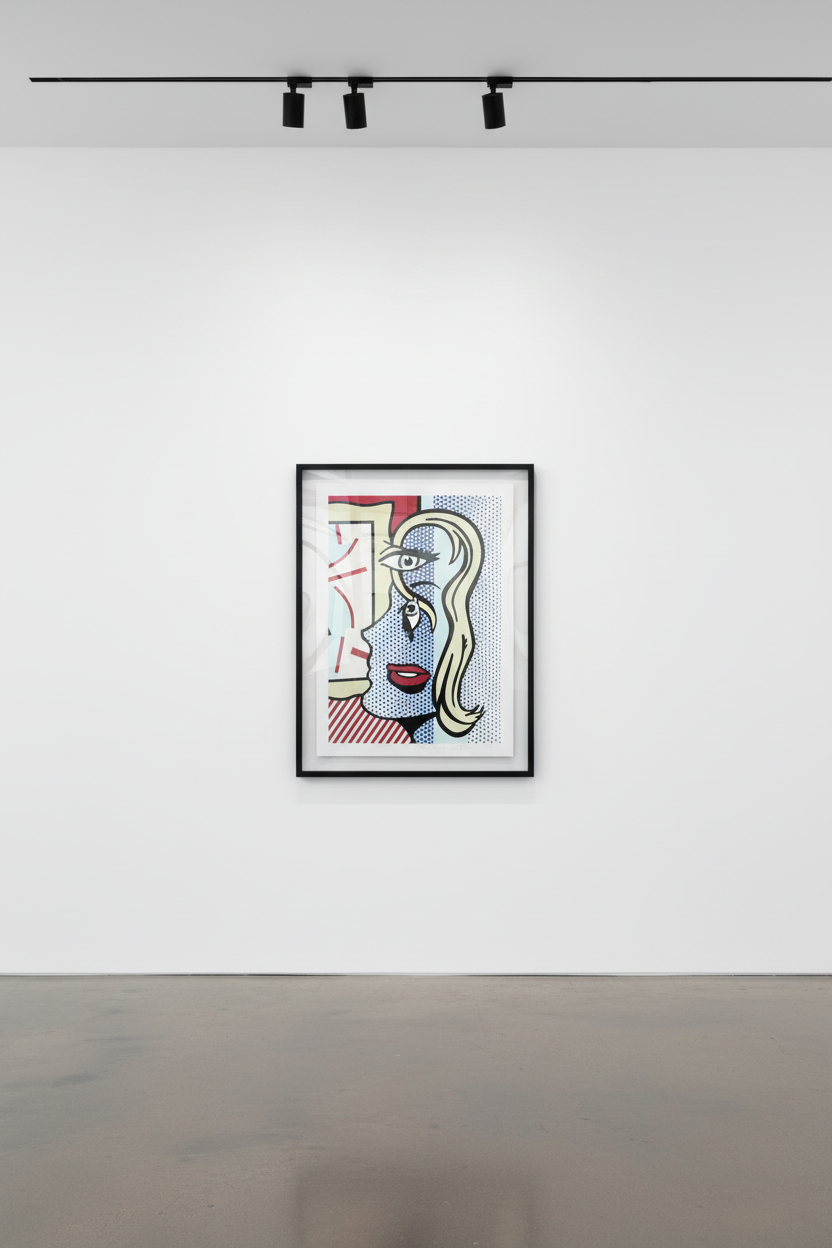
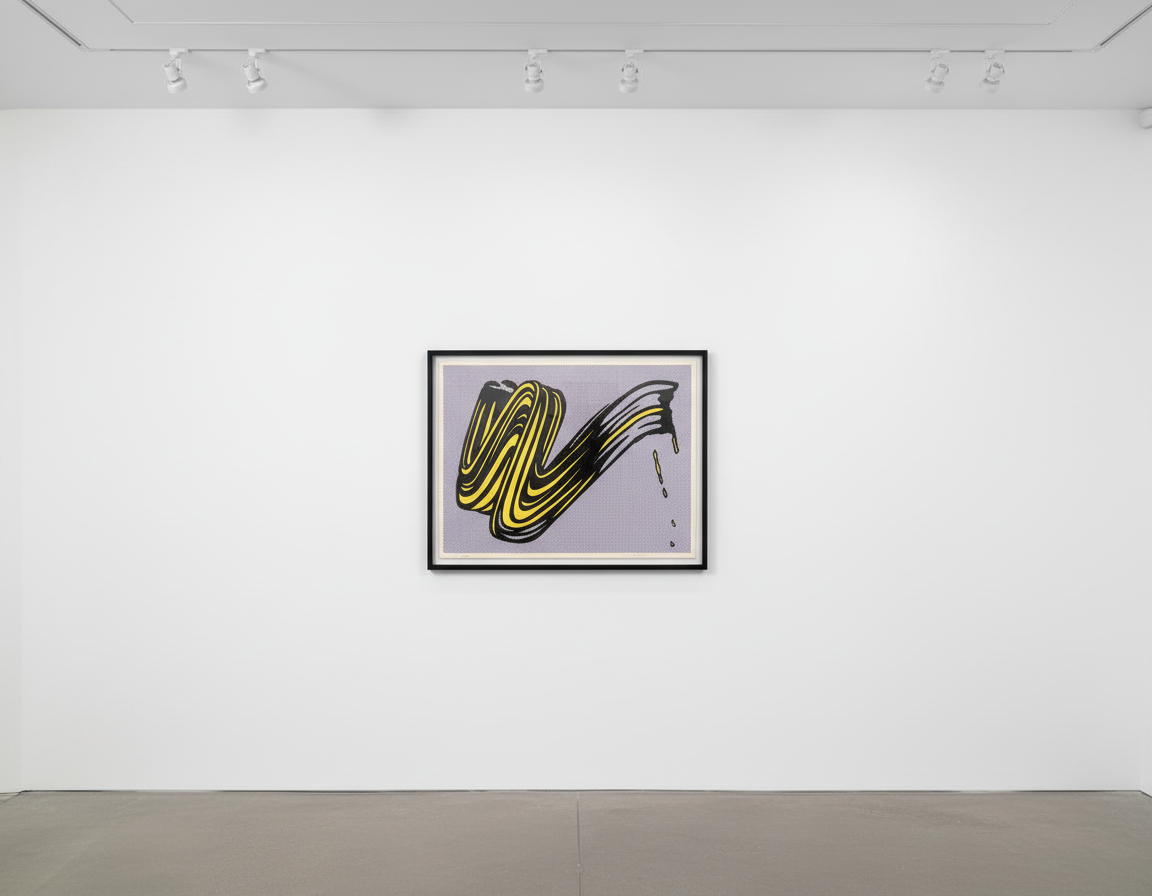
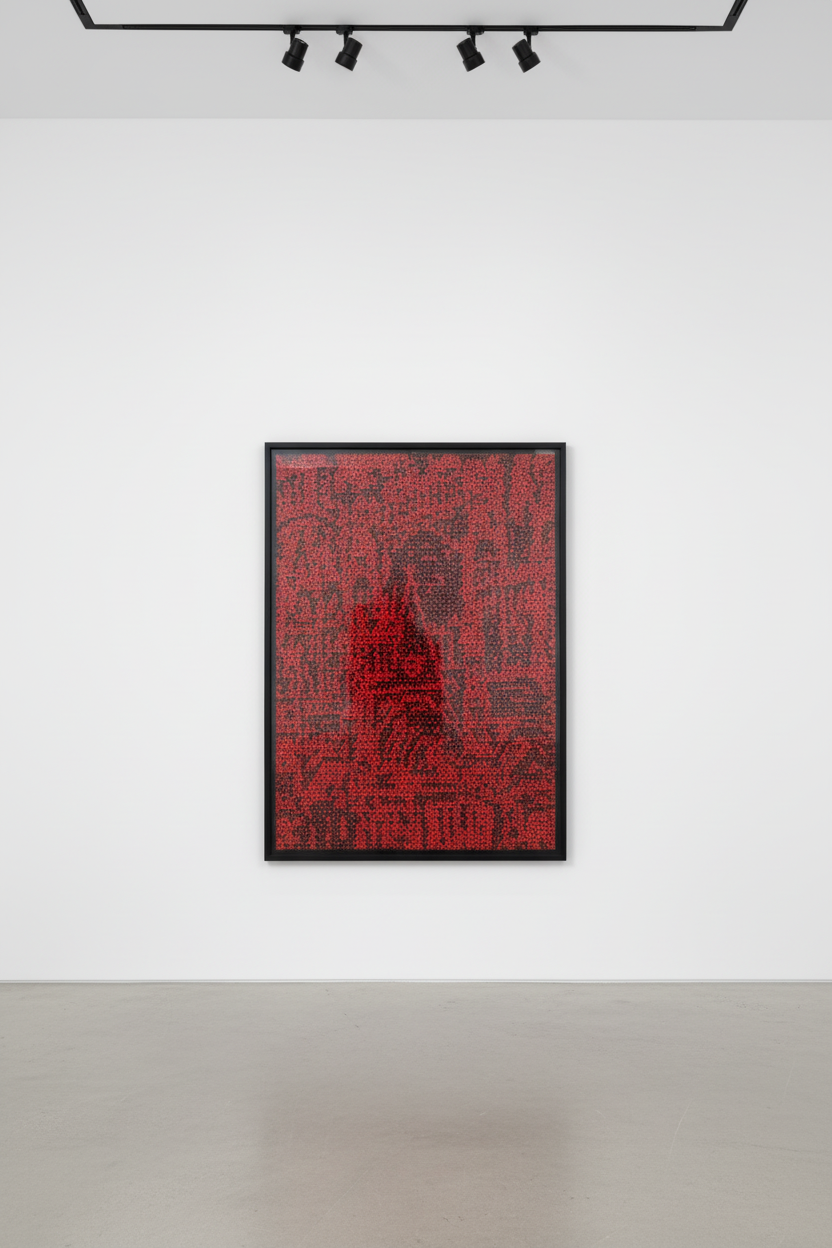
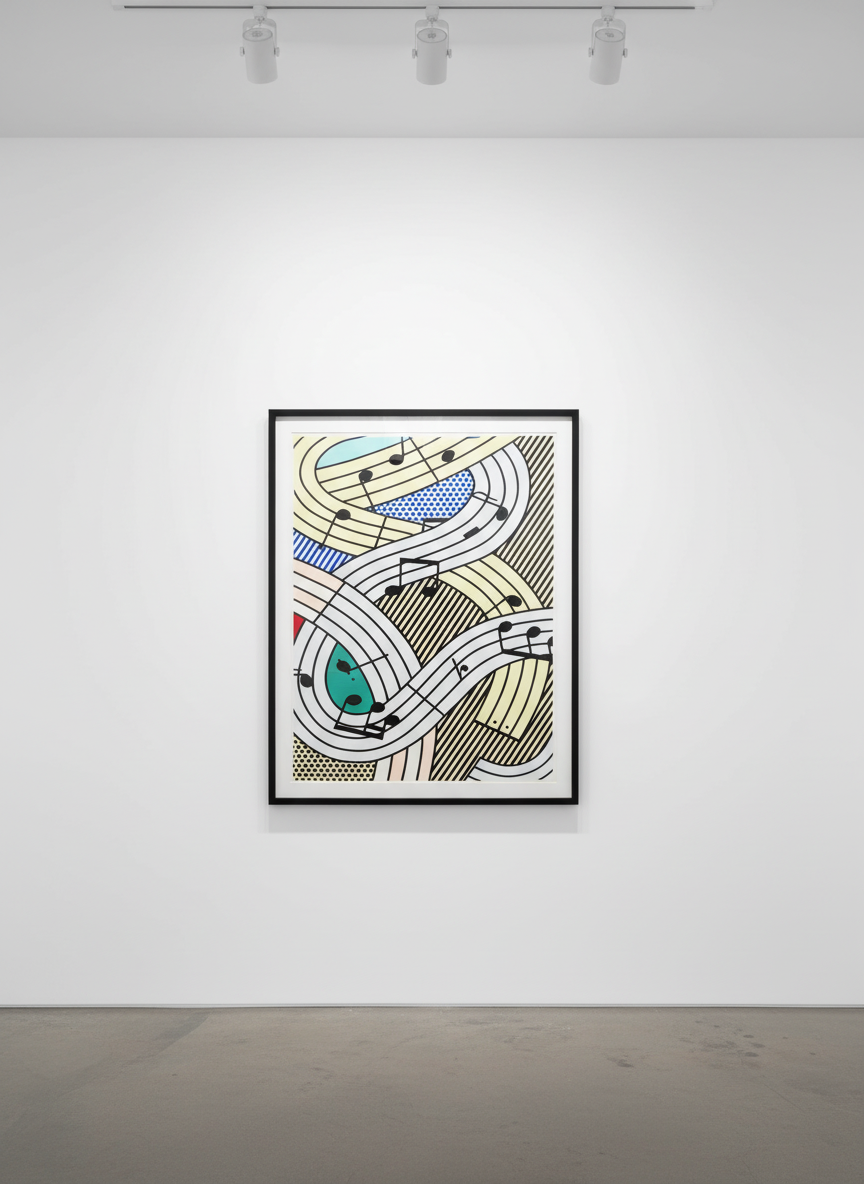
--- **Browse Roy Lichtenstein prints** at Guy Hepner: [Roy Lichtenstein art for sale](/roy-lichtenstein) | [Sell your Lichtenstein](/sell/roy-lichtenstein)Explore Roy Lichtenstein prints for sale at Guy Hepner: American Indian Theme, Art Critic, Brushstrokes, Cathedral, Composition.
Related Series