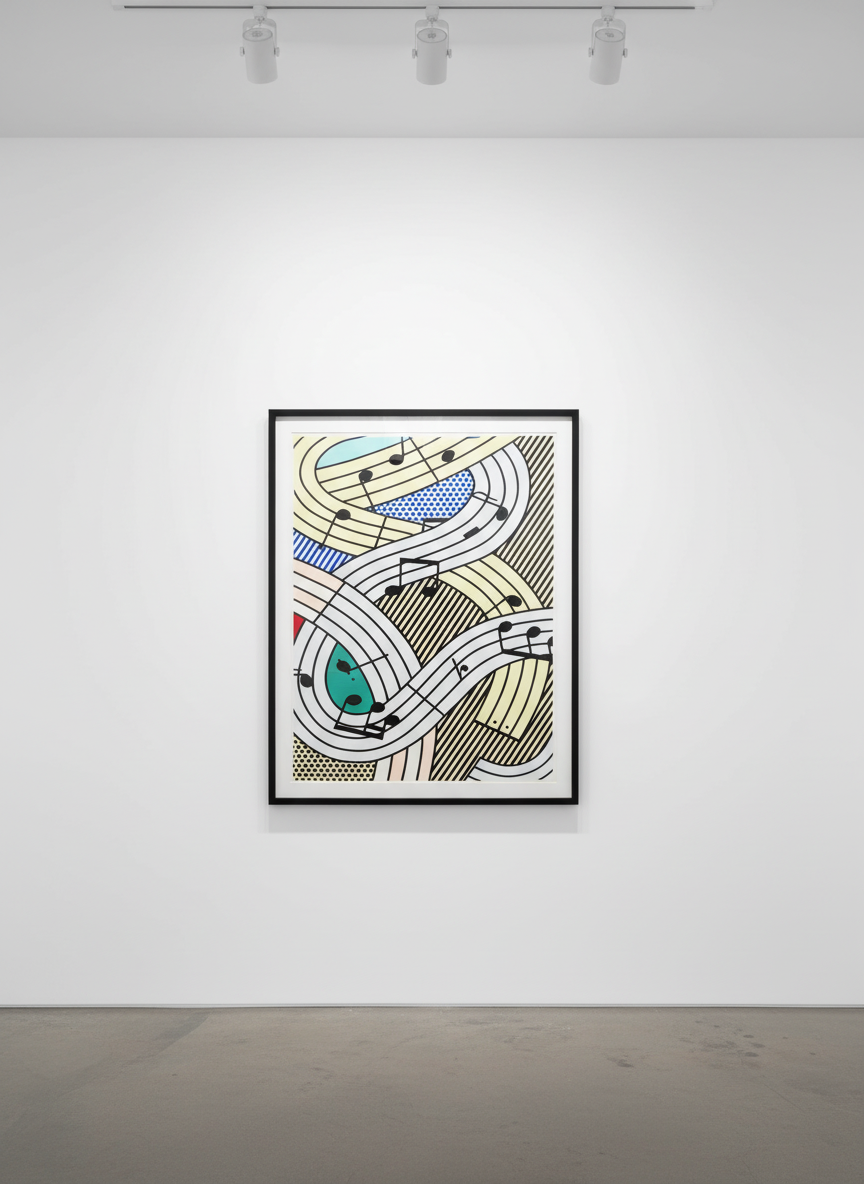
Imperfect

Roy Lichtenstein stands as one of the most influential American artists of the twentieth century, a central figure in the Pop art movement whose distinctive visual language transformed the landscape of contemporary art. While many recognize Lichtenstein for his iconic comic strip-inspired paintings featuring Ben-Day dots and bold primary colors, his later abstract works reveal an artist constantly pushing creative boundaries. The Imperfect series, created between 1986 and 1988, represents a pivotal moment in Lichtenstein's career—a deliberate departure from representation toward pure geometric abstraction while maintaining the graphic vocabulary that defined his artistic identity.
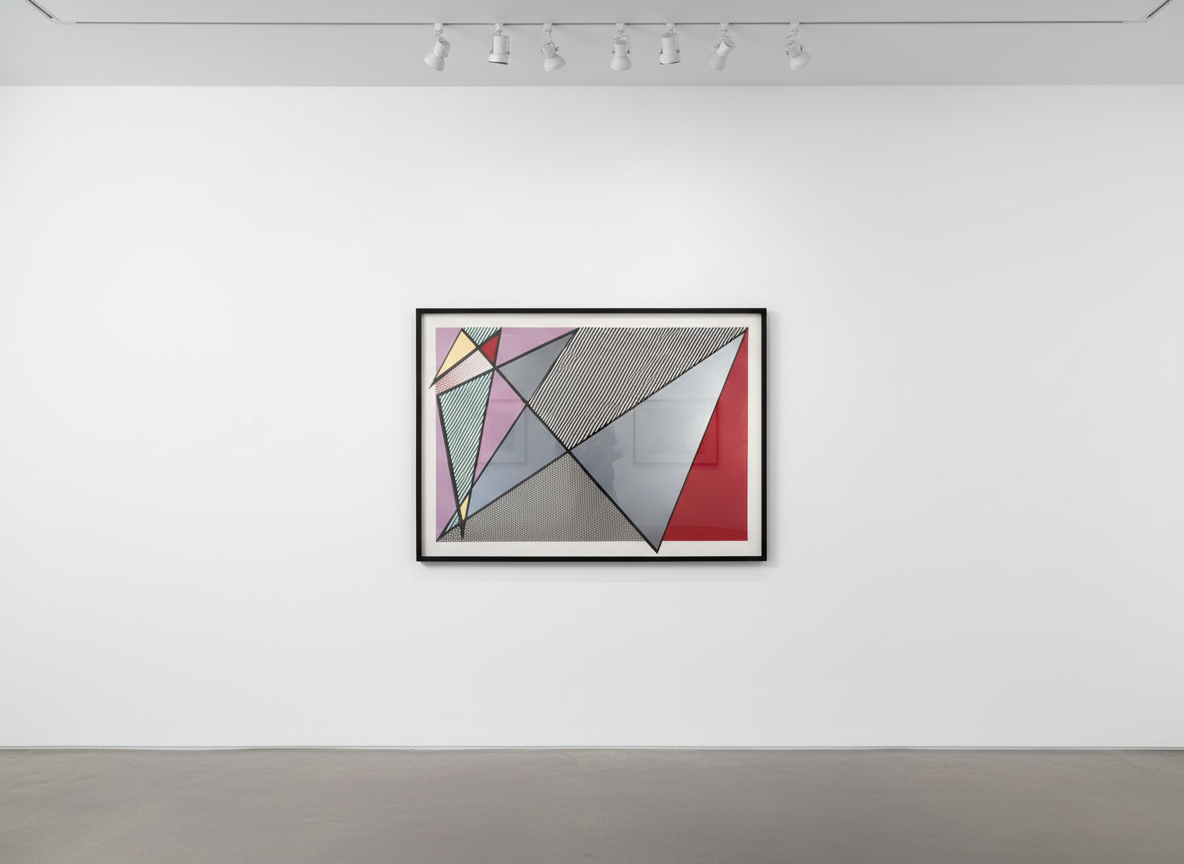
Roy Lichtenstein's Perfect series, initiated in 1978, established the conceptual foundation for what would become one of his most intellectually rigorous bodies of work. These compositions featured abstract, planar arrangements of intersecting triangles filled with multicolored patterns of lines and dots, all carefully confined within rectangular canvases. The geometric precision of these works demonstrated Lichtenstein's mastery of formal Composition while paying homage to earlier abstract movements.
The Imperfect series of 1986-88 represents a radical evolution of these ideas. Where the Perfect paintings respected the traditional boundaries of the picture plane, the Imperfect works deliberately transgress them. Edges and points extend beyond the rectilinear limits of the canvas, creating shaped canvases that challenge conventional notions of painting as a contained, window-like experience. This formal innovation carries profound conceptual weight—the very title suggests a philosophical meditation on incompleteness, asymmetry, and the limitations of geometric idealism.
Lichtenstein created several paired works as diptychs, presenting Perfect and Imperfect variations on shared themes. These pairings invite viewers to contemplate the relationship between order and chaos, containment and expansion, the ideal and the real. The dialogue between these companion pieces reflects broader artistic conversations about the nature of abstraction that had engaged artists from Mondrian to Stella.
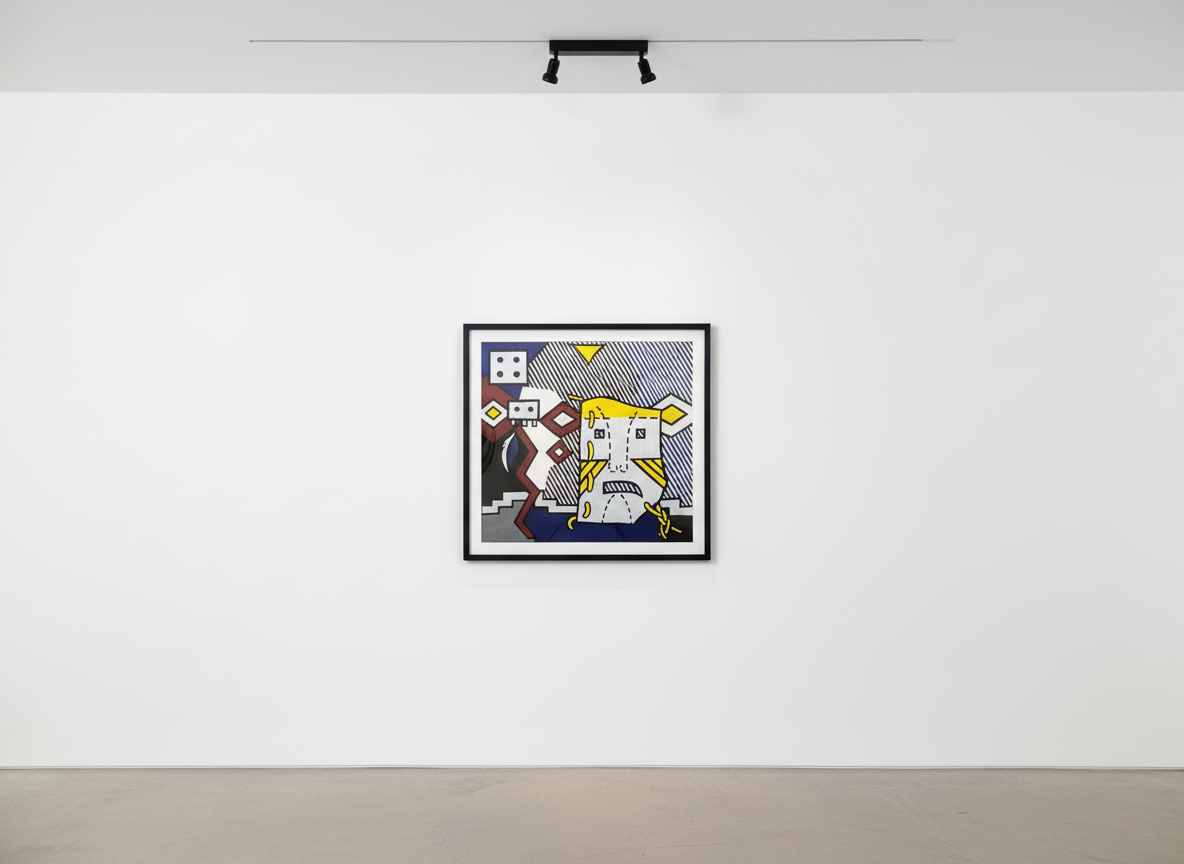
Rainforest (C. 278) — Roy Lichtenstein. Available at Guy Hepner, New York.
The Imperfect series necessitated a significant shift in Roy Lichtenstein's studio process, marking a departure from the working methods that had defined his earlier Pop art production. Rather than relying on preliminary sketches derived from mass-produced imagery—comic books, advertisements, and commercial illustrations—these works were entirely self-generated. In this respect, they share methodological kinship with his Modern paintings, which similarly emerged from the artist's imagination rather than appropriated sources.
Initial studies for the Imperfect compositions were meticulously plotted on graph paper, with lines serving as the foundational structural element. This mathematical approach to composition reveals Lichtenstein's deep engagement with the formal properties of visual art—line, shape, color, and pattern considered as autonomous elements rather than vehicles for representation. The resulting webs of shapes incorporated his signature dots, diagonal lines, and flat areas of color, creating complex visual fields that reward sustained attention.
This series represents Lichtenstein's most deliberate exploration of total abstraction within the Pop art idiom. The tension between Pop art's traditional engagement with commercial culture and the Imperfect paintings' pure formalism creates a productive ambiguity. Lichtenstein demonstrates that his visual vocabulary—those unmistakable Ben-Day dots and bold outlines—possesses expressive potential independent of any representational content. The graphic language of mass media becomes, in these works, a medium for serious abstract investigation.
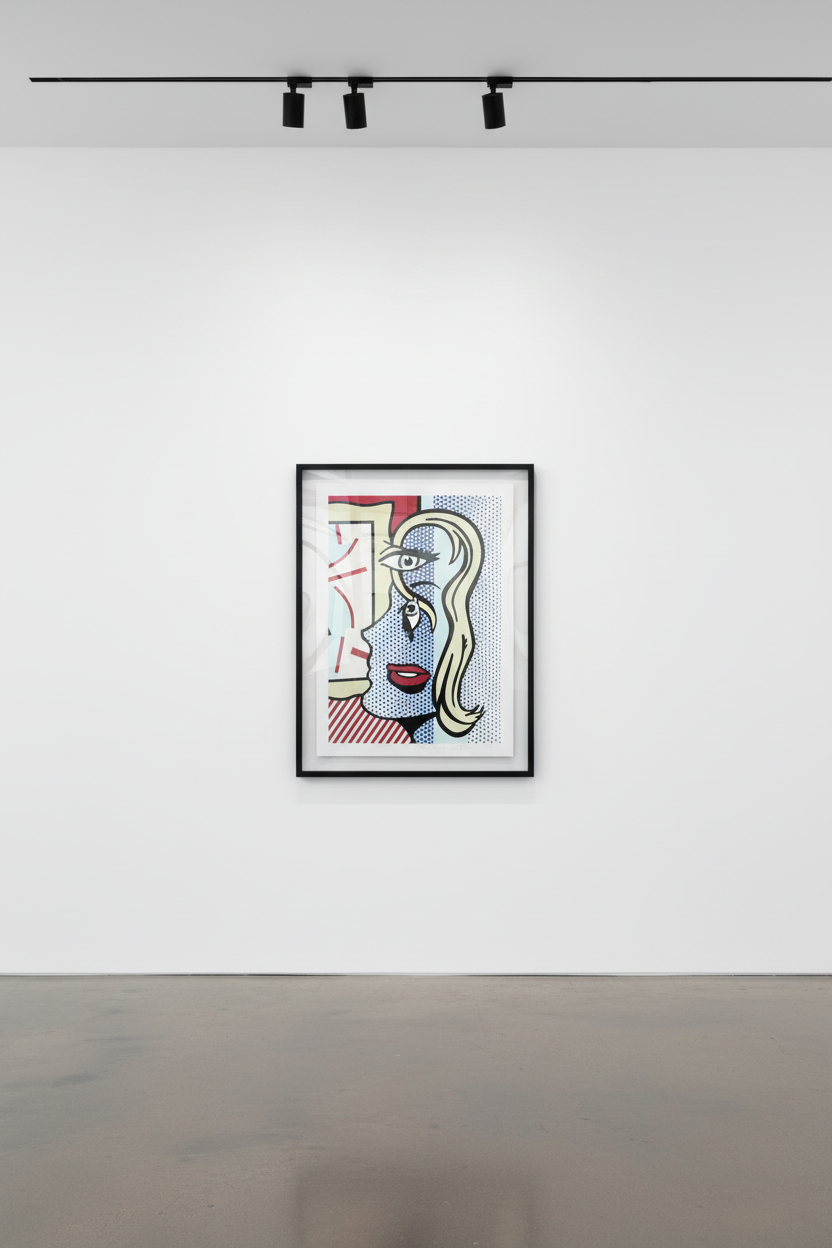
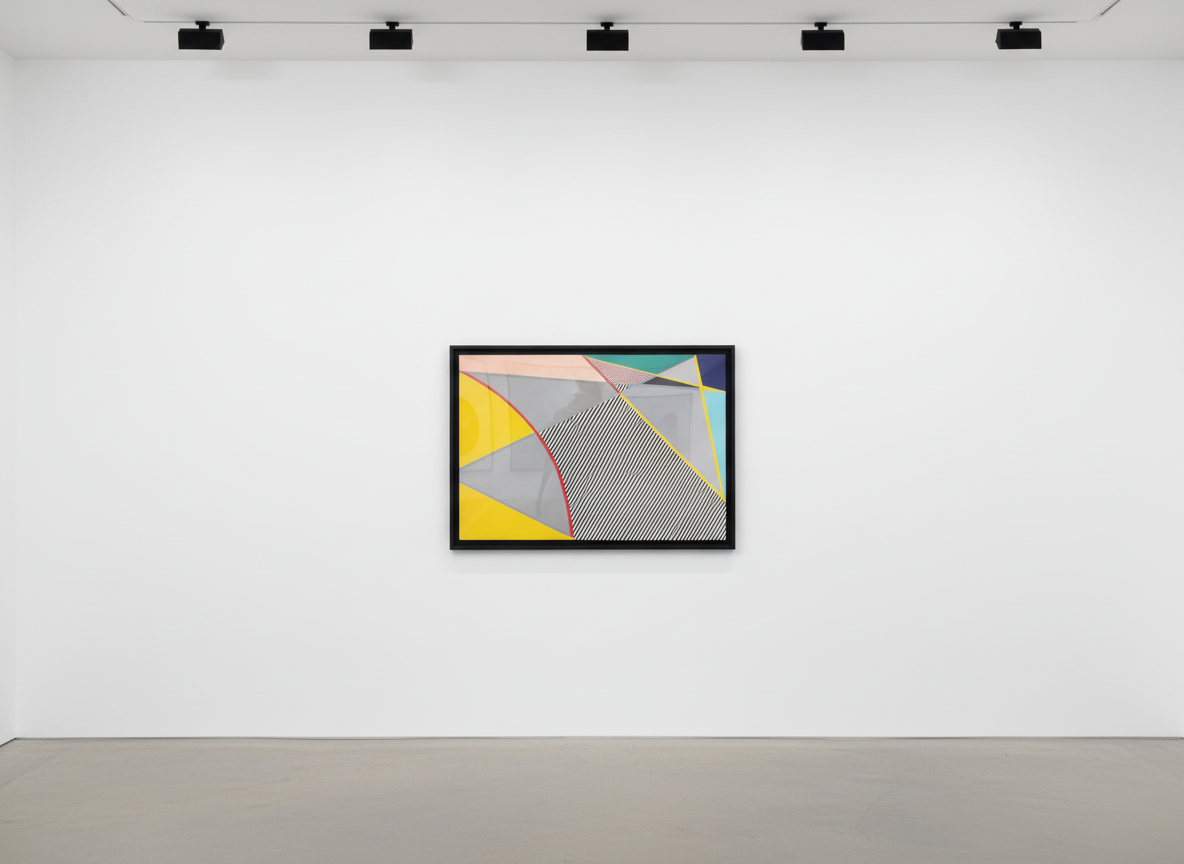
Virtual Interior With Book — Roy Lichtenstein. Available at Guy Hepner, New York.
During the 1970s and 1980s, Roy Lichtenstein increasingly shifted toward abstract representation, moving away from the comic strip-inspired imagery of his earlier works that had secured his place in art history. This evolution surprised critics who had perhaps too narrowly defined Lichtenstein's artistic concerns. Yet the abstract works reveal continuities with his earlier production—a sustained interest in how images are constructed, how visual languages communicate, and how artistic conventions shape perception.
The Imperfect series emerged during a period of renewed interest in geometric abstraction across the art world. Neo-Geo artists were similarly exploring the intersection of Pop aesthetics and abstract form. Lichtenstein's contribution to this dialogue was distinctive, bringing his decades of experience with commercial visual culture to bear on questions of pure form. The result was a body of work that felt simultaneously contemporary and deeply rooted in art historical tradition.
According to market analysis from Christie's and Sotheby's, Lichtenstein's abstract works have attracted increasing collector attention in recent years. While his comic-derived paintings continue to achieve headline prices, sophisticated collectors recognize the Imperfect series as representing a mature artist working at the height of his powers. The Art Basel and UBS Global Art Market Report has consistently identified Lichtenstein as among the most sought-after post-war American artists, with his abstract works occupying an important niche within his broader market.
The shaped canvases of the Imperfect series present particular appeal to collectors interested in the intersection of painting and sculpture. These works occupy physical space differently than traditional rectangular paintings, asserting their presence as objects while maintaining their identity as pictures. This hybrid quality connects them to contemporaneous developments in installation art and site-specific practice, even as they remain fundamentally committed to the traditions of easel painting.
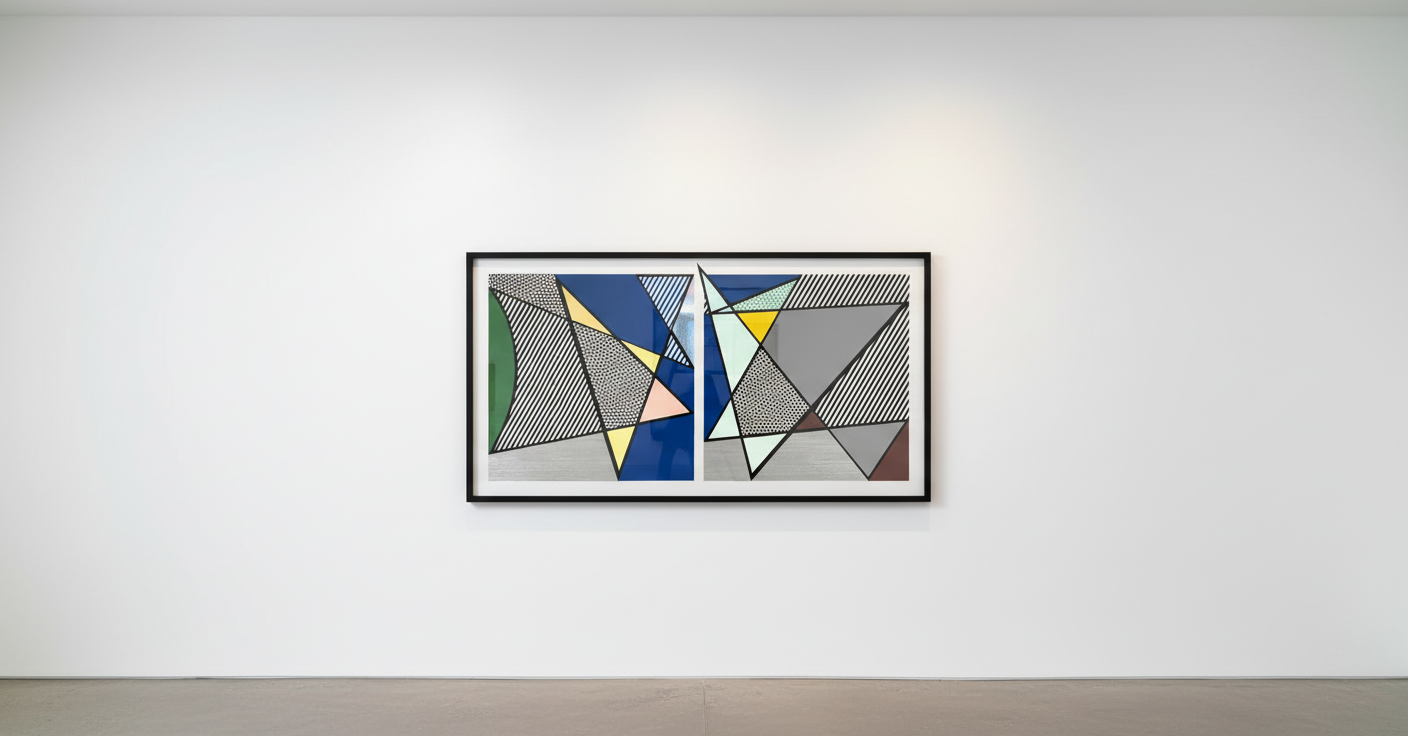
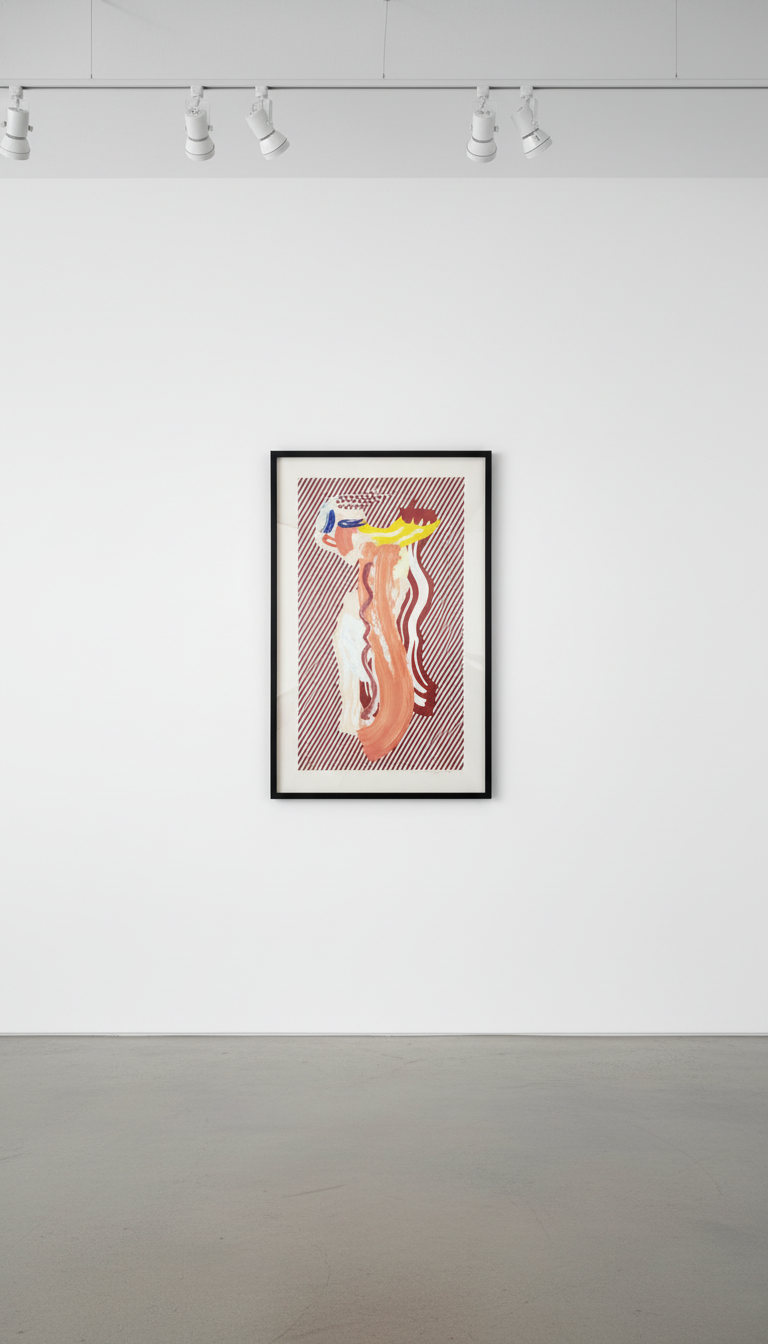
Against Apartheid (C. 200) — Roy Lichtenstein. Available at Guy Hepner, New York.
Collectors are drawn to Roy Lichtenstein's Imperfect series for multiple reasons. These works offer entry into a less commercially saturated area of the artist's production while maintaining the visual impact and art historical significance of his more famous paintings. The series demonstrates Lichtenstein's range and intellectual depth, qualities that ensure his continued relevance as critical assessments of Pop art evolve.
The relative scarcity of these works compared to Lichtenstein's print editions makes them particularly desirable. Each Imperfect painting represents a unique object—a handmade work that carries the full weight of the artist's creative process. For collectors seeking museum-quality examples of Lichtenstein's mature practice, the Imperfect series offers exceptional opportunities.
Furthermore, these works display beautifully in contemporary architectural settings. Their bold geometric forms and vibrant colors complement modern Interiors while their shaped canvases create dynamic visual interest. Unlike figurative works that impose specific narrative content, the Imperfect paintings offer aesthetic pleasure that rewards repeated viewing without exhausting interpretation.
Guy Hepner is proud to offer works by Roy Lichtenstein, including pieces from his most significant series. Our gallery specializes in connecting discerning collectors with exceptional examples of post-war and contemporary art. To inquire about availability, pricing, and acquisition opportunities for Roy Lichtenstein works, please contact our expert team who can provide detailed condition reports, provenance documentation, and personalized consultation services tailored to your collecting goals.
--- **Browse Roy Lichtenstein prints** at Guy Hepner: [Roy Lichtenstein art for sale](/roy-lichtenstein) | [Sell your Lichtenstein](/sell/roy-lichtenstein)Explore Roy Lichtenstein prints for sale at Guy Hepner: Imperfect, American Indian Theme, Art Critic, Brushstrokes, Cathedral.
Related Series