Anatomy

Jean-Michel Basquiat remains one of the most consequential artists of the twentieth century, a figure whose meteoric rise from the streets of New York to the pinnacle of the international art world continues to captivate collectors and scholars alike. His work, characterized by its visceral energy, layered symbolism, and unflinching examination of race, power, and cultural identity, speaks with an urgency that transcends its era. Within the broader context of his prolific yet tragically brief career, Basquiat's explorations of icons and identity stand as particularly significant, revealing an artist deeply engaged with questions of who is remembered, who is celebrated, and who is ultimately consumed by the very systems that elevate them.
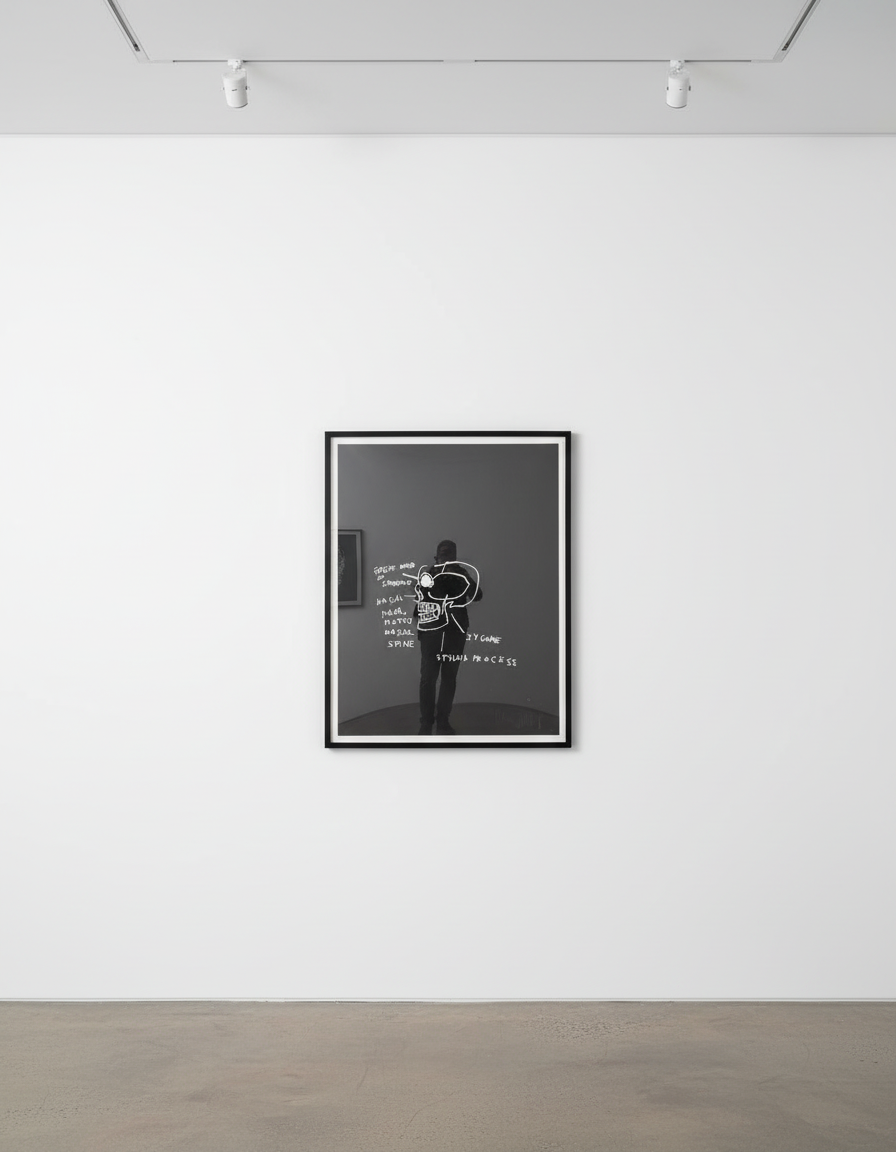
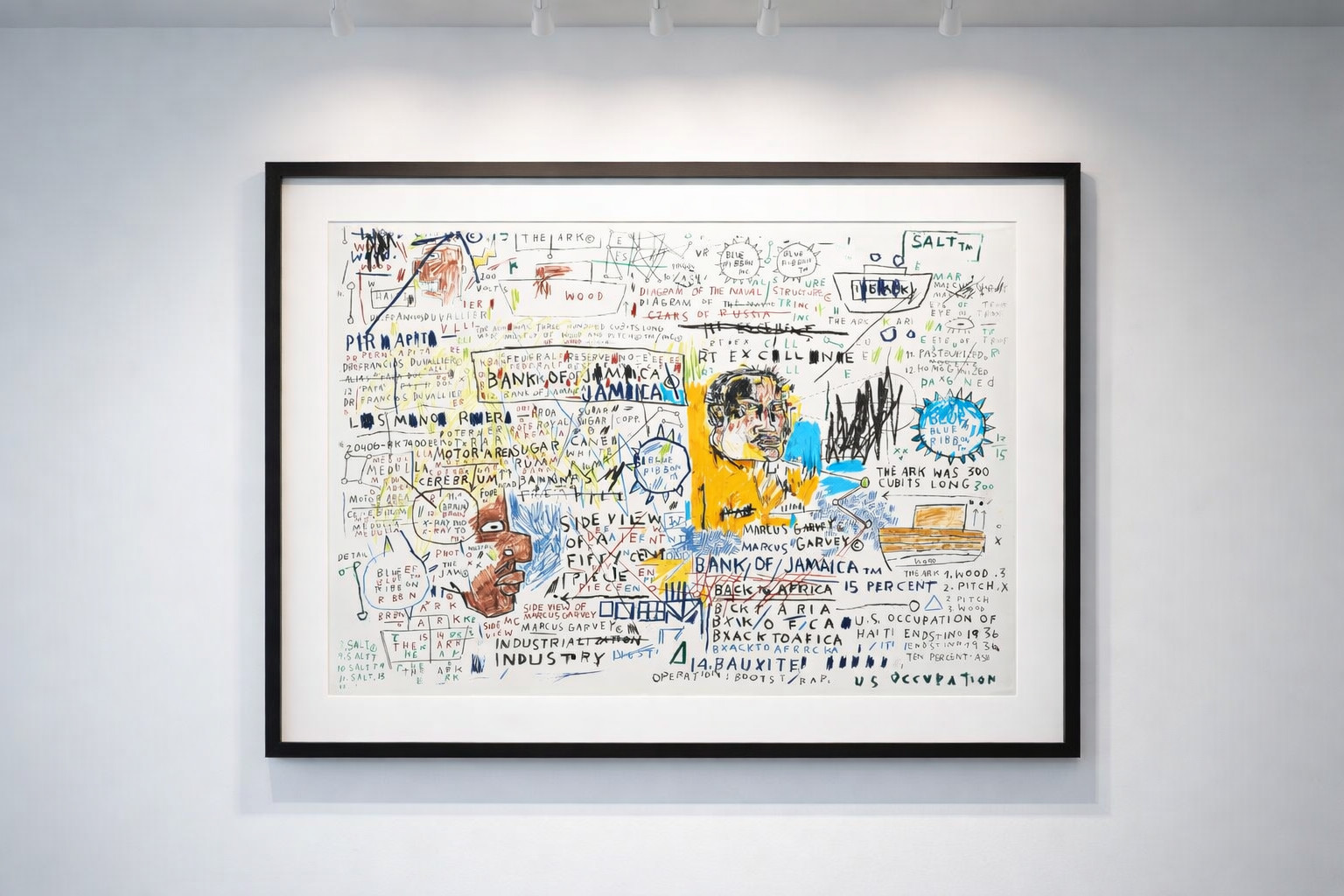
Basquiat developed a visual vocabulary unlike any other, drawing from sources as diverse as Gray's Anatomy, jazz history, African diasporic traditions, and the graffiti-tagged walls of downtown Manhattan. His approach to identity was never singular but rather a complex negotiation between personal experience and collective memory. Works such as Great Wind of Sphenoid from the Anatomy series demonstrate his fascination with the human body as both biological fact and cultural construct. The sphenoid bone, butterfly-shaped and nestled at the base of the skull, becomes in Basquiat's hands a meditation on the hidden structures that support consciousness itself.
This anatomical obsession was far from clinical. Basquiat, who famously studied medical illustrations after a childhood accident, understood the body as a site of vulnerability and power. His figures often appear simultaneously exposed and defiant, their internal workings laid bare yet rendered with a dignity that challenges the historical objectification of Black bodies in Western art and science. The raw marks and scrawled annotations that populate these works function as both diagnosis and resistance, a refusal to be categorized or contained by institutional frameworks.

Great Wind of Sphenoid, from Anatomy — Jean-Michel Basquiat. Available at Guy Hepner, New York.
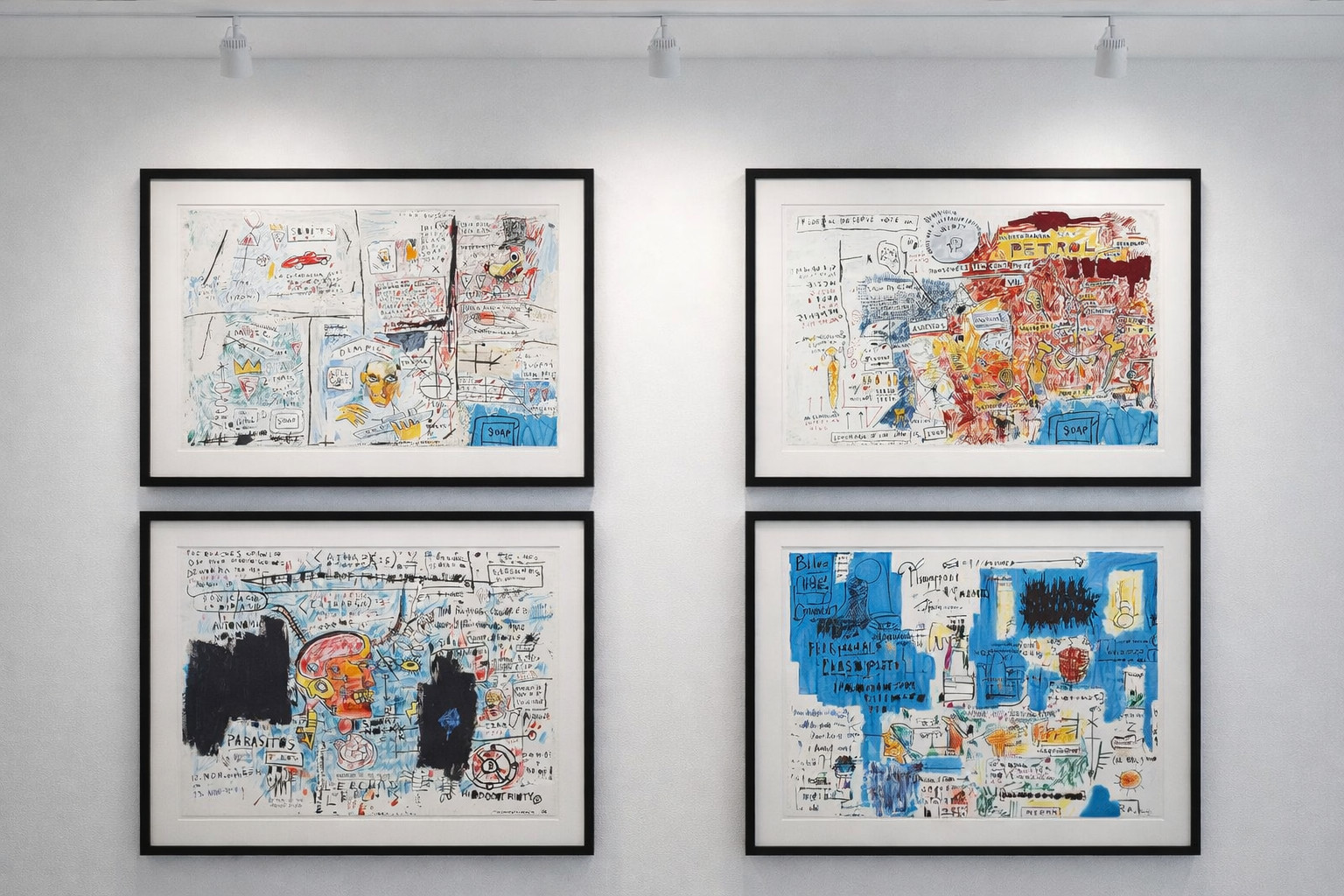
Portfolio II, a compelling collection of four screenprints, presents a multifaceted exploration of cultural identity, history, and personal mythology. Each piece within this suite is imbued with Basquiat's characteristic blend of raw energy and intense symbolism, inviting viewers into a sustained dialogue about social constructs, power structures, and self-perception. These works demonstrate the artist's ability to compress vast historical and emotional content into compositions that feel both spontaneous and meticulously considered.
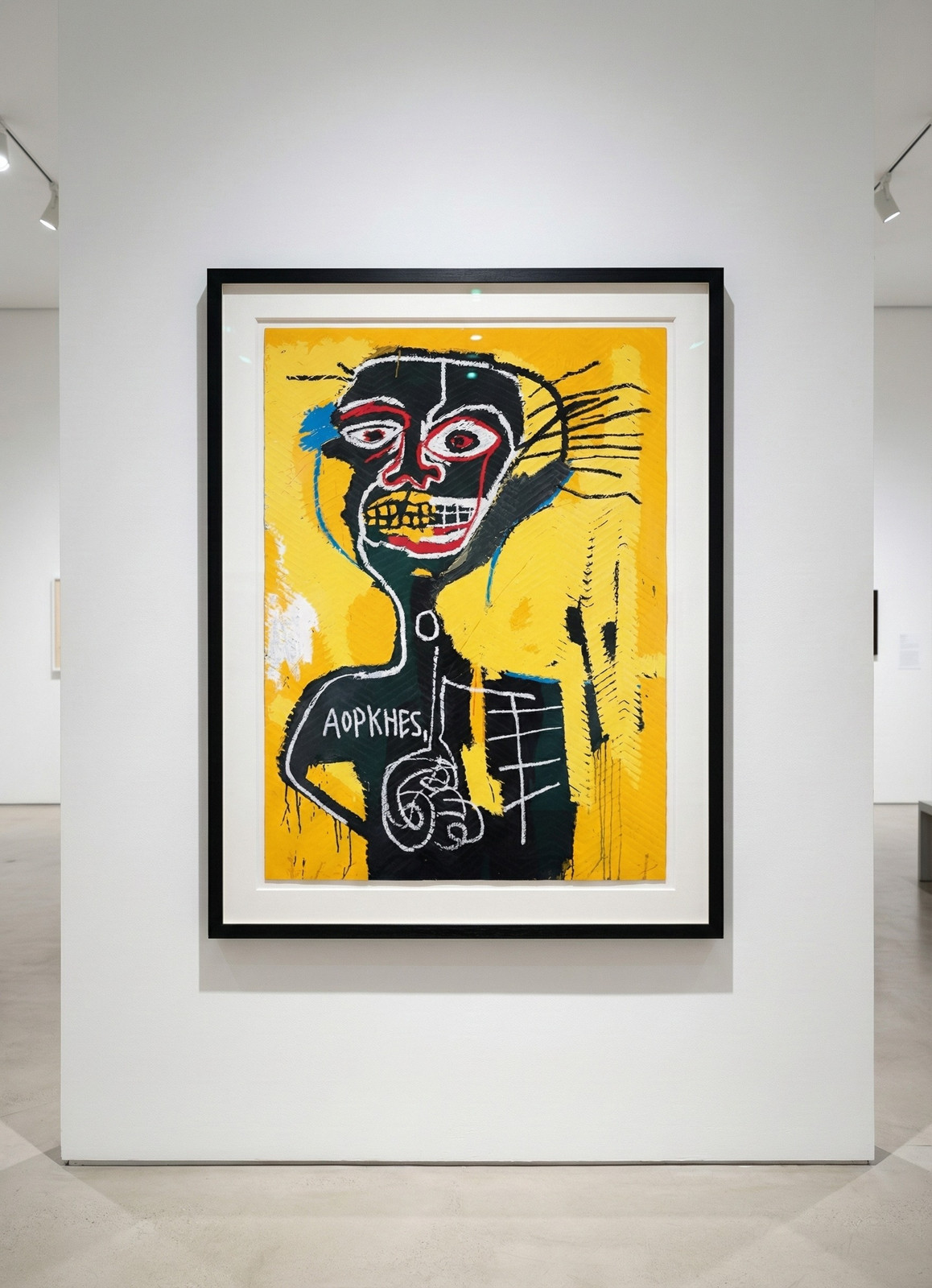
Cabeza, Spanish for head, exemplifies Basquiat's ongoing fascination with the skull as a symbol of mortality, wisdom, and ancestral presence. The head motif recurs throughout his oeuvre, serving as a repository for identity itself. In this work, the artist strips away external markers of status and race to present something more essential, a universal humanity that nonetheless carries the weight of specific cultural histories. The gestural intensity of the composition, combined with Basquiat's distinctive use of color and line, creates an image that feels simultaneously ancient and urgently contemporary.
The screenprint medium itself holds particular significance within Basquiat's practice. While he was primarily known for his paintings, his editions allowed for a different kind of engagement with his visual language, translating his improvisational marks into a format that could reach wider audiences while retaining the essential character of his hand. For collectors, these works offer an accessible entry point into Basquiat's world without sacrificing the power of his artistic vision.
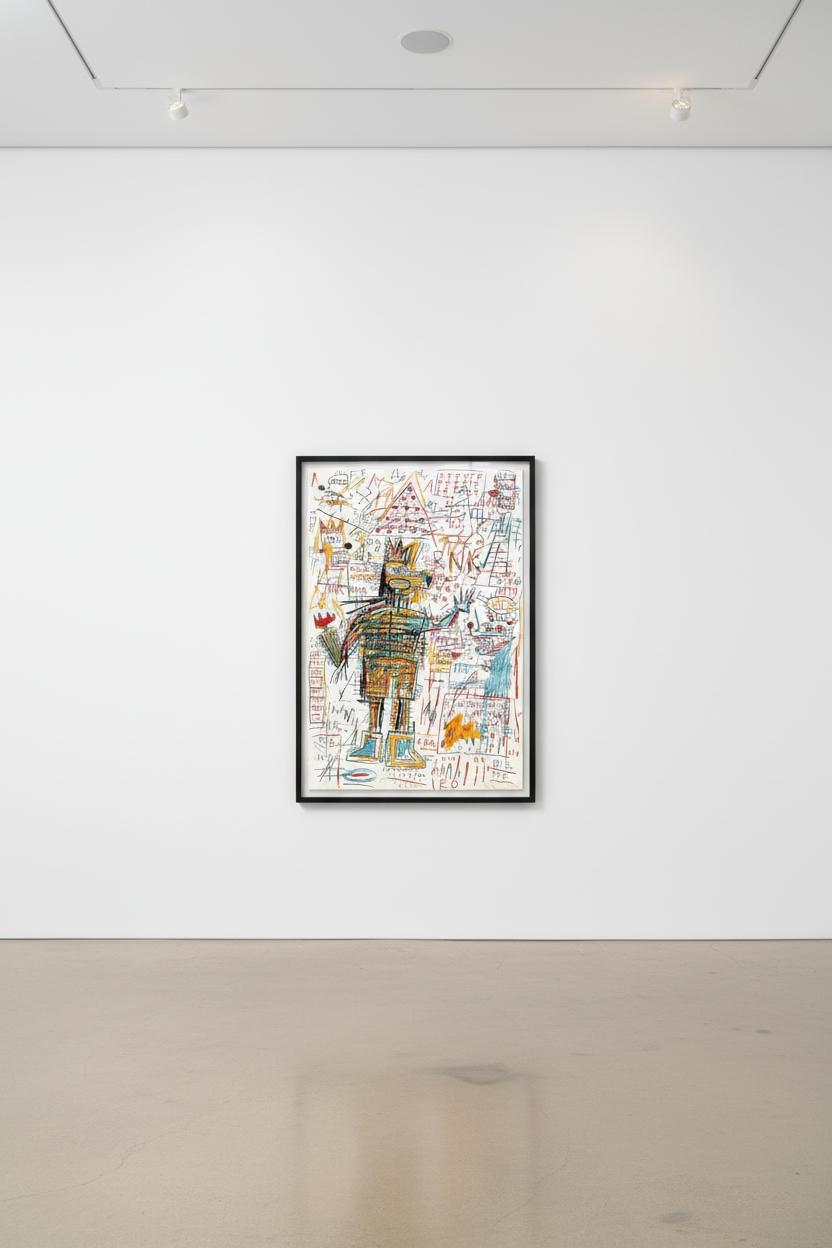
Cabeza, from Portfolio II — Jean-Michel Basquiat. Available at Guy Hepner, New York.
Throughout his career, Basquiat returned repeatedly to the figures he considered cultural royalty, bestowing upon them the three-pointed crown that became his signature emblem. Jazz musicians, boxers, and athletes populated his canvases alongside references to anatomical structures and copyright symbols, creating dense networks of meaning that reward sustained attention. His treatment of these icons was never merely celebratory but rather deeply ambivalent, acknowledging both their greatness and their vulnerability within systems designed to exploit them.
Flash in Naples from the Superhero Portfolio demonstrates this complex relationship with heroic imagery. Basquiat understood that the superhero, like the jazz legend or the champion athlete, exists in a precarious position, elevated by popular culture yet subject to its capricious demands. The phrase most young kings get their head cut off, which appears across multiple works, encapsulates this dynamic perfectly. Fame and destruction become intertwined, and the crown transforms from a symbol of triumph into a mark of sacrifice.
This thematic preoccupation carries profound resonance when considered alongside Basquiat's own biography. An artist who achieved international recognition before the age of twenty-five, he understood intimately the pressures faced by those who challenge conventions. His work does not merely depict icons but interrogates the very mechanisms by which society creates, celebrates, and ultimately consumes its heroes.
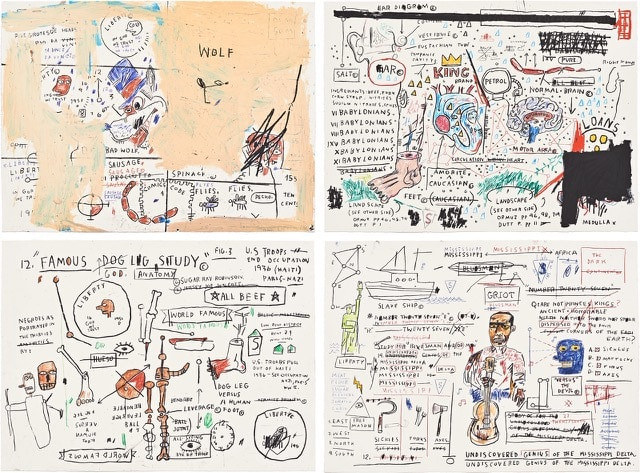
Untitled 4 (from Leonardo) — Jean-Michel Basquiat. Available at Guy Hepner, New York.
The market for Jean-Michel Basquiat has demonstrated remarkable strength and consistent growth over the past two decades. According to data from Christie's and Sotheby's, Basquiat consistently ranks among the highest-selling artists at auction, with major works regularly achieving prices in excess of fifty million dollars. The Art Basel and UBS Global Art Market Report has repeatedly identified Basquiat as a key driver of the contemporary art market, with particular strength among American collectors and growing international demand.
For discerning collectors, Basquiat's works on paper and editions represent an opportunity to acquire pieces by an artist whose significance only continues to grow. The thematic coherence of works exploring icons and identity offers collectors a focused area of engagement, one that connects to broader cultural conversations about representation, power, and legacy. As institutions worldwide continue to mount major retrospectives and scholarly attention deepens, Basquiat's position within the canon appears unassailable.
Guy Hepner is proud to offer exceptional works by Jean-Michel Basquiat, including rare prints and editions that capture the full force of his artistic vision. Our specialists possess deep expertise in navigating the Basquiat market and are committed to guiding collectors toward acquisitions of lasting significance. We invite you to contact the gallery to inquire about available works and to discuss how these powerful pieces might enhance your collection.
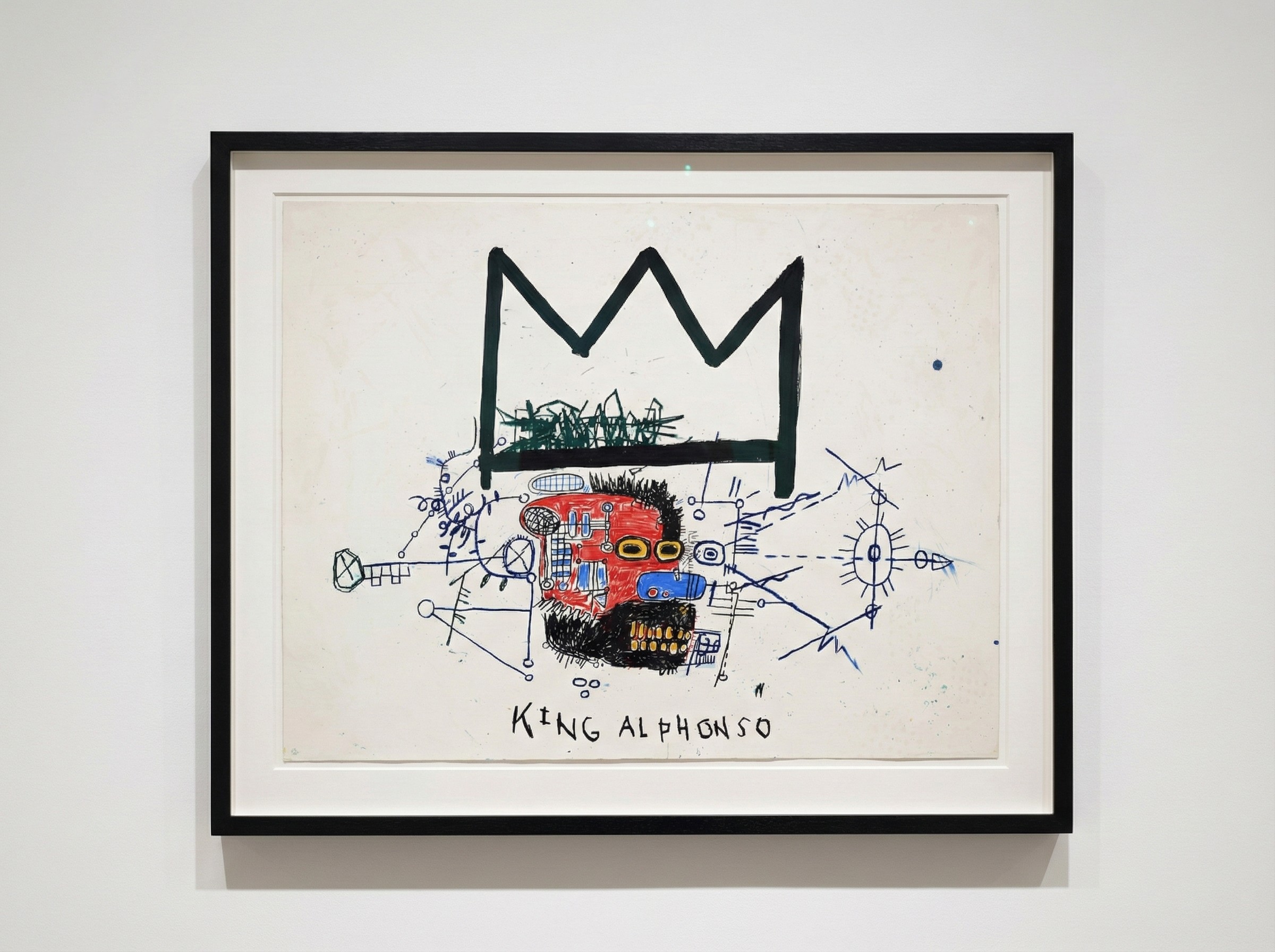
Explore Jean Michel Basquiat prints for sale at Guy Hepner: Anatomy, Daros Suite, Estate Prints, King Alphonso, Portfolio I.
Related Series