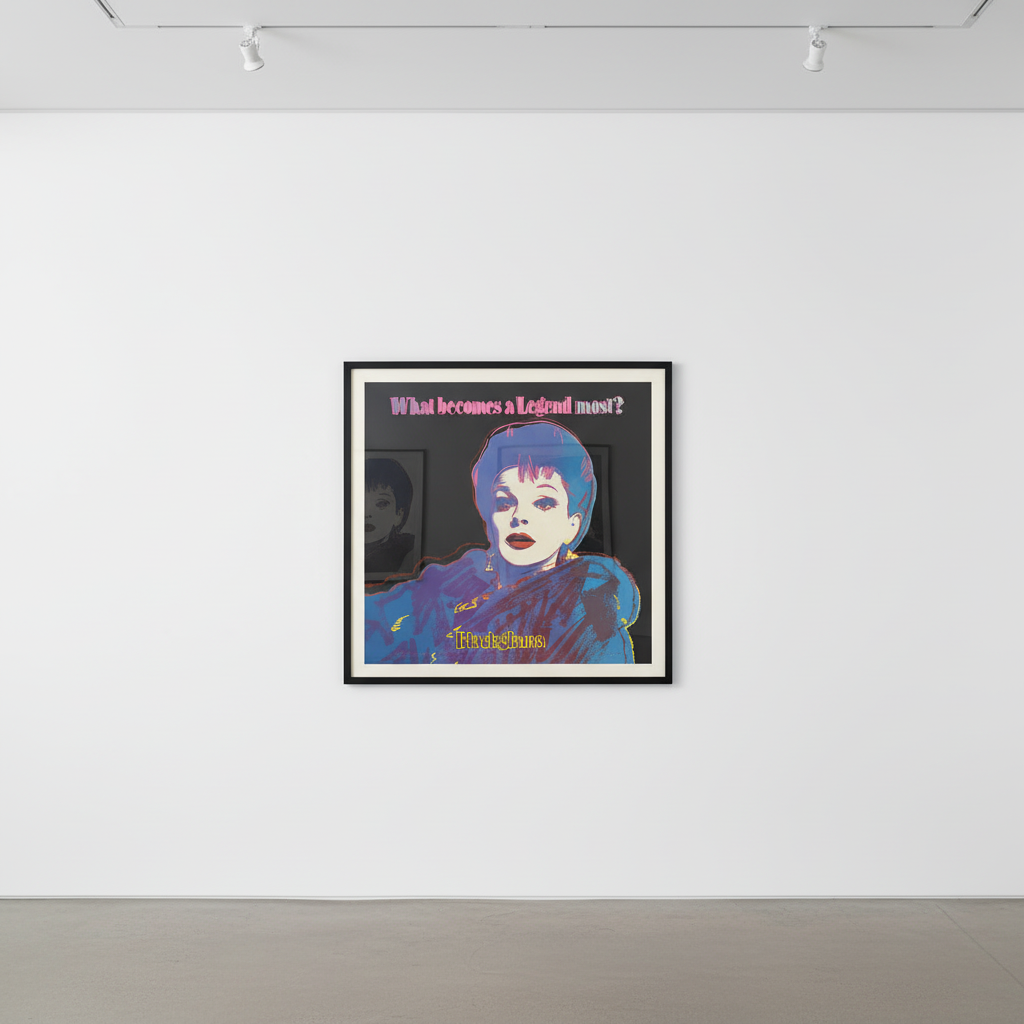
Camouflage

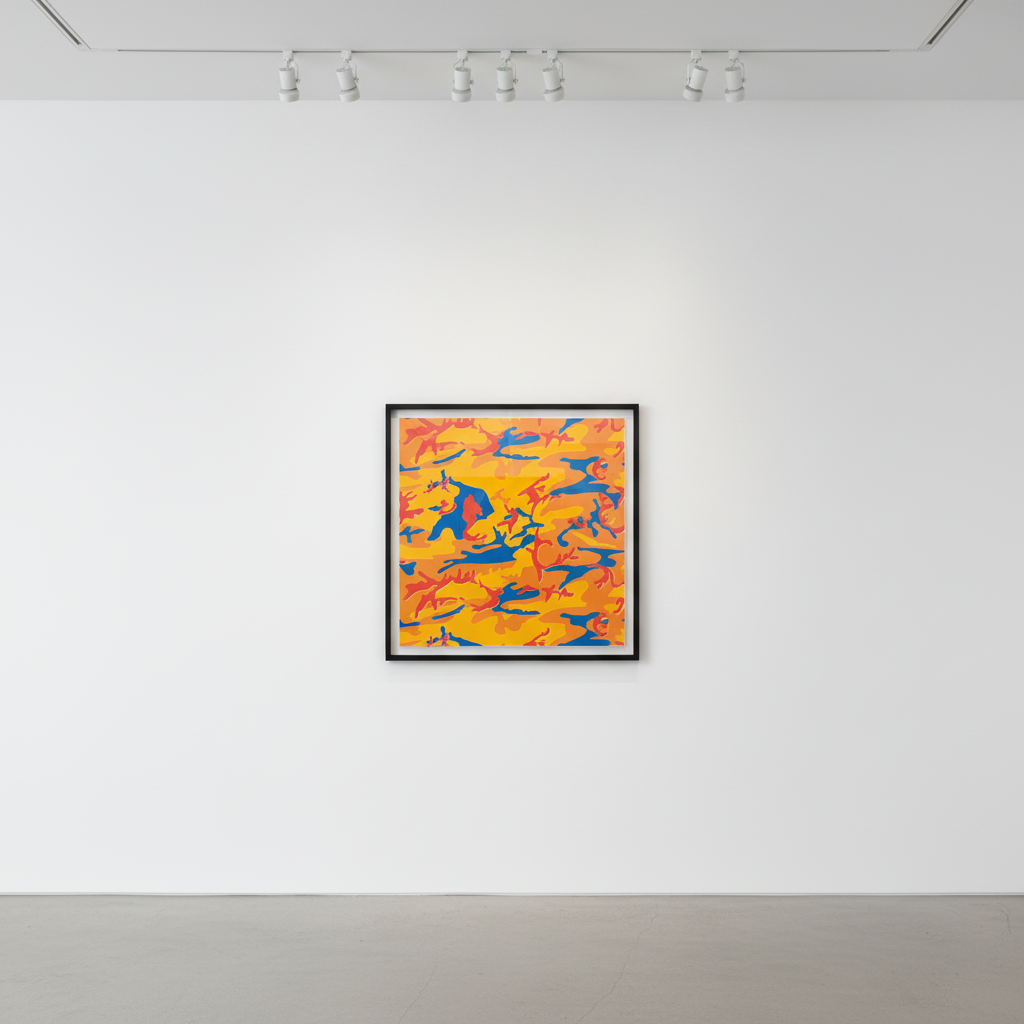
Andy Warhol's camouflage series represents one of the most conceptually sophisticated bodies of work from the final years of his extraordinary career. Created in 1986 - just months before his untimely death in February 1987 - these striking compositions demonstrate Warhol's enduring ability to transform familiar visual language into profound artistic statements. The Andy Warhol camouflage artworks stand as a testament to an artist who, even after decades of innovation, continued to challenge perceptions of what constituted legitimate subject matter for fine art.
The camouflage pattern had long existed as a utilitarian design, developed for military concealment and later adopted by fashion and counterculture movements. When Andy Warhol turned his attention to this ubiquitous motif in the mid-1980s, he was operating at the height of his technical mastery while simultaneously grappling with themes of visibility, identity and the relationship between surface and substance. The resulting Andy Warhol camouflage prints emerged as a remarkable synthesis of Pop Art sensibility and abstract expressionist scale.
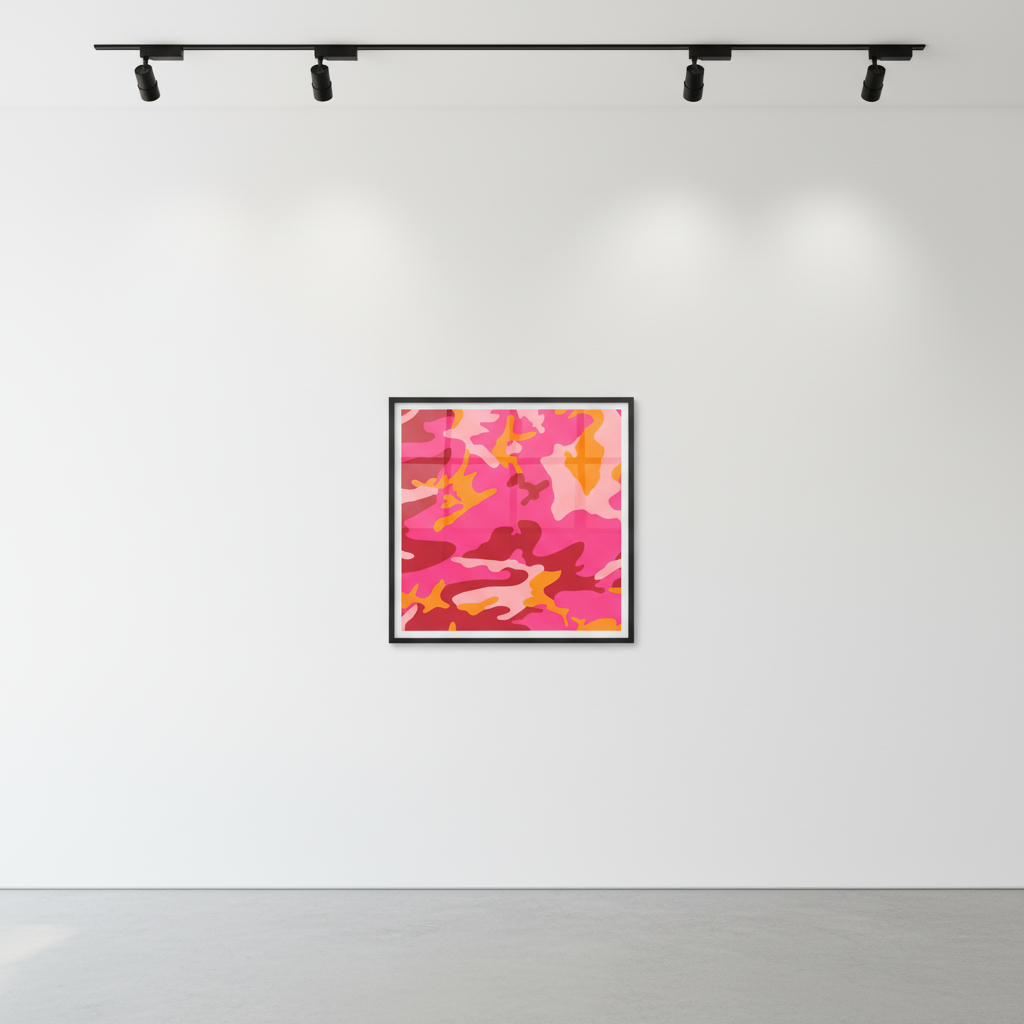
Warhol's approach to camouflage was characteristically paradoxical. By isolating and enlarging the pattern - stripping it from its functional military context - he simultaneously revealed and concealed its essential nature. The organic, amorphous shapes that were designed to help soldiers disappear into landscapes became, through Warhol's intervention, impossibly vivid declarations of presence. His camouflage works do not hide; they announce themselves with chromatic intensity that demands attention.
Camouflage Trial Proof TP 4/84 — Andy Warhol. Available at Guy Hepner, New York.
The series comprised both paintings and an important portfolio of screenprints, with Warhol exploring numerous colour variations that ranged from traditional woodland greens and browns to electric combinations of pink, orange and purple. This chromatic experimentation aligned perfectly with Warhol's career-long investigation into how colour transforms meaning and perception. Each variation offers a distinct emotional register while maintaining the immediately recognisable camouflage structure.
The Andy Warhol camouflage artworks operate on multiple interpretive levels that reward sustained contemplation. On one plane, they function as pure abstraction - allover compositions that recall the drip paintings of Jackson Pollock or the colour field works of Helen Frankenthaler. Warhol was acutely aware of this art historical dialogue, and the camouflage series can be understood as his response to Abstract Expressionism filtered through his distinctly Pop sensibility.
Yet unlike purely abstract works, Warhol's camouflage pieces carry an unavoidable referential weight. The pattern evokes military conflict, masculine identity, hunting culture and - through its adoption by various subcultures - rebellion and nonconformity. Warhol, who had survived an assassination attempt in 1968 and remained preoccupied with themes of death throughout his career, surely understood the darker resonances embedded within these deceptively decorative surfaces.
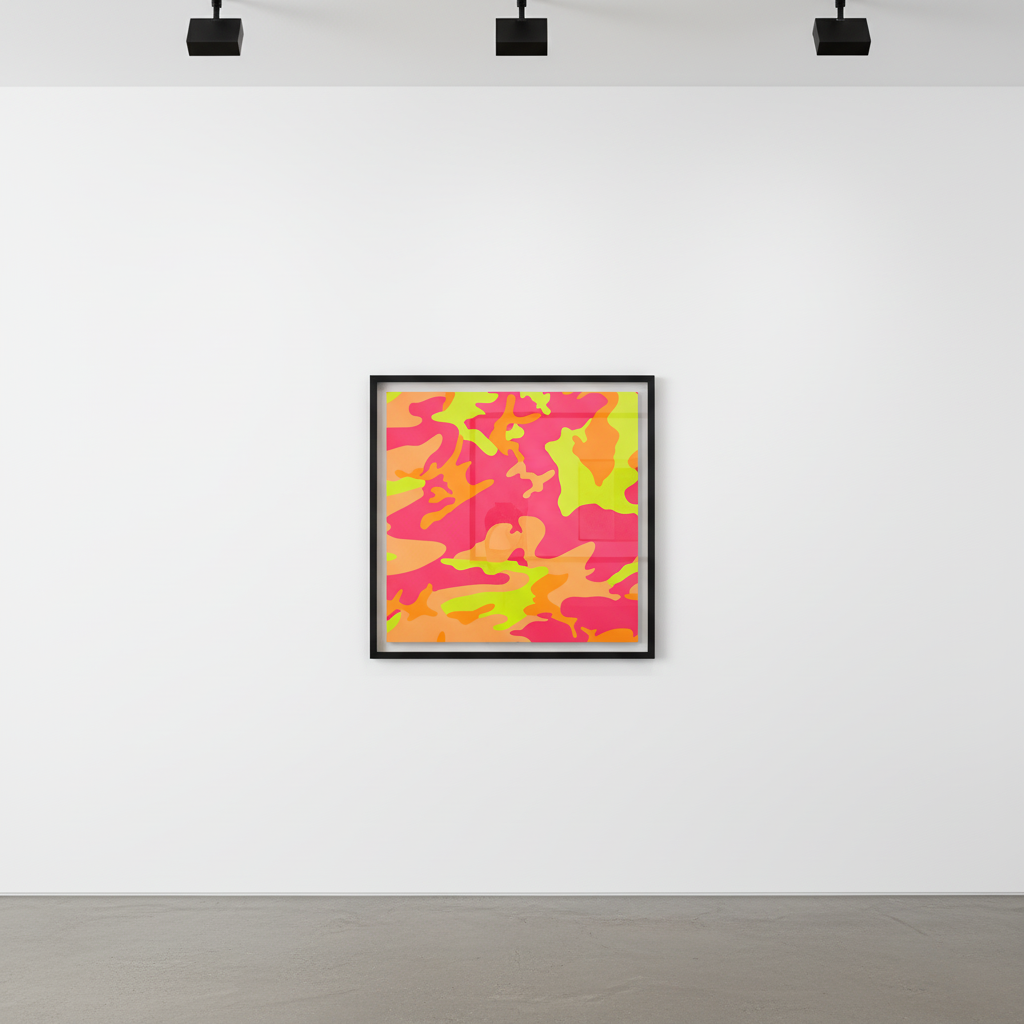
Camouflage F.S. II 409 — Andy Warhol. Available at Guy Hepner, New York.
The timing of the camouflage series also holds significance. Created during the Reagan era, with its renewed military spending and Cold War tensions, these works can be read as subtle commentary on American militarism and the aestheticisation of warfare. Warhol's genius lay in creating art that could function simultaneously as beautiful decoration and pointed critique - allowing viewers to find their own meaning within the interlocking shapes.
Contemporary scholarship increasingly positions the camouflage works as essential late-period pieces that demonstrate Warhol's continued relevance and innovation. According to research published in conjunction with major retrospectives, these final series reveal an artist still pushing boundaries and finding new territories for exploration even after twenty-five years of sustained creative output.
The auction market has consistently validated the importance of Andy Warhol camouflage artworks within his broader oeuvre. Major sales at Christie's and Sotheby's have demonstrated robust collector demand for both the large-scale paintings and the screenprint portfolio. The Art Basel and UBS Global Art Market Report consistently positions Warhol among the most actively traded artists at auction, with his late works commanding particular attention from sophisticated collectors.
The screenprint portfolio, designated F.S. II 406 through 413, offers collectors an accessible entry point into this significant body of work. Each print in the series explores a different colour palette, allowing collectors to select variations that resonate with their aesthetic preferences while acquiring museum-quality examples of Warhol's final creative statements. Trial proofs from the series are especially prized, as they document Warhol's working process and often feature unique colour combinations not present in the final published editions.
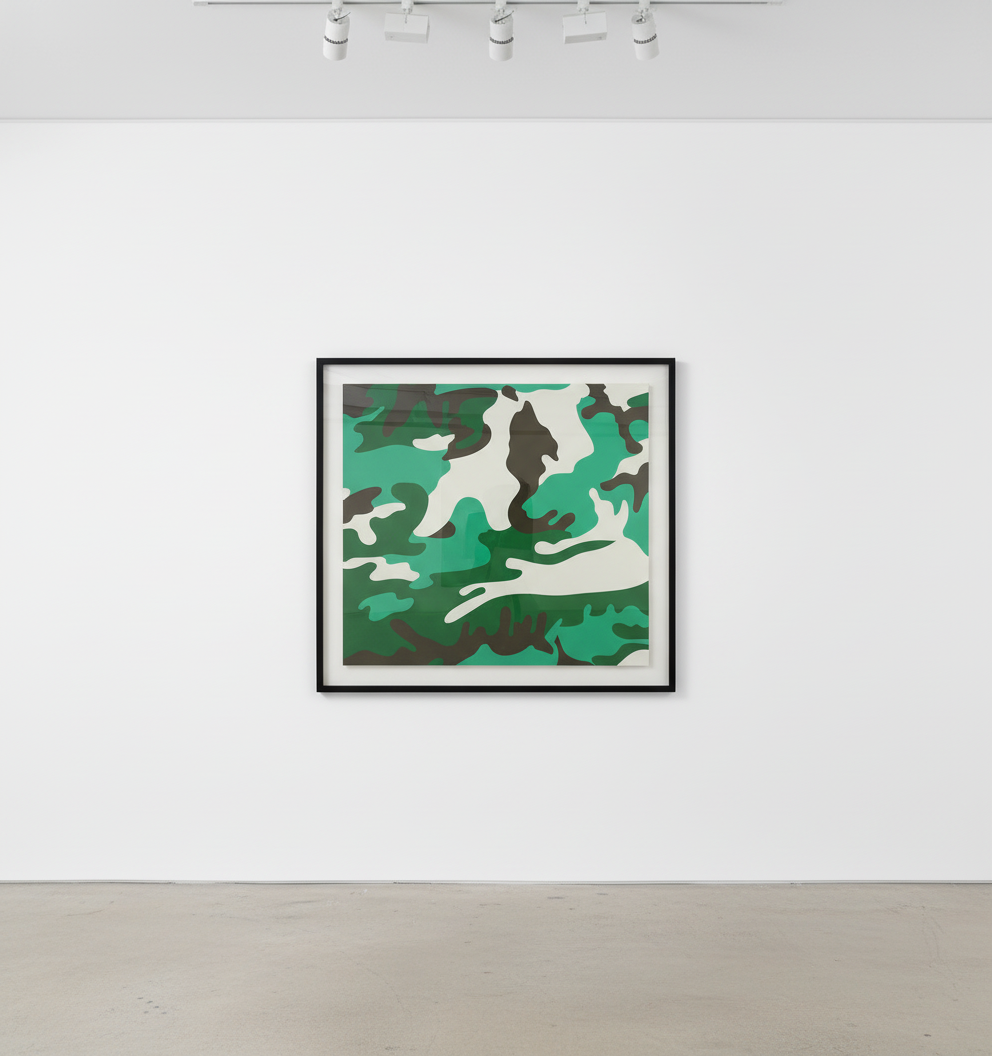
Camouflage F.S. II 406 — Andy Warhol. Available at Guy Hepner, New York.
Institutional recognition has further cemented the camouflage series' importance. Major museums worldwide hold examples within their permanent collections, and the works regularly appear in retrospective exhibitions exploring Warhol's legacy. This institutional validation, combined with strong auction results, has established Andy Warhol camouflage pieces as blue-chip acquisitions that satisfy both aesthetic and investment considerations.
Collectors are drawn to these works for their remarkable visual impact, their conceptual sophistication and their place within art history as the culmination of one of the twentieth century's most influential careers. The camouflage series represents Warhol at his most assured - an artist who could take any subject and transform it into something undeniably his own.
Guy Hepner is proud to offer exceptional examples from Andy Warhol's celebrated camouflage series, including rare trial proofs and published editions from the F.S. II portfolio. Our specialists possess deep expertise in Warhol's printed works and are committed to guiding collectors through the acquisition process with discretion and scholarly rigour. We invite collectors and institutions seeking Andy Warhol camouflage artworks to contact Guy Hepner to discuss available inventory, authentication and provenance documentation. Our gallery maintains relationships with leading Warhol collections worldwide and can assist in sourcing specific works to meet collector requirements.
--- **Browse Andy Warhol prints** at Guy Hepner: [Andy Warhol art for sale](/andy-warhol) | [Sell your Warhol](/sell/andy-warhol)Explore Andy Warhol prints for sale at Guy Hepner: Camouflage, The Wonderful World of Fleming Joffe, 25 Cats Named Sam, A Gold Book, A La Recherche Du Shoe Perdu.
Related Series