Electric Chair

Andy Warhol's Electric Chair series stands as one of the most compelling and thought-provoking bodies of work to emerge from the Pop Art movement. Initiated in 1964, this series represents a decisive departure from the consumer-focused imagery that had defined Warhol's earlier practice—the Campbell's Soup Cans, the Coca-Cola bottles, the celebrity portraits. With Electric Chair, Warhol turned his unflinching gaze toward mortality, institutional violence, and the numbing effect of mass media on collective consciousness. The series would prove instrumental in establishing Warhol not merely as a chronicler of American consumerism but as a profound commentator on the darker undercurrents of contemporary society.
The source image for the Electric Chair series was a press photograph depicting the death chamber at Sing Sing Correctional Facility in New York, where Julius and Ethel Rosenberg were executed in 1953 for espionage. By appropriating this stark documentary image, Warhol collapsed the distance between fine art and photojournalism, between the gallery wall and the newspaper page. This conceptual strategy aligned with his broader investigation into how images circulate, lose meaning through repetition, and ultimately become absorbed into the visual noise of everyday life.
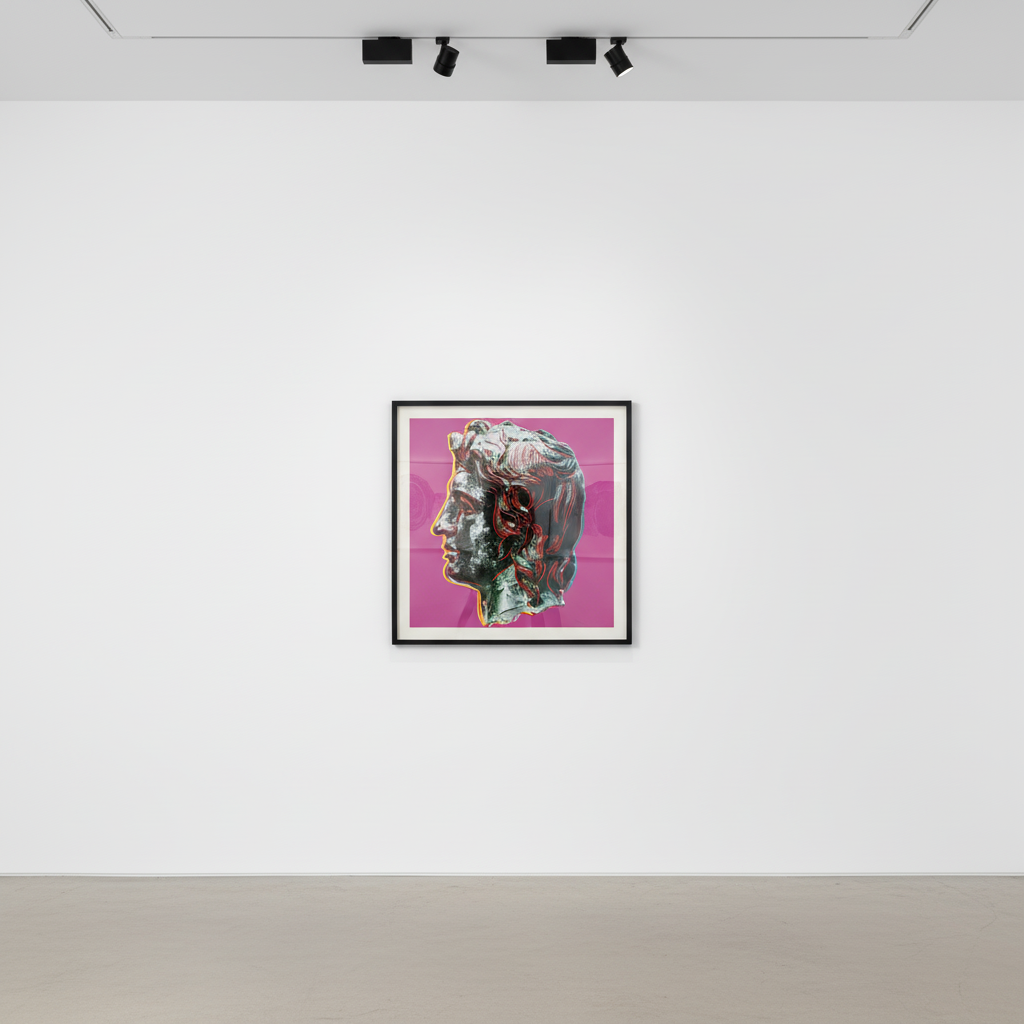
Shadows V (Red and Blue) ` — Andy Warhol. Available at Guy Hepner, New York.
The technical execution of the Electric Chair works demonstrates Warhol's sophisticated understanding of the silkscreen process and his willingness to exploit its inherent characteristics for expressive effect. Each canvas and paper edition was hand-printed, a labor-intensive method that Warhol embraced despite—or perhaps because of—its capacity for variation and imperfection. As noted by gallerist Frayda Feldman and art publisher Jörg Schellmann, Warhol's innovative printing process deliberately retained the graininess and immediacy of mass media images, infusing each work with subtle imperfections that imparted a distinct handmade quality.
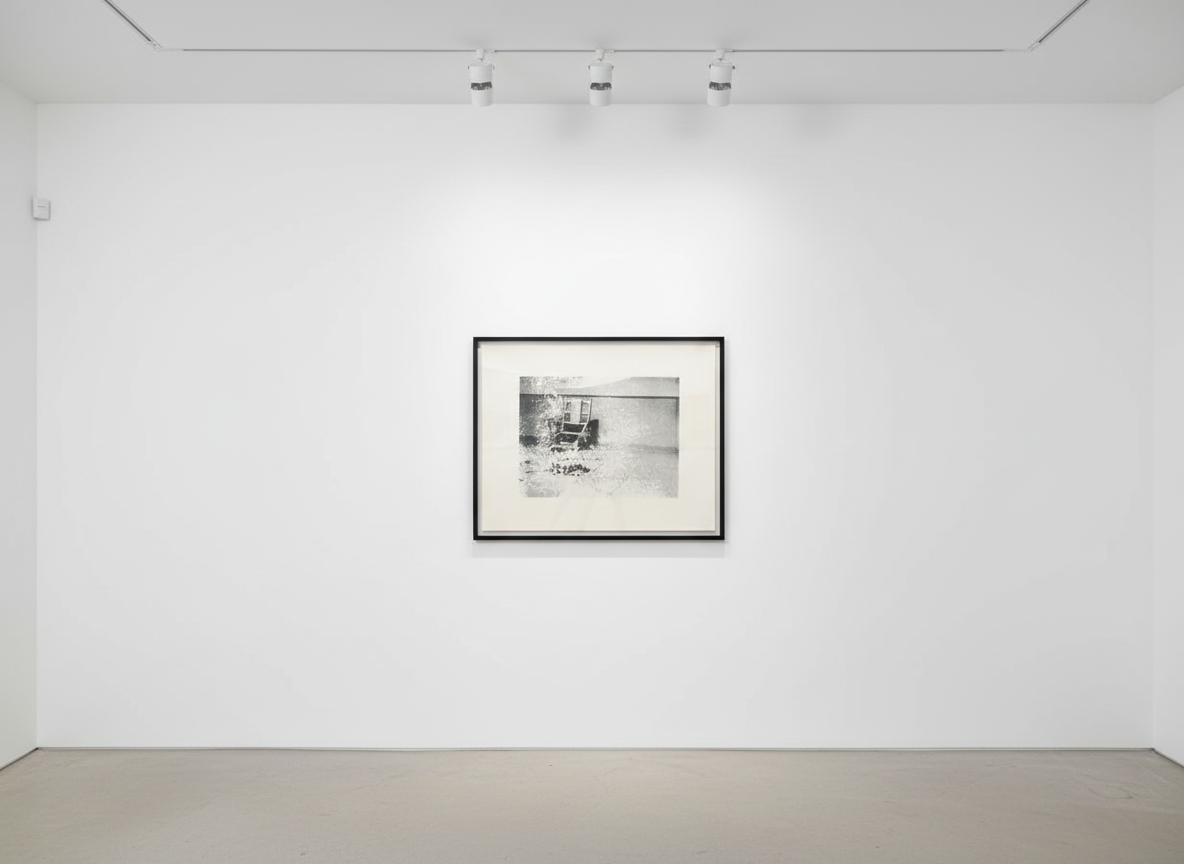
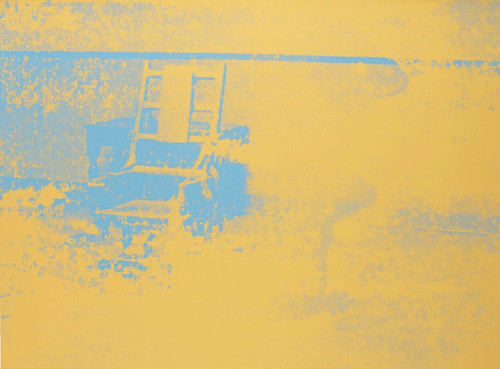
The composition centers on an unoccupied electric chair positioned within a stark, empty execution chamber. The chair's distinctive features—a high-backed wooden frame and leather restraining straps at its foot and sides—are rendered with haunting precision. A coiled cable at the chair's base serves as a visceral reminder of the apparatus's lethal function. Behind the chair, a modest wooden table rests against the rear wall, while a barely discernible sign reading "Silence" occupies the upper right corner of the composition. This single word transforms the image into something approaching a meditation on death, accountability, and the complicity of silence in the face of state-sanctioned violence.
Warhol produced the Electric Chair series across multiple color variations, each chromatic shift fundamentally altering the psychological tenor of the image. Versions rendered in electric pink or lavender create an unsettling dissonance between the seductive quality of the color and the grim subject matter. Monochromatic silver editions, achieved through silver acrylic paint, lend the works a photographic quality that emphasizes their documentary origins while simultaneously aestheticizing the death chamber into an object of visual contemplation.
Goethe F.S. II 272 — Andy Warhol. Available at Guy Hepner, New York.
The Electric Chair series occupies a critical position within Warhol's Death and Disaster series, which also encompasses his Car Crash paintings, Race Riots, and Suicide works. Collectively, these pieces represent Warhol's most sustained engagement with mortality and violence—themes that resonate with increasing urgency in contemporary discourse. At the time of their creation, the United States was engaged in fierce debate over capital punishment, lending the Electric Chair works an immediate political dimension that has scarcely diminished in the intervening decades.
According to the Art Basel and UBS Global Art Market Report, works from Warhol's Death and Disaster series consistently rank among the most sought-after pieces in the artist's extensive catalogue. Major auction houses have documented extraordinary results for Electric Chair works. Christie's and Sotheby's have recorded significant hammer prices for prime examples from the series, with collectors recognizing these pieces as essential representations of Warhol's conceptual sophistication and technical virtuosity. The scarcity of high-quality examples, combined with their art-historical importance, ensures sustained institutional and private collector interest.
What distinguishes the Electric Chair series within Warhol's oeuvre is its unflinching confrontation with uncomfortable truths about American society. While his Marilyn portraits seduce through glamour and his commodity works engage through familiar branding, the Electric Chair works demand that viewers reckon with questions of justice, mortality, and collective moral responsibility. This conceptual depth, combined with their striking visual presence, positions them as cornerstone acquisitions for serious collectors of postwar and contemporary art.
Sunset F.S. II 85 - 88 — Andy Warhol. Available at Guy Hepner, New York.
For discerning collectors, works from Andy Warhol's Electric Chair series represent the intersection of aesthetic excellence, historical significance, and enduring cultural relevance. These pieces anchor collections with their gravitas while demonstrating the full range of Warhol's artistic concerns—far beyond the accessible Pop imagery for which he is popularly known. The series speaks to audiences across generations, its meditation on violence, media, and desensitization proving prescient in an era of perpetual image saturation.
Institutional validation further reinforces the series' importance. Major museums worldwide, including the Museum of Modern Art and the Whitney Museum of American Art, hold examples of the Electric Chair works in their permanent collections, ensuring continued scholarly attention and public engagement with this body of work.
Guy Hepner maintains a distinguished position in the secondary market for museum-quality Andy Warhol works, including exceptional examples from sought-after series. Collectors seeking to acquire works by Andy Warhol, including Electric Chair pieces and related prints, are invited to contact Guy Hepner directly. Our specialists offer confidential consultation on available inventory, provenance research, and strategic collection building, ensuring that each acquisition meets the highest standards of quality and authenticity.
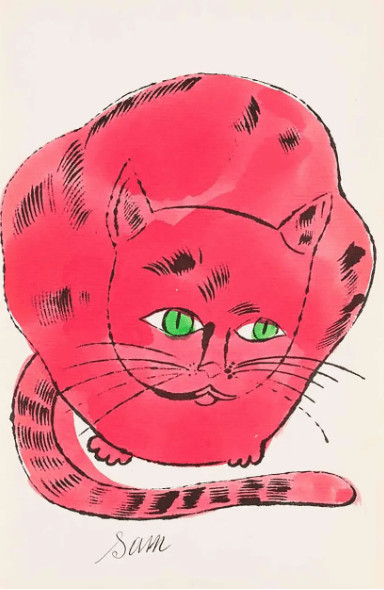
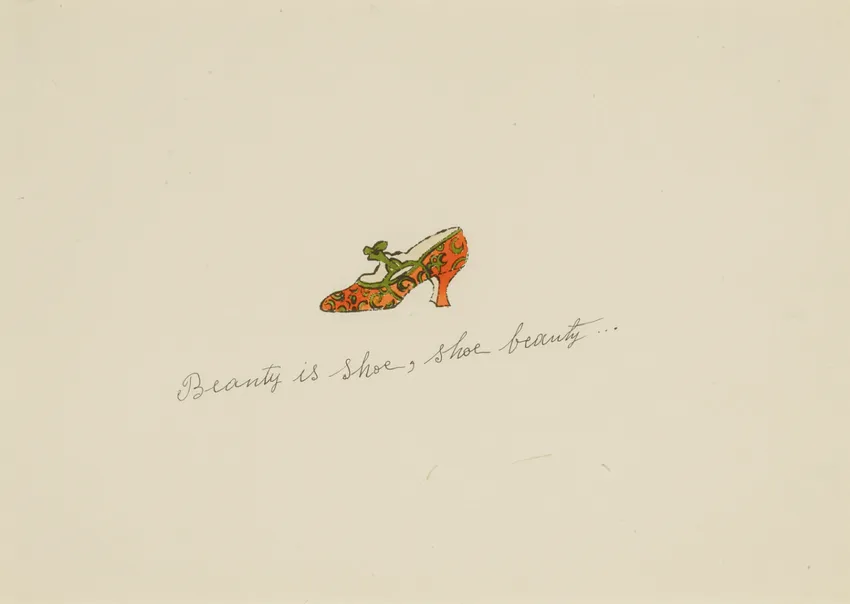
--- **Browse Andy Warhol prints** at Guy Hepner: [Andy Warhol art for sale](/andy-warhol) | [Sell your Warhol](/sell/andy-warhol)Explore Andy Warhol prints for sale at Guy Hepner: Electric Chair, 25 Cats Named Sam, A Gold Book, A La Recherche Du Shoe Perdu, Alexander the Great.
Related Series