Flash

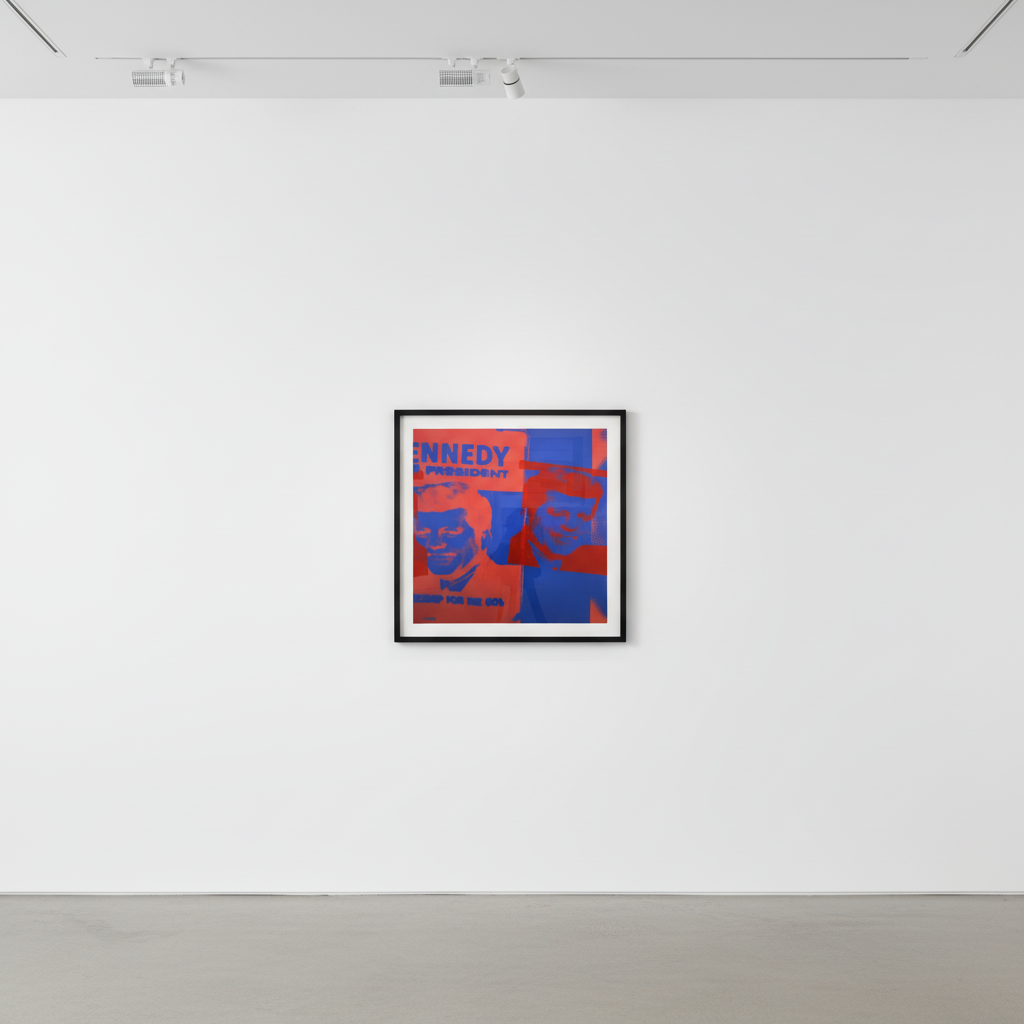
Andy Warhol remains one of the most influential artists of the twentieth century, a figure whose work fundamentally transformed our understanding of art, celebrity and mass culture. Among his most profound and politically charged bodies of work, the Andy Warhol Flash portfolio stands as a masterful meditation on one of the darkest moments in modern American history. Created in 1968, this series of eleven screenprints examines the assassination of President John F. Kennedy through the lens of media imagery, offering collectors and scholars alike a deeply layered exploration of how tragedy becomes spectacle in the age of mass communication.
The title of the Andy Warhol Flash portfolio derives from the term "news flash" - those urgent bulletins that interrupt regular broadcasting to deliver momentous information. On November 22, 1963, Americans across the nation experienced such interruptions as word spread of the shooting in Dallas. Warhol, ever attuned to the mechanisms of media and its power over collective consciousness, recognized that this event represented far more than a political assassination. It marked a fundamental shift in how tragedy would be consumed, processed and remembered in the modern era.
The portfolio comprises eleven screenprints based on campaign posters, mass-media photographs and advertisements from the period surrounding Kennedy's presidency and death. The cover of the series deliberately mirrors the front page of the New York World Telegram from the day of the assassination, immediately establishing the work's engagement with journalistic documentation and historical record. Each print within the portfolio is accompanied by Teletype reports carefully selected by Phillip Greer, creating a deliberate juxtaposition between visual imagery and textual narrative that emphasizes the constructed nature of our collective understanding of historical events.
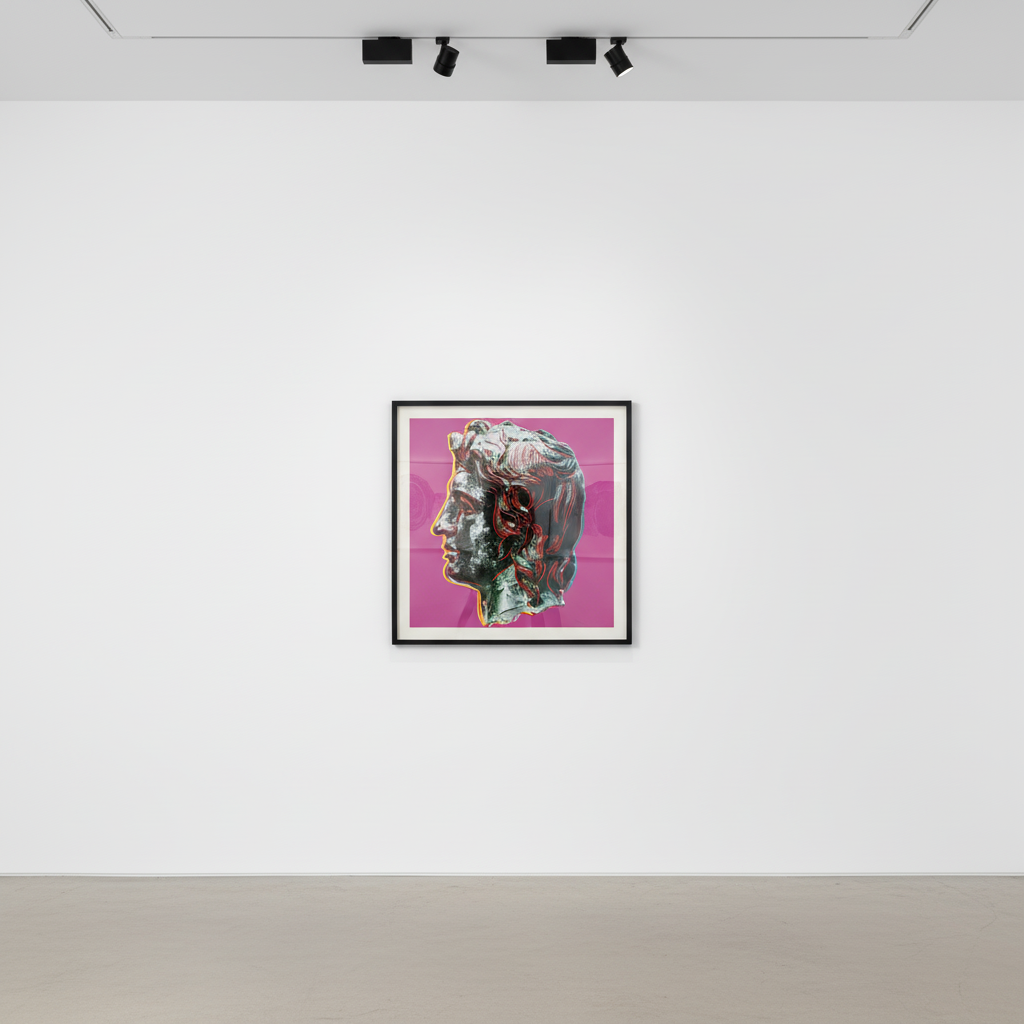
Shadows V (Red and Blue) ` — Andy Warhol. Available at Guy Hepner, New York.
Warhol's choice to work with appropriated media imagery rather than original photographs underscores his central thesis: that our memories of significant events are not truly our own but are instead shaped and mediated by the images we consume. The Andy Warhol Flash series asks viewers to consider how photographs selected by editors, cropped by designers and reproduced endlessly across publications become the definitive visual record of history itself.
The Flash portfolio did not emerge in isolation but rather represents the culmination of Warhol's sustained artistic engagement with the Kennedy family. His deep-seated fascination with the Kennedys had manifested years earlier in his iconic Jackie series, created in the immediate aftermath of the assassination. Those works depicted Jacqueline Kennedy in moments before and after her husband's death, drawn from widely circulated press photographs that had become seared into the American consciousness.
Warhol's interest in the Kennedy family extended beyond JFK and Jackie to include Edward Kennedy, whom he later incorporated into his artistic explorations of American political dynasties. This ongoing engagement reveals Warhol's understanding that the Kennedys represented something unprecedented in American public life - a family whose celebrity status transcended traditional political boundaries and entered the realm of cultural mythology.
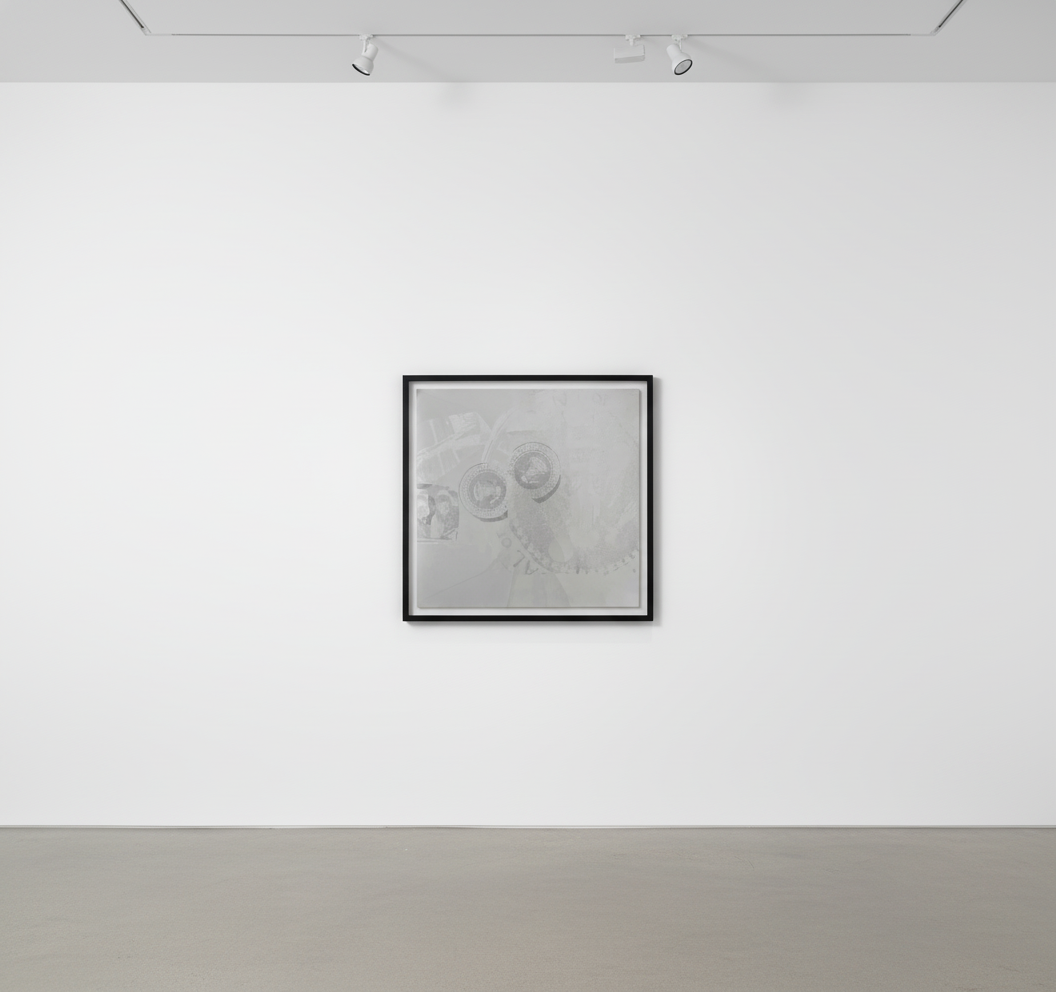
Goethe F.S. II 272 — Andy Warhol. Available at Guy Hepner, New York.
For Warhol, who was famously captivated by fame itself, the Kennedy phenomenon provided an inexhaustible wellspring of creative inspiration. The family embodied the intersection of power, glamour, tragedy and media saturation that defined Warhol's artistic concerns throughout his career. The Andy Warhol Flash portfolio can thus be understood as both a specific commentary on the assassination and a broader meditation on how celebrity figures become vessels for collective emotion and national narrative.
By blending mass-media imagery with artistic expression in the Flash series, Warhol challenges conventional boundaries between documentation and interpretation, between objective record and subjective experience. The screenprint medium itself carries significance - a commercial printing technique elevated to fine art status, perfectly suited to exploring how mechanical reproduction shapes meaning and memory.
The inclusion of Teletype reports alongside the visual imagery creates a powerful commentary on how textual and visual narratives work in concert to construct our understanding of events. News coverage does not simply record history but actively shapes it, selecting which images become iconic, which details receive emphasis and which aspects of complex events become simplified into digestible narratives. Warhol understood this dynamic with remarkable prescience, creating work that anticipated contemporary discussions of media literacy and information manipulation by decades.
The Art Basel and UBS Global Art Market Report consistently identifies Warhol as among the most sought-after artists at auction, with his politically engaged works commanding particular attention from sophisticated collectors. Both Christie's and Sotheby's have noted sustained institutional and private interest in the Flash portfolio, recognizing its unique position within Warhol's oeuvre as work that combines his signature aesthetic approach with substantive historical and political content.
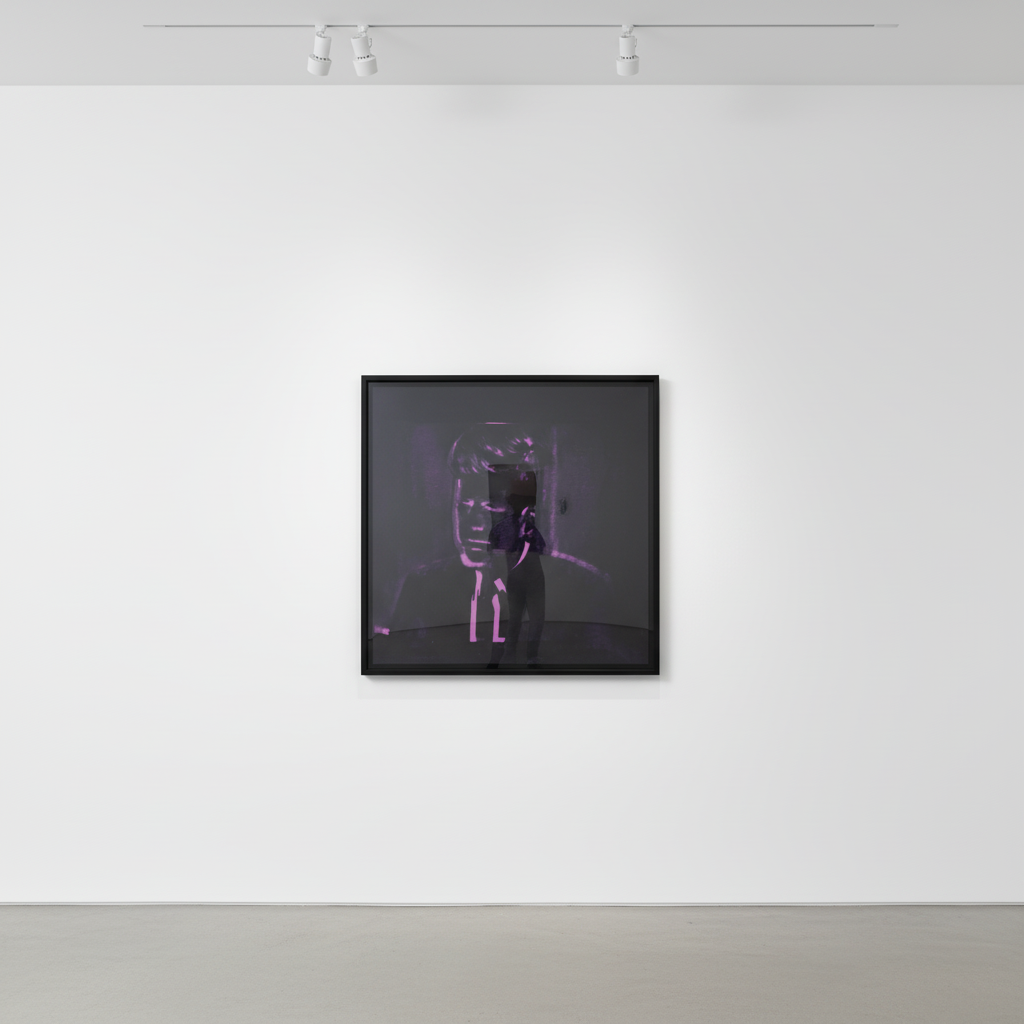
Sunset F.S. II 85 - 88 — Andy Warhol. Available at Guy Hepner, New York.
The Andy Warhol Flash portfolio occupies a distinctive position within the artist's extensive body of work. While Warhol is perhaps best known for his celebrity portraits and consumer product imagery, the Flash series demonstrates the full range of his intellectual engagement and artistic ambition. Collectors who acquire works from this portfolio obtain not merely decorative objects but historically significant documents that continue to resonate with contemporary concerns about media, truth and the construction of public memory.
Auction results at Christie's and Sotheby's demonstrate consistent appreciation for politically engaged Warhol works, with the Flash portfolio benefiting from both its historical significance and its relative scarcity compared to more commercially oriented series. The portfolio's conceptual depth appeals to collectors seeking work that rewards sustained contemplation and scholarly engagement while maintaining the visual impact and technical excellence that define Warhol's finest achievements.
Guy Hepner is proud to offer collectors the opportunity to acquire works from the Andy Warhol Flash portfolio, representing some of the most intellectually substantive and historically significant pieces within the artist's celebrated career. Our gallery maintains exceptional examples from this important series, each accompanied by full provenance documentation and authentication. We invite serious collectors to contact our team for private viewings, detailed condition reports and expert guidance on incorporating these masterworks into distinguished collections. To inquire about availability and pricing for Andy Warhol Flash prints, please reach out to Guy Hepner directly to discuss acquisition opportunities.
--- **Browse Andy Warhol prints** at Guy Hepner: [Andy Warhol art for sale](/andy-warhol) | [Sell your Warhol](/sell/andy-warhol)Explore Andy Warhol prints for sale at Guy Hepner: Flash, 25 Cats Named Sam, A Gold Book, A La Recherche Du Shoe Perdu, Alexander the Great.
Related Series