Bagdad

Gerhard Richter stands as one of the most significant and influential artists of the post-war era, commanding a position of unparalleled respect within the contemporary art world. Born in Dresden in 1932, Richter's artistic journey spans over six decades, during which he has consistently challenged, redefined, and expanded the boundaries of painting. His work bridges the divide between figuration and abstraction, between photorealism and pure painterly expression, establishing him as a truly singular voice in modern art history. Richter's refusal to be confined by any single style or movement has resulted in a body of work that is both remarkably diverse and philosophically cohesive, united by his persistent questioning of how we perceive and represent reality.
The artist's early experiences in East Germany, followed by his dramatic escape to the West in 1961, profoundly shaped his artistic sensibilities. Exposure to both Socialist Realism and the burgeoning movements of Pop Art, Fluxus, and Conceptualism provided Richter with a unique perspective that would inform his lifelong exploration of imagery, truth, and the limitations of visual representation. His photo-paintings, color charts, grey monochromes, and abstract works each represent distinct yet interconnected investigations into the nature of seeing and the possibilities of paint as a medium.
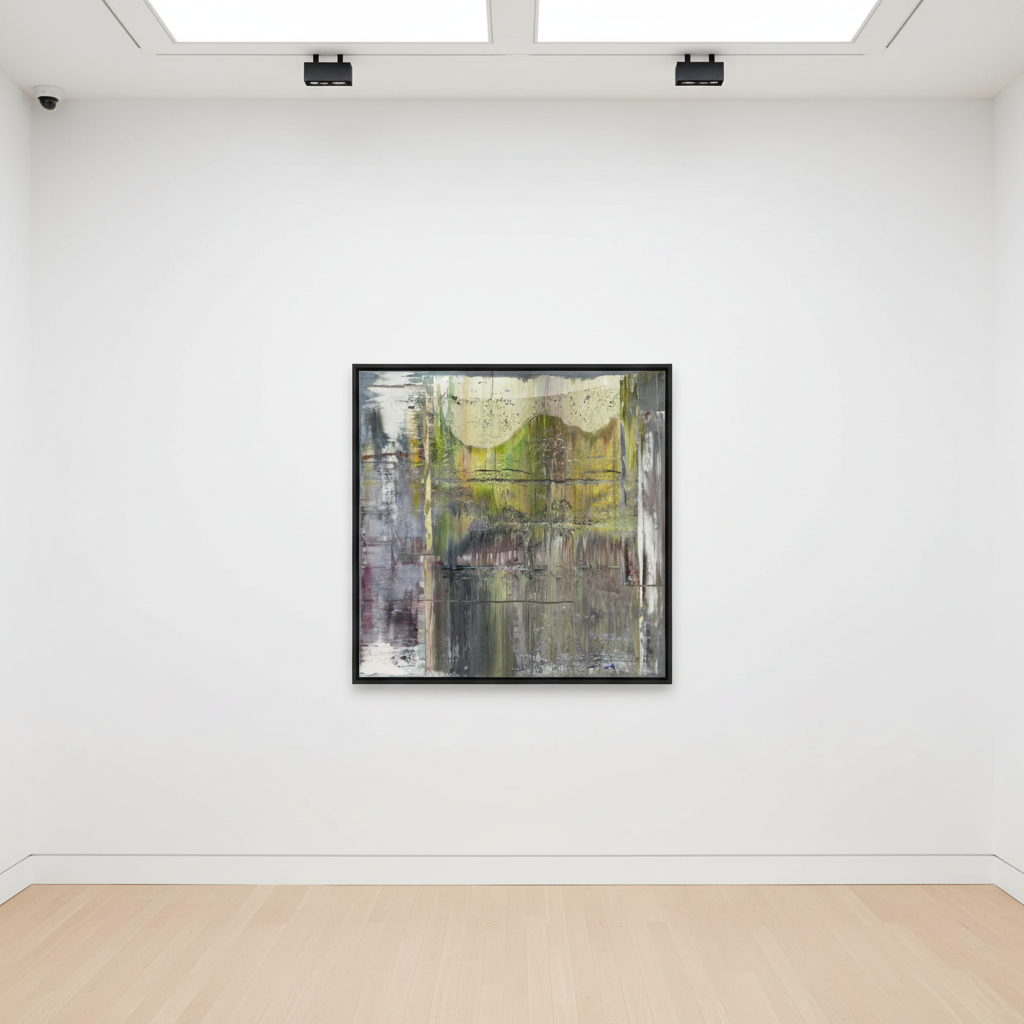
Cage: P19-5 — Gerhard Richter. Available at Guy Hepner, New York.
Gerhard Richter's Cage series represents one of the most ambitious and celebrated achievements of his abstract period. Created between 2006 and 2007, this extraordinary collection of paintings pays homage to the legendary avant-garde composer John Cage, whose revolutionary approach to music fundamentally altered twentieth-century artistic practice. Cage's embrace of chance operations, silence, and the dissolution of boundaries between art and life resonated deeply with Richter's own artistic philosophy, creating a profound conceptual dialogue across disciplines.
The series emerged from Richter's long-standing admiration for Cage's innovative ideas, particularly his belief in the creative potential of randomness and the dynamic interplay between control and chaos. Just as Cage invited ambient sounds and unpredictable elements into his compositions, Richter allows the physical properties of paint - its viscosity, resistance, and behavior under pressure - to participate actively in the creative process. This collaborative relationship between artist intention and material accident produces works of extraordinary visual complexity and emotional depth.
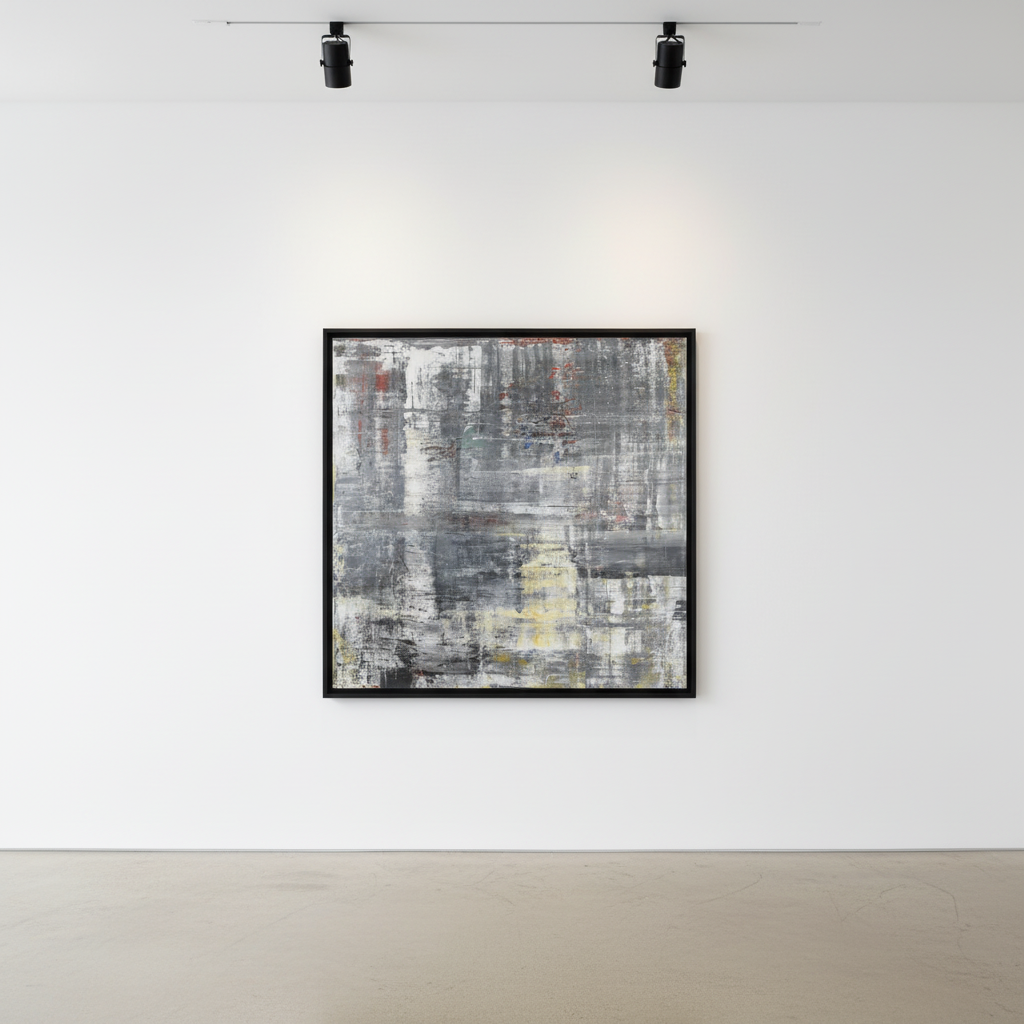
The Cage paintings are characterized by their intricate layers, rich textures, and enigmatic compositions that reward sustained contemplation. Richter employs his signature technique of blurring and scraping, using a large squeegee to manipulate the paint across the canvas surface. This process simultaneously obscures and reveals underlying layers, creating a visual archaeology that invites viewers to engage in a process of discovery. Each passage of the squeegee removes certain elements while depositing others, building up a palimpsest of color and gesture that seems to contain infinite depth.
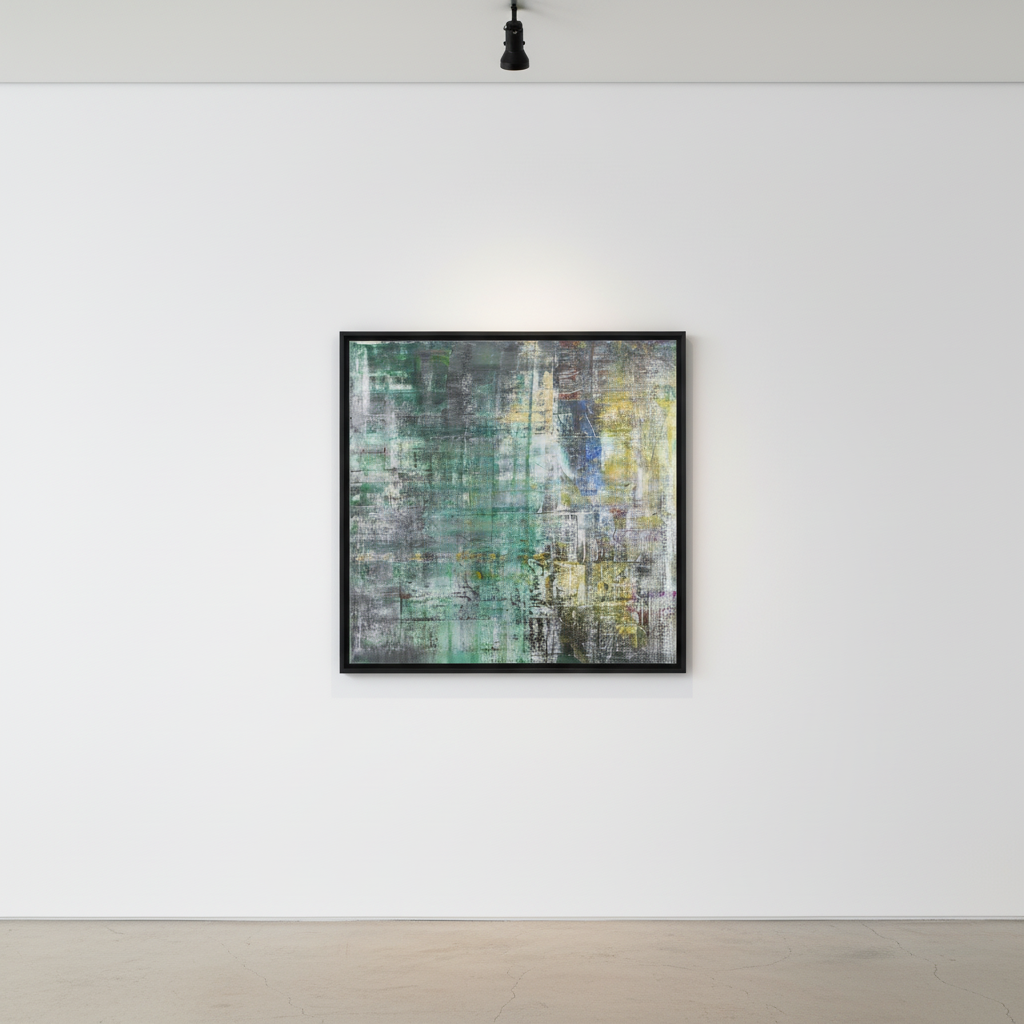
Cage: P19-6 — Gerhard Richter. Available at Guy Hepner, New York.
In these works, Gerhard Richter grapples with fundamental questions about the limitations of representation, contemplating the elusive nature of truth and perception that has occupied him throughout his career. The Cage paintings challenge traditional notions of pictorial space, hovering between surface and depth, between the purely optical and the intensely physical. Viewers find themselves unable to settle on a single reading, as the paintings seem to shift and reconfigure with each viewing.
Richter's technical process in the Cage series involves building up numerous layers of oil paint, each stratum applied and then partially removed or redistributed through the action of the squeegee. The resulting surfaces bear witness to their own making - traces of previous states remain visible beneath and within subsequent layers, creating a temporal dimension that suggests both accumulation and erasure. Colors merge, separate, and transform according to principles that balance deliberate choice with material contingency.
The scale of the Cage paintings amplifies their immersive qualities, enveloping viewers in fields of chromatic intensity that range from luminous passages of brilliant color to dense, shadowed regions of near-black opacity. This dynamic range evokes the full spectrum of human emotional experience, from moments of transcendent clarity to passages of uncertainty and doubt. The paintings do not illustrate music so much as they parallel its capacity to move and transform us through purely abstract means.
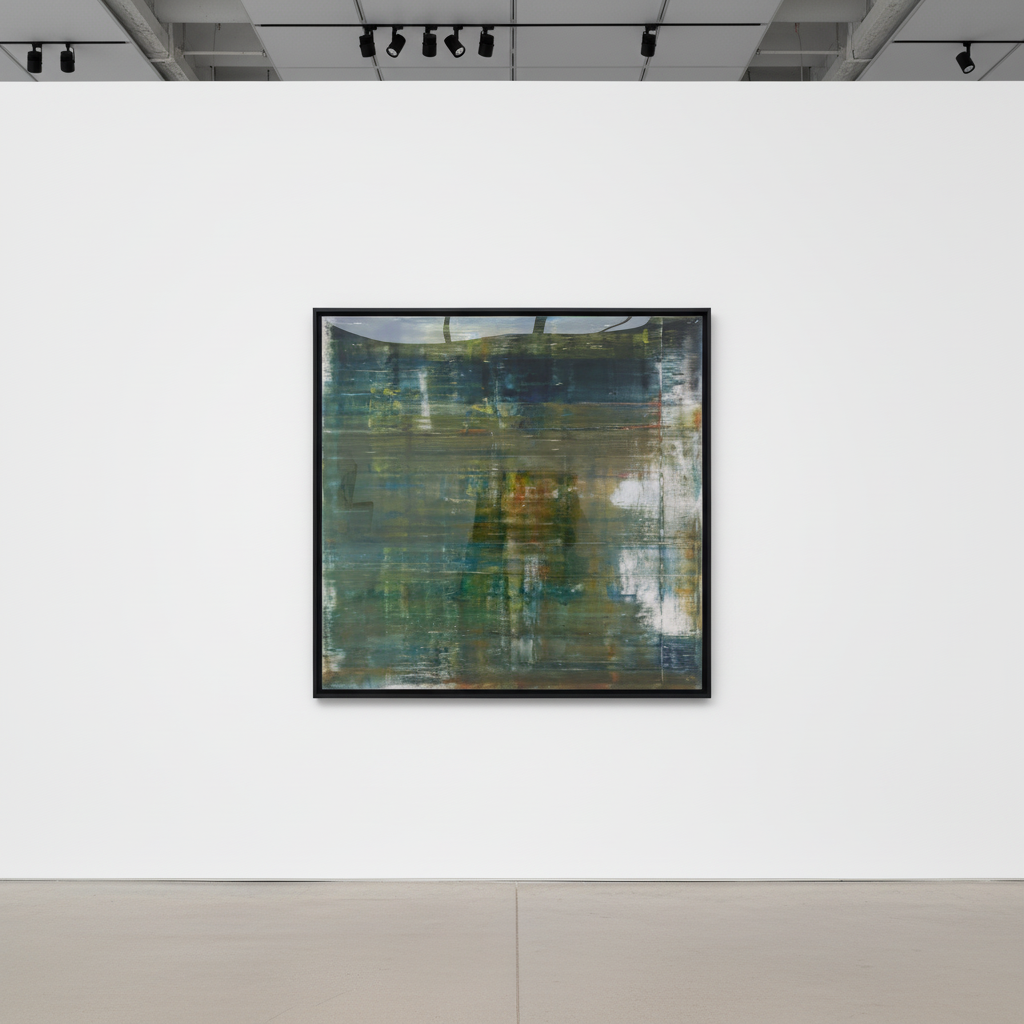
Cage: P19-1 — Gerhard Richter. Available at Guy Hepner, New York.
Gerhard Richter consistently ranks among the most sought-after artists at auction, with his works achieving record prices that reflect his canonical status within art history. According to data compiled by Art Basel and UBS in their annual art market reports, Richter remains one of the top-selling contemporary artists globally, demonstrating sustained demand across all collecting categories. His abstract works, including pieces from the Cage series, command particular attention from sophisticated collectors who recognize both their art historical importance and their enduring aesthetic power.
Christie's and Sotheby's regularly feature major Richter works in their marquee evening sales, where competitive bidding routinely drives prices well above estimates. The abstract paintings from the 2000s, including the Cage series, represent the culmination of Richter's decades-long investigation into the possibilities of abstraction, making them especially desirable to collectors seeking works of definitive significance. Museum acquisitions continue apace, with major institutions worldwide recognizing the imperative to include Richter's mature abstractions in their permanent collections.
Collectors are drawn to Gerhard Richter's work for its rare combination of intellectual rigor, technical virtuosity, and immediate visual impact. The Cage paintings offer an opportunity to acquire works that engage meaningfully with broader cultural and philosophical questions while providing profound aesthetic satisfaction. Their connection to John Cage's musical legacy adds an additional dimension of cultural resonance that appeals to collectors with interdisciplinary interests.
Guy Hepner is honored to offer exceptional works from Gerhard Richter's celebrated Cage series, including prints from the P19 edition that translate the power of the original paintings into a more accessible format without sacrificing their visual complexity or conceptual depth. Our gallery maintains strong relationships with collectors and estates worldwide, enabling us to source significant works by this master of contemporary painting. For private inquiries regarding available Gerhard Richter editions and original works, or to discuss building a collection that includes this essential artist, we invite collectors to contact our specialist team at Guy Hepner for confidential consultation and acquisition guidance.
Explore Gerhard Richter prints for sale at Guy Hepner: Bagdad, Cage, Flow, Other Editions.
Related Series