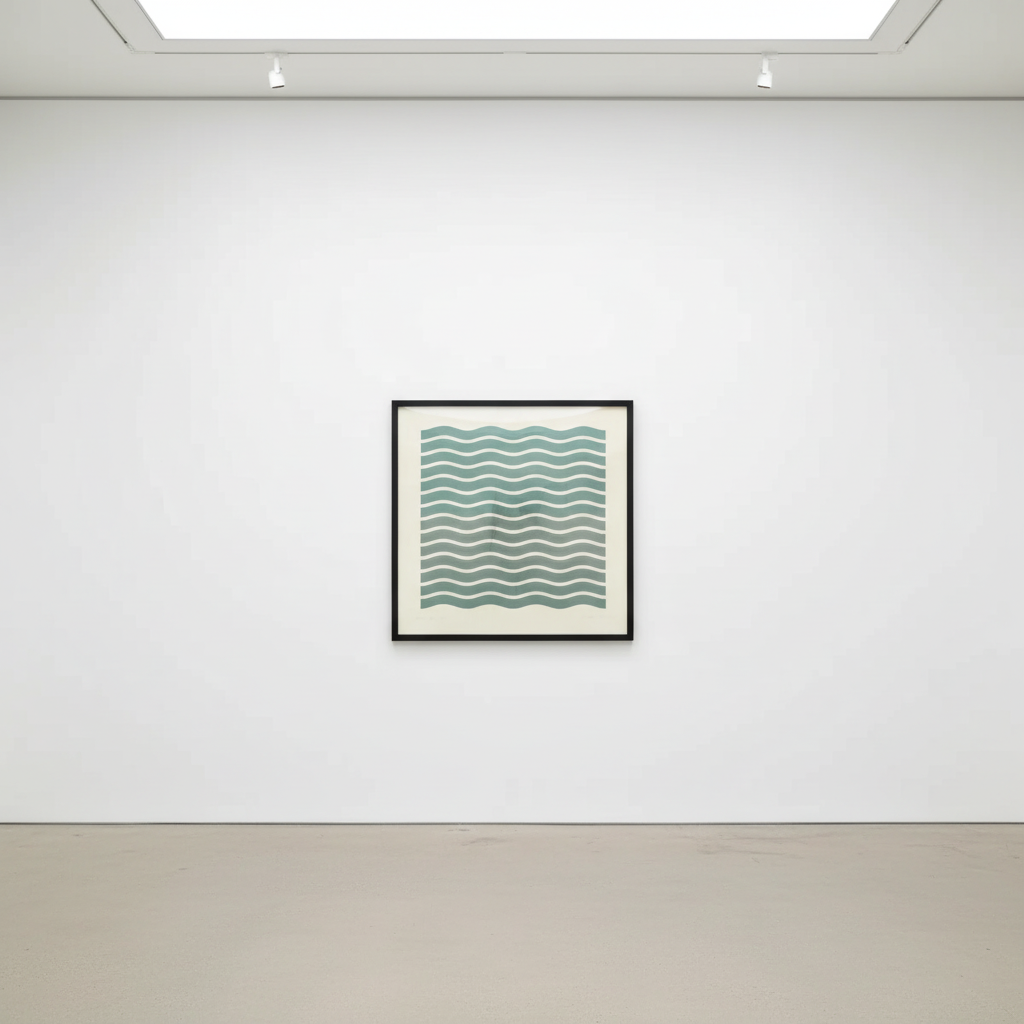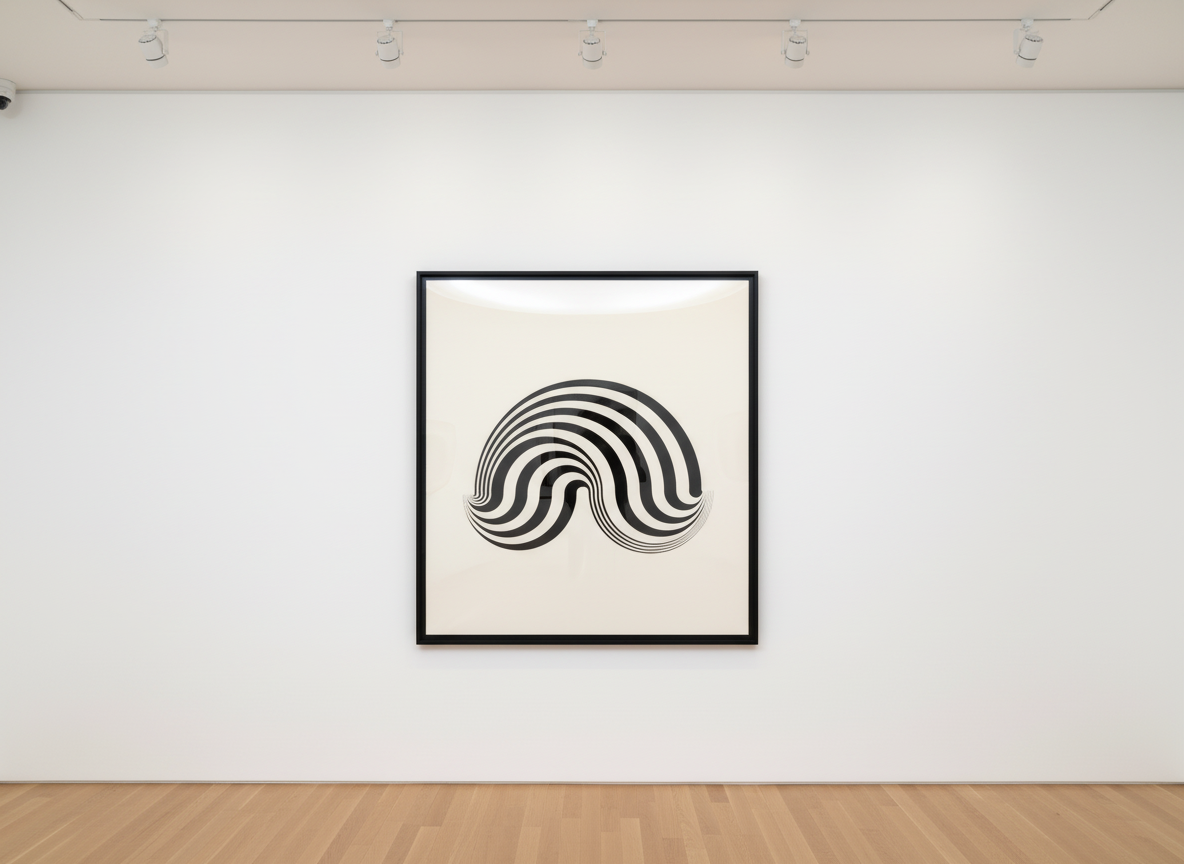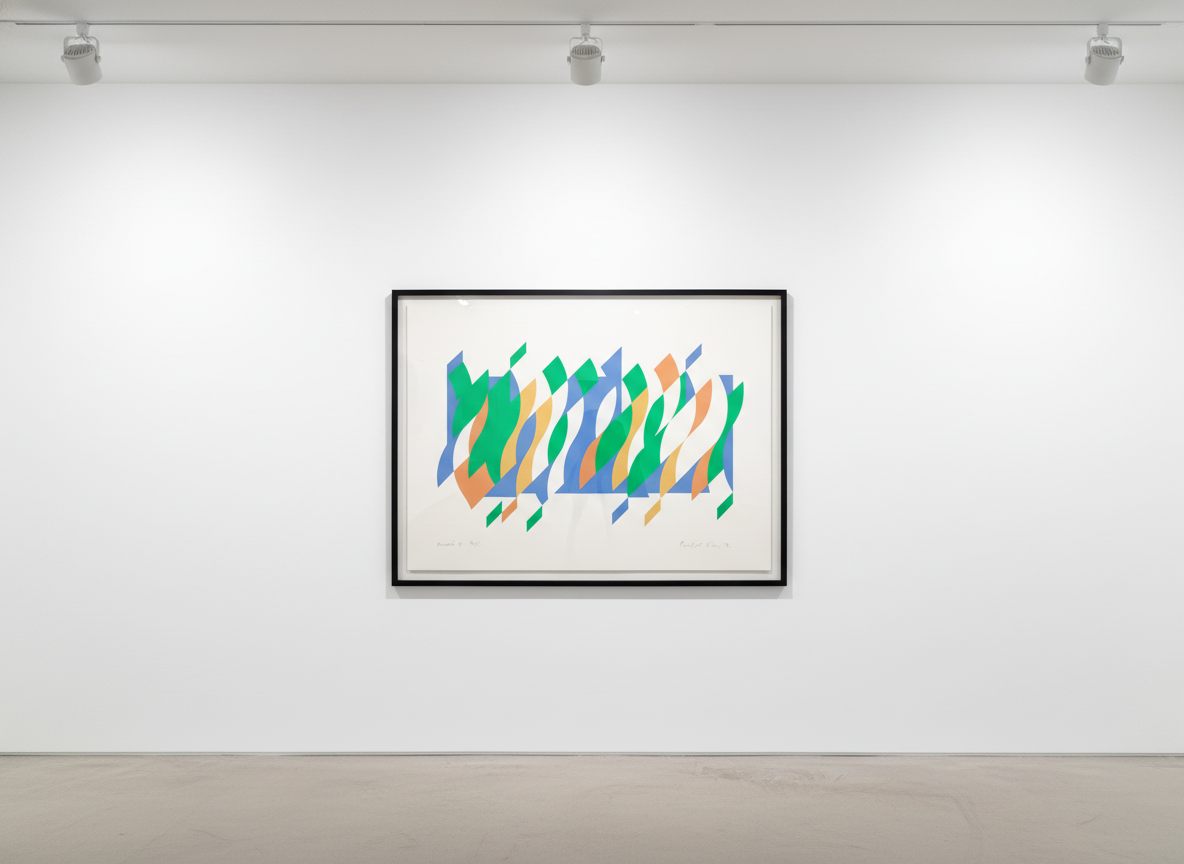
Arcadia

Bridget Riley stands as one of the most influential figures in post-war British art, a pioneer whose revolutionary exploration of optical phenomena transformed the possibilities of abstract painting. Her work represents a singular achievement in the history of twentieth-century art—a rigorous, intellectually grounded practice that bridges the gap between scientific inquiry and pure aesthetic experience. At the heart of Riley's extraordinary contribution lies her mastery of line, that most fundamental element of visual language, which she has elevated into a vehicle for profound perceptual discovery.
Born in London in 1931, Bridget Riley emerged during the early 1960s as the defining voice of the Op Art Movement, though she has consistently resisted such categorical labels. Her work transcends simple classification, representing instead a lifelong investigation into the mechanics of sight itself. Riley's artistic journey began with a deep engagement with the work of Georges Seurat, whose Pointillist techniques revealed to her how colour and form could be systematically constructed to create optical unity. This foundational study informed her understanding that perception is not passive reception but active construction—a principle that would guide her entire oeuvre.
Riley's breakthrough came with her black-and-white paintings of the early 1960s, works of stark geometric precision that seemed to pulse, vibrate, and shift before the viewer's eyes. These compositions established the visual vocabulary that would define her practice: parallel lines, curves, and geometric forms arranged with mathematical exactitude to generate sensations of movement, depth, and spatial ambiguity. The apparent simplicity of her means—line, contrast, repetition—belied the sophisticated understanding of perceptual psychology that underpinned each composition.
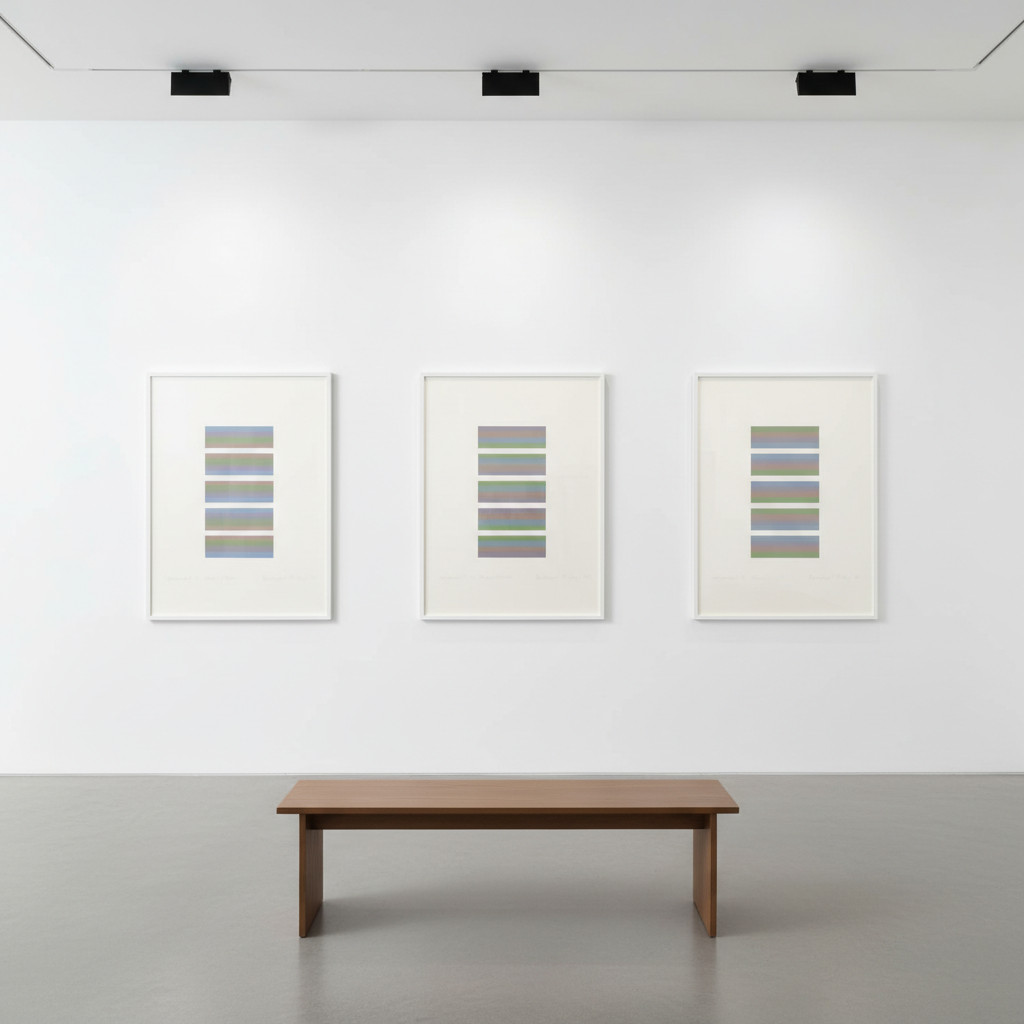
Intervals set of 3 — Bridget Riley. Available at Guy Hepner, New York.
Her significance extends far beyond the Op Art movement with which she is most commonly associated. Riley represents a crucial link between the geometric abstraction of early modernism and contemporary investigations into perception and phenomenology. Her influence can be traced through subsequent generations of artists working with systematic approaches to colour, pattern, and optical experience. The Venice Biennale recognised her achievement in 1968 when she became the first British contemporary painter—and first woman—to win the International Prize for painting, a landmark moment that confirmed her position at the forefront of international contemporary art.
The stripe paintings of Bridget Riley constitute one of the most significant bodies of work in her extensive practice, representing a sustained meditation on how the simplest formal element can generate the most complex perceptual experiences. Bridget Riley stripes are not merely decorative patterns but carefully calibrated instruments for exploring the relationship between physical surface and optical sensation. Each work in this series demonstrates how parallel lines—varied in width, spacing, colour, and rhythm—can produce effects of movement, vibration, and spatial depth that seem to exceed the boundaries of the canvas itself.
Riley's approach to the stripe format reveals her extraordinary technical precision and her deep understanding of colour theory. Unlike gestural abstract painters who work intuitively, Riley develops each composition through extensive preparatory studies, calculating the exact relationships between elements to achieve specific perceptual effects. She has long worked with studio assistants who execute her designs with meticulous accuracy, a practice that underscores her conceptual approach—the idea and its precise realisation take precedence over the physical act of painting.
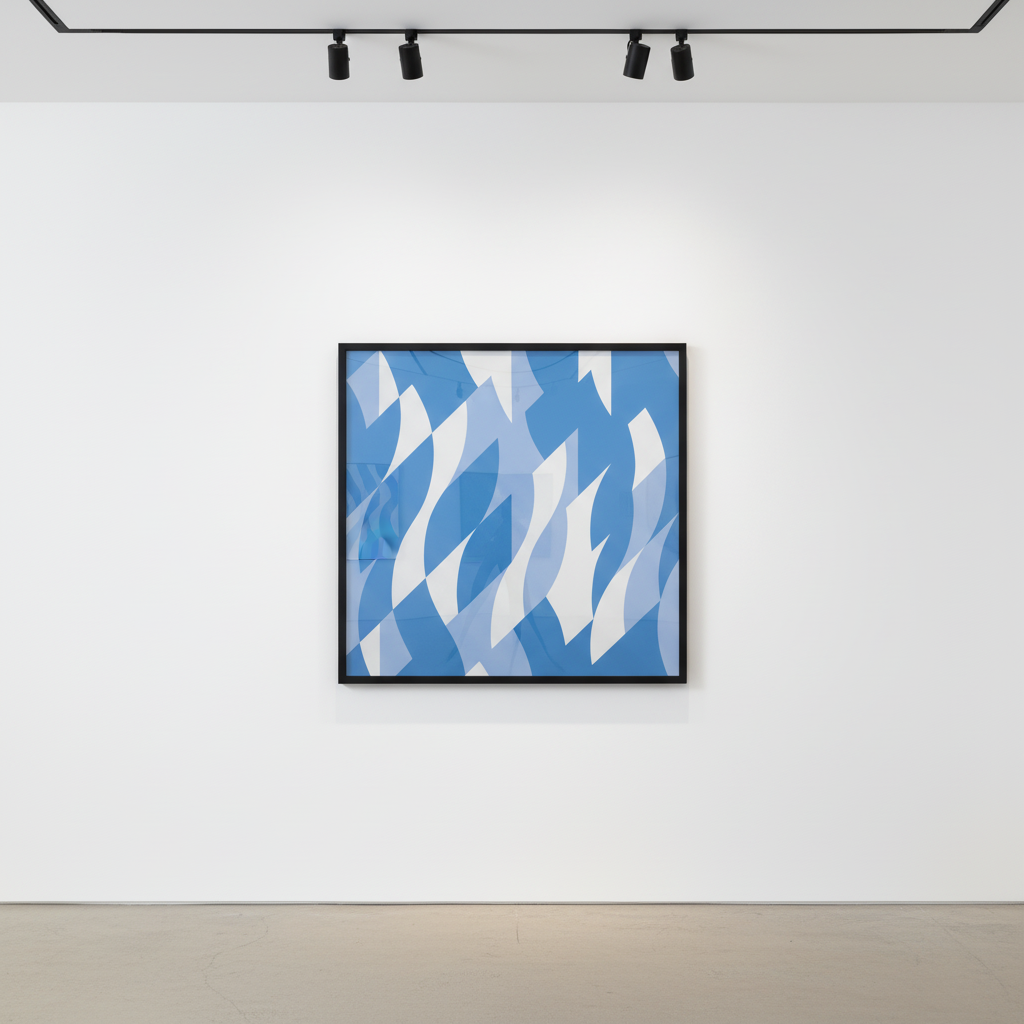
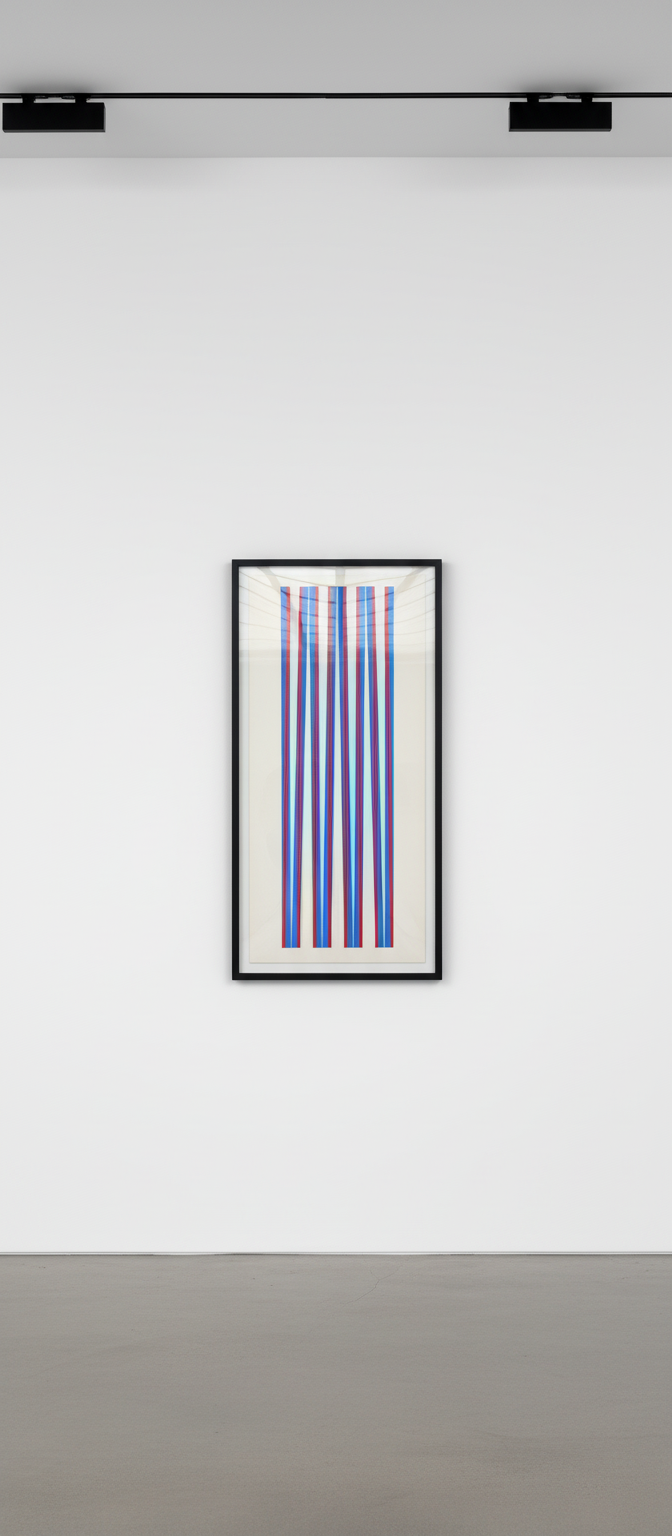
Two Blues — Bridget Riley. Available at Guy Hepner, New York.
The evolution of Riley's stripe paintings tracks her expanding investigation of colour. Her early black-and-white works gave way in the mid-1960s to explorations of grey tones, and by 1967, she had introduced colour into her practice—a development she approached with characteristic rigour. Works such as those in her stripe series demonstrate her mastery of chromatic interaction, where adjacent colours influence each other to create optical mixing, afterimages, and sensations of luminosity that transform the viewing experience. The Bridget Riley stripes format allowed her to isolate and examine these colour relationships with scientific precision while achieving results of remarkable beauty and visual impact.
The market for Bridget Riley's work reflects her enduring significance within the canon of post-war art. According to data from Sotheby's and Christie's, Riley's paintings have achieved substantial results at auction, with major works commanding prices that position her among the most valued British artists of her generation. The Art Basel and UBS Global Art Market Report has consistently identified Op Art and systematic abstraction as areas of sustained collector interest, with Riley's work representing the pinnacle of achievement in this field.
Collectors are drawn to Bridget Riley stripes for multiple reasons. These works offer immediate visual impact combined with intellectual depth—they reward both instantaneous appreciation and prolonged contemplation. The stripe paintings demonstrate Riley's ability to create experiences of movement and energy through purely static means, a paradox that continues to fascinate viewers decades after their creation. Furthermore, Riley's rigorous working method ensures consistency of quality across her oeuvre, giving collectors confidence in the integrity of each work.
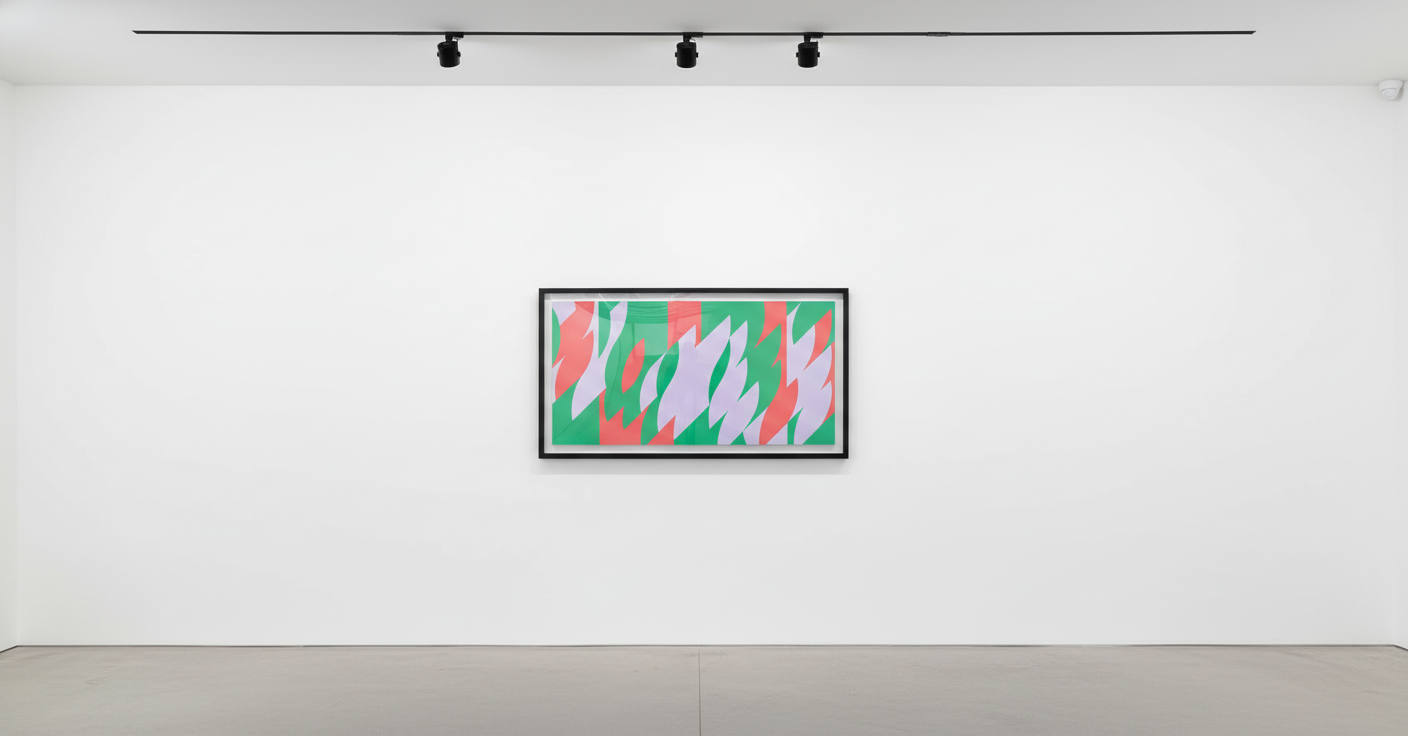
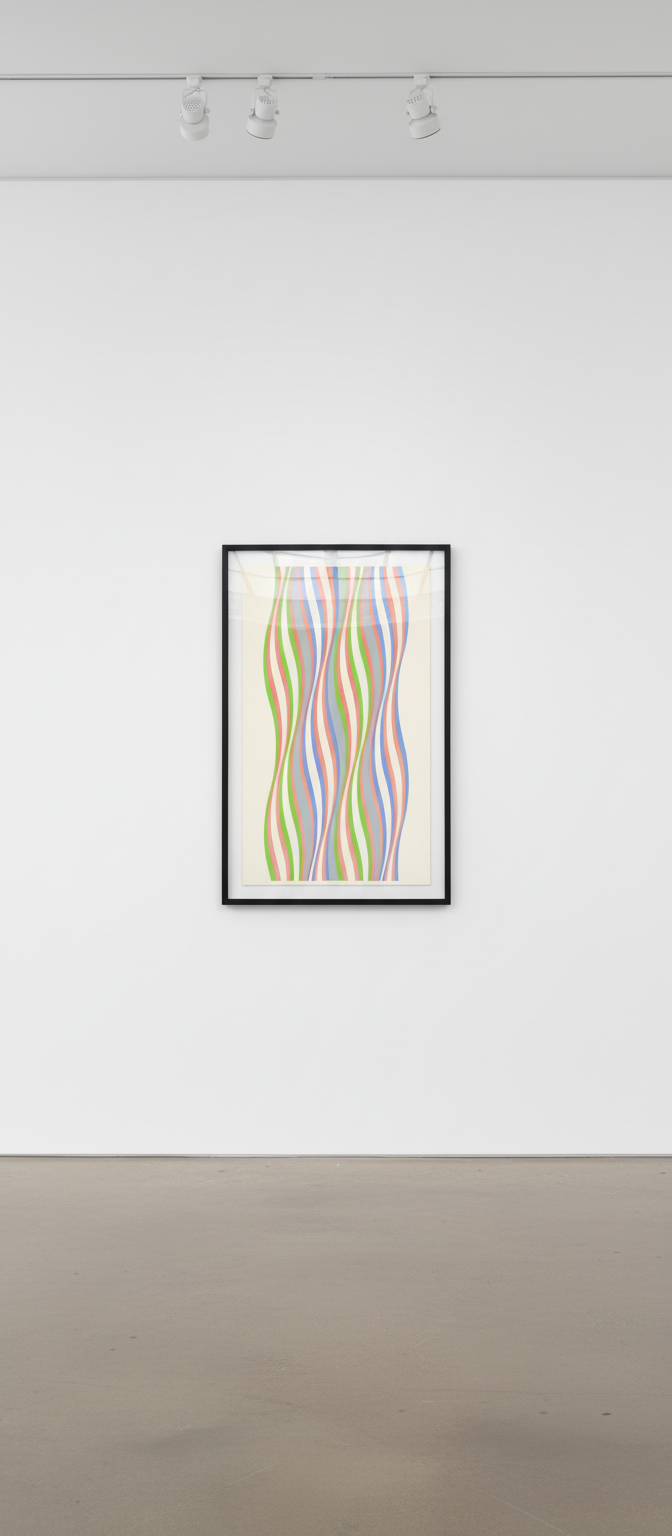
About Lilac — Bridget Riley. Available at Guy Hepner, New York.
The institutional recognition of Riley's achievement reinforces her market position. Her work is held in major museum collections worldwide, including the Museum of Modern Art, Tate, and the National Gallery, London, which made her the second living artist—and first living British artist—to receive a major retrospective in 2023. This level of institutional validation, combined with Riley's continued active practice into her nineties, positions her work as both historically significant and vitally contemporary.
Guy Hepner is pleased to offer exceptional works by Bridget Riley, providing collectors with the opportunity to acquire pieces by this towering figure of contemporary art. Our gallery maintains access to significant examples of Riley's stripe paintings and related works, each representing the precision, beauty, and perceptual sophistication that define her practice. Whether you are an established collector seeking a masterwork or a new collector drawn to the optical power of Riley's vision, our team offers expert guidance through every stage of the acquisition process. We invite you to contact Guy Hepner to discuss available works by Bridget Riley and explore how her extraordinary mastery of line and perception might enhance your collection.
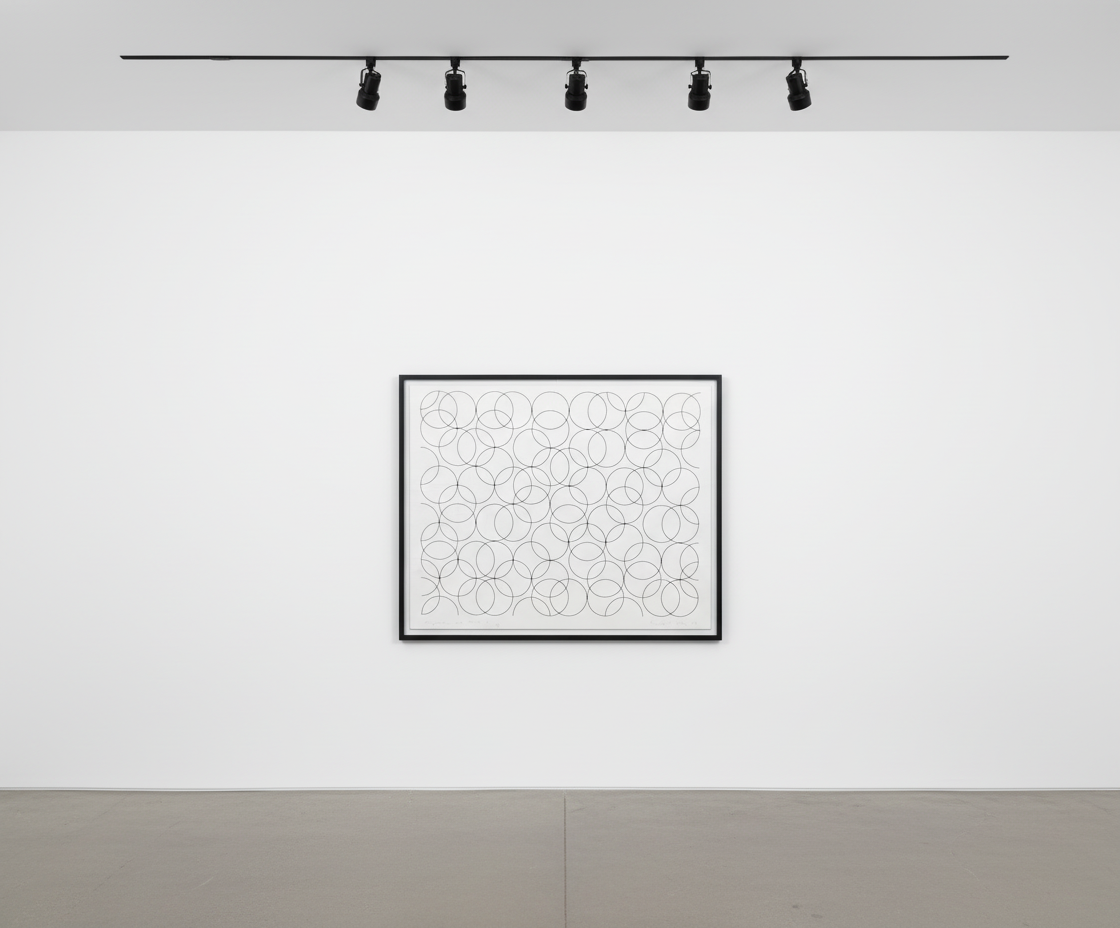
Explore Bridget Riley prints for sale at Guy Hepner: Arcadia, Coloured Greys, Composition with Circles, Dominance, Elongated Triangles.
Related Series