Superflat Shadows: Yoshitomo Nara and Takashi Murakami
Superflat Shadows: Yoshitomo Nara and Takashi Murakami
Across contemporary Japanese art, the Superflat aesthetic has emerged as one of the most powerful visual languages of our time - a movement that creates immediate graphic impact while engaging with complex psychological depths. Far from functioning as purely decorative or commercial gestures, the works of Takashi Murakami and Yoshitomo Nara have established a framework for examining rebellion, identity, and the shifting states of the human mind. Working across painting, sculpture, and limited editions, these two artists draw from the visual vocabulary of anime and manga to anchor their practice in cultural recognition while simultaneously challenging viewers to look beneath the surface. Together, they demonstrate how kawaii - the Japanese concept of cuteness - can operate not as a superficial trait but as a sophisticated lens through which contemporary life and historical trauma are interpreted and understood.
The Superflat Movement and Its Cultural Significance
Takashi Murakami coined the term Superflat in 2000 to describe both an artistic style and a cultural condition. The concept refers simultaneously to the flattened visual planes characteristic of traditional Japanese art and the perceived shallowness of post-war Japanese consumer culture. Yet this apparent simplicity conceals remarkable depth - Murakami's theoretical framework positions Superflat as a critique of the boundary dissolution between high and low culture, between commercial enterprise and fine art, between Eastern tradition and Western influence.
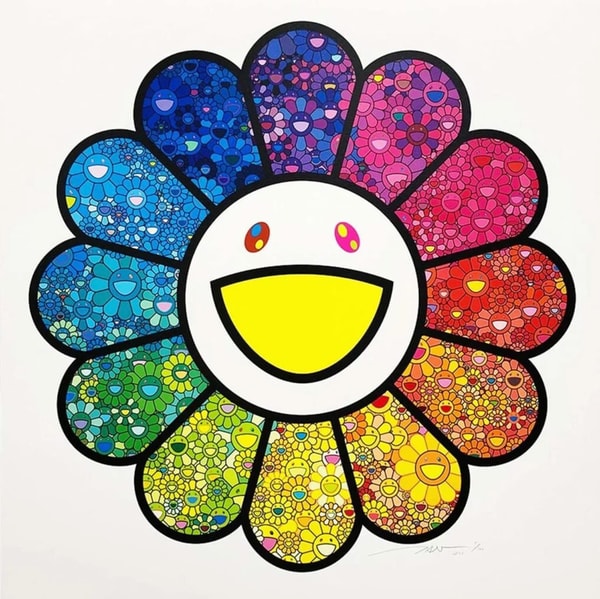
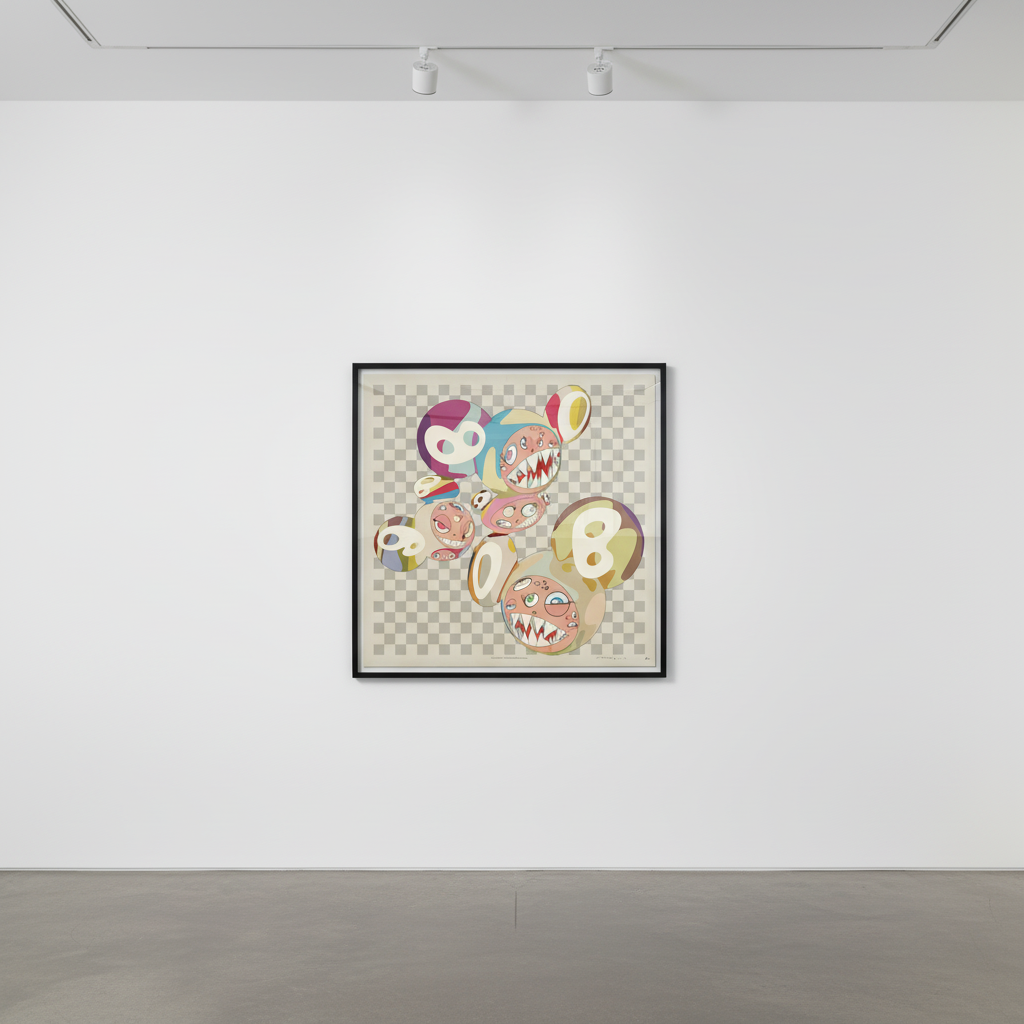
The movement emerged from Japan's unique post-war experience, where rapid economic growth, American cultural occupation, and the trauma of Hiroshima created a society that Murakami argues retreated into the escapism of anime, manga, and consumer goods. His iconic flowers, with their rows of smiling faces, and his recurring Mr. DOB character embody this tension - simultaneously cheerful and unsettling, commercially appealing and critically engaged. According to the Art Basel and UBS Global Art Market Report, Japanese contemporary artists working within this aesthetic framework have seen sustained collector interest, with Murakami consistently ranking among the most sought-after living artists globally.
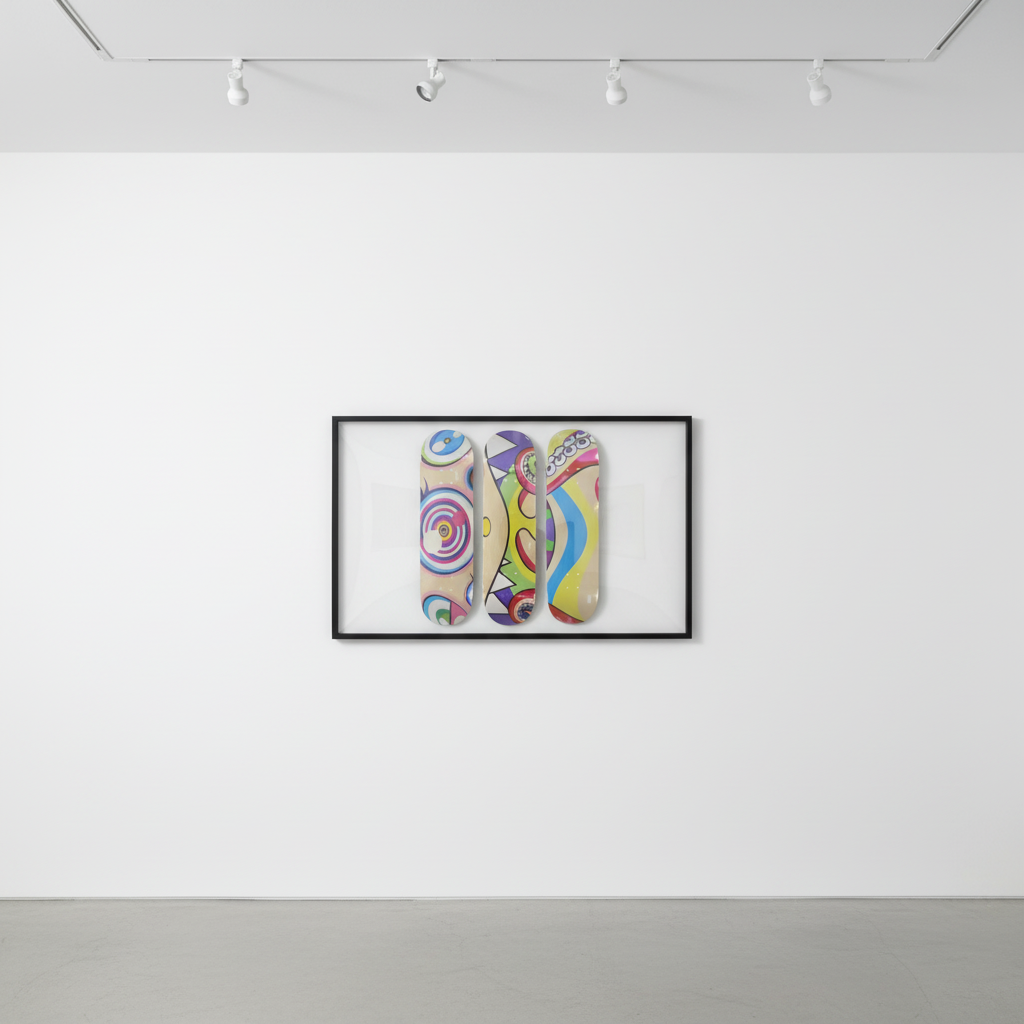
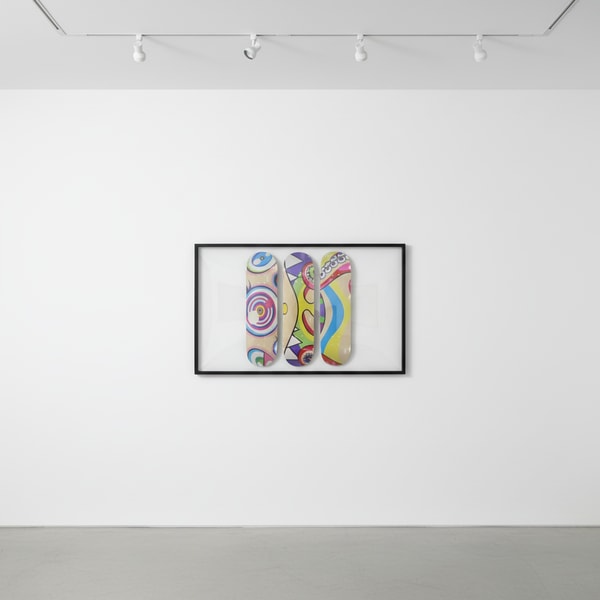
Flowers Set Of 3 Skateboard Decks — Takashi Murakami. Available at Guy Hepner, New York.
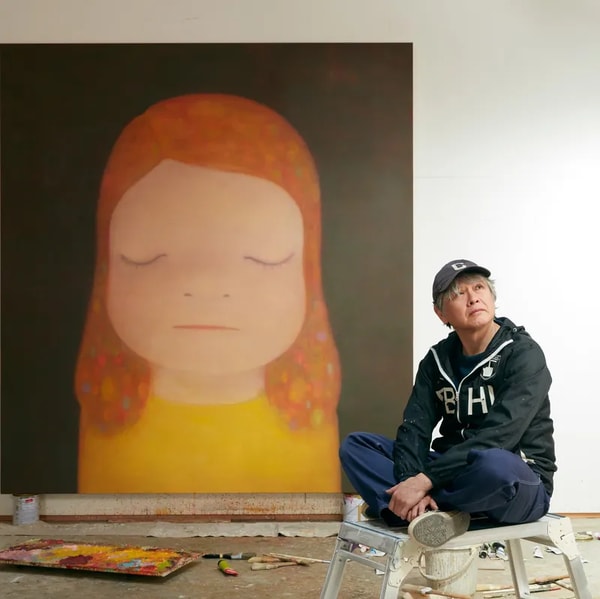
Yoshitomo Nara, while often associated with Superflat exhibitions and discourse, maintains a distinctly different relationship with the movement. Where Murakami embraces the collaborative factory model and corporate partnerships, Nara works in relative solitude, producing images of children and animals that carry an emotional directness absent from Murakami's more conceptually layered approach. Both artists, however, share a fundamental commitment to using accessible imagery as a vehicle for deeper psychological exploration.
Each Artist's Perspective on the Self
Although united by their roots in Japanese pop culture, Murakami and Nara approach the concept of the alter ego from distinctly different psychological perspectives. Murakami's work is rooted in the external - the spectacle of consumerism, the vibrance of the digital age, and the multidimensionality of the artist as brand. His practice deliberately blurs the line between fine art and commercial production, with his Kaikai Kiki studio employing hundreds of assistants and his collaborations extending from Louis Vuitton to Kanye West.
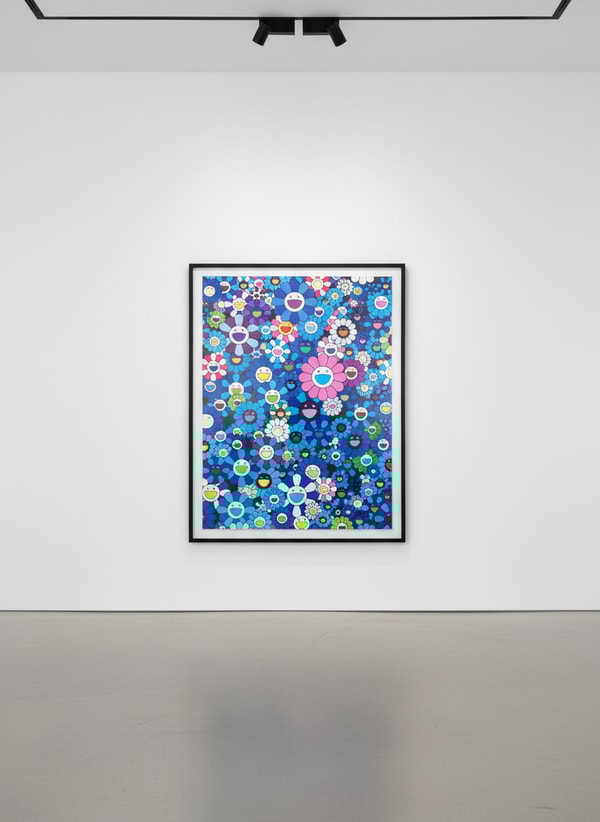
The recurring characters in Murakami's universe - Mr. DOB, Kaikai and Kiki, the jellyfish eyes - function as corporate mascots and existential avatars simultaneously. Mr. DOB, whose name derives from the Japanese phrase "dobojite" meaning "why," began as a parody of commercial character design but evolved into a shape-shifting entity that moves between cute and monstrous, reflecting the artist's meditation on transformation and identity in consumer culture. His flower motifs, appearing across canvases, sculptures, and collectible editions, present faces that oscillate between joy and menace depending on the viewer's perspective.
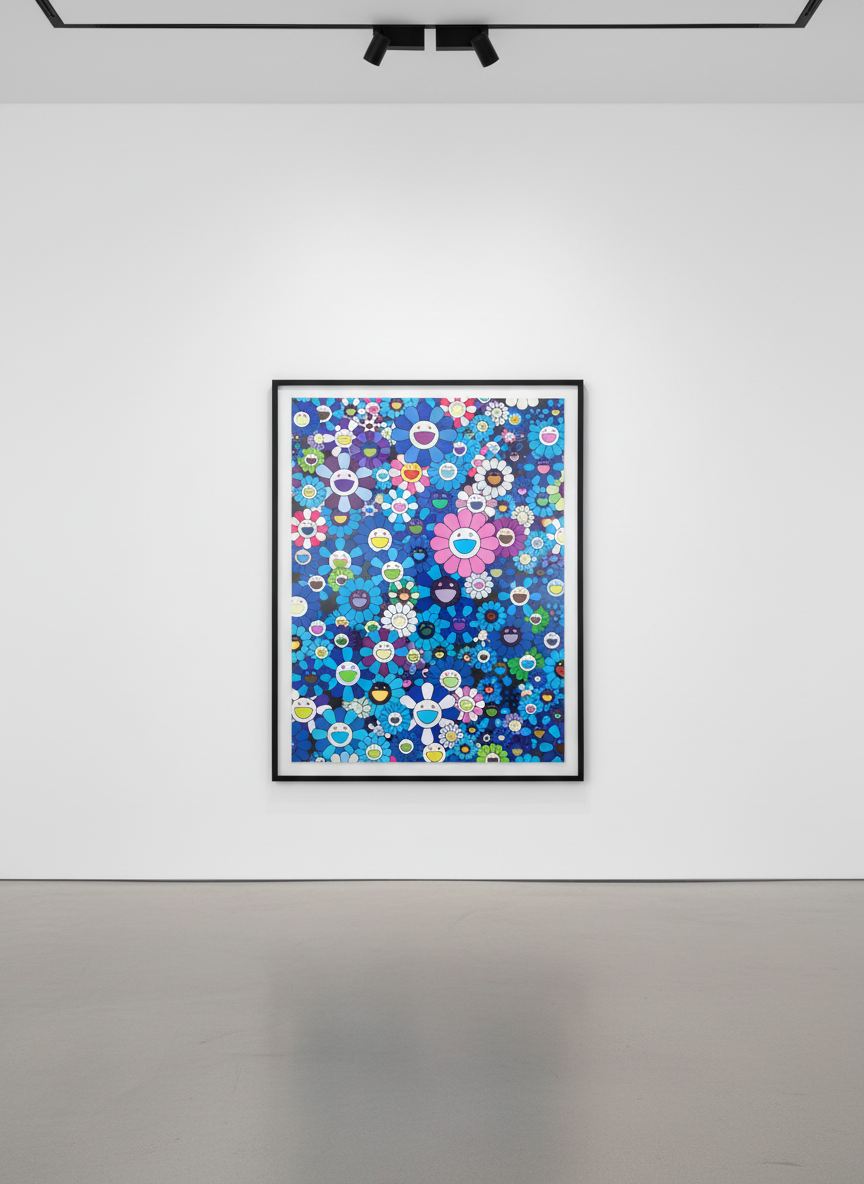
An Homage To Yves Klein Blue — Takashi Murakami. Available at Guy Hepner, New York.
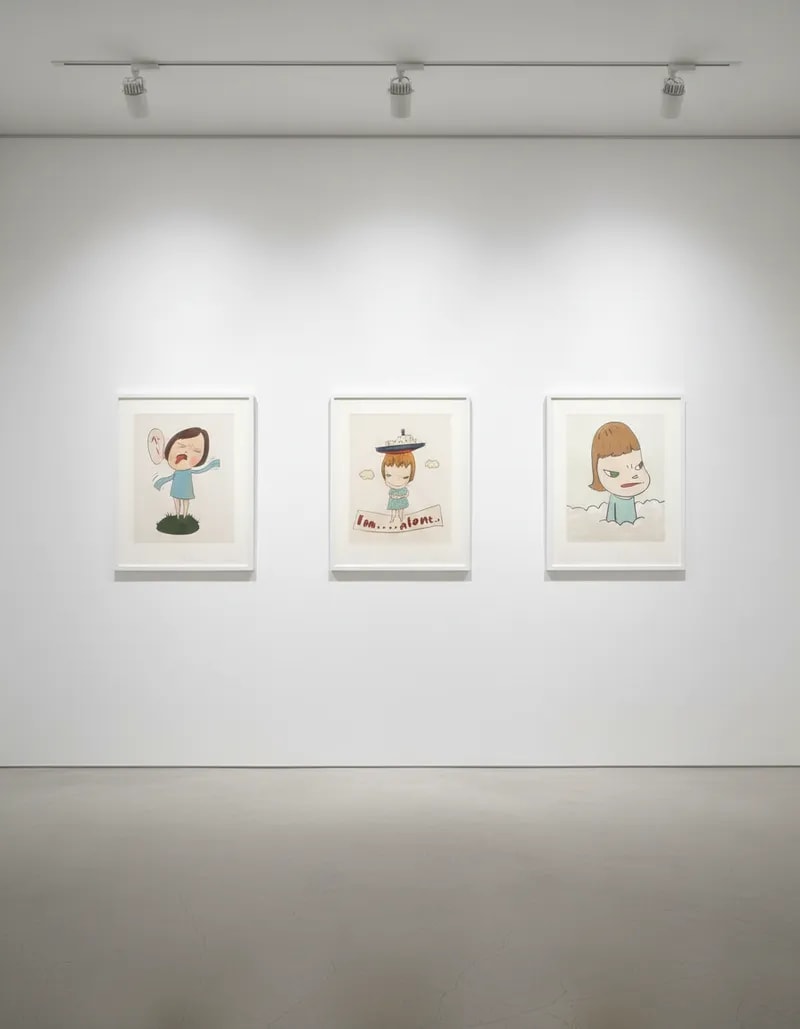
Nara's children, by contrast, emerge from an intensely personal interior space. Armed with knives, bandaged, defiant, or simply lost in thought, these figures represent the artist's ongoing dialogue with his own childhood memories and emotional states. Unlike Murakami's calculated brand-building, Nara's repetition of similar subjects across decades reflects an almost compulsive return to unresolved psychological material. His figures exist in blank or minimally defined spaces, stripped of the decorative excess that characterizes Murakami's work, creating an intimacy that collectors describe as immediately affecting.
The contrast between these approaches illuminates the range possible within Superflat-adjacent practice. Murakami externalizes identity into proliferating characters and corporate partnerships, while Nara internalizes it into singular figures that seem to guard private emotional territory. Both strategies, however, use the visual language of childhood and popular culture to access states of vulnerability and aggression that more traditionally serious art historical modes might struggle to convey.
Market Context and Collector Perspectives
The auction performance of both artists reflects their significant positions within contemporary art collecting. Christie's and Sotheby's have established dedicated sales categories for Japanese contemporary art, with Murakami and Nara consistently achieving record results. Murakami's monumental paintings have realized figures exceeding fifteen million dollars at auction, while Nara's seemingly simple portraits of defiant children have achieved comparable results, demonstrating that collectors value emotional resonance as highly as spectacular production values.
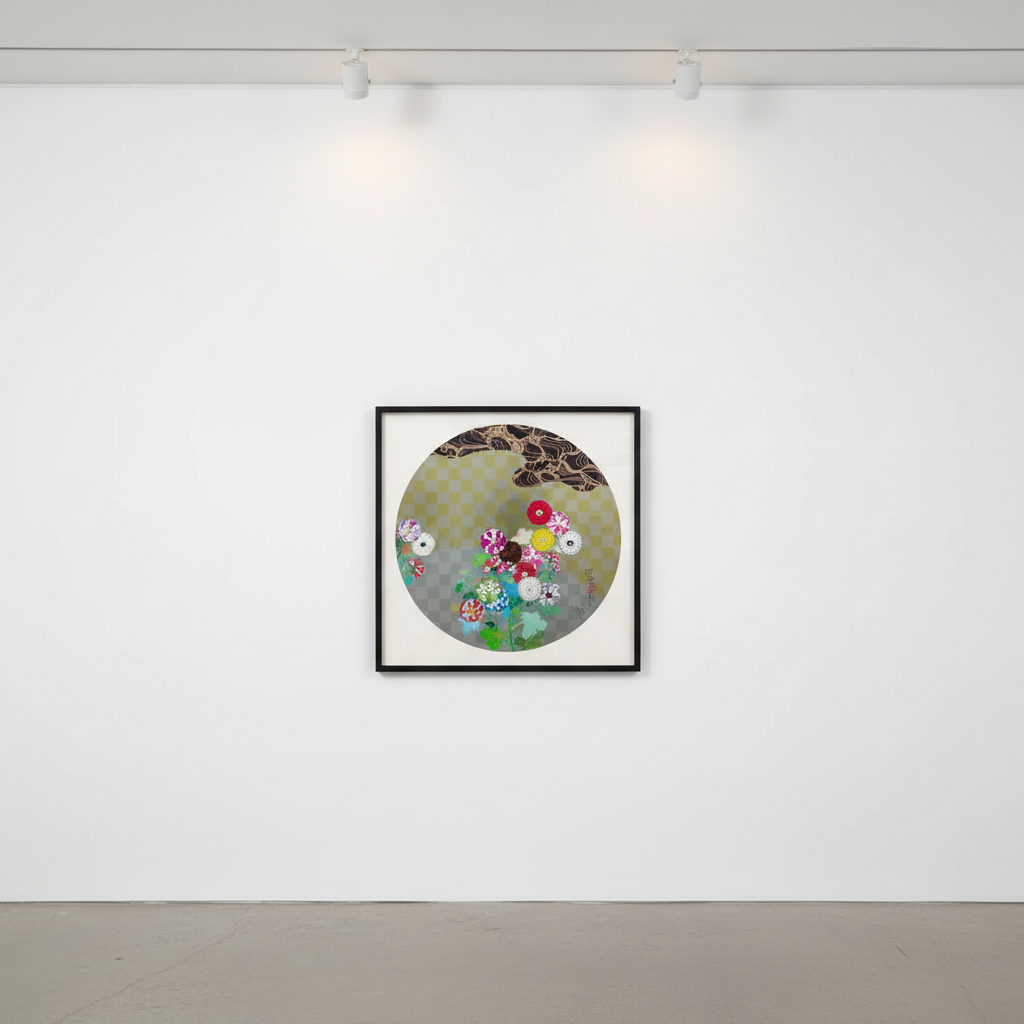
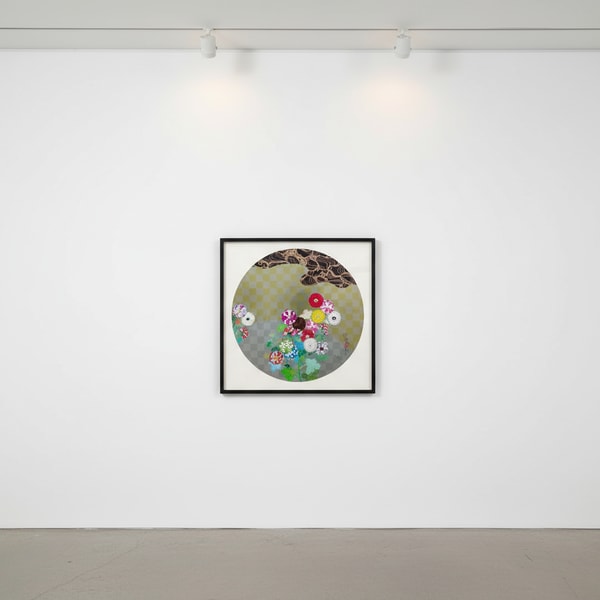
Korin Flowers and Water — Takashi Murakami. Available at Guy Hepner, New York.
The limited edition market for both artists has proven particularly robust. Murakami's prints, sculptures, and multiples allow collectors to engage with his iconic imagery at accessible price points while participating in the broader phenomenon of his practice. These editions - from signed prints to skateboard decks and sculptural objects - maintain strong secondary market performance, with certain releases appreciating significantly from their original retail prices. The Art Basel and UBS report has noted that limited editions by established contemporary artists increasingly function as entry points for new collectors while maintaining appeal for established collections seeking comprehensive artist representation.
For collectors, the appeal of both Murakami and Nara extends beyond aesthetic pleasure to cultural significance. These artists have fundamentally shaped how contemporary art engages with popular culture, commercial practice, and psychological content. Acquiring their work means participating in an ongoing conversation about the nature of art in the twenty-first century - its relationship to consumer goods, its capacity for emotional expression, and its function as both commodity and critique.
Acquiring Murakami at Guy Hepner
Guy Hepner maintains an exceptional collection of Takashi Murakami limited editions and original works, offering collectors the opportunity to acquire pieces by one of contemporary art's most influential figures. From iconic flower prints to rare sculptural editions, our inventory represents the full range of Murakami's creative output. Our specialist advisors provide comprehensive guidance on authentication, provenance, and collection building, ensuring that each acquisition meets the highest standards of quality and significance. Contact Guy Hepner to explore available works by Takashi Murakami and discover how these masterful explorations of Superflat aesthetics can enhance your collection.
Browse Series
Works For Sale
Available through Guy Hepner
Takashi Murakami
Flowers Set Of 3 Skateboard Decks
2017
Enquire →
Takashi Murakami
An Homage To Yves Klein Blue
2012
Enquire →
Takashi Murakami
Korin Flowers and Water
2023
Enquire →
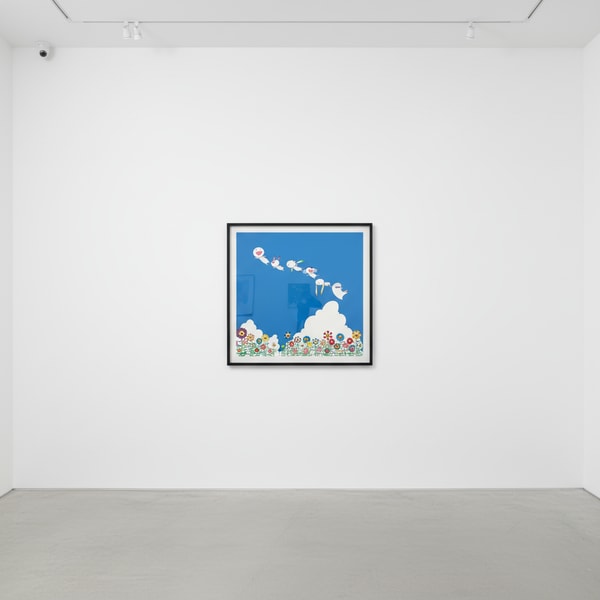
Takashi Murakami
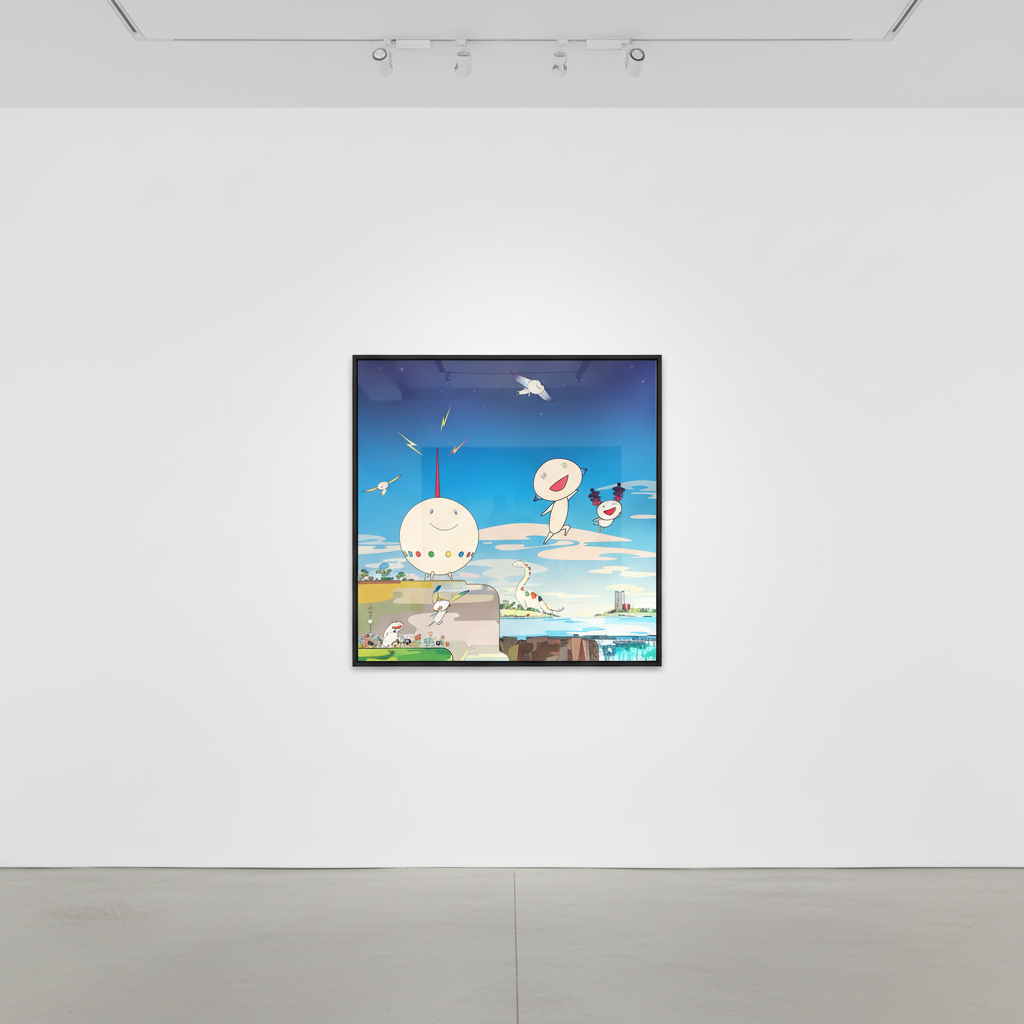
Planet Summer Vacation
2004
Enquire →
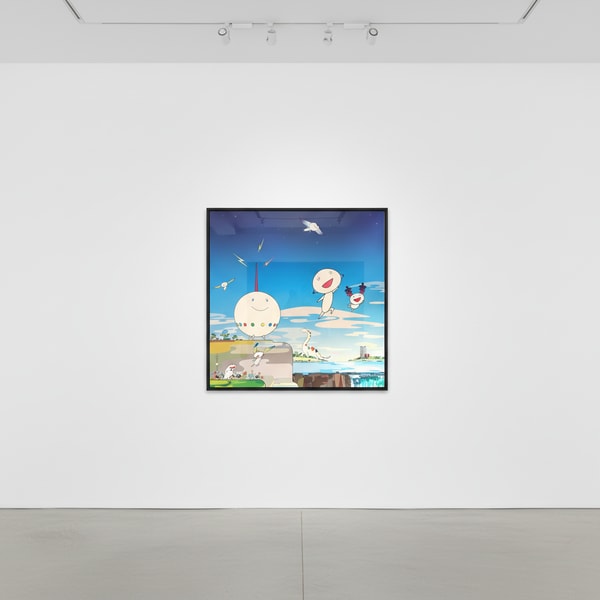
Takashi Murakami
Planet 66
2007
Enquire →
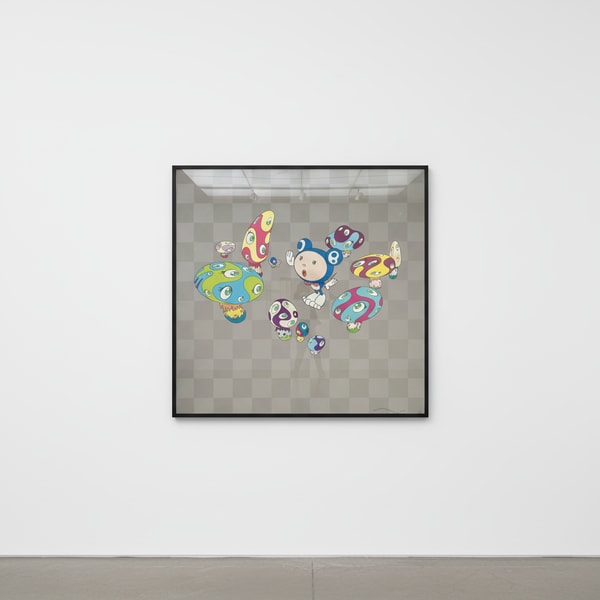
Takashi Murakami
Cha
2010
Enquire →
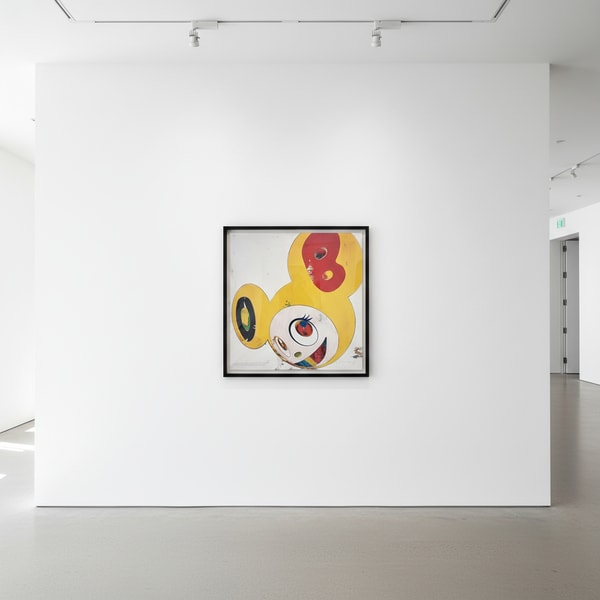
Takashi Murakami
And Then Lemon Pepper
2006
Enquire →

Takashi Murakami
Takashi Murakami, A Panda Cub Hugging a Ball of Flowers
2020
Enquire →
More from Guy Hepner