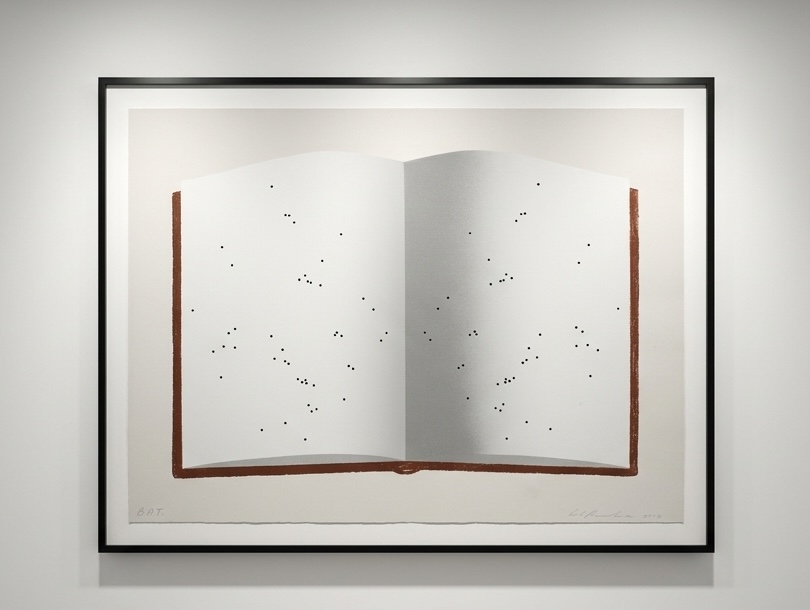
Book Covers

When Christopher Wool released Black Book in 1989, he was not yet the blue-chip figure whose name would come to dominate contemporary painting. But the book - slim, monochromatic, and unassuming - would soon prove to be one of the most important publications of late twentieth-century art. Containing seventeen crisp reproductions of his now-iconic text paintings, Black Book distilled Wool's conceptual rigor and graphic intensity into a single, editioned object. Today, it stands as the primary document of his most influential period - the moment when his language-based paintings reshaped the visual and intellectual landscape of American art.
By the late 1980s, New York's downtown art scene was in the midst of a profound shift. The raw expressiveness of Neo-Expressionism had begun to fade, and a new generation of artists was interrogating the nature of images, signs, and the mechanics of communication itself. Christopher Wool emerged as a central voice in this moment. Working with industrial stencils - originally intended for signage rather than studio use - he applied black, block-letter words directly onto white surfaces, stripping away ornamentation until only the tension between language and image remained.
This approach aligned Wool with the conceptual lineage of Ed Ruscha, whose pioneering word paintings of the 1960s had first demonstrated that text could function as both subject and form. Ruscha's deadpan presentation of words like "OOF" and "HONK" established a visual vocabulary that subsequent generations would expand upon. Where Ruscha employed a cool, almost commercial detachment, Wool introduced a sense of urban grit and psychological urgency. His stenciled phrases - often fragmented, always confrontational - carried the weight of graffiti, advertising, and the relentless noise of contemporary life.
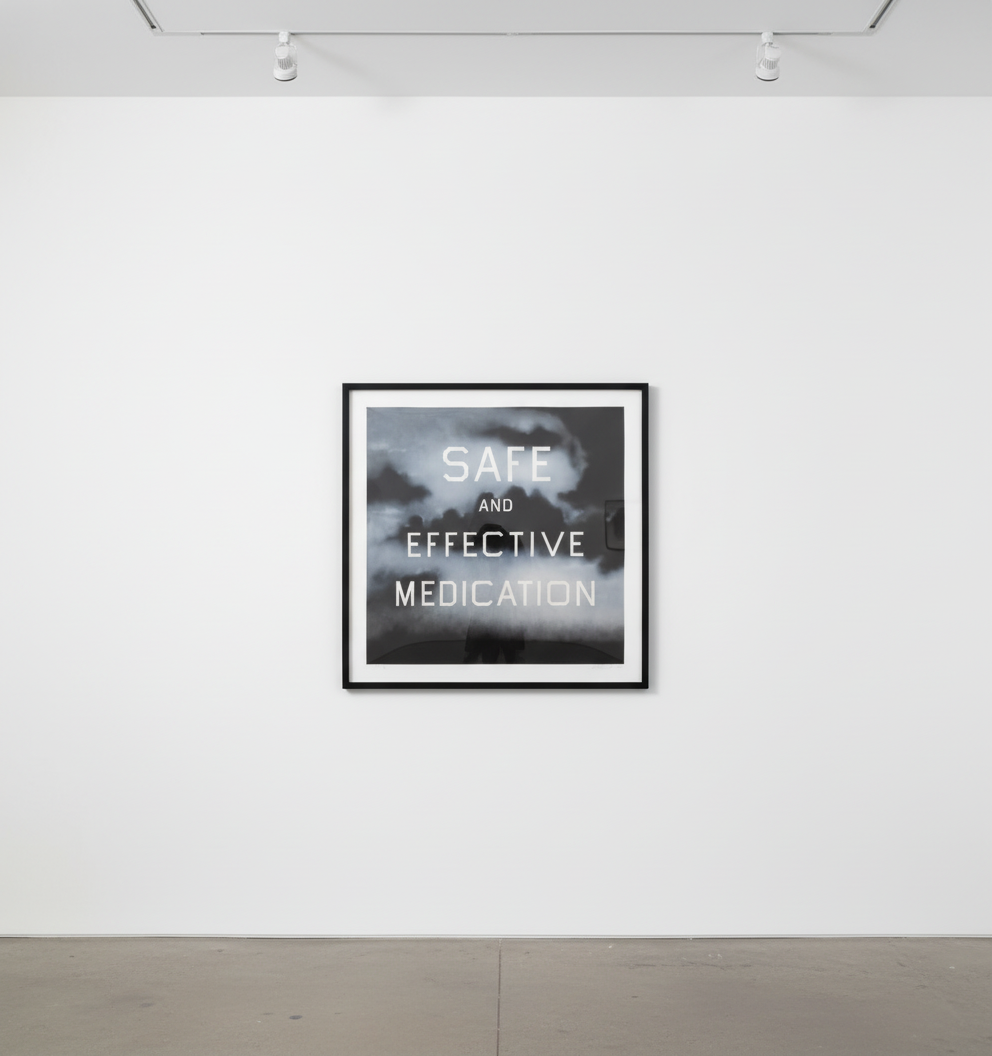
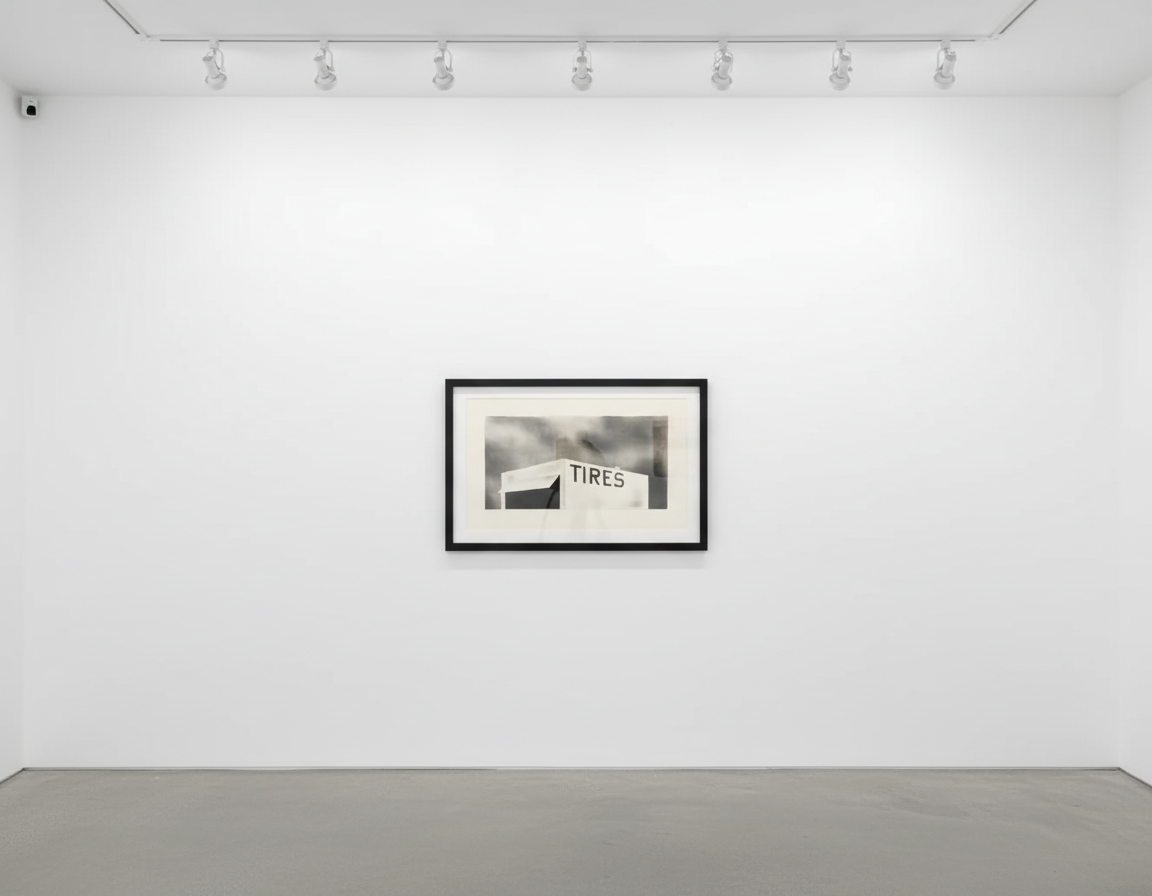
Safe and Effective Medication — Ed Ruscha. Available at Guy Hepner, New York.
Black Book occupies a unique position in the history of artist publications. Unlike traditional exhibition catalogs or retrospective monographs, it functions as an autonomous artwork - a carefully sequenced experience that translates the impact of Wool's large-scale canvases into an intimate, portable format. The seventeen text paintings reproduced within its pages represent the artist's most concentrated period of linguistic investigation, featuring works that have since become touchstones of contemporary art discourse.
The publication's significance extends beyond its documentary function. In choosing the book format, Wool acknowledged the influence of Ed Ruscha's seminal artist books from the 1960s and 1970s. Ruscha's publications - including Twentysix Gasoline Stations and Every Building on the Sunset Strip - had revolutionized the concept of the artist book by treating it as a primary medium rather than a secondary record. Black Book operates within this tradition while asserting its own distinct character. Where Ruscha's books cataloged the vernacular landscape of Southern California with photographic precision, Wool's publication presents language itself as landscape - stark, repetitive, and stripped of context.
The formal qualities of Black Book reinforce its conceptual ambitions. The monochromatic palette, the absence of explanatory text, and the rigorous sequencing of images create a cumulative effect that mirrors the experience of encountering Wool's paintings in physical space. Each page turn reveals another fragment of meaning, another collision between readability and abstraction. This structure has made the book a highly sought-after object among collectors who recognize its importance as both historical document and aesthetic statement.
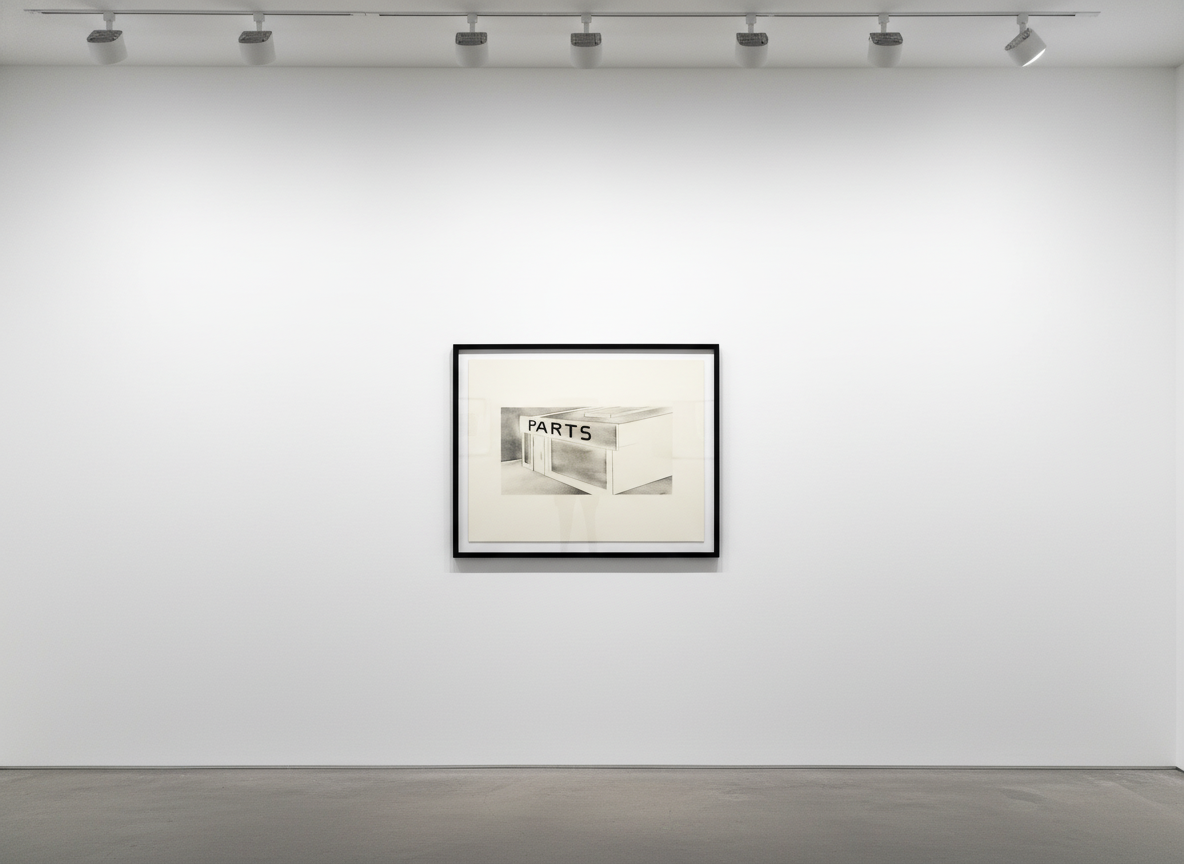
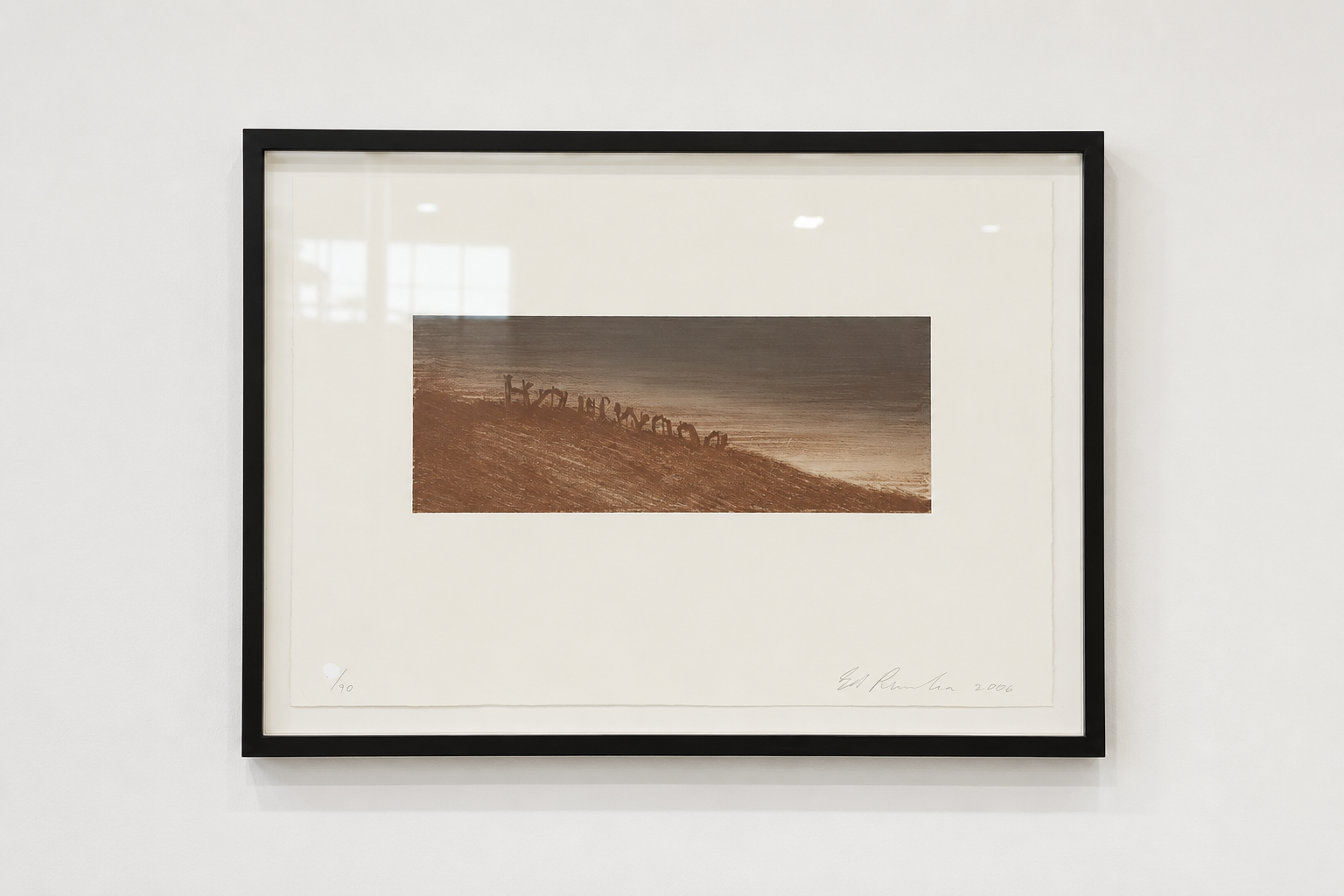
Parts — Ed Ruscha. Available at Guy Hepner, New York.
The market for Christopher Wool's work has demonstrated remarkable strength over the past two decades, reflecting his status as one of the most consequential painters of his generation. According to data compiled for the Art Basel and UBS Global Art Market Report, works by artists of Wool's caliber continue to command significant attention at the highest levels of the market. His paintings have achieved exceptional results at both Christie's and Sotheby's, with major text works regularly exceeding pre-sale estimates. The 2013 sale of Apocalypse Now at Christie's New York - which realized over twenty-six million dollars - confirmed Wool's position within the upper echelon of living artists.
Black Book benefits from this broader market context while maintaining its own distinct collector appeal. As an editioned object from a pivotal moment in Wool's career, it offers accessibility that his major paintings cannot. The book represents an opportunity to engage with the artist's most celebrated body of work in a format that rewards sustained attention and repeated viewing. For collectors building comprehensive holdings in contemporary art, Black Book serves as an essential reference point - a work that illuminates not only Wool's individual achievement but also the broader conceptual currents that shaped late twentieth-century practice.
The connection between Wool and Ed Ruscha adds another dimension to the book's significance. Ruscha's continued influence on contemporary art - and his sustained market presence - underscores the enduring relevance of the text-based tradition that both artists have defined. Collectors who appreciate this lineage often seek works that establish dialogue across generations, recognizing that the most compelling collections are those that reveal unexpected connections and shared concerns.
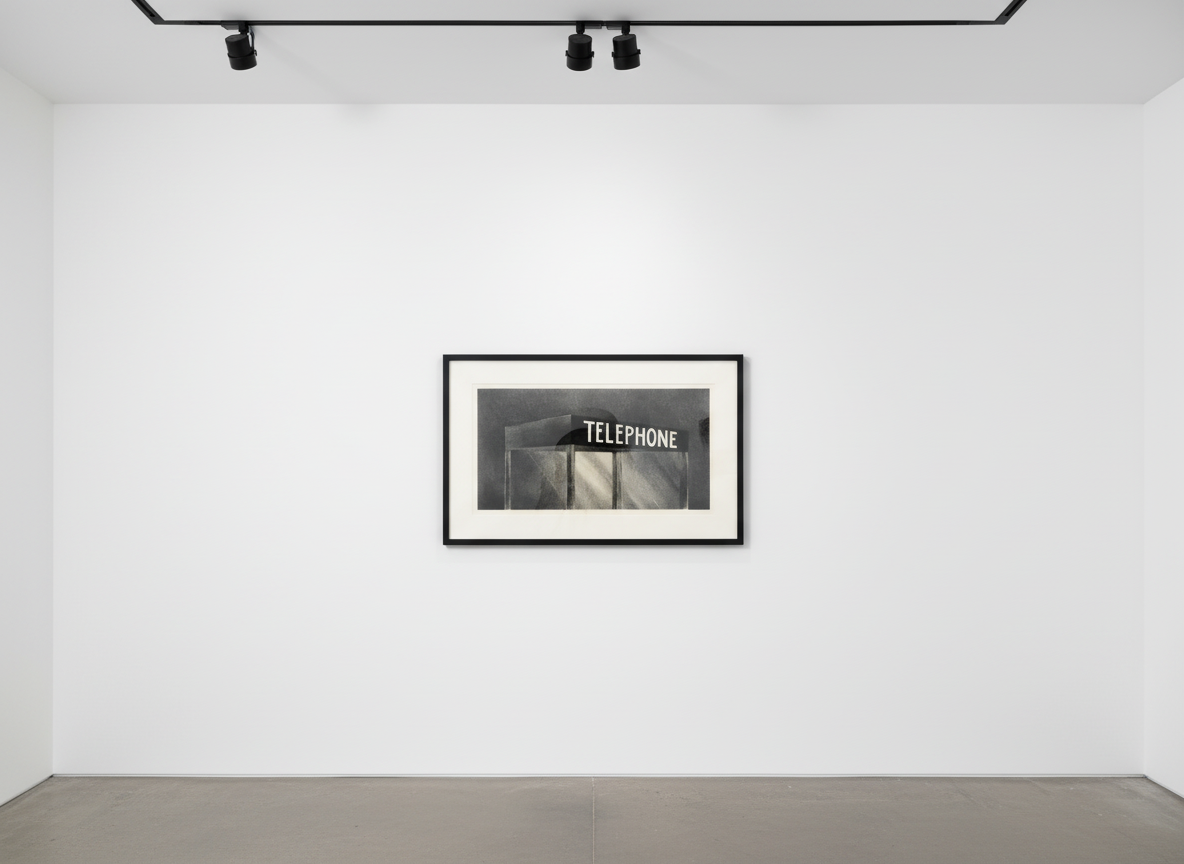
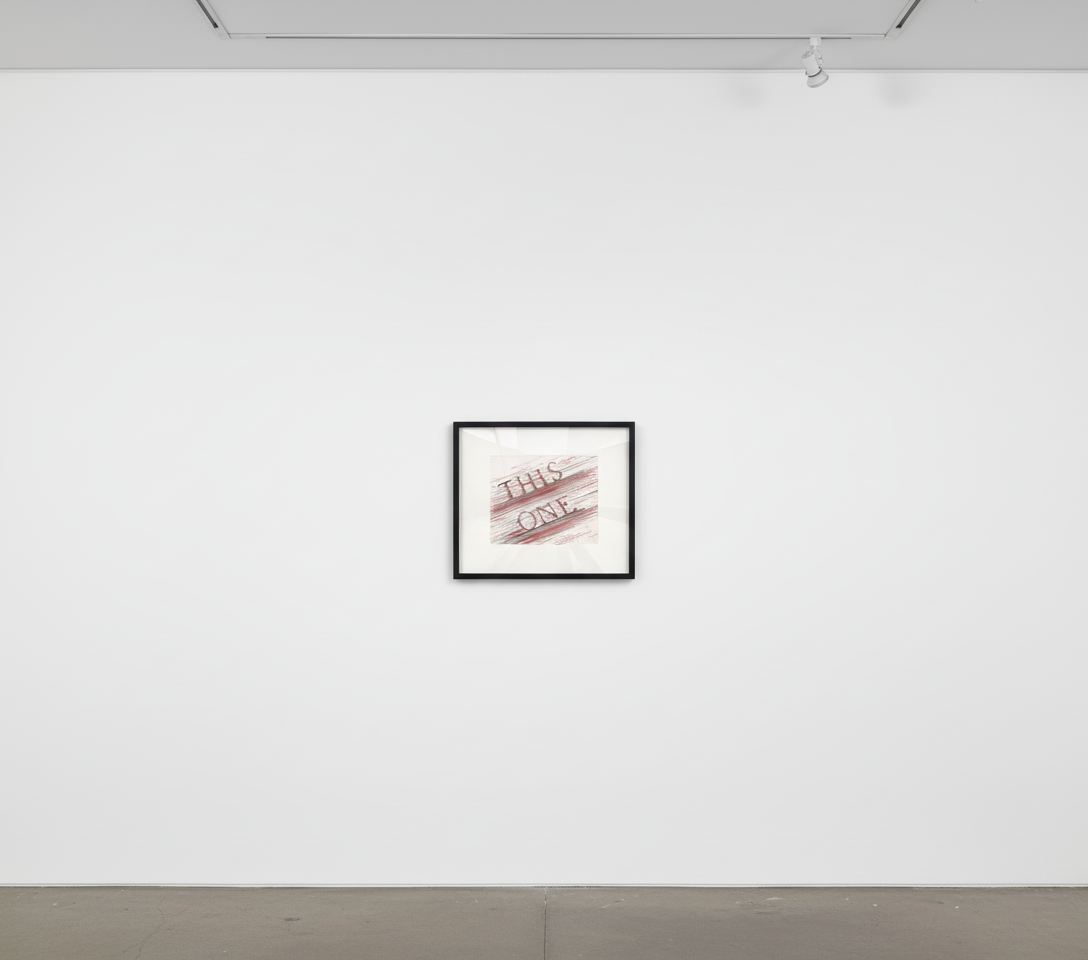
Telephone — Ed Ruscha. Available at Guy Hepner, New York.
Guy Hepner is pleased to offer works by Ed Ruscha, whose foundational contributions to text-based art provide essential context for understanding Christopher Wool's Black Book and its place within contemporary art history. Our current inventory includes significant prints and editions that demonstrate Ruscha's mastery of language as visual form. For collectors seeking to acquire works by Ed Ruscha - or to explore the broader tradition of conceptual text-based practice - our team provides expert guidance on availability, provenance, and collection strategy. Contact Guy Hepner to discuss current offerings and to arrange private viewing appointments at our New York gallery.
Explore Ed Ruscha prints for sale at Guy Hepner: Book Covers, Archi-Props, Bow-Tie Landscapes, Etchings, Hollywood.
Related Series