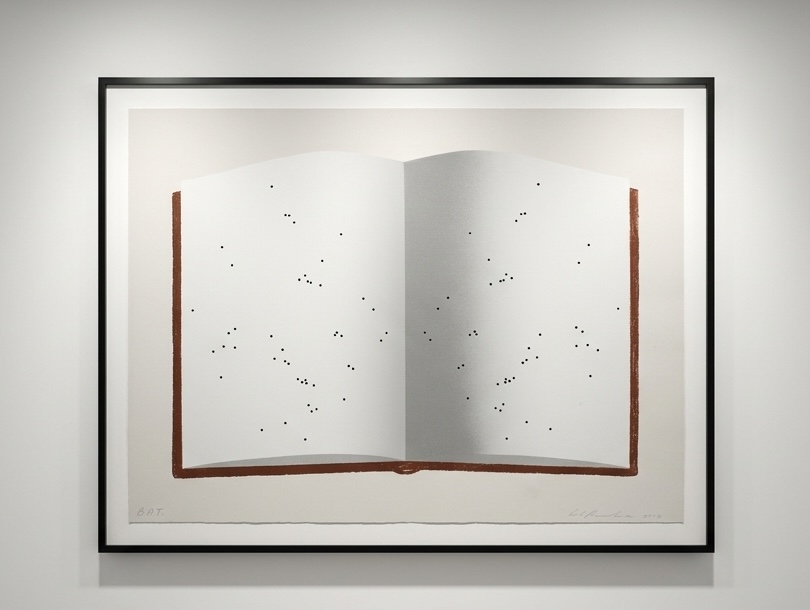
Archi-Props

Ed Ruscha stands as one of the most influential American artists of the post-war era, a figure whose work has shaped contemporary art discourse for over six decades. For collectors seeking to acquire pieces by this celebrated artist, understanding his creative trajectory, the significance of his various bodies of work, and the nuances of today's market proves essential. This guide examines how to approach collecting Ed Ruscha art with insight into his artistic influences, the key works that define his practice, and what discerning collectors should consider when building a meaningful collection.
Born in Omaha in 1937 and raised in Oklahoma City, Ed Ruscha relocated to Los Angeles in 1956 to study at Chouinard Art Institute, now known as CalArts. This move proved transformative - the sprawling cityscape of LA with its car culture, towering billboards, cinematic industry, and distinctive low-slung architecture would become his lifelong subject matter and creative wellspring.
Ruscha absorbed European modernism and American commercial design in equal measure during his formative years. His early influences range from Jasper Johns and Robert Rauschenberg to the practical disciplines of sign-painting, typography manuals, and the graphic clarity of mid-century advertising. While he witnessed the emergence of Pop art in New York and London - the rise of Warhol and Lichtenstein among them - Ruscha consistently resisted being categorised strictly as a Pop artist. His sensibility operates on a different frequency: cooler, more literary, and decidedly more conceptual in its approach to image-making.
What distinguishes Ruscha's practice is his treatment of words as visual objects possessing their own aesthetic weight and cultural resonance. His text-based paintings and prints transform ordinary phrases into meditations on language, meaning, and the American vernacular. Works featuring phrases like "Safe and Effective Medication" demonstrate his ability to isolate everyday language and present it with such formal precision that viewers are compelled to reconsider words they might otherwise overlook entirely.
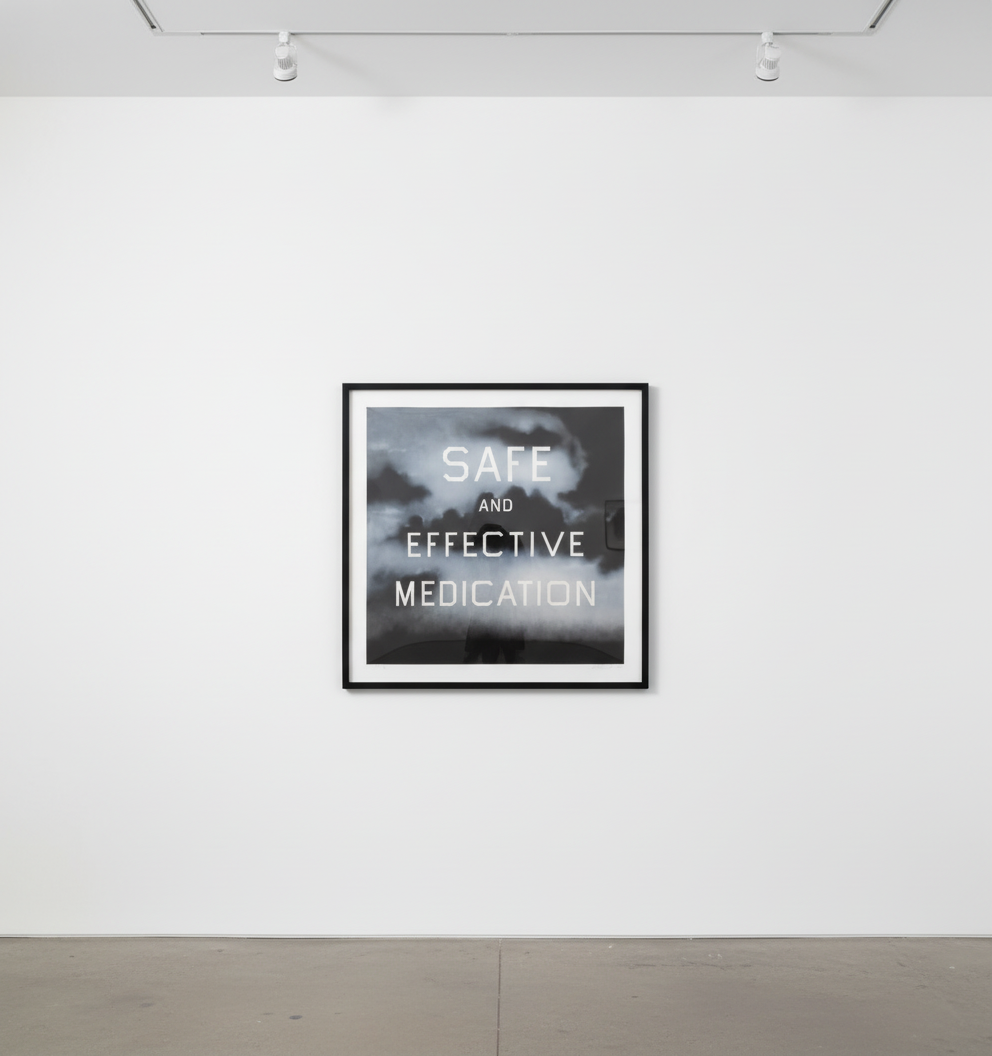
Safe and Effective Medication — Ed Ruscha. Available at Guy Hepner, New York.
The artist's photographic books, beginning with "Twentysix Gasoline Stations" in 1963, established him as a pioneer of the artist's book format and demonstrated his conceptual rigour. These publications, along with his paintings depicting Standard Oil stations, Hollywood signs, and Los Angeles parking lots, created an iconography of the American West that remains instantly recognisable. His artistic vocabulary - spanning gas stations, Hollywood sunsets, and deadpan text rendered in striking typography - has influenced generations of subsequent artists and continues to resonate with contemporary audiences worldwide.
The market for Ed Ruscha art has demonstrated remarkable strength and consistency over recent decades. According to data from Christie's and Sotheby's, his works regularly achieve significant results at auction, with major canvases commanding prices in the tens of millions. His 1964 painting "Hurting the Word Radio #2" sold at Christie's in 2019 for over fifty-two million dollars, establishing a new benchmark for the artist and confirming his position among the most valued living American artists.
For collectors entering the market, prints and works on paper represent the most accessible pathway into Ruscha's world. His printmaking practice spans lithography, screenprinting, and innovative techniques using organic materials, offering collectors diverse entry points at various price levels. Works from significant series such as his word prints and gas station imagery consistently perform well, with edition prints from the 1960s and 1970s particularly sought after by institutions and private collectors alike.
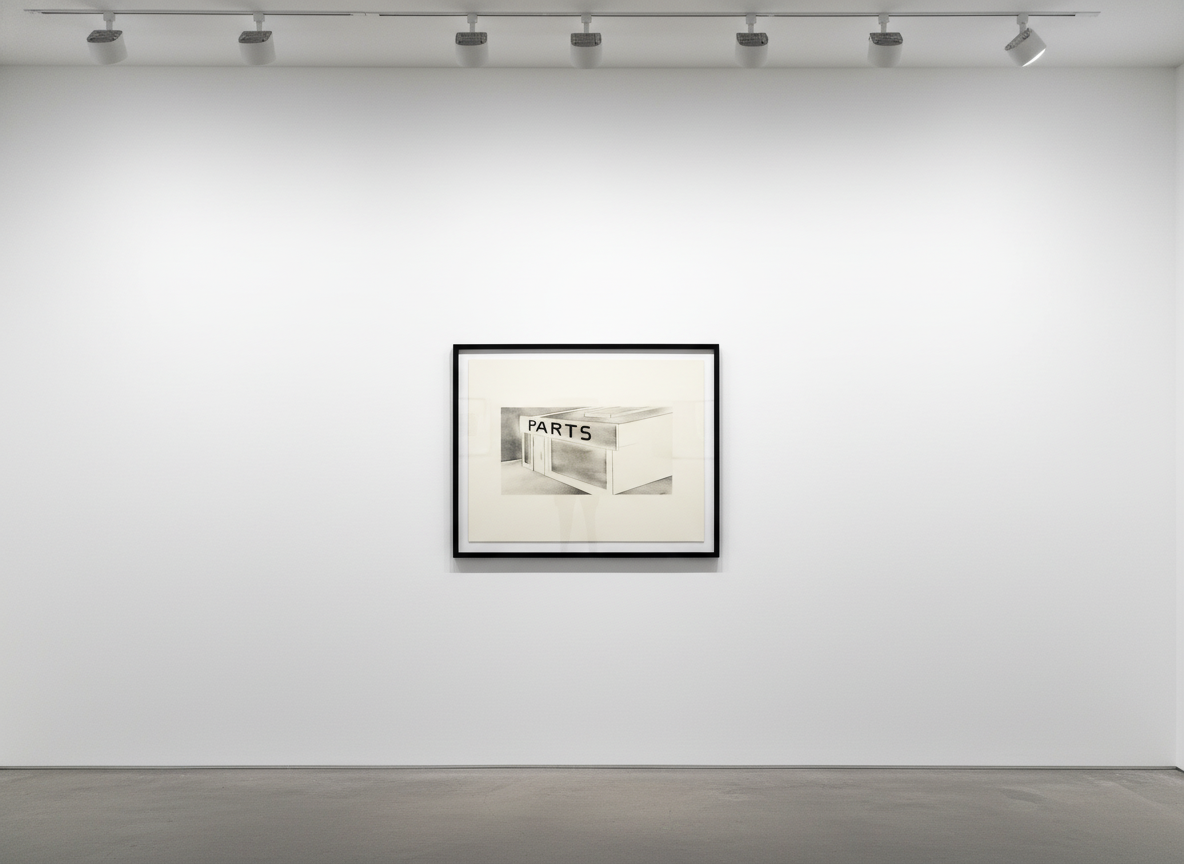
Parts — Ed Ruscha. Available at Guy Hepner, New York.
The 2023 Art Basel and UBS Global Collecting Survey indicated sustained collector interest in post-war American artists, with figures like Ruscha maintaining strong demand across geographic markets. His representation of the United States at the 2024 Venice Biennale - a career-defining honour - has further elevated institutional and collector attention. This recognition, combined with major retrospectives at leading museums worldwide, continues to solidify his legacy and support market confidence.
Collectors should note that condition, provenance, and edition number significantly impact value when acquiring Ruscha prints. Early impressions from limited editions, particularly those with distinguished exhibition histories or notable prior ownership, command premiums. Works featuring his most iconic imagery - gasoline stations, the Hollywood sign, and his celebrated word paintings - remain the most desirable and tend to appreciate most reliably over time.
When considering how to collect Ed Ruscha art, understanding the distinct categories within his oeuvre helps inform strategic acquisitions. His text-based works form perhaps the most recognisable aspect of his practice. Pieces featuring words and phrases rendered against atmospheric backgrounds showcase his masterful combination of linguistic content and formal beauty. These works range from single-word compositions to longer phrases that capture the poetry of everyday American speech.
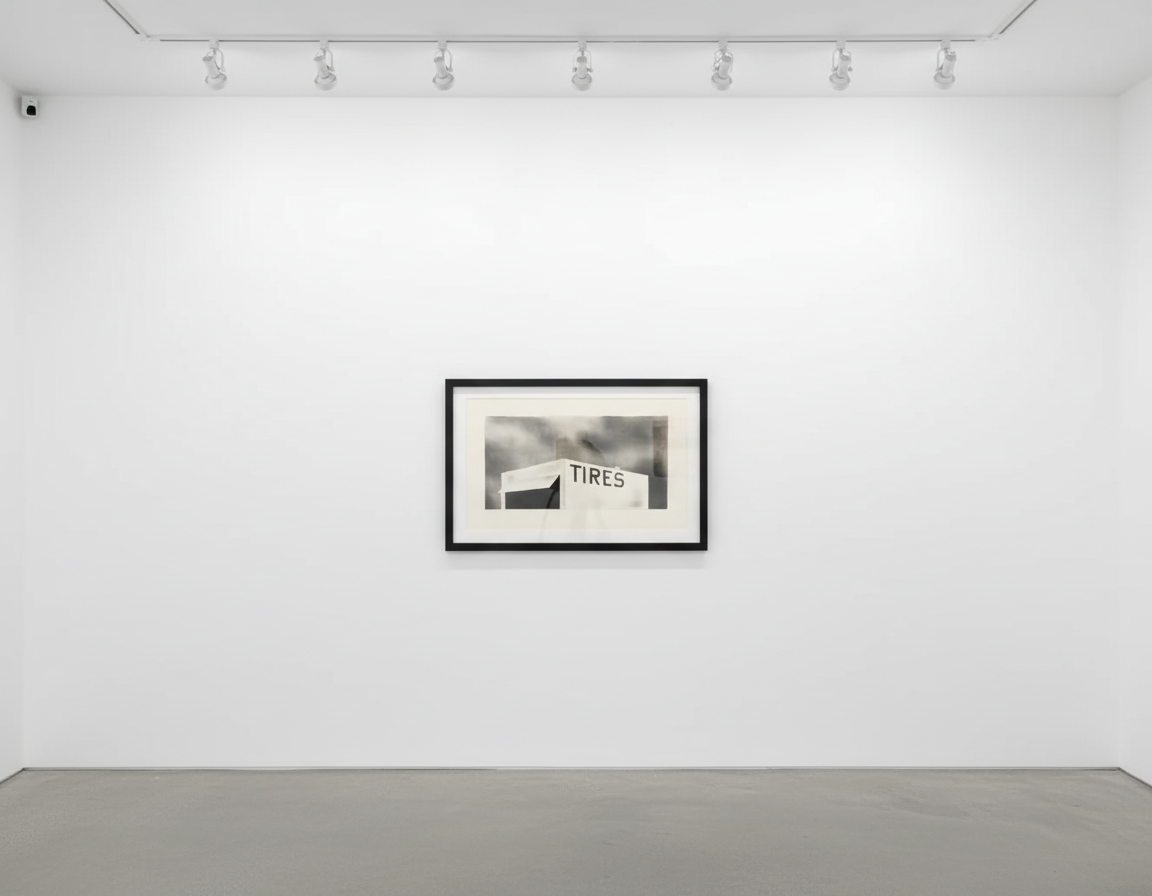
His documentation of Los Angeles architecture and infrastructure represents another significant collecting category. Images of gas stations, particularly the Standard Oil stations that became synonymous with his name, embody his fascination with the vernacular landscape of the American West. Works like "Tool & Die" and "Tires" exemplify his ability to elevate mundane commercial subjects into compelling artistic statements.
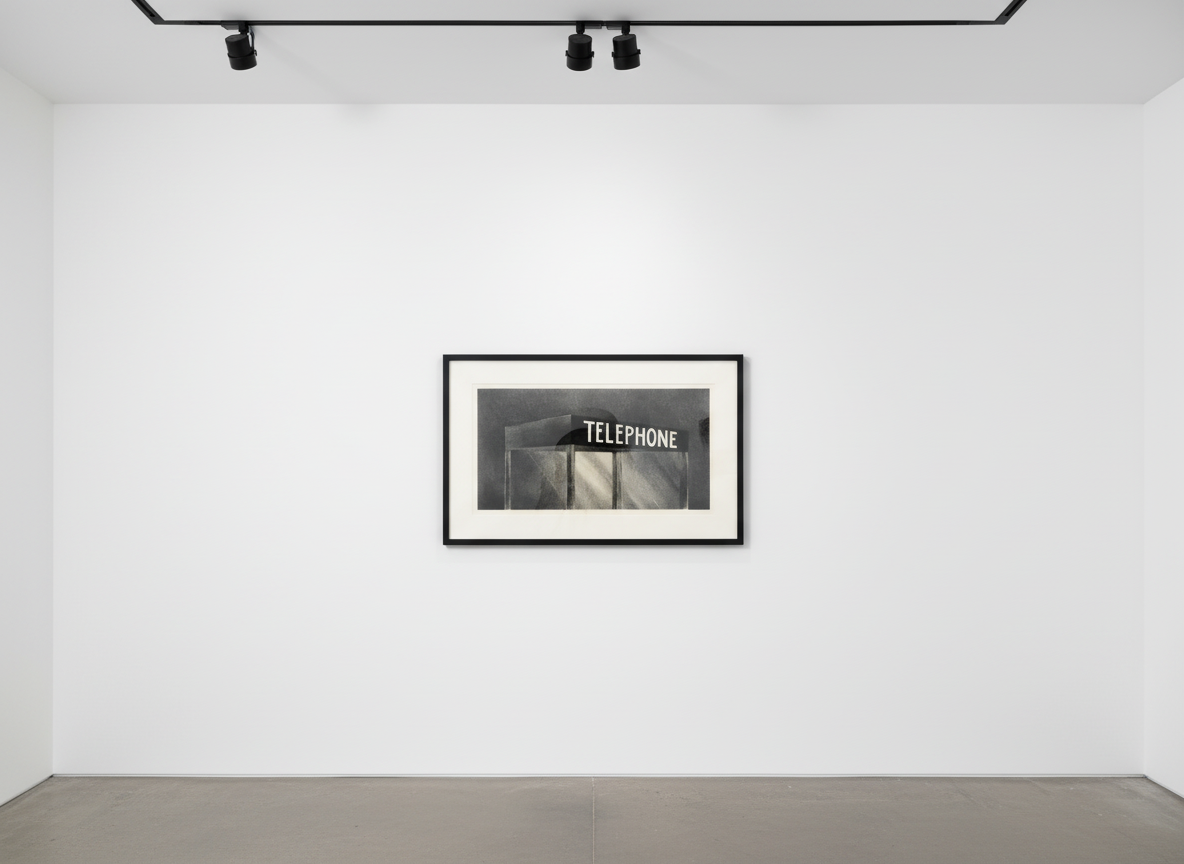
Telephone — Ed Ruscha. Available at Guy Hepner, New York.
The telephone motif appears throughout Ruscha's career, representing communication, connection, and the objects that populate modern life. Similarly, works addressing themes of commerce and industry reflect his ongoing engagement with American capitalism and consumer culture. Collectors building comprehensive holdings often seek examples from multiple thematic categories to represent the full scope of his artistic concerns.
Guy Hepner gallery maintains a distinguished selection of Ed Ruscha artworks for collectors seeking to acquire pieces by this essential American artist. Our expertise in post-war and contemporary art enables us to guide clients through the acquisition process with confidence, whether securing works from our current inventory or sourcing specific pieces through our extensive network. We invite collectors to contact Guy Hepner directly to discuss available Ed Ruscha works, including prints, editions, and unique pieces that represent the finest examples of his celebrated practice.
Explore Ed Ruscha prints for sale at Guy Hepner: Archi-Props, Book Covers, Bow-Tie Landscapes, Etchings, Hollywood.
Related Series