Spot Paintings

Damien Hirst stands as one of the most influential and provocative artists of the late twentieth and early twenty-first centuries. As the leading figure of the Young British Artists movement that emerged in the late 1980s, Hirst has consistently challenged conventional notions of art-making, authorship, and aesthetic value. Among his diverse body of work - which includes the iconic formaldehyde animal sculptures, butterfly paintings, and Spot Paintings - the spin paintings occupy a unique position. These explosively colorful works represent a fascinating intersection of chance, mechanical process, and conceptual inquiry that continues to captivate collectors and critics alike.
The genesis of Damien Hirst's spin paintings can be traced to both personal memory and art-historical precedent. Hirst has frequently acknowledged the children's spin art toy as a primary inspiration - those simple machines found at school fairs and amusement parks where paint is dripped onto a rotating surface to create abstract patterns. This nostalgic reference point is characteristic of Hirst's broader artistic practice, which often draws upon familiar objects and experiences to explore profound philosophical questions.
What distinguishes Hirst's approach from mere childhood recreation is the conceptual framework he constructed around the process. When he began creating spin paintings in the early 1990s, Hirst was deeply engaged with questions about the role of the artist's hand in creative production. By employing a mechanical spinning apparatus, he deliberately removed traditional markers of artistic skill - brushwork, composition, deliberate mark-making - and replaced them with centrifugal force and gravity. The artist becomes less a craftsman and more an orchestrator of circumstances.
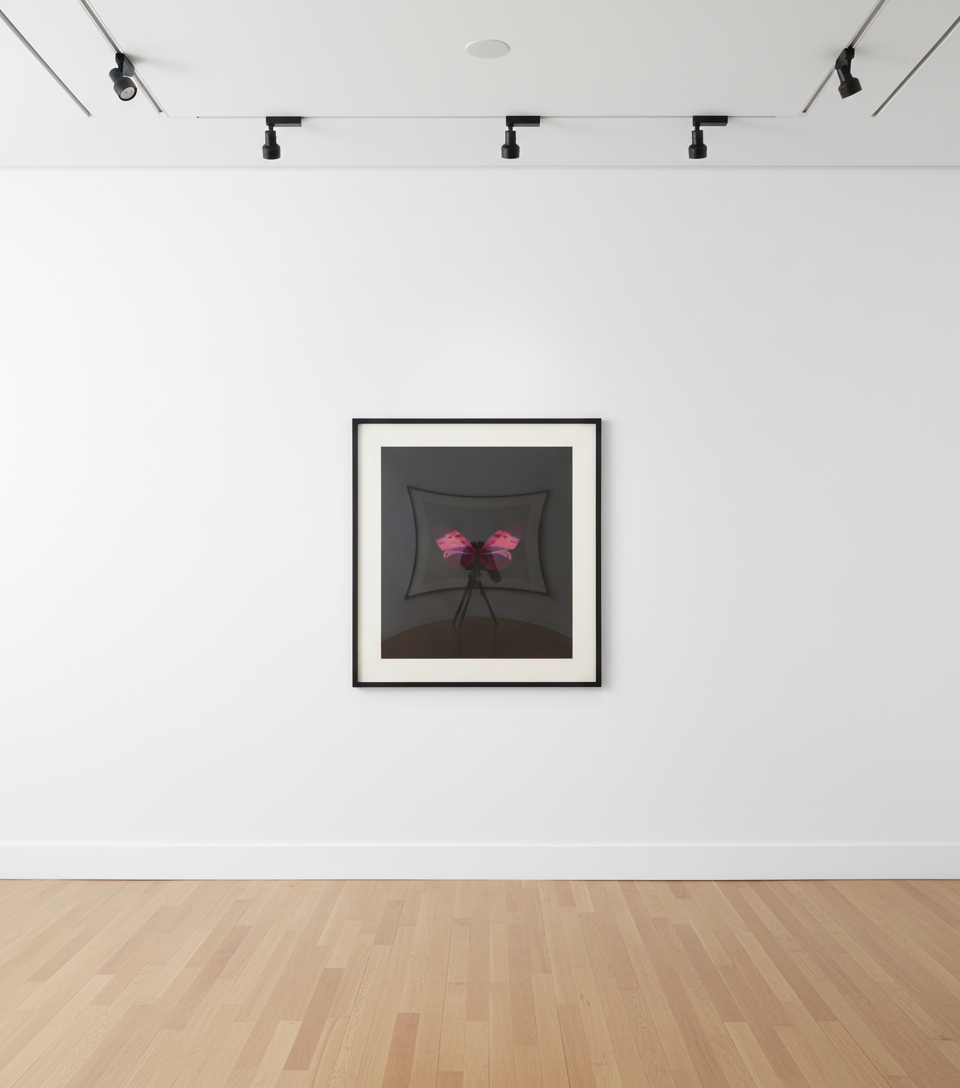
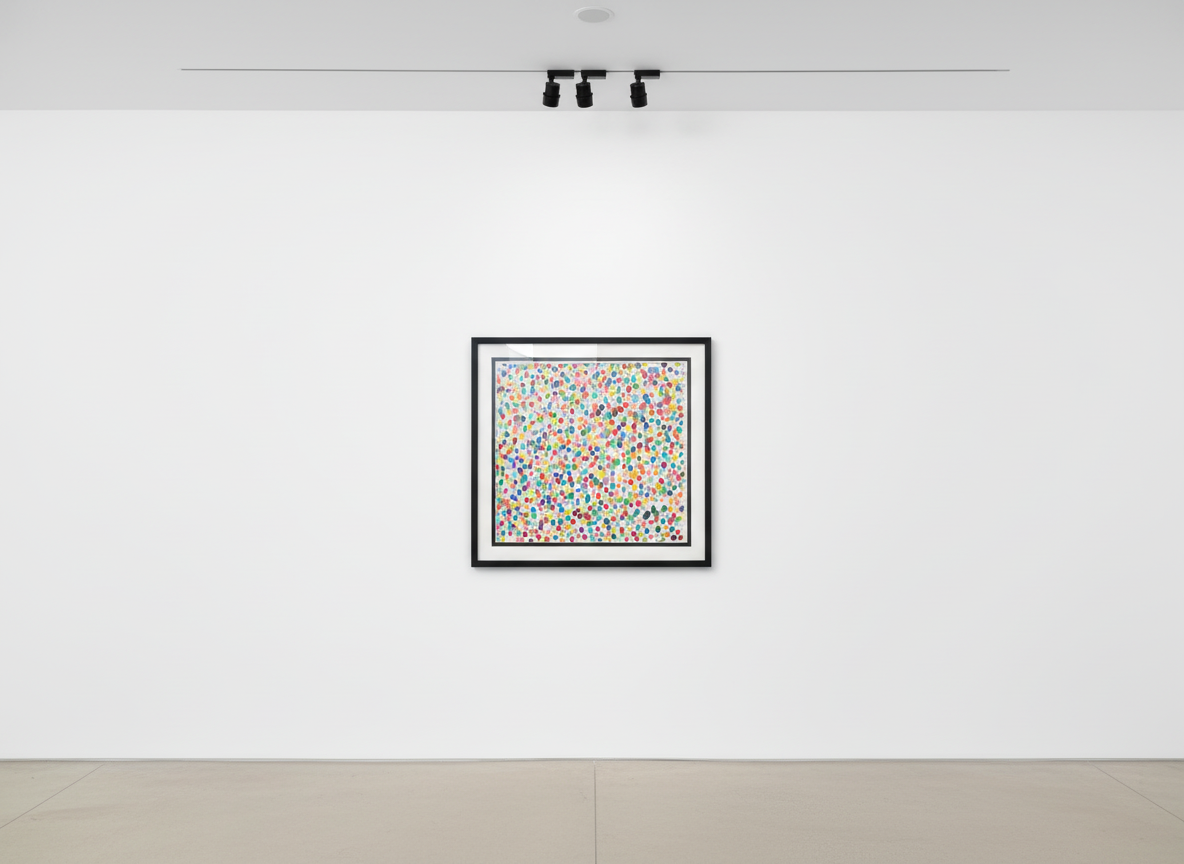
Methylamine 13c — Damien Hirst. Available at Guy Hepner, New York.
The first significant spin paintings emerged around 1992-1993, coinciding with Hirst's rapid ascent in the international art world. These early works were created using a modified spin-painting machine capable of handling large canvases, transforming what had been a children's craft into monumental statements. Hirst titled these pieces "Beautiful" followed by various descriptive phrases - a practice that continued throughout the series and emphasized their aesthetic immediacy while subtly questioning the nature of beauty itself.
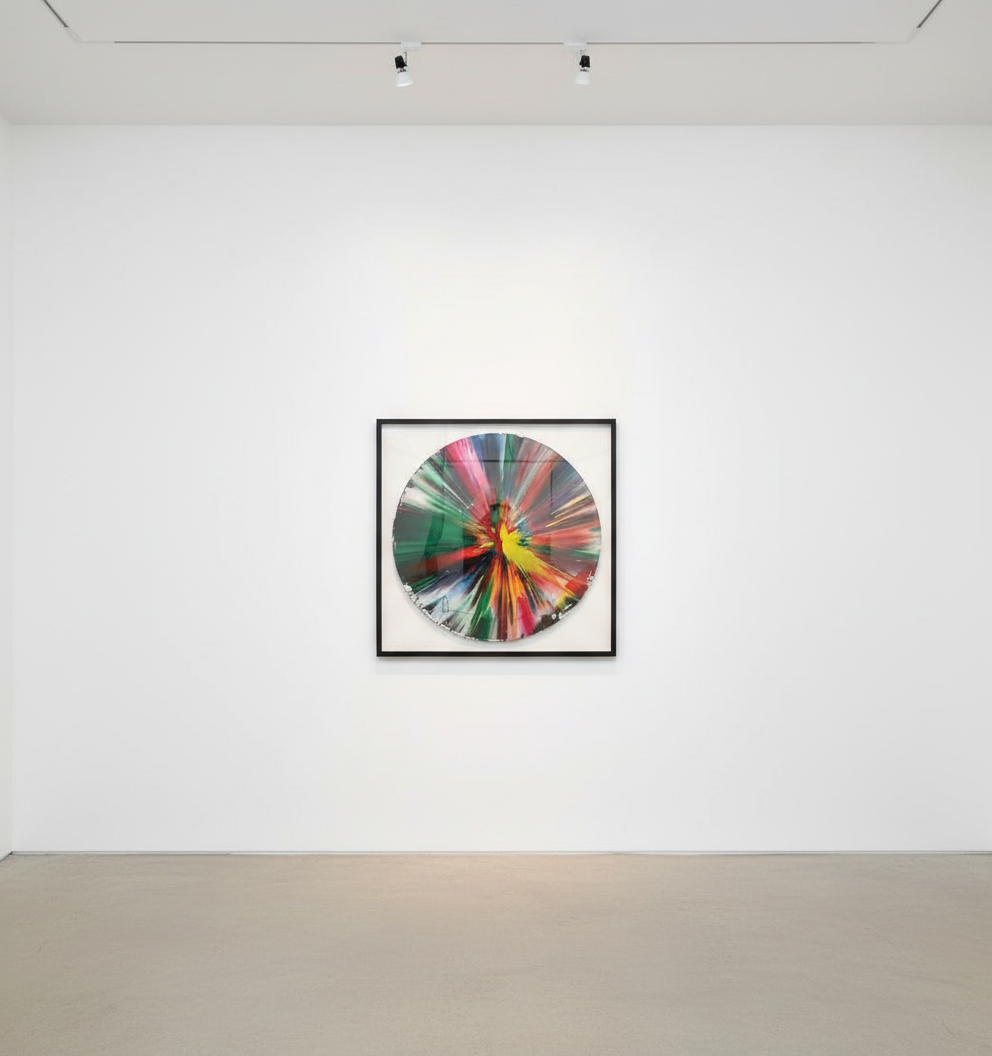
The creation of a Damien Hirst spin painting involves a carefully calibrated surrender of control. Canvases - which range from intimate circles to massive rectangular formats - are secured to a motorized spinning platform. As the surface rotates at varying speeds, household gloss paint is poured or flung onto the canvas. Centrifugal force pulls the paint outward in radiating bands, creating the distinctive swirling patterns that define the series.
This process raises fundamental questions that have occupied artists and philosophers for centuries. If the artist does not directly control where each drop of paint lands, can the resulting work be considered an authentic expression of artistic vision? Hirst's answer is characteristically provocative - he argues that the conceptual framework, the selection of colors, the timing of paint application, and the decision to designate the result as art are themselves creative acts of the highest order.
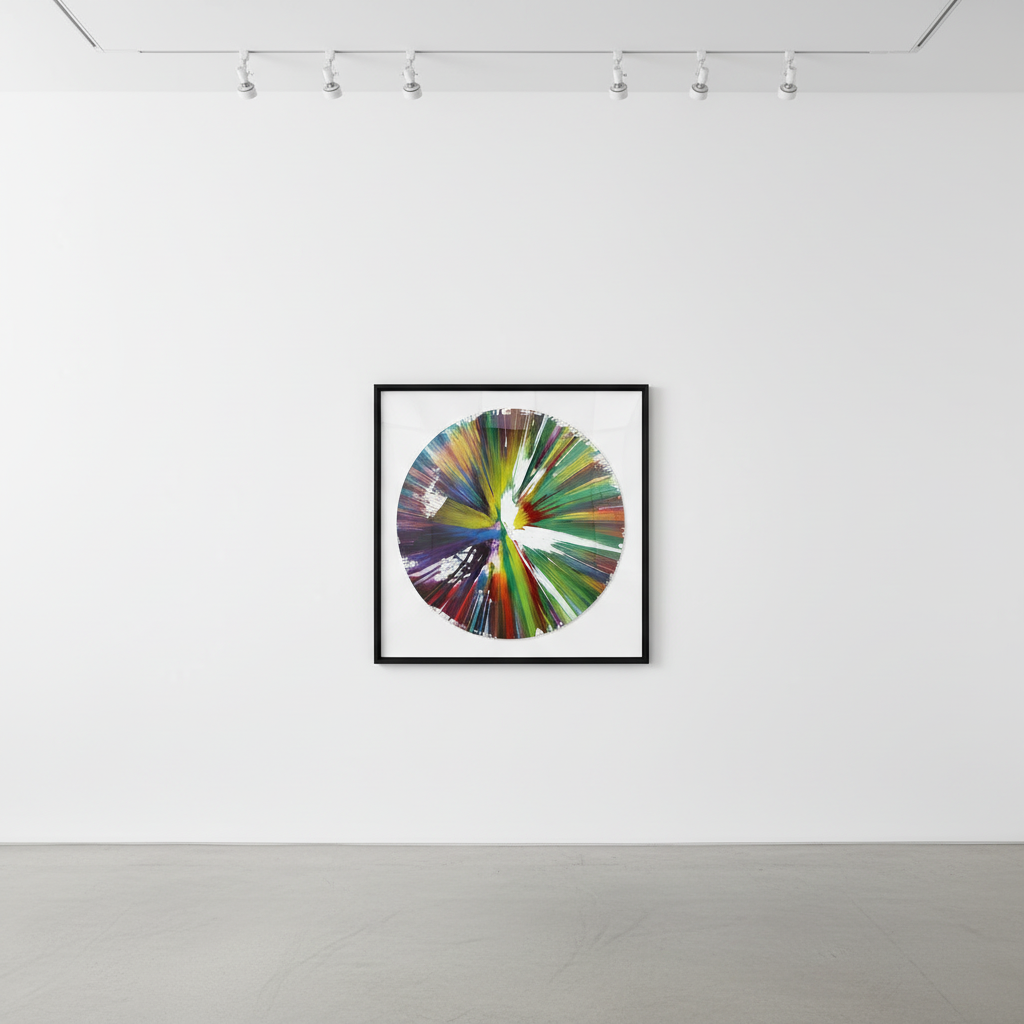
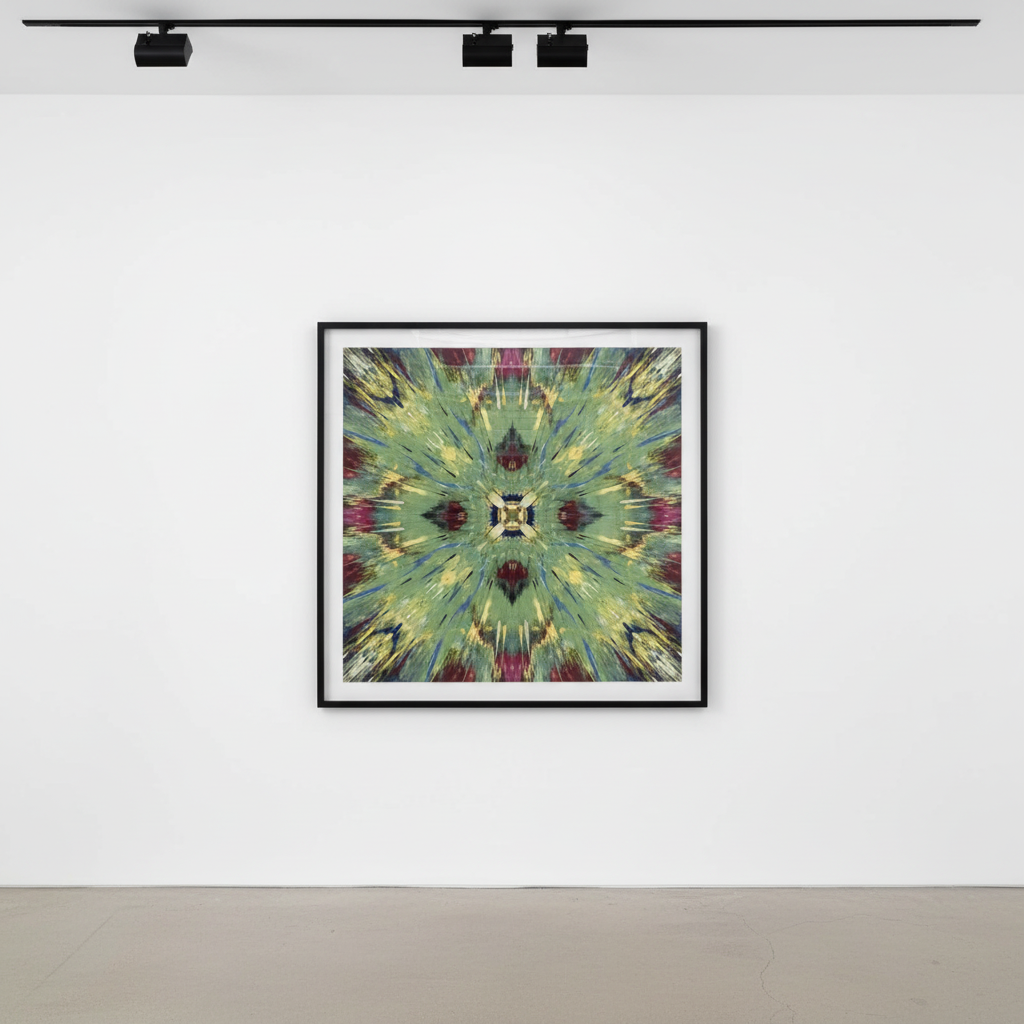
All you need is love, love, love (Diamond Dust) — Damien Hirst. Available at Guy Hepner, New York.
This position places Hirst within a lineage stretching from Marcel Duchamp's readymades through John Cage's chance operations to the process-based works of artists like Morris Louis and the action paintings of Jackson Pollock. Yet Hirst's spin paintings differ in their forthright embrace of mechanical production and their refusal of the gestural heroism associated with Abstract Expressionism. Where Pollock's drip paintings celebrated the physical engagement of the artist's body, Hirst's spin paintings celebrate its absence.
The philosophical implications extend further when considering Hirst's studio practice. Many spin paintings have been produced by assistants following Hirst's specifications - a practice the artist has never concealed and one that echoes the workshop traditions of Old Masters like Rubens and Rembrandt. This delegation of execution has drawn criticism from some quarters but has also reinforced Hirst's conceptualist credentials, demonstrating that artistic value resides in conception rather than manual execution.
The market performance of Damien Hirst's spin paintings reflects both the artist's towering reputation and the works' distinctive visual appeal. According to data from Christie's and Sotheby's, spin paintings have achieved significant results at auction, with major examples commanding prices that position them among the most sought-after works in contemporary art. The 2008 Sotheby's sale "Beautiful Inside My Head Forever" - in which Hirst bypassed galleries entirely to sell work directly at auction - included numerous spin paintings and demonstrated unprecedented collector demand.
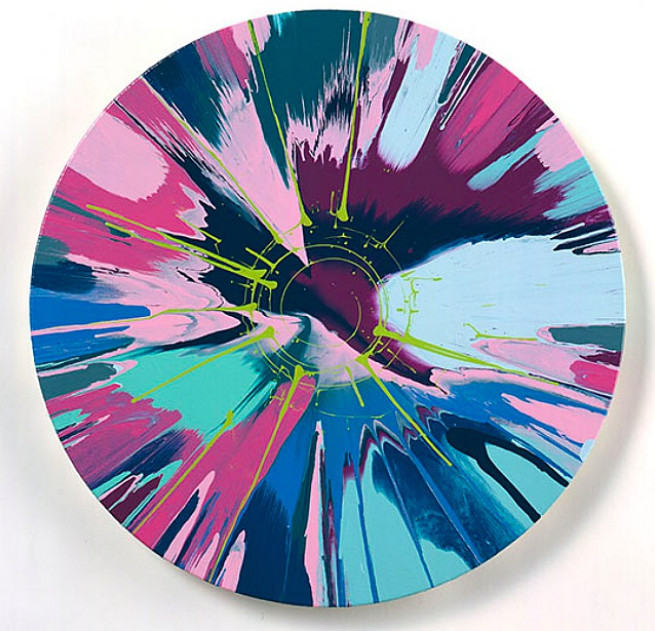
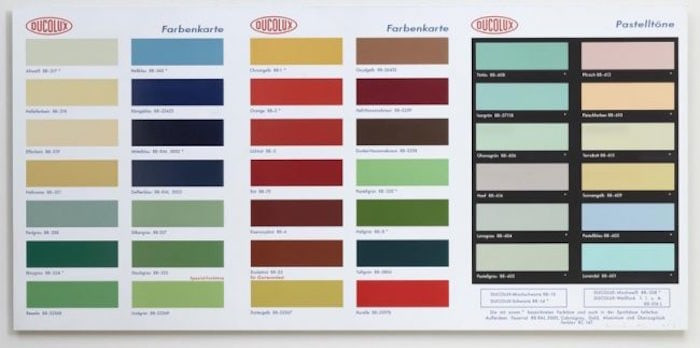
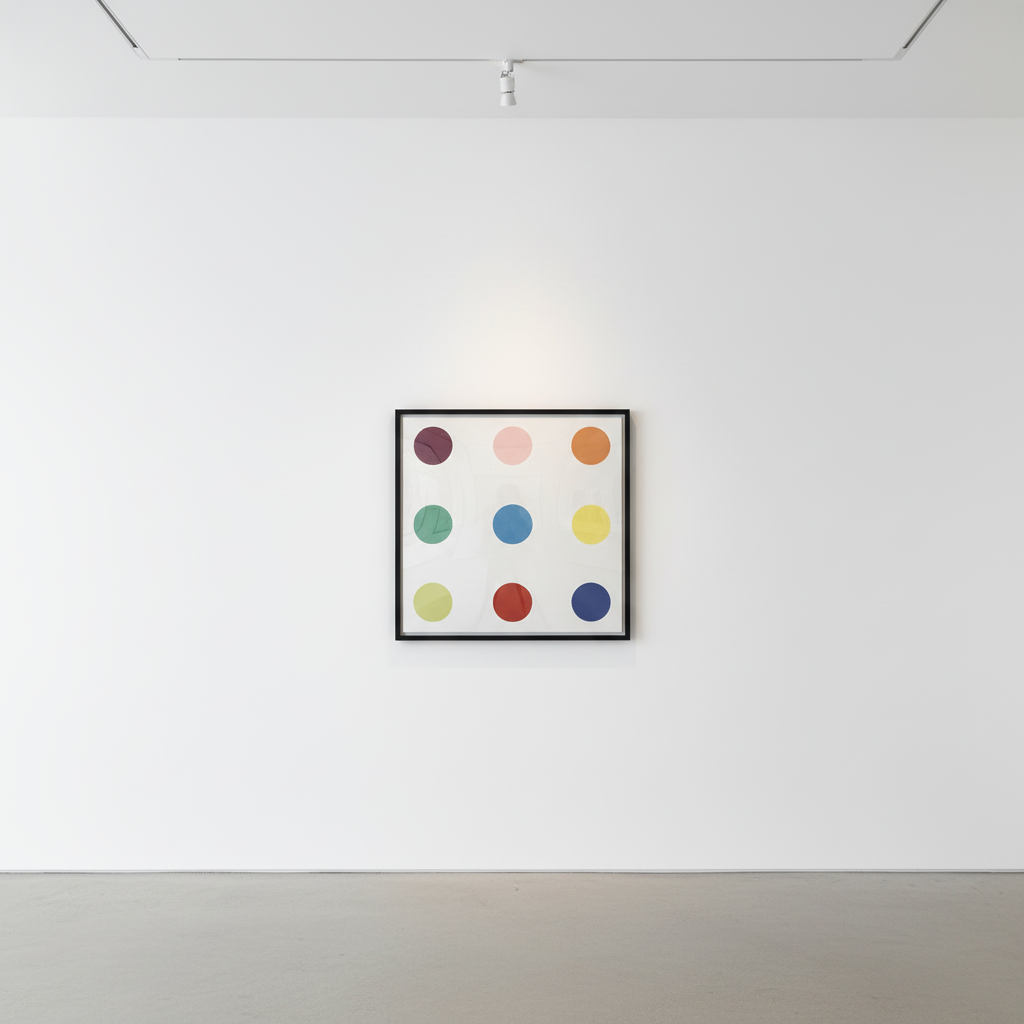
Mannitol — Damien Hirst. Available at Guy Hepner, New York.
For collectors, the spin paintings offer several compelling attributes. Their immediate visual impact makes them powerful presences in residential and corporate environments alike. The combination of Hirst's conceptual rigor with genuine aesthetic pleasure resolves a tension that characterizes much contemporary art. Furthermore, as documented in the Art Basel and UBS Global Art Market Report, works by established contemporary artists with strong institutional histories continue to demonstrate resilience and appreciation in value - criteria that Hirst's oeuvre exemplifies.
The spin paintings also function as accessible entry points into Hirst's broader practice. While the formaldehyde works present logistical challenges and the pharmaceutical cabinets carry darker connotations, the spin paintings radiate unambiguous joy. This does not diminish their conceptual sophistication but rather demonstrates Hirst's ability to layer meaning beneath surfaces of pure visual pleasure.
Three decades after their introduction, Damien Hirst's spin paintings remain vital works that continue to generate scholarly discussion and collector interest. They anticipated many concerns that would come to dominate contemporary art discourse - questions about mechanical reproduction, artistic labor, and the boundaries between high art and popular culture. In an era increasingly shaped by artificial intelligence and algorithmic creation, Hirst's early experiments in relinquishing authorial control appear remarkably prescient.
The spin paintings also reveal an aspect of Hirst's sensibility that can be overlooked amid the provocations of his more confrontational work - a genuine delight in color, form, and the unpredictable beauty that emerges when carefully constructed systems encounter chance. They remind us that conceptual art need not be austere or alienating but can instead celebrate the sheer pleasure of looking.
Guy Hepner is pleased to offer select works from Damien Hirst's celebrated spin painting series, alongside related editions and unique pieces from the artist's extensive practice. Our gallery provides collectors with expert guidance on acquiring works by Hirst and other leading contemporary artists, ensuring authenticity, provenance, and exceptional quality. To inquire about available Damien Hirst spin paintings or to discuss building your collection, please contact Guy Hepner directly.
--- **Browse Damien Hirst prints and editions** at Guy Hepner: [Damien Hirst art for sale](/damien-hirst) | [Sell your Damien Hirst](/sell/damien-hirst)Explore Damien Hirst prints for sale at Guy Hepner: Spot Paintings, Blossoms, Colour Chart, H1 - Enter the Infinite, H10 - the Empresses.
Related Series