Basketball
12 works

Jonas Wood's Plants and Clippings series represents one of the most strategically significant entry points into a market that has demonstrated exceptional institutional validation and sustained collector demand.
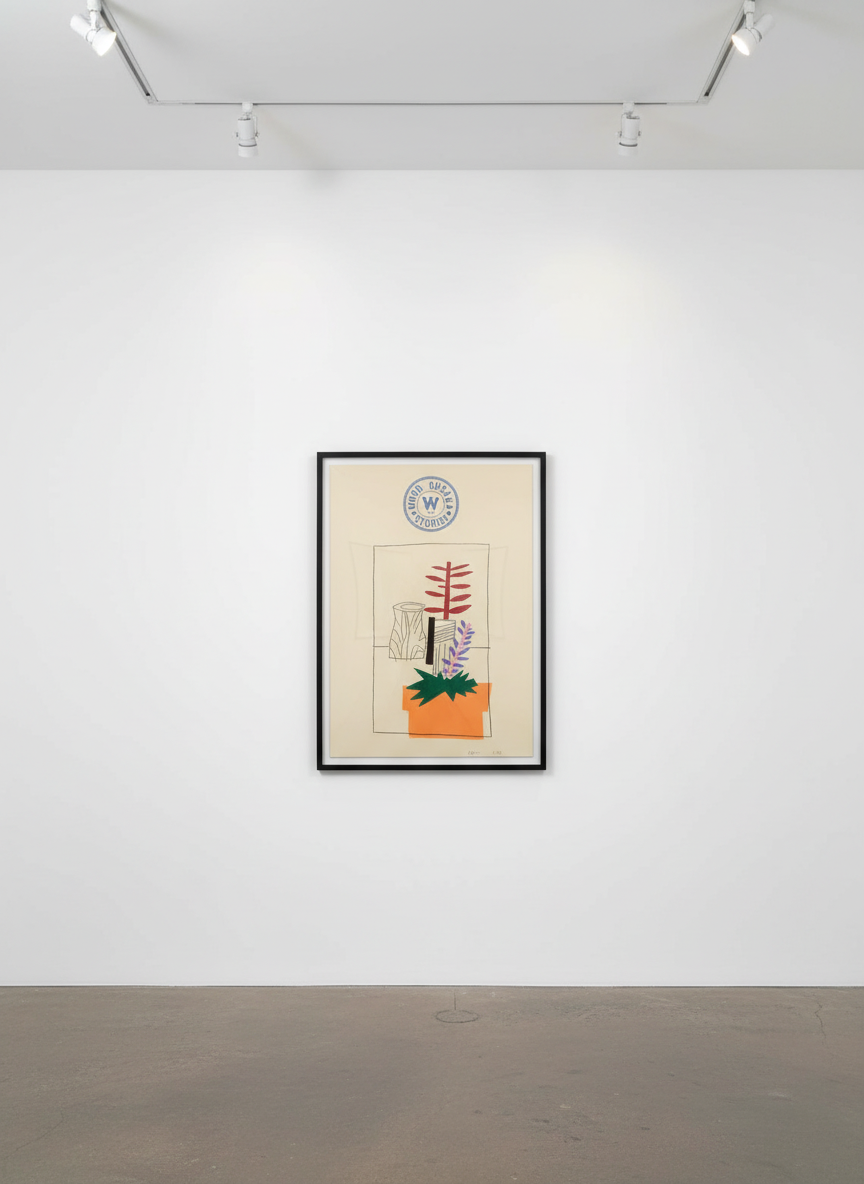
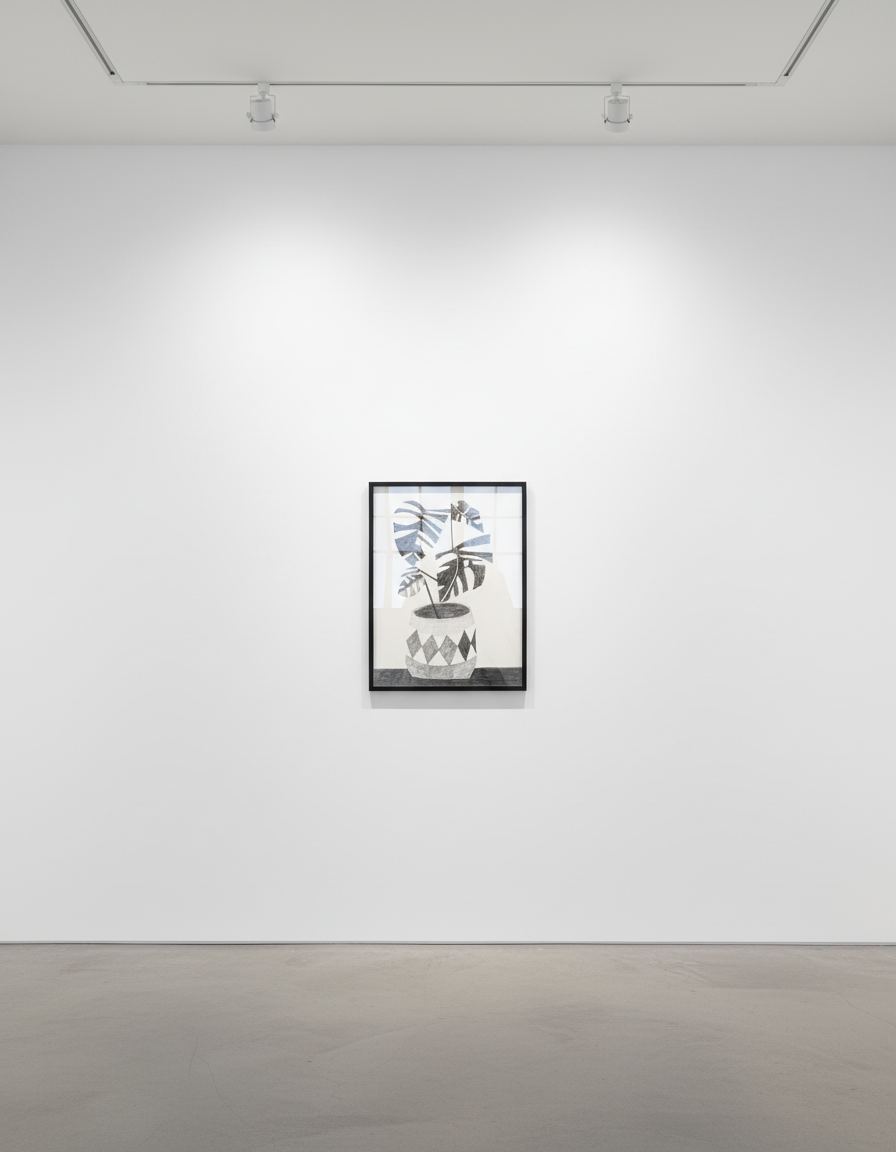
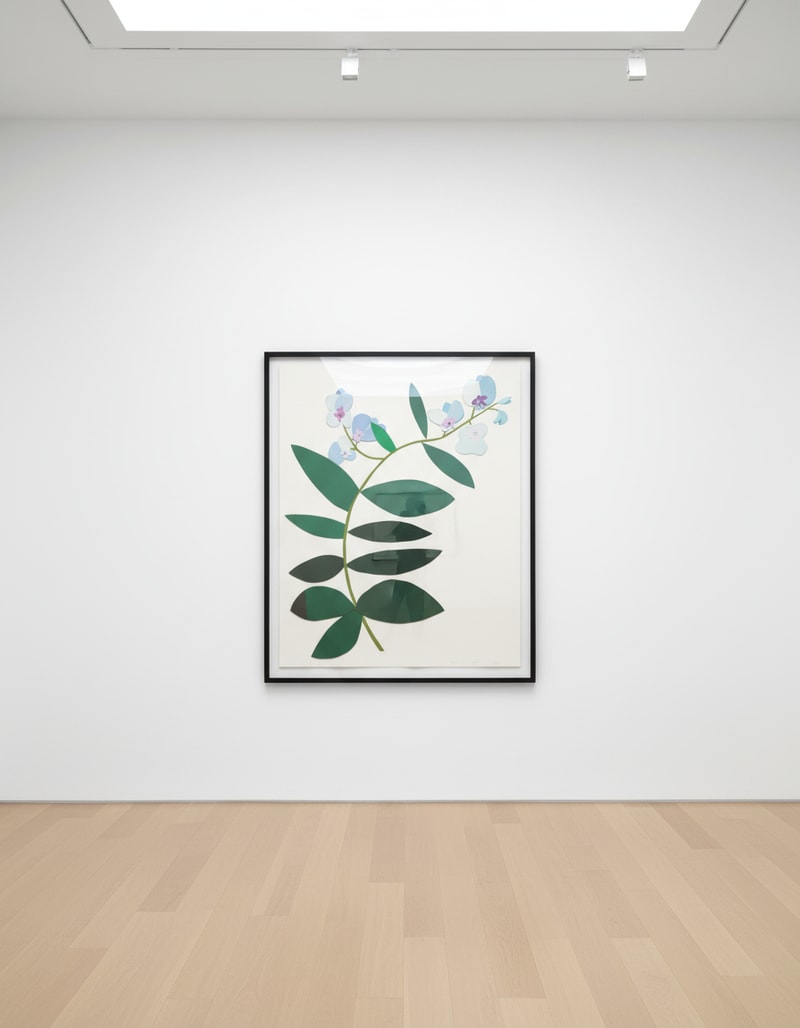
The Plants and Clippings series crystallizes Jonas Wood's defining artistic preoccupation: the transformation of domestic botanical subjects into vibrant geometric compositions that balance observational intimacy with formal abstraction. Born in Boston in 1977, Wood pursued rigorous academic training, earning his BFA from the University of Washington before completing his MFA at Tufts University. This foundation in drawing and color theory manifests throughout the Plants and Clippings works, where each leaf, stem, and vessel receives the same compositional attention typically reserved for figurative portraiture.
Wood's representation by both Gagosian and David Kordansky Gallery positions him within the uppermost tier of contemporary market infrastructure. His presence in the permanent collections of the Museum of Modern Art, the Whitney Museum of American Art, and the Los Angeles County Museum of Art confirms institutional consensus regarding his historical significance. The Plants and Clippings series translates this blue-chip positioning into editioned works, allowing collectors to acquire Wood's distinctive visual language without competing for unique paintings that now command prices approaching seven figures.
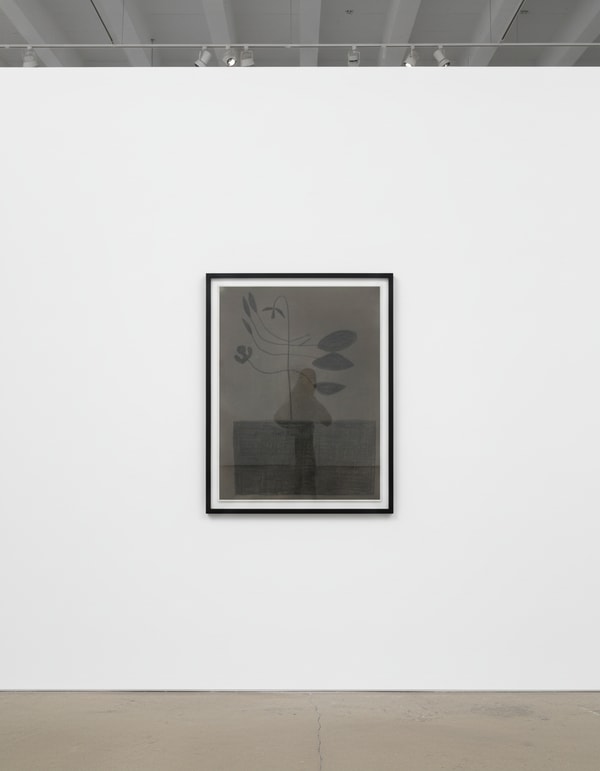
The series draws from Wood's personal environment—houseplants photographed in his Los Angeles studio, clippings arranged on windowsills, bonsai trees cultivated over years. This autobiographical dimension connects the works to broader art historical traditions of still life while maintaining the flattened, graphic sensibility that defines Wood's contemporary relevance.
The Plants and Clippings series showcases extraordinary technical range, with Wood collaborating with master printmakers to achieve effects impossible through conventional reproduction methods. This technical ambition distinguishes the series as collectible objects rather than mere multiples.
Holiday Print (2018) exemplifies Wood's chromatic sophistication through nine-color screenprinting on Rising museum board. The layered ink application creates optical depth while maintaining the flat, graphic quality central to Wood's aesthetic. Rising museum board provides archival stability alongside a surface texture that enhances color saturation.
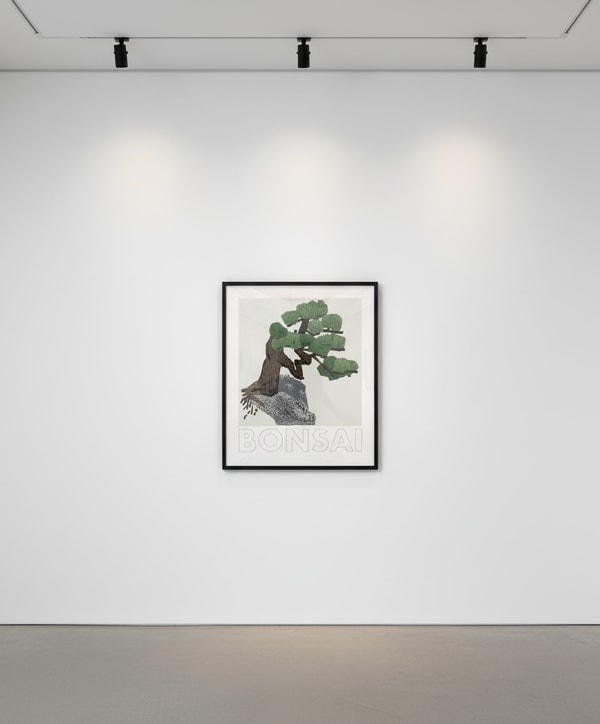
Five Bonsais (2024) represents Wood's most culturally expansive print project, employing traditional Japanese Ukiyo-e woodcut techniques. This collaboration honors centuries of botanical printmaking tradition while filtering it through Wood's contemporary geometric vocabulary. The Ukiyo-e process demands exceptional precision, with each color requiring a separate carved block—a technical investment that elevates these works beyond standard contemporary editions.
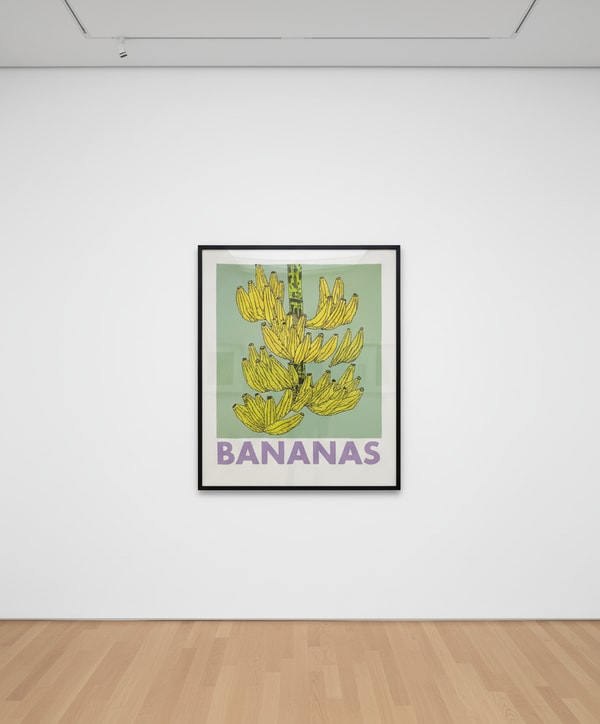
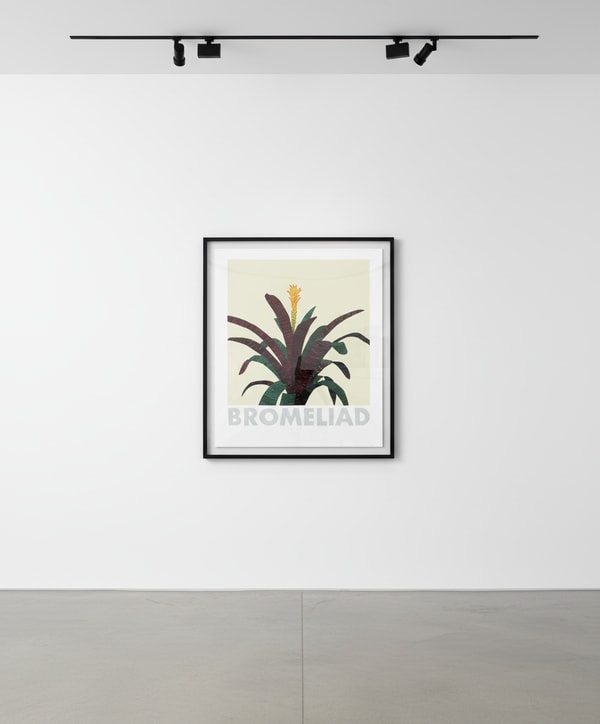
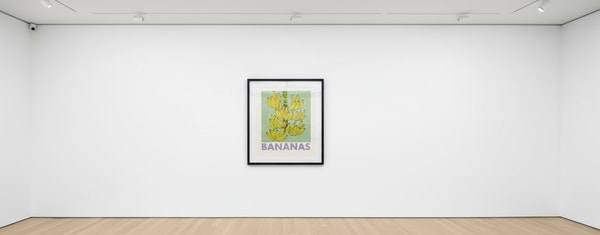
Bromeliad / Bananas / Bonsai (2022) pushes technical boundaries through thirteen-color screen printing on Rising museum board. The expanded color palette enables subtle gradations within Wood's characteristic bold forms, creating luminous surfaces that reward extended viewing.
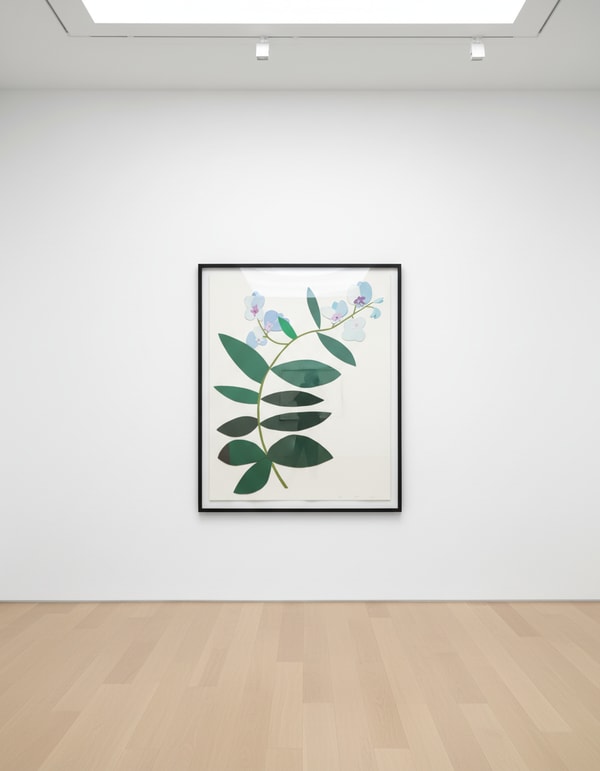
Three Clippings (White) (Set of Three) (2018) and related Mixografía editions demonstrate Wood's commitment to dimensional printmaking. The Mixografía process, developed in Mexico City, creates relief surfaces through cast paper techniques, adding sculptural presence to two-dimensional imagery. These editions feature embossing on handmade paper, transforming botanical subjects into tactile objects that exist between print and sculpture.
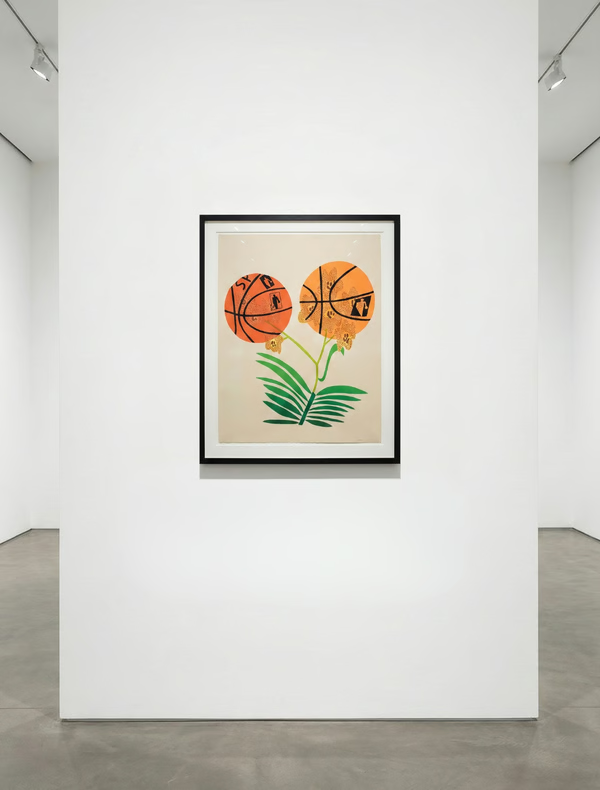
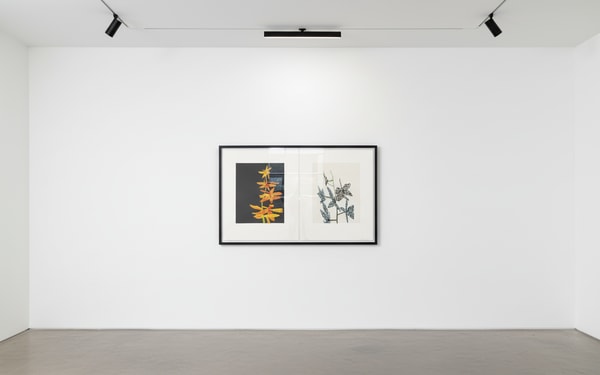
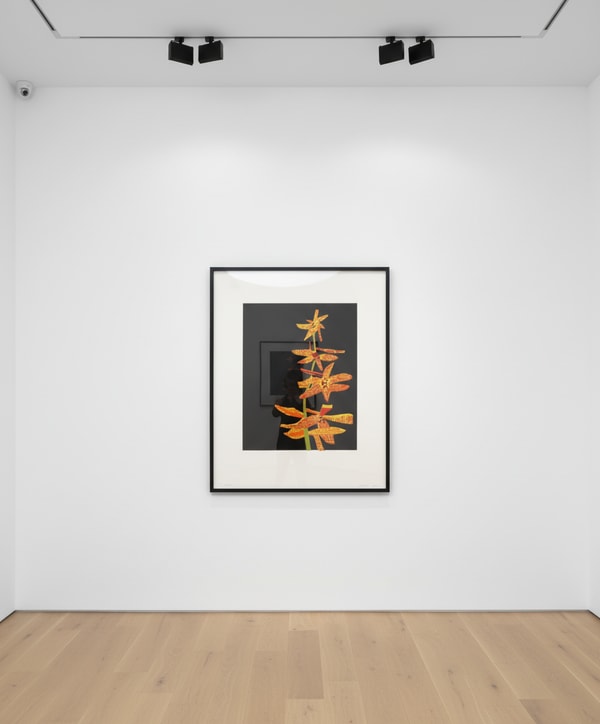
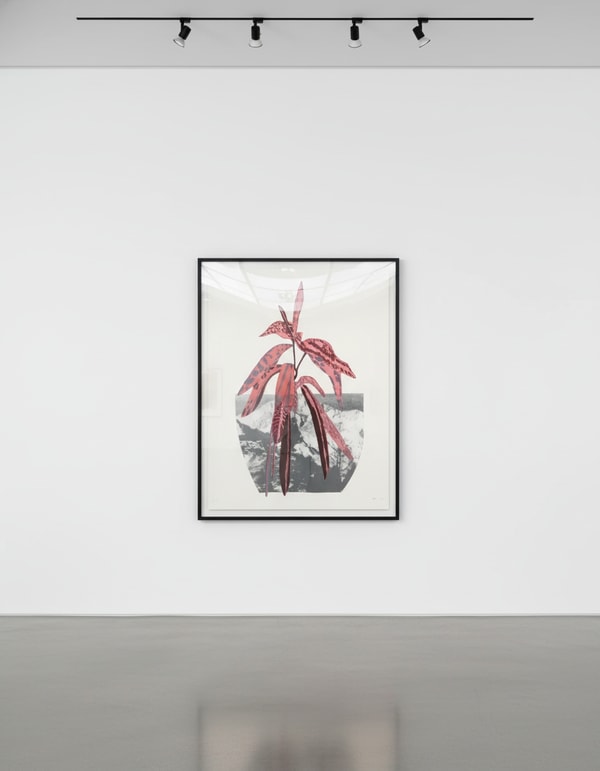
Untitled (Orchid Diptych) (2015) and Untitled (pink) (2014) represent earlier explorations in silkscreen and lithographic combination, documenting Wood's evolving technical vocabulary while maintaining consistent thematic focus on cultivated nature.
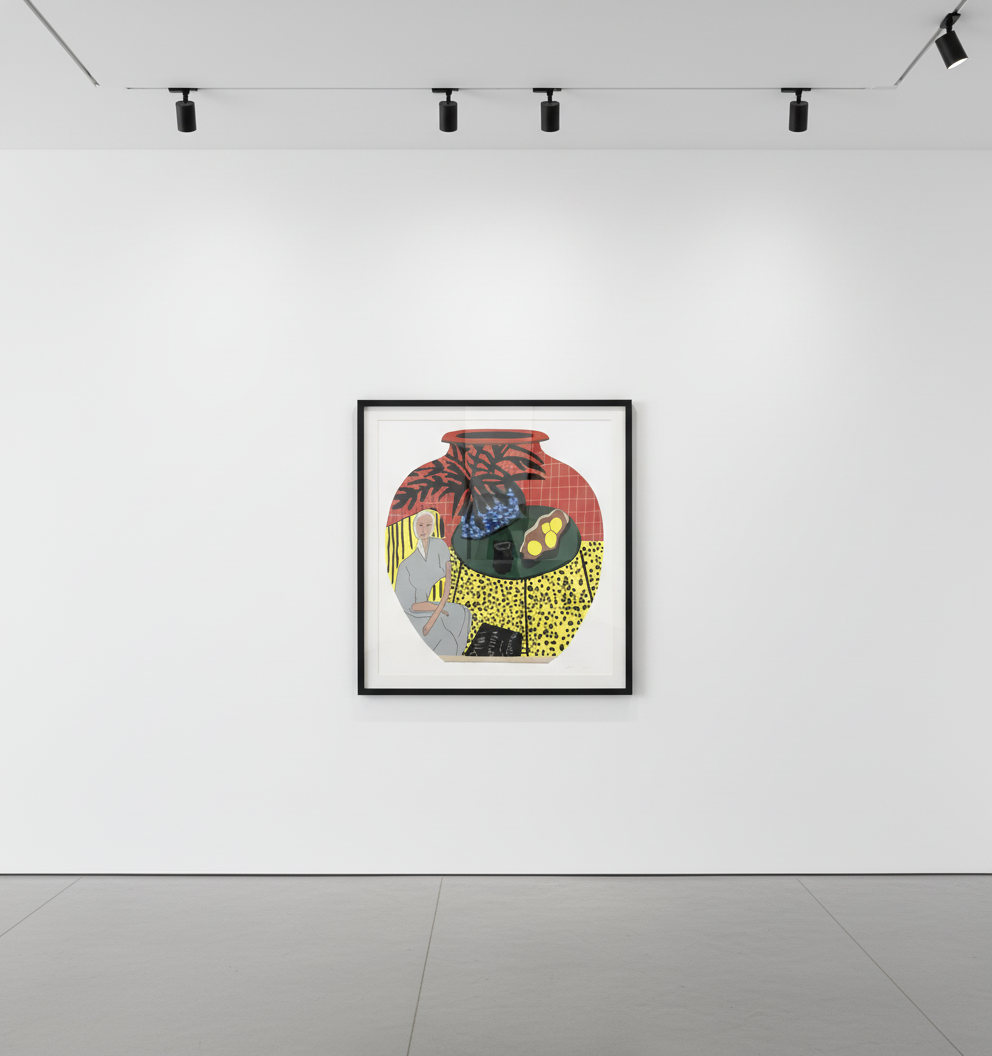
Jonas Wood has developed a distinctive painting language built from flattened perspective, bold pattern, and a personal iconography of interiors, plants, and everyday objects rendered with a graphic clarity that draws on collage, printmaking, and observational drawing in equal measure. His compositions frequently incorporate multiple perspectives within a single image — a table seen from above alongside a wall seen straight on — creating a controlled visual tension that has become a signature of his mature style.
Wood's paintings and works on paper are held in the collections of major institutions and have been the subject of significant gallery and museum exhibitions internationally, establishing him as one of the most distinctive figurative painters of his generation.
17 works available
Jonas Wood
3 Clippings
2018
Jonas Wood
Bananas
2021
Jonas Wood
Black Plant
2010
Jonas Wood
Bonsai
2022
Jonas Wood
Bromeliad
2020
Jonas Wood
Bromeliad / Bananas / Bonsai
2022
Jonas Wood
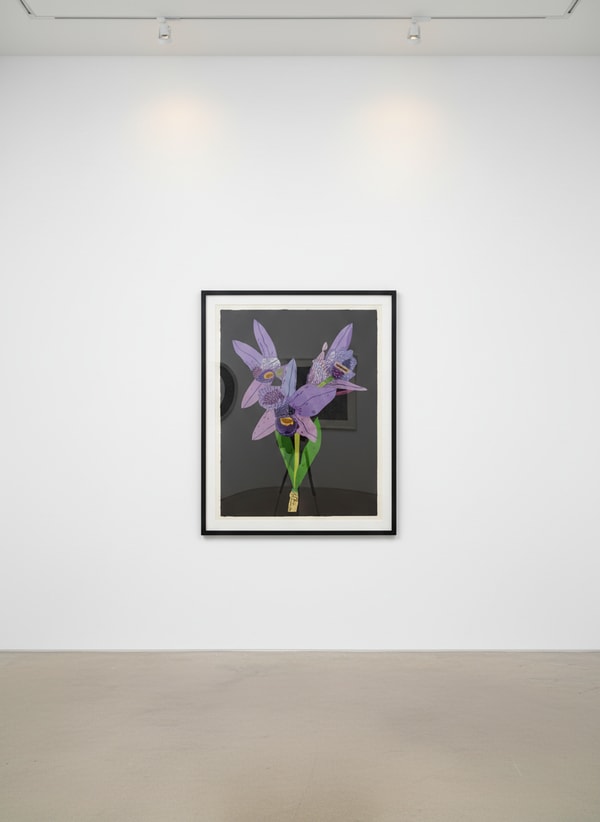
Dogface Purple Orchids
2022
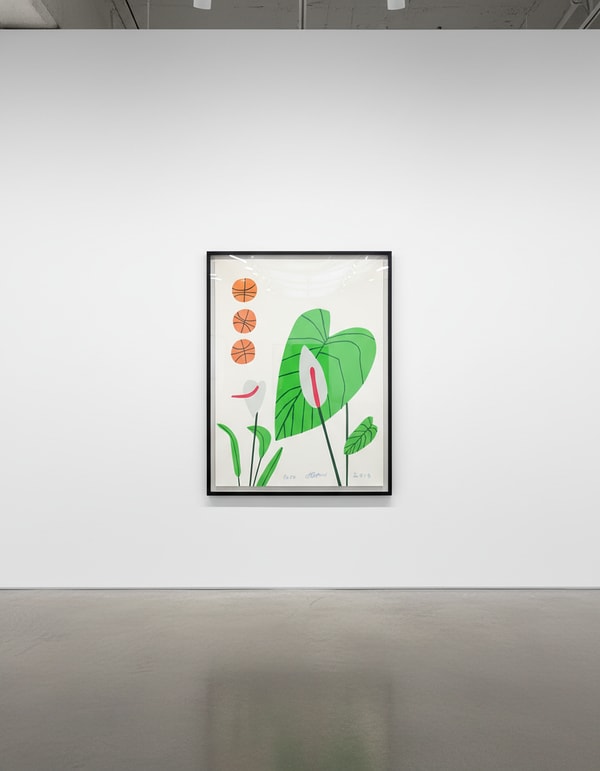
Jonas Wood
Holiday Print
2018
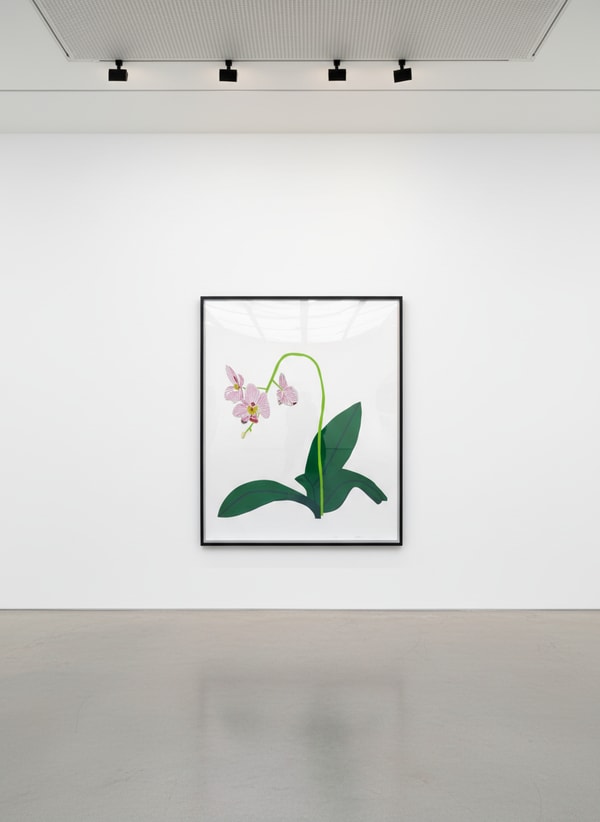
Jonas Wood
Single Clipping
2018
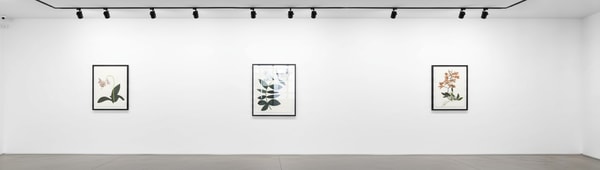
Jonas Wood
Three Clippings
2018
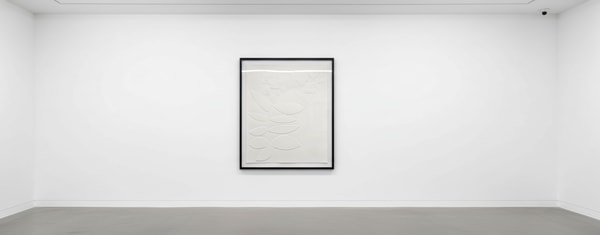
Jonas Wood
Three Clippings (White) (Set Of Three)
2018

Jonas Wood
Three Landscape Pots : Night Bloom, Orchid, Bromeliad
2019
Jonas Wood
Untitled (Orchid Diptych)
2015
Jonas Wood
Untitled (Orchid II)
2015
Jonas Wood
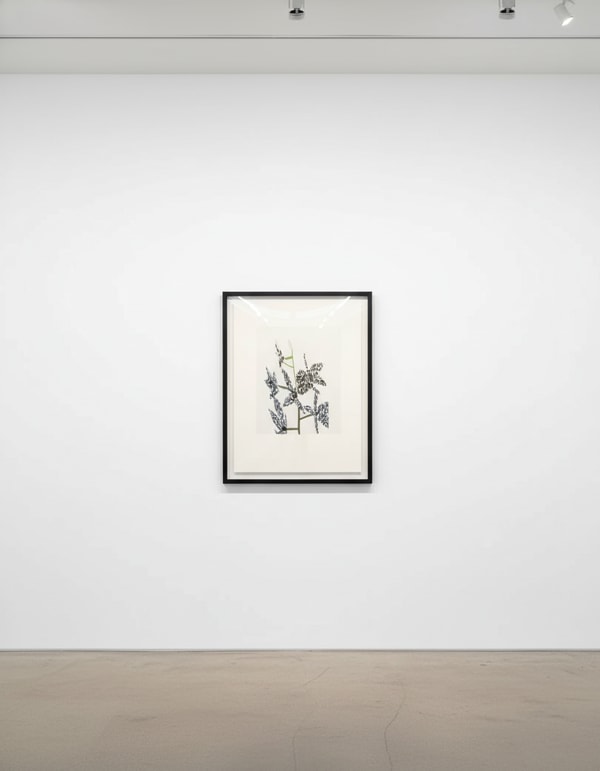
Untitled (Orchid)
2015
Jonas Wood
Untitled (pink)
2014
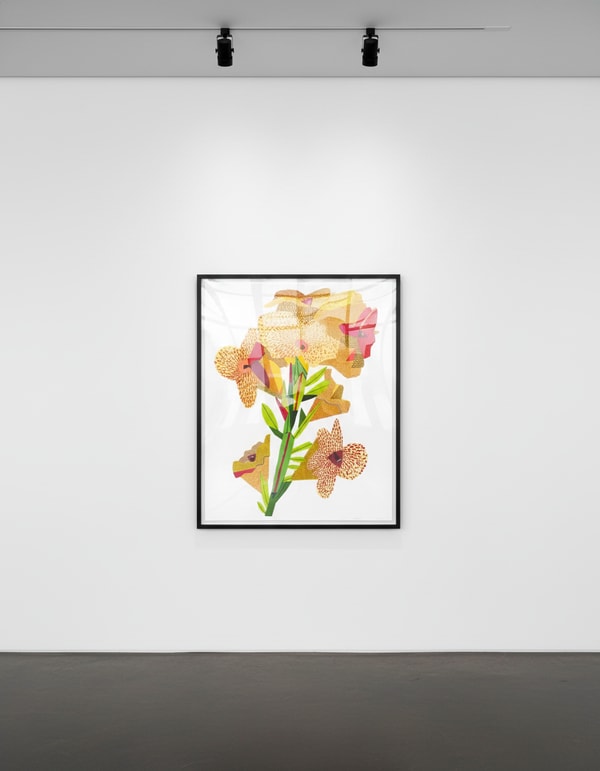
Jonas Wood
Yellow Flower
2022
Market Data
See real auction history, estimate ranges and price benchmarks for individual Plants and Clippings prints, sourced from Christie's, Sotheby's and other major auction houses.
Frequently Asked Questions
Jonas Wood Plants and Clippings prints for sale are available at Guy Hepner Gallery, 177 Tenth Avenue, New York. We offer authenticated editions with full provenance documentation sourced from the secondary market and directly from publishers.
Jonas Wood Plants and Clippings works — 17 available — are typically produced as limited editions, individually signed and numbered by the artist. Contact Guy Hepner Gallery for edition details on specific works.
Pricing for Jonas Wood Plants and Clippings prints varies by edition size, date, and condition. Contact Guy Hepner Gallery for current market pricing and availability.
From the Journal
More Jonas Wood Series
View all Jonas Wood works →