Basketball
12 works

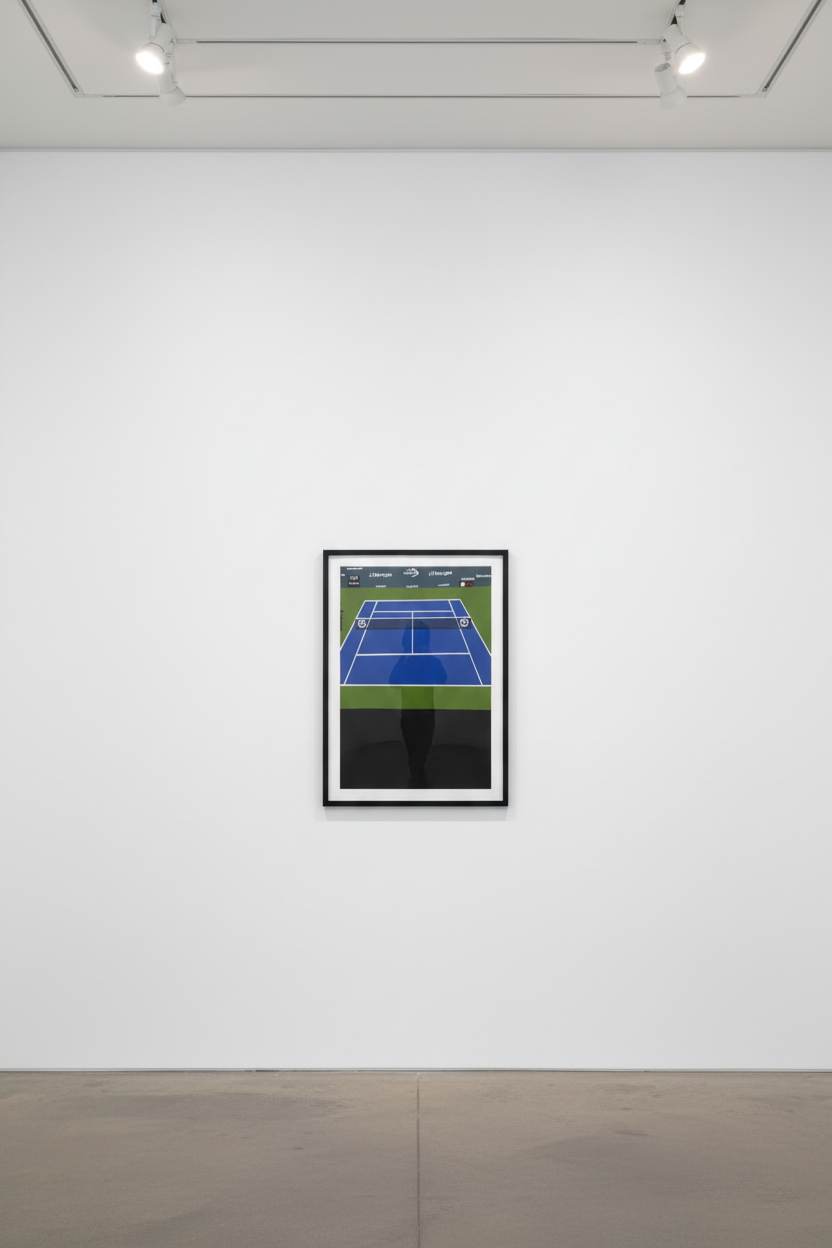
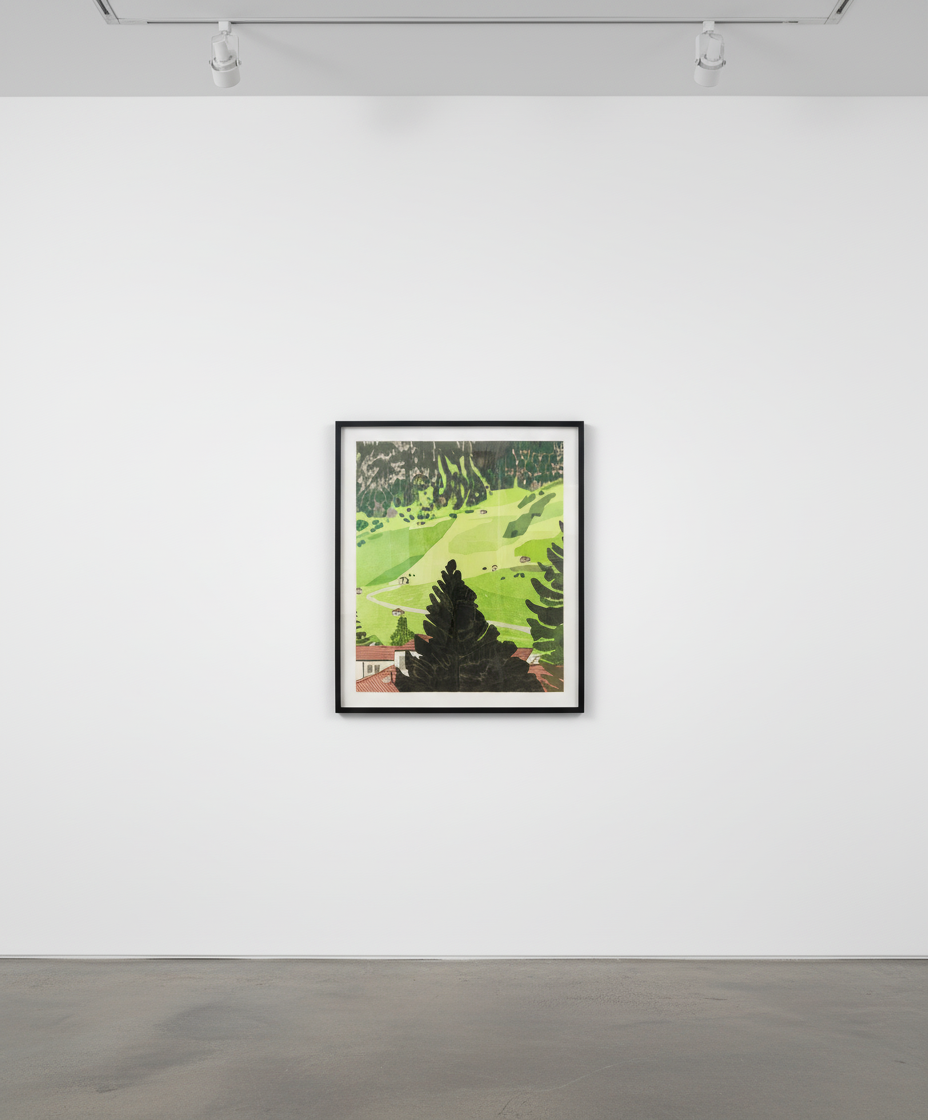
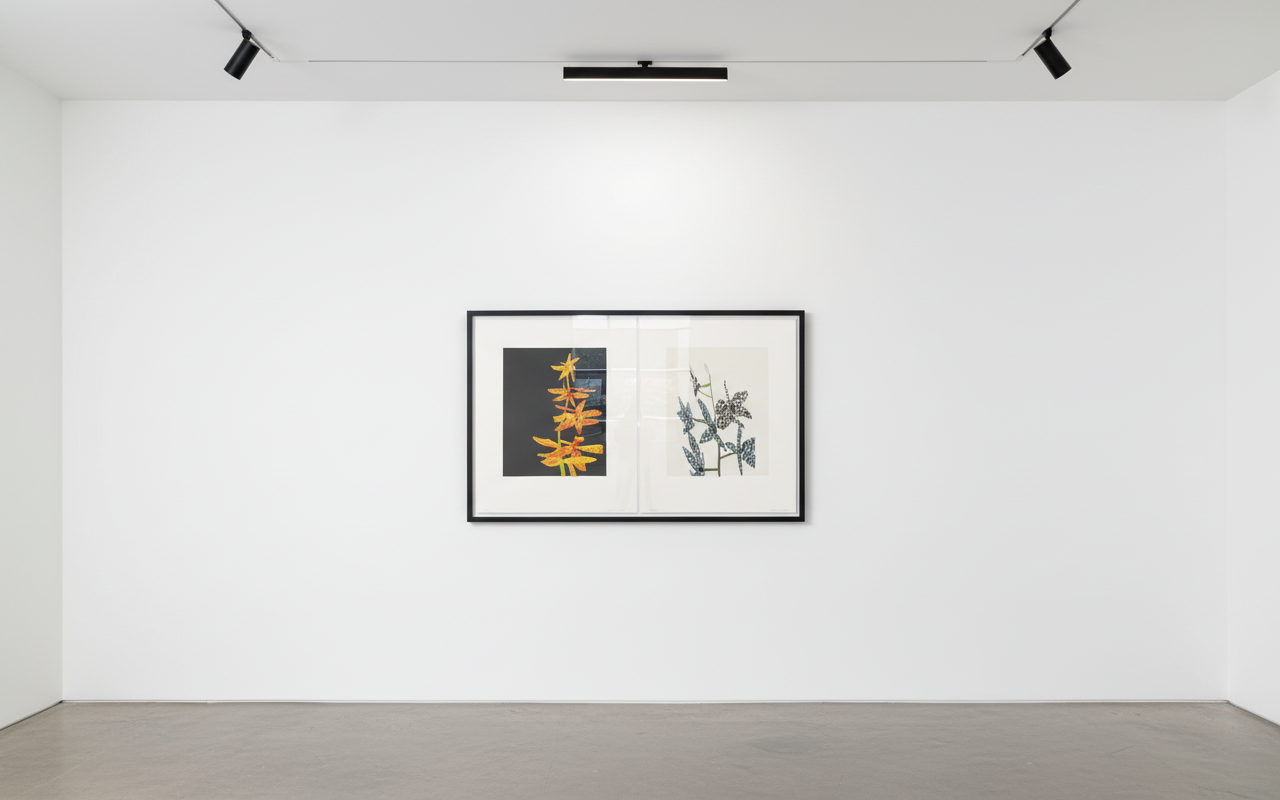
Jonas Wood's Interiors series represents one of the most compelling investment opportunities in contemporary printmaking, combining the artist's signature architectural precision with deeply personal subject matter that has propelled his auction presence to extraordinary heights. Within this recovering landscape, established contemporary artists with strong institutional backing and consistent auction performance have demonstrated particular resilience. Wood's representation by Gagosian and David Kordansky Gallery, combined with holdings at MoMA, the Whitney Museum of American Art, and the Los Angeles County Museum of Art, positions his work within the institutional framework that sophisticated collectors recognize as fundamental to sustained market confidence.
The Interiors series emerged from Wood's distinctive practice of transforming personal photographs and domestic environments into flattened, geometrically structured compositions. Born in Boston in 1977, Wood received his BFA from the University of Washington before completing his MFA at Tufts University, developing an approach that synthesizes influences from David Hockney's spatial experiments, Henri Matisse's decorative interiors, and the pattern-based abstraction of his contemporaries.
What distinguishes Wood's Interiors from conventional domestic imagery is his method of visual compression—collapsing perspective while maintaining spatial coherence through carefully orchestrated color relationships and repeated geometric motifs. The series draws from photographs of his own home, friends' residences, and studio environments, transforming quotidian spaces into architecturally complex compositions where plants, pottery, furniture, and artwork compete for visual attention within rigorously organized picture planes.
This autobiographical dimension has proven particularly resonant with collectors, who recognize in Wood's interiors a form of contemporary history painting that documents creative communities and personal relationships through accumulated objects and spatial arrangements. The translation of these compositions into limited edition prints extends their accessibility while maintaining the chromatic complexity and technical ambition that characterize his painted works.
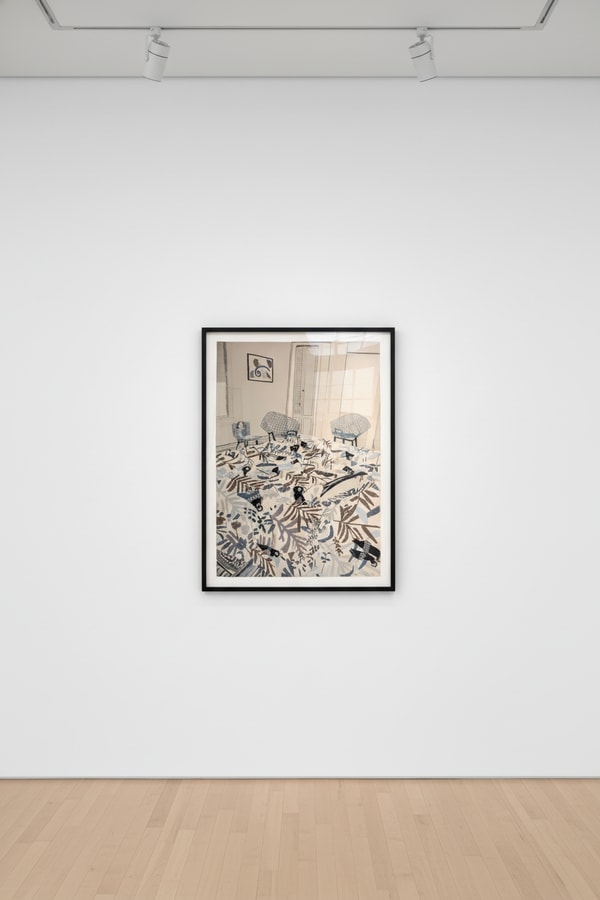
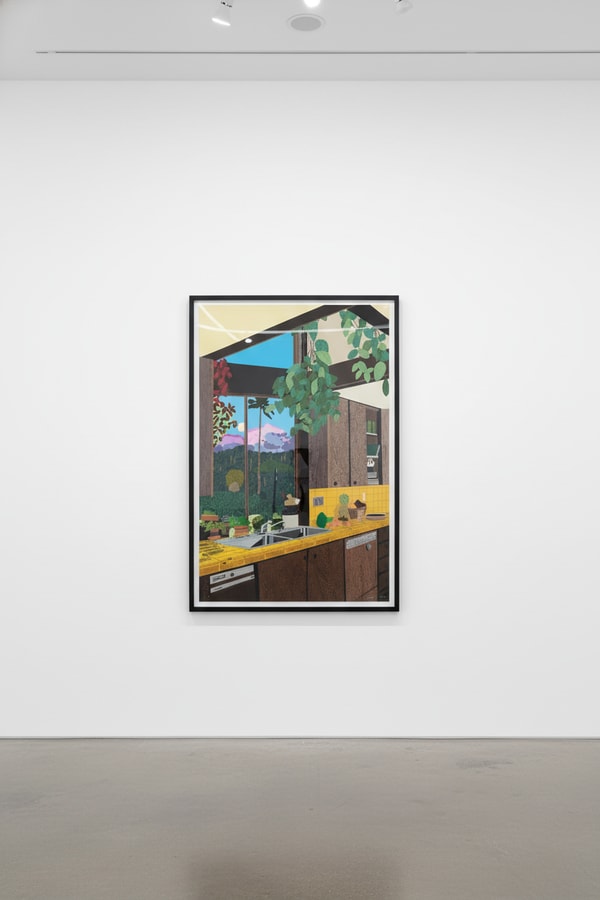
The Interiors prints demonstrate exceptional technical sophistication, employing multi-color processes that capture the layered visual density of Wood's approach. Kitchen Interior (2022) exemplifies this achievement through its remarkable 112-color screen print on museum board—a technical feat that required extraordinary precision in registration and ink layering to reproduce the painting's intricate spatial relationships and chromatic nuance.
Hammer (2016) showcases the versatility of Wood's print practice through 18-color letterpress on Crane Lettra paper, a process that imparts subtle dimensionality through the physical impression of type into paper surface. This tactile quality distinguishes letterpress editions from conventional lithographic reproduction, offering collectors a fundamentally different material experience.
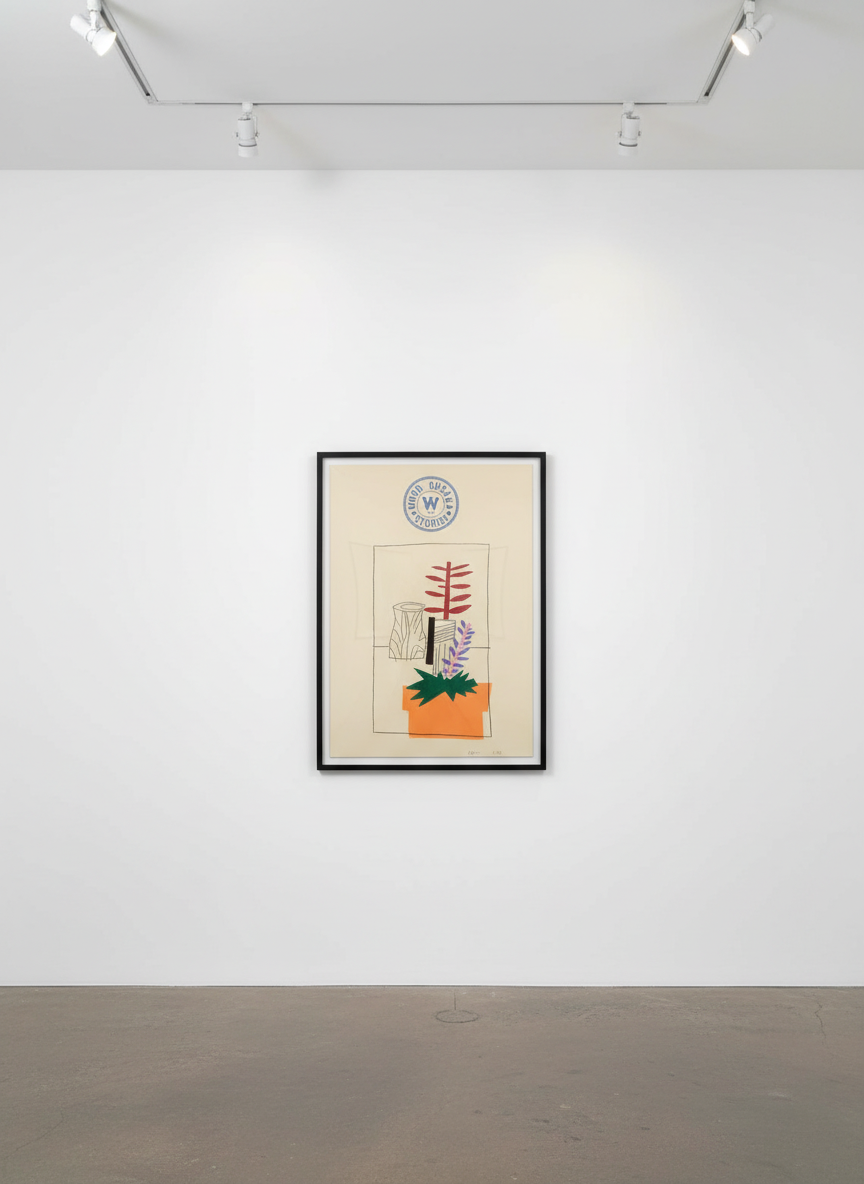
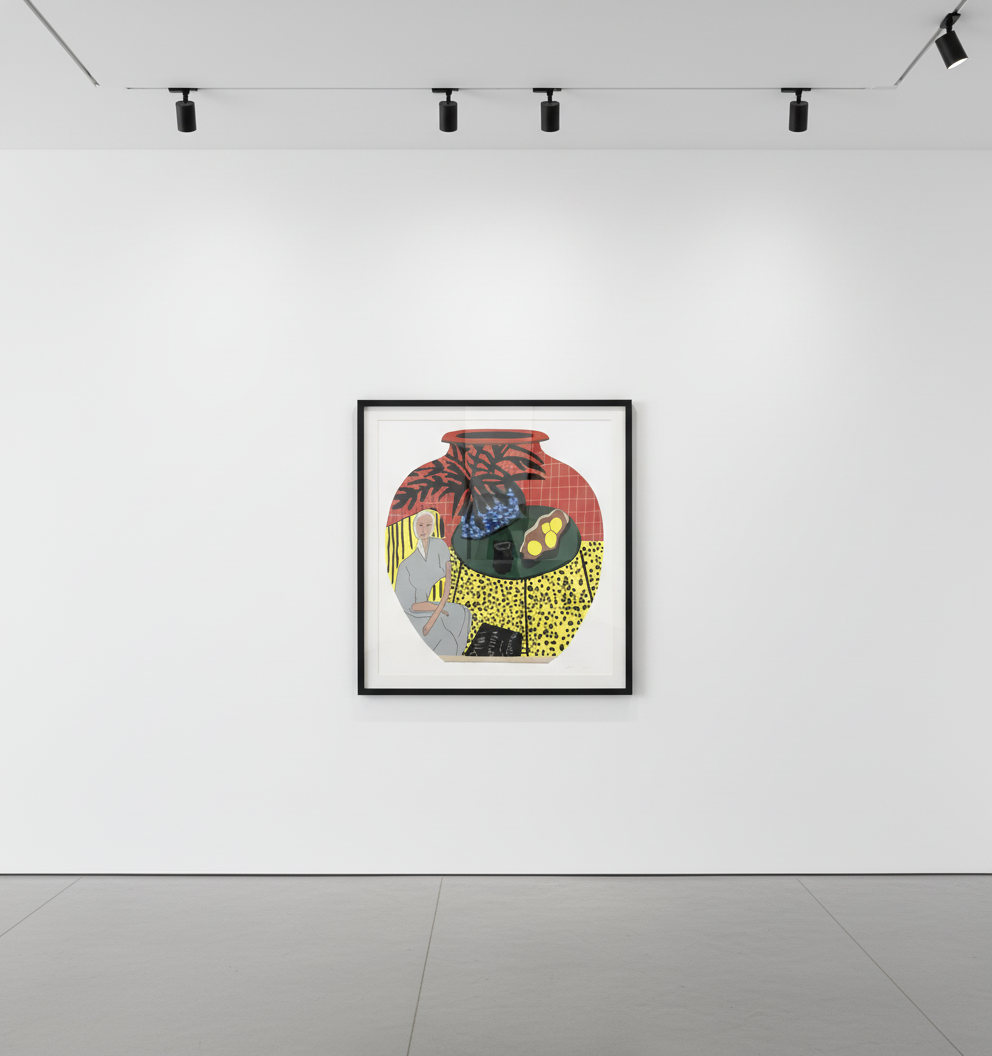
Matisse Pot 4 (2019-2020) utilizes 18-color screen printing on Rising Museum Board, capturing the dialogue between Wood's contemporary practice and Matisse's decorative legacy that informs much of the Interiors series. The choice of museum board provides archival stability while allowing the saturated colors characteristic of screen printing to achieve maximum vibrancy.
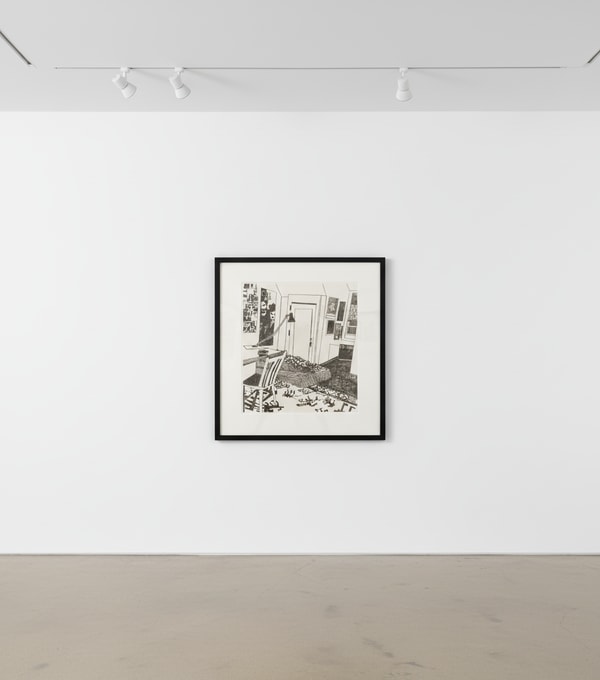
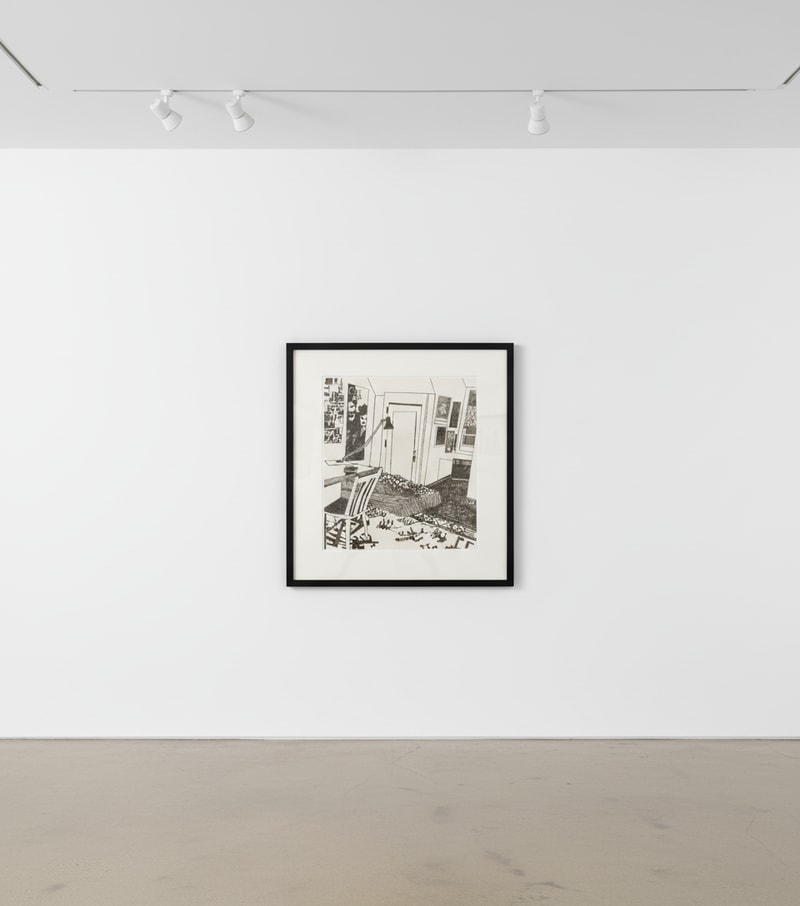
Alexis's Room (2014) demonstrates Wood's facility with chin-collé etching, a technique involving the adhesion of thin paper to heavier stock during the printing process, creating subtle textural variation that enriches the composition's surface. This work captures the intimate scale and personal specificity that distinguishes Wood's domestic subjects.
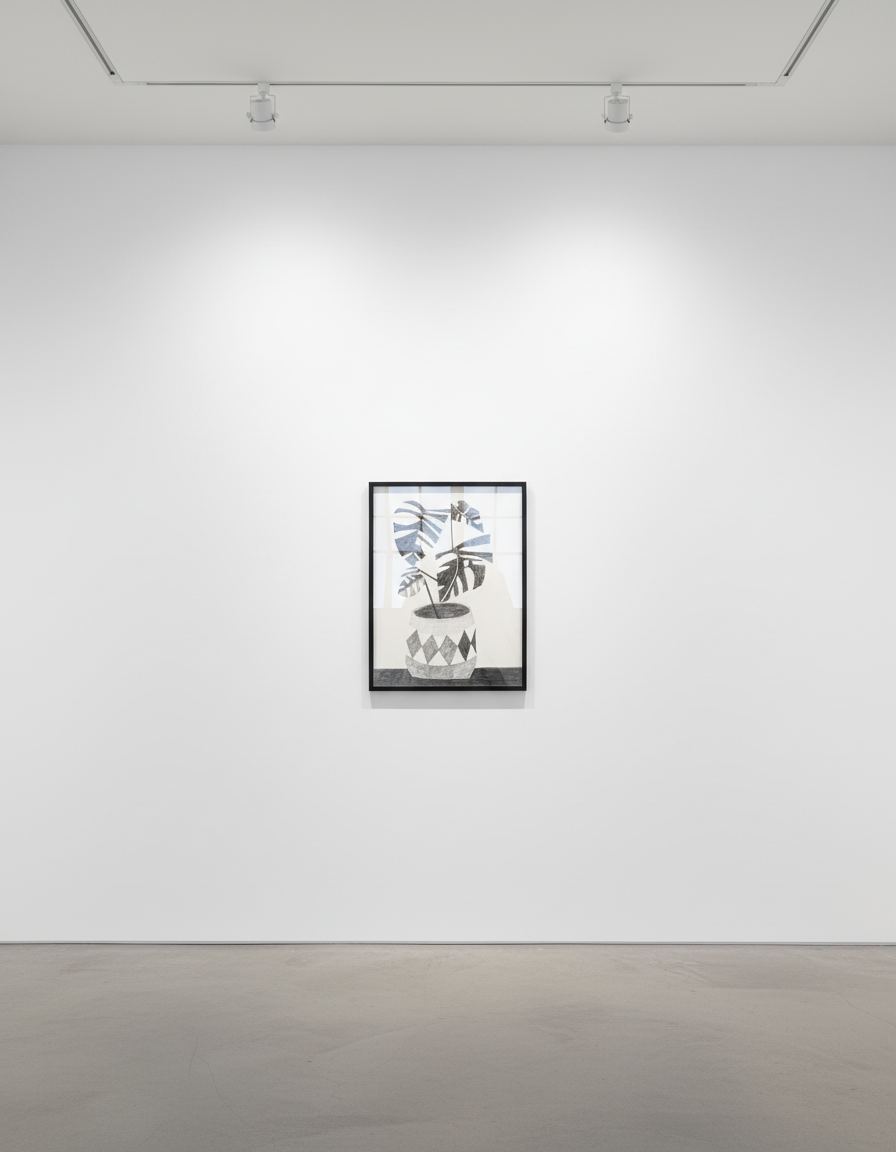
Landscape Pot with Plant (2017), a 16-color screenprint on white Somerset Tub Sized Satin paper, exemplifies the artist's ongoing meditation on contained nature—potted plants that appear throughout his interiors as both decorative elements and subjects of focused attention.
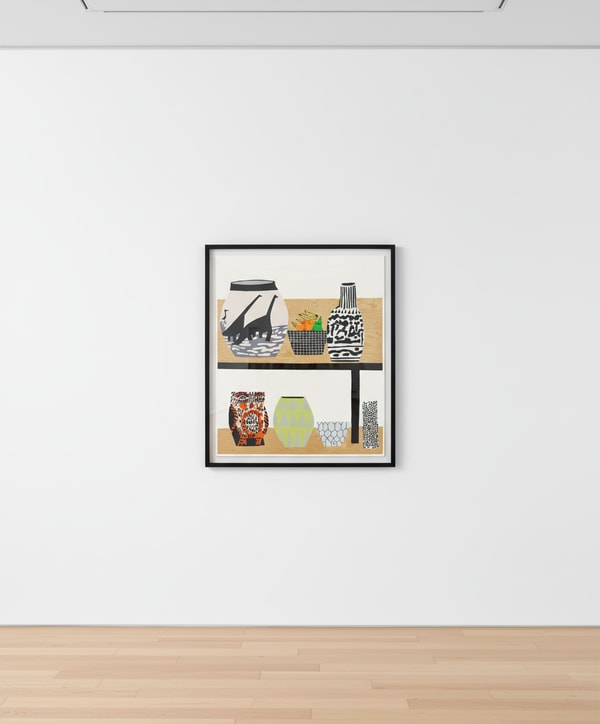
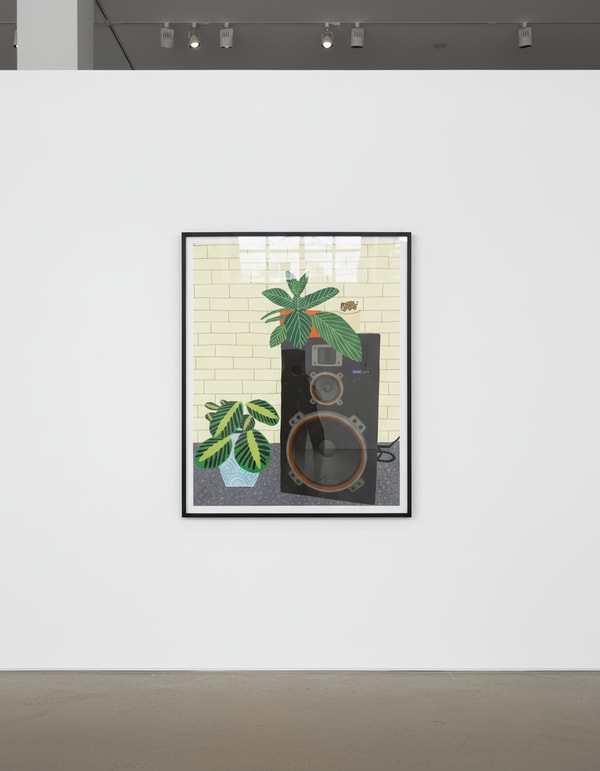
Speaker Still Life (2019) and Shelf Still Life (2018) combine lithography and silkscreen techniques, demonstrating the hybrid approaches that contemporary printmaking enables. These mixed-media prints achieve tonal subtlety through lithographic passages while employing silkscreen for areas requiring saturated, flat color application.
Dawn (2014), executed as a lithograph, represents the more traditional end of Wood's print practice, employing the medium's capacity for subtle tonal gradation to capture atmospheric qualities within domestic space.
Jonas Wood has developed a distinctive painting language built from flattened perspective, bold pattern, and a personal iconography of interiors, plants, and everyday objects rendered with a graphic clarity that draws on collage, printmaking, and observational drawing in equal measure. His compositions frequently incorporate multiple perspectives within a single image — a table seen from above alongside a wall seen straight on — creating a controlled visual tension that has become a signature of his mature style.
Wood's paintings and works on paper are held in the collections of major institutions and have been the subject of significant gallery and museum exhibitions internationally, establishing him as one of the most distinctive figurative painters of his generation.
6 works available
Market Data
See real auction history, estimate ranges and price benchmarks for individual Interiors prints, sourced from Christie's, Sotheby's and other major auction houses.
Frequently Asked Questions
Jonas Wood Interiors prints for sale are available at Guy Hepner Gallery, 177 Tenth Avenue, New York. We offer authenticated editions with full provenance documentation sourced from the secondary market and directly from publishers.
Jonas Wood Interiors works — 6 available — are typically produced as limited editions, individually signed and numbered by the artist. Contact Guy Hepner Gallery for edition details on specific works.
Pricing for Jonas Wood Interiors prints varies by edition size, date, and condition. Contact Guy Hepner Gallery for current market pricing and availability.
From the Journal
Watch
More Jonas Wood Series
View all Jonas Wood works →