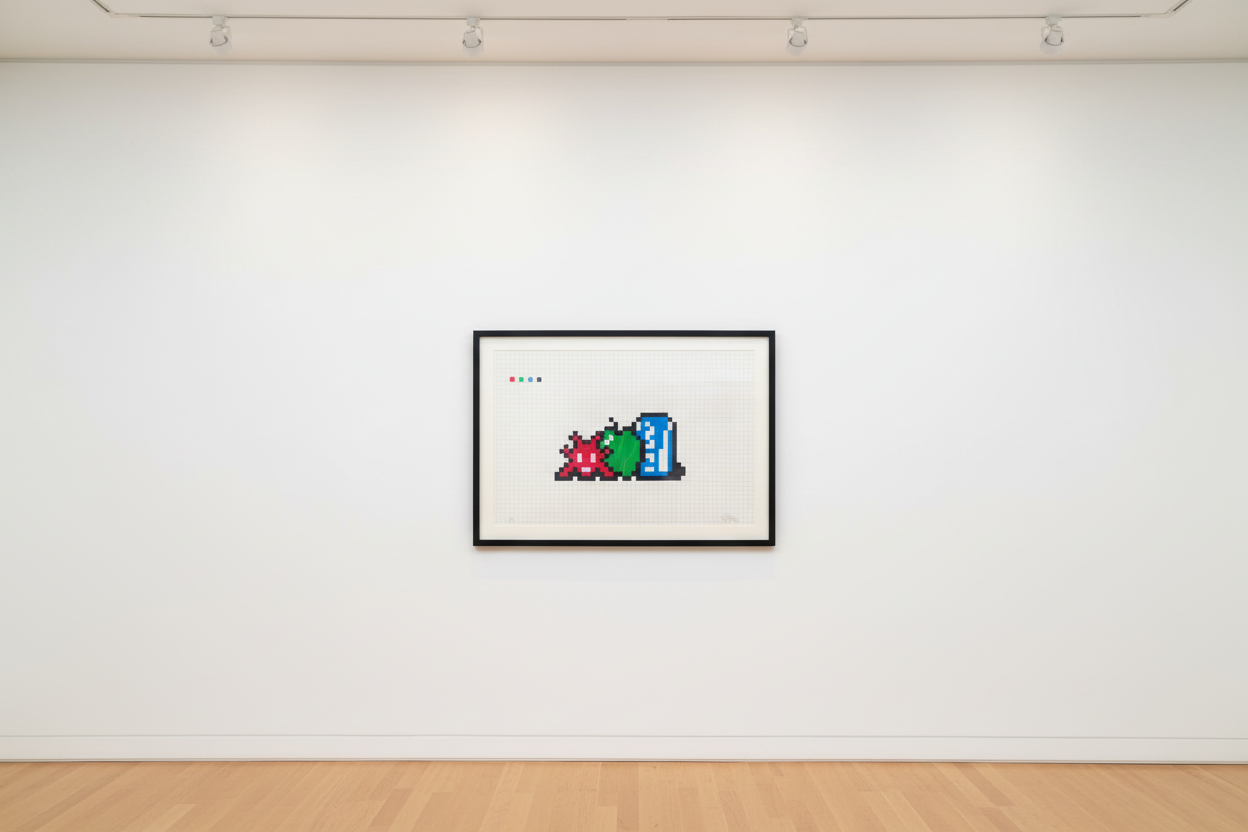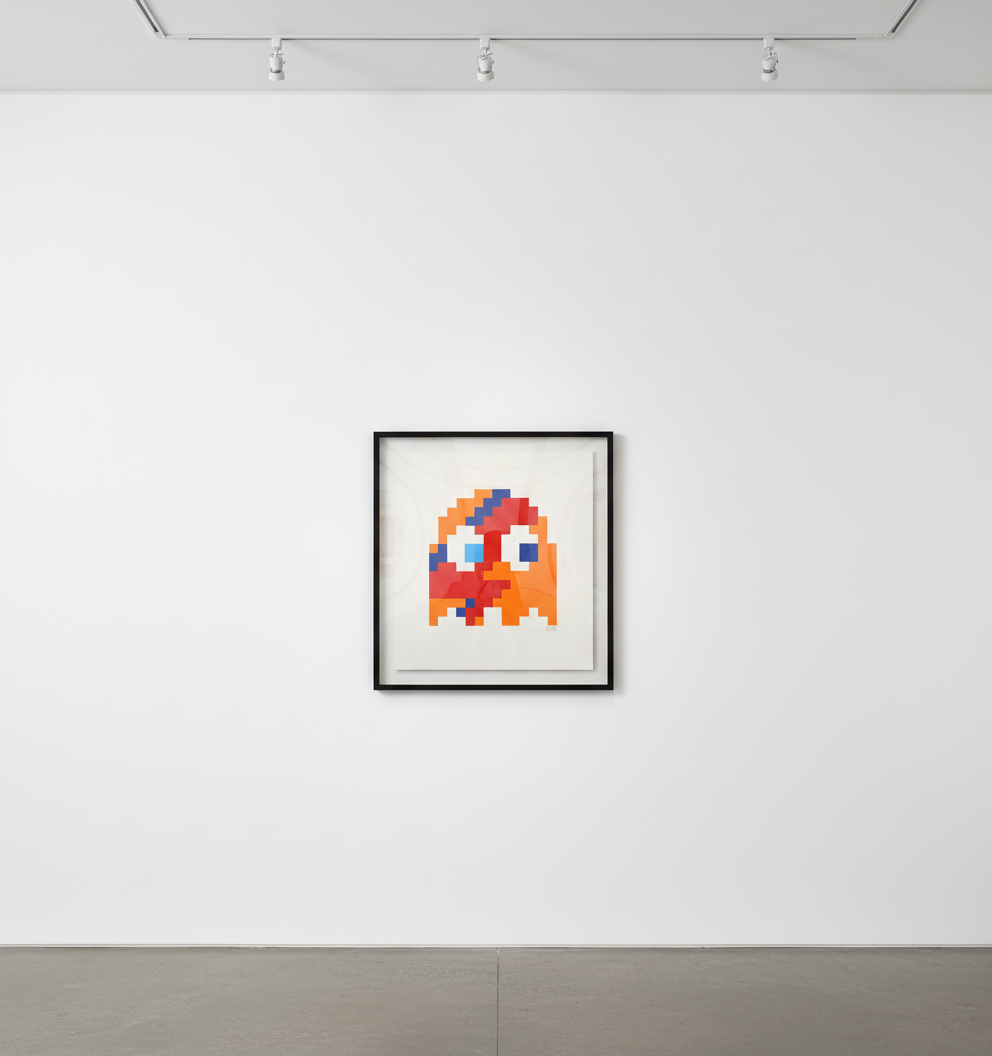
Aladdin Sane
7 works

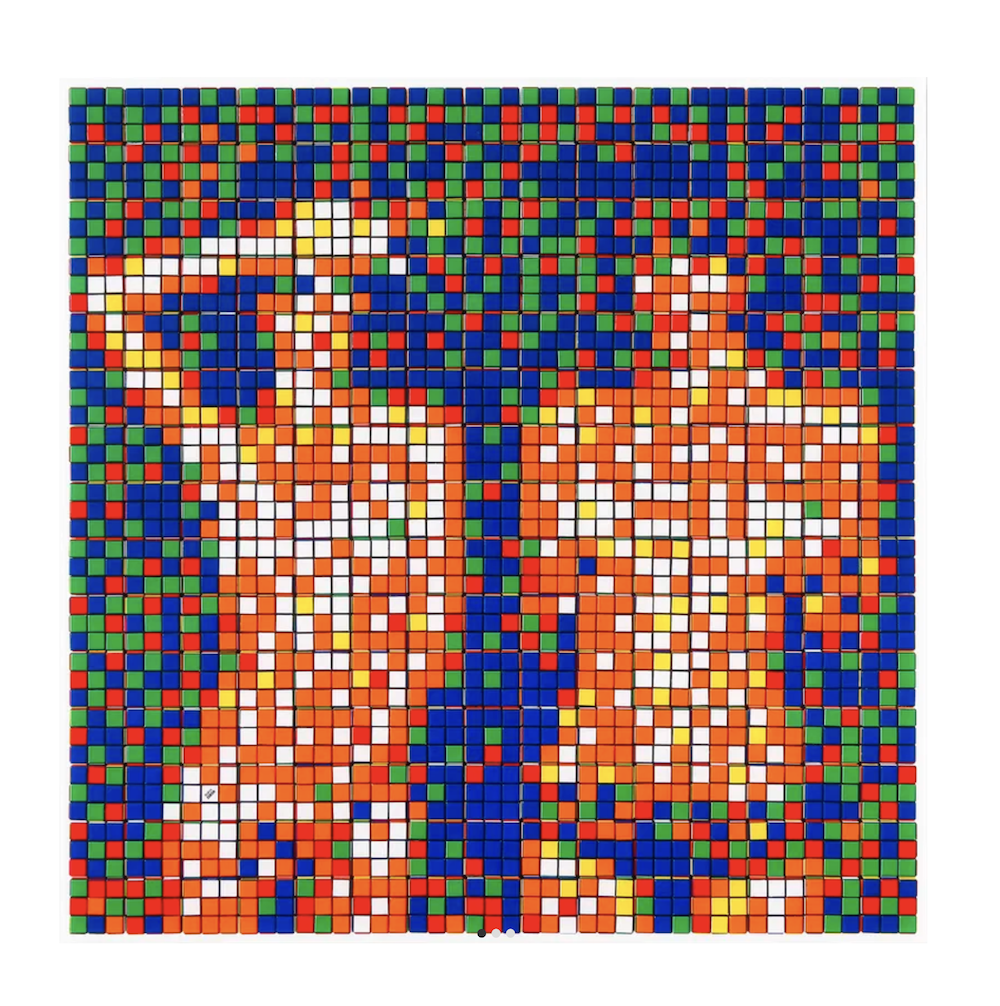
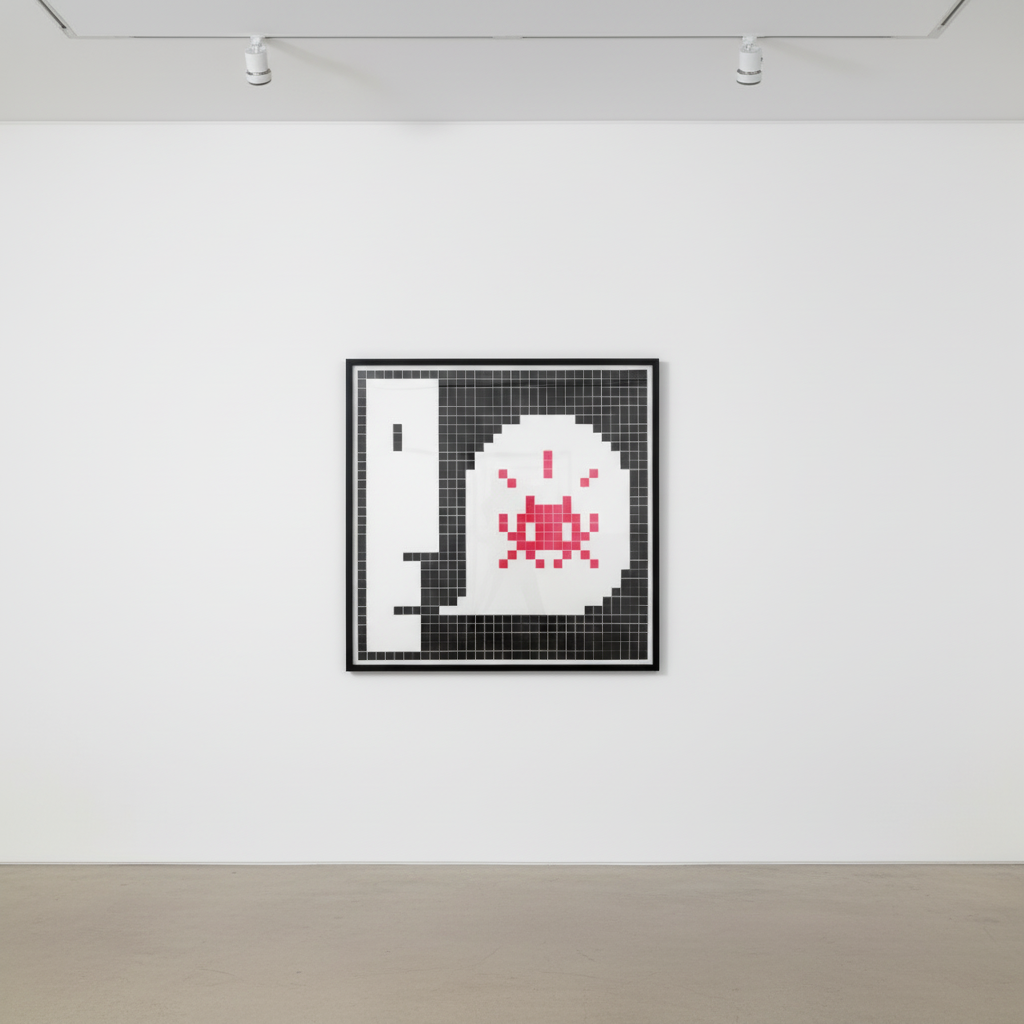
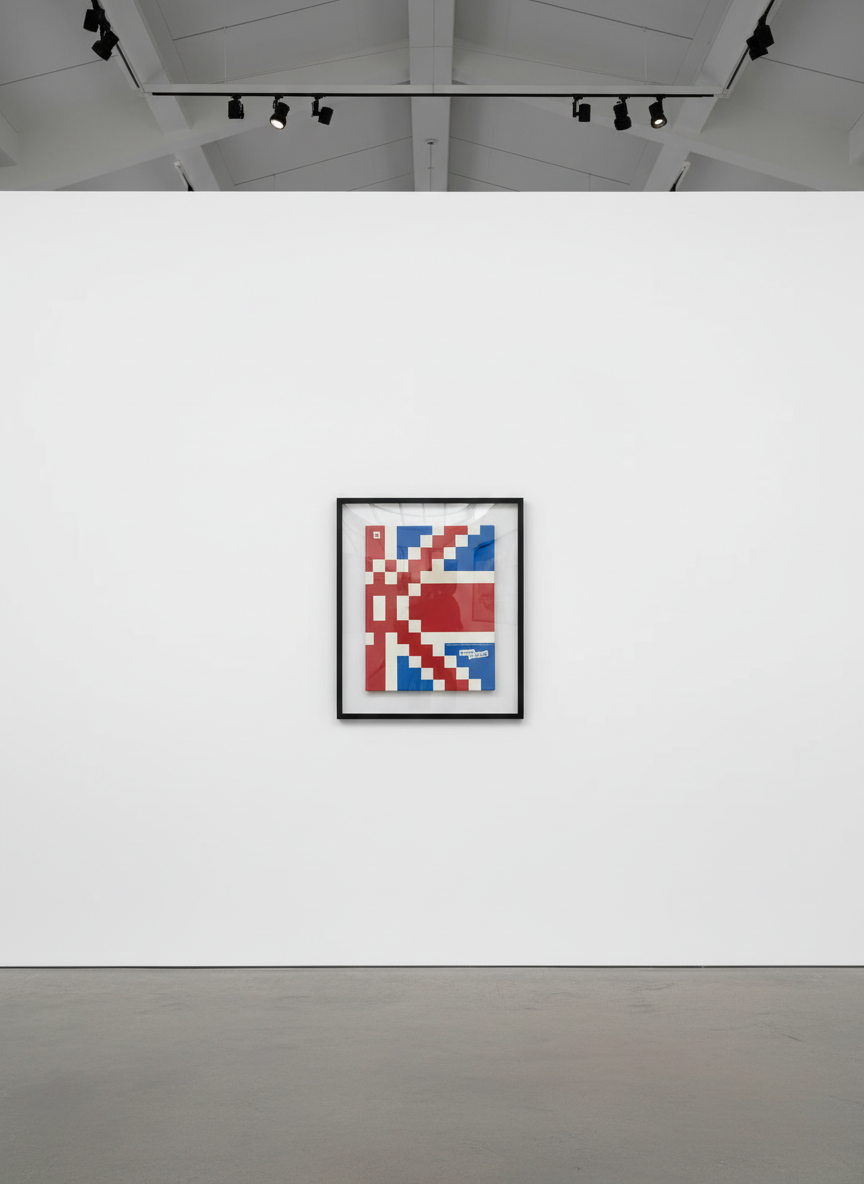
Invader Rubik Shot Country Life, NVDR1-3, 2023
Giclée print on aluminum composite panel
39 3/8 x 39 3/8 in | 100 x 100 cm
Invader Rubik Shot Country Life, NVDR1-3 Invader stands as one of the most consequential street artists working today, having built an internationally recognized practice over more than two decades. His pixelated mosaic interventions now populate cities across six continents, while his gallery works command significant attention from collectors worldwide. The artist's market has demonstrated remarkable strength, with major pieces achieving six-figure results at auction and editions maintaining robust demand in both primary and secondary markets. This work belongs to the artist's celebrated Rubikcubism series, in which Invader employs Rubik's Cubes as his medium, treating each cube as a three-dimensional pixel. The resulting compositions merge the visual language of 8-bit gaming with the tradition of portraiture and still life, creating works that exist at the intersection of sculpture, painting, and conceptual art. In Rubik Shot Country Life, NVDR1-3, the artist transforms a familiar image into a grid of precisely arranged color blocks, rendering his subject through the distinctive chromatic palette of the classic puzzle toy. The aluminum composite panel provides a rigid, contemporary surface that complements the geometric precision of the composition while ensuring archival stability. Issued in an edition of 431, this giclée print on aluminum composite panel offers collectors access to Invader's Rubikcubism practice at an accessible scale. The edition size reflects the artist's strategic approach to editioning, balancing availability with collectibility. Guy Hepner is pleased to offer this work to discerning collectors seeking a significant example of Invader's ongoing exploration of pixel-based imagery. For acquisition inquiries or additional information, please contact the gallery directly.
Invader is a French anonymous artist who has, since 1998, systematically invaded the urban fabric of cities on six continents with small mosaics constructed from ceramic tiles in the pixelated visual language of the 1978 Space Invaders arcade game. His identity remains rigorously concealed — the anonymity is not incidental but structural, an integral part of the work's meaning and its market mystique. Named after the Taito Corporation's iconic game, Invader treats the world's cities as a single global canvas, each installation a tile-based creature adhered to a building facade, a bridge, an underpass, a museum exterior — anywhere the public gaze might fall, and many places it is unlikely to.
The scope of the project is genuinely remarkable. Invader has completed invasions in more than eighty cities across more than thirty countries, installing over four thousand individual works in locations from Paris, London, New York, Tokyo, and Los Angeles to Kathmandu, Hong Kong, and beyond. Each city invasion is documented in a limited-edition artist book — the Invasion Guides — which function simultaneously as artworks, catalogues, and maps. The Flash Invaders mobile application allows enthusiasts to locate and photograph his works in the field, converting the invasion into a participatory urban game. This ecosystem of books, maps, and digital tools has built an unusually engaged and knowledgeable collector community around his practice.
The range of Invader's output includes ceramic tile mosaics installed in situ (photographed and sometimes deaccessioned), canvas mosaics produced for the gallery market, prints, and multiples. His work has appeared at Christie's, Sotheby's, Phillips, and Bonhams, where canvas mosaics and major works command five-figure and above results. His print editions and multiples — often created in small, controlled runs — are actively traded by collectors who engage with the full breadth of his output. Series include Space Invaders, Aladdin Sane, the Alert System, and Rubik Cube works deploying the pixelated aesthetic of the source game across an expanding range of subjects and references. His anonymity sustains a market dynamic in which scarcity and mystique compound one another: there is no studio to visit, no social media presence, no commercial gallery partner. What exists is the work itself, the documentation, and the global community of those who seek it out.
Invader has exhibited at the Musée d'Art Moderne de la Ville de Paris and MOCA Los Angeles, receiving institutional recognition that underscores the seriousness with which the art world regards his project beyond its street-art origins.
Guy Hepner represents Invader editions and multiples from our gallery at 177 Tenth Avenue, New York. We offer collectors authenticated works with full documentation, expert guidance on valuation, and access to a broad network of buyers and sellers active in this market. For those wishing to buy or sell Invader works, or seeking a free valuation of works in their collection, we are well placed to assist.