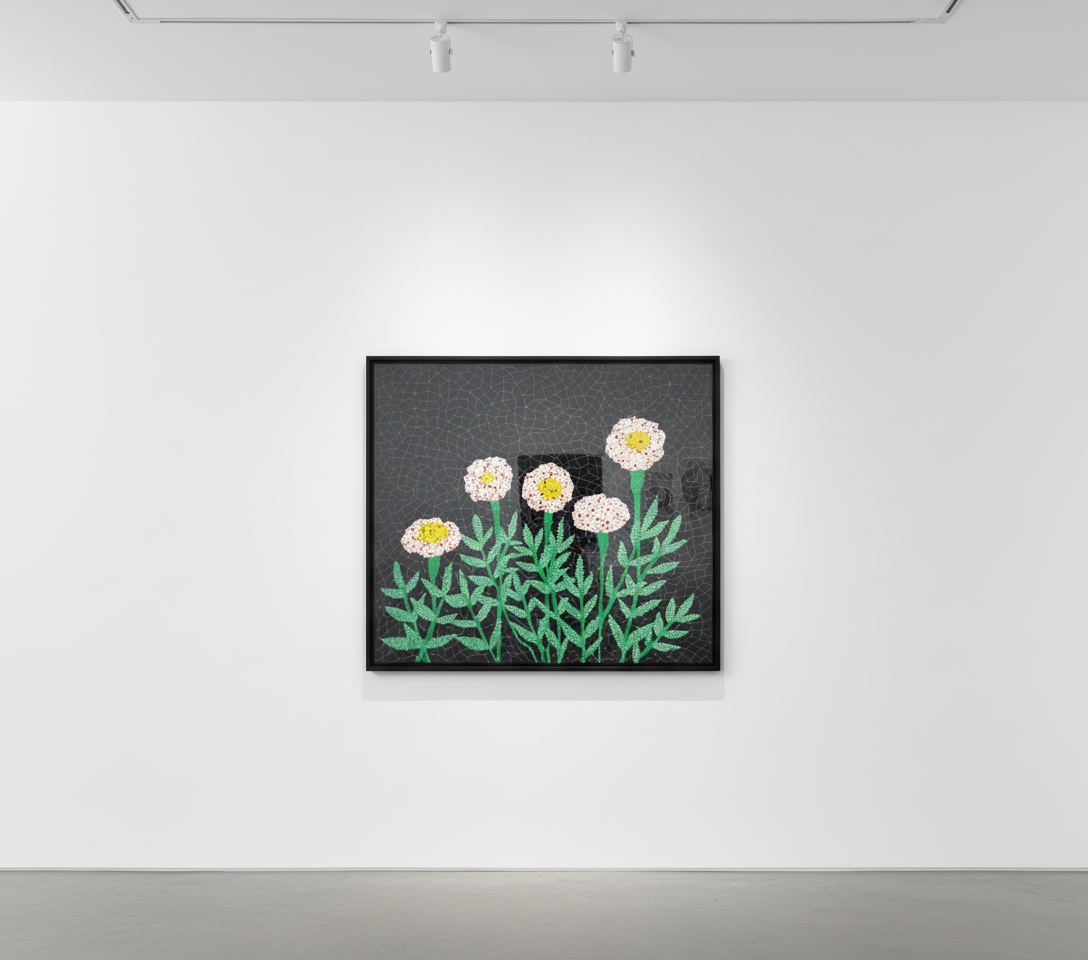
Flowers
20 works

Yayoi Kusama's Fauna series represents a distinctive chapter within an auction career that has consistently commanded international attention. Kusama's market demonstrates sustained institutional confidence across her diverse thematic explorations. Guy Hepner has facilitated $561,250 in Yayoi Kusama transactions, establishing direct expertise in navigating collector demand for the artist's rarer series and print editions.
Within this recovering landscape, Kusama's position remains exceptional. Her status as the world's best-selling living female artist, reinforced through major retrospectives at Tate Modern, Centre Pompidou, the Whitney Museum, and the Museum of Modern Art, provides foundational support for all series within her catalogue. The Fauna series, while less frequently encountered at auction than her signature Infinity Nets or Pumpkin compositions, benefits from this broader institutional validation while offering collectors access to a more intimate dimension of Kusama's artistic vision.
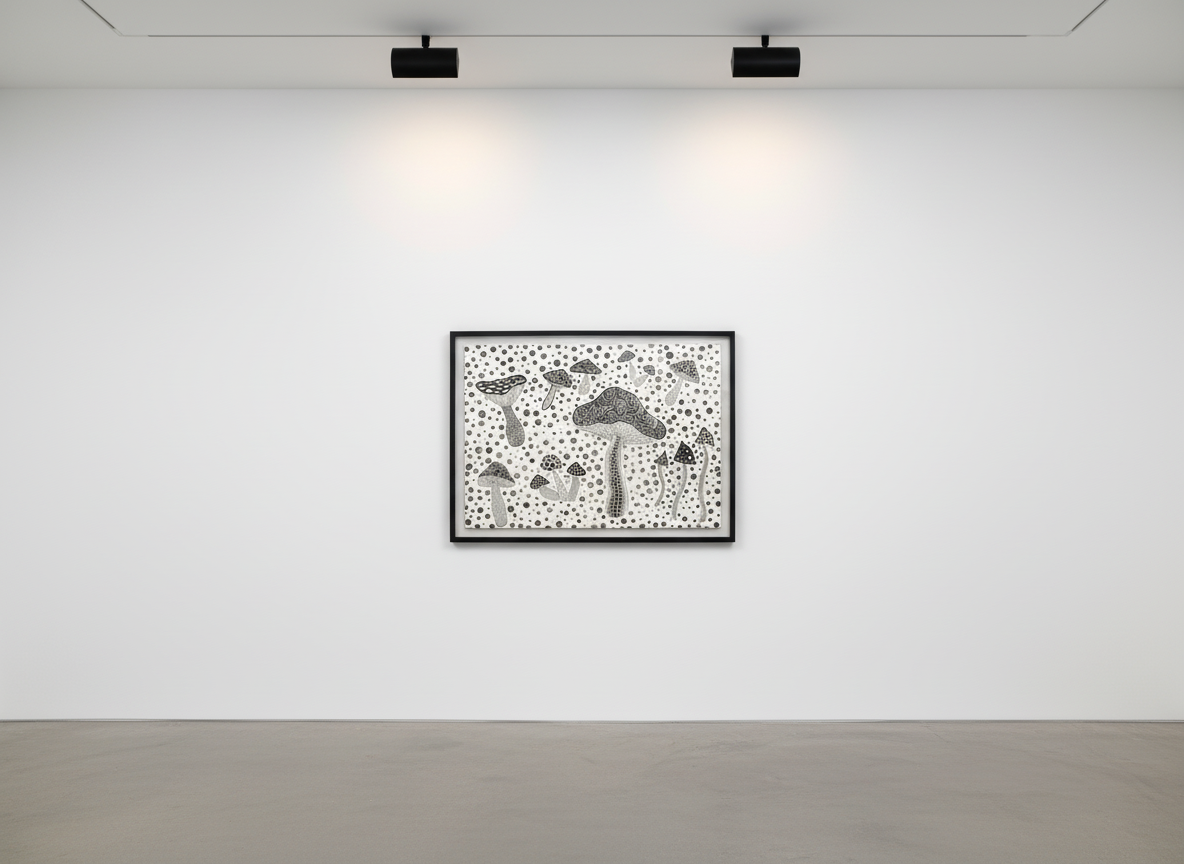
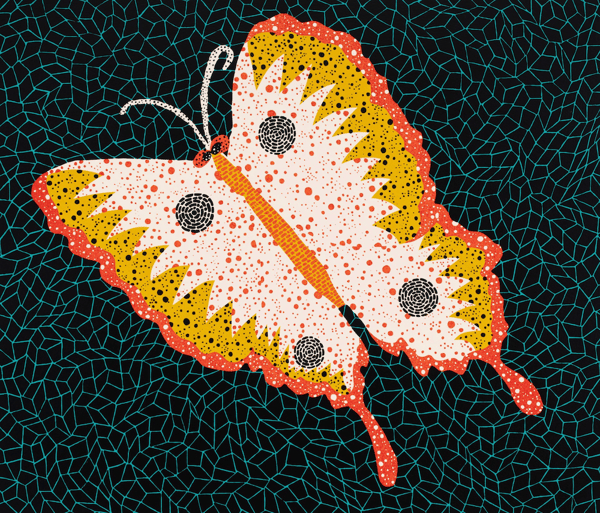
The Fauna series emerges from Kusama's lifelong engagement with natural forms and biological imagery, themes that have permeated her practice since her earliest works in 1950s Japan. While her Infinity Rooms and polka-dot installations dominate public consciousness, Kusama's investigation of organic subjects reveals the philosophical depth underlying her more recognizable motifs. The Fauna works examine the tension between individual creatures and infinite repetition, applying her signature visual language to the animal kingdom with characteristic precision and psychological intensity.
Created during the late 1980s, this series coincides with Kusama's voluntary residency at Seiwa Hospital for the Mentally Ill in Tokyo, where she has lived and worked since 1977. This period produced some of her most contemplative graphic works, as the structured environment allowed sustained focus on printmaking and drawing alongside her sculptural and installation practice. The Fauna compositions demonstrate Kusama's ability to translate her obsessive patterning into naturalistic contexts, suggesting that her cosmic repetitions exist not only in abstract infinity but within the living world itself.
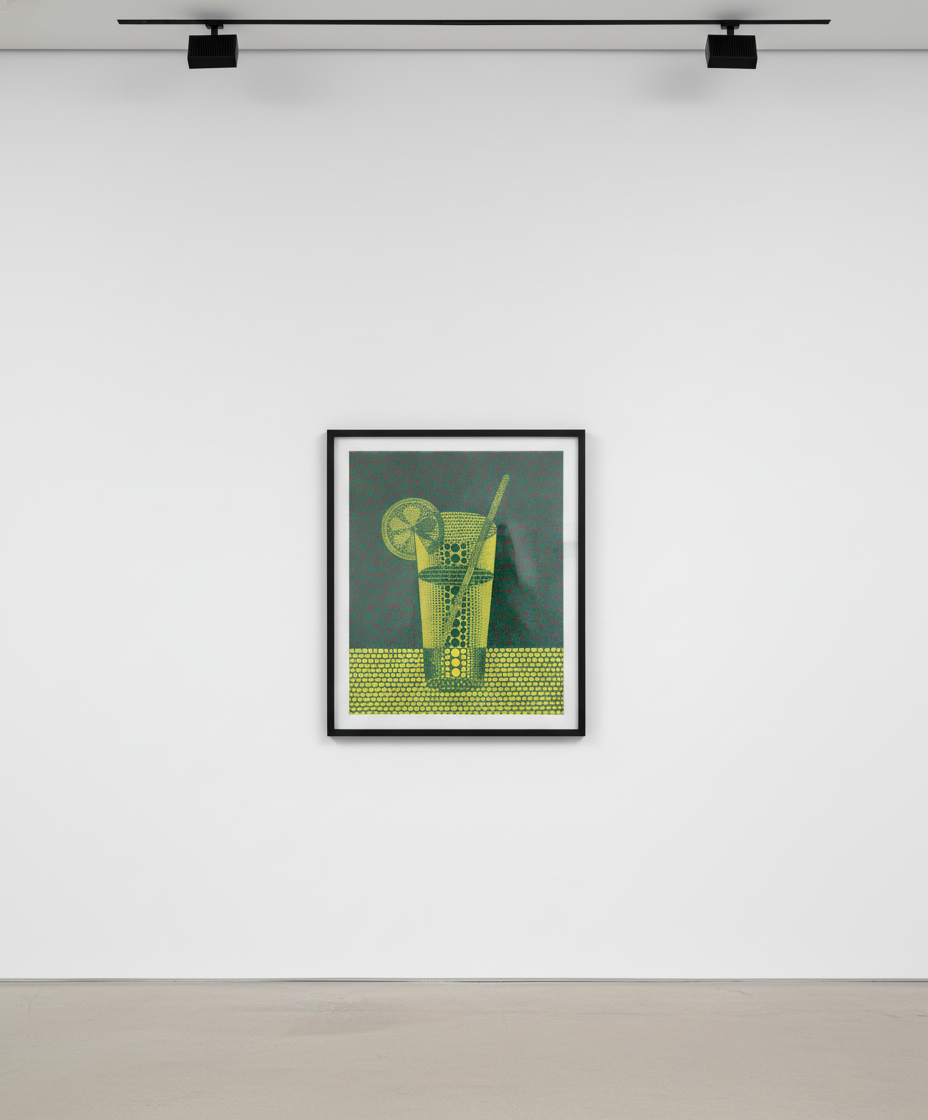
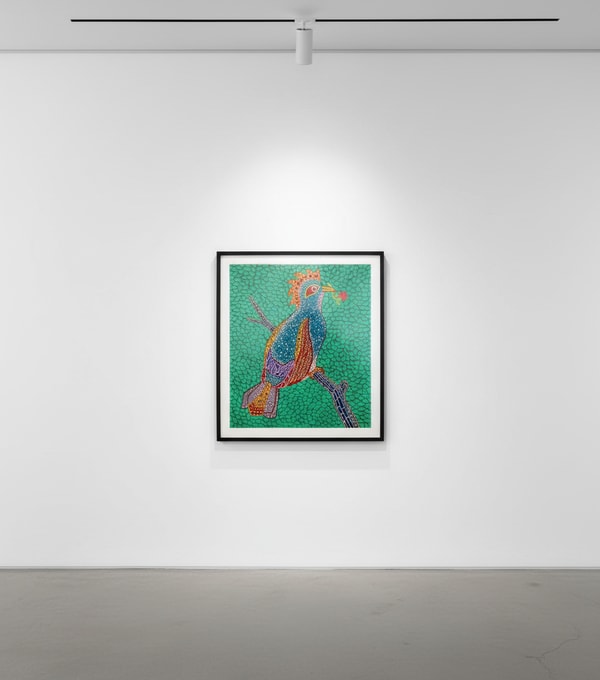
Dawn (1989) exemplifies the technical sophistication characterizing Kusama's screen print production during this productive decade. Screen printing, or serigraphy, allowed Kusama to achieve the precise registration and saturated color fields essential to her visual vocabulary while maintaining the controlled repetition central to her artistic philosophy. The medium's capacity for exact replication across editions mirrors the conceptual framework of infinite recurrence that defines her broader practice.
The 1989 date positions Dawn within a period when Kusama had fully reestablished her international reputation following her return to Japan from New York in 1973. Her graphic works from this era demonstrate refined technical control accumulated across four decades of practice, combining the spontaneous energy of her early Infinity Net drawings with the production values expected by an increasingly attentive collector base. Screen prints from this period typically feature Kusama's characteristic dot patterns integrated with figurative elements, creating visual tension between organic form and systematic abstraction.
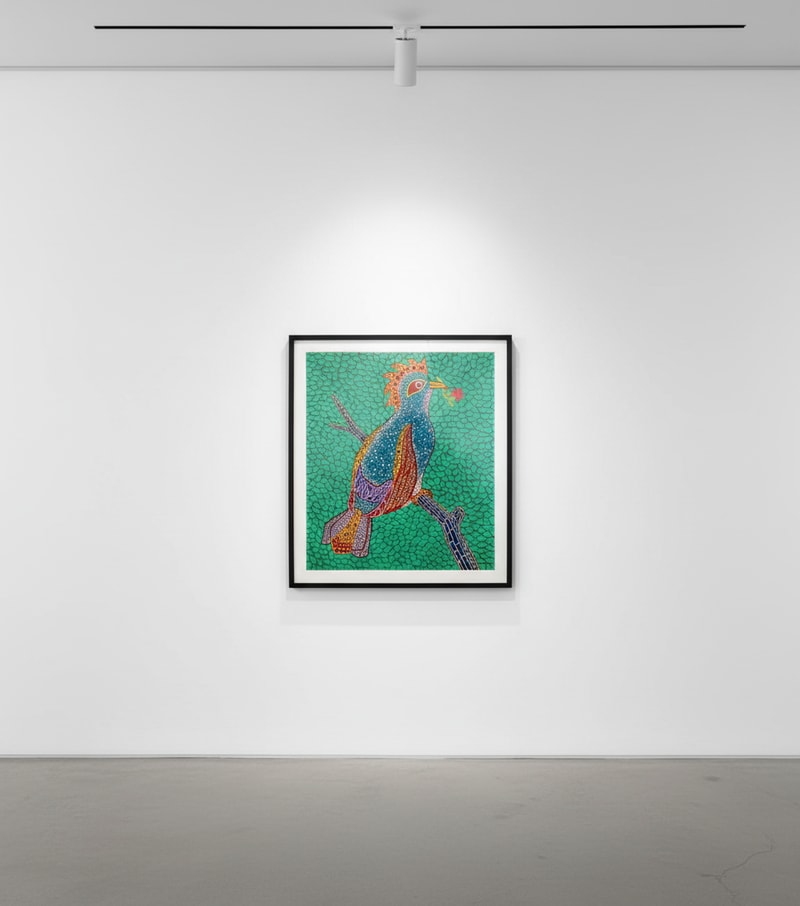
Dawn (1989) presents viewers with Kusama's meditation on natural awakening filtered through her distinctive aesthetic framework. The work's title suggests temporal transition and emergence, themes resonating with Kusama's broader philosophical investigations into consciousness, existence, and the boundaries between self and environment. Within the Fauna series context, this screen print demonstrates how Kusama applied her signature visual strategies to naturalistic subject matter without compromising the psychological intensity characterizing her abstract compositions.
The limited edition format of Kusama's screen prints from this period ensures controlled supply against consistently expanding demand. As her Infinity Mirror Rooms continue touring internationally and her retrospective exhibitions break attendance records, collector interest extends across her complete catalogue. Works like Dawn offer entry points for collectors seeking authenticated Kusama pieces that demonstrate her range beyond the most frequently reproduced imagery.
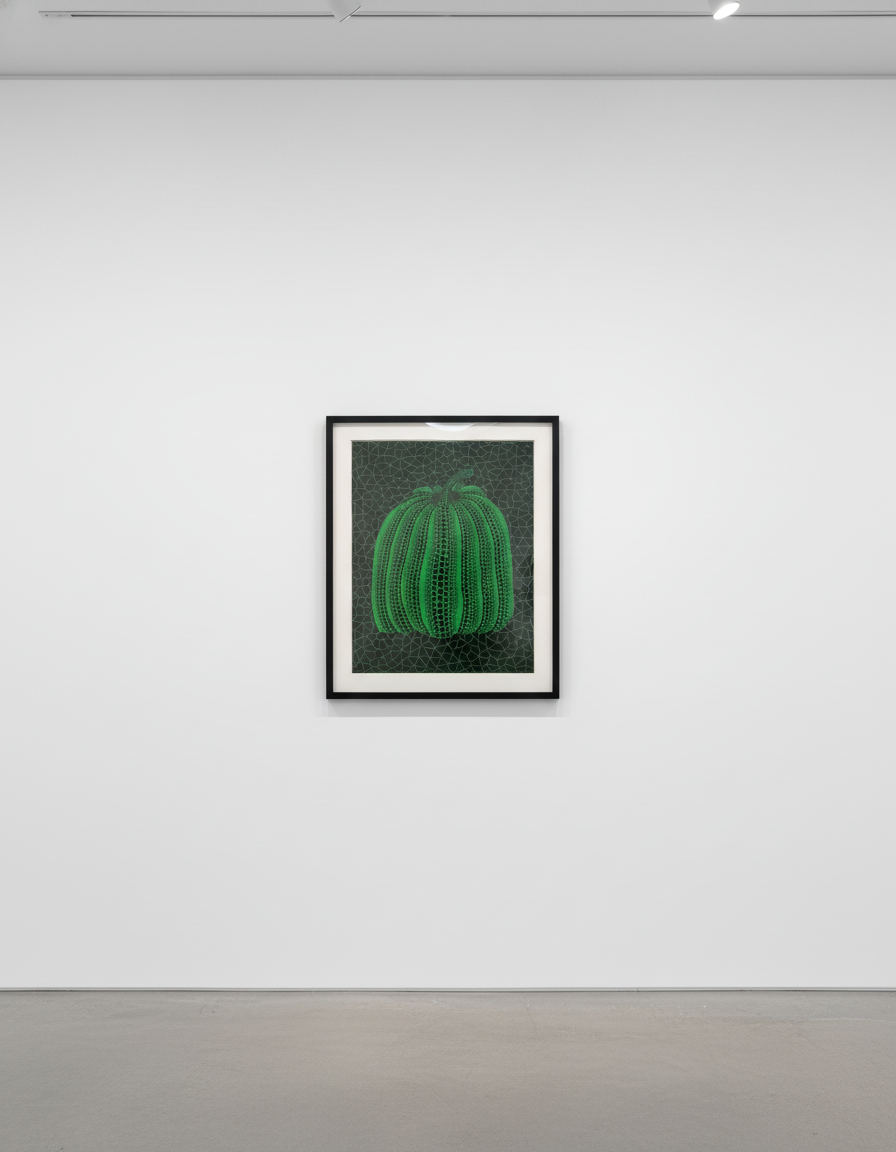
Yayoi Kusama has built one of the most instantly recognisable bodies of work in contemporary art through her sustained investigation of pattern, repetition, and self-obliteration, developed across painting, sculpture, installation, and print media over more than seven decades. Her recurring motifs — polka dots, net patterns, and later the pumpkin — function as a personal visual vocabulary rooted in hallucinatory visual experiences she has described since childhood, transformed through disciplined repetition into a body of work of extraordinary scale and consistency.
Kusama's work is held in the permanent collections of major museums worldwide, and her Infinity Mirror Room installations have drawn record attendance at institutions internationally, establishing her as one of the most widely recognised and best-selling living artists.
2 works available
Market Data
See real auction history, estimate ranges and price benchmarks for individual Fauna prints, sourced from Christie's, Sotheby's and other major auction houses.
Frequently Asked Questions
Yayoi Kusama Fauna prints for sale are available at Guy Hepner Gallery, 177 Tenth Avenue, New York. We offer authenticated editions with full provenance documentation sourced from the secondary market and directly from publishers.
Yayoi Kusama Fauna works — 2 available — are typically produced as limited editions, individually signed and numbered by the artist. Contact Guy Hepner Gallery for edition details on specific works.
Pricing for Yayoi Kusama Fauna prints varies by edition size, date, and condition. Contact Guy Hepner Gallery for current market pricing and availability.
More Yayoi Kusama Series
View all Yayoi Kusama works →