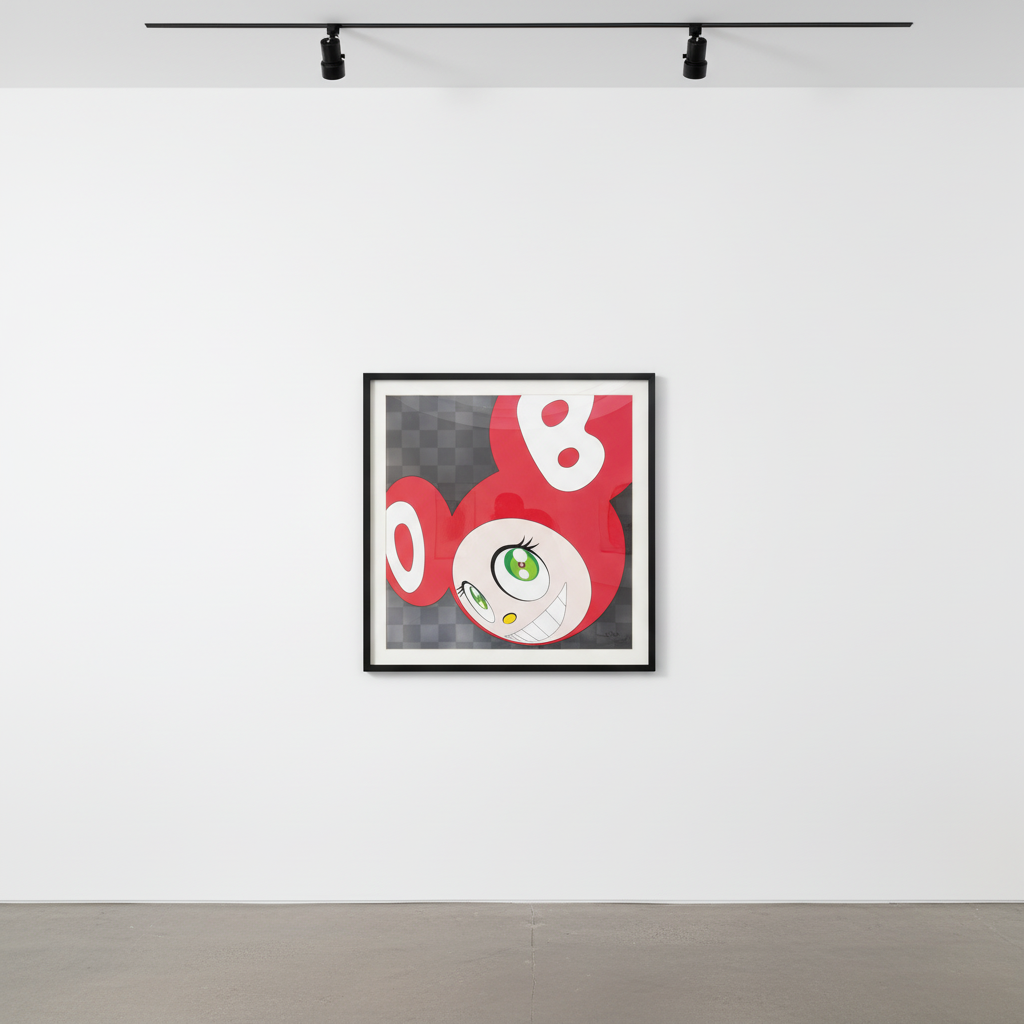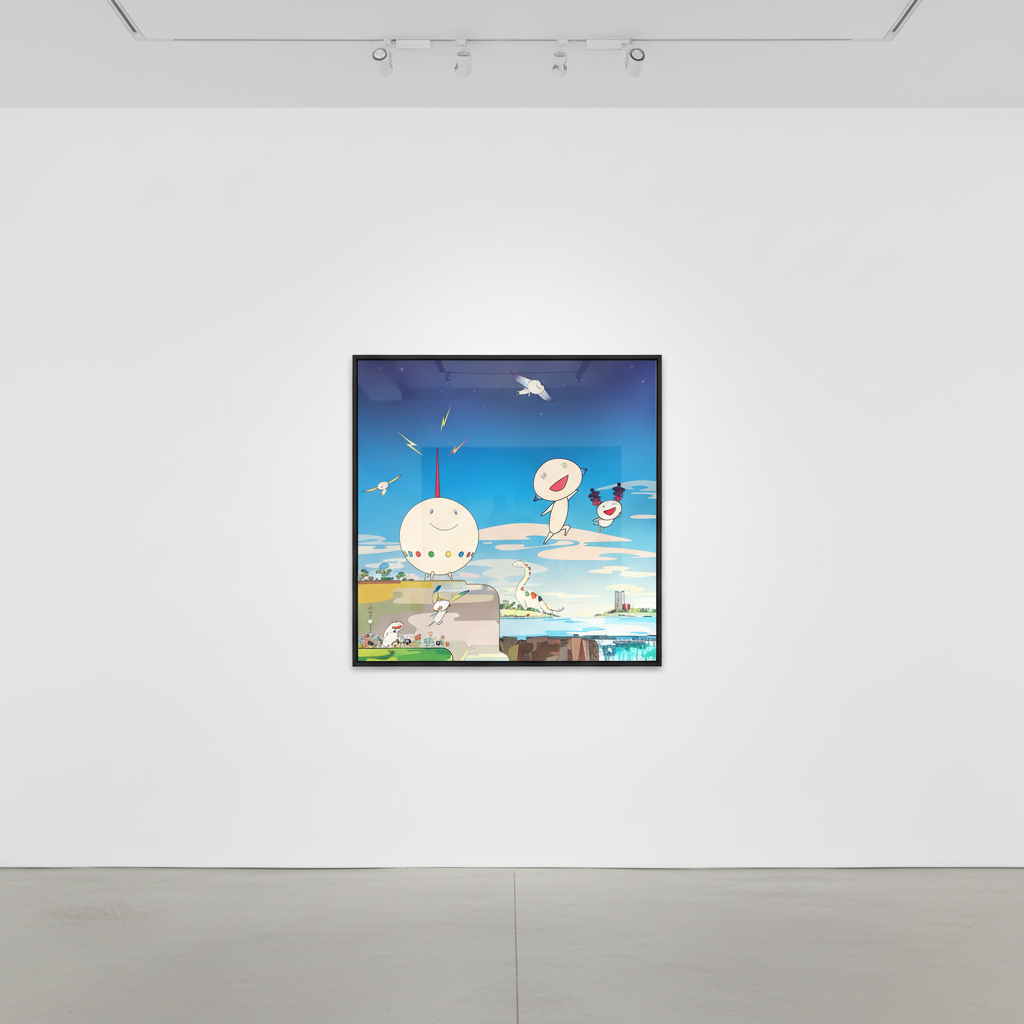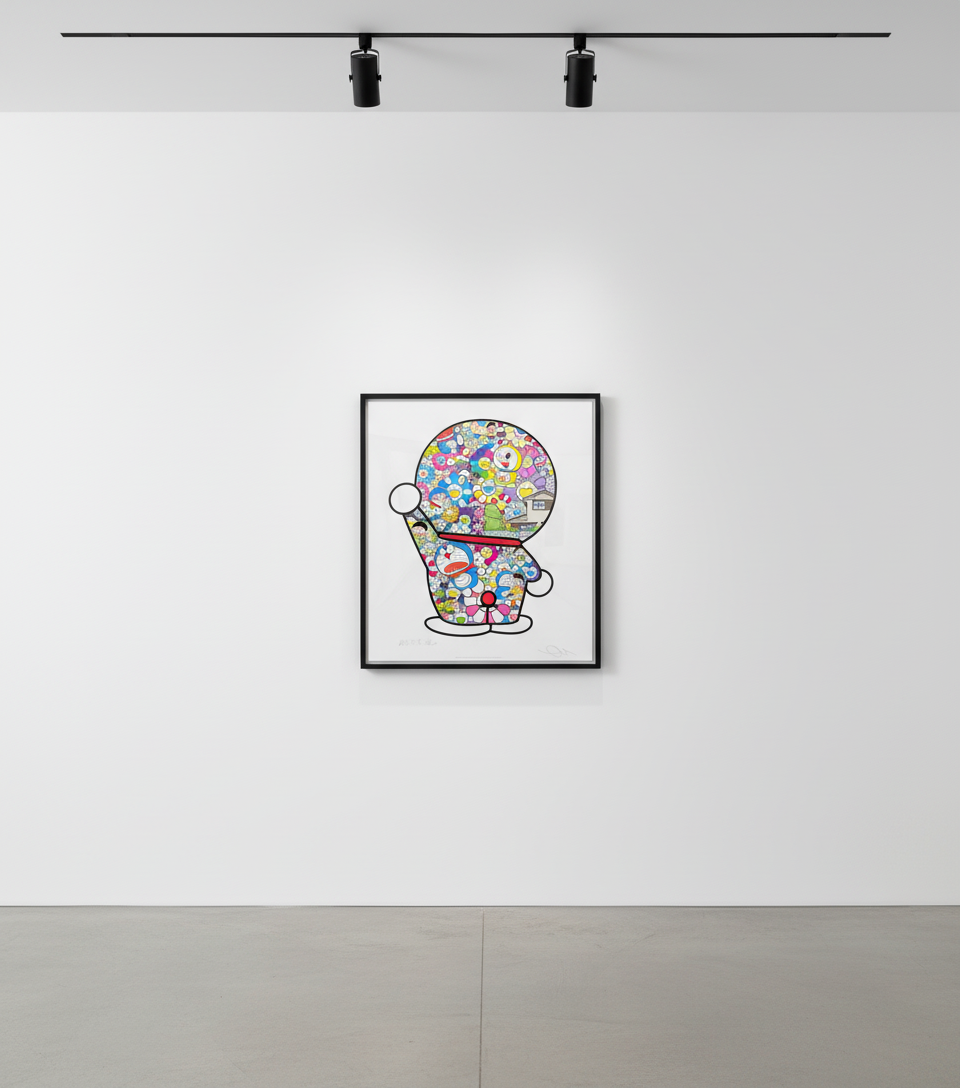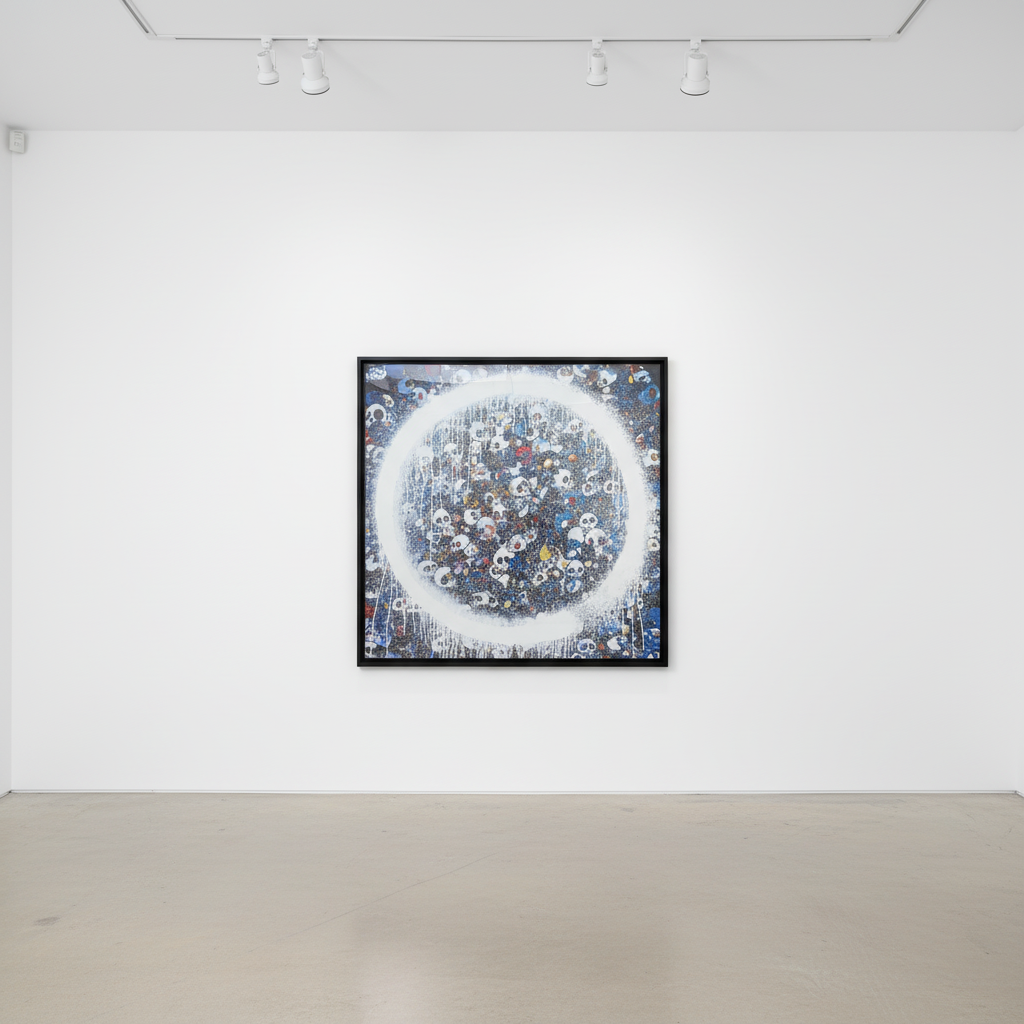
Acupuncture
3 works

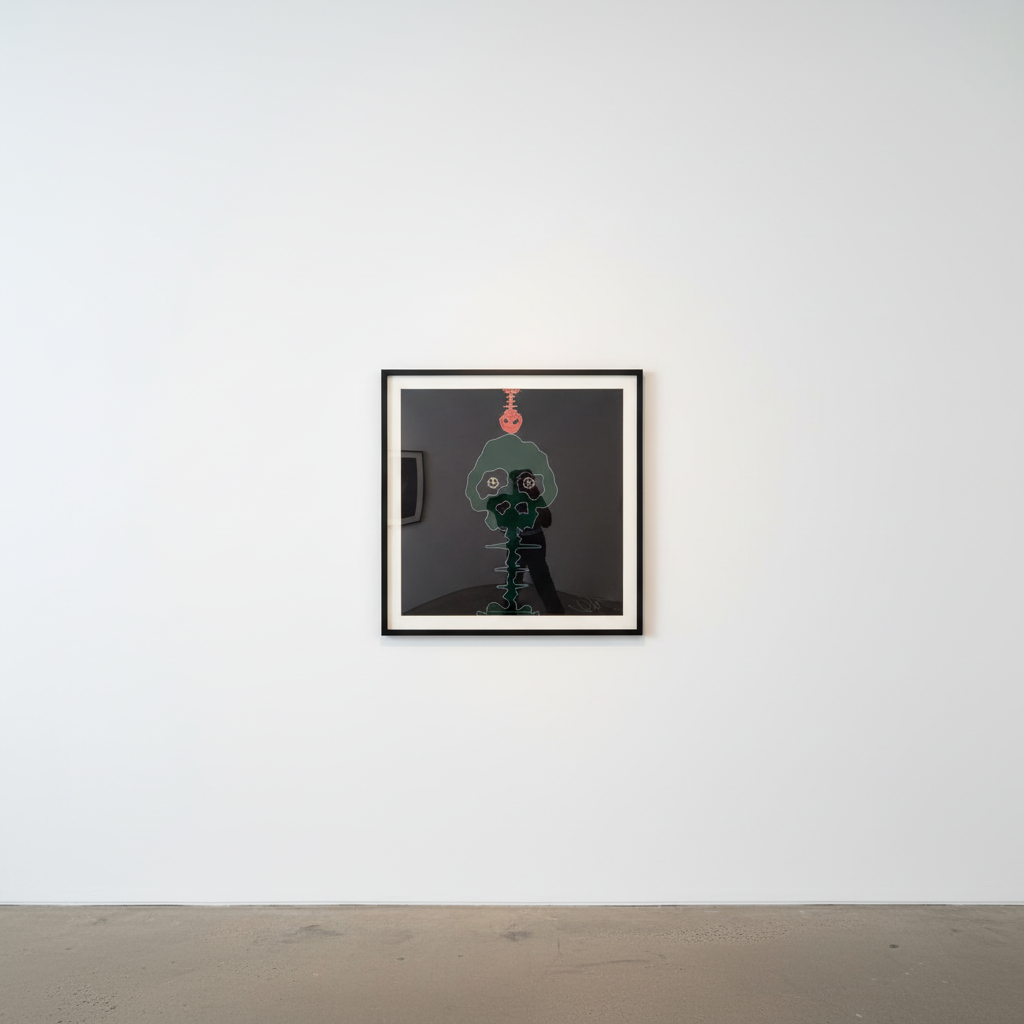
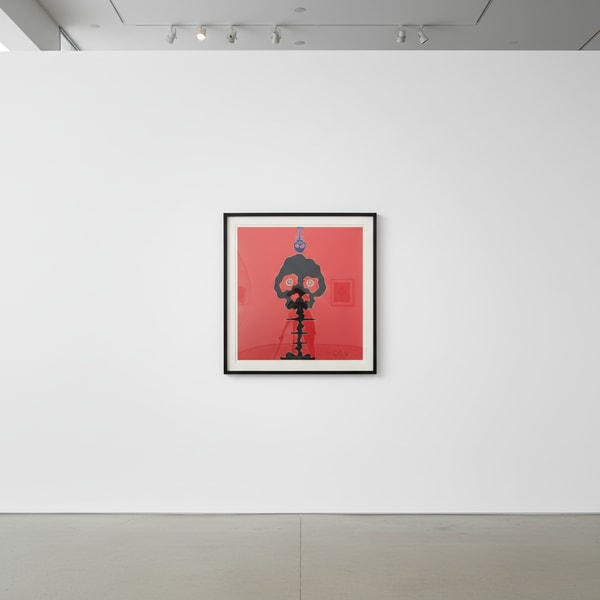
Time Bokan (Black), 2006
Lithograph
19 3/4 x 19 3/4 in 50 x 50 cm
Ediion of 300
Takashi Murakami's Time Bokan series is a provocative collection of three prints that skillfully intertwine cultural commentary with historical reflection. Produced in 2006, each print features a distinctively shaped mushroom cloud resembling a skull, set against boldly colored backdrops of pink, black, and red. The series draws its name and inspiration from the iconic Japanese anime series *Time Bokan*, which originally aired in 1975 and is known for its unique narrative device where defeated enemies explode into an anatomic cloud shaped like a skull at the end of each episode. Murakami's adaptation of this imagery incorporates his signature motif of smiling daisies, which replace the eyes of the skull in the clouds. These smiling flowers, frequently appearing in Murakami’s works, are rendered in bright colors with emoji-like faces, adding a layer of ironic cheerfulness to the otherwise ominous symbol of the mushroom cloud. This juxtaposition not only enhances the visual impact of the prints but also deepens the thematic complexity, blending elements of pop culture with profound historical references. Furthermore, the Time Bokan series serves as a poignant commentary on the atomic bombings of Hiroshima and Nagasaki in 1945, events that have left an indelible mark on the Japanese collective memory. Murakami, known for his critical view of contemporary Japanese artists’ responses to World War II, utilizes this series to address the lingering traumas and the often sanitized narratives surrounding these bombings. By incorporating elements from a popular anime, Murakami bridges the gap between historical events and their representations in media, questioning the ways in which Japanese culture processes and portrays its own history. In doing so, Murakami’s Time Bokan not only reflects on the past but also critiques contemporary societal attitudes, urging a reconsideration of how history is remembered and depicted in popular culture. The series highlights Murakami’s ability to fuse 'high' art with 'low' culture, challenging viewers to reconsider the boundaries between entertainment and serious historical discourse. Through this powerful imagery, Murakami engages with the post-war Japanese psyche, exploring themes of memory, trauma, and the role of art in societal healing and reflection.
Price on Application
Time Bokan - Fatman Gold · Takashi Murakami · Sotheby's · 2007-09 · $37,000
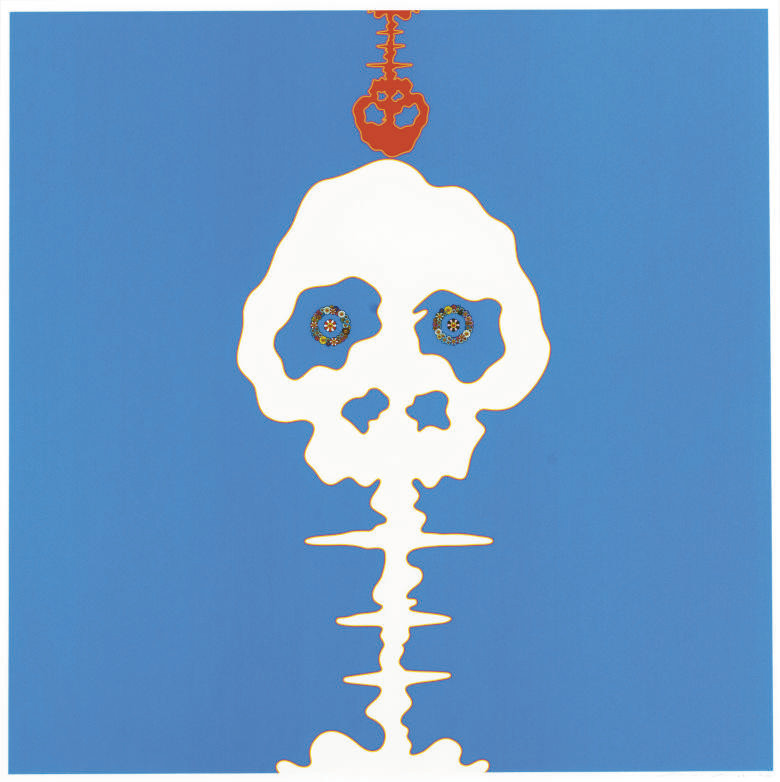
Time Bokan -- Blue · Takashi Murakami · Christie's · 2008-10 · $9,375
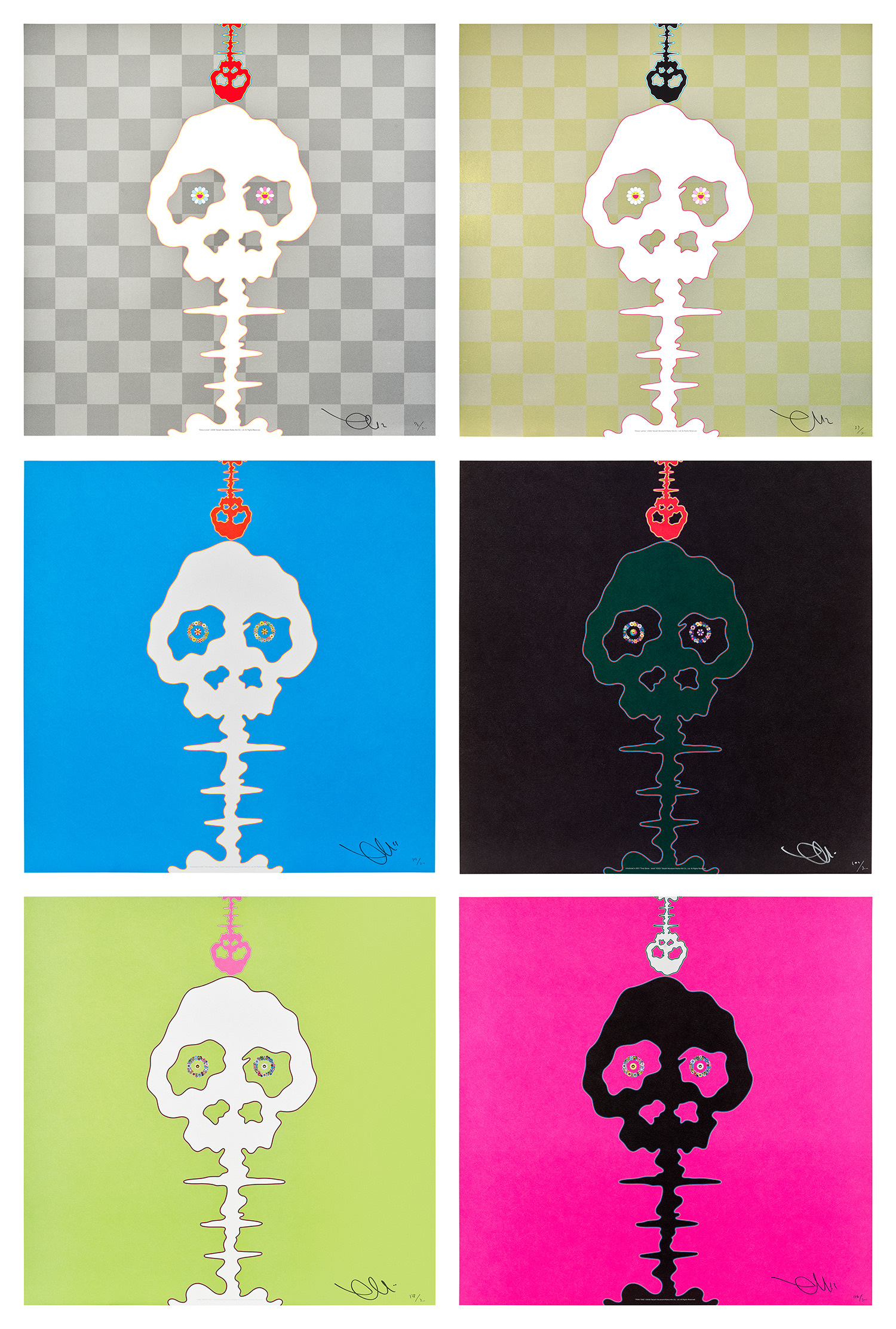
Dokuro Silver; Dokuro Yellow; Time Bokan - Blue; Time Bokan; Lime Green - Time; and Pink - Time · Takashi Murakami · Phillips · 2025-01 · $4,775
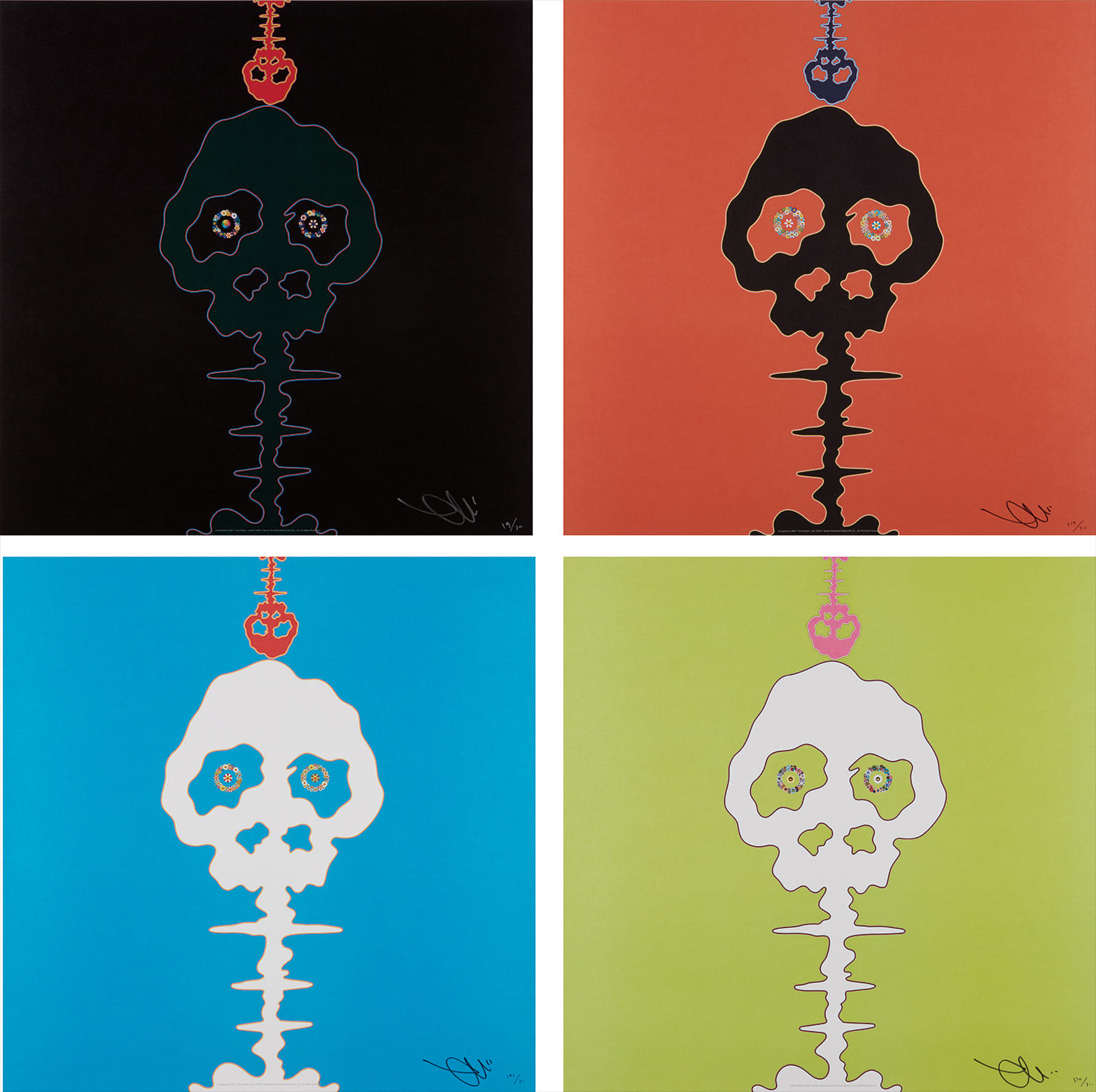
Time Bokan-black; Time Bokan-red; Time Bokan-blue; and Lime Green-Time · Takashi Murakami · Phillips · 2019-04 · $4,750
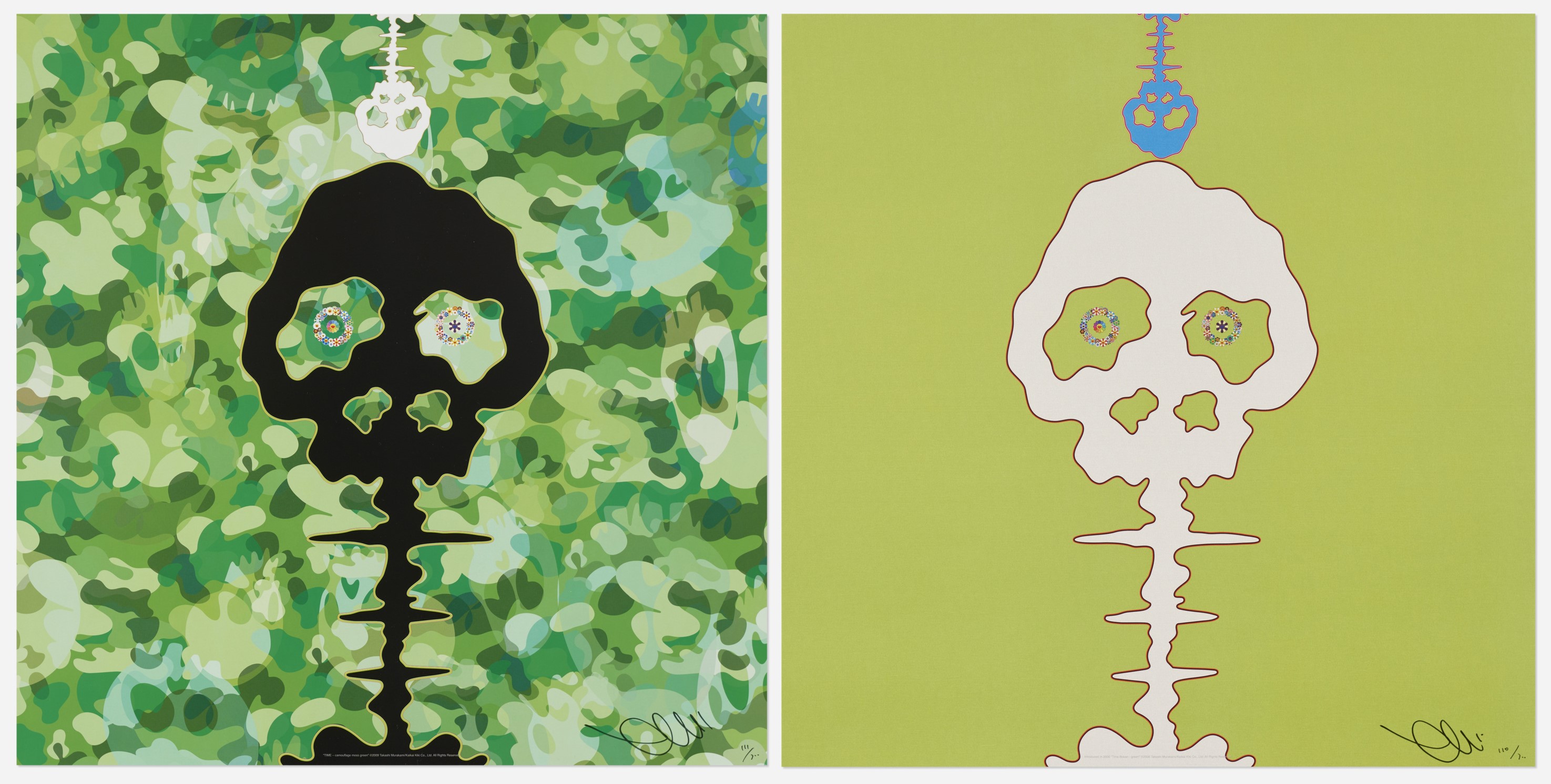
Time Bokan (Green); Time (Camouflage Moss Green) (two works) · Takashi Murakami · Wright · 2024-08 · $4,192