Editions

September 25, 2026
George Condo art represents one of the most intellectually rigorous and visually arresting bodies of work in contemporary painting. For collectors seeking an artist whose practice bridges the historical gravitas of Old Master portraiture with the fractured psychology of modern existence, Condo offers a uniquely compelling proposition. His invented term "Artificial Realism" — the practice of painting things that could exist but do not — has produced a visual language that feels simultaneously ancient and urgently contemporary, classical and deliberately disturbing.
Condo's position in the contemporary art market reflects his critical importance. His paintings have regularly achieved between one and five million dollars at auction, while his work resides in the permanent collections of the Museum of Modern Art, the Whitney Museum of American Art, the Centre Pompidou, and dozens of other major institutions worldwide. His 2011 retrospective at the New Museum in New York cemented his reputation as one of the most significant American painters of his generation, and subsequent museum exhibitions have only strengthened this standing.
For collectors, Condo presents multiple entry points across different price ranges and formats. His print editions offer access to his distinctive visual vocabulary at accessible price points, while his paintings and major drawings represent substantial acquisitions for advanced collectors building museum-quality holdings. Understanding the nuances of his practice — from his psychological cubism to his various series and their market performance — is essential for making informed acquisition decisions.
Born in Concord, New Hampshire in 1957, George Condo emerged during a pivotal moment in American art history. After studying art history and music theory at the University of Massachusetts Lowell, he moved to New York in the early 1980s, working briefly at Andy Warhol's Factory before relocating to Paris in 1985. This trajectory — from the epicenter of American Pop to the historical weight of European painting — profoundly shaped his artistic development and helps explain the distinctive synthesis that characterizes his mature work.
In Paris, Condo immersed himself in the tradition of European painting, studying Velázquez, Goya, Picasso, and the Surrealists while developing his own visual language. Unlike many of his Neo-Expressionist contemporaries who rejected historical painting traditions, Condo embraced them, seeking to extend rather than negate the possibilities of figurative representation. This period produced his earliest important works and established the intellectual framework that continues to guide his practice today.
The artist's return to New York in the 1990s coincided with a broader art world reassessment of painting's possibilities. While conceptual practices dominated critical discourse, Condo continued his investigation of portraiture and psychological representation, building a following among collectors who recognized the depth and originality of his project. His perseverance through changing art world fashions has proven prescient, as subsequent decades have seen a dramatic resurgence of interest in figurative painting broadly and in Condo's specific contributions particularly.
George Condo's market trajectory demonstrates the rewards of sustained institutional support combined with critical acclaim. His auction records show consistent appreciation over the past two decades, with his most significant works commanding prices that place him among the top tier of contemporary painters. His 2023 auction results included multiple works exceeding one million dollars, confirming the sustained collector demand for his paintings.
Institutional acquisitions have paralleled market success. Beyond the major museums already mentioned, Condo's work has entered collections at the Tate Modern, the Broad, the Rubell Museum, and numerous university galleries. Museum exhibitions continue regularly, including major presentations in Europe and Asia that have expanded his collector base internationally. This institutional embrace provides collectors with confidence in the long-term historical importance of their acquisitions.
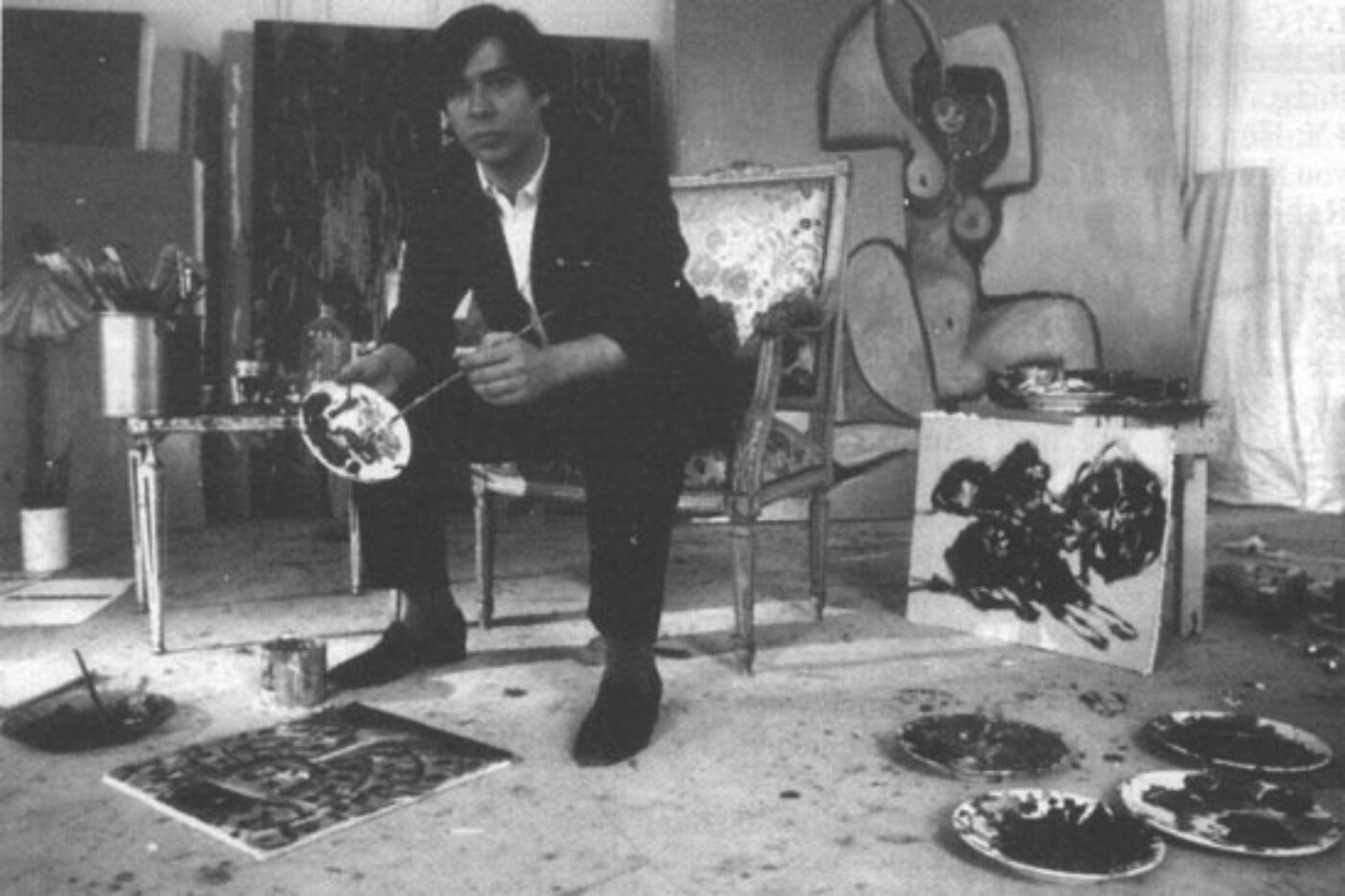
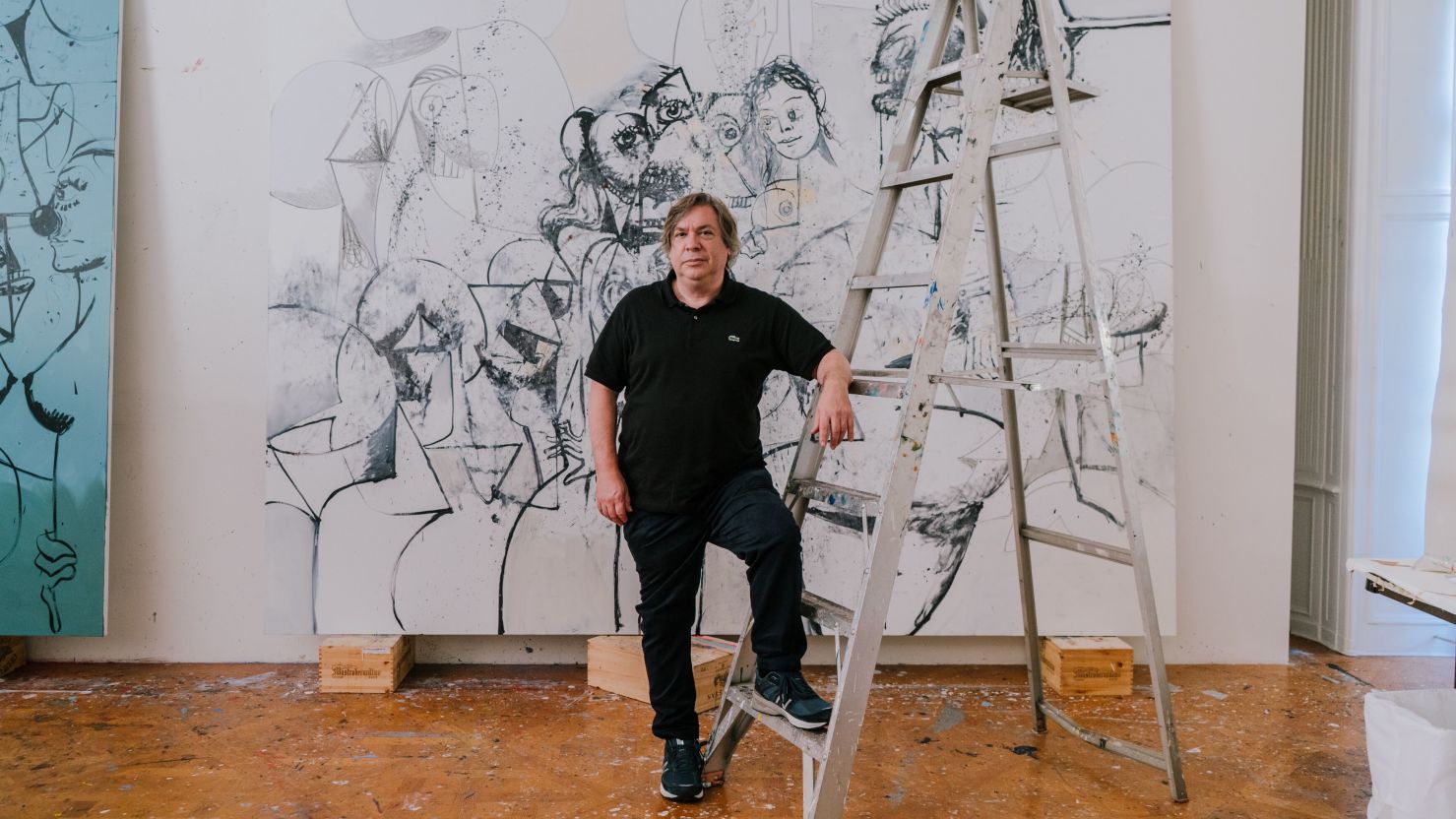
George Condo. © 1989 Marianne Haas.
The artist's cultural influence extends beyond traditional art world boundaries. His George Condo Kanye West collaboration — creating the cover artwork for the 2010 album "My Beautiful Dark Twisted Fantasy" — introduced his visual language to millions who might never enter a gallery. This crossover visibility has not diminished his art world standing; rather, it has demonstrated the broader cultural resonance of his psychological portraits while expanding collector awareness of his work.
The term "psychological cubism" captures the essential innovation of George Condo's mature practice. Where Picasso and Braque fractured the visual appearance of their subjects into geometric planes, Condo fractures the psychological states of his figures, presenting multiple contradictory emotions simultaneously within a single face. A Condo portrait might show joy and despair, innocence and corruption, humanity and monstrosity all at once, creating images that resist simple emotional categorization.
This approach emerges from Condo's broader concept of Artificial Realism, which he has described as depicting things that do not exist in reality but which are rendered with the technical conviction of realistic painting. His figures are not observed from life but invented, allowing him to explore psychological states that exceed the possibilities of actual human expression. The technical mastery evident in his handling of paint — learned through deep study of Old Master techniques — gives these impossible beings a visceral presence that purely abstract or crudely rendered images could not achieve.
The psychological intensity of Condo's work connects to a broader investigation of the human condition under contemporary pressures. His distorted faces can be read as responses to media saturation, psychological fragmentation, and the competing demands of modern existence. Collectors drawn to his work often cite this resonance with contemporary experience as a primary attraction, finding in his invented figures something that feels more truthful about inner life than conventional portraiture could capture.
Among Condo's most significant bodies of work, the Mental States series most directly addresses his psychological cubism approach. These paintings present figures whose faces morph between expressions, whose features seem to slide and reconstitute before the viewer's eyes. The series has produced some of his most valuable auction results and remains highly sought by collectors building comprehensive holdings of his work.
Related series include his Antipodal Beings, which present figures caught between opposing states of existence, and his various clown and harlequin subjects, which draw on the historical iconography of the entertainer while investing these figures with psychological complexity that transcends their origins in popular culture. His drawings, which range from rapid sketches to highly finished Works on Paper, often explore these same themes with an immediacy and directness that complements his more labored paintings.
The Psychological Moralist subjects represent another important category within his oeuvre. These works often depict figures in poses derived from Old Master compositions, but with the psychological distortions that characterize his mature style. The tension between historical painting conventions and contemporary psychological content gives these works their distinctive charge, appealing to collectors who appreciate both art historical sophistication and contemporary relevance.
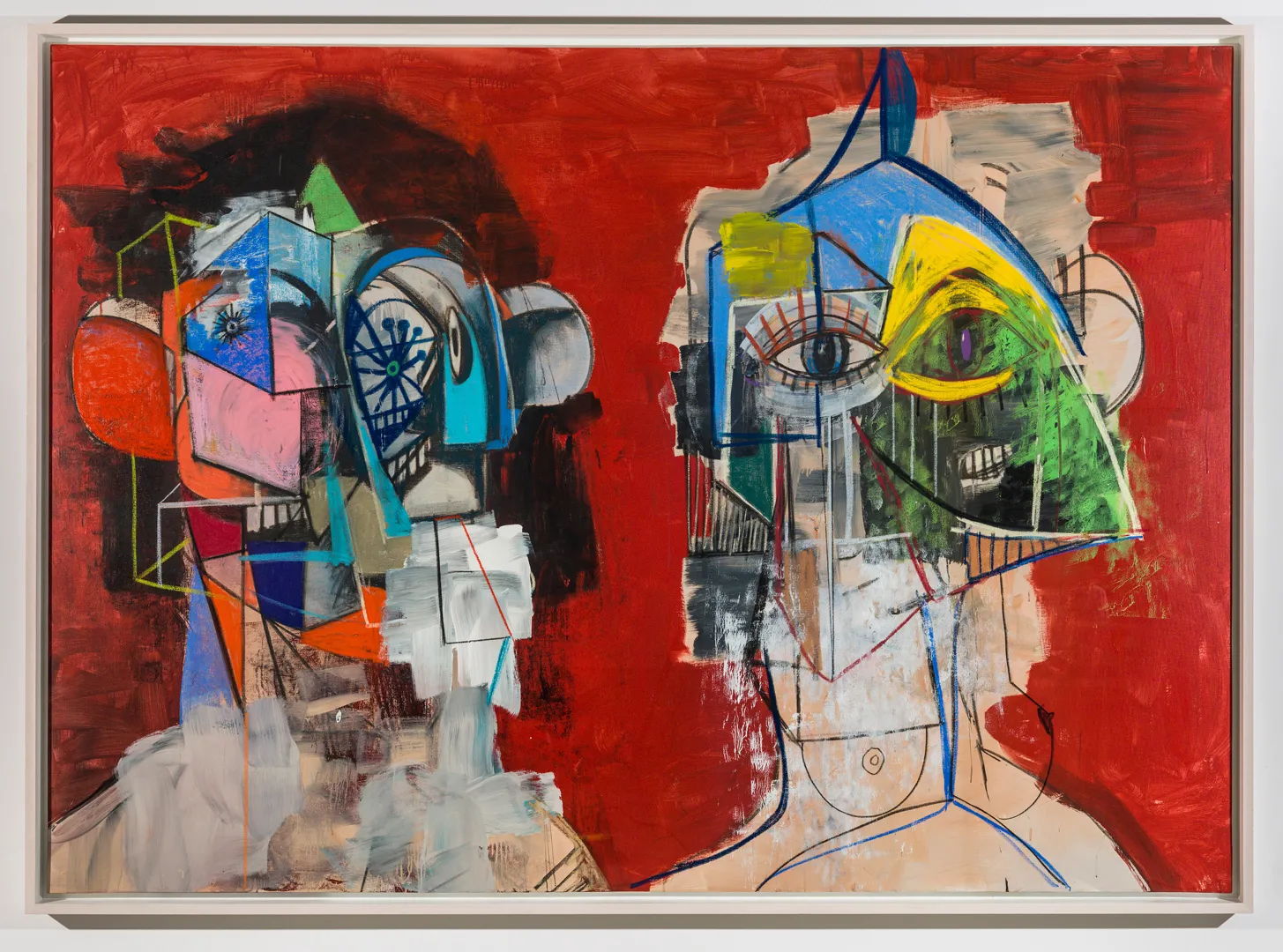
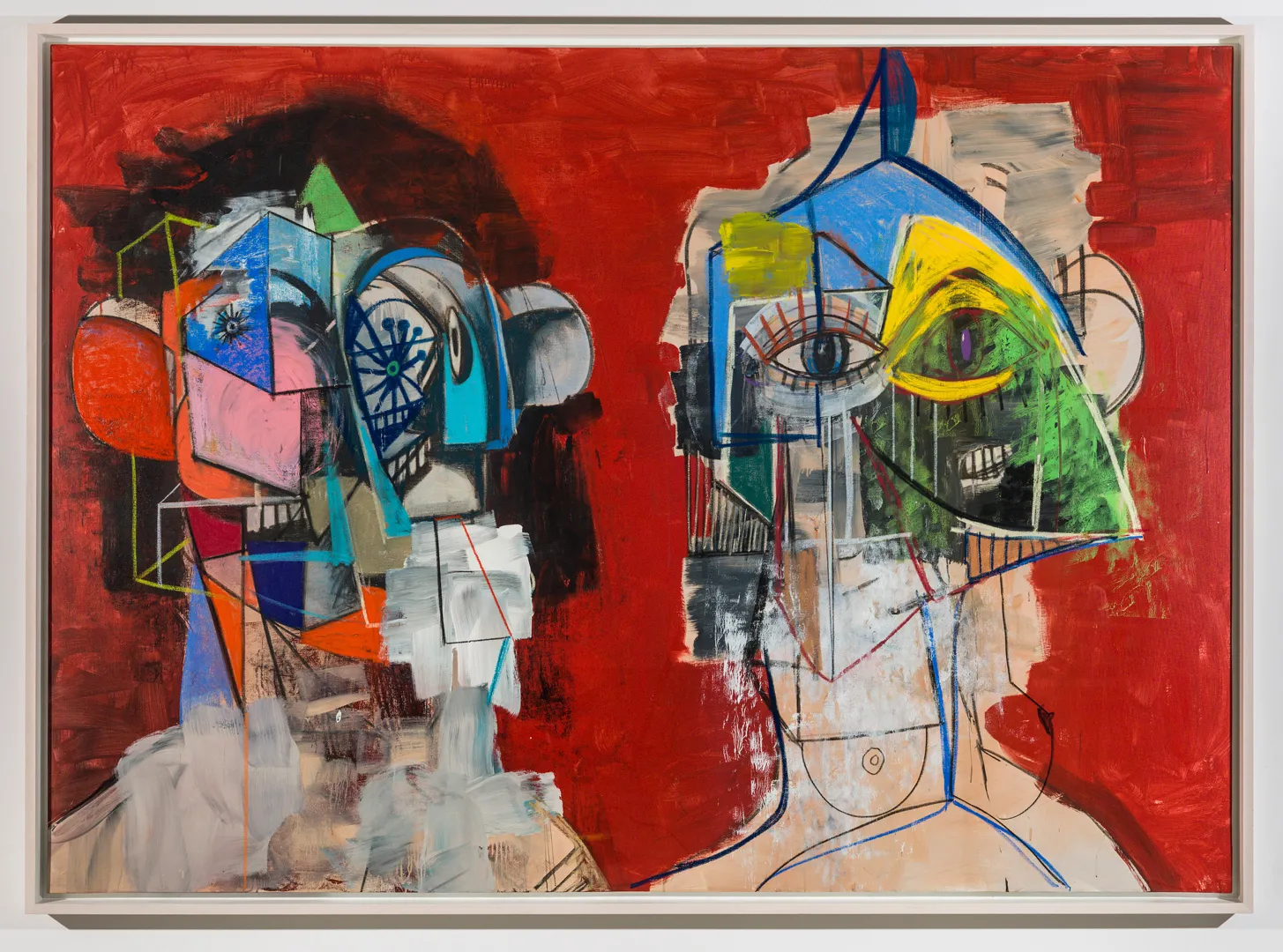
George Condo, Double Heads on Red.
Collectors approaching George Condo's work should develop familiarity with the characteristics that distinguish his strongest pieces. Technical mastery reveals itself in the handling of paint, the construction of form, and the integration of Old Master techniques with contemporary content. The best Condo paintings demonstrate a confidence and fluency that lesser works lack, with passages of bravura brushwork that reward sustained attention.
When evaluating George Condo paintings and drawings, consider the following criteria:
Collectors sometimes ask about George Condo vs Basquiat as comparative investments or collection-building strategies. While both artists emerged from the New York art scene of the 1980s and both engage with art historical traditions through contemporary lenses, their markets operate quite differently. Basquiat's premature death created a finite body of work whose scarcity drives extraordinary prices, while Condo's continuing production offers collectors more varied acquisition opportunities. Both artists reward serious study and represent important holdings for contemporary collections, but they serve different collecting strategies.
Condo's market has shown consistent appreciation without the extreme volatility that characterizes some contemporary artists. This stability reflects the depth of collector interest and the strength of institutional support for his work. For collectors seeking both aesthetic satisfaction and reasonable confidence in long-term value retention, this stability represents a significant advantage.
Proper authentication protects collectors from the financial and reputational risks of acquiring inauthentic works. For George Condo, authentication follows established procedures that serious collectors should understand:
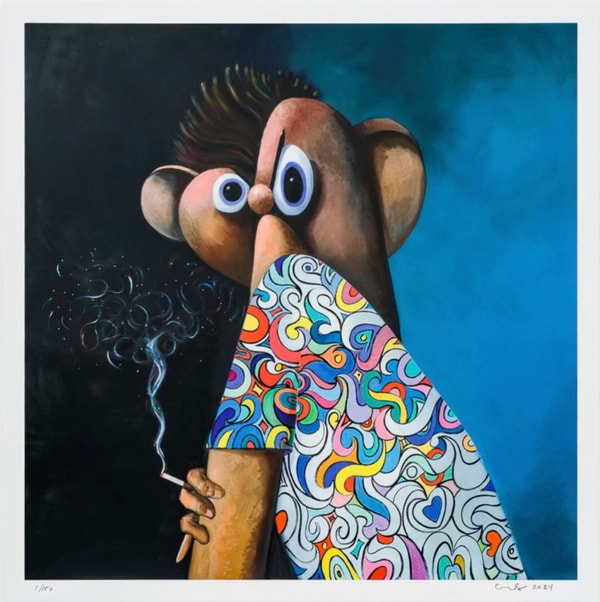
George Condo, Lost In Time, Acrylic on Canvas. Available at Guy Hepner, New York.
Collectors should maintain complete documentation for their acquisitions, including purchase records, certificates of authenticity, condition reports, and exhibition loans. This documentation protects both current ownership and facilitates future resale or donation. Working with established galleries like Guy Hepner ensures access to properly documented works and professional guidance on provenance standards.
For significant acquisitions, independent condition reports from qualified conservators provide additional protection. These reports document the current state of the work and can identify any concerns that might affect value or require treatment. The cost of professional assessment represents a small fraction of major acquisition prices and provides valuable protection for the collector's investment.
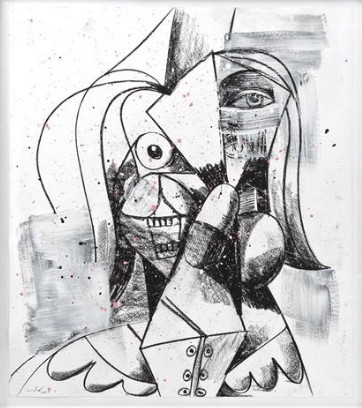
George Condo editions occupy a compelling position for collectors who appreciate his vision but whose budgets may not extend to his paintings. Condo has engaged with printmaking throughout his career, producing editions in collaboration with leading print publishers and studios. These prints translate his signature visual language — the distorted figuration, the psychological intensity, the multiple simultaneous emotional states — into reproducible form without compromising the conceptual density of his unique works.
Condo's editions include several distinct categories:
George Condo prints and editions typically range from three thousand to thirty thousand dollars depending on format, edition size, and subject matter. His most sought Psychological Moralist series works can exceed this range, particularly as edition availability decreases in the secondary market. These prices offer significant value compared to his paintings while providing access to the same visual and conceptual concerns.
Figure-based prints command stronger secondary market performance than more abstract works, reflecting broader collector preferences for Condo's portrait subjects. The distorted portrait editions — particularly works referencing his Mental States and Psychological Moralism subjects — are most sought by collectors building coherent holdings. Signed and numbered editions from established publishers carry the strongest resale documentation and should be preferred over open editions or unsigned works.
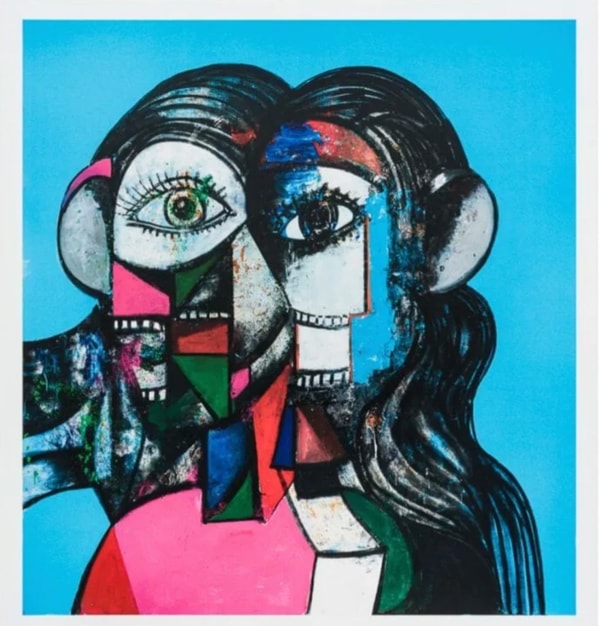
George Condo, Prismatic Head, Oil on Canvas. Available at Guy Hepner, New York.
Understanding George Condo price levels across different categories helps collectors make informed acquisition decisions. The market stratifies roughly as follows:
These ranges represent general guidelines; specific works may fall outside these parameters based on individual characteristics, provenance, condition, and market timing.
Collectors frequently ask whether George Condo represents a good investment. While no artwork purchase should be made purely for financial return, Condo's market characteristics suggest favorable conditions for value retention and potential appreciation. His strong institutional support, consistent critical acclaim, and demonstrated auction performance provide reasonable confidence that serious collectors can expect their acquisitions to maintain or increase in value over appropriate holding periods.
However, investment considerations should supplement rather than replace aesthetic judgment. Collectors who acquire works they genuinely appreciate will derive ongoing satisfaction from their ownership regardless of market fluctuations. Those who purchase purely for speculative purposes risk both financial disappointment and the opportunity cost of not owning works that provide genuine pleasure. The most successful collecting strategies balance aesthetic conviction with prudent market awareness.
Maintaining proper condition protects both the aesthetic integrity and market value of artworks. For Condo's various media, condition assessment follows established protocols:
Proper storage and display practices prevent condition deterioration over time. Works should be protected from direct sunlight, excessive humidity or dryness, and temperature fluctuations. Professional conservation-quality framing provides essential protection for works on paper. Regular condition monitoring allows early identification of any emerging concerns.
Collectors approach George Condo's work through various strategies depending on their resources, interests, and collecting goals. Some focus narrowly on specific series or periods, building depth within a defined area. Others pursue breadth, seeking representative examples across his various media and subjects. Both approaches can produce meaningful collections that reflect the collector's engagement with the artist's practice.
For collectors beginning to acquire Condo's work, editions offer an accessible starting point that familiarizes them with his visual language while they develop their understanding of his broader practice. As knowledge and resources grow, collectors often progress to unique works on paper and eventually paintings. This gradual approach allows collectors to refine their preferences and develop relationships with dealers who can facilitate more significant acquisitions.
Advanced collectors building museum-quality holdings typically focus on major paintings from significant series, supplemented by important drawings and representative editions. These collectors often loan works to museum exhibitions, contributing to scholarly understanding while enhancing the documented history of their holdings. Some collectors have built comprehensive collections that have themselves become subjects of exhibition and publication.
Guy Hepner Gallery, located at 177 Tenth Avenue in New York, offers collectors access to George Condo editions and works with full authentication documentation and professional guidance. The gallery's expertise in contemporary editions ensures that collectors receive properly documented works accompanied by appropriate certificates of authenticity and provenance information. Our advisory services help collectors navigate acquisition decisions, from identifying appropriate works to assessing condition and negotiating fair pricing.
Whether you are beginning your engagement with George Condo's practice through an accessible edition or seeking a significant painting to anchor an advanced collection, the specialists at Guy Hepner can provide the expertise and access necessary for confident acquisition. We maintain current inventory of Condo editions and can advise on both primary market opportunities and secondary market acquisitions. Contact the gallery to discuss current George Condo availability and develop an acquisition strategy aligned with your collecting goals and resources.
Explore George Condo prints for sale at Guy Hepner: Works on Paper.
Related Series