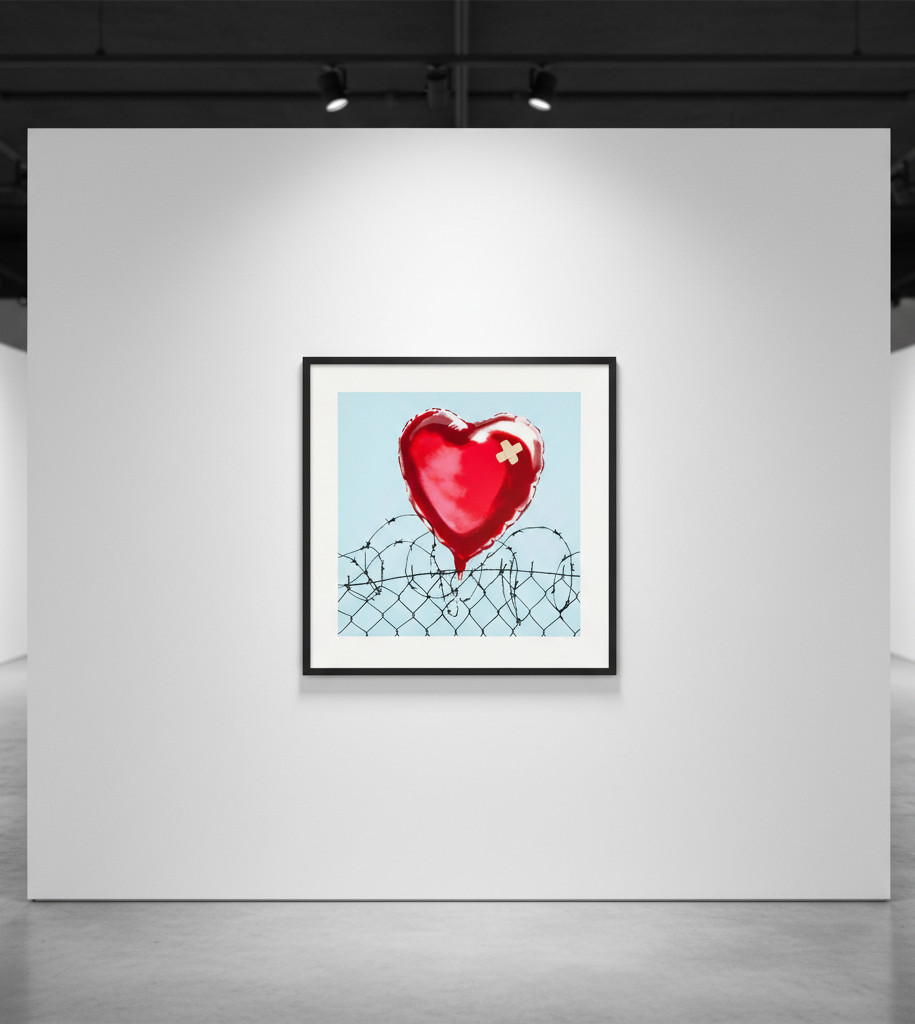
Love Hurts

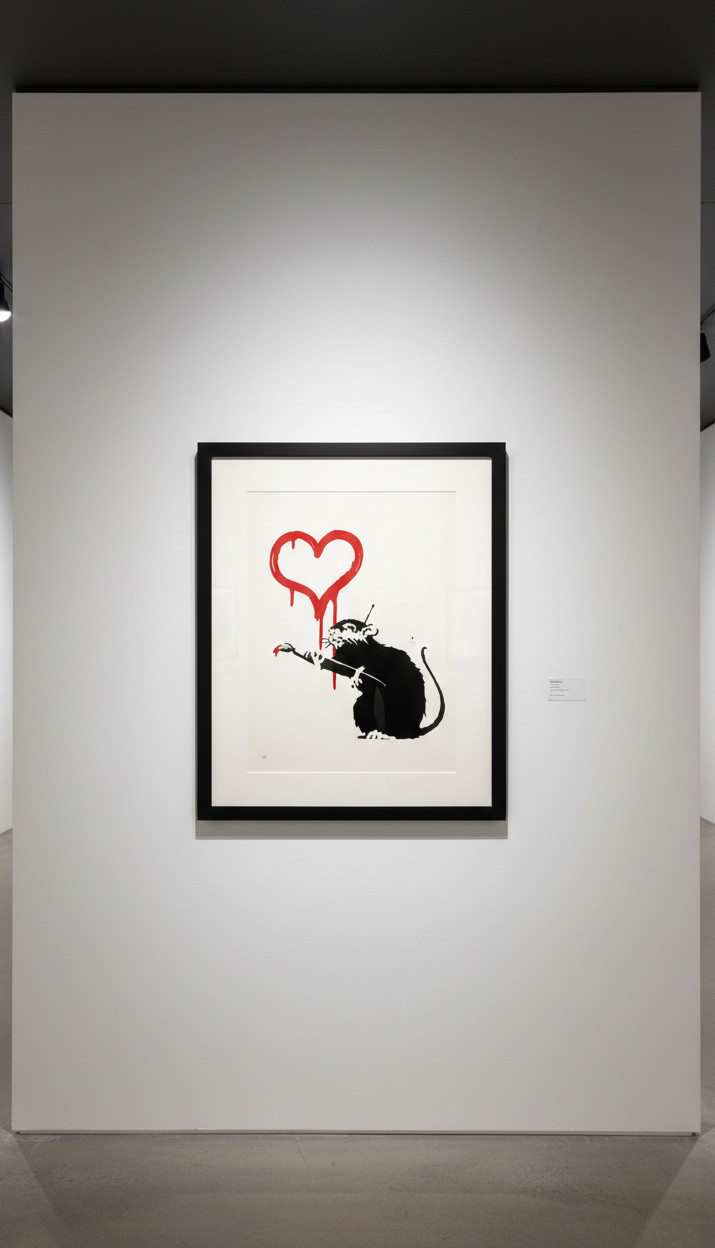
The question of why Banksy uses love hearts points to the tension that sits at the centre of his work. Few artists have taken such a universally recognisable symbol and loaded it with as much emotional and political complexity. In Banksy's hands, the heart is never decorative. It becomes a device for examining how love, empathy, and vulnerability survive in a world shaped by violence, consumerism, and social fracture.
Banksy's visual language relies on clarity, speed, and contrast. His stencil technique - developed out of necessity during illegal street interventions - allows him to communicate instantly while retaining precision and nuance. The heart motif recurs throughout his practice, sometimes as a focal point, sometimes embedded within a wider scene, but always in service of a broader critique. What looks simple at first glance rarely is. This tension between accessibility and depth has made Banksy one of the most significant artists of the contemporary era, commanding auction results that rival the established masters of twentieth-century art.
To understand Banksy's use of hearts, it helps to see them as instruments rather than expressions. They are not sentimental gestures but tools of irony and subversion. The heart in Banksy's iconography operates as a Trojan horse - familiar enough to draw viewers in, provocative enough to unsettle them once they arrive.
Consider the recurring image of the heart-shaped balloon. On one level, it evokes childhood innocence, fairground joy, and uncomplicated affection. Yet Banksy consistently places this symbol in contexts that complicate its meaning. The balloon drifts away from reaching hands. It floats toward oblivion. It represents something precious that cannot be held. This strategic ambiguity - positioning hope adjacent to loss - defines Banksy's approach to the love heart across his entire body of work.
The artist has built an extraordinary career by speaking to universal human experiences through imagery that requires no art historical education to decode. The heart is perhaps the most democratic of all visual symbols, understood across cultures, ages, and social backgrounds. By deploying it repeatedly, Banksy ensures his work remains accessible while simultaneously critiquing the systems that commodify emotion itself.
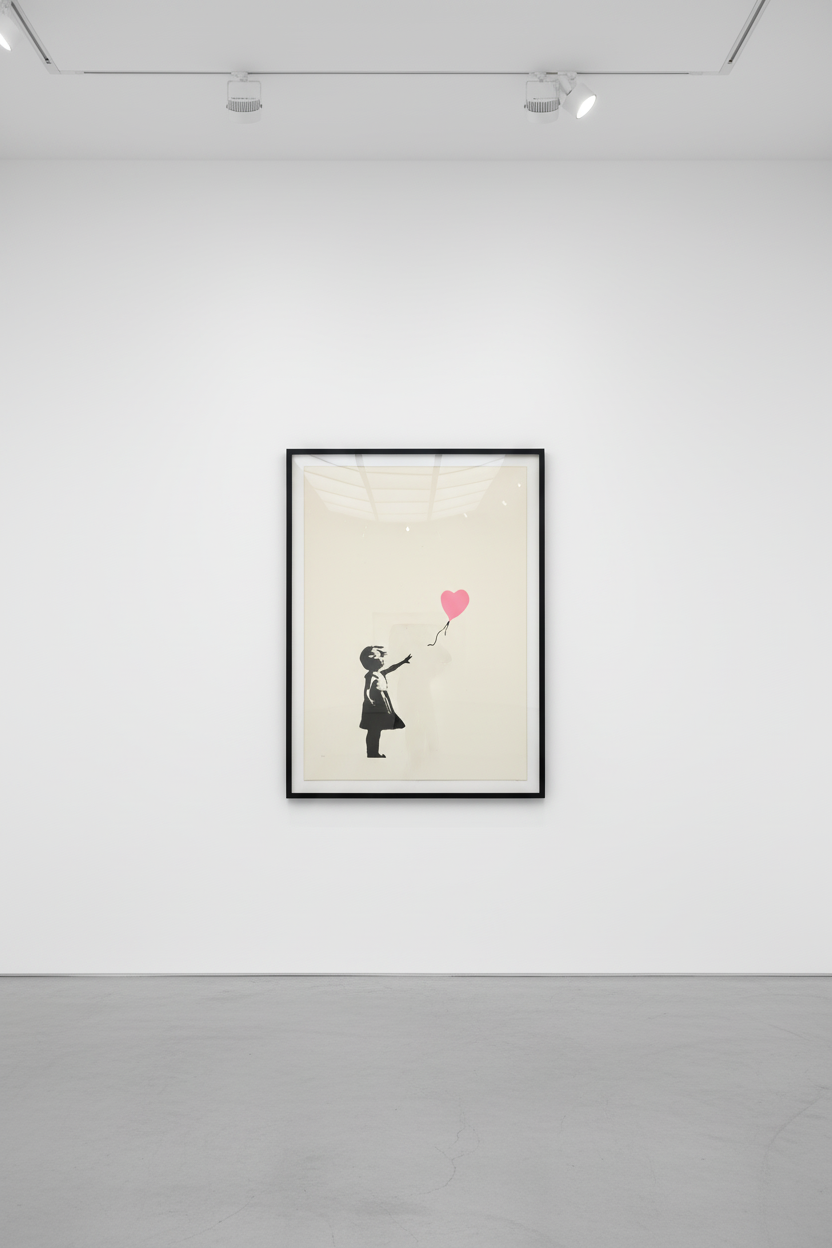
Girl with Balloon Pink AP — Banksy. Available at Guy Hepner, New York.
No work encapsulates Banksy's approach to the heart more powerfully than Girl With Balloon. First appearing on a wall in London's South Bank in 2002, the image has since become one of the most recognised artworks of the twenty-first century. A young girl - rendered in Banksy's characteristic black stencil - reaches toward a red heart-shaped balloon carried away by the wind. The accompanying text, "There is always hope," adds a layer of poignant ambiguity.
The genius of Girl With Balloon lies in its interpretive openness. Is the girl releasing the balloon or losing it? Is the message one of optimism or resignation? Banksy leaves the question unresolved, and this uncertainty is precisely what gives the work its emotional power. The heart balloon becomes a vessel for whatever the viewer needs it to contain - lost love, departed loved ones, fading dreams, or the persistent belief that beauty endures despite evidence to the contrary.
The work achieved unprecedented notoriety in October 2018 when, moments after selling at Sotheby's London for £1.04 million, it partially shredded itself through a mechanism hidden in the frame. Rather than destroying its value, this act of institutional critique - later retitled Love is in the Bin - transformed the piece into an even more significant cultural artefact. When it returned to Sotheby's in 2021, it sold for £18.6 million, demonstrating that Banksy's conceptual provocations only amplify collector demand.
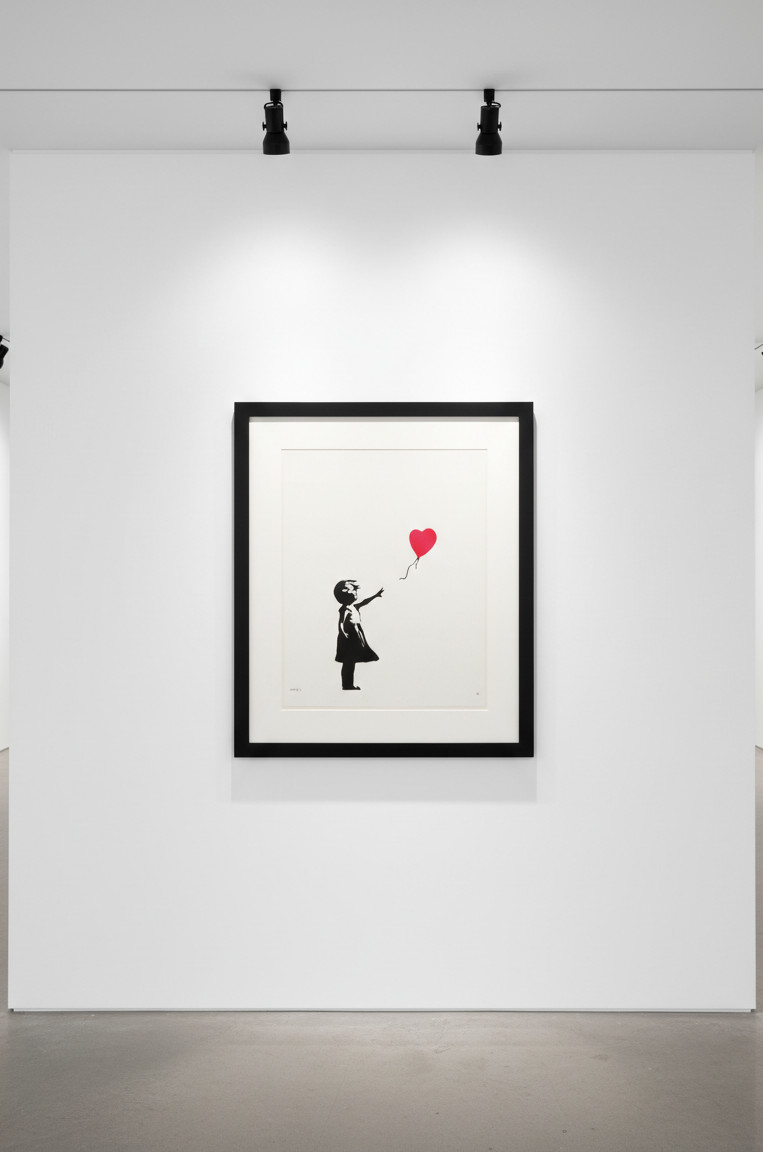
Girl With Balloon (Signed) — Banksy. Available at Guy Hepner, New York.
The Art Basel and UBS Global Art Market Report has consistently identified street art and contemporary works with strong narrative content as areas of sustained collector interest. Banksy occupies a unique position within this landscape - an artist whose market performance rivals blue-chip contemporaries while maintaining an anti-establishment ethos that paradoxically enhances his appeal.
Christie's and Sotheby's have recorded numerous Banksy works exceeding seven figures, with heart-themed pieces among the most sought after. The emotional resonance of the love heart motif translates into genuine collector passion, creating a market dynamic where demand consistently outpaces supply. Institutional recognition has followed commercial success, with major museums worldwide acquiring Banksy works for permanent collections.
For collectors, Banksy's heart imagery offers something increasingly rare in contemporary art - genuine emotional connection combined with art historical significance and strong investment fundamentals. The works speak immediately to human experience while rewarding deeper contemplation. They function equally well in private collections and institutional settings, maintaining relevance across shifting cultural conversations.
The various editions of Girl With Balloon - from unsigned prints to signed Artist Proofs - represent different entry points into this iconic body of work. Each variant carries its own provenance considerations and market positioning, allowing collectors to acquire pieces aligned with their specific collecting strategies and investment horizons.
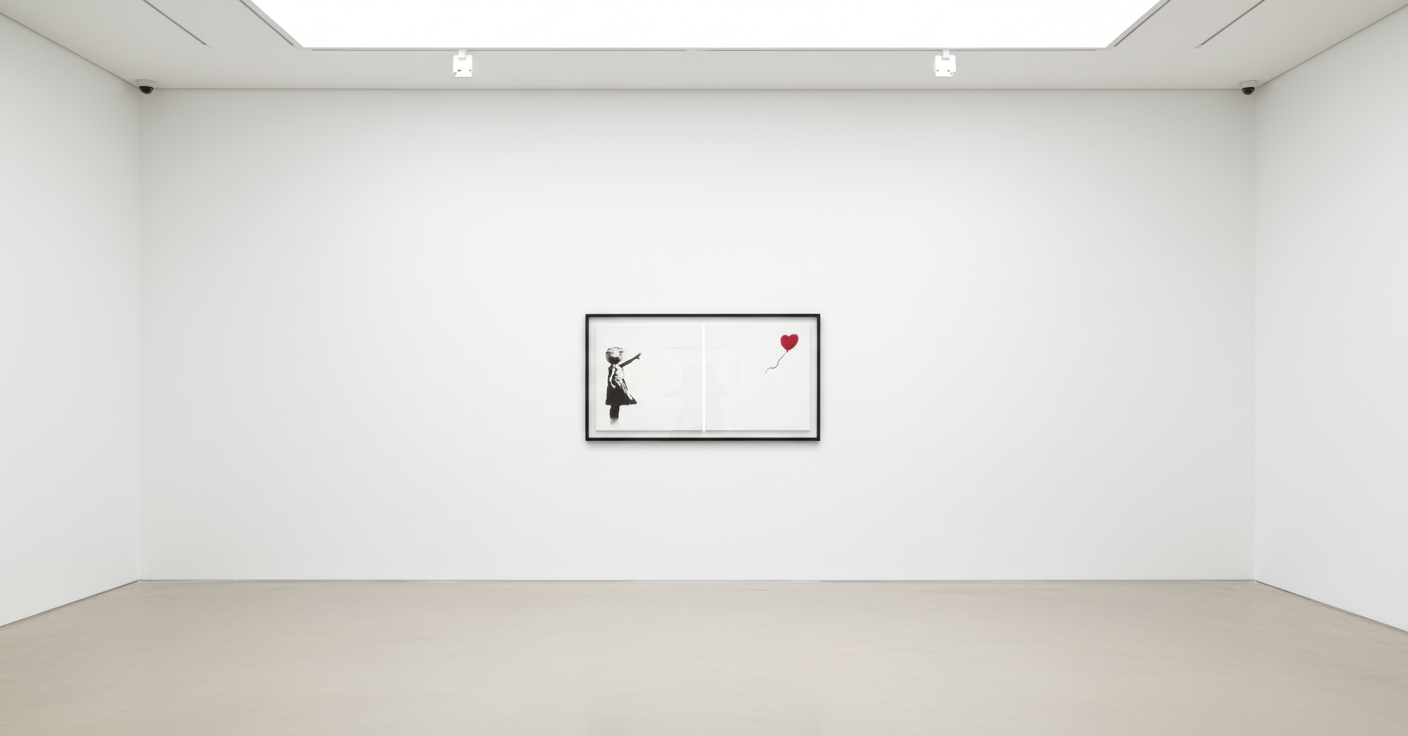
Girl With Balloon Diptych — Banksy. Available at Guy Hepner, New York.
Banksy's hearts endure because they refuse easy categorisation. They are simultaneously sincere and ironic, hopeful and melancholic, personal and political. In a contemporary art landscape often criticised for privileging concept over emotion, Banksy demonstrates that the two need not be mutually exclusive. The love heart - that most ancient and universal of symbols - becomes in his hands a vehicle for exploring what it means to feel anything genuine in an age of mediated experience.
The street origins of these images matter. Banksy's hearts first appeared in public spaces, offered freely to whoever encountered them. This democratic beginning informs how the works function even within gallery and auction contexts. They carry the memory of accessibility, of art as gift rather than commodity, even as they command significant prices in the secondary market.
Guy Hepner is pleased to offer authenticated Banksy works featuring the artist's iconic heart imagery, including editions from the celebrated Girl With Balloon series. Our specialists provide comprehensive guidance on provenance, condition, and market positioning for collectors seeking to acquire these historically significant pieces. To enquire about available works or discuss acquisition opportunities, contact our New York gallery directly.
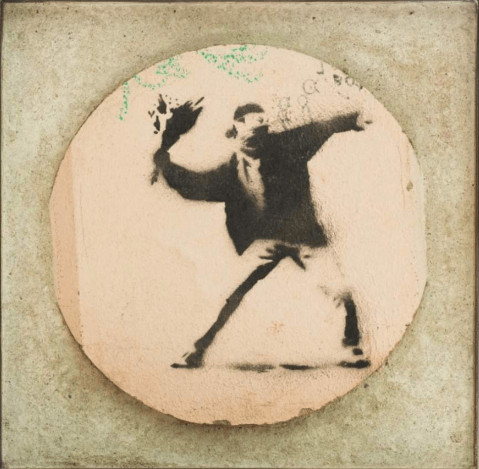
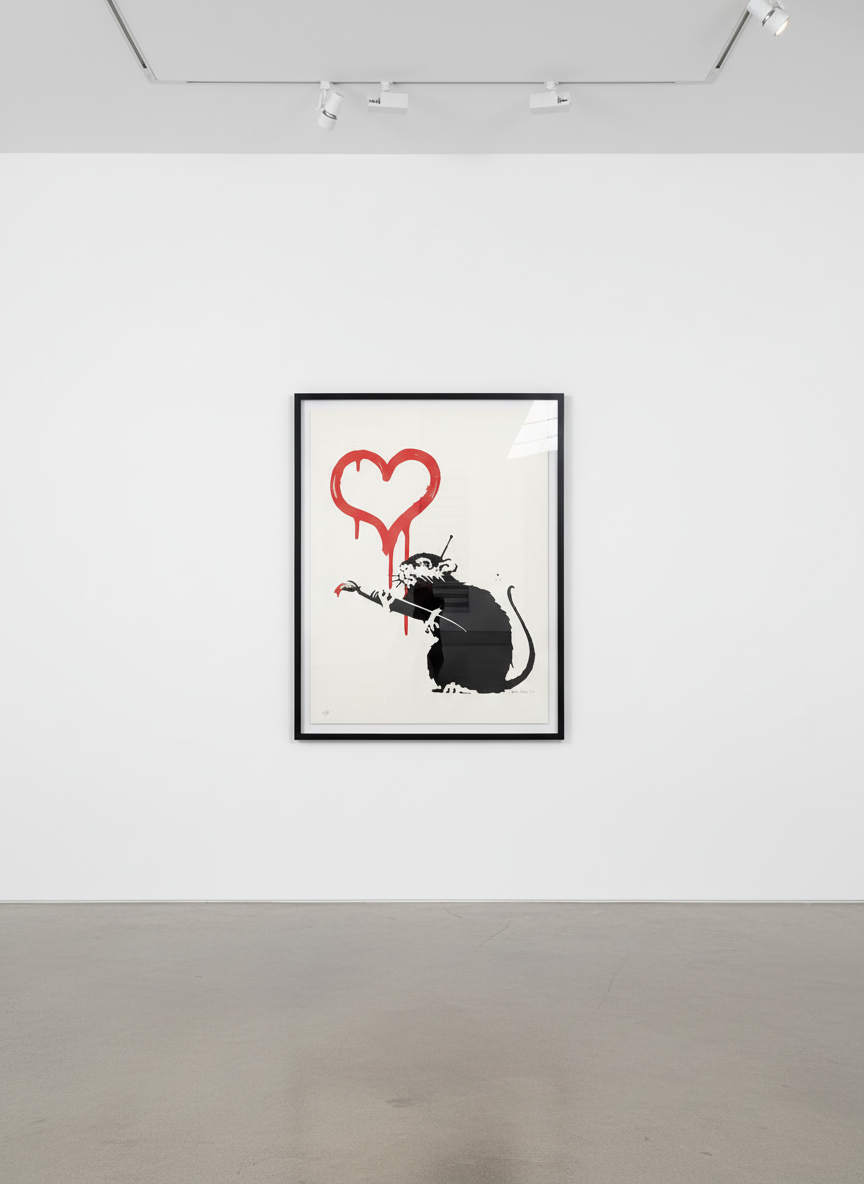
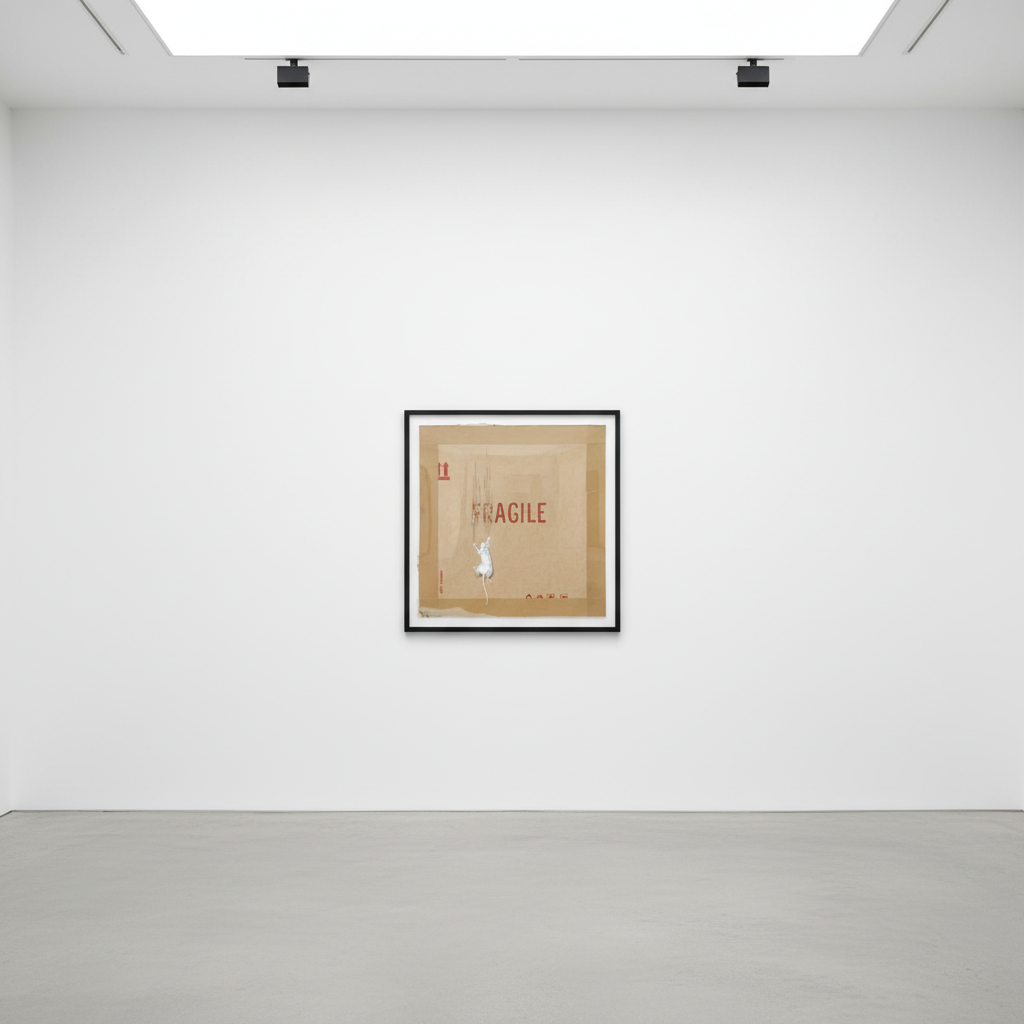
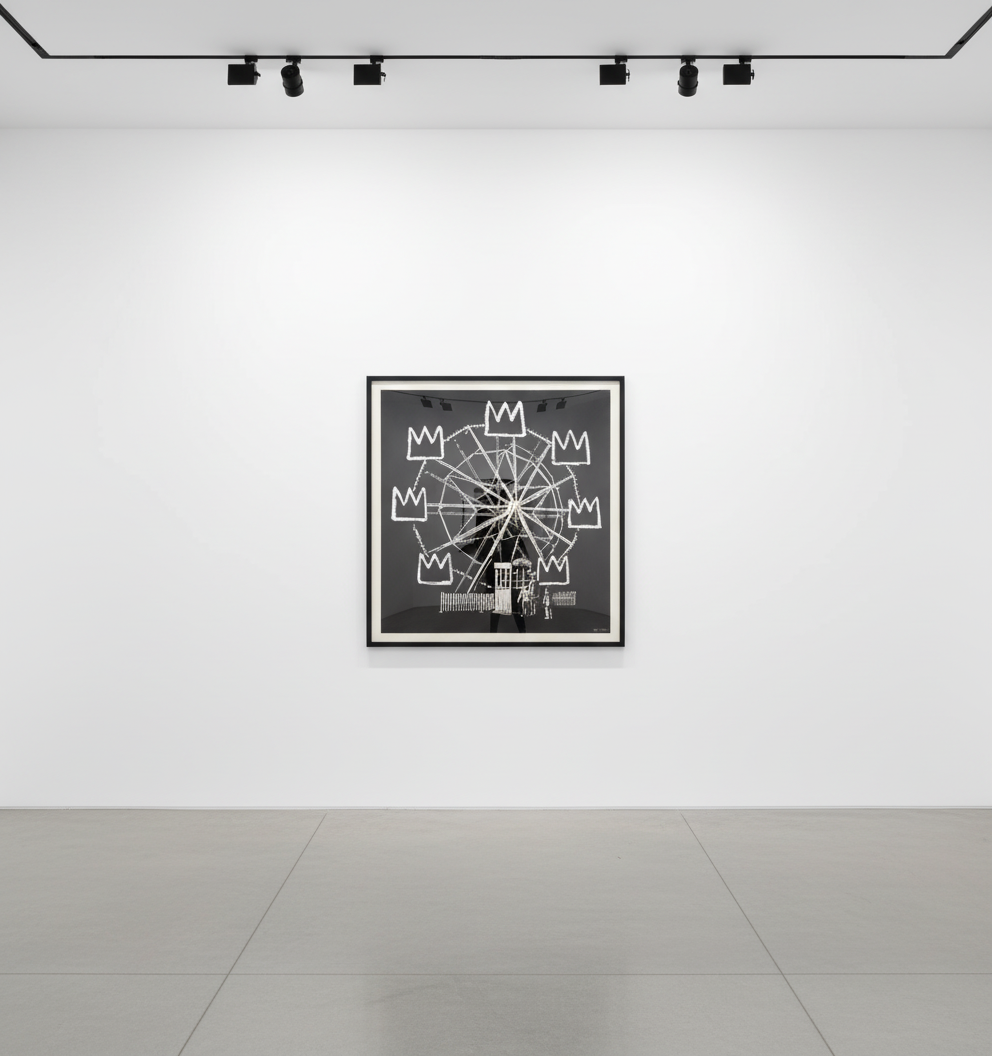
Explore Banksy prints for sale at Guy Hepner: Love Hurts, Love Is in the Air (Flower Thrower), Love Rat, (Fr)agile, Applause.
Related Series