Editions

George Condo has emerged as one of the defining painters of his generation, serving as a vital bridge between the Neo-Expressionist energy of the 1980s and the psychologically fraught figuration that dominates today's blue-chip contemporary painting. For collectors navigating the art market in 2025-2026, his work—particularly his prints and editions—offers a compelling entry point into an artist whose market now spans mid-five figures for exceptional Works on Paper to multi-million-dollar paintings at major auction houses including Christie's and Sotheby's.
This guide provides a practical, collector-focused approach to acquiring George Condo art: covering his formative influences, the conceptual framework of his distinctive style, key examples across prints and paintings, and strategic considerations for building a Condo collection with lasting value and art historical significance.
George Condo was born in 1957 in Concord, New Hampshire, and pursued studies in art history and music theory at the University of Massachusetts Lowell. From his earliest years, he maintained a dual commitment to painting and music that would profoundly shape his artistic sensibility. As a teenager, Condo studied classical guitar and immersed himself in Bach and other classical composers, developing an appreciation for formal structure and compositional complexity that would later inform his visual work. During the late 1970s, he played in a proto-punk band in Boston while working at a silkscreen factory—an experience that introduced him to printmaking techniques he would later employ throughout his career.
Condo's move to New York in 1979 proved transformative. He worked briefly as a screen printer for Andy Warhol's Factory, absorbing lessons about repetition, appropriation, and the productive tension between high art and popular culture. His friendships with Jean-Michel Basquiat and Keith Haring placed him at the centre of the East Village art scene, though Condo's intellectual interests diverged from his contemporaries' more immediate visual languages. Where Basquiat channelled raw urban energy and Haring developed iconic graphic simplicity, Condo looked backward to Velázquez, Goya, Picasso, and the Old Masters, seeking to synthesise historical painting traditions with contemporary psychological insight.
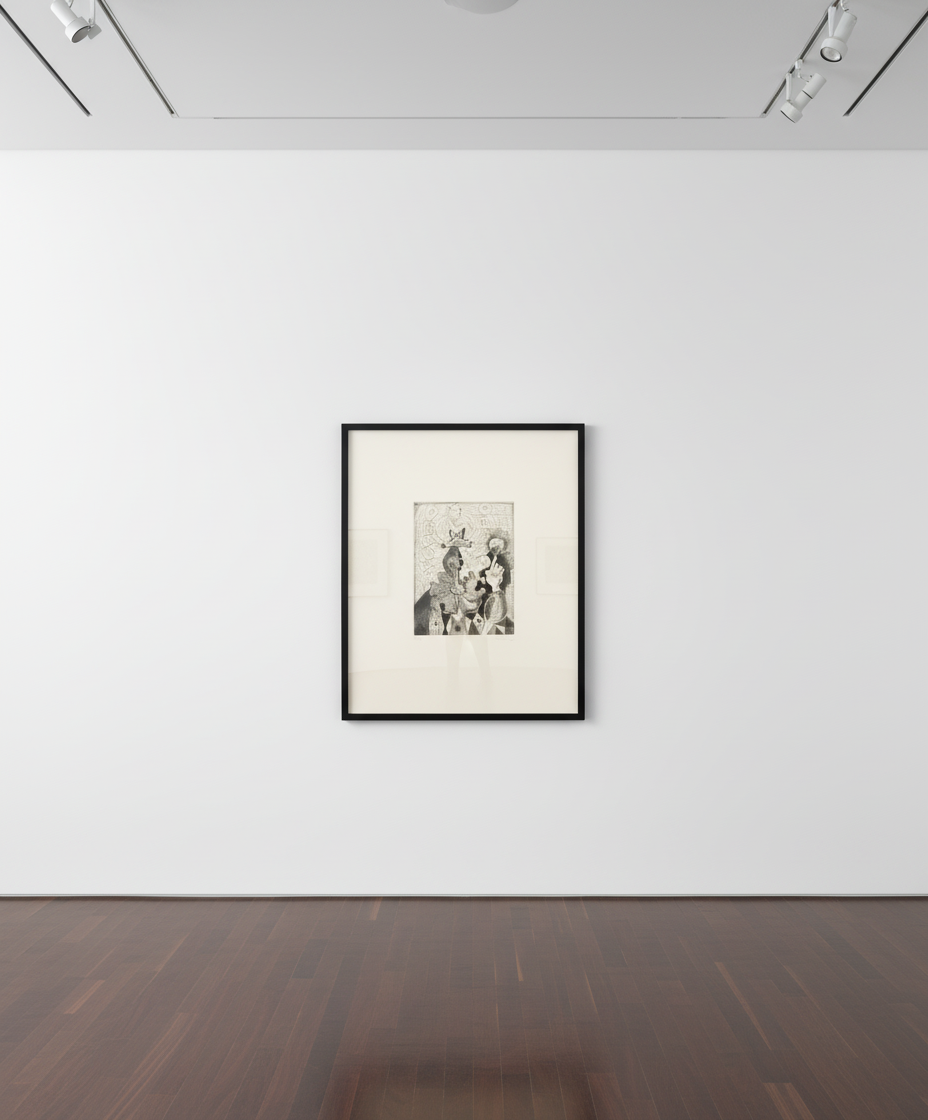
Untitled — George Condo. Available at Guy Hepner, New York.
This synthesis crystallised in what Condo termed "Artificial Realism"—a conceptual framework that remains central to understanding and collecting his work. Rather than depicting reality as observed, Artificial Realism presents invented figures that feel psychologically authentic despite their impossible anatomies. Condo's subjects—with their bulging eyes, fragmented features, and grotesque proportions—are not portraits of specific individuals but visualisations of internal states, conflicting emotions rendered in paint. The term itself suggests the paradox at the heart of his practice: these are artificial constructions that achieve a kind of emotional realism unavailable to conventional representation.
For collectors seeking to acquire George Condo art without immediately committing to the seven-figure paintings that dominate his auction record at Christie's and Sotheby's, his prints and editions represent an exceptional opportunity. Condo has maintained a consistent engagement with printmaking throughout his career, producing etchings, lithographs, screenprints, and monotypes that extend his painted investigations into more accessible formats.
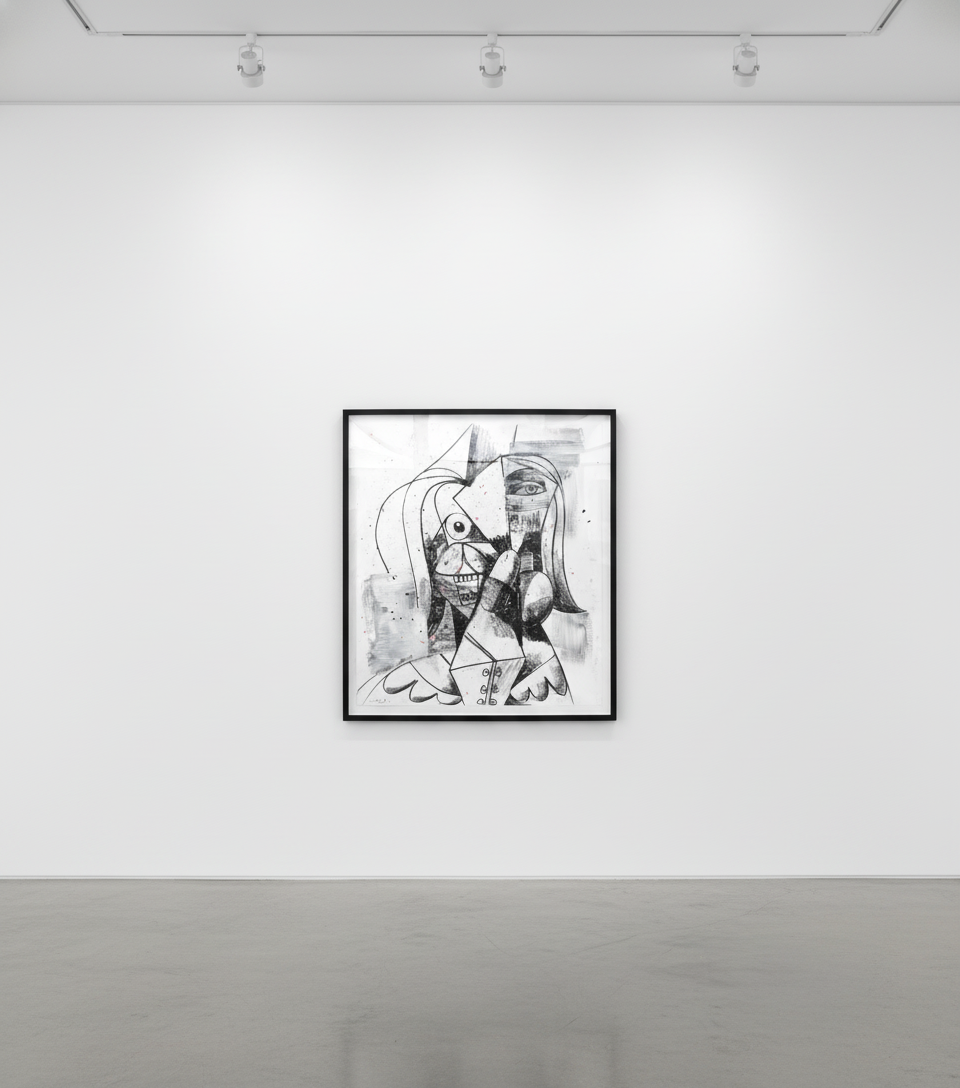
Works such as Prismatic Head demonstrate Condo's ability to translate his characteristic visual language into print media without sacrificing intensity or conceptual depth. The prismatic fragmentation of facial features—eyes multiplied and displaced, noses rendered from contradictory angles—carries the same psychological charge as his large-scale paintings while offering collectors a more approachable price point. Similarly, Untitled (Delineated Facial Composition) showcases Condo's draughtsmanship in its purest form, revealing the linear scaffolding that underlies his more elaborate painted surfaces.
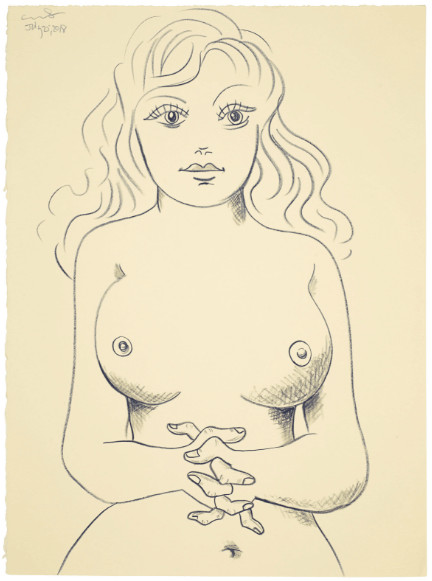
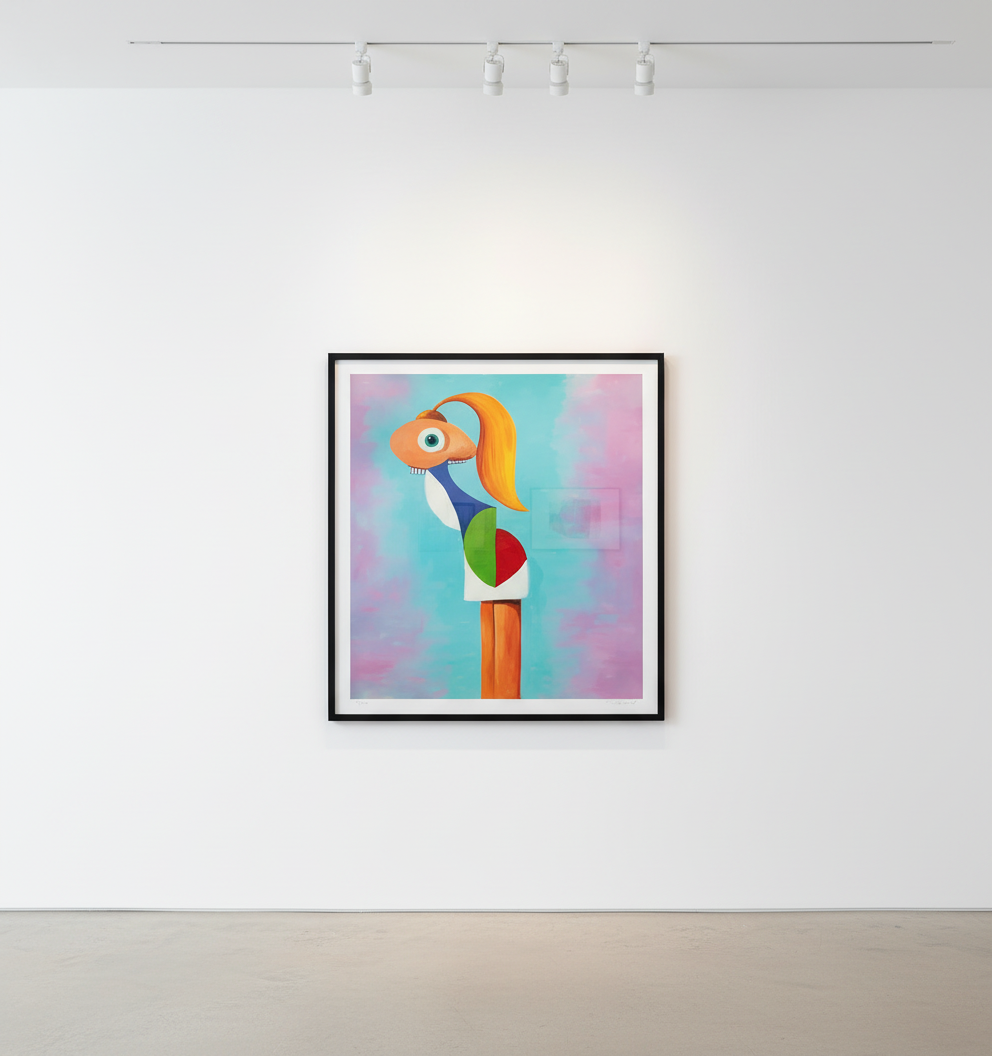
Young Girl In The Wild — George Condo. Available at Guy Hepner, New York.
The market for George Condo prints has strengthened considerably over the past five years. According to data compiled by Art Basel and UBS in their annual art market reports, works on paper by established contemporary artists have demonstrated remarkable resilience, often outperforming broader market indices during periods of economic uncertainty. Condo's prints benefit from both his institutional prominence—with works held by the Museum of Modern Art, the Whitney Museum of American Art, and the Tate—and the growing collector appetite for editions by artists whose paintings have become financially inaccessible to all but the most capitalised buyers.
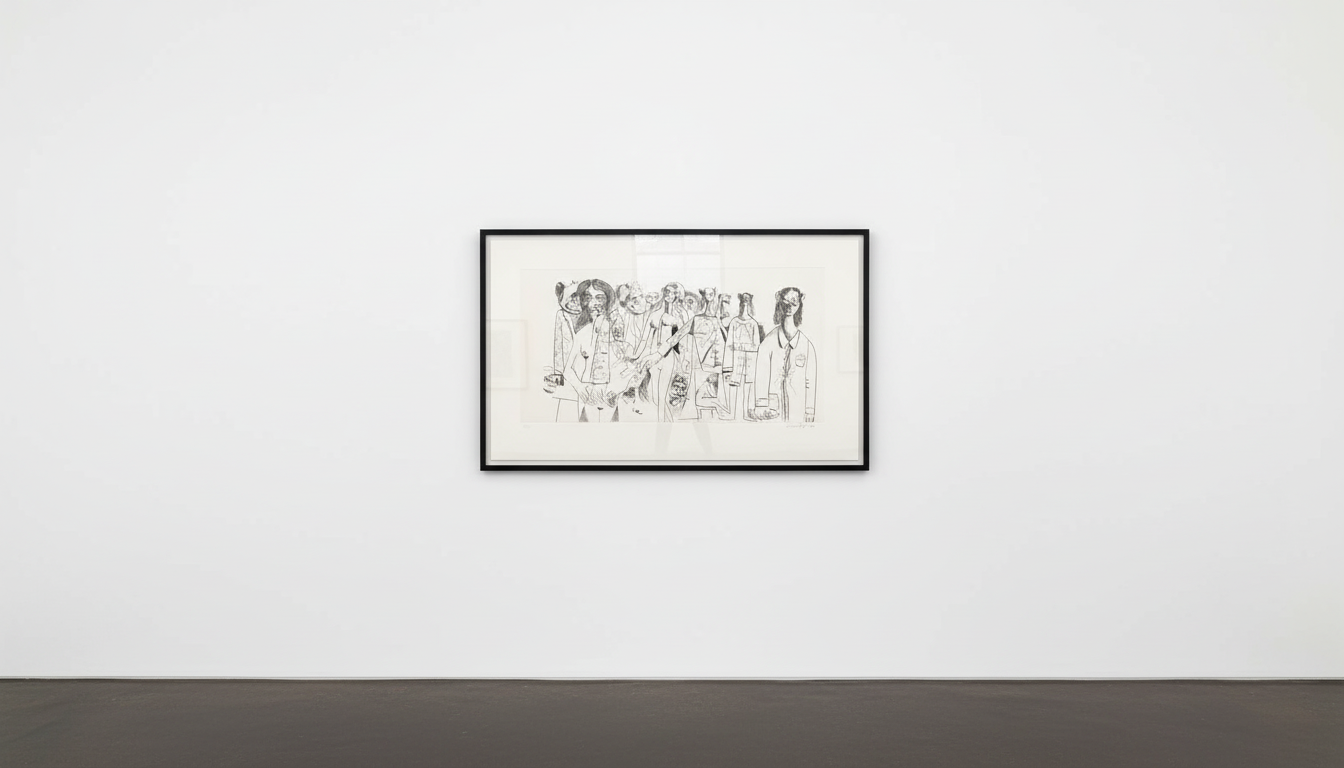
Prints such as Invocations of Miles, which reveals Condo's ongoing engagement with jazz and musical improvisation, and Young Girl In The Wild, exemplifying his exploration of innocence and psychological complexity, represent the range available to collectors. These works function not as secondary productions but as autonomous investigations, each print extending Condo's artistic concerns into new material and compositional territory.
The George Condo market in 2025-2026 presents both opportunities and challenges for collectors. His paintings regularly achieve results exceeding ten million dollars at Christie's and Sotheby's evening sales, placing his major canvases alongside works by Basquiat, Richter, and other market leaders. This price escalation reflects genuine art historical significance—Condo's influence on younger painters including George Rouy, Cristina BanBan, and numerous others is unmistakable—but it also means that collectors must think strategically about entry points and collection building.
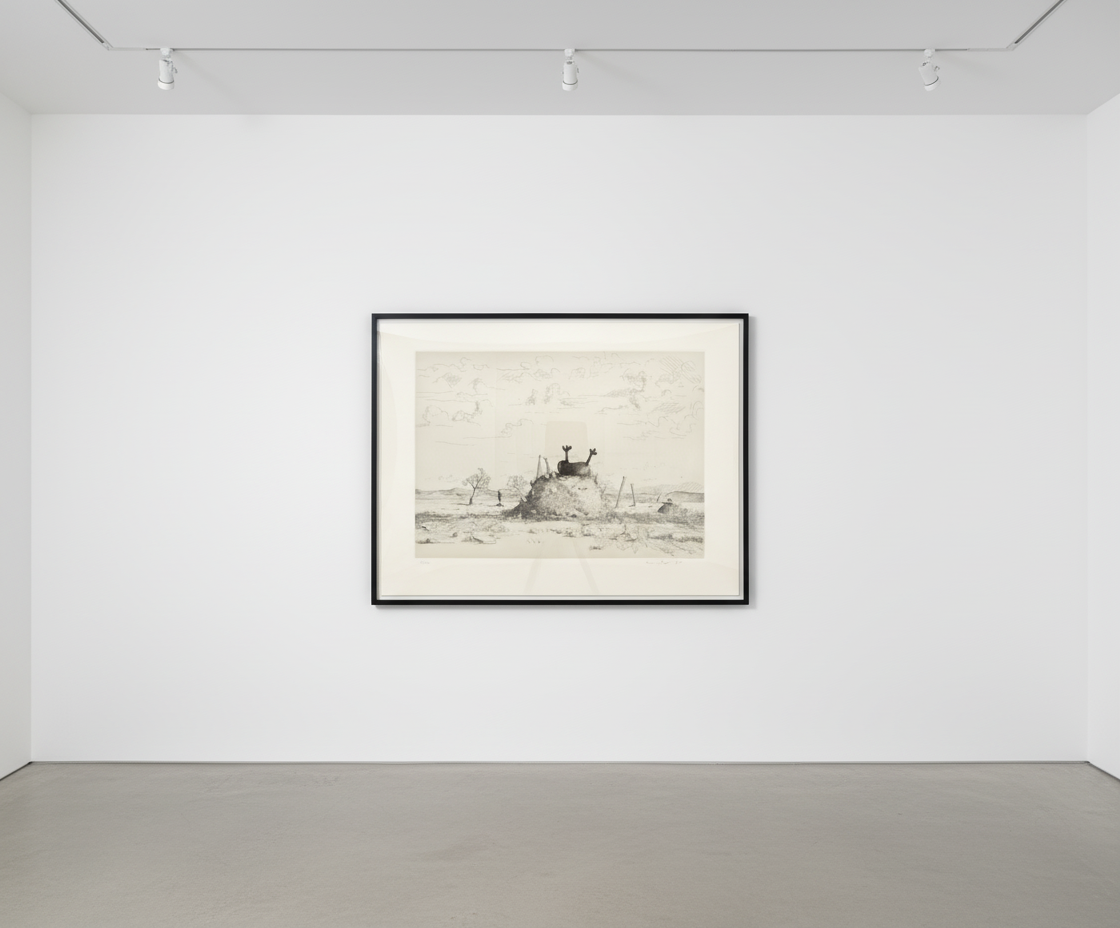
Untitled (Delineated Facial Composition) — George Condo. Available at Guy Hepner, New York.
Works on paper, prints, and smaller-scale paintings offer the most viable path for collectors establishing a position in Condo's market. When evaluating specific works, prioritise those that demonstrate his signature concerns: the fractured psychology of his portrait heads, the tension between classical technique and contemporary subject matter, and the characteristic palette that ranges from acidic yellows and pinks to the sombre earth tones of his Old Master-influenced pieces. Provenance matters significantly at this level, with works from important private collections or with exhibition histories commanding appropriate premiums.
Condition is paramount for works on paper. Examine prints carefully for fading, foxing, or handling damage, and ensure proper archival framing for long-term preservation. Editions from reputable publishers with full documentation—including certificates of authenticity and clear edition numbering—provide the transparency serious collectors require.
Guy Hepner maintains an active inventory of George Condo works, including significant prints, editions, and select paintings available for immediate acquisition. Our gallery provides comprehensive provenance documentation, condition reports, and art advisory services to collectors at every level—from those acquiring their first Condo print to established collectors seeking major paintings for institutional-quality holdings. To enquire about current availability, pricing, and acquisition opportunities for George Condo art, contact Guy Hepner directly for a confidential consultation tailored to your collecting objectives.
Explore George Condo prints for sale at Guy Hepner: Works on Paper.
Related Series