Men in the Cities

Few series in contemporary art have captured the psychological tension of modern life as vividly as Robert Longo's Men in the Cities. Conceived between 1978 and 1983, these monumental black-and-white drawings of sharply dressed figures twisting, falling, and convulsing in midair remain some of the most enduring and instantly recognizable images of late twentieth-century art. The series cemented Longo's place within the Pictures Generation - a group of artists who emerged in New York during the late 1970s to interrogate the influence of photography, cinema, and mass media on perception and identity. Today, these works continue to resonate with collectors and institutions worldwide, their stark visual power undiminished by the passage of four decades.
Robert Longo developed Men in the Cities at a pivotal moment when traditional painting was giving way to new visual languages rooted in photography, film, and postmodern appropriation. After studying at the State University of New York at Buffalo and co-founding the influential Hallwalls Contemporary Art Center alongside Cindy Sherman, Longo relocated to New York City, where he immersed himself in the downtown art scene that would reshape contemporary practice. He became fascinated by how mediated images - drawn from cinema, advertising, and television - shaped emotional experience and collective consciousness.
The genesis of Men in the Cities was distinctly performative. On a rooftop in Manhattan, Longo photographed friends and peers dressed in crisp business attire against neutral backgrounds. To provoke authentic, uncontrolled movement, he employed an unconventional method - startling his subjects by throwing tennis balls or even pelting them with projectiles, capturing the split-second physical reactions that resulted. These photographs served as source material for the large-scale charcoal and graphite drawings that would become the final artworks. Working with assistant Diane Shea, Longo translated the photographic references into meticulously rendered drawings that hover between hyperrealism and cinematic abstraction.
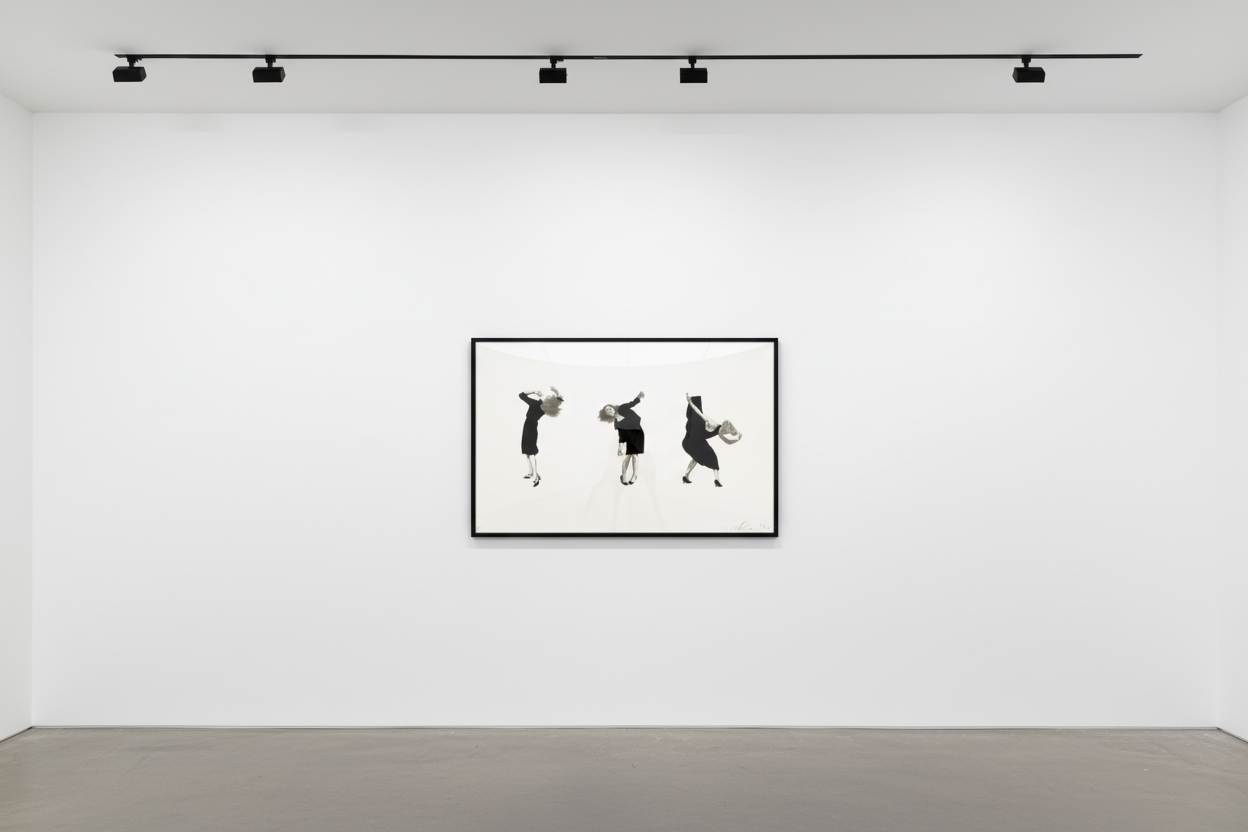
Men In The Cities V — Robert Longo. Available at Guy Hepner, New York.
The resulting figures appear suspended in states of ecstatic collapse - simultaneously dancing and dying, celebrating and suffering. Stripped of background context and isolated against pure white grounds, these anonymous urbanites embody the contradictions of Reagan-era ambition. Their tailored suits and elegant dresses signify professional success, yet their bodies betray a loss of control that suggests the psychological cost of upward mobility. Longo drew inspiration from diverse sources, including a still from Rainer Werner Fassbinder's film The American Soldier showing a man recoiling from gunfire, and the kinetic energy of punk rock performances he witnessed in downtown clubs.
What distinguishes Robert Longo's Men in the Cities from other figurative work of the period is its masterful synthesis of high art technique and mass media aesthetics. The drawings demonstrate extraordinary technical virtuosity - the rendering of fabric folds, the gradation of shadows across contorted limbs, the precise articulation of hands frozen in gesture. Yet this traditional draftsmanship serves a deeply contemporary purpose, creating images that feel simultaneously timeless and urgently of their moment.
The figures in Men in the Cities resist easy interpretation. Are they experiencing pleasure or pain? Freedom or constraint? The ambiguity is intentional. Longo has spoken of wanting to create images that function like Rorschach tests, reflecting viewers' own anxieties and desires back at them. In the context of early 1980s New York - a city defined by extremes of wealth and poverty, artistic innovation and social crisis - these anonymous professionals embody collective uncertainty about the American dream.
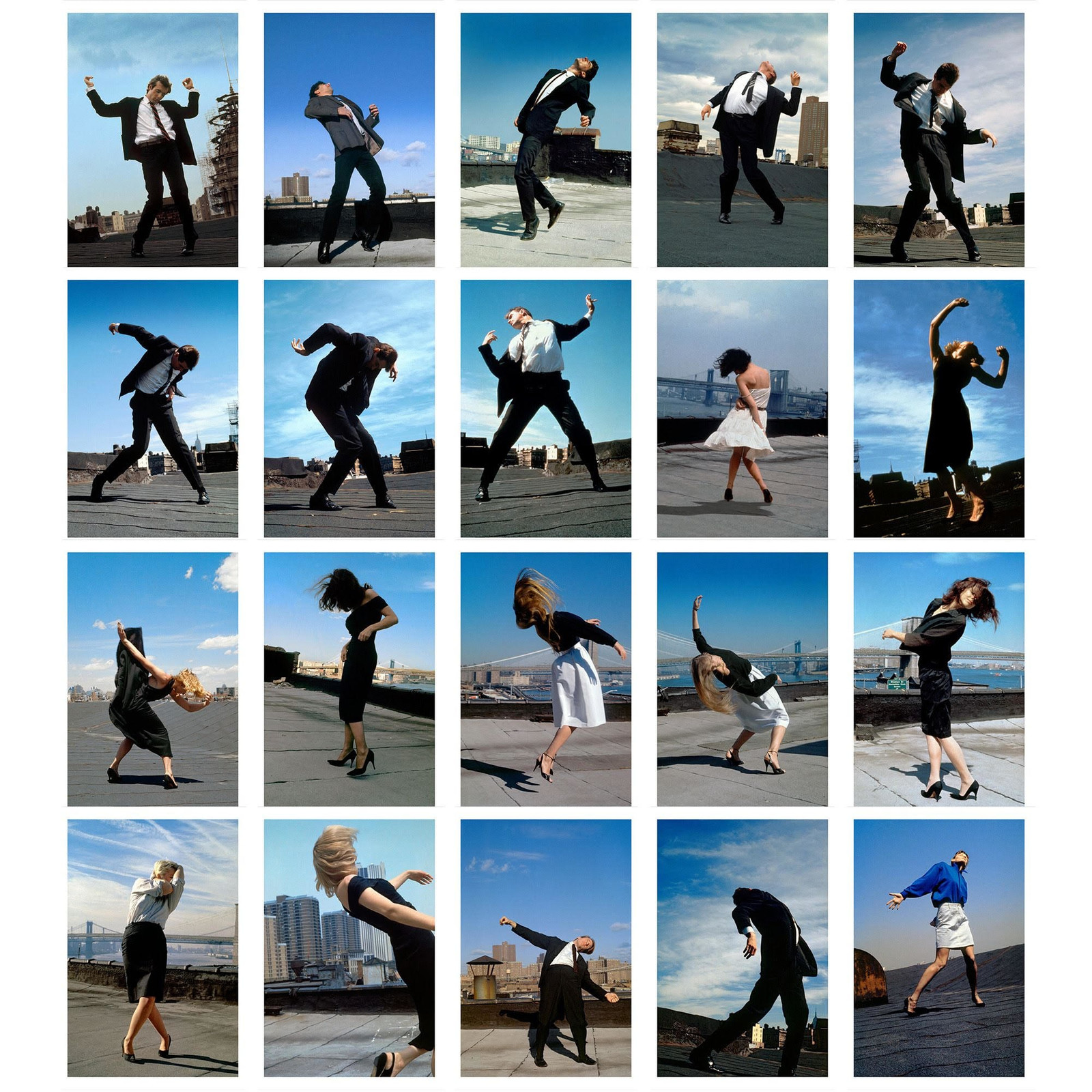
Men in the Cities (Portfolio of 20) — Robert Longo. Available at Guy Hepner, New York.
The series also anticipated our contemporary relationship with images of the body in distress. Decades before social media would flood our screens with carefully curated performances of self, Longo recognized how modern subjects were increasingly defined by their mediated representations. The Men in the Cities figures exist only as images - we know nothing of their identities, histories, or fates. They are pure surface, pure gesture, pure spectacle. This prescient critique of image culture helps explain why the series has gained renewed relevance with younger collectors discovering the work today.
Robert Longo's Men in the Cities occupies a distinguished position within the secondary market for Pictures Generation artists. According to data tracked by major auction houses including Christie's and Sotheby's, works from this series consistently achieve strong results, with exceptional examples commanding prices that reflect their art-historical importance. The Art Basel and UBS Global Art Market Report has documented sustained collector interest in postmodern American art from this period, with Longo's early career output particularly sought after.
Individual works from the Men in the Cities series have appeared at auction with notable frequency, testament to both the size of the original edition and the enduring appetite among collectors. The complete portfolio of twenty prints represents a particularly compelling acquisition opportunity, offering comprehensive access to the full range of figures and compositions Longo developed across the project's five-year evolution. Institutional holdings of Men in the Cities works include the Museum of Modern Art, the Whitney Museum of American Art, and the Tate Modern, underscoring the series' canonical status.
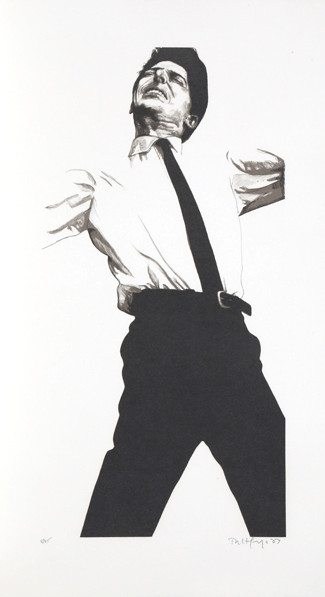
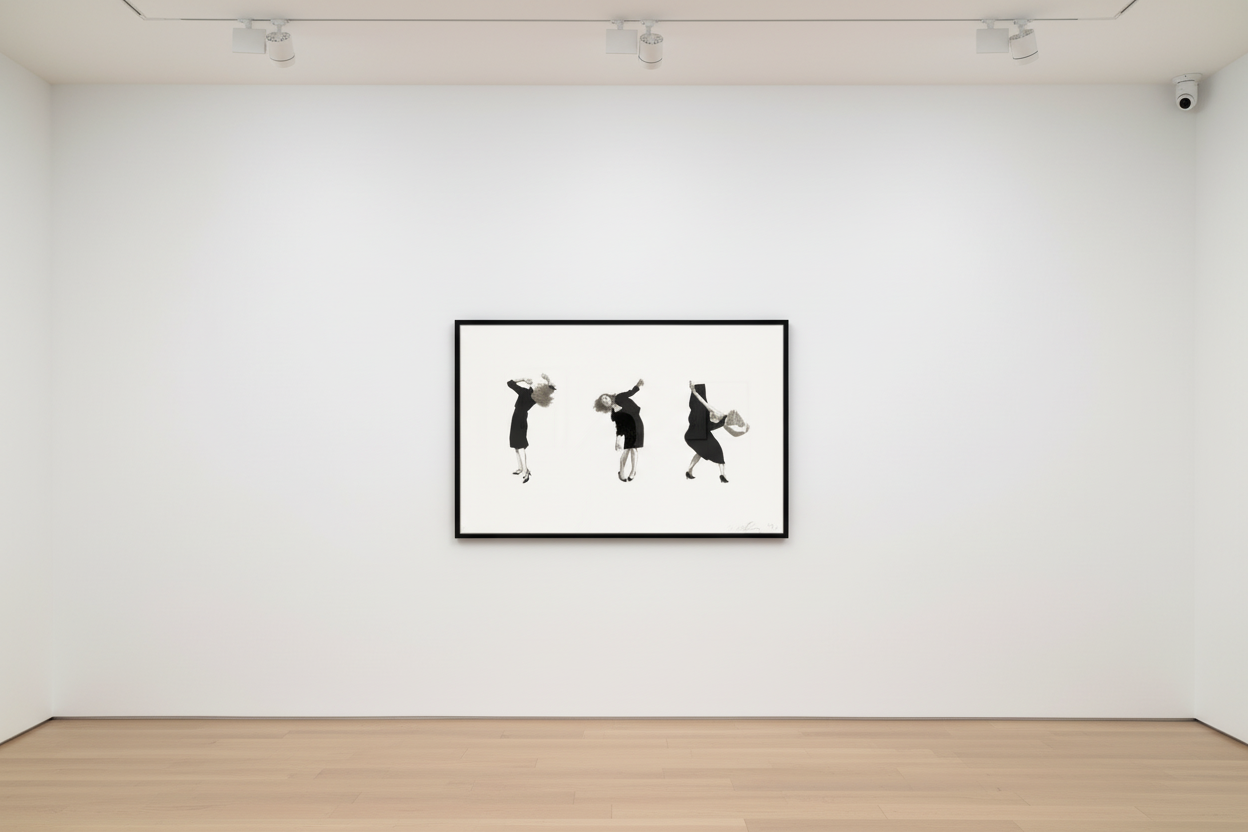
Jules , from Men In the Cities — Robert Longo. Available at Guy Hepner, New York.
For collectors, Men in the Cities offers a rare combination of immediate visual impact and intellectual depth. These are works that command attention in any setting - their scale, graphic boldness, and technical excellence make them powerful anchors for both private collections and corporate environments. Simultaneously, they reward sustained engagement, revealing new layers of meaning as viewers contemplate the complex cultural moment they distill.
Guy Hepner is pleased to offer exceptional works from Robert Longo's Men in the Cities series, including individual prints and the complete portfolio of twenty. Our gallery specialists possess deep expertise in Pictures Generation art and can guide collectors through the nuances of edition variations, condition considerations, and comparative market positioning. Whether you are building a focused collection of postmodern American art or seeking a singular statement work, we invite you to contact Guy Hepner to discuss available inventory and acquisition opportunities.
Explore Robert Longo prints for sale at Guy Hepner: Men in the Cities, Untitled Series.
Related Series