Flowers

Keith Haring remains one of the most influential and universally recognised artists to emerge from the New York art scene of the 1980s. His bold lines, radiant babies, and barking dogs became visual shorthand for an era defined by both creative exuberance and social crisis. Yet among his extensive body of work, the Flowers portfolio—created in 1990, the final year of his life—stands as perhaps his most emotionally resonant and spiritually profound achievement. Produced just months before his death from AIDS-related complications at age thirty-one, this series represents Haring's ultimate meditation on mortality, hope, and the eternal cycle of existence.
The Flowers portfolio emerged during an extraordinarily productive yet deeply challenging period in Keith Haring's career. By 1990, the artist was acutely aware that his time was limited. Rather than retreat from his practice, Haring channelled his remaining energy into creating works of unprecedented emotional depth. The portfolio consists of five large-scale screenprints, each measuring approximately 39 x 50 inches, printed on high-quality Coventry rag paper in an edition of 100 plus artist proofs.
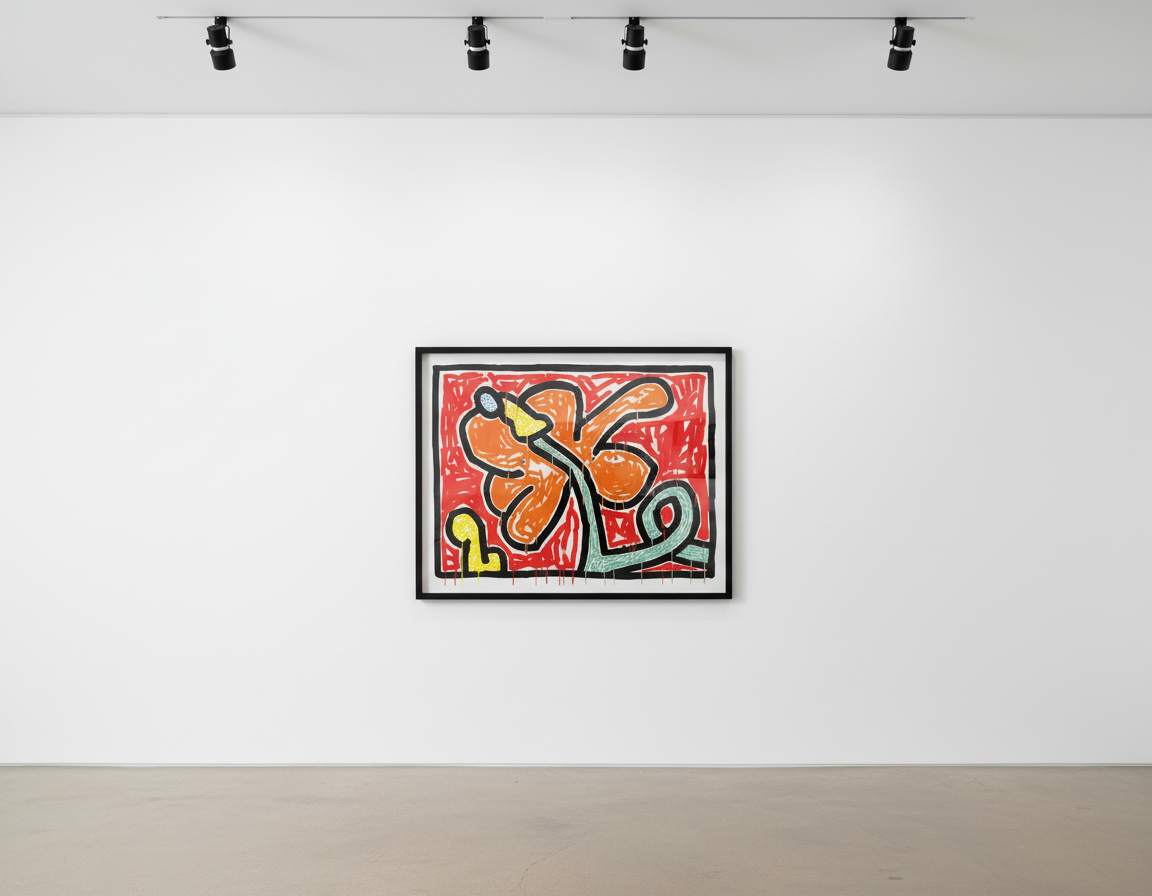
Haring collaborated with master printer George Mulder and his longtime friend and publisher Tony Shafrazi to realise this ambitious project. The technical execution demonstrates the artist's continued commitment to excellence even as his health declined. Each print radiates with saturated colour—vivid yellows, electric blues, passionate reds, and organic greens—applied with the precision and intentionality that defined Haring's mature practice. The seemingly joyful surfaces belie the gravity of their creation, embodying the tension between celebration and mourning that permeates the entire series.
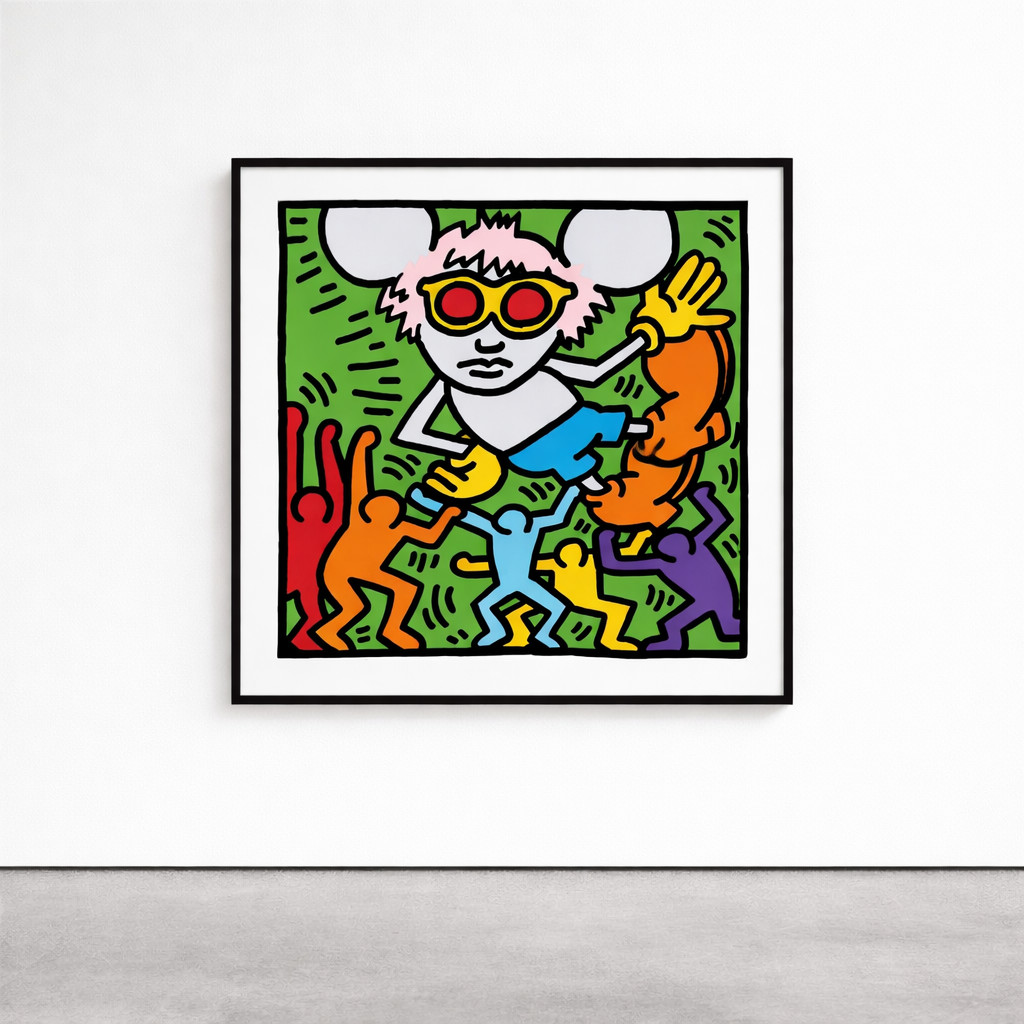
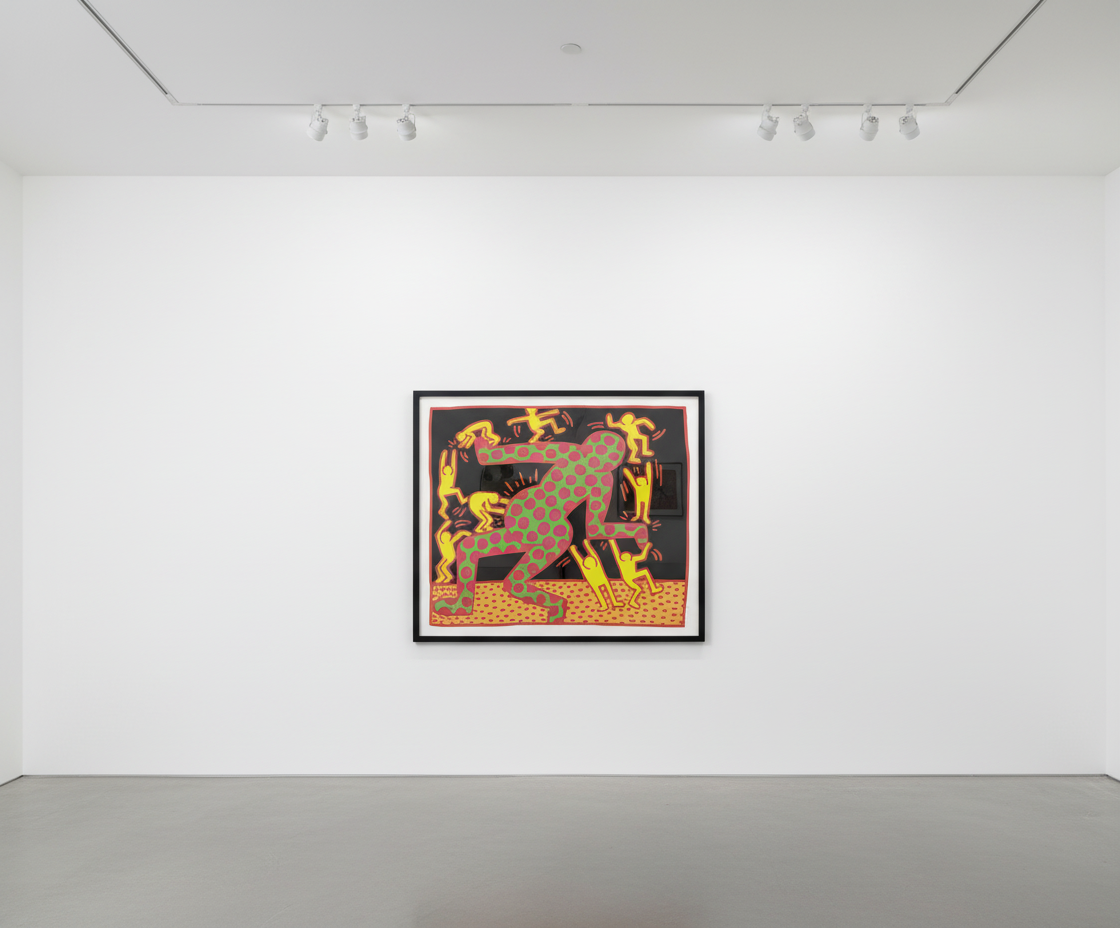
Fertility 4 (Littmann PP. 33) — Keith Haring. Available at Guy Hepner, New York.
What distinguishes the Flowers portfolio from Haring's more overtly political works—his anti-apartheid imagery, AIDS awareness campaigns, and critiques of capitalism—is its contemplative, almost metaphysical quality. Here, Haring stepped back from direct social commentary to engage with universal human concerns. The flower, rendered in his characteristic graphic style, becomes a vessel for exploring questions that transcend any single moment or movement.
Throughout art history, flowers have served as potent symbols of life's transience. From Dutch vanitas paintings to Georgia O'Keeffe's monumental blooms, artists have long recognised the flower's capacity to embody both beauty and decay, vitality and death. Keith Haring drew upon this rich tradition while infusing it with his distinctive visual vocabulary and personal circumstances. In the Flowers portfolio, botanical forms merge with his iconic figures—dancing humans, radiating energy lines, and abstract shapes—creating compositions that pulse with kinetic energy while addressing the most profound aspects of human experience.
The five prints function as a cohesive meditation on cyclical existence. Haring understood that flowers are not merely decorative; they are reproductive organs, symbols of fertility and regeneration. Birth, growth, flowering, wilting, and the scattering of seeds to begin anew—this natural progression mirrors the artist's own contemplation of legacy and continuity. Even as Haring faced his mortality, he created images that insist upon renewal and the persistence of creative energy beyond any individual lifespan.
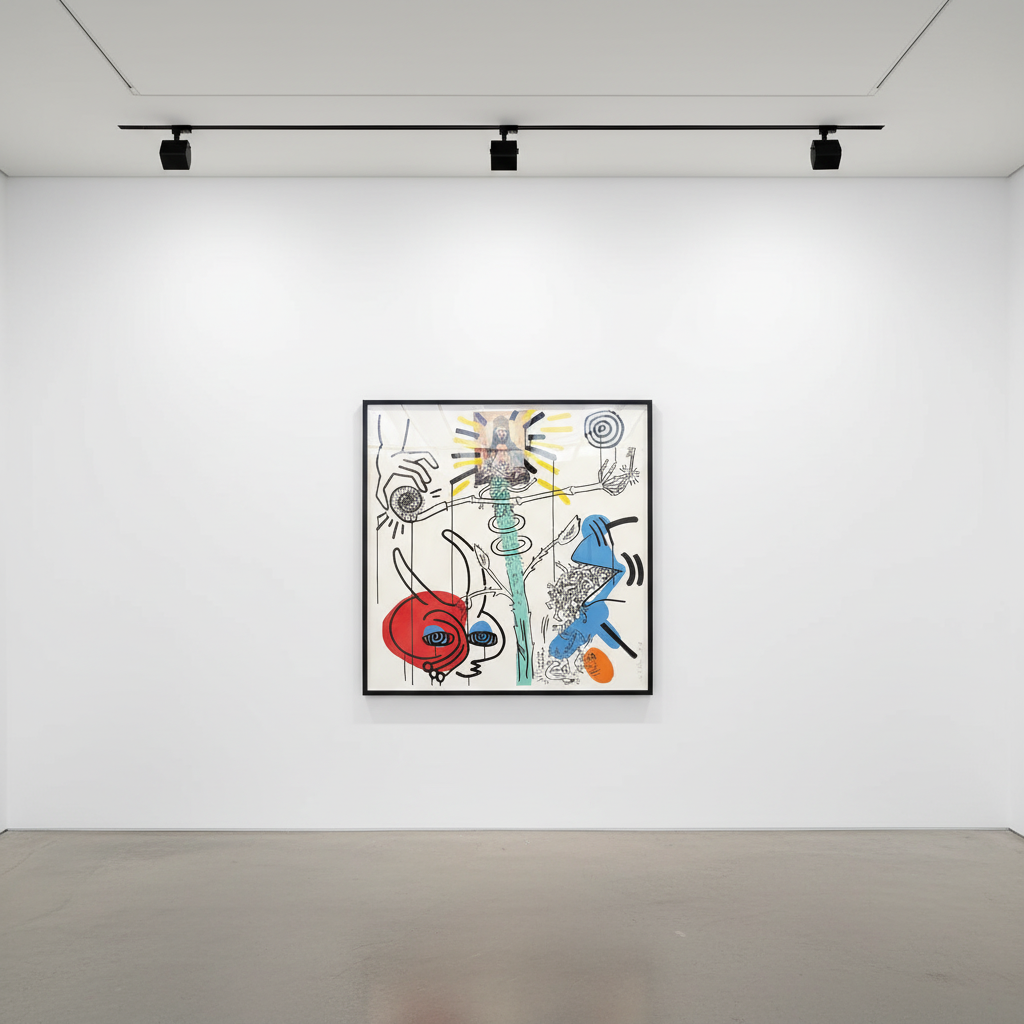
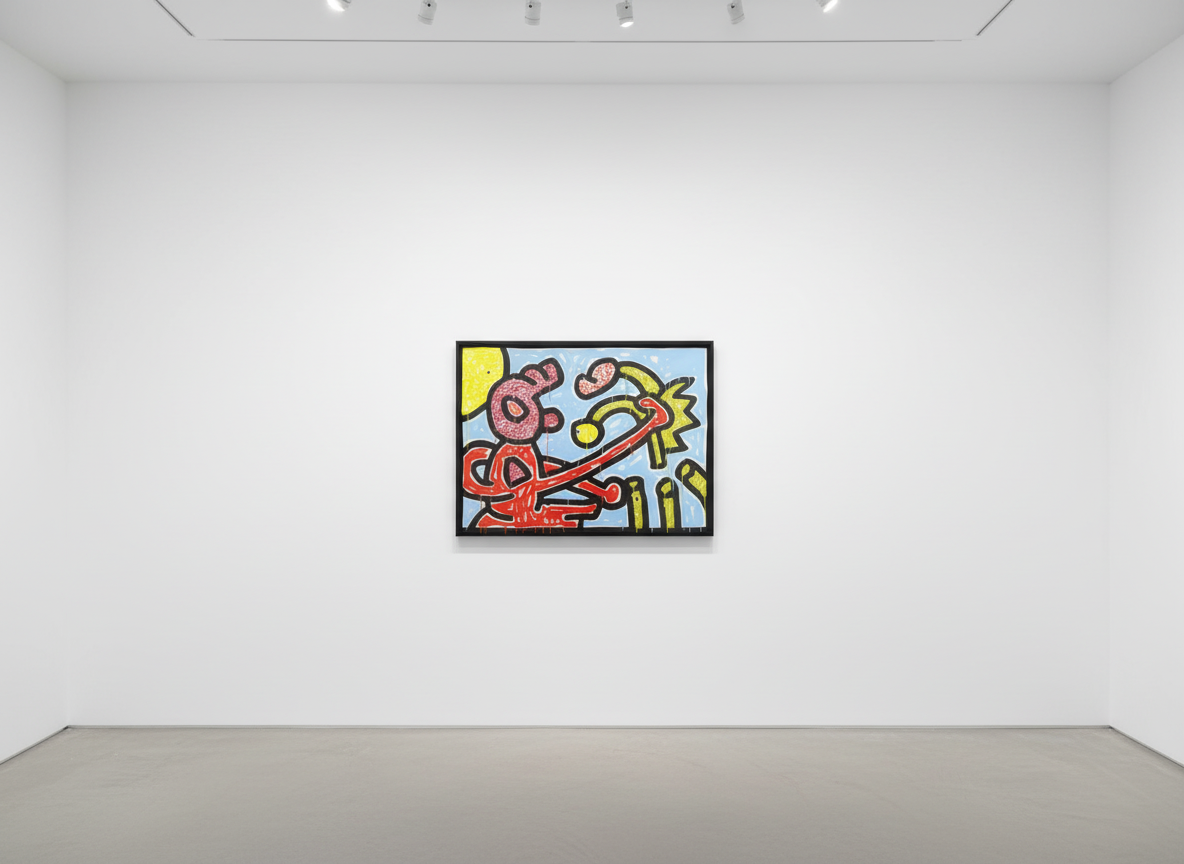
Fertility 3 (Littmann PP. 32) — Keith Haring. Available at Guy Hepner, New York.
Haring's engagement with fertility as a central theme connects the Flowers portfolio to broader concerns that animated his entire career. He consistently championed life-affirming messages, even when addressing the darkest subjects. The radiant baby, perhaps his most famous motif, celebrates new life and innocence. The Flowers series extends this celebration into the natural world, suggesting that vitality and regeneration are fundamental forces that cannot be extinguished. For an artist confronting a terminal diagnosis, this affirmation carries extraordinary emotional weight.
Keith Haring's position in the contemporary art market has strengthened considerably over the past two decades. According to data from Christie's and Sotheby's, his works consistently achieve strong results at auction, with major pieces commanding prices that reflect his enduring cultural relevance. The Art Basel and UBS Global Art Market Report has noted the sustained institutional and collector interest in artists who bridged street art and fine art traditions—a category Haring essentially defined.
The Flowers portfolio occupies a particularly significant position within Haring's printed oeuvre. Late works by artists who died prematurely invariably attract heightened collector attention, as they represent final statements and artistic summations. For Haring, whose career was tragically abbreviated, the Flowers series functions as a testament—a visual document of an artist reconciling himself to mortality while affirming the transcendent power of creativity.
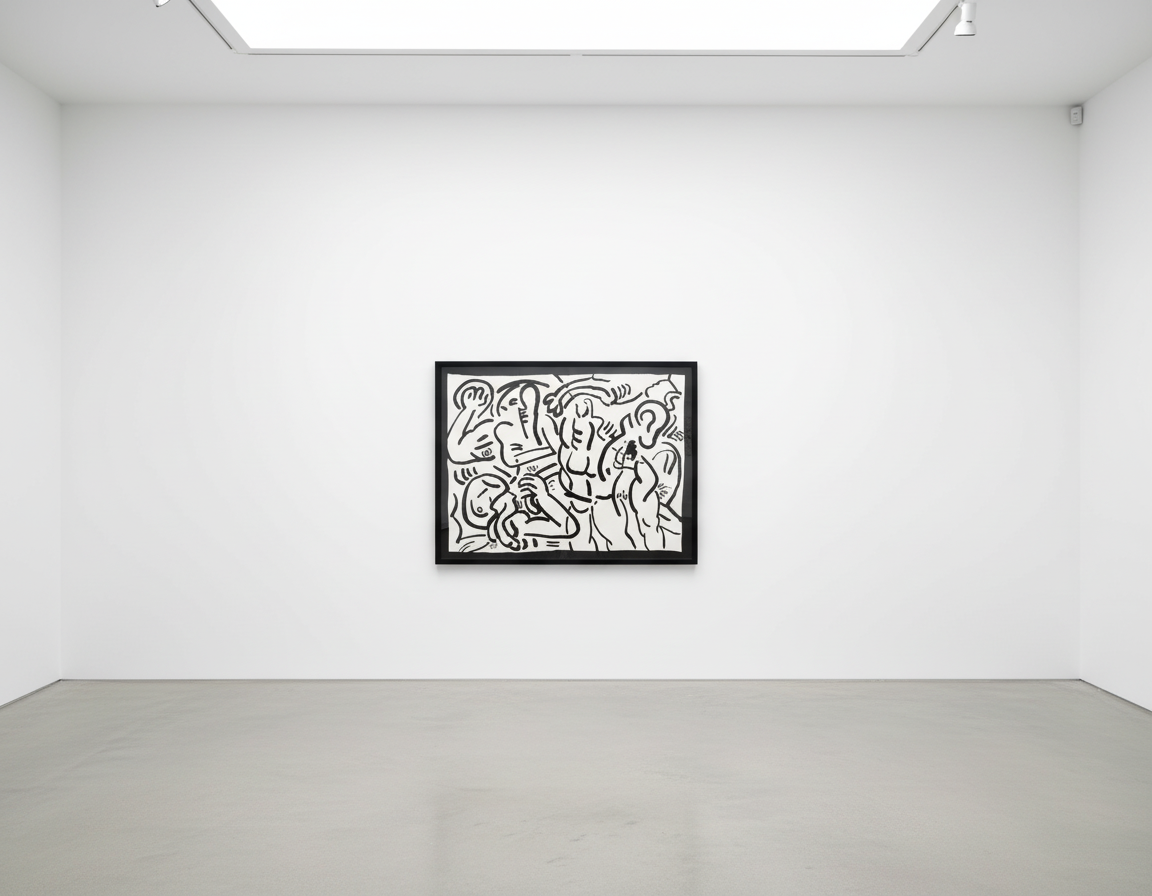
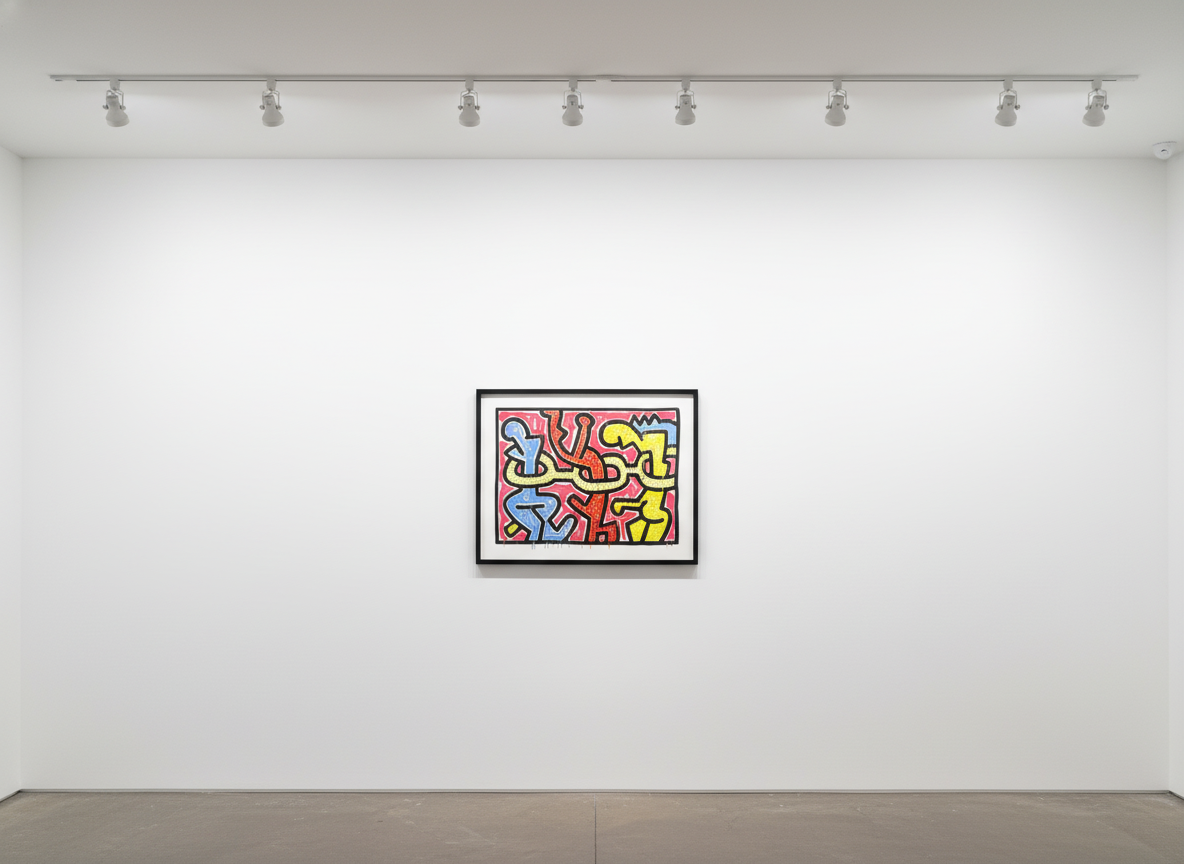
Fertility 2 (Littmann PP. 32) — Keith Haring. Available at Guy Hepner, New York.
Collectors are drawn to this portfolio for multiple reasons. The works possess immediate visual impact, with their bold colours and dynamic compositions commanding attention in any setting. Yet they also reward sustained contemplation, revealing deeper layers of meaning upon extended viewing. The combination of accessibility and profundity that characterised Haring's best work reaches its apex in these prints. Furthermore, the edition size of 100 ensures relative scarcity while allowing for institutional and private acquisition—a balance that supports long-term value stability.
More than three decades after their creation, Keith Haring's Flowers prints continue to resonate with contemporary audiences. Their themes of mortality, hope, and renewal feel perpetually relevant, while their visual language remains fresh and compelling. Museums worldwide include Haring's work in their permanent collections, and major retrospectives regularly reaffirm his importance to late twentieth-century art history. The Flowers portfolio, as his final major print project, holds a unique place in this legacy—simultaneously a conclusion and a beginning, an ending that speaks to eternal recurrence.
Guy Hepner is privileged to offer works from Keith Haring's Flowers portfolio to discerning collectors. As a leading New York gallery specialising in contemporary masters, Guy Hepner provides expert guidance on acquiring significant examples from this landmark series. For enquiries regarding availability, pricing, and acquisition of Keith Haring's Flowers prints, collectors are invited to contact the gallery directly.
Explore Keith Haring prints for sale at Guy Hepner: Flowers, Andy Mouse, Apocalypse, Bad Boys, Chocolate Buddha.
Related Series