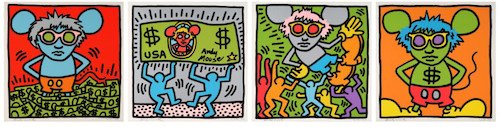
Andy Mouse

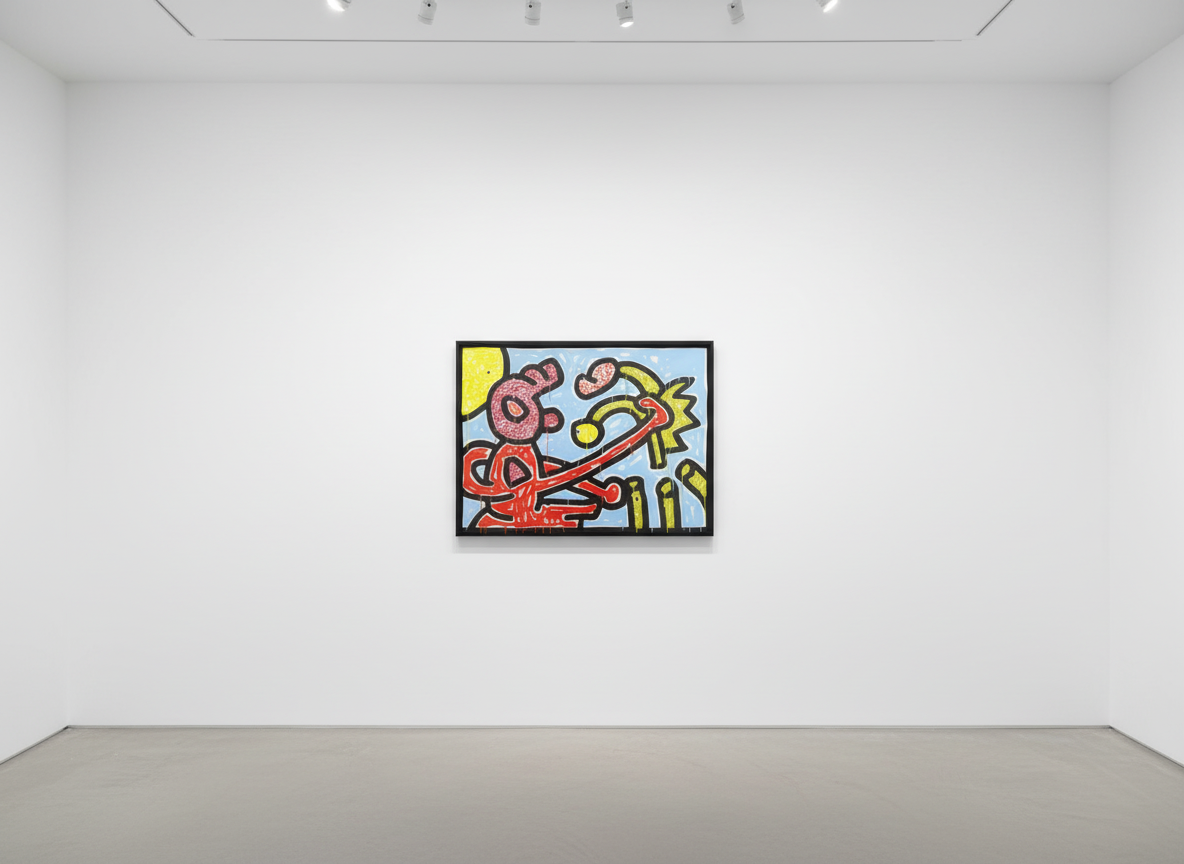
Few artists have straddled the boundary between fine art and mass appeal as gracefully and deliberately as Keith Haring. From chalk drawings in New York subways to international brand campaigns, Haring's art has consistently echoed a singular, inclusive message: art is not reserved for the elite - it belongs to everyone. Through a wide range of commercial ventures, from Absolut Vodka to Lucky Strike, and later UNIQLO, Swatch, and more, Haring built and sustained an artistic legacy grounded in accessibility, activism, and universal visual language. His work remains among the most sought-after in the contemporary art market, with collectors worldwide recognising both its cultural significance and enduring investment potential.
Keith Haring emerged in the 1980s New York art scene with a vibrant visual vocabulary - radiant babies, barking dogs, dancing figures - that was instantly recognisable and resonated with people from all walks of life. His approach defied the exclusivity often associated with the art world. He famously stated that the public needs art, and it is the responsibility of a self-proclaimed artist to realise that the public needs art, and not to make bourgeois art for the few.
This democratic philosophy shaped every aspect of Haring's career. Unlike many of his contemporaries who viewed commercial work as a compromise of artistic integrity, Haring embraced it as an extension of his mission. He saw no contradiction between creating gallery works and engaging with commercial enterprises. To him, both were tools for mass communication, capable of reaching audiences far beyond the traditional gallery visitor. His Subway Drawings, executed in white chalk on blank advertising panels throughout the New York transit system, exemplified this approach - transforming daily commutes into encounters with original art.
Haring's visual language was deliberately accessible. His bold outlines, primary colours, and kinetic figures required no art historical knowledge to appreciate. A child could understand the joy in his dancing figures just as readily as a seasoned collector could appreciate their formal sophistication. This universality was not accidental but carefully cultivated, reflecting Haring's belief that art should function as a shared human experience rather than an exclusive cultural commodity.
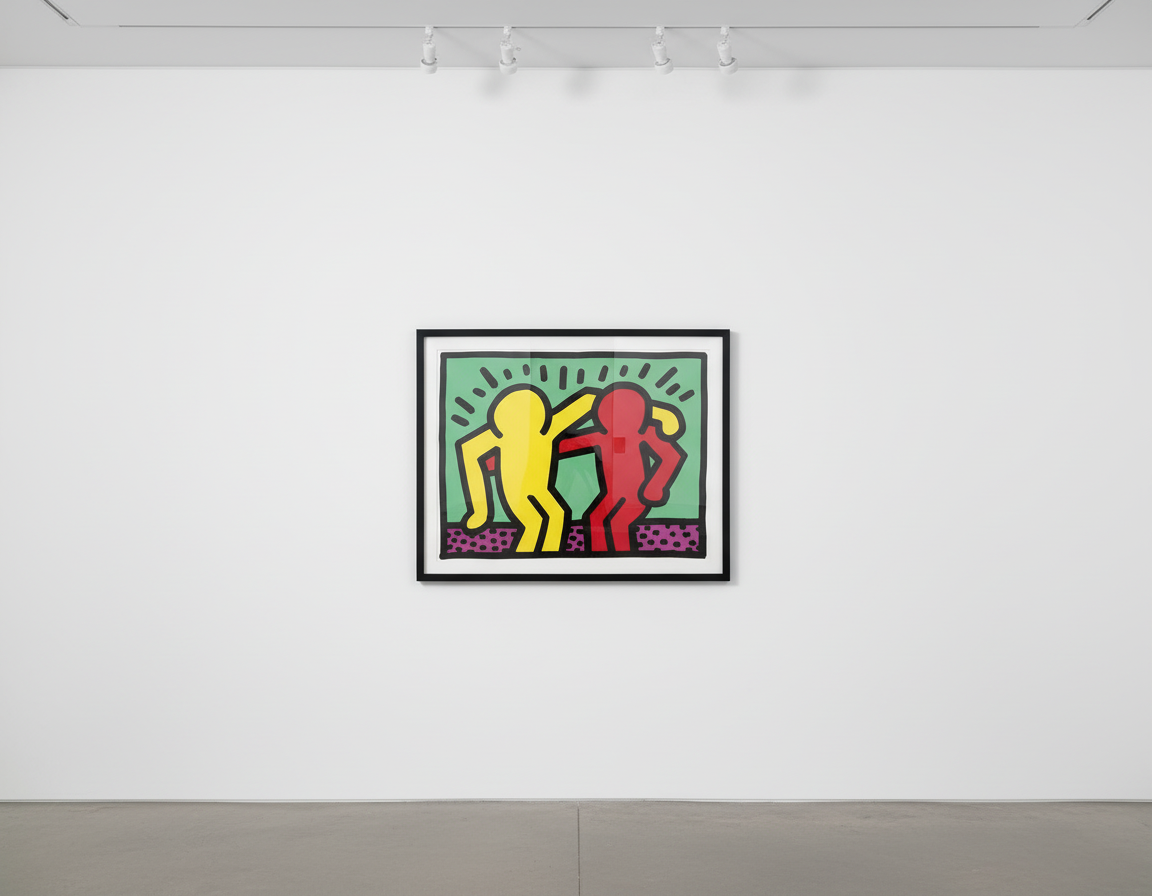
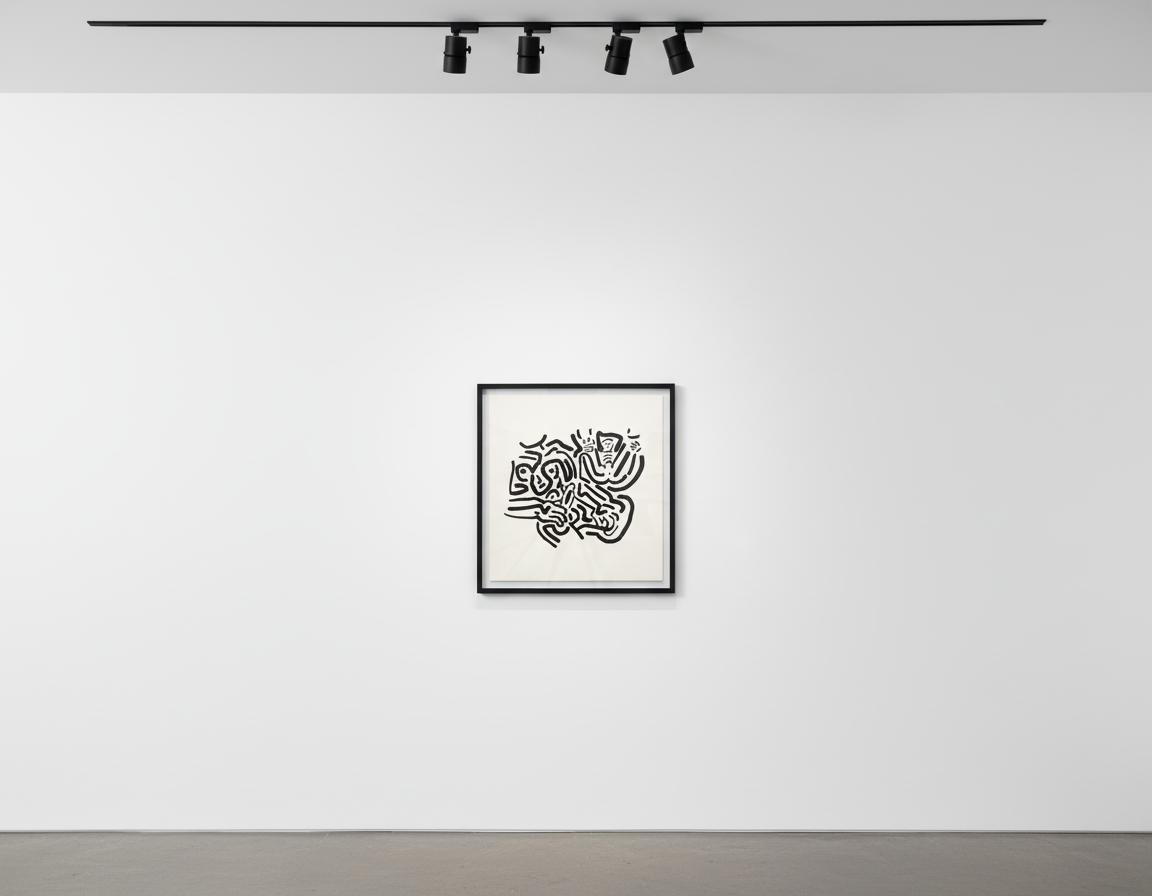
Pop Shop I (A) (Littmann PP. 82) — Keith Haring. Available at Guy Hepner, New York.
In 1986, Keith Haring opened the Pop Shop in SoHo, Manhattan - a radical experiment that crystallised his philosophy into physical form. The store sold affordable merchandise featuring his iconic imagery: t-shirts, posters, badges, and toys, all priced for accessibility. Critics initially dismissed it as crass commercialism, but Haring defended it passionately as a means of breaking down barriers between art and everyday life.
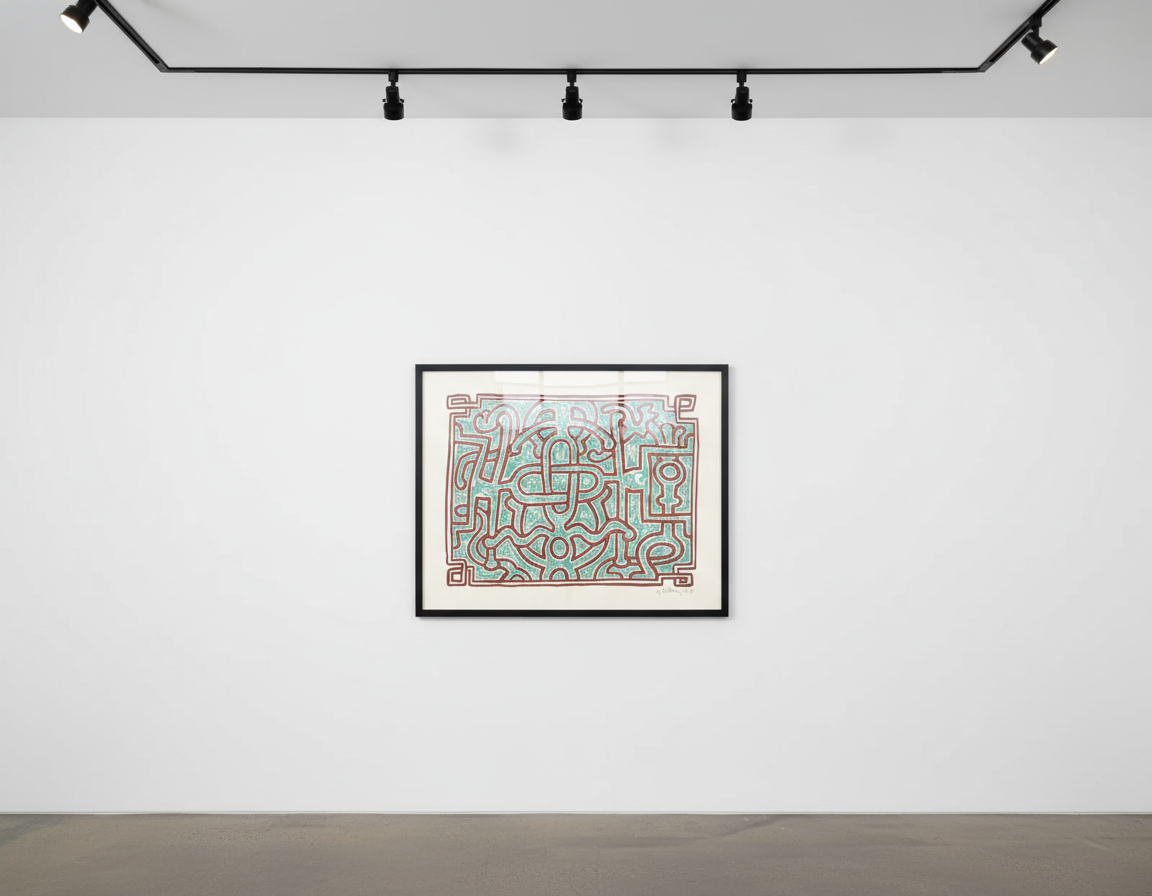
The Pop Shop prints represent some of the most significant works from this period. These editions - including the celebrated Pop Shop Quad series - capture the essence of Haring's mission: museum-quality artworks that maintained the democratic spirit of his commercial endeavours. The prints feature his most iconic motifs rendered with the same energy and precision as his public murals, yet scaled for domestic spaces and priced to reach a broader collecting audience.
What distinguished the Pop Shop from mere merchandising was Haring's complete creative control. He designed every aspect of the space, covering the interior with his signature black-and-white patterns. The shop itself became an immersive artwork, blurring the distinction between retail environment and gallery installation. This approach anticipated contemporary art-commerce hybrids by decades and established a template that artists continue to follow today.
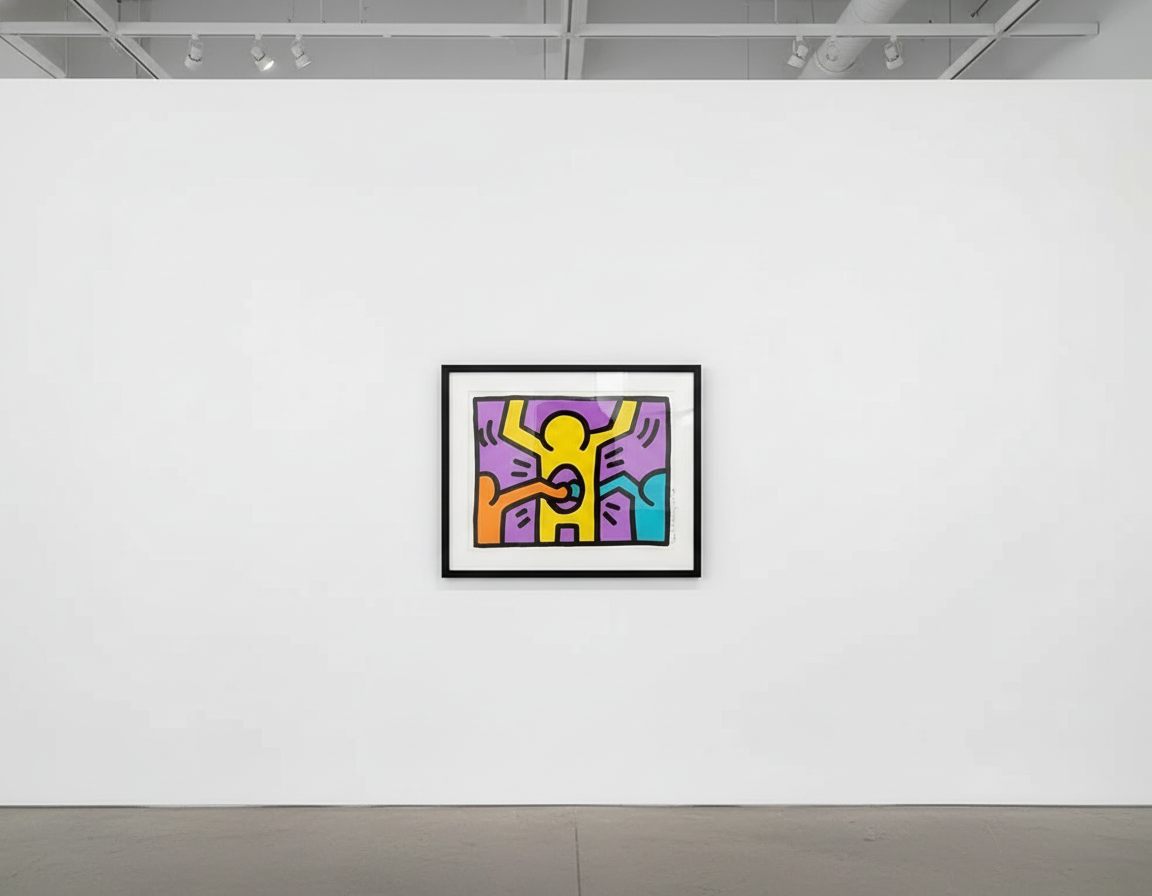
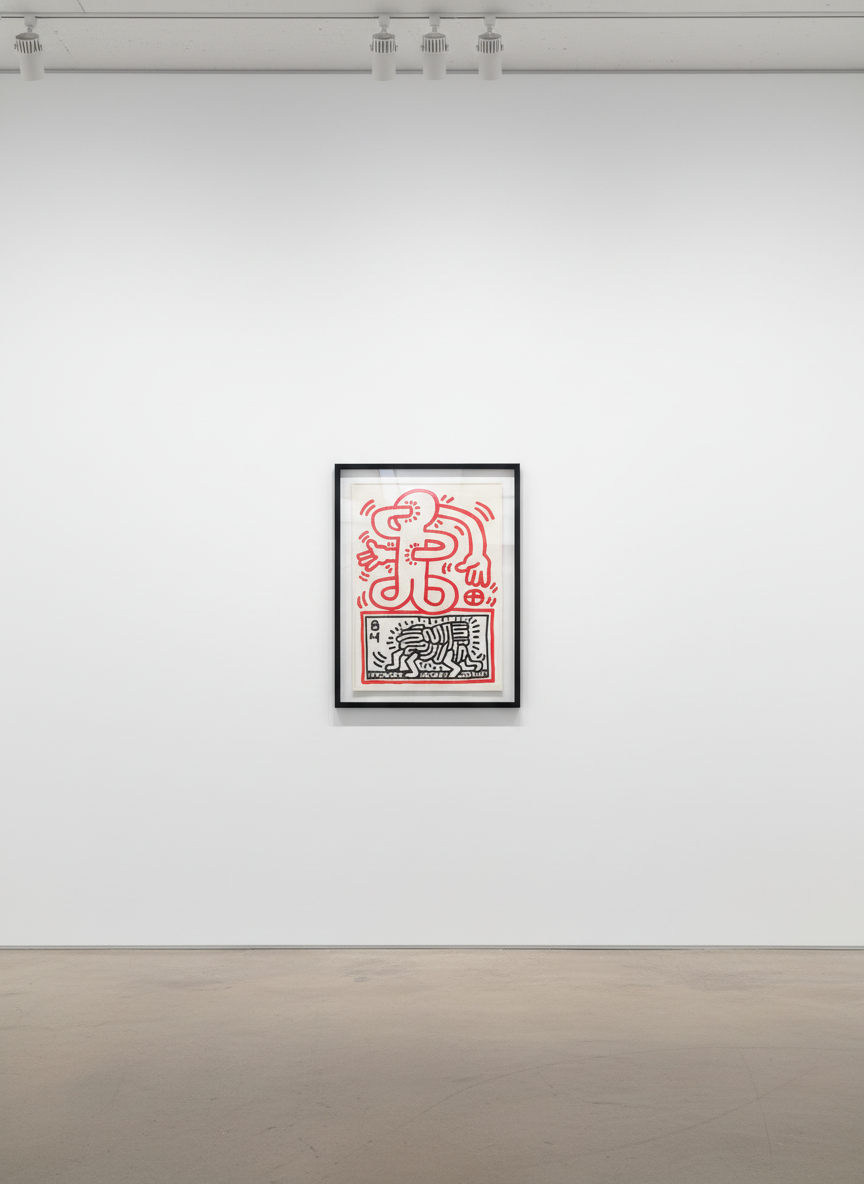
Pop Shop I (C) (Littmann PP. 83) — Keith Haring. Available at Guy Hepner, New York.
Haring's willingness to collaborate with major brands was unprecedented among artists of his stature. His partnerships with Absolut Vodka, Lucky Strike, and Swatch brought his imagery to millions who might never enter a gallery. Later posthumous collaborations with UNIQLO and other global brands have extended this reach into the twenty-first century, introducing new generations to his visual vocabulary.
These collaborations were never passive licensing arrangements. Haring approached each partnership as a creative opportunity, producing original works that maintained his artistic vision while serving commercial purposes. His Absolut Vodka advertisement, for instance, transformed the bottle into one of his characteristic outlined figures - unmistakably a Haring work despite its commercial context. This integrity ensured that his brand collaborations enhanced rather than diminished his artistic reputation.
The market has vindicated Haring's approach. According to the Art Basel and UBS Global Art Market Report, works by artists who successfully bridged fine art and popular culture have shown remarkable resilience across economic cycles. Haring's auction results at Christie's and Sotheby's consistently demonstrate strong demand, with his Pop Shop prints achieving particularly impressive results relative to their edition sizes. Collectors recognise that these works occupy a unique position - accessible enough to have achieved genuine cultural penetration, yet executed with the formal rigour expected of museum-quality editions.
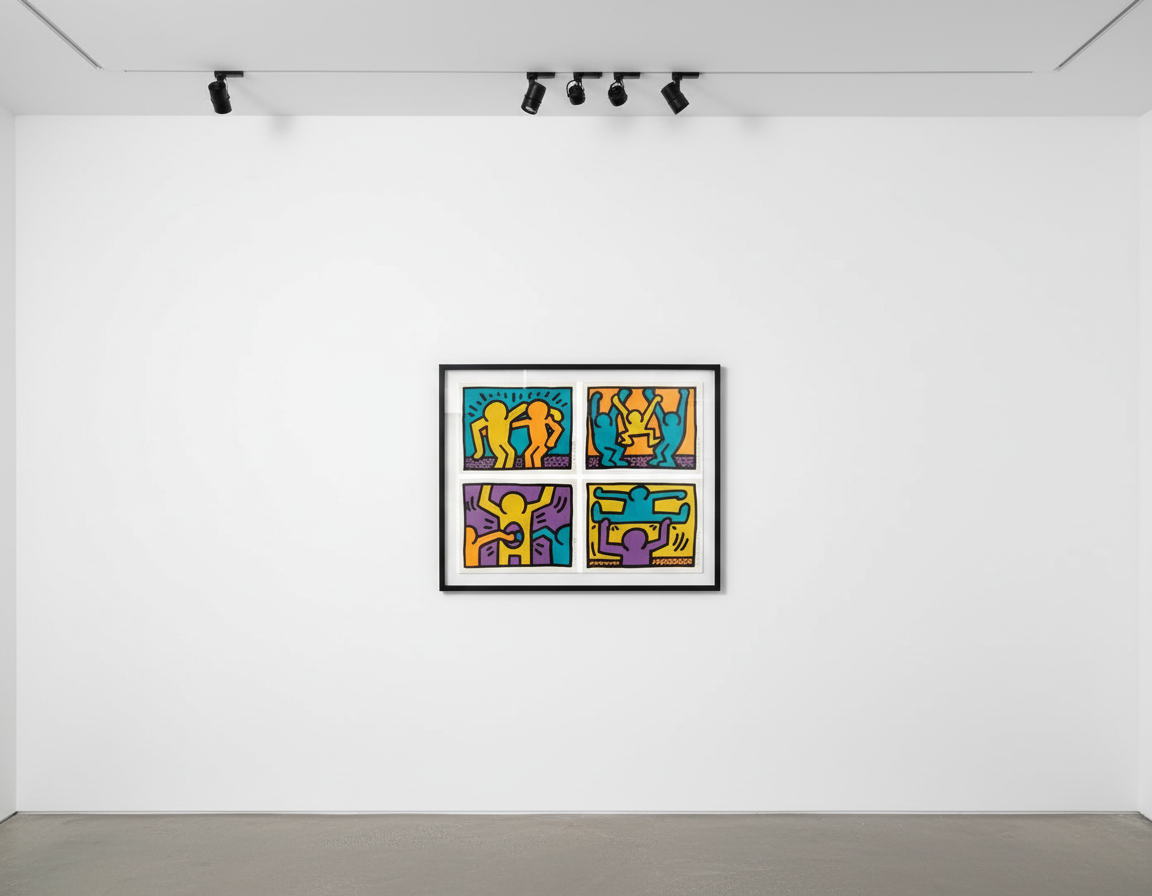
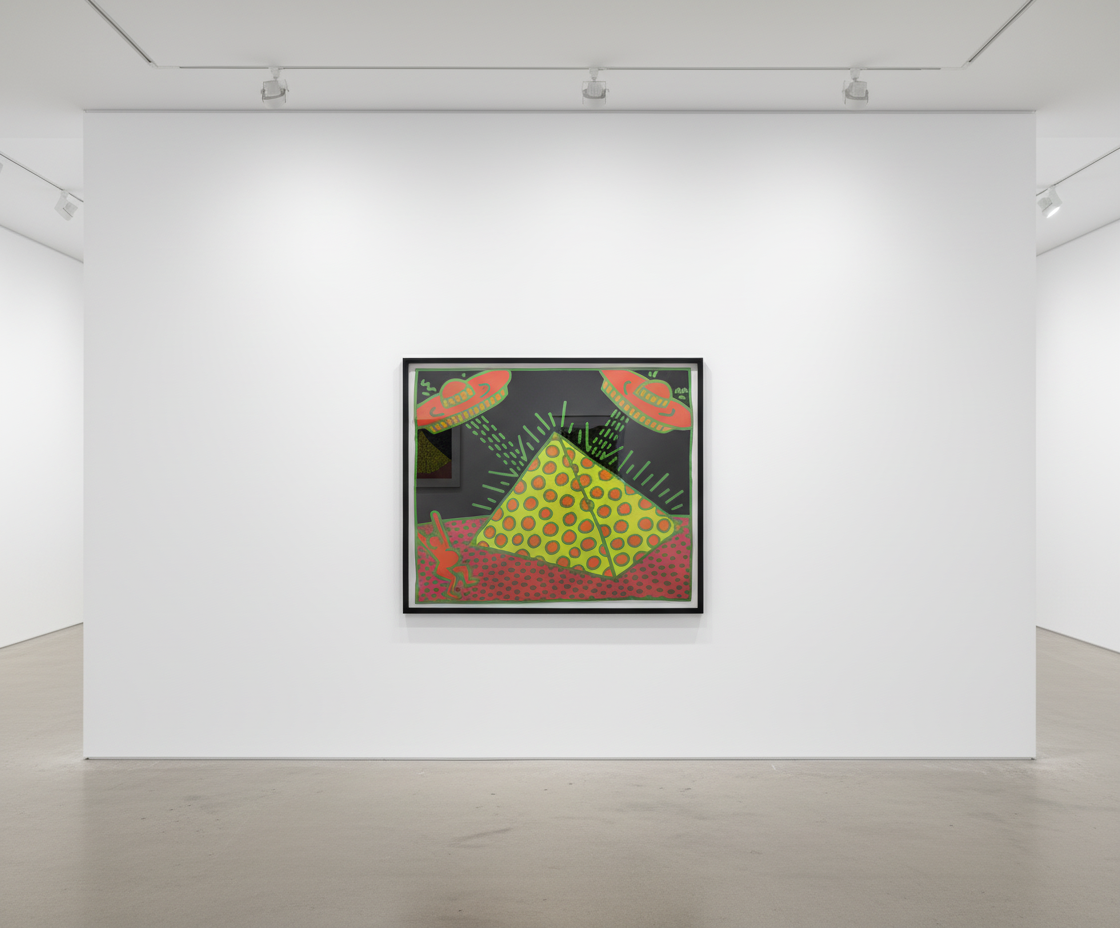
Pop Shop I (Littmann PP. 82 - 83) — Keith Haring. Available at Guy Hepner, New York.
The contemporary market for Keith Haring works reflects his unique position in art history. As both a critical darling and a popular icon, his pieces appeal to institutional collectors, private foundations, and individual enthusiasts alike. Major auction houses regularly feature Haring works in their contemporary sales, with competitive bidding reflecting sustained international demand.
For collectors, Haring's Pop Shop prints offer a compelling entry point into his oeuvre. These works combine the accessibility that defined his mission with the technical excellence expected of important editions. Their relatively modest edition sizes, compared to commercial merchandise, ensure genuine scarcity, while their direct connection to the Pop Shop concept provides unimpeachable provenance and historical significance.
Beyond investment considerations, collecting Haring means participating in his ongoing cultural mission. Each work in private hands extends the reach of his democratic vision, placing museum-quality art in spaces where it can be encountered daily rather than occasionally. This alignment of aesthetic value, historical importance, and philosophical purpose makes Haring particularly meaningful to collectors who view art acquisition as cultural stewardship.
Guy Hepner is proud to offer an exceptional selection of Keith Haring works, including prints from the iconic Pop Shop series. Our collection represents Haring at his most characteristic and culturally significant, with each piece authenticated and presented with comprehensive provenance documentation. Whether you are establishing a new collection or adding to an existing holding, our specialists provide personalised guidance to help you acquire works that resonate with both your aesthetic sensibilities and collecting objectives. Contact Guy Hepner today to explore available Keith Haring editions and discover how these landmark works can become part of your collection.
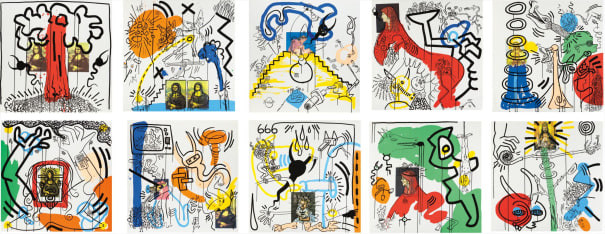
Explore Keith Haring prints for sale at Guy Hepner: Andy Mouse, Apocalypse, Bad Boys, Chocolate Buddha, Fertility.
Related Series