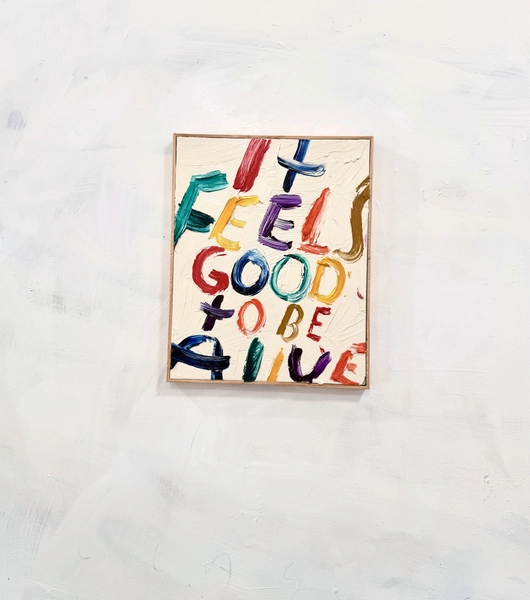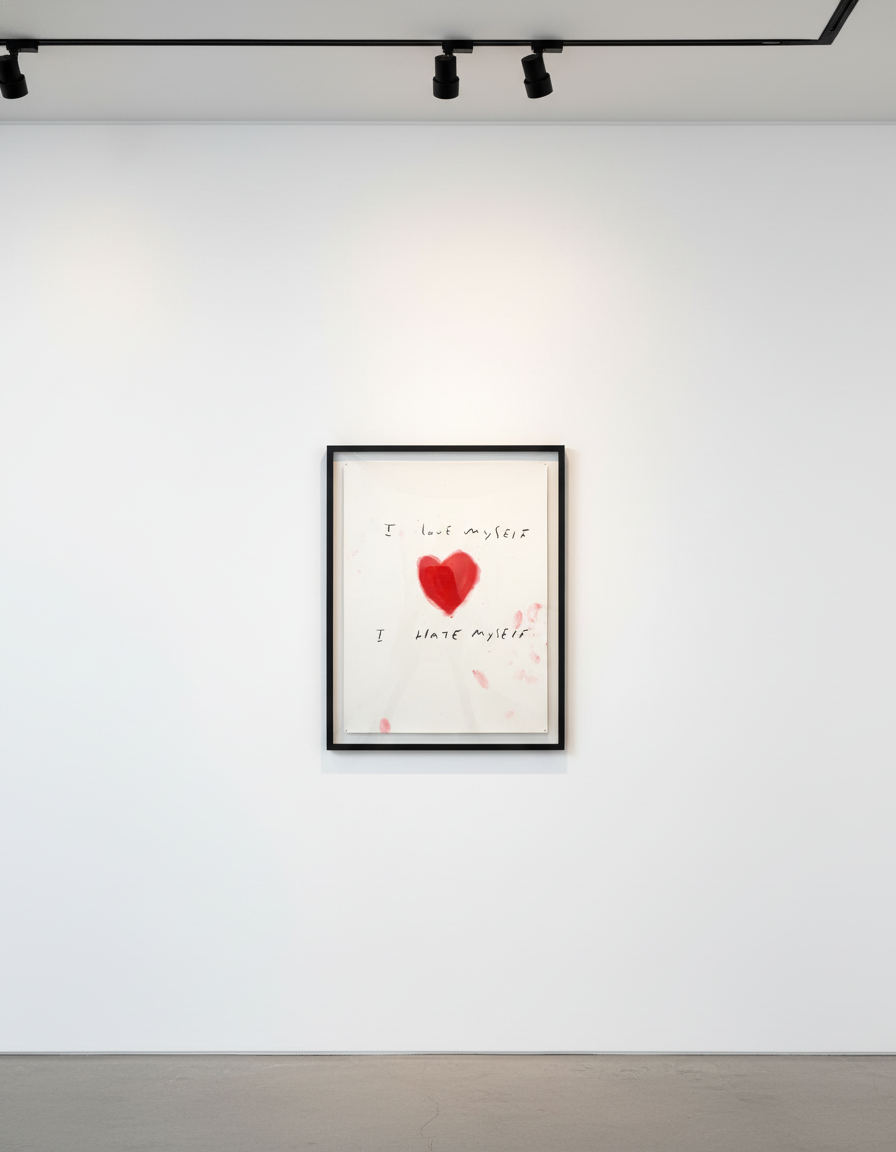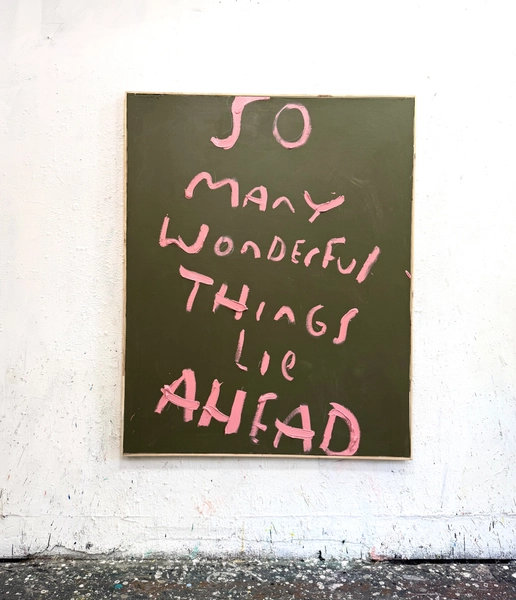
Paintings

Eric Stefanski has emerged as one of the most compelling voices in contemporary text-based art, building a practice that speaks to the contradictions of modern emotional life with unflinching honesty and disarming wit. In an art world often characterised by conceptual opacity and deliberate distance, Stefanski offers something increasingly rare - genuine vulnerability rendered in bold, declarative strokes. His paintings transform confessional language into visual monuments, creating works that function simultaneously as intimate diary entries and universal statements about the human condition.
Over the past decade, Stefanski has cultivated a distinctive position in the contemporary art market, maintaining both critical relevance and sustained collector interest in an increasingly competitive landscape. His work resonates with a generation of collectors who have grown weary of ironic detachment, seeking instead art that acknowledges the messy, contradictory nature of contemporary existence. The title of this exhibition - Wear Your Heart On Your Sleeve - encapsulates the artist's fundamental philosophy: that authenticity, even when uncomfortable, remains the most powerful currency in art.
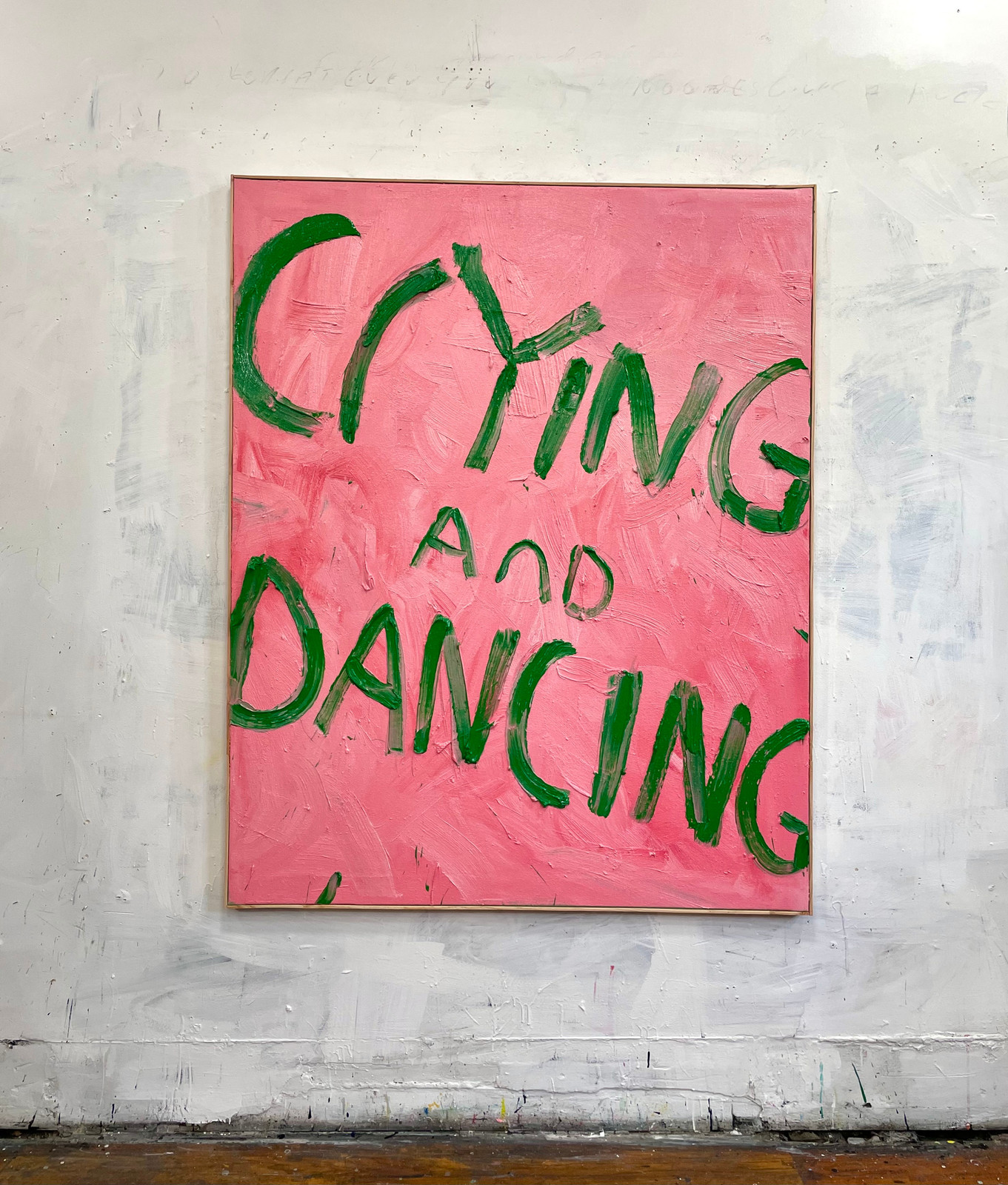
Crying and Dancing — Eric Stefanski. Available at Guy Hepner, New York.
Eric Stefanski's artistic practice centres on the transformative potential of language when stripped of context and presented as visual object. Working primarily with acrylic on canvas, he renders phrases that oscillate between self-deprecation and self-awareness, humour and heartbreak. These are not mere slogans or Instagram-ready aphorisms - they are carefully constructed emotional excavations that invite viewers into a shared space of recognition and reflection.
The Art Basel and UBS Global Art Market Report has consistently highlighted the growing collector appetite for works that bridge conceptual rigour with emotional accessibility. Stefanski's paintings occupy precisely this territory, offering the intellectual engagement of text-based conceptual art while delivering the immediate emotional impact traditionally associated with figurative or abstract expressionist work. This dual appeal has proven particularly attractive to a new generation of collectors who value authenticity and narrative alongside formal innovation.
What distinguishes Stefanski from other practitioners in the text-art tradition is his willingness to inhabit the space of genuine confession. Where many artists employ language as a distancing mechanism or ironic commentary, Stefanski uses words as direct emotional transmission. Phrases emerge from his canvases not as clever observations about culture but as admissions - sometimes painful, often humorous, always human. This approach has earned him a devoted following among collectors who recognise in his work a mirror for their own unspoken thoughts and feelings.
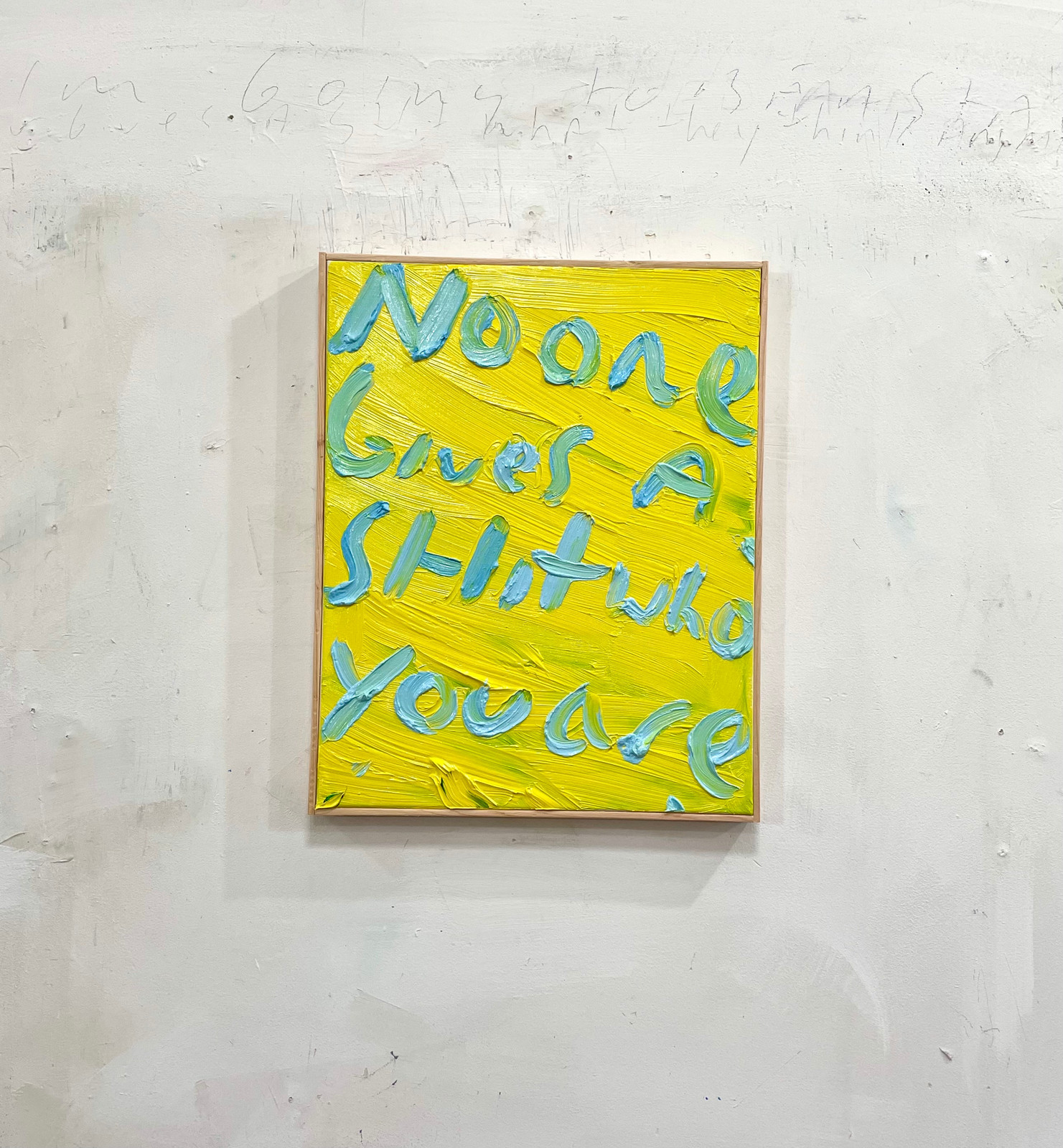
Who You Are — Eric Stefanski. Available at Guy Hepner, New York.
The contemporary art market has witnessed a significant shift in collector priorities over the past several years. According to analysis from Christie's and Sotheby's auction results, works demonstrating authentic emotional engagement have shown remarkable resilience, particularly among millennial and Generation X collectors. Eric Stefanski's practice aligns perfectly with this evolving sensibility, offering pieces that function as both aesthetic objects and emotional talismans.
Stefanski's market strength derives from several interconnected factors. First, the accessibility of his work - while conceptually sophisticated, his paintings require no specialised art-historical knowledge to appreciate. The language speaks directly to the viewer, creating immediate connection and eliminating the interpretive barriers that can make contemporary art feel exclusionary. This accessibility has broadened his collector base considerably, attracting both seasoned collectors and first-time buyers who find in his work a compelling entry point into contemporary art collecting.
Second, the authenticity of Stefanski's practice provides collectors with something increasingly valuable - art that means what it says. In an era of social media performance and carefully curated public personas, Stefanski's willingness to expose uncertainty, failure, and emotional struggle reads as genuinely countercultural. His canvases become spaces of permission, acknowledging feelings that polite society typically demands we suppress.
The range of Stefanski's emotional register also contributes to his sustained market appeal. Works like Mothers Are Underrated demonstrate his capacity for sincere tribute and gratitude, while pieces such as Ego reveal his sharp self-critical awareness. Crying and Dancing captures the peculiar simultaneity of contemporary emotional life - the way joy and sorrow often coexist in the same moment. This breadth ensures that collectors can find works that speak to their specific emotional needs while building coherent collections that explore the full spectrum of human experience.
Beyond market considerations, Eric Stefanski's work holds significance for its cultural commentary on the role of the artist in contemporary society. His practice implicitly asks what we expect from artists - detached observation, aesthetic beauty, intellectual provocation, or something more intimate. Stefanski answers by positioning the artist as fellow traveller rather than elevated guide, someone who shares our confusions and contradictions rather than standing above them.
This democratisation of the artistic voice has profound implications for how we understand art's function in contemporary life. Stefanski's paintings suggest that art's highest purpose may not be to transcend ordinary experience but to illuminate it - to name the feelings we struggle to articulate and create communion through shared recognition. Works like Who You Are and Sad Ones speak to fundamental questions of identity and emotional truth that transcend demographic categories, connecting viewers across generational and cultural boundaries.
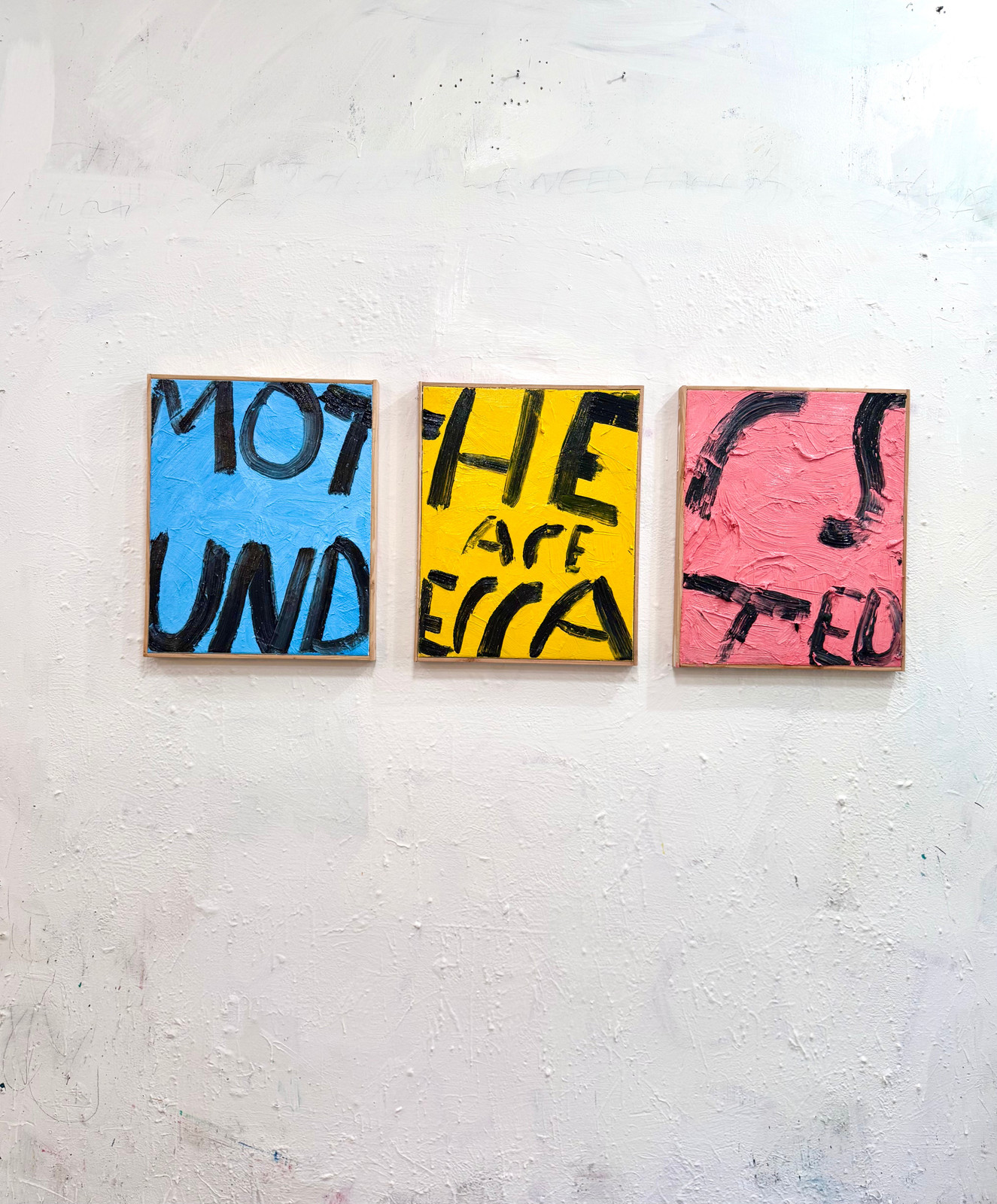
Mothers Are Underrated — Eric Stefanski. Available at Guy Hepner, New York.
The enduring appeal of Stefanski's practice lies in its fundamental generosity. By wearing his heart on his sleeve, the artist grants permission for viewers to acknowledge their own emotional complexity. In a cultural moment characterised by anxiety, uncertainty, and the pressure to project confidence, this permission constitutes a genuine gift - and one that collectors increasingly recognise as worthy of preservation.
Guy Hepner is pleased to offer collectors the opportunity to acquire works by Eric Stefanski, including pieces from his most celebrated series. As a gallery committed to representing artists whose work demonstrates both market strength and cultural significance, we recognise Stefanski as a defining voice in contemporary text-based practice. Our team provides comprehensive acquisition services, including private viewings, collection advisory, and worldwide shipping. To enquire about available works by Eric Stefanski or to arrange a consultation, please contact Guy Hepner directly.
Explore Eric Stefanski prints for sale at Guy Hepner: Small Canvases, Works on Paper.
Related Series