Blossoms

Damien Hirst stands as one of the most influential and polarising figures in contemporary art, an artist whose visual language has undergone remarkable transformation across more than three decades of practice. From formaldehyde-preserved animals to meticulously arranged pharmaceutical cabinets, from vibrant spin paintings to delicate butterfly compositions, Hirst has consistently challenged the boundaries of artistic imagery while maintaining an unwavering focus on humanity's most profound concerns - life, death, beauty, and belief. His evolution as an artist reflects not only personal artistic growth but also broader shifts in contemporary art's relationship with commerce, spectacle, and meaning. For collectors and institutions worldwide, understanding the trajectory of Hirst's imagery provides essential insight into one of the art market's most significant figures.
Hirst first achieved international recognition in the early 1990s as the de facto leader of the Young British Artists movement. His breakthrough work, The Physical Impossibility of Death in the Mind of Someone Living from 1991 - featuring a tiger shark suspended in formaldehyde - immediately established the visual vocabulary that would define his early career. This piece introduced several recurring elements in Hirst's oeuvre: the clinical aesthetic borrowed from scientific and medical display, the direct confrontation with mortality, and the strategic deployment of shock as a catalyst for deeper philosophical reflection.
During this formative period, Hirst developed imagery that drew heavily from biological and medical contexts. His Natural History series expanded to include sheep, cows, and other preserved specimens, each work forcing viewers to confront the physical reality of death while simultaneously aestheticising it through precise presentation. The vitrine became his signature format - a contained theatrical space where life and death existed in suspended animation. According to Sotheby's analysis of contemporary art movements, Hirst's early works fundamentally altered how the art world approached conceptual practice, merging installation, sculpture, and performance into singular provocative statements.
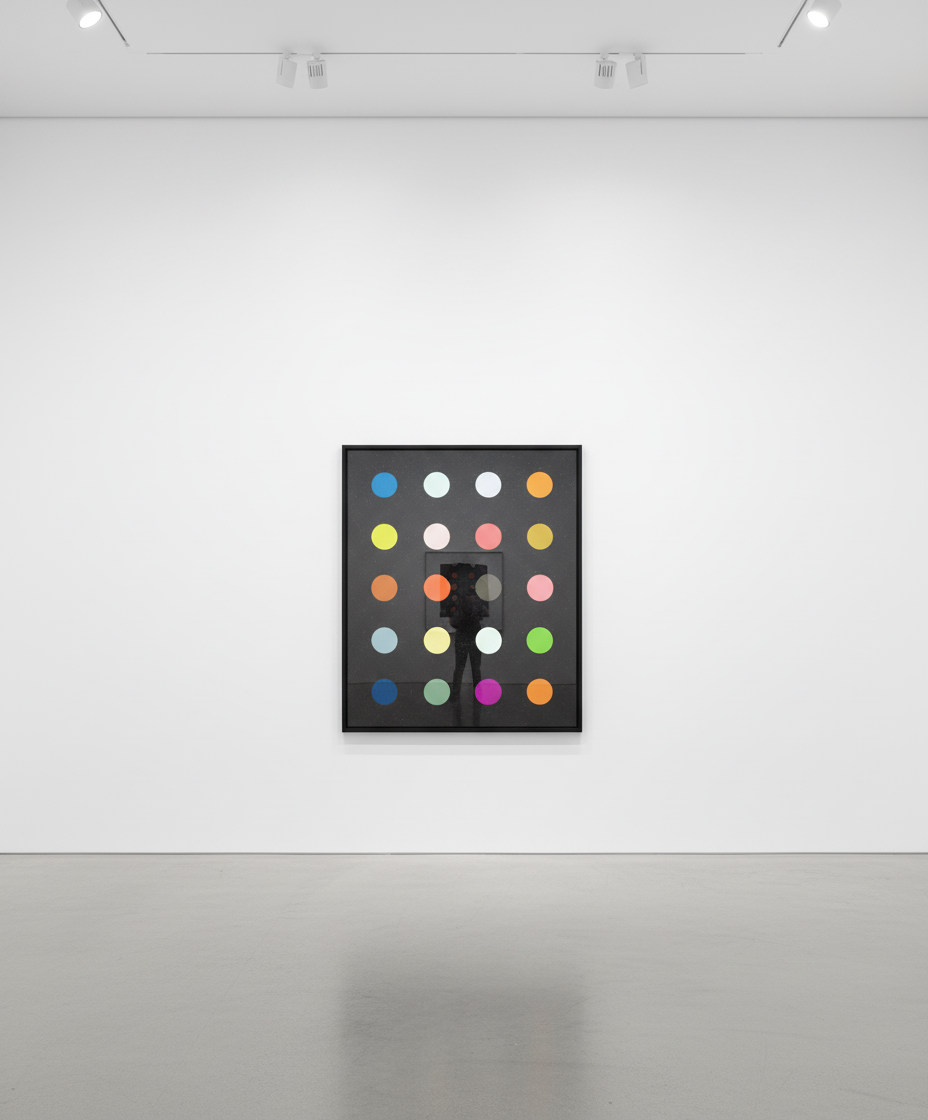
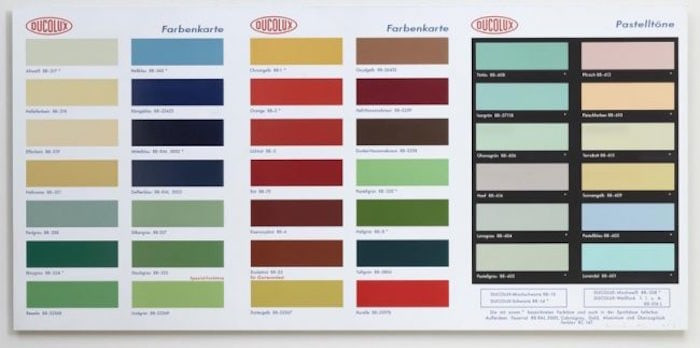
Methylamine 13c — Damien Hirst. Available at Guy Hepner, New York.
As Hirst's practice matured through the mid-1990s and into the 2000s, his imagery shifted toward more systematic and serialised forms. The Pharmaceutical series emerged as a critical development, featuring medicine cabinets filled with meticulously arranged pills, tablets, and medical packaging. Works exploring compounds such as methylamine and mannitol demonstrated Hirst's fascination with the visual language of chemistry and pharmacology. These pieces function simultaneously as minimalist sculptures, memento mori, and critiques of society's relationship with medication and the promise of scientific salvation.
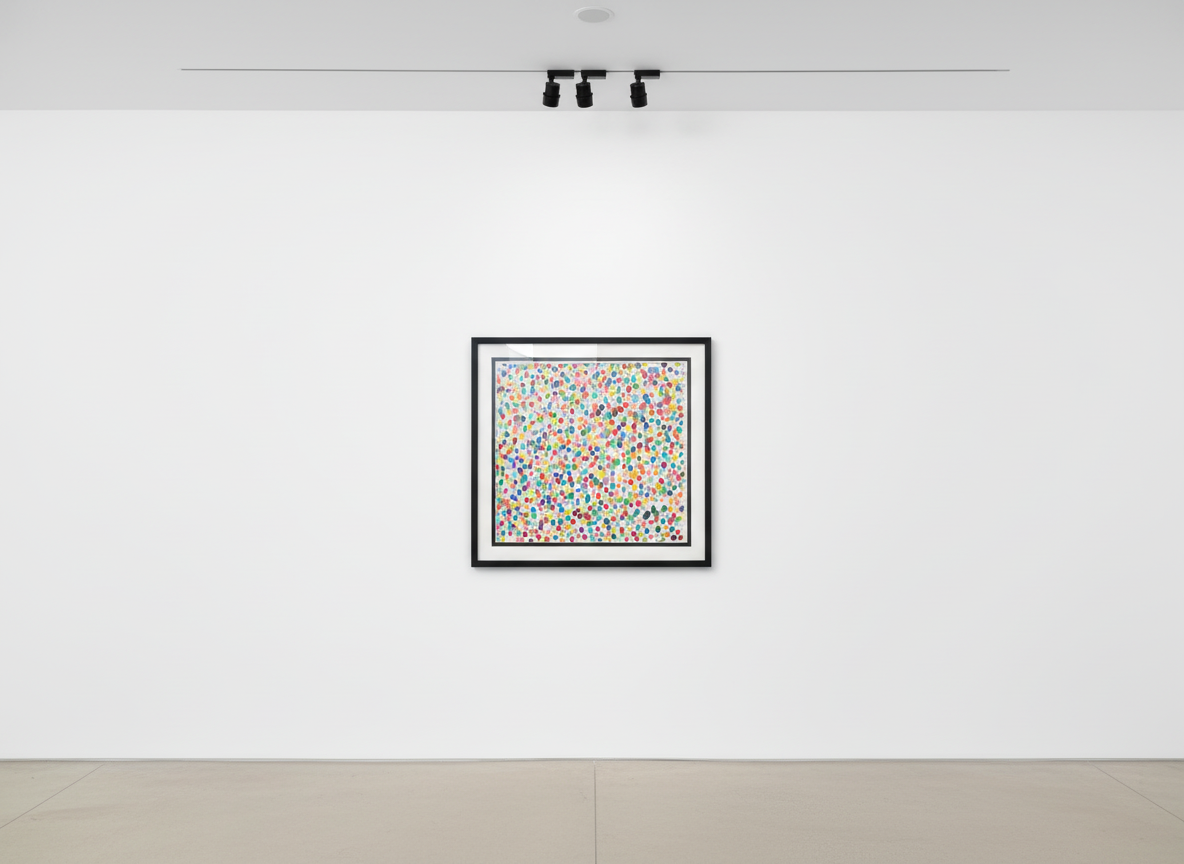
The Spot Paintings, which Hirst began in 1986 but expanded dramatically in subsequent decades, represent perhaps his most systematic approach to image-making. Each canvas features rows of randomly coloured circles arranged in perfect grids - a visual system that references everything from molecular structures to pharmaceutical branding. Christie's has noted that the Spot Paintings demonstrate Hirst's understanding of how repetition and variation create both aesthetic pleasure and conceptual depth. The imagery is deceptively simple yet endlessly engaging, offering collectors works that function as both decorative objects and intellectual propositions.
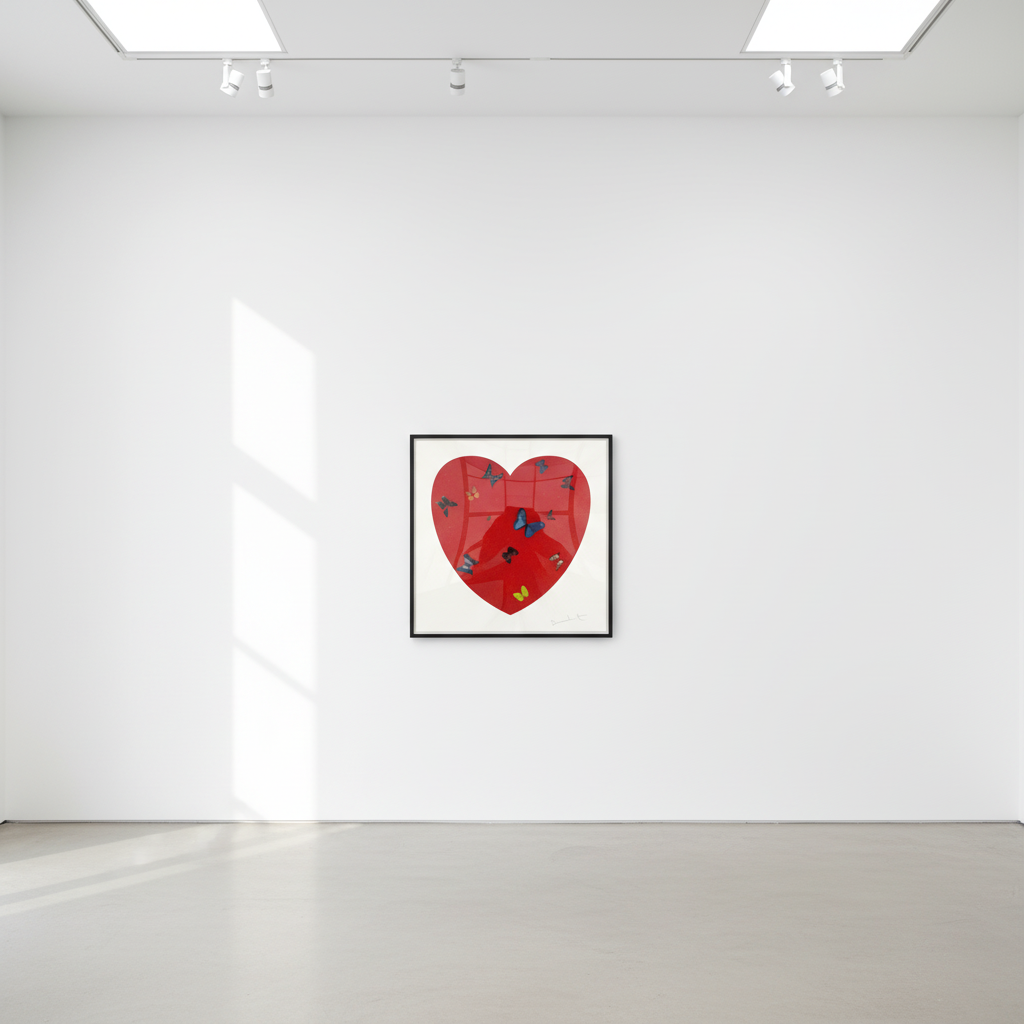
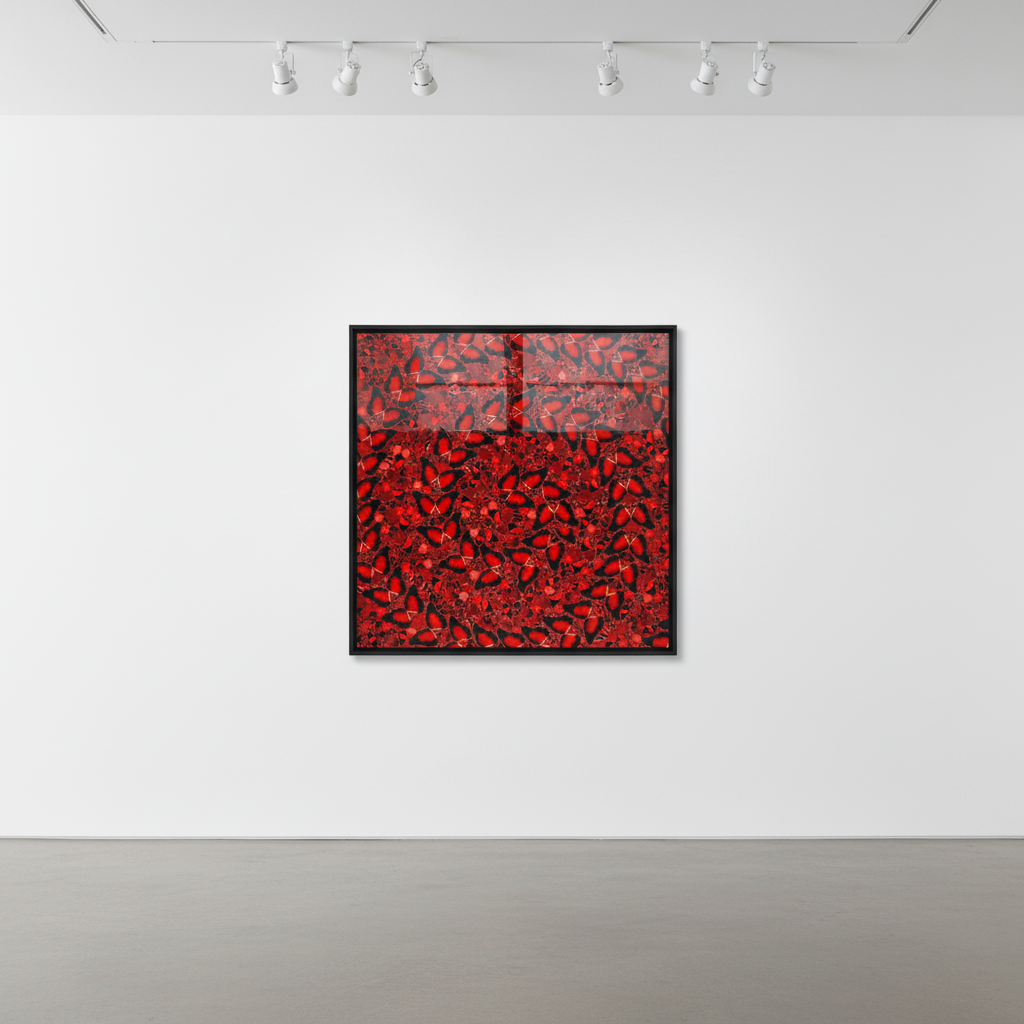
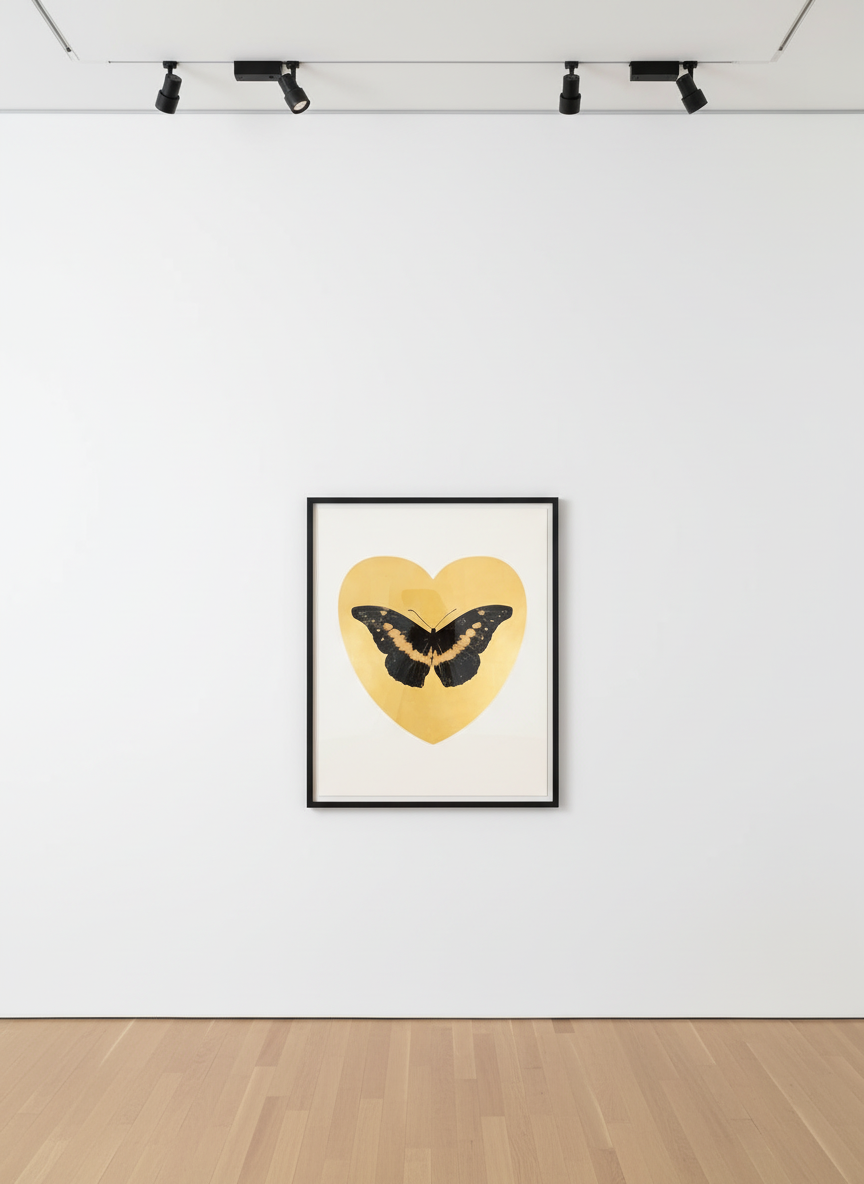
All you need is love, love, love (Diamond Dust) — Damien Hirst. Available at Guy Hepner, New York.
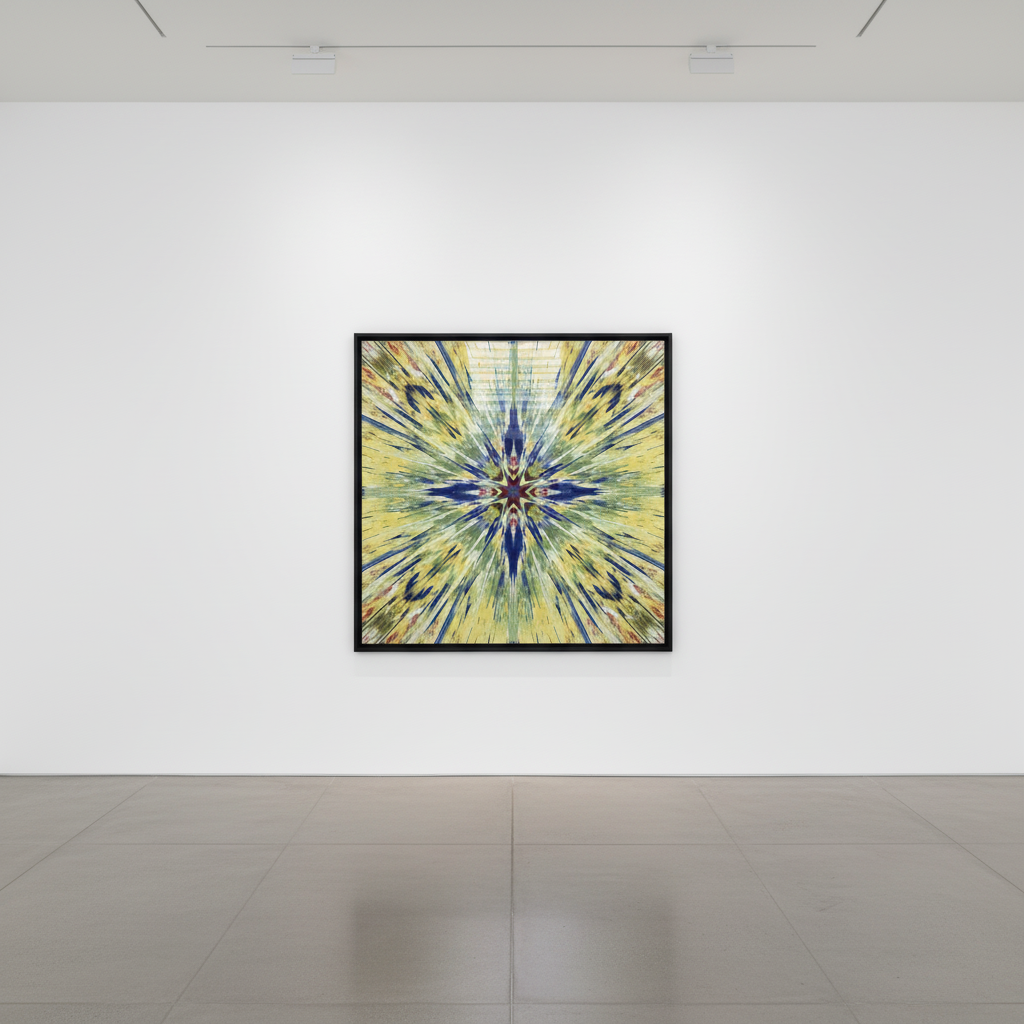
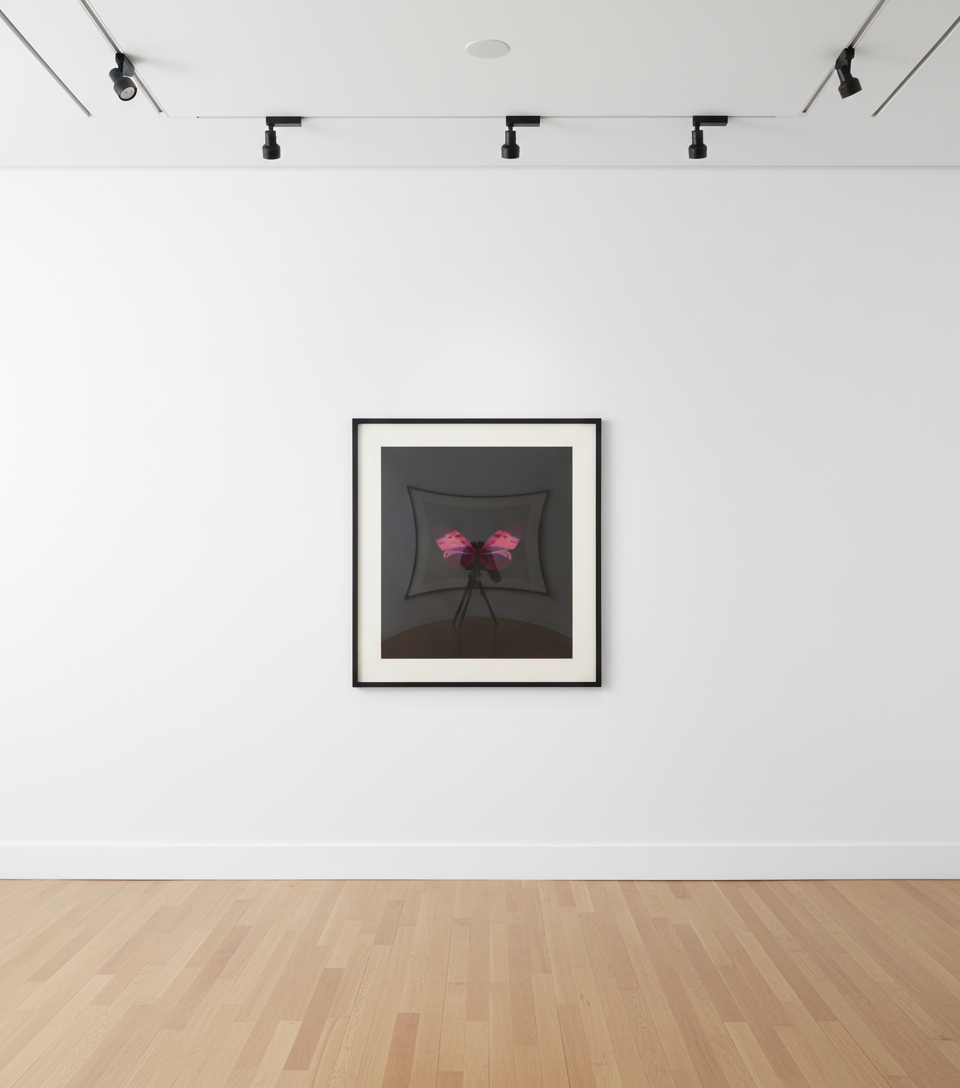
This period also saw the development of Hirst's butterfly imagery, which would become increasingly central to his practice. The Kaleidoscope paintings arrange real butterfly wings into mandala-like compositions of extraordinary chromatic intensity. These works marked a significant evolution from the aggressive imagery of preserved animals toward something more traditionally beautiful - yet equally concerned with mortality. The butterfly, with its brief lifespan and transformative life cycle, provided Hirst with a potent symbol for exploring themes of transience, resurrection, and natural splendour. His Memento series continues this meditation on mortality through imagery that reminds viewers of life's fragility.
The later phases of Hirst's career have seen his imagery embrace more explicit symbolism and luxurious materials. The famous For the Love of God from 2007 - a platinum skull encrusted with 8,601 diamonds - represented a dramatic synthesis of his ongoing concerns. This work combined the memento mori tradition with unprecedented material opulence, creating an image that simultaneously celebrated and critiqued wealth, mortality, and the art market itself. The Art Basel and UBS Global Art Market Report has consistently cited Hirst as a case study in how contemporary artists navigate commercial success while maintaining conceptual rigour.
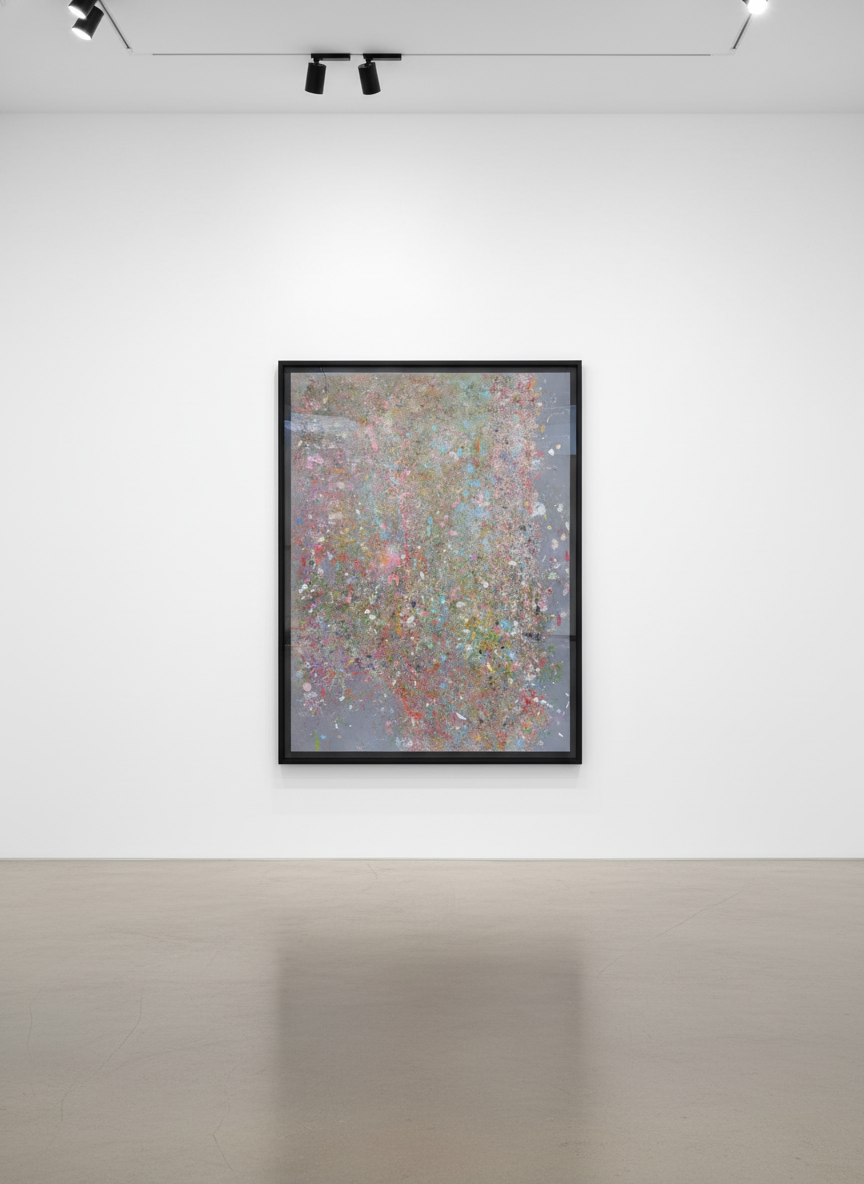
His more recent series have explored increasingly varied imagery. The Cherry Blossoms, unveiled in 2021, marked a surprising turn toward painterly expressionism - vast canvases covered in thick impasto depicting flowering trees. This evolution demonstrated Hirst's willingness to continually reinvent his visual approach while maintaining thematic consistency. The blossoms, like butterflies, speak to beauty's impermanence and nature's cyclical rhythms. Works such as All You Need Is Love, Love, Love executed in diamond dust exemplify this later synthesis of material luxury with universal emotional themes.
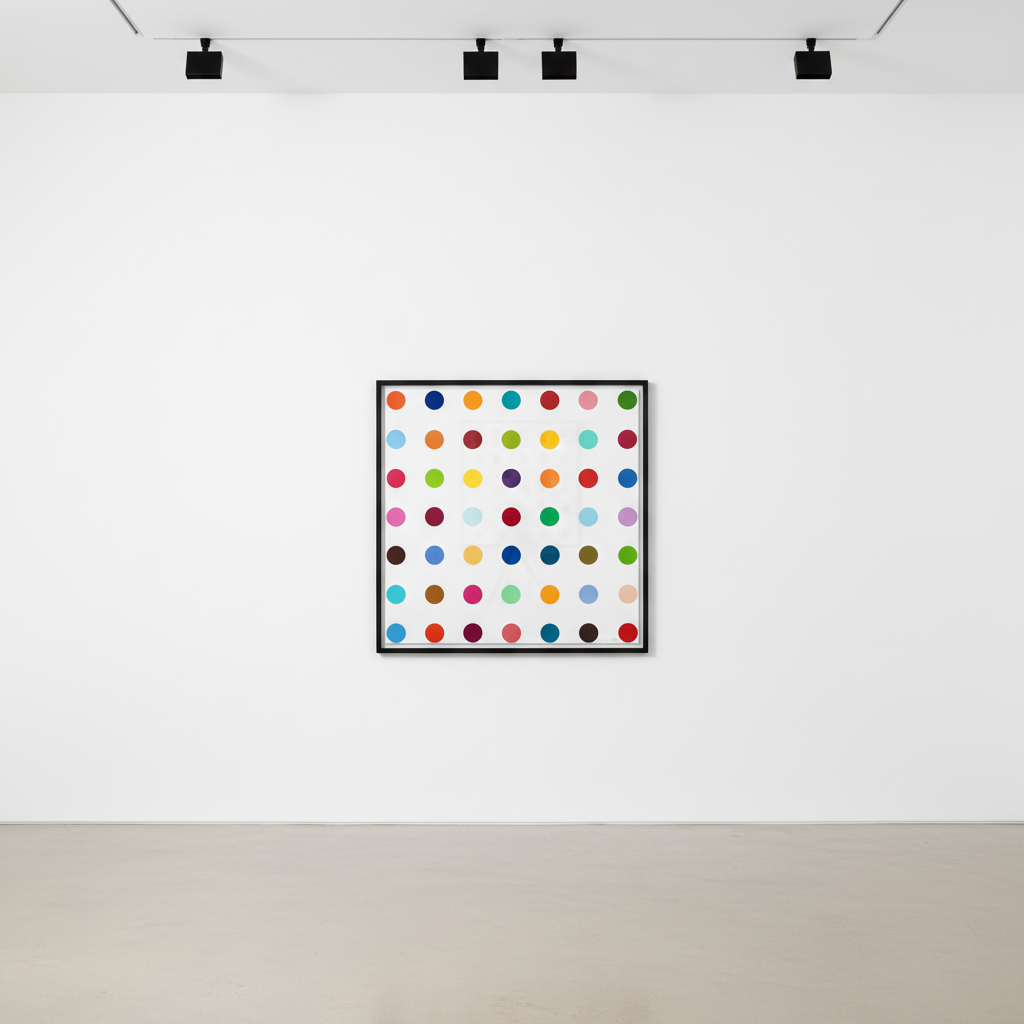
Mannitol — Damien Hirst. Available at Guy Hepner, New York.
Throughout these evolutions, Hirst has maintained remarkable market presence. Sotheby's historic 2008 Beautiful Inside My Head Forever auction, which saw Hirst bypass galleries entirely to sell work worth over 111 million pounds, demonstrated his understanding of art's commercial dimensions. For collectors, Hirst's works offer both significant investment potential and the opportunity to own pieces by an artist whose imagery has genuinely shaped contemporary visual culture. His works exploring substances like opium continue to provoke discussion about humanity's search for transcendence through chemistry and medicine.
Guy Hepner gallery offers collectors privileged access to works by Damien Hirst across the full spectrum of his artistic evolution. From pharmaceutical-themed prints to butterfly compositions and diamond dust editions, our curated selection represents the breadth of Hirst's imagery and conceptual concerns. Our specialist advisors provide comprehensive guidance on provenance, condition, and market positioning, ensuring that each acquisition aligns with our clients' collecting objectives. To inquire about available Damien Hirst works or to discuss building a collection featuring this defining contemporary artist, contact Guy Hepner directly for a personalised consultation.
--- **Browse Damien Hirst prints and editions** at Guy Hepner: [Damien Hirst art for sale](/damien-hirst) | [Sell your Damien Hirst](/sell/damien-hirst)Explore Damien Hirst prints for sale at Guy Hepner: Blossoms, Colour Chart, H1 - Enter the Infinite, H10 - the Empresses, H11 - the Currency.
Related Series