Paintings

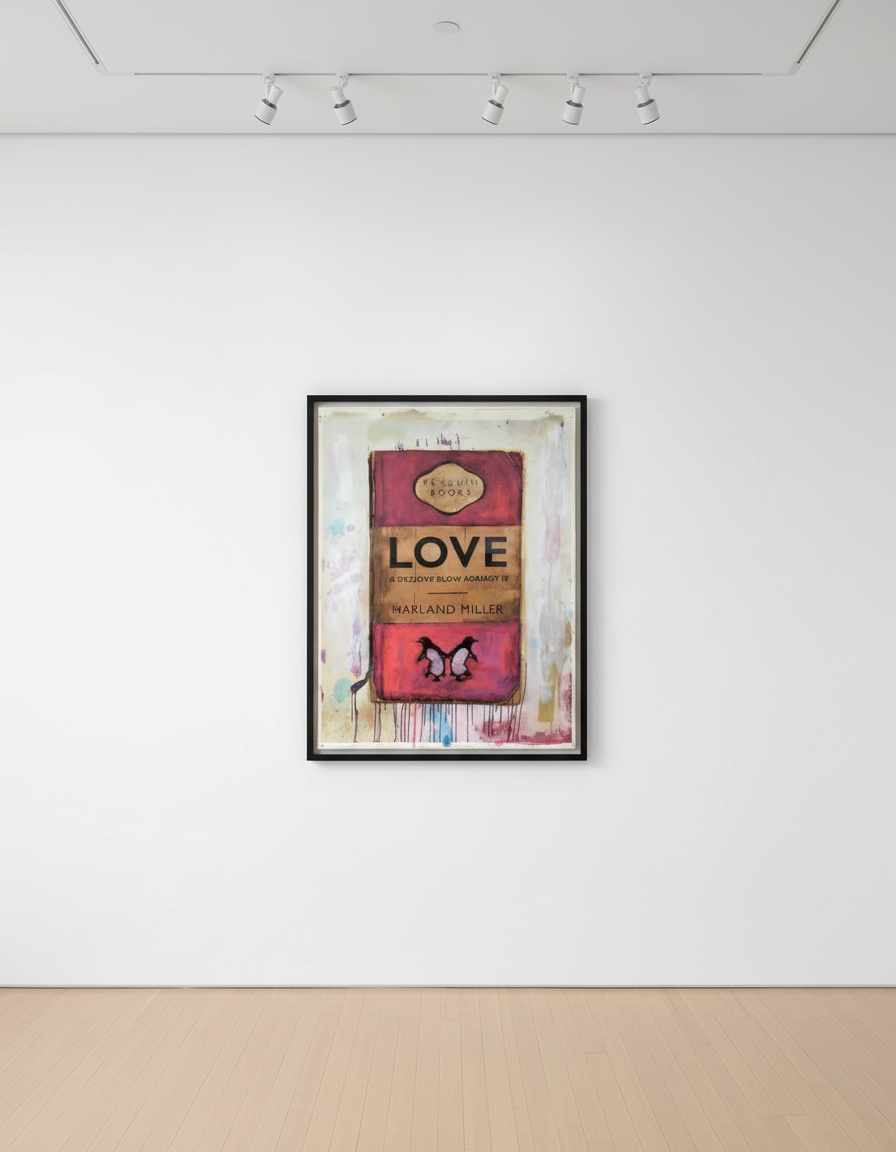
In the contemporary art world, few artists wield irony and wit as masterfully - and subversively - as Harland Miller and Banksy. Though stylistically distinct, both employ humor, satire, and sharp social commentary to question dominant narratives, expose cultural hypocrisies, and provoke meaningful reflection. Their works operate as visual Trojan horses - accessible and often humorous at first glance, yet deeply layered with critique that resonates long after the initial encounter. By tapping into the cultural zeitgeist with a distinctly British sensibility, Harland Miller and Banksy challenge viewers to confront uncomfortable truths about society, identity, and the mechanisms of power that shape contemporary existence.
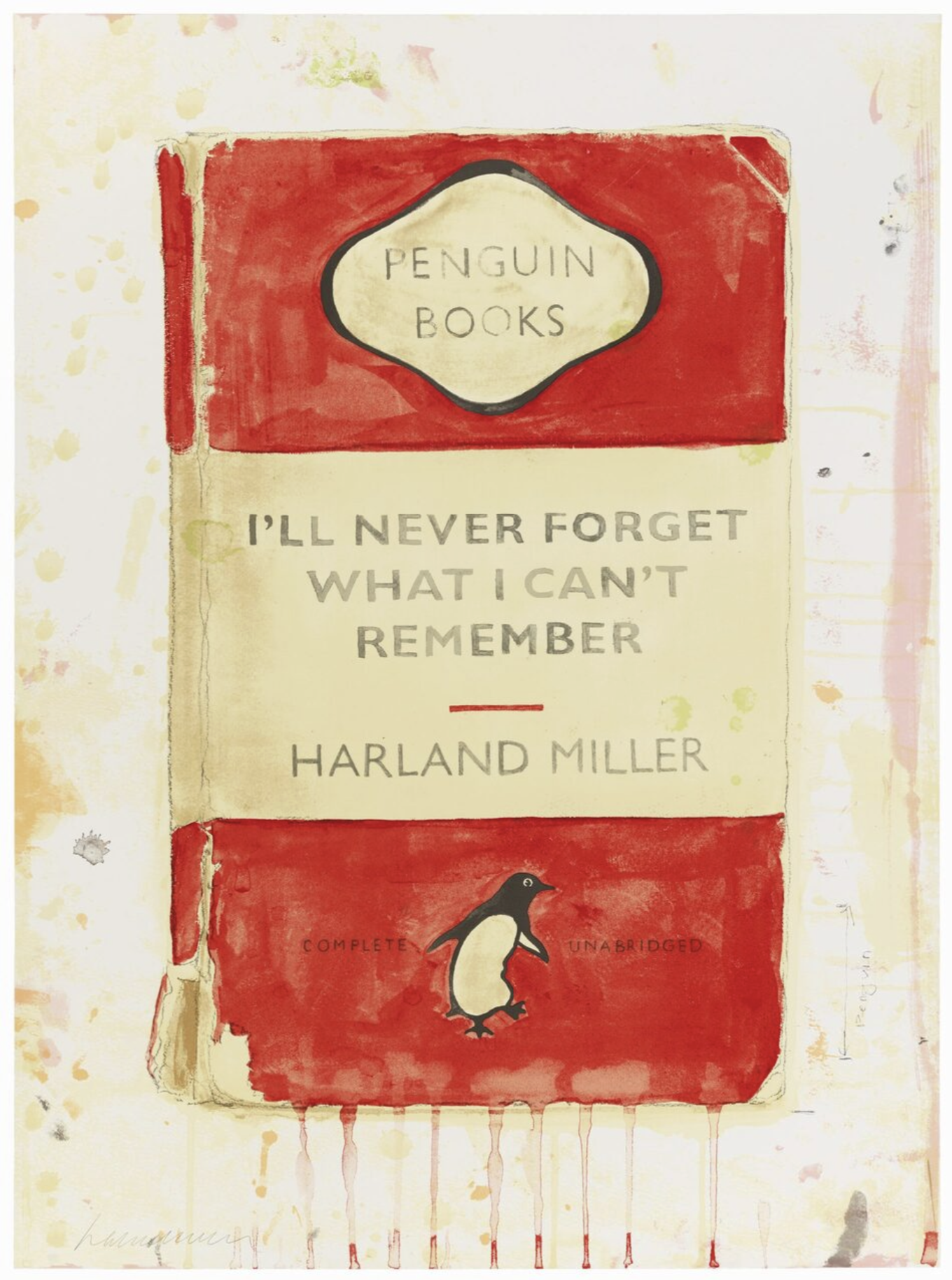
Harland Miller's artistic practice is fundamentally rooted in the power of language. Best known for his large-scale paintings of reimagined Penguin book covers, Miller fuses the nostalgic aesthetics of mid-20th-century publishing with razor-sharp textual subversion. These faux titles - such as "Happiness: The Case Against" or "I'll Never Forget What I Can't Remember" - mirror the format of self-help books and existential novels while deliberately undermining their authority. With characteristically dry British humor, Miller distorts the promise of literature as salvation, instead offering sardonic observations that oscillate between despair and dark comedy.
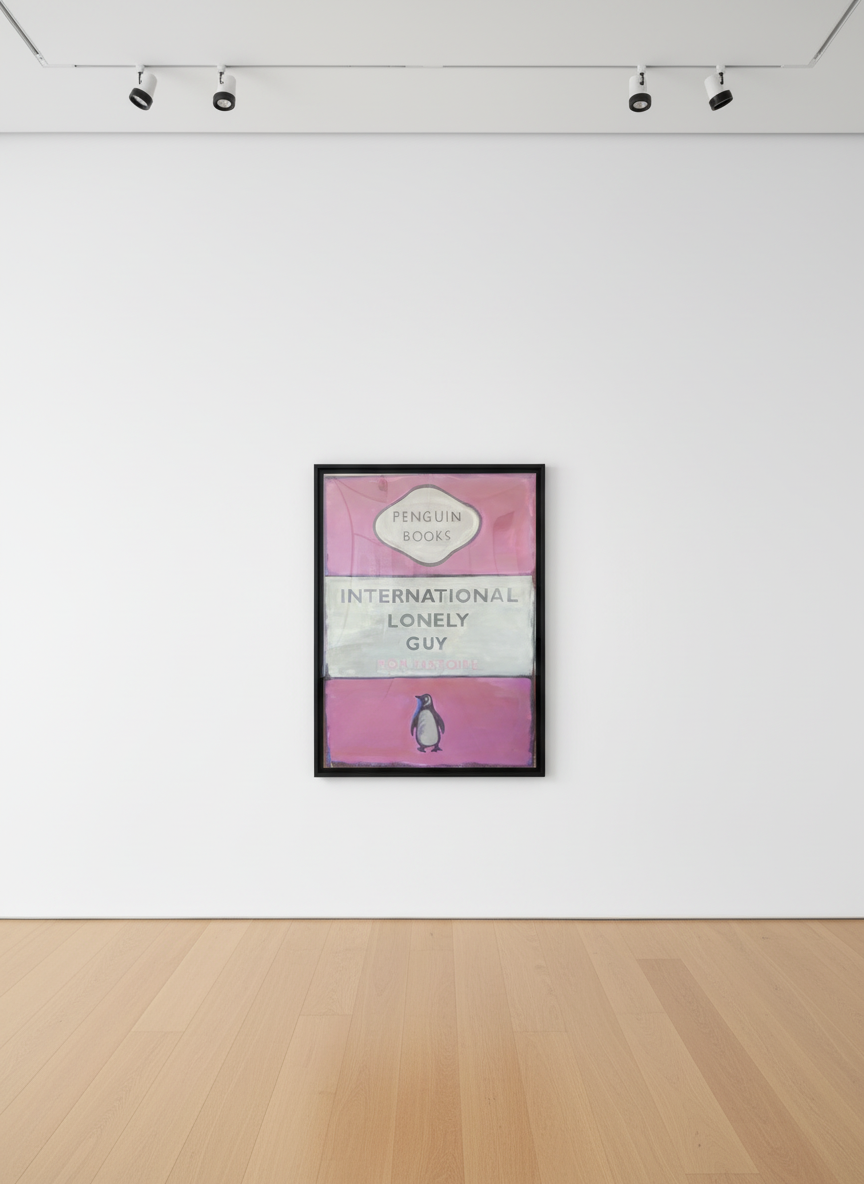
The genius of Harland Miller's approach lies in his exploitation of cultural memory. The Penguin paperback represents a democratization of knowledge - affordable, portable, and intellectually aspirational. By co-opting this format, Miller taps into collective nostalgia while simultaneously critiquing the commodification of wisdom. His invented titles function as philosophical provocations disguised as pulp fiction, inviting viewers into a space where expectation and reality collide with uncomfortable precision. Works such as "International Lonely Guy" exemplify this tension, presenting isolation not as tragedy but as a condition worthy of its own literary genre - complete with weathered cover and vintage typography.
International Lonely Guy — Harland Miller. Available at Guy Hepner, New York.
Miller's technique reinforces his conceptual framework with remarkable sophistication. His paintings bear the marks of age and use - scuffed corners, faded spines, and worn edges that suggest countless readings by unknown hands. This deliberate aging process transforms each work into an artifact of imagined histories, lending authenticity to entirely fictional texts. The scale of these pieces - often monumental - elevates the humble paperback to the realm of high art, creating a productive tension between popular culture and fine art that collectors find particularly compelling.
Where Harland Miller operates through literary subversion, Banksy deploys visual iconography as guerrilla critique. The anonymous street artist has built an unparalleled career by weaponizing public space, transforming urban environments into canvases for political commentary. Banksy's stenciled works - appearing overnight on walls from London to Palestine - combine accessible imagery with pointed social criticism, creating moments of unexpected confrontation in the fabric of everyday life.
Banksy's wit operates through juxtaposition and context. A girl releasing a heart-shaped balloon becomes a meditation on lost innocence. Riot police wielding flowers instead of batons expose the absurdity of state violence. These images communicate instantly across language barriers and educational backgrounds, democratizing contemporary art in ways that traditional gallery systems cannot achieve. Yet this accessibility masks considerable sophistication - each work carefully calibrated to provoke specific emotional and intellectual responses.
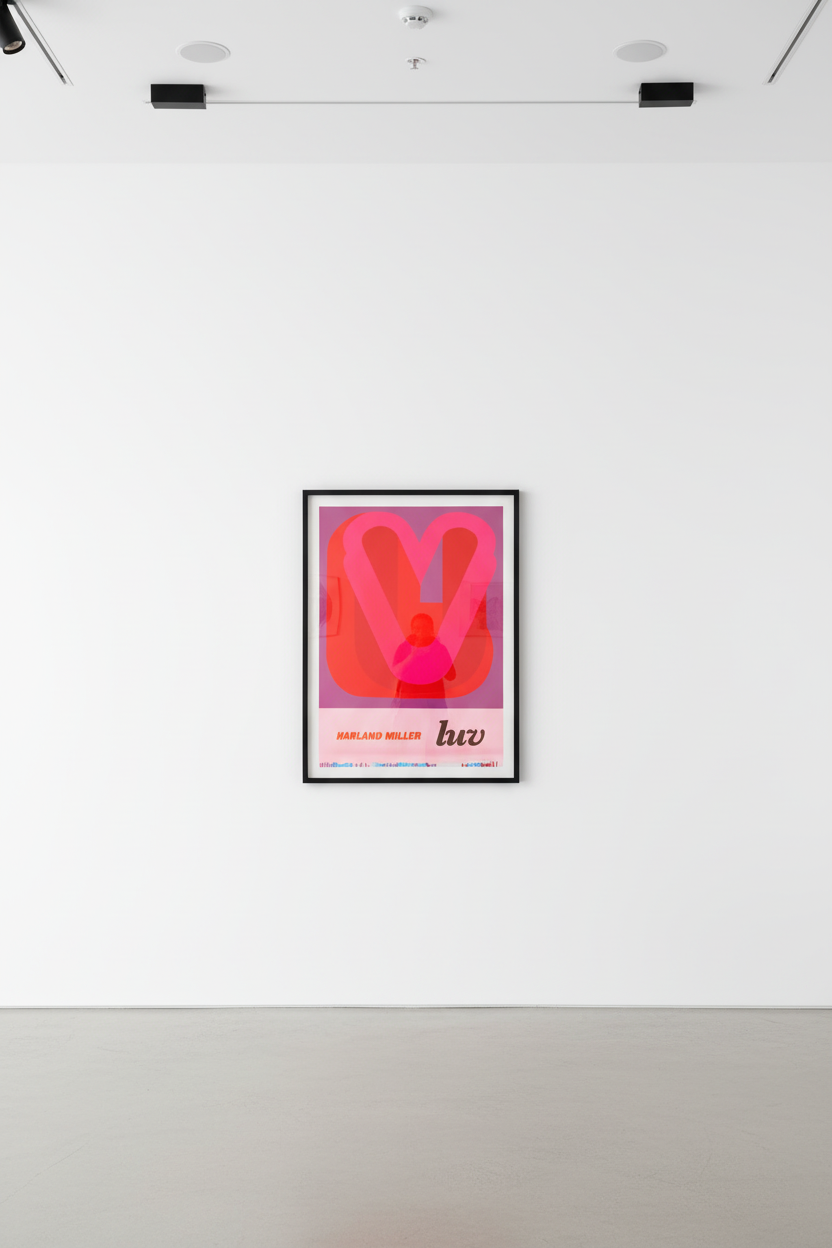
Luv — Harland Miller. Available at Guy Hepner, New York.
The art market's embrace of Banksy represents one of contemporary culture's most fascinating paradoxes. An artist whose practice began as an explicit rejection of commercial art systems now commands extraordinary prices at auction, with works regularly appearing at Christie's and Sotheby's to spectacular results. This contradiction - anti-establishment art absorbed by establishment institutions - forms part of Banksy's ongoing critique, each record-breaking sale functioning as both commercial triumph and conceptual commentary on the systems being criticized.
Harland Miller and Banksy represent the contemporary apex of a distinctly British artistic tradition - one that stretches back through centuries of satirical practice. From Hogarth's moral narratives to Gerald Scarfe's political caricatures, British art has consistently employed wit as a vehicle for social critique. This lineage provides crucial context for understanding why collectors worldwide respond so powerfully to works by both Harland Miller and Banksy.
The Art Basel and UBS Global Art Market Report consistently identifies British contemporary artists among the most sought-after in international markets, with works demonstrating strong appreciation and sustained collector interest. Harland Miller's prints and paintings have achieved remarkable results at major auction houses, with Sotheby's and Christie's regularly featuring his work in contemporary sales. This institutional validation reflects broader recognition that Miller's literary paintings transcend mere cleverness to achieve genuine artistic significance.
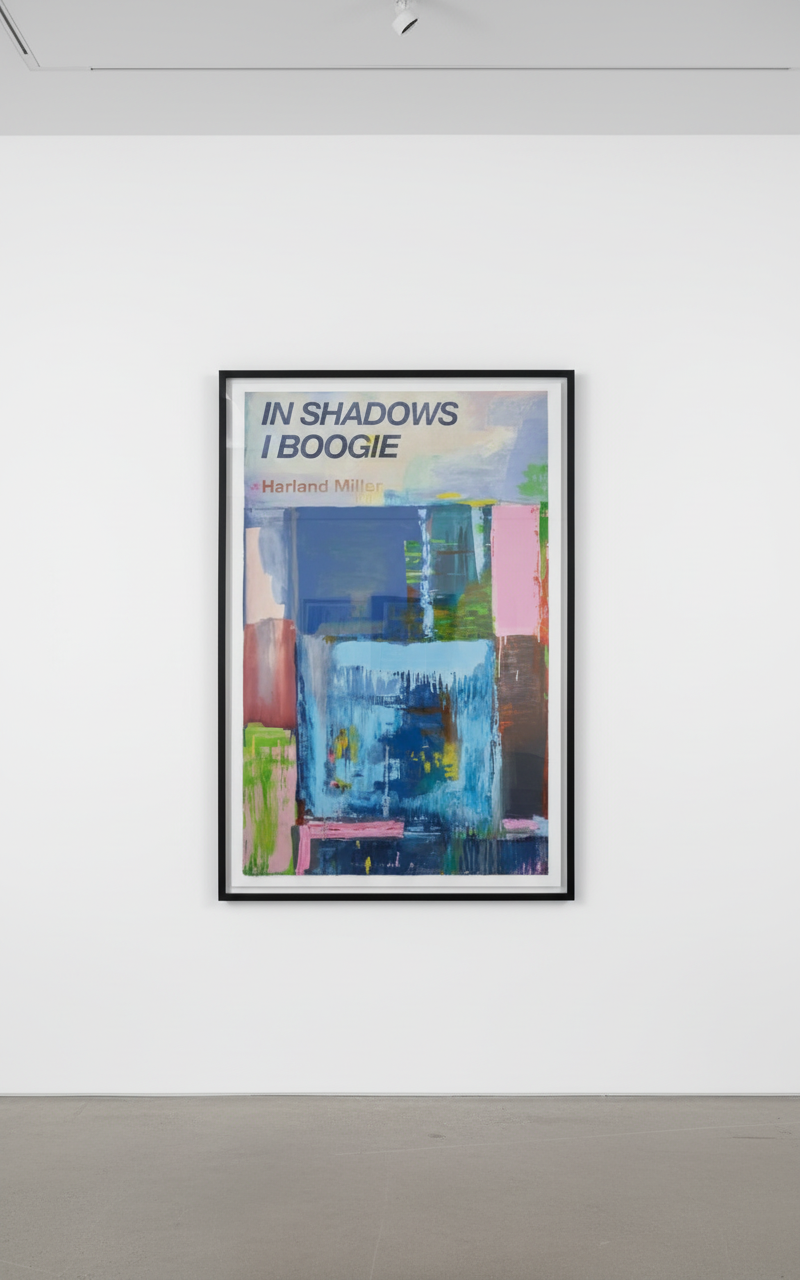
In Shadows I Boogie — Harland Miller. Available at Guy Hepner, New York.
What distinguishes both artists is their refusal to separate aesthetic pleasure from intellectual engagement. Harland Miller's paintings reward extended contemplation - the interplay of color, texture, and language revealing new dimensions with each viewing. Works like "In Shadows I Boogie" and "Luv" demonstrate his mastery of both visual composition and linguistic wit, creating pieces that function simultaneously as beautiful objects and conceptual provocations. For collectors, this dual nature ensures enduring relevance - works that continue to resonate as cultural conditions evolve.
The market for conceptually driven British contemporary art has never been stronger. According to analysis from major auction houses including Christie's and Sotheby's, works by artists who combine visual sophistication with intellectual depth demonstrate remarkable price stability and appreciation potential. Harland Miller occupies a particularly compelling position within this landscape - established enough to provide security, yet still producing work that commands critical attention and collector enthusiasm.
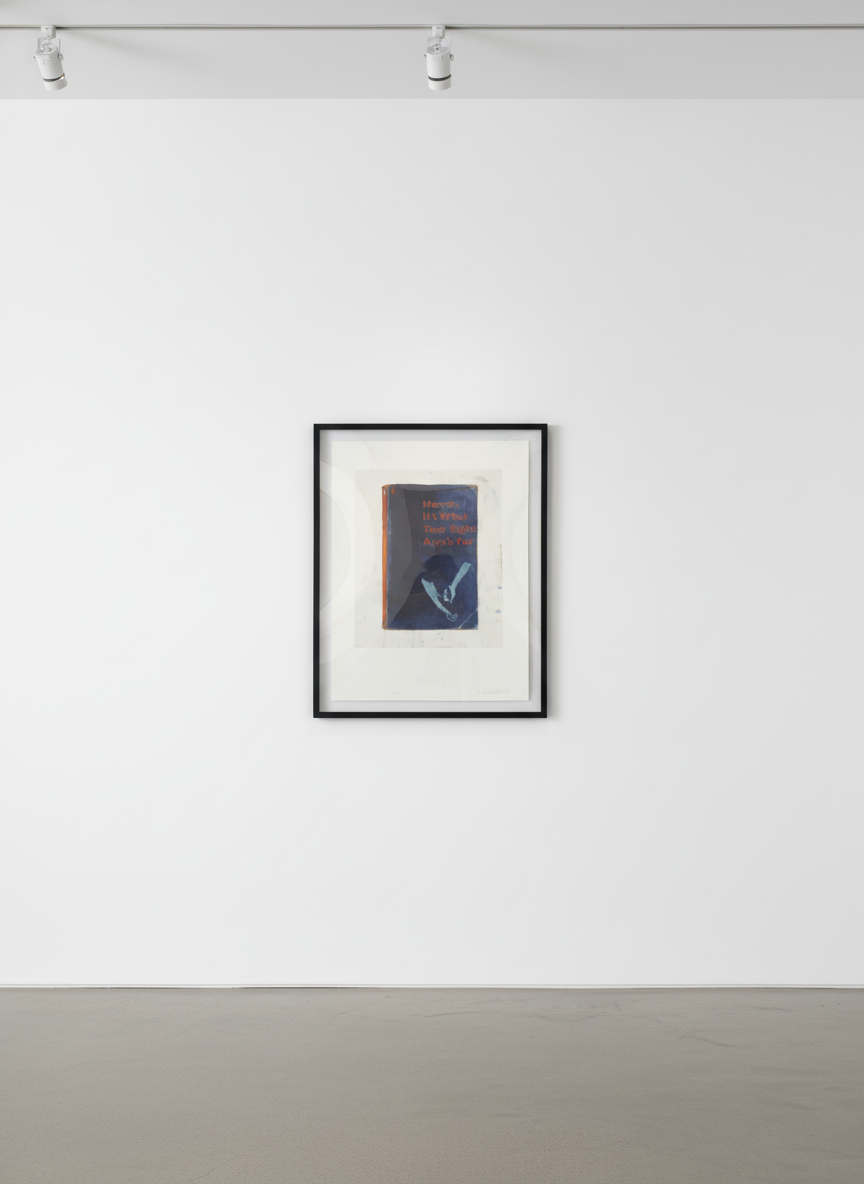
Miller's exploration of existential themes through the lens of popular culture resonates with collectors who seek art that engages meaningfully with contemporary experience. Pieces such as "Love, A Decisive Blow If Against" and "Heroin: It's What Your Right Arm's For" exemplify his willingness to confront difficult subjects with characteristic dark humor - a quality that ensures his work maintains relevance across changing cultural moments.
Guy Hepner is proud to offer exceptional works by Harland Miller to discerning collectors worldwide. Our gallery maintains access to significant pieces spanning the artist's celebrated career, from iconic Penguin cover paintings to limited edition prints and unique Works on Paper. Our expert team provides comprehensive guidance on acquisition, provenance, and collection development, ensuring that each purchase represents both aesthetic excellence and sound investment. Contact Guy Hepner today to explore available works by Harland Miller and discover how his distinctive vision might enhance your collection.
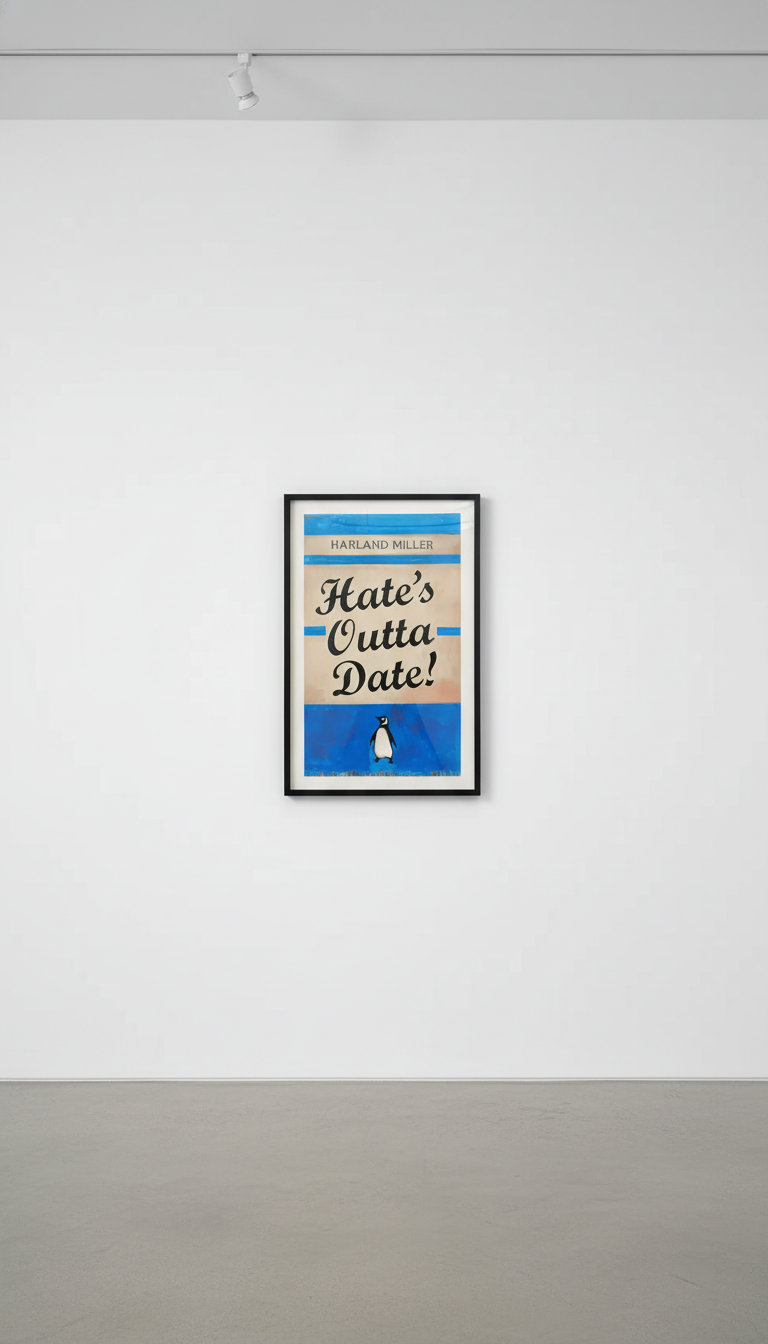
Explore Harland Miller prints for sale at Guy Hepner: Penguin Book Cover Editions, Screenprints & Editions, Works on Paper, Hate's Outta Date.
Related Series